Beagle Harrier
FCI Group
6• FCI 290
Size
Medium
Origin Country
FR
Height
45-50 cm
Weight
25-30 kg
Lifespan
11-13 years
Temperament
Overview
Beagle Harrier is a unique dog breed that combines the best traits of the Beagle and the Harrier. This hunting dog, originating from France, gained popularity in the 18th century as an indispensable companion during hare and small game hunts.
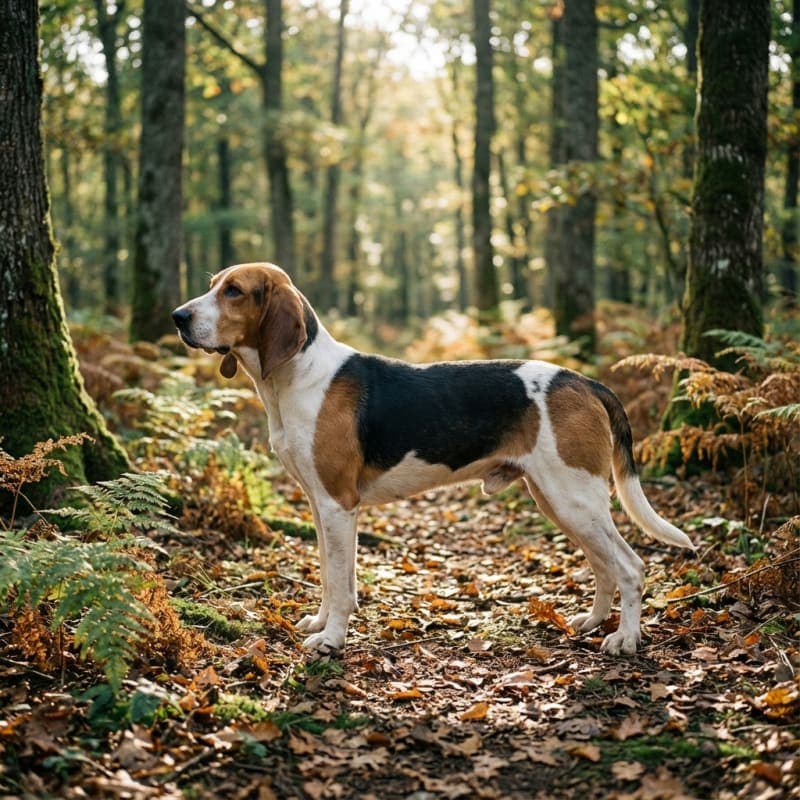
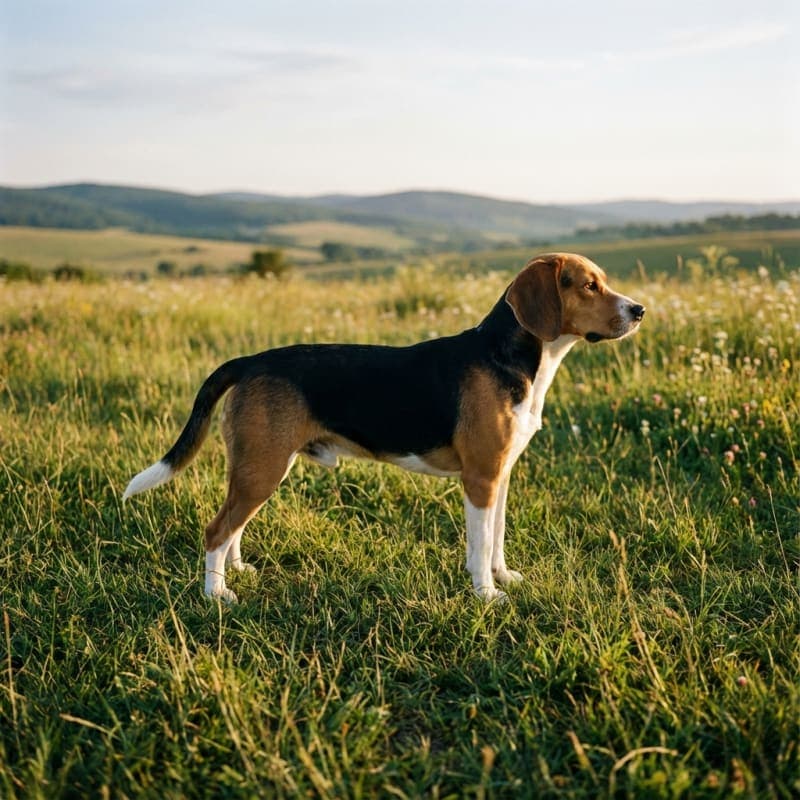
Its agility, vigor, and excellent sense of smell make the Beagle Harrier an ideal choice for those who value an active lifestyle. It resembles a slender Beagle in appearance, though it is more elegant and harmoniously built, which gives it a special charm.
Appearance Characteristics:
- Harmonious, balanced body structure
- Moderately strong head with a broad skull
- Dark, intelligent eyes with a lively expression
- Medium-length ears, slightly rounded and close to the head
- Black, well-developed nose
- Dense, close-fitting coat with a tricolor pattern
The Beagle Harrier reaches a height of 45 to 50 cm at the withers, weighing 25-30 kg. Its gentle and friendly temperament makes it an excellent companion for families with children and other dogs. Loyalty to the family and the ability to form deep relationships with people are additional traits that distinguish this breed.
However, the Beagle Harrier requires a significant amount of exercise and activity, so it thrives best in a home with individuals who prefer an active lifestyle. Regular walks, runs, and outdoor play not only meet its physical needs but also contribute to overall happiness and mental health.
In summary, the Beagle Harrier is a breed that adapts well to various lifestyles, provided it receives the appropriate amount of exercise and attention. In the following sections of the guide, you will learn details about its health, grooming, nutritional needs, and other aspects that help better understand this extraordinary breed.
The Beagle Harrier is a dog with a harmonious and balanced body structure, combining features of both the Beagle and the Harrier. Its silhouette is elegant, agile, and full of vigor.
Physical parameters:
- Height at the withers: 45-50 cm
- Weight: 25-30 kg
- Build: medium, balanced, harmoniously constructed
Head: Moderately strong, with a broad skull and a gently defined occipital protuberance. The stop (transition from forehead to muzzle) is not strongly pronounced. The muzzle is approximately equal in length to the skull, never square, but narrows in profile without being pointed. The nasal bridge is quite straight, never arched.
Eyes: Wide open, dark in color, with an honest, lively, and intelligent expression. The Beagle Harrier's gaze is full of curiosity and attentiveness, reflecting its sharp mind.
Ears: Rather short and medium-wide, set at eye level. In the middle part, they are slightly rounded, falling flat along the skull and curling slightly at the bottom into a small oval. The ears give the dog a characteristic, gentle expression.
Neck: Free, yet well-set on the shoulders, slightly arched in profile at the upper part. The neck is harmoniously connected to the rest of the body.
Body:
- Back: Short, well-supported, and muscular
- Loin: Strong and muscular, may be slightly arched
- Chest: Well-dropped, but the ribs are never too flat, which could excessively reduce the chest. The sternum is strongly extended back. False ribs, while not cylindrical, must be long and sufficiently arched to provide a spacious chest
- Lower line and belly: Never very tucked up, rather filled
Limbs: Strong and straight, providing flexibility and agility during movement. Strong front limbs are well-muscled and allow for confident movement in difficult terrain.
Coat: Short, dense, and close-lying, ideal for outdoor work. The coat requires no complicated grooming, and regular brushing is sufficient to keep it in excellent condition.
Coloring: Most commonly found in a tricolor pattern - the dominant colors are fawn, black, and white. This classic color arrangement gives the dog an elegant and distinguished appearance.
The Beagle Harrier moves confidently and gracefully, making it an excellent dog for hunting and all outdoor activities. Its body structure is designed for enduring effort and chasing game in diverse terrain.
The Beagle Harrier is a dog with a friendly, sociable, and cheerful disposition. He is extremely affectionate and loyal to his family, gets along well with children, making him an excellent family dog.
Key temperament traits:
- Lively, energetic, and full of vigor
- Intelligent and curious about the world
- Friendly towards people and other dogs
- Loyal and devoted to the family
- Joyful and optimistic
His temperament is full of energy and enthusiasm, which makes him an excellent companion for play and outdoor activities. The Beagle Harrier loves the company of people and is happy when he can spend time with his family.
Hunting instinct: The Beagle Harrier has a strong hunting instinct and may show a tendency to chase small animals. In the field, he can be very focused on the trail, so it is important to keep him on a leash in areas where he may encounter potential game. His excellent sense of smell and hound nature make him very persistent in tracking.
Need for companionship: This is a dog that does not tolerate long periods of solitude. If left alone for many hours, he may become destructive or develop behavioral problems. The Beagle Harrier is very dependent on people and needs their presence to feel happy and fulfilled.
Voice and communication: The Beagle Harrier is quite vocal and can make various sounds - barking, howling, whining. This trait is characteristic of hounds, which traditionally communicated with hunters during hunts. In apartments, this can pose a challenge, so it is advisable to work on controlling excessive barking from puppyhood.
Socialization: A well-socialized Beagle Harrier is friendly towards strangers and other animals. Early socialization is crucial for developing positive behaviors and avoiding problems in the future.
In the right conditions, with sufficient exercise, mental stimulation, and companionship, the Beagle Harrier becomes a wonderful, loving companion who brings extraordinary joy and energy to the lives of his owners.
The Beagle Harrier has an expected , which is typical for medium-sized dogs. Overall, it is a relatively healthy and resilient breed, but like many breeds, it can be prone to certain genetic and age-related conditions.
Most common health issues:
Hip dysplasia: A developmental disease of the hip joints that can lead to pain, stiffness, and difficulty moving. The Beagle Harrier may experience this due to its active lifestyle and body structure. Regular veterinary check-ups and maintaining an appropriate weight can help minimize the risk.
Vision problems: As the Beagle Harrier ages, it may experience ocular issues such as cataracts, progressive retinal atrophy (PRA), or other eye diseases. Regular eye examinations by a veterinarian will allow for early detection and treatment of potential problems.
Ear infections: Due to its floppy ears, which limit air circulation, the Beagle Harrier may be prone to ear infections. Regular checking and cleaning of the ears will help prevent these issues.
Health prevention:
- Regular veterinary visits (at least once a year)
- Up-to-date vaccinations and deworming
- Weight and body condition monitoring
- Monitoring the condition of ears and eyes
- Maintaining oral hygiene
Weather resistance: The Beagle Harrier is quite resistant to various weather conditions due to its dense coat. However, extreme temperatures should be avoided:
- Heat: Provide access to shade and fresh water, avoid intense exercise during the hottest parts of the day
- Frost: Protect the dog from prolonged exposure to very low temperatures, especially if it is wet
Diet and activity: A well-balanced diet and regular physical activity are crucial for keeping the Beagle Harrier in good health. Overweight can exacerbate joint problems, so it is important to monitor weight and adjust food portions according to the dog's activity level.
With proper veterinary care, correct nutrition, and regular physical activity, the Beagle Harrier can enjoy a long, healthy, and happy life alongside its family.
The Beagle Harrier does not require complicated grooming, making it a relatively easy to maintain dog. Its short, dense coat is easy to keep clean and in good condition.
Brushing the coat:
- Regular brushing once a week is sufficient to remove dead hair and keep the coat in good condition
- During heavy shedding periods (spring and autumn), increase the brushing frequency to 2-3 times a week
- Use a natural bristle brush or a rubber grooming glove
- Brushing not only removes dead hair but also stimulates the skin and distributes natural oils throughout the coat
Ear care: Due to its drooping ear structure, the Beagle Harrier requires special attention in this area:
- Regularly check the ears for redness, unpleasant odor, or discharge
- Clean the ears once a week using a special ear cleaning solution for dogs
- Gently dry the ears after bathing or walking in rainy weather
- Drooping ears limit air circulation, increasing the risk of infection
Nail care:
- Trim the nails every 3-4 weeks or as needed
- Overly long nails can cause discomfort while walking and joint problems
- If you hear the nails clicking on the floor while the dog is walking, it means they are too long
- Use special clippers for medium-sized dogs
Bathing:
- Bathtub the Beagle Harrier only as needed, usually every 2-3 months
- Too frequent baths can destroy the natural protective layer of the skin and coat
- Use mild shampoos designed for dogs
- After bathing, thoroughly dry the dog, especially the ears
Oral hygiene:
- Brush the dog's teeth 2-3 times a week using dog toothpaste
- Regular oral hygiene prevents periodontal disease and bad breath
- You can also use dental chews
Overall, the Beagle Harrier is a breed that does not pose significant grooming challenges, making it a suitable choice for people who do not have much time for daily, time-consuming care of their dog's appearance. A few simple grooming tasks performed regularly are enough to keep it in excellent condition.
Beagle Harrier is a highly energetic and active dog that requires a significant amount of exercise and daily physical activity. Its natural energy, desire to explore, and hunting instinct mean it needs at least 2 hours of intense physical effort each day.
Recommended forms of activity:
Walks and runs: Beagle Harrier loves long walks and running outdoors. Its hunting instinct makes it interested in all the scents and movements in its surroundings, so walks should be varied and conducted in different places.
- At least 2 walks a day, each lasting 45-60 minutes
- Long hikes in the terrain (forests, fields, mountain trails)
- Running alongside a bicycle (for healthy adult dogs)
- Exploring new places and scent trails
Play with other dogs: Beagle Harrier is sociable and loves spending time with other dogs. Playing together in a dog park or yard is an excellent way to meet its social and physical needs.
Sports and specialized activities:
- Nosework/mantrailing: Utilizing natural scenting abilities in controlled conditions
- Agility: Obstacle courses that develop agility and cooperation with the handler
- Canicross: Running with the dog in a special harness
- Playing with balls, frisbees, retrieving: Activities that engage the chase instinct
Diversity is key: It's important to introduce variety into daily activities so that the Beagle Harrier does not get bored with routine. Monotonous repetition of the same routes or games may cause the dog to lose interest.
Mental stimulation: In addition to physical activity, Beagle Harrier also needs mental stimulation:
- Puzzles and interactive toys with hidden treats
- Scent exercises (hiding treats in the house or garden)
- Learning new commands and tricks
- Obedience training
Safety during activities:
- Due to its strong hunting instinct, it is better to keep the Beagle Harrier on a leash or a long training line in open areas
- In safe, fenced places, it can be allowed to run freely
- Always supervise the dog during play with other animals
Consequences of lack of activity: If the Beagle Harrier does not get enough exercise, it may:
- Develop behavioral problems (destructive behavior, excessive barking)
- Become restless and frustrated
- Gain weight, which negatively affects joint health
- Show signs of depression and apathy
Regardless of the form of activity, it is important for the Beagle Harrier to have the opportunity to release its accumulated energy daily. This is not a breed for people leading a sedentary lifestyle - it requires an active, engaged owner who will provide it with the right amount of movement and adventures. In return, you will receive a wonderful, joyful companion full of enthusiasm and love for life.
Training a Beagle Harrier can pose a certain challenge due to its independent nature and strong hunting instinct. Although this dog is intelligent and eager to cooperate, its natural tendency to think for itself and easily get distracted by scents can complicate the training process.
Key principles of effective training:
Positive reinforcement: Beagle Harrier responds well to the positive reinforcement method:
- Reward with treats for correctly following commands
- Use verbal praise and petting
- Ignore undesirable behaviors instead of punishing
- Never use physical violence or shouting
Consistency and patience: These are two foundations of effective training for this breed. All family members should use the same commands and rules to avoid confusing the dog.
Short and engaging sessions: Beagle Harrier can quickly lose interest in monotonous training:
- Training sessions should last 10-15 minutes
- Conduct 2-3 sessions a day instead of one long one
- Vary the exercises and introduce new elements
- End training on a positive note when the dog has completed the task correctly
Basic commands to teach:
- Sit - basic control command
- Stay/Wait - crucial for safety
- Come/Recall - particularly important due to the hunting instinct
- Leave it/No - prevents picking up dangerous items
- Lie down - helpful in everyday situations
Breed-specific challenges:
Hunting instinct: A strong tracking instinct may cause the Beagle Harrier to ignore commands when it finds an interesting scent. Systematic recall training in various situations and with increasing levels of distraction is key.
Selective hearing: Beagle Harrier may pretend not to hear a command if it is interested in something. Don't give up - consistently require the command to be followed before rewarding.
Escaping and roaming: Due to its hunting instinct, it is essential to work on reliable recall. Always train in a safe, fenced area before allowing the dog to run free.
Socialization - fundamental importance:
- Start socialization as early as possible (from 8 weeks of age)
- Introduce the puppy to various people, dogs, animals, sounds, and places
- Provide positive experiences in diverse situations
- Continue socialization throughout the dog's life
Play as a training element: Incorporating play elements into training significantly increases the motivation of the Beagle Harrier:
- Hide treats and let the dog search for them
- Practice commands during fetch games
- Use interactive toys as rewards
- Create obstacle courses for varied training
Group classes: Consider enrolling the Beagle Harrier in group dog classes:
- Puppy school (from 8 weeks of age)
- Basic obedience
- Advanced training
- Sports classes (agility, nosework)
A well-trained and socialized Beagle Harrier is a joyful, balanced, and reliable companion with whom you can safely spend time in any conditions. Remember that investing time in puppy training will pay off many times over in the form of a wonderful relationship with an adult dog.
The Beagle Harrier's diet should be balanced and appropriately tailored to its age, weight, health status, and level of physical activity. As an active and energetic dog, it requires a diet rich in nutrients that support its vitality and health.
Basic components of the diet:
Protein: As a dog with a high level of activity, the Beagle Harrier needs a diet rich in high-quality animal protein:
- Minimum 25-30% protein in dry food for adult dogs
- Sources: chicken, turkey, beef, fish, lamb
- Protein supports muscle development and regeneration
- Puppies and pregnant dogs need even more protein (28-32%)
Fats: Source of energy and essential fatty acids:
- 15-20% fat in dry food
- Omega-3 and omega-6 fatty acids support skin and coat health
- Sources: salmon oil, flaxseed oil, poultry fat
Carbohydrates: Provide energy for activity:
- Healthy sources: brown rice, oatmeal, sweet potatoes
- Avoid excess simple sugars and unnecessary fillers
Type of food:
Dry food:
- Convenient and helps maintain dental hygiene
- Choose high-quality premium or super-premium foods
- Check the ingredients - meat should be the first ingredient
- Avoid foods with excessive grains, artificial colors, and preservatives
Wet food:
- Higher moisture content, tastier for many dogs
- Can be fed alone or as a supplement to dry food
- More expensive option than dry food
BARF diet (raw):
- For experienced owners
- Requires careful balancing of ingredients
- Consultation with a veterinarian is recommended
Portions and feeding frequency:
Adult dogs (over 12 months):
- 2 meals a day - in the morning and evening
- The amount of food depends on weight, age, and activity (check the manufacturer's recommendations)
- The average Beagle Harrier (25-30 kg) needs about 300-400g of dry food per day
- Divide into two equal portions
Puppies (up to 12 months):
- 3-4 meals a day for puppies up to 6 months
- 2-3 meals a day for puppies 6-12 months
- Food specifically dedicated to medium breed puppies
Weight control:
The Beagle Harrier, like many hounds, tends to eat too quickly and may be prone to overweight if we do not monitor its portions:
- Regularly monitor the dog's weight (monthly)
- You should be able to feel the ribs under a thin layer of fat
- A visible waist (indentation behind the ribs) is a sign of proper weight
- Overweight leads to joint problems, heart issues, and shortens lifespan
Slowing down eating:
- Use a non-slip bowl with a special structure to slow down eating
- Use puzzles or toys that dispense food
- Divide the portion into several smaller meals
- This helps with proper digestion and prevents bloating
Fresh water:
- Always provide access to fresh, clean water
- Change the water daily
- Especially important after intense exercise
- On hot days, provide several bowls of water
Treats and snacks:
- Treats should make up at most 10% of the daily calorie intake
- Use healthy snacks: dried meat, vegetables (carrots, broccoli)
- Avoid sweets, chocolate, and fatty leftovers from the table
- Include training treats in the daily calorie balance
Prohibited products:
- Chocolate (toxic to dogs!)
- Onion and garlic
- Grapes and raisins
- Avocado
- Xylitol (artificial sweetener)
- Alcohol
- Poultry bones (can cause choking)
A well-balanced diet, regular portions, and weight control will help the Beagle Harrier maintain health, energy, and vitality throughout its life. If in doubt about nutrition, always consult a veterinarian who will tailor the diet to your dog's individual needs.
Characteristic Traits
Pros
- Friendly and sociable character
- Loyal to family
- Gets along perfectly with children
- Ideal for active families
- Durable and energetic
- Excellent sense of smell.
Cons
- Requires a minimum of 2 hours of exercise daily
- Can be stubborn during training
- Strong hunting instinct
- Tendency to bark and howl loudly
- Does not tolerate solitude
- May chase small animals.
Behavioral Ratings
Breed History
The history of the Beagle Harrier is fascinating and dates back to the 18th century, when the breed was developed in France as a specialized hunting dog. It was bred specifically for hunting hares and small game, combining the best traits of its ancestors.
Origin and development of the breed:
The Beagle Harrier descends from a crossbreed of the Beagle and the Harrier, two renowned breeds of hunting dogs. Its creation aimed to combine:
- From the Beagle: Excellent sense of smell, compact build, endurance in tracking
- From the Harrier: Greater speed, elegance, stamina
- Result: A hunting dog with optimal parameters for hunting in diverse terrain
Other breeds of hunting dogs popular in France at that time may have also participated in the breeding process, further enriching the gene pool and shaping the characteristic traits of this breed.
First historical mentions:
Although the breed was officially recognized in the 18th century, mentions of similar hunting dogs can be found as early as the 13th century. Sir Elias de Midhope, an English knight, owned a pack of hunting dogs with traits similar to today's Beagle Harrier. These early hunting dogs were used by the aristocracy for mounted hunting, providing invaluable support to hunters.
Popularity in the hunting world:
For centuries, the Beagle Harrier was highly valued among hunters both in France and other European countries. Its advantages as a hunting dog included:
- Exceptional sense of smell allowing for effective tracking
- Endurance enabling long hours of hunting
- Ability to work in difficult terrain (forests, fields, mountains)
- Voice characteristic of hunting dogs - communication with the hunter
- Ability to work in a pack as well as independently
Official status:
Despite its long history and recognition in the hunting community, the Beagle Harrier has a complex status in the canine world:
- Since 1971 it has not been recognized by the Kennel Club (English Kennel Club)
- However, it is recognized by the Fédération Cynologique Internationale (FCI) - an international canine organization
- Less commonly seen at dog shows than in the role of a working dog
- In its homeland - France - it still enjoys recognition and respect
Contemporary role:
Today, the Beagle Harrier serves a dual role:
Hunting dog: Still used for hunting, particularly in France and other European countries where hunting traditions are alive. Its tracking skills and endurance remain highly valued.
Companion dog: Increasingly, the Beagle Harrier is becoming a member of active families who appreciate its:
- Friendly and gentle nature
- Loyalty and devotion to the family
- Excellent relationships with children
- Energy and enthusiasm for outdoor activities
- Ability to adapt to family life while retaining hunting instincts
Preserving the heritage:
Modern breeders of the Beagle Harrier are committed to maintaining the purity of the breed and its traditional hunting traits. Although it is not one of the most popular breeds in the world, it has a dedicated group of enthusiasts who value its unique combination of working abilities and family temperament.
The history of the Beagle Harrier is a fascinating story of a breed that combines hunting tradition with modernity, remaining true to its roots while perfectly adapting to the contemporary demands of family life. This extraordinary breed is a living testament to how hunting dogs can be wonderful companions for active, adventure-loving families.