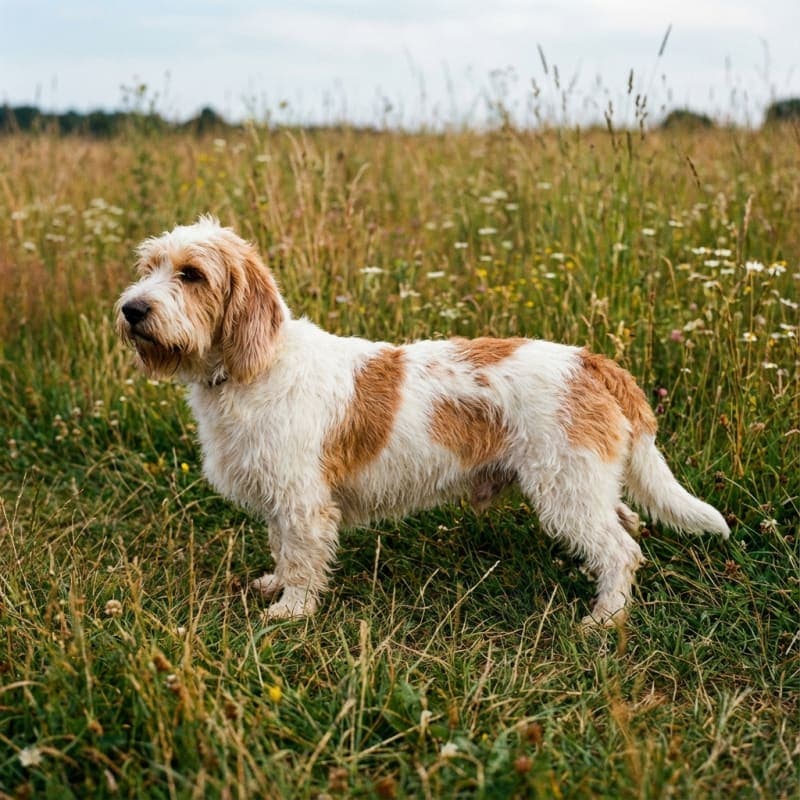
Grand Basset Griffon Vendéen
FCI Group
6• FCI 33
Size
Medium
Origin Country
FR
Height
39-44 cm
Weight
18-20 kg
Lifespan
12-14 years
Temperament
Overview
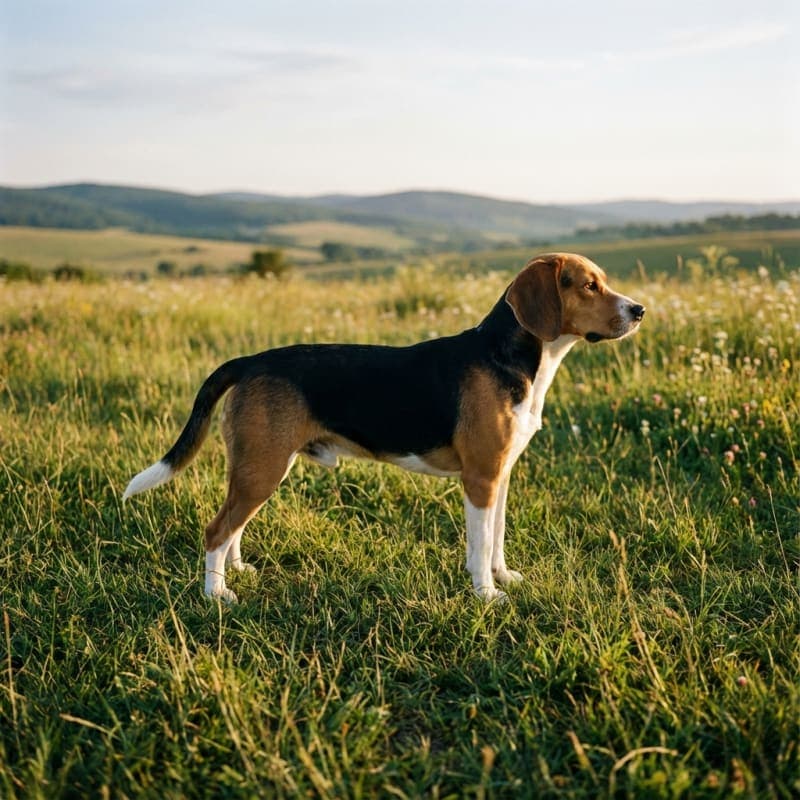
The Grand Basset Griffon Vendéen is a unique dog breed originating from the Vendée region of France, which has accompanied humans during hunts since the 16th century, particularly for hares and wild boars. This versatile breed combines elegance with strength, showcasing a harmonious silhouette with elongated proportions and strong limbs.
Physical characteristics:
- Height at the withers: 40-44 cm (males), 39-43 cm (females)
- Weight: 18-20 kg
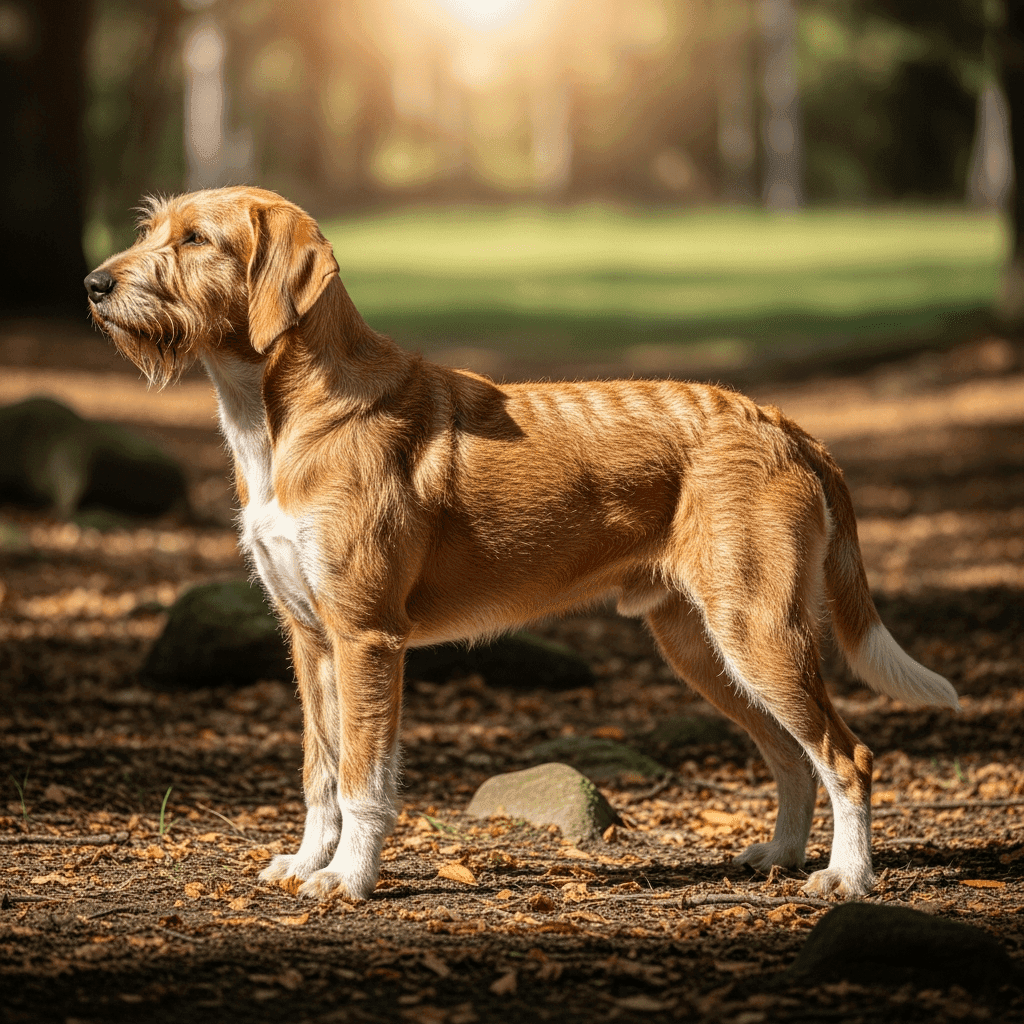
- Hard, rough coat of moderate length
- Characteristic longer hair on the eyebrows and ears
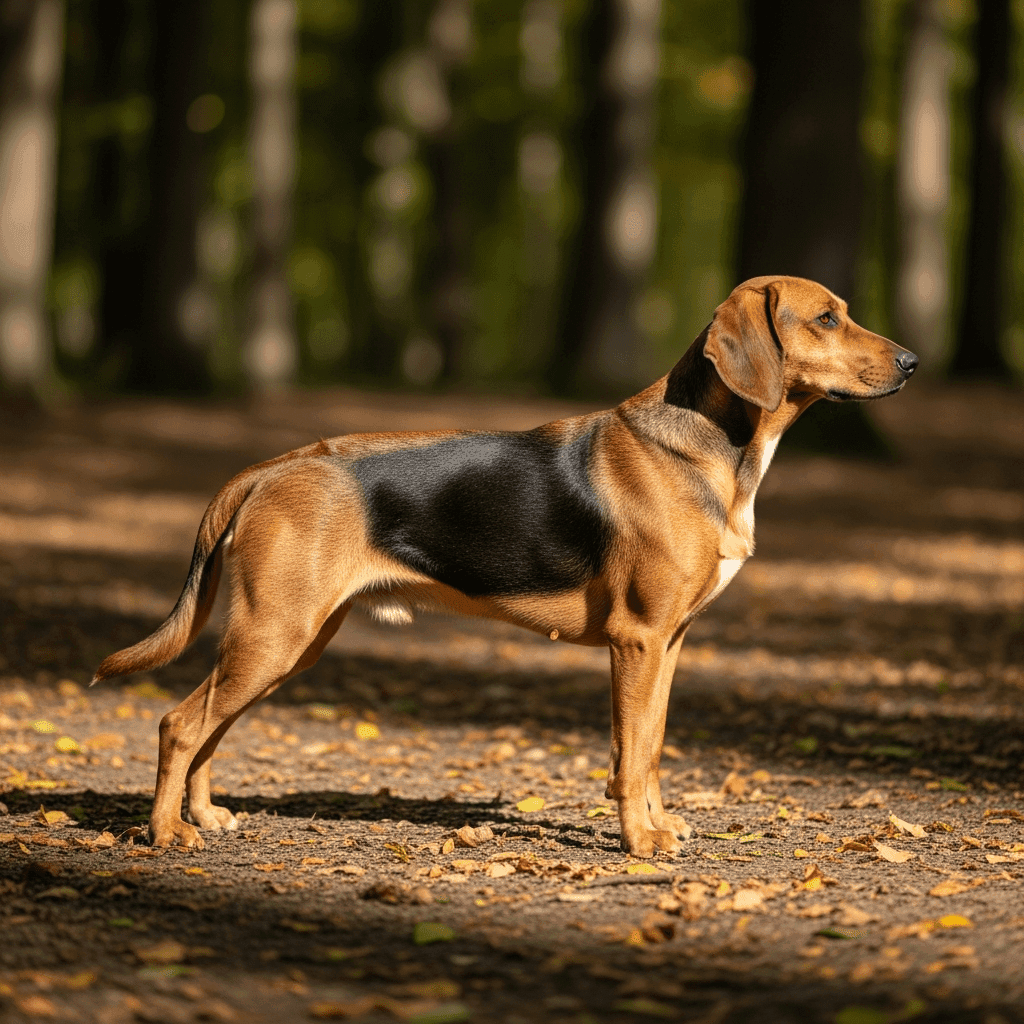
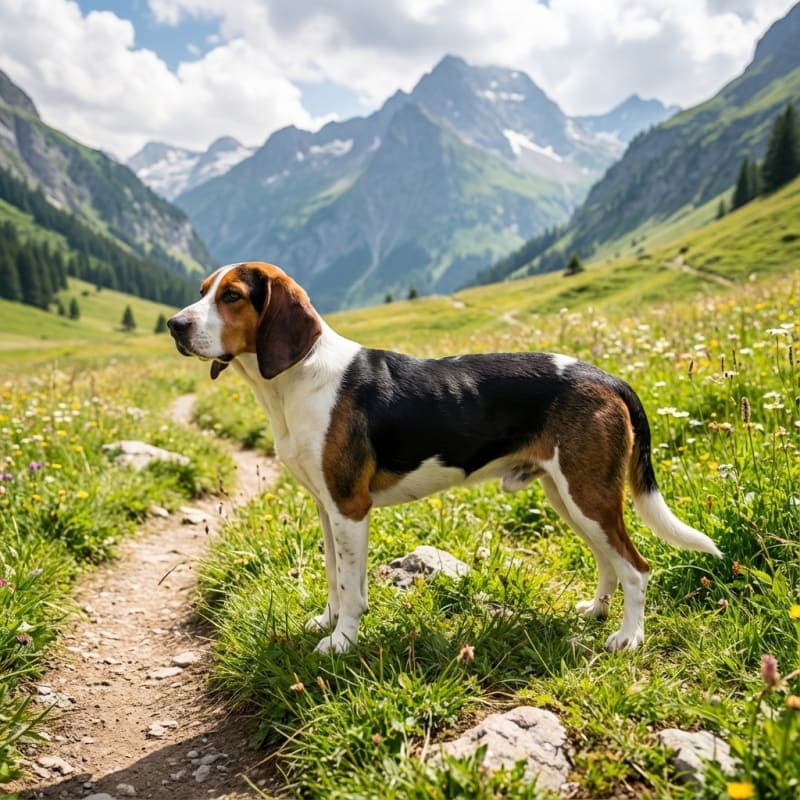
- Diverse coat colors: black and white, black and tan, fawn, and white shades
- Large, dark, oval eyes expressing intelligence
- Long, soft ears with oval tips
What distinguishes the Grand Basset Griffon Vendéen is its strong hunting instinct combined with a friendly nature. It is the fastest of all the basset hounds, displaying exceptional endurance and courage in the field. Despite its hunting roots, this breed excels as a family companion, showing deep affection for its caregivers.
The Grand Basset Griffon Vendéen is characterized by a cheerful disposition and sociable nature. It gets along well with children and other dogs, although its hunting instincts require caution around small pets, especially cats. A certain degree of stubbornness, typical of hound breeds, necessitates consistency and patience during training, but with the right approach, this breed is eager to cooperate with its owner.
Its adaptability to various living conditions allows the Grand Basset Griffon Vendéen to thrive in both apartments and homes with gardens. However, it is crucial to provide it with at least 2 hours of activity daily - long walks, runs, and tracking games are essential for its physical and mental health. Discover more details about this fascinating breed in the following sections of our comprehensive guide!
The Grand Basset Griffon Vendéen showcases a unique body structure that harmoniously combines elegance with functionality. Its silhouette is slightly elongated, giving it a characteristic, noble appearance typical of hounds.
Proportions and overall build:
- Height at the withers: 40-44 cm (males), 39-43 cm (females)
- Slightly elongated but balanced silhouette
- Strong, well-muscled limbs - straight and stable
- Deep chest emphasizing endurance
- Structure typical of a basset, but without heaviness - elegant and agile
Head and expression:
The head is slightly elongated and proportional to the rest of the body. The skull exhibits a gentle dome, with a clearly defined stop (transition between the forehead and muzzle). The nose is well-developed, black - in dogs with a white-orange coat, a brown nose is acceptable. The eyes are large, dark, and oval, expressing intelligence and a friendly disposition, giving the dog a characteristic, warm facial expression.
Ears:
Long, soft, and narrow ears are set low, ending ovally. They hang along the cheeks, giving the dog a charming and somewhat melancholic appearance. This characteristic feature emphasizes its belonging to the group of hounds.
Coat and coloration:
The coat of the Grand Basset Griffon Vendéen is hard, rough, and smooth, of moderate length. Around the eyebrows and ears, the hair is slightly longer, creating characteristic fringes - however, they should not be too abundant to maintain the breed's natural, rustic appearance. Various colorations are acceptable:
- Black and white with patches
- Black and tan with white markings
- Fawn with white
- Tricolor combinations
Each individual has a unique coat pattern, making the breed even more distinctive. The chest is well-defined, emphasizing a strong build and endurance - essential traits for long-lasting tracking in difficult terrain. The Grand Basset Griffon Vendéen is a dog that stands out not only for its harmonious appearance but also for its functional build designed to work in any terrain conditions.
Grand Basset Griffon Vendéen is a breed with a wonderful, balanced temperament, which combines the liveliness of a hunting dog with the gentleness of a family companion. It is an extremely sociable dog that loves the presence of people and other animals, making it an ideal choice for active families.
Character traits:
- Friendly and open towards people
- Brave and full of enthusiasm
- Deeply attached to the family
- Sociable with other dogs
- Cheerful and lively
- Intelligent and attentive
- A bit stubborn, but without malice
Social interactions:
Grand Basset Griffon Vendéen gets along excellently with children, showing them patience and gentleness. Its energetic character makes it eager to participate in games, but it can also be gentle. This breed does very well in the company of other dogs - its sociable nature means it enjoys walks and playtime in a dog group.
Working temperament:
As a hound, Grand Basset Griffon Vendéen has a strong hunting instinct and exceptional perseverance. When on the trail, it can be incredibly focused and determined, not giving up even in the toughest terrain conditions. This stubborn determination, valuable during hunts, can sometimes manifest in everyday life - the dog may ignore commands if it finds them less interesting than the scent it is tracking.
Voice and communication:
Grand Basset Griffon Vendéen tends to be loud, although it usually barks only in justified situations - on the trail, during play, or warning of the arrival of guests. Its voice is resonant and melodic, typical of hounds. Owners should remember to train barking properly to prevent excessive noise.
Independence and alertness:
Despite its deep attachment to the family, this breed exhibits a certain degree of independence, which is typical of hunting dogs that work alone. It is not overly alert or suspicious of strangers - it usually greets new people friendly, making it a poor guard but an excellent companion.
Important warning:
Due to its strong hunting instinct, Grand Basset Griffon Vendéen may show a tendency to chase scents. When it catches an interesting scent, it may forget everything else and take off in pursuit. Therefore, it is extremely important to secure the area properly (with a solid fence) and to remain vigilant during off-leash walks. Caution is also advised when interacting with small pets, especially cats - without proper socialization, the dog may view them as potential prey.
Grand Basset Griffon Vendéen is a dog that brings joy, energy, and loyalty to the home. With proper training, socialization, and enough exercise, it will become an irreplaceable, beloved family member for many years.
The Grand Basset Griffon Vendéen is considered a relatively healthy and resilient breed, with an average lifespan of 12-14 years. However, like any breed, it has certain predispositions to specific genetic conditions that owners should be aware of.
Most common health issues:
1. Hip and elbow dysplasia
This orthopedic condition occurs when the joint does not develop properly, leading to pain, lameness, and arthritis. Regular veterinary check-ups and proper weight management can help minimize symptoms. For breeding purposes, X-ray examinations are recommended before allowing reproduction.
2. Thyroid diseases
Hypothyroidism can lead to metabolic issues, weight gain, lethargy, and skin problems. This condition requires regular monitoring of hormone levels and often long-term hormonal therapy.
3. Epilepsy
Some individuals may suffer from idiopathic epilepsy (of unknown cause), which manifests as seizure episodes. This condition requires ongoing veterinary care and often pharmacological treatment.
4. Patellar luxation (luxatio patellae)
An orthopedic issue where the kneecap dislocates from its normal position, causing lameness and discomfort. In severe cases, it may require surgical intervention.
5. Hernias (inguinal and umbilical)
A congenital defect of the abdominal wall that in some cases requires surgical correction, especially if the hernia is large or causes health problems.
6. PBGV pain syndrome
Characteristic of breeds closely related to the Petit Basset Griffon Vendéen, it can also occur in the Grand Basset. It manifests as episodes of severe pain and discomfort, often related to the musculoskeletal system.
Prevention and healthcare:
- Regular veterinary visits (at least once a year)
- Weight management - avoiding obesity that burdens the joints
- Proper diet tailored to age and activity level
- Preventive examinations - especially in older dogs
- Physical activity adjusted to age and condition
- Regular ear care - infection prevention
- Vaccinations and deworming according to the veterinary calendar
Resilience and endurance:
Despite the mentioned genetic predispositions, the Grand Basset Griffon Vendéen is a resilient and tough dog, well-suited to various weather conditions. Its coarse coat protects it from cold and moisture, although in extreme temperatures (both very high and very low) it requires additional protection. With proper care, a balanced diet, and regular physical activity, the Grand Basset Griffon Vendéen can enjoy a long, healthy life as an active and beloved family companion.
Grand Basset Griffon Vendéen requires regular but not overly demanding grooming. Its hard, rough coat is relatively easy to maintain, although certain areas require special attention.
Coat care:
Brushing:
It is recommended to brush the dog at least once a week, using a brush with stiff bristles or a wide-toothed comb. Regular brushing removes dead hair, prevents tangles (especially in the areas of the ears, limbs, and belly), and distributes natural skin oils, giving the coat a healthy shine. While brushing, pay special attention to:
- Ears - longer hair tends to tangle easily
- Area under the belly and between the limbs
- Tail - fringes require regular combing
- Eyebrows - a characteristic feature of the breed
Bathing:
Grand Basset Griffon Vendéen does not require frequent baths - a bath once every 2-3 months or as needed when the dog is particularly dirty is sufficient. Too frequent bathing can remove the skin's natural protective layer. Use mild shampoos designed for dogs with rough coats that will not dry out the skin. After bathing, thoroughly dry the dog, especially around the ears, to prevent infections.
Seasonal shedding:
This breed sheds moderately, with more noticeable shedding in spring and autumn. During these periods, it is advisable to increase the brushing frequency to 2-3 times a week to remove dead hair and support natural coat renewal.
Ear care (KEY):
The long, drooping ears of the Grand Basset Griffon Vendéen are prone to bacterial and fungal infections due to limited air circulation. Regularly check the ears (at least once a week) and clean them using special ear cleaning solutions for dogs. Pay attention to:
- Unpleasant odor
- Excessive wax buildup
- Redness or swelling
- Scratching at the ears (signs of irritation)
Oral hygiene:
Why is regular tooth brushing important (ideally 2-3 times a week)? It prevents the buildup of tartar, gum problems, and bad breath. Use dog toothpaste (never human!) and a soft toothbrush. You can also use special dental treats and toys for cleaning teeth.
Nail care:
If the dog does not naturally wear down its nails while walking on hard surfaces, they should be regularly trimmed (every 4-6 weeks). Too long nails can cause discomfort while walking and lead to posture problems.
Eye check:
Check the dog's eyes daily, gently removing any discharge with a damp, clean cloth. Watch for signs of irritation, excessive tearing, or redness.
Summary of grooming routine:
- Brushing: once a week (more often during shedding)
- Bathing: every 2-3 months or as needed
- Ear cleaning: once a week
- Tooth brushing: 2-3 times a week
- Nail trimming: every 4-6 weeks
- Eye check: daily
Regular grooming not only keeps the Grand Basset Griffon Vendéen looking healthy and attractive but also allows for the early detection of potential health issues. It is also a great opportunity to strengthen the bond between the dog and its owner!
Grand Basset Griffon Vendéen is a breed with high exercise needs, requiring an adequate amount of physical activity to maintain physical health and mental balance. As the fastest of all hunting basset hounds, this dog is full of energy and endurance.
Minimum exercise requirements:
Grand Basset Griffon Vendéen needs a minimum of 2 hours of intense activity daily. However, this does not mean that these 2 hours must be continuous - they can be divided into several sessions:
- Morning walk: 45-60 minutes
- Afternoon walk: 45-60 minutes
- Evening play: 15-30 minutes
Types of activities:
1. Long walks and hikes
Grand Basset Griffon Vendéen loves long walks where it can explore the surroundings, track scents, and utilize its natural instincts. Forest areas, meadows, and rural paths are ideal places for this breed. This dog happily accompanies its owners on long mountain or forest hikes.
2. Running and jogging
With its endurance and speed, this breed can be a great jogging partner for active owners. However, it is important to gradually introduce this type of activity, especially for young dogs, to avoid overloading developing joints.
3. Tracking games
This is a natural activity for a hunting dog! Games like fetch, hidden treats, or tracking activities are excellent ways to engage both body and mind. You can create a scent trail in the garden or during a walk in the woods.
4. Garden play
A safe, fenced garden is a true paradise for Grand Basset Griffon Vendéen. The dog can run freely, explore, and play there. NOTE: The fence must be sturdy and high enough - this breed can be surprisingly agile when on the scent trail!
5. Play with other dogs
Grand Basset Griffon Vendéen is a very sociable dog with other dogs. Regular visits to the dog park or organized group walks are excellent ways to socialize and get additional exercise.
6. Canine sports
This breed excels in various sports disciplines:
- Tracking - natural use of instincts
- Agility - great fun and fitness training
- Rally obedience - combines movement with obedience training
- Mantrailing - ideal for a hunting breed
Mental stimulation:
In addition to physical activity, Grand Basset Griffon Vendéen also requires mental stimulation. Obedience training, learning new tricks, dog puzzles, or interactive toys help prevent boredom and destructive behaviors. An intelligent dog that gets bored can become problematic!
Consequences of insufficient exercise:
Lack of adequate activity can lead to serious behavioral problems:
- Destruction of household items
- Excessive barking and howling
- Frustration and nervousness
- Escape attempts
- Obesity and related health issues
- Depression and apathy
Safety during activities:
- Always use a leash when walking in unfenced areas - a strong hunting instinct may cause the dog to chase after a scent
- In summer, avoid activities during the hottest hours of the day
- Ensure access to fresh water
- Monitor the dog's condition - avoid overexertion
- Young dogs (up to 12-18 months) should not be overworked - their joints are still developing
Age adjustment:
Exercise needs change as the dog ages. Young, adult individuals require the most exercise, while puppies and seniors need gentler, shorter activity sessions.
Grand Basset Griffon Vendéen is a dog made for movement and work - this is not a breed for sedentary individuals. It requires active owners who can dedicate time to daily, intense exercise. In return, they receive a loyal, healthy, and happy companion who joyfully shares every adventure!
Training the Grand Basset Griffon Vendéen is a fascinating challenge that requires the owner to have patience, consistency, and creativity. This intelligent breed, while eager to cooperate, also possesses a typical hound's dose of independence and stubbornness.
Breed characteristics in the context of training:
- Intelligent and quick to learn
- Motivated by food and praise
- Somewhat stubborn and independent
- Easily distracted (especially by smells!)
- Needs variety in training
- Requires positive reinforcement
When to start training?
Training should begin at an early age - ideally from the 8th week of life. Early socialization and learning basic rules are crucial for shaping a balanced, well-mannered adult dog.
Basic principles of effective training:
1. Positive reinforcement
The Grand Basset Griffon Vendéen responds excellently to positive training methods. Rewards in the form of treats, verbal praise, and play are much more effective than punishment or coercion. This breed quickly loses motivation when training is too harsh or monotonous.
2. Short, dynamic sessions
Training sessions should be short (10-15 minutes), but frequent - ideally 2-3 times a day. Long, monotonous training leads to boredom and loss of focus. End each session while the dog is still motivated and eager to work.
3. Variety and creativity
The intelligent Grand Basset Griffon Vendéen quickly gets bored with repetitive exercises. Introduce variety - change training locations, use different rewards, diversify tasks. This will keep the dog's interest and accelerate learning.
4. Consistency from the whole family
All family members must follow the same rules and commands. Inconsistency in training leads to confusion and makes the dog not understand what is expected of it.
Basic commands to master:
- Sit - basic control command
- Stay - extremely important for safety
- Come - crucial due to the tendency to chase
- Lie down - helps calm the dog
- Leave it - prevents eating unwanted things
- Go to your place - defines the resting spot
- No pulling - walking at heel
Breed-specific challenges:
Strong hunting instinct
The biggest challenge in training the Grand Basset Griffon Vendéen is its extremely strong tracking instinct. When the dog catches an interesting scent, it may completely ignore commands and take off in pursuit. Therefore, it is crucial to:
- Early and intensive training of the Come command
- Training with a long leash in safe conditions
- Gradually increasing distractions
- Never allow off-leash running in unfenced areas until recall is 100% reliable
Stubbornness and independence
The Grand Basset Griffon Vendéen was bred for independent tracking work, which means it naturally exhibits some independence. It may sometimes seem like it ignores commands - often it is just assessing whether it is worth following them. The key is to make training more interesting than the alternatives.
Training levels:
Basic level (3-6 months):
- Socialization with people and other animals
- Basic commands (sit, stay, come)
- Getting used to the leash and collar
- House training
- Acceptance of basic grooming procedures
Intermediate level (6-12 months):
- Improving basic commands
- Walking on a loose leash
- Calm behavior in the presence of distractions
- Recall training (with a long leash)
- Basic obedience in various locations
Advanced level (12+ months):
- Dog sports (agility, tracking, mantrailing)
- Advanced obedience
- Training in high-distraction environments
- Complex command sequences
Socialization - the key to success:
In addition to basic obedience training, socialization is absolutely crucial. A Grand Basset Griffon Vendéen puppy should be exposed to:
- Different environments (city, countryside, forest, dog-friendly shops)
- Diverse sounds (traffic, children, other animals)
- Contact with various people (adults, children, people in hats, glasses)
- Meetings with other dogs (different breeds, sizes, ages)
- Various surfaces (grass, asphalt, metal, stairs)
Behavioral problems and their solutions:
Excessive barking: Teach a quiet command, reward calm behavior, provide enough activity.
Tendency to escape: Solid fencing, recall training, never let off-leash in dangerous places.
Destructive behaviors: Usually a result of boredom - increase physical activity and mental stimulation.
Ignoring commands: Make training more engaging, use better rewards, reduce distractions, go back to basics.
Professional help:
If you encounter difficulties in training, do not hesitate to seek help from a professional dog trainer or behaviorist. Particularly helpful may be:
- Puppy training classes
- Basic obedience courses
- Classes in nosework or tracking - ideal for this breed!
- Consultations with a behaviorist in case of problems
Summary:
The Grand Basset Griffon Vendéen is an intelligent but independent breed that requires a patient, consistent, and creative approach to training. With the right upbringing, started at an early age, it will become a well-mannered, obedient companion. Remember: training is not just about learning commands, but primarily about building a deep bond based on trust and mutual respect. The investment of time and effort in training will pay off many times over in the form of a happy, balanced dog that is a joy to the whole family!
The proper diet is the foundation of health and good condition for the Grand Basset Griffon Vendéen. This active breed requires a balanced diet that provides energy for daily activities, supports proper development, and maintains optimal body weight.
Basic nutrition principles:
1. High-quality food
Investing in premium food is an investment in the dog's health. High-quality food should contain:
- High content of animal protein (meat as the first ingredient) - 20-30% for adult dogs
- Healthy sources of fats - 10-15% (omega-3 and omega-6 fatty acids)
- Complex carbohydrates - rice, oats, sweet potatoes
- Vitamins and minerals - supporting the immune system, joint health, and coat condition
- No artificial additives - free from preservatives, colorants, and flavorings
2. Adaptation to age and activity
Nutritional needs change depending on the life stage:
Puppies (2-12 months):
Food for medium breed puppies, rich in protein and calcium for proper bone and muscle development. Feeding 3-4 times a day at regular intervals.
Adult dogs (1-7 years):
Food for adult dogs with moderate or high activity. Due to their energetic lifestyle, the Grand Basset Griffon Vendéen may require food with higher protein and fat content. Feeding 2 times a day.
Senior dogs (7+ years):
Senior food with lower calories but enriched with ingredients that support joints (glucosamine, chondroitin), kidney, and heart health. Feeding 2 times a day.
3. Portion control - preventing obesity
The Grand Basset Griffon Vendéen has a tendency to gain weight, especially when not receiving enough exercise. Obesity is a serious health issue that burdens the joints, heart, and shortens the dog's life. How to prevent it:
- Follow the manufacturer's recommendations for portion sizes
- Adjust the amount of food to the dog's activity level
- Regularly monitor weight - weigh once a month
- Check body condition - you should feel the ribs with gentle pressure, but they should not be visible
- Include training treats in the daily calorie balance
Example daily caloric requirements:
- A dog weighing 18 kg, moderately active: ~900-1000 kcal/day
- A dog weighing 18 kg, very active: ~1100-1300 kcal/day
- A dog weighing 20 kg, moderately active: ~1000-1100 kcal/day
4. Healthy snacks and treats
Treats should make up no more than 10% of daily calorie intake. Recommended options:
- Fresh fruits: apples (without seeds), blueberries, raspberries, watermelon
- Vegetables: carrots, broccoli, green beans, cucumber
- Natural treats: dried meat, pig ears, pieces of dried fish
- Training treats: small, low-calorie treats are ideal during training sessions
PROHIBITED products:
- Chocolate and cocoa products
- Onion, garlic, leek
- Grapes and raisins
- Avocado
- Xylitol (artificial sweetener)
- Alcohol, caffeine
- Fatty meat, chicken bones (choking hazard)
5. Hydration - a key element
Fresh water must be available at all times, especially after intense physical activity. On hot days or after long walks, regularly offer the dog water. An adult dog should drink about 50-60 ml of water per 1 kg of body weight per day (so a dog weighing 18 kg - about 900-1080 ml of water daily).
6. Supplementation
With high-quality food, additional supplementation is usually not needed. However, in some cases, a veterinarian may recommend:
- Glucosamine and chondroitin - for joint health (especially in older dogs or those with dysplasia)
- Omega-3 fatty acids - for skin and coat health and anti-inflammatory support
- Probiotics - for digestive health
- Joint supplements - for active sporting dogs
ALWAYS consult supplementation with a veterinarian - excess of certain vitamins and minerals can be harmful.
7. BARF diet and natural feeding
Some owners choose natural feeding (BARF - Biologically Appropriate Raw Food). If you are considering such a diet:
- Consult with a veterinarian or canine nutritionist
- Ensure a balanced diet with the appropriate ratio of meat, bones, vegetables, and fruits
- Be cautious of bacteria - raw meat requires special hygiene
- Monitor the dog's health - blood tests every 6-12 months
8. Common nutritional problems and their solutions
Food allergies: Symptoms include itchy skin, digestive problems, hair loss. Solution: elimination diet under veterinary supervision, hypoallergenic food.
Digestive issues: Diarrhea, vomiting, bloating. Solution: easily digestible food, feeding in smaller, more frequent portions, avoiding sudden diet changes.
Picky eating: Some individuals may be picky. Solution: regular feeding times, avoiding giving food from the table, short access time to the bowl (15-20 minutes).
9. Changing food
If you need to change food, do it gradually over 7-10 days:
- Days 1-2: 75% old food + 25% new
- Days 3-4: 50% old food + 50% new
- Days 5-6: 25% old food + 75% new
- Day 7+: 100% new food
Gradual transition prevents digestive problems.
10. Feeding schedule
- Puppies 2-6 months: 3-4 meals a day
- Puppies 6-12 months: 2-3 meals a day
- Adult dogs: 2 meals a day (morning and evening)
- Senior dogs: 2 meals a day, sometimes 3 smaller portions for better digestibility
Consistent feeding times help regulate digestion and facilitate house training in puppies.
Summary:
Proper nutrition for the Grand Basset Griffon Vendéen is the foundation of a long, healthy life. High-quality food tailored to age and activity level, portion control, healthy snacks, and constant access to fresh water - this is the recipe for a happy and healthy dog. Remember: every dog is individual - observe your pet and adjust the diet to their specific needs. In case of doubts, always consult a veterinarian or animal nutritionist!
Characteristic Traits
Pros
- Friendly and sociable character
- Great companion for children and families
- Intelligent and energetic
- Elegant and harmonious appearance
- Brave and persistent
- Gets along perfectly with other dogs.
Cons
- Requires a minimum of 2 hours of activity daily
- Can be stubborn during training
- Strong hunting instinct and tendency to escape
- Noisy – likes to bark
- Requires regular coat grooming.
Behavioral Ratings
Breed History
The Grand Basset Griffon Vendéen is a breed with a rich and fascinating history, dating back to the 16th century. Its roots are deeply embedded in the French hunting tradition, and the Vendée region in western France became the cradle of this unique breed of hounds.
Origins of the breed - 16th-18th century:
The Grand Basset Griffon Vendéen was developed from larger griffon-type dogs (rough-haired hounds) that had been used in France for centuries to hunt various game. Originally, tall griffon dogs - the Grand Griffon Vendéen - were bred in the Vendée region, which were incredibly effective in hunting large game in the difficult, overgrown terrain characteristic of this area.
Over time, hunters noticed that they needed dogs with a lower build - ones that could effectively track hares and rabbits in dense underbrush, where taller dogs had difficulties. This led to the idea of breeding a basset (a dog with short legs) while retaining the griffon traits - a tough, wiry coat and an excellent sense of smell.
Breed development - 19th century:
In the 19th century, systematic breeding efforts began to establish the type of Grand Basset Griffon Vendéen. A key figure in this was Count d'Elva, who, at the turn of the 19th and 20th centuries, conducted a selection of individuals with desirable physical traits. His goal was to breed a dog with straight legs (as opposed to the heavily curved limbs of some bassets), a harmonious build, and appropriate height.
Another important breeder was Paul Dezamy, who significantly contributed to establishing the breed type. Dezamy understood that to effectively hunt hares, dogs of a specific height were needed - he determined that the ideal height at the withers should be about 43 cm. This height provided the perfect compromise between agility and endurance, allowing the dogs to effectively track in difficult terrain for many hours.
Development in the 20th century:
In the first half of the 20th century, the Grand Basset Griffon Vendéen gained increasing popularity among French hunters. The breed was particularly valued for:
- Exceptional speed - the fastest of all hound breeds
- Tenacity and perseverance on the trail
- Courage and determination
- Ability to work in all types of terrain
- Versatility - effectiveness in hunting various game, from rabbits to wild boars
International recognition:
The breed was officially recognized by the Fédération Cynologique Internationale (FCI) and classified in Group 6 (Hounds, Bloodhounds and Related Breeds), Section 1.3 (Small Hounds). The FCI standard for the Grand Basset Griffon Vendéen was first published in 1976, and the last update took place on January 9, 1999 (valid from February 14, 2001).
Hunting successes:
One of the most significant achievements confirming the quality of the breed was the victory in the 5th edition of the European Cup for hare hunting, where the Grand Basset Griffon Vendéen team demonstrated exceptional effectiveness and endurance.
Evolution of function:
Originally, the Grand Basset Griffon Vendéen was used solely as a hunting dog - a companion for hunters using firearms in moderately sized terrains. Its specialization was tracking:
- Hares - the main game
- Rabbits
- Foxes
- Wild boars (in teams of dogs)
Over time, as hunting became less popular, the breed also began to serve as a family companion. Its friendly nature, intelligence, and attachment to family made the Grand Basset Griffon Vendéen excel in its new role - a companion dog for active families.
Contemporary times:
Today, the Grand Basset Griffon Vendéen is a breed recognized on the international stage, although still relatively rare outside of France. It is particularly valued by:
- Hunters - as a versatile, enduring working dog
- Families - as a friendly, active companion
- Canine sports enthusiasts - in disciplines such as tracking, mantrailing, agility
The breed's popularity is gradually increasing in other European countries, the United States, and Canada, where more and more people appreciate its unique character, versatility, and charming appearance.
Heritage and future:
The Grand Basset Griffon Vendéen is a living legacy of French canine and hunting tradition. Breeders around the world are working to preserve the original traits of the breed - both physical and characterological - while adapting it to modern needs as a family dog. With responsible breeding and growing interest, the future of this unique breed looks promising.
The history of the Grand Basset Griffon Vendéen is the story of a dog that has served humans in hunting for centuries, and today has also become a beloved companion, bringing joy and energy to the lives of its families while still retaining its unique hunting roots.