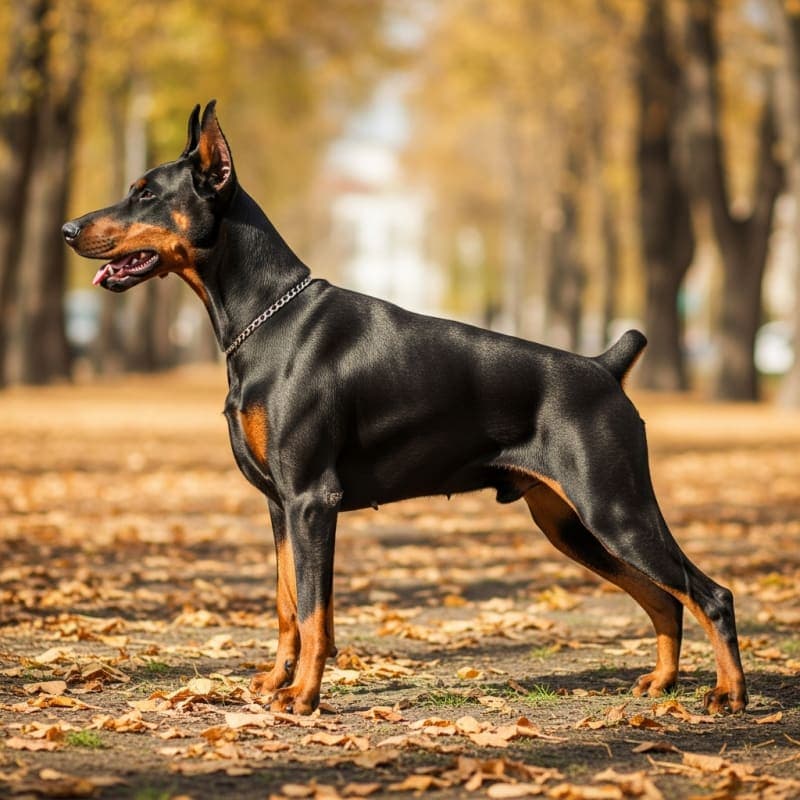
Doberman
FCI Group
2• FCI 143
Size
Large
Origin Country
DE
Height
63-72 cm
Weight
32-45 kg
Lifespan
10-12 years
Temperament
Overview
Doberman is a breed of dogs that consistently fascinates dog lovers around the world. Originating in the 19th century in Germany, these dogs are known not only for their elegance and strength but also for their remarkable intelligence and loyalty. Created by Friedrich Louis Dobermann (1834-1894), Dobermans quickly gained popularity as guard, protective, and working dogs. This combination of incredible courage and fidelity makes them indispensable companions.
The Doberman attracts attention with its muscular, athletic body and smooth, short coat, which does not require overly complicated grooming. The coat with characteristic rust-brown markings (tan markings) adds to their charm and distinguishes them from other breeds. However, it is not just their appearance that makes them special.
Their friendly yet alert temperament is key to their success as companion, protective, and working dogs. Dobermans are brave, determined, and confident, yet also affectionate, devoted, and peaceful towards their family. The FCI standard emphasizes their moderate temperament, average sensitivity to stimuli, and low reaction threshold, making them excellent working dogs.
Dobermans require plenty of exercise and intensive mental stimulation. They need an experienced owner who understands their needs and provides the right amount of exercise, training, and engagement to avoid behavioral problems. These dogs excel as companions in an active lifestyle. Their energy, willingness to learn, and ability to work are limitless, making them not only excellent guardians but also devoted family dogs.
Despite their numerous advantages, Dobermans do not tolerate loneliness and neglect. Their strong personality, need for closeness to family, and high activity requirements mean they are not suitable for people who spend a lot of time away from home or lack experience in raising dogs. However, if you are looking for a dog that will be your faithful friend, protector, and work partner, and you can dedicate the right amount of time, attention, and commitment to them, a Doberman may be the perfect choice.
The Doberman is a medium-sized dog with a strong, muscular, and athletic build, combining strength with elegance and grace. The FCI standard describes it as a dog of medium size, strong construction, and well-muscled, with a clearly defined top line.
Dimensions and proportions:
- Height at the withers (males): 68-72 cm, ideal: 70 cm
- Height at the withers (females): 63-68 cm, ideal: 65 cm
- Weight (males): about 40-45 kg
- Weight (females): about 32-35 kg
- Proportions: the length of the body (from the sternum to the ischial tuberosities) should not exceed the height at the withers by more than 5% in males and 10% in females
Profile and build:
The top line of the body is clearly sloping from the withers through the back to the hindquarters, giving the Doberman its characteristic dynamic appearance. The body is strong, with a well-developed chest - both in depth (reaching to the elbows) and width, featuring clearly arched ribs.
Head and expression:
The Doberman's head is strong and proportional, appearing from above as a blunt wedge. The profile line of the top of the skull runs almost parallel to the line of the nose.
- Skull: strong, well-developed, with a slightly convex forehead
- Stop: slightly defined but visible
- Muzzle: deep, well-developed, with strong jaws
- Nose: large, well-opened, with large nostrils - black in black dogs, brown in brown dogs
- Teeth: strong, white, with a complete scissor bite (42 teeth)
Eyes:
- Medium-sized, oval
- Dark (in black dogs) or lighter (in brown dogs)
- Expression: lively, attentive, full of determination
Ears:
According to the FCI standard (2015), the ears are naturally hanging, set high on both sides of the highest point of the skull, lying close to the cheeks.
Neck:
The Doberman's neck is long and elegant, well-muscled, with a clearly defined nape, held high, emphasizing the noble appearance of the breed.
Tail:
The tail is natural, set high. Ideally, it should be carried slightly curved upwards.
Limbs:
Both the front and hind limbs are straight, strong, and well-muscled:
- Front: seen from the front, completely straight and parallel, with well-fitting shoulders
- Hind: seen from the back, parallel, with wide, well-muscled thighs and well-angled joints
- Paws: short, compact, with arched toes (cat-like paws)
Coat and coloration:
The Doberman's coat is short, hard, and dense, without an undercoat, smoothly adhering to the body, evenly distributed over the entire surface. The coat is shiny, highlighting the dog's musculature.
Coat colors (according to FCI):
- Black with rust-brown markings (black and tan)
- Brown with rust-brown markings (brown and tan)
Distribution of markings (tan markings):
The rust-brown markings are located in strictly defined places:
- On the muzzle - as spots on the cheeks and on the upper lips
- Above the eyes
- On the throat
- Two spots on the chest
- On the metacarpus and metatarsus
- Inner side of the thighs
- Around the anus
- On the ischial tuberosities
Movement:
The Doberman's movement is flexible, elegant, dynamic, and confident. The front limbs reach far forward, while the hind limbs provide the necessary springy and strong drive. The front limb on one side and the hind limb on the other side move forward simultaneously (cross movement).
Dobermans are known for their friendly, calm, and devoted nature, especially towards family, while also exhibiting alertness and courage. The FCI standard (2015) describes their temperament as friendly and peaceful, very attached to family, loving towards children.
Key character traits:
- Moderate temperament - balanced, not hyperactive
- Average sensitivity to stimuli - does not react nervously to the environment
- Low reaction threshold - reacts quickly when the situation demands it
- High ability to work and learn
- Courage, toughness, and self-confidence
- Alertness - an ideal watchdog and protective dog
Temperament towards family:
Dobermans are extremely attached to their family and form strong emotional bonds:
- Love children - they are patient and caring towards the youngest family members
- Peaceful disposition - calm and relaxed at home
- Need for closeness - they want to participate in all family activities
- Devotion - they are absolutely loyal to their owners
- Emotional sensitivity - they can sense the moods of household members perfectly
Behavior towards strangers:
Dobermans are naturally alert, but their reaction to strangers should be controlled:
- Moderate distrust - they are cautious around strangers
- Situation assessment - they observe and analyze the threat
- Defense when necessary - they react when the family is threatened
- No excessive aggression - with proper socialization, they are not unnecessarily aggressive
Intelligence and learning abilities:
The Doberman is one of the most intelligent dog breeds:
- Quick to learn new commands - often just a few repetitions are enough
- Excellent memory - retains commands and situations for a long time
- Ability to perform complex tasks - can execute complicated sequences of actions
- Independence in thinking - can make decisions in situations requiring judgment
- Concentration - maintains attention during long training sessions
Owner requirements:
The Doberman is a breed that requires an experienced, consistent owner:
- Needs a strong leader - requires clear boundaries and rules
- Does not tolerate loneliness - struggles with long hours spent alone
- Needs mental stimulation - boredom leads to behavioral problems
- Sensitive to training methods - reacts poorly to harsh, punitive methods
- Requires socialization - needs contact with various people, dogs, and situations from puppyhood
Energy and activity:
The Doberman is a high-energy breed:
- Needs at least 2 hours of intense activity daily
- Excels in dog sports: agility, IPO, nosework, rally-o
- Loves physical and mental challenges
- Becomes destructive and unhappy without exercise
Relationships with other animals:
With proper socialization, Dobermans can coexist well with other animals:
- With other dogs: usually tolerant, especially if raised together
- With cats: possible coexistence with early socialization
- Hunting instinct: moderate - may chase small animals
- Dominance: dogs may show dominance over other dogs of the same sex
Potential behavioral problems (in the absence of socialization and training):
- Excessive defensive aggression
- Separation anxiety
- Destructiveness
- Excessive barking
- Dominance over the owner
- Reactivity towards other dogs
Ideal environment for a Doberman:
- ✅ An active family with experience in raising dogs
- ✅ A house with a garden (but can live in an apartment with enough exercise)
- ✅ An owner who dedicates time to training and activity
- ✅ An environment with clear rules and consistency
- ❌ A home where the dog spends most of the day alone
- ❌ An owner without experience with large breeds
- ❌ An environment without opportunities for regular activity
Dobermans have a average lifespan of 10-13 years, which is typical for large dog breeds. Overall, they are healthy and resilient dogs, but like all breeds, they can be prone to certain genetic diseases and conditions characteristic of their build.
Most important genetic conditions:
1. Dilated Cardiomyopathy (DCM)
The most serious health issue in dobermans - heart disease that leads to enlargement of the heart chambers and weakening of its function:
- Prevalence: very high in dobermans (affects 40-50% of the breed)
- Symptoms: weakness, fainting, coughing, difficulty breathing, sudden cardiac death
- Age of onset: usually 4-10 years
- Diagnosis: echocardiographic examination (ECHO), ECG, 24-hour Holter
- Treatment: cardiological medications (slow the progression of the disease, do not cure)
- Prognosis: serious - many dogs die within a year of diagnosis
Recommendations: Regular cardiological examinations (every 6-12 months for adult dogs), breeders should test dogs before breeding.
2. von Willebrand Disease (vWD)
Hereditary blood clotting disorder:
- Type: most commonly type I (mild form)
- Symptoms: prolonged bleeding after injuries, bruising, nosebleeds, and gum bleeding
- Diagnosis: genetic test, measurement of von Willebrand factor levels
- Management: avoiding unprepared surgeries, transfusions in emergencies
3. Hip Dysplasia (HD)
- Description: abnormal development of the hip joint
- Symptoms: limping, difficulty getting up, pain, decreased activity
- Diagnosis: X-ray of the hip joints
- Treatment: pharmacological (pain relievers, supplements), physiotherapy, surgery in severe cases
- Prevention: weight control, appropriate exercise, breeding only from healthy dogs
4. Wobbler Syndrome (cervical vertebral instability)
A spinal disease leading to compression of the spinal cord:
- Symptoms: wobbly gait, especially in the hind limbs, coordination difficulties, neck pain
- Age of onset: young dogs (6-24 months) or older (3-9 years)
- Diagnosis: X-ray, MRI, CT
- Treatment: anti-inflammatory medications, rest, surgery in severe cases
5. Hypothyroidism
- Symptoms: weight gain, lethargy, skin problems, hair loss
- Diagnosis: thyroid hormone level testing (T4, TSH)
- Treatment: hormonal supplementation (lifelong)
6. Skin problems:
- Allergic skin disease - itching, rashes, red spots
- Folliculitis (inflammation of hair follicles)
- Mast cell tumor - skin cancer
- Vitiligo - loss of skin pigmentation
7. Gastrointestinal problems:
- Gastric Dilatation-Volvulus (GDV) - a life-threatening condition requiring immediate veterinary intervention
- Symptoms: bloated abdomen, ineffective vomiting, anxiety, weakness
- Prevention: small, frequent meals, avoiding intense exercise after feeding, calm eating
8. Eye problems:
- Cataracts
- Corneal inflammation
- Progressive retinal atrophy (PRA)
9. Tumors:
Dobermans are prone to various types of tumors:
- Osteosarcoma
- Lymphoma
- Hemangiosarcoma (blood vessel cancer)
Healthcare and prevention:
Regular veterinary check-ups:
- Puppies and young dogs: visits every 3-6 months
- Adults (2-7 years): annual check-up + cardiological examinations
- Seniors (7+ years): check-up every 6 months, blood tests, heart ECHO
Vaccinations and deworming:
- Basic and booster vaccinations according to the veterinarian's schedule
- Regular deworming (every 3 months)
- Tick and flea prevention
Weight control:
- Obesity strains the heart and joints
- Monitor body condition - the dog should have a visible waist and palpable ribs
High-quality diet:
- Food tailored to age, weight, and activity
- Joint-supporting supplements (glucosamine, chondroitin)
- Omega-3 fatty acids for heart and skin health
Physical activity:
- Regular, moderate exercise supports heart and joint health
- Avoid excessive exertion in young dogs (harmful to developing joints)
Environment:
Dobermans do not tolerate extreme temperatures:
- In winter: short coat without undercoat requires protection - consider protective clothing
- In summer: provide shade, cool water, avoid exertion in heat
- Never leave in a closed car
Genetic testing for breeders:
Responsible breeders should test dogs before breeding:
- ✅ Heart ECHO examination
- ✅ von Willebrand disease test
- ✅ X-ray of hip joints (HD)
- ✅ Thyroid examination
Dobermans have short, smooth coats without an undercoat, which makes them a relatively easy breed to groom. Nevertheless, regular basic grooming is essential for maintaining the dog's health, skin condition, and overall well-being.
Brushing the coat:
- Frequency: 1-2 times a week during normal periods, daily during shedding
- Tools: soft bristle brush, rubber grooming glove, rubber curry brush
- Goals: to remove dead hair, stimulate the skin, distribute natural oils
- Technique: brush in the direction of hair growth, gently but thoroughly
Shedding:
Dobermans shed year-round, intensifying in spring and autumn:
- Lack of undercoat means they lose short, stiff hairs
- During heavy shedding, brush daily
- Use a damp cloth or rubber glove to collect loose hairs
Bathing:
A Doberman does not require frequent baths - excessive washing can strip the natural oils that protect the skin:
- Frequency: every 6-12 weeks or as needed (when dirty or smelling unpleasant)
- Shampoo: mild, dog-specific, suited to skin type (normal/sensitive)
- Water temperature: lukewarm, comfortable for the dog
- Procedure:
- Thoroughly wet the entire coat
- Apply shampoo and gently massage into the coat
- Be careful around the eyes and ears
- Rinse thoroughly - leftover shampoo can cause irritation
- Dry with a towel - the coat dries quickly
Ear care:
Dobermans have naturally floppy ears that require regular checking:
- Frequency: weekly check, cleaning every 2-4 weeks or as needed
- How to check: lift the ear and look inside - a healthy ear is pink, without redness, excessive discharge, or unpleasant odor
- Cleaning:
- Use a dog ear cleaning solution
- Pour the solution into the ear canal
- Gently massage the base of the ear (the dog will shake its head)
- Wipe away visible discharge with a cotton ball or gauze
- NEVER insert cotton swabs deeply into the ear
- Signs of trouble: unpleasant odor, red skin, excessive discharge, scratching at the ears - consult a veterinarian
Dental care:
Regular oral hygiene is crucial for health - periodontal disease can lead to serious health issues:
- Brushing frequency: ideally daily, minimum 2-3 times a week
- Tools: dog toothbrush (or finger brush) + dog toothpaste
- IMPORTANT: Never use human toothpaste - it contains xylitol (toxic to dogs)
- Technique:
- Gradually acclimate the dog - start by touching the teeth with your finger
- Apply toothpaste to the brush
- Brush gently in circular motions, focusing on the gum line
- Pay special attention to the back molars
- Alternatives: dental treats, teeth-cleaning toys, water additives
- Veterinary check: once a year, professional cleaning if needed
Nail trimming:
- Frequency: every 3-4 weeks (or when you hear the nails clicking on the floor)
- Tools: guillotine clippers or scissor-type clippers for large dogs
- Technique:
- Hold the paw firmly but gently
- Trim small sections at a time
- Be careful of the quick - it contains nerves and blood vessels
- It is harder to see in black dogs - trim cautiously
- If you cut the quick - apply a styptic powder or cornstarch
- Alternative: nail grinder (Dremel) - more precise but requires acclimating the dog
Skin check:
While brushing, regularly check the skin for:
- Rashes, redness, dry skin, flaking
- Ticks (especially after walks in the woods/meadows)
- Growths, warts, skin changes - report to the veterinarian
- Irritations in skin folds (if present)
- Wounds, scratches, abrasions
Paw check:
- Regularly check the paw pads for wounds, cracks, foreign bodies
- After winter walks, wash the paws to remove road salt
- In summer, check after walks on hot asphalt
- In winter, consider using protective wax on the paw pads
Care for sensitive areas:
- Eye area: gently wipe with a damp cloth, remove discharge
- Skin folds (if present): keep clean and dry
- Anal-genital area: keep clean, check anal glands
Additional tips:
- ✅ Start the grooming routine from puppyhood - it makes acclimatization easier
- ✅ Always reward the dog for cooperation during grooming
- ✅ Use a calm, soothing tone of voice
- ✅ If the dog shows fear or aggression - work with a behaviorist
- ✅ Take breaks during longer grooming sessions
The Doberman is a breed with a very high energy level and intense exercise needs. As a working dog, bred for tasks requiring physical and mental endurance, the Doberman requires a minimum of 2 hours of activity daily to remain healthy, happy, and mentally balanced.
Basic exercise requirements:
- Duration: minimum 90-120 minutes of intense activity daily
- Type: a combination of physical effort and mental stimulation
- Frequency: divided into 2-3 sessions daily
- Intensity: moderate to high - the Doberman is an endurance dog
Ideal forms of activity:
1. Walks and jogging:
- Daily long walks - 45-60 minutes in the morning and evening
- Jogging/running - the Doberman is an excellent running partner (8-15 km)
- Fast walks - maintain a good pace, allow the dog to explore
- Change routes - different environments provide new stimuli
2. Biking:
- The Doberman can run alongside a bike (after training and learning)
- Distance: 10-20 km for a well-trained dog
- Use a special bike attachment for dogs
- Build endurance gradually
3. Fetching:
- Ball, frisbee, fetch - intense effort in a short time
- Sessions of 15-20 minutes, 2-3 times a day
- Teaches obedience and strengthens the bond
4. Swimming:
- Excellent form of activity - low impact on joints
- Ideal on hot days
- Not all Dobermans like water - acclimatize them gradually
- Always supervise
5. Dog sports:
The Doberman excels in sports requiring intelligence and athleticism:
- IPO/Schutzhund - protection training, ideal for utilizing natural instincts
- Agility - obstacle courses, speed + coordination
- Rally Obedience - obedience with elements of games
- Nosework/Tracking - working with the nose, excellent mental stimulation
- Canicross - running with the dog in a harness
- Bikejoring - pulling a bike
- Dock Diving - jumping into water
Mental stimulation (just as important as exercise!):
The Doberman is an extremely intelligent breed - mental boredom is as destructive as lack of exercise:
- Obedience training - daily sessions of 10-15 minutes, new commands
- Interactive toys - puzzles, Kong with frozen food, Nina Ottosson type toys
- Searching for treats - hide them in the house/garden, let the dog search
- Scent games - learning to recognize scents, finding hidden objects
- Tricks - learning new tricks (give paw, spin, play dead)
- Changing routines - different routes, new places, new people and dogs
Requirements for puppies (IMPORTANT!):
Doberman puppies should not be overloaded with exercise - their bones and joints are still developing:
- Rule: 5 minutes of intense exercise for each month of age, twice a day
- Example: 3-month-old puppy = 15 minutes of activity x 2 = 30 min daily
- Avoid: jumping from heights, long runs, intense agility
- Instead: short walks, gentle play, mental training
- Maturity age: gradually introduce full activity after 12-18 months
Limitations and precautions:
1. Temperature:
Dobermans do not tolerate extreme temperatures due to lack of undercoat:
- Heat (>25°C):
- Walks early in the morning and late in the evening
- Always have access to water
- Avoid intense exercise
- Watch for signs of overheating: heavy breathing, drooling, weakness
- Frost (<0°C):
- Consider protective clothing
- Shorten walk times
- Protect paw pads
2. After meals:
- CRITICAL: avoid intense activity 1-2 hours after feeding
- Risk of gastric torsion (GDV) - a life-threatening condition
- Let the dog rest quietly after eating
3. Surface:
- Prefer soft surfaces (grass, dirt, forest trails) for joints
- Avoid long runs on asphalt/concrete
- In summer, check the surface temperature (if it's hot for your hand = too hot for the dog's paws)
Consequences of insufficient activity:
Insufficient exercise leads to serious problems:
- Obesity - burdens the heart and joints
- Destructiveness - chewing furniture, destroying items
- Excessive barking - due to frustration and boredom
- Hyperactivity - anxiety, inability to rest
- Aggression - frustration can lead to reactivity
- Separation anxiety - worsening of the problem
- Compulsive behaviors - tail chasing, paw licking
- Depression - apathy, lack of appetite
Ideal daily schedule:
- 6:00-7:00: Morning walk/jogging (45-60 min)
- 8:00: Feeding (after the walk!)
- 9:00-12:00: Rest, interactive toys
- 12:00-13:00: Short walk + training (30 min)
- 14:00-17:00: Rest
- 17:00-18:00: Activity (agility, fetching, biking)
- 19:00: Feeding
- 20:00-21:00: Evening walk (45-60 min)
- 21:00-6:00: Night rest
For whom the Doberman is NOT suitable:
- ❌ Sedentary individuals
- ❌ Owners spending 8+ hours away from home
- ❌ Individuals unwilling to engage in daily, intense exercise
- ❌ Apartments without access to walking areas
- ❌ Individuals without time for mental stimulation
The training of a Doberman should start as early as possible - ideally from the moment the puppy arrives in its new home (usually 8-10 weeks). Dobermans are extremely intelligent and eager to learn, but their emotional sensitivity, physical strength, and natural protective instincts require a consistent, positive, and experienced approach.
Characteristics of a Doberman in training:
- High intelligence - one of the smartest breeds, quickly absorbs new commands (often 2-3 repetitions)
- Excellent memory - remembers both good and bad experiences
- Emotional sensitivity - reacts poorly to harsh, punitive methods
- Willingness to cooperate - wants to please the owner
- Need for consistency - requires clear boundaries and rules
- Natural alertness - guarding instinct requires control
- Energy and endurance - can train for a long time without losing focus
Basic training principles:
1. Positive reinforcement (ALWAYS):
A Doberman responds best to positive training methods:
- Rewards: treats, toys, verbal praise, petting
- Timing: reward immediately after the command is performed (within 1-2 seconds)
- Consistency: always reward desired behavior
- Marker: use a word like Yes, Good or a clicker as a behavior marker
- Gradation: reduce the frequency of rewards as the command is mastered (variable reinforcement)
NEVER USE:
- ❌ Physical violence - harms mentally and physically
- ❌ Yelling - causes fear and avoidance
- ❌ Electric/corrective collars - destroy trust
- ❌ Alpha dominance - outdated, harmful method
2. Early socialization (CRITICAL!):
The socialization period (8-16 weeks) is the most important time in a Doberman's life:
- People:
- Different individuals - men, women, children, elderly people
- Different appearances - hats, glasses, beards, uniforms
- Different behaviors - shouting, running children, wheelchairs
- Animals:
- Other dogs - different breeds, sizes, ages
- Cats, birds, other pets
- Controlled meetings in a safe environment
- Environments:
- City streets - traffic, noise, crowds
- Parks - other dogs, children on playgrounds
- Pet shops, dog-friendly cafes
- Car, public transport
- Stimuli:
- Sounds - vacuum cleaner, washing machine, firecrackers (recordings), doorbells
- Surfaces - concrete, grass, sand, stairs, metal grates
- Objects - umbrellas, bags, scooters, bicycles
IMPORTANT: All experiences should be positive - reward calm behavior, do not force contact if the dog is afraid.
3. Basic obedience:
Commands that every Doberman must know:
- Sit - the foundation of training, calming down
- How to teach: treat above the nose, pull hand back - the dog will sit
- Reward immediately + verbal command Sit
- Lie down - relaxation, control in various situations
- From the sitting position, treat in front of the nose down
- Gradually build duration
- Stay - safety, impulse control
- Start with 2-3 seconds, gradually increase distance and time
- Do not call the dog - return to it and reward
- Come - the most important command for safety
- Always reward with a SUPER reward (best treat, play)
- NEVER punish after calling (even if it did something wrong)
- Practice in different places, with various distractions
- Leave/No - interrupting unwanted behavior
- Teaching impulse control
- Useful in potentially dangerous situations
- Stand - useful during grooming, veterinary examinations
- Go to your place - relaxation command, designating a resting spot
4. Leash training:
A Doberman is a strong dog - learning to walk on a loose leash is crucial:
- Equipment: flat collar or harness (NOT chain collar/prong collar), leash 1.5-2 m
- Rule: the dog walks beside you, leash loose - if it pulls, you stop
- Reward: every few steps on a loose leash
- Change direction: if it pulls, turn around and go the other way
- Patience: first walks may take 20 minutes to cover 50 meters - this is normal
5. Resource guarding:
Teach the dog that your presence near its resources = good things:
- While eating: approach and add treats to the bowl
- While playing with a toy: approach, give a treat, take the toy
- Do not take by force - trade for a better resource
Advanced training:
1. Protection training (IPO/Schutzhund):
The Doberman was bred for protective work - this can be an excellent outlet for its instincts:
- ONLY with a professional trainer!
- Includes: obedience, tracking, protection
- A controlled way to utilize natural instincts
- Requires dog maturity (18+ months)
2. Agility:
- Obstacle courses - tunnel, slalom, jumps, seesaw
- Great physical and mental stimulation
- Strengthens the bond between dog and owner
3. Nosework:
- Working with the nose - searching for hidden scents
- Natural activity for all dogs
- Intense mental stimulation
4. Rally Obedience:
- Obedience + elements of games
- Less formal than classic obedience
- For all skill levels
Common challenges and solutions:
Problem: Reactivity on the leash (barking, jumping at other dogs/people):
- Cause: frustration (wants to approach), fear, excessive excitement
- Solution:
- Increase distance from the trigger
- Reward calm behavior in the presence of the trigger
- Gradual desensitization - reduce distance only when the dog is calm
- Work with a behaviorist
Problem: Jumping on people:
- Cause: greeting, seeking attention
- Solution:
- Ignore jumping (turn away, no eye contact)
- Reward 4 paws on the ground
- Teach an alternative behavior (sit to greet)
Problem: Excessive barking:
- Cause: alarm, boredom, seeking attention, frustration
- Solution:
- Teach the command Quiet - reward when it stops barking
- Increase physical and mental activity
- Do not reward barking with attention (even negative)
- Identify the cause and work on it
Problem: Stubbornness/selective listening:
- Cause: low motivation, too difficult command, distraction
- Solution:
- Increase reward value
- Simplify the task, gradually build difficulty
- Train in less distracting places
- Be more interesting than the environment
Structure of a training session:
- Time: 10-15 minutes per session (puppy), 20-30 minutes (adult)
- Frequency: 2-3 sessions a day
- Place: start without distractions (home), gradually increase difficulty (park)
- Conclusion: always end on a success - the last exercise should be easy
Key tips:
- ✅ Be consistent - the same rules all the time
- ✅ All household members use the same commands and rules
- ✅ Patience - building trust takes time
- ✅ Start socialization immediately
- ✅ Short, frequent sessions are better than long, rare ones
- ✅ Life is training - use everyday situations for learning
- ❌ Do not prolong sessions - a tired dog does not learn
- ❌ Do not punish for non-compliance - find the cause
- ❌ Do not allow behaviors that will be a problem in an adult dog
Proper nutrition for a Doberman is a key element in maintaining its health, athletic physique, and optimal condition. As a large breed with a high level of activity and specific health issues (especially cardiomyopathy), a Doberman requires a carefully planned high-quality diet.
Basic nutrition guidelines:
1. High-quality food:
- Category: premium or super-premium food
- First ingredient: meat (chicken, turkey, beef, lamb, fish) - NO by-products
- Avoid: foods with excessive grains, artificial colors, preservatives, fillers
- Kibble size: suitable for large breeds
- Type: dry food, wet food, or BARF diet (under supervision)
2. Portion control (CRITICAL!):
Dobermans can be prone to obesity, which is particularly dangerous due to heart problems:
- Amount: according to the manufacturer's recommendations, adjusted for weight, age, and activity level
- Body condition assessment:
- Ideal weight: visible waist, ribs palpable (but not visible)
- Too thin: visible ribs, lack of fat tissue
- Too heavy: no waist, ribs not palpable
- Monitoring: weigh monthly, adjust portions as needed
- Use a measuring cup - do not estimate by eye
3. Feeding schedule (IMPORTANT - risk of gastric torsion!):
The Doberman is prone to gastric torsion (GDV) - a life-threatening condition:
- Puppies (2-6 months): 3-4 meals a day
- Young (6-12 months): 2-3 meals a day
- Adults (12+ months): 2 meals a day (morning and evening)
- NEVER: one large meal a day
Gastric torsion prevention:
- ✅ Small, frequent meals
- ✅ Calm eating - raise the bowl on a stand (controversial - consult with a veterinarian)
- ✅ Avoid intense activity 1-2 hours BEFORE and AFTER feeding
- ✅ Limit large amounts of water at once after exercise
- ✅ Reduce stress during feeding
- ❌ Do not allow fast, greedy eating (use a slow feeder bowl)
Nutritional needs by age:
Puppies (2-12 months):
Period of rapid growth - it is crucial to avoid excessive or too rapid growth (risk of orthopedic problems):
- Food: for large breed puppies
- Protein: 25-30% (supports muscle growth)
- Fat: 12-15% (energy, NOT too much - risk of accelerated growth)
- Calcium: 1.0-1.5% (for bones, NOT too much - harms joints)
- Phosphorus: 0.8-1.2% (Ca:P ratio = 1.2:1 to 1.5:1)
- Calories: controlled - do not overfeed!
- Transition to adult food: 12-18 months
Adults (1-7 years):
- Food: for adult large breed dogs
- Protein: 22-28% (maintaining muscle mass)
- Fat: 10-16% (energy for activity)
- Daily calories:
- Less active: ~1600-1800 kcal
- Moderately active: ~2000-2400 kcal
- Very active/working: ~2600-3000 kcal
- Additional ingredients:
- Omega-3 and Omega-6 (EPA/DHA) - heart, skin, coat health
- Glucosamine and chondroitin - joint support
- Taurine and L-carnitine - heart function support
- Antioxidants (vitamins E, C) - immune system
Seniors (7+ years):
- Food: senior for large breeds
- Protein: 20-25% (maintaining muscles, less strain on kidneys)
- Fat: 10-14% (lower calorie content - reduced activity)
- Joint supplements (glucosamine, chondroitin, MSM)
- Heart support: taurine, L-carnitine, Omega-3 fatty acids
- Antioxidants - slowing aging
- Fiber - digestive support
Nutrients - details:
Protein (key for Dobermans!):
- Function: muscle building and repair, immune system support
- Quality sources: chicken, turkey, beef, lamb, fish (salmon, mackerel), eggs
- Avoid: by-products, meat meals of unknown origin
- For Dobermans: high-quality protein is crucial for maintaining an athletic physique
Fats:
- Function: energy source, healthy skin and shiny coat, vitamin absorption
- Omega-3 (EPA/DHA): anti-inflammatory, heart, joint, brain support
- Sources: salmon oil, krill oil, flaxseed oil
- Omega-6: healthy skin and coat
- Sources: chicken oil, sunflower oil
- Omega-6:Omega-3 ratio = ideal 5:1 to 10:1
Carbohydrates:
- Function: energy, fiber for digestion
- Quality sources: brown rice, oats, sweet potatoes, peas, lentils
- Avoid excess: wheat, corn, soy (common allergens)
Vitamins and minerals:
- Vitamin A: vision, skin, immune system
- B vitamins: metabolism, energy, nerve health
- Vitamin C: antioxidant, immune system
- Vitamin E: antioxidant, skin health
- Calcium and phosphorus: healthy bones and teeth (important ratio!)
- Magnesium: muscle and nerve function
- Potassium: electrolyte balance, heart function
Special ingredients for Doberman heart health:
Due to the high risk of dilated cardiomyopathy (DCM):
- Taurine: amino acid crucial for heart function
- Some foods may be deficient (especially grain-free with peas/lentils)
- Consider supplementation (after consulting with a veterinarian)
- Sources: dark meat (hearts, liver), fish
- L-carnitine: fat metabolism in the heart, cardiological function support
- Omega-3 fatty acids (EPA/DHA): anti-inflammatory, heart support
- Coenzyme Q10: antioxidant, supports energy in heart cells
⚠️ Controversy: Grain-free foods and DCM
The FDA (USA) is investigating the link between grain-free foods with peas/lentils and DCM in Dobermans:
- Some ingredients may block taurine absorption
- Consider food with whole grains or taurine supplementation
- Consult with a veterinary cardiologist
Snacks and treats:
Snacks should not exceed 10% of daily calorie intake:
- Healthy options: carrot, apple (without seeds), pear, zucchini, cooked chicken, fish
- Training treats: small, low-calorie, soft
- Recreational bones: large raw bones (NOT cooked) under supervision
- Subtract calories from treats from main meals
PROHIBITED products (toxic to dogs):
- ❌ Chocolate - toxic (theobromine)
- ❌ Grapes/raisins - kidney damage
- ❌ Onion/garlic - destroy red blood cells
- ❌ Xylitol (sweetener) - deadly dangerous
- ❌ Avocado - contains persin (toxin)
- ❌ Cooked bones - risk of choking and intestinal perforation
- ❌ Alcohol - extremely toxic
- ❌ Caffeine - toxic
- ❌ Macadamia nuts - toxic
Water (CRITICAL!):
- Constant access to fresh water - absolutely essential
- Change water daily
- Wash the bowl regularly
- Monitor intake - sudden increase may indicate health issues (diabetes, kidney problems)
- After intense exercise - allow drinking in small amounts (risk of gastric torsion)
Special diets:
1. Food allergies:
- Symptoms: itching, rashes, red skin, digestive problems, ear infections
- Diagnosis: elimination diet (8-12 weeks) under veterinary supervision
- Hypoallergenic foods: with new proteins (duck, rabbit, kangaroo, salmon)
- Avoid allergens: beef, chicken, wheat, soy, corn, dairy
2. DCM/Heart problems:
- Low sodium content (reduces heart strain)
- High taurine and L-carnitine content
- Omega-3 fatty acids
- Protein control (depending on the stage of the disease)
- Consult with a veterinary cardiologist
3. Overweight/Obesity:
- Light or weight management food
- Increase physical activity
- Reduce portions by 10-20%
- More vegetables (carrots, broccoli), fewer snacks
- Weight reduction plan with a veterinarian
Supplementation (after consulting with a veterinarian!):
- Taurine: 500-1000 mg daily (for heart support)
- L-carnitine: 50-100 mg/kg daily
- Salmon oil: 1 teaspoon/10 kg body weight (Omega-3)
- Glucosamine + chondroitin: 500-1000 mg daily (joints)
- Probiotics: digestive system support
- Coenzyme Q10: 30-100 mg daily (heart)
Characteristic Traits
Pros
- Extremely intelligent and easy to train
- Loyal and devoted to family
- Excellent guard and protective dog
- Energetic and active
- Loving towards children
- Elegant and athletic physique.
Cons
- Requires a lot of exercise and mental stimulation
- Does not tolerate loneliness
- Prone to dilated cardiomyopathy (DCM)
- Requires an experienced owner
- Sensitive to extreme temperatures
- May show dominance without proper training.
Behavioral Ratings
Breed History
The history of the Doberman is a fascinating tale about the only dog breed named after its creator - Friedrich Louis Dobermann (1834-1894). The breed emerged in the second half of the 19th century in Germany and quickly gained a reputation as an excellent guard, protection, and service dog.
The beginnings of the breed - Friedrich Louis Dobermann (1860-1890):
Friedrich Louis Dobermann lived in the town of Apolda in Thuringia, central Germany. He held many positions that influenced his motivation to create a new breed:
- Tax collector - visited dangerous neighborhoods and needed protection
- Night watchman - patrolled the town at night
- Stray dog catcher - had access to various dogs with different traits
- Manager of a slaughterhouse (knacker) - likely involved in disposing of carcasses
The goal of breeding:
Dobermann wanted to create a dog that would be:
- Brave and alert - protecting the owner in dangerous situations
- Loyal and obedient - completely devoted to the owner
- Intelligent - capable of quick learning
- Strong and athletic - able to effectively deter attackers
- Medium-sized - large enough to be intimidating, but not too large to control
The breeds used to create the Doberman:
Dobermann did not keep detailed breeding records, but breed historians point to the following breeds:
- Old German Pinscher - the foundation, courage, alertness
- Rottweiler (early type) - strength, courage, protective instinct
- In Apolda, there were dogs known as butcher's dogs - an early type of Rottweiler
- Thuringian Black Shepherd Dog - intelligence, work ability, black coat with tan markings
- Greyhound - likely for elegance and speed
- Manchester Terrier - possibly for coat color and agility
- Weimaraner - possibly for intelligence and work ability
The result was a breed with a sharp nature, high courage, and incredible loyalty - the ideal dog for a tax collector traversing dangerous territories.
After Dobermann's death (1894):
Friedrich Louis Dobermann died in 1894, without seeing his breed gain international recognition. His work was continued by:
- Otto Goeller - considered the father of the modern Doberman
- Improved the breed by reducing excessive aggression
- Worked on the elegance of the silhouette
- Developed a breeding program
- Goswin Tischler - a breeder who contributed to the stabilization of the type
Official recognition of the breed:
- 1900: Establishment of the National Doberman Pinscher Club in Germany (the first breed club)
- 1900: The breed was officially named Dobermann Pinscher in honor of its creator
- 1949: The word Pinscher was removed - the breed became simply Dobermann
- 1955: Recognition by the FCI (Fédération Cynologique Internationale) - Standard No. 143
The development of the breed worldwide:
1. Europe:
The Doberman quickly gained popularity throughout Germany as a police and military dog:
- Used by the German police as early as the 20th century
- Nickname Gendarme dog due to its work in the police
- Spread across Europe - Great Britain, France, the Netherlands
2. United States:
- 1908: The first Dobermans arrived in the USA
- 1921: Establishment of the Doberman Pinscher Club of America (DPCA)
- 1908: The American Kennel Club (AKC) recognized the breed
- The breed gained immense popularity during the interwar period
Doberman in war:
World War I (1914-1918):
- Used by the German army as guard dogs, message carriers, rescue dogs
- Their courage and intelligence proved the breed's worth
World War II (1939-1945):
Dobermans made their mark in military history:
- U.S. Marine Corps: used Dobermans as War Dogs in the Pacific
- Detecting enemy positions
- Warning of ambushes
- Carrying messages
- Protecting camps
- Searching for the wounded
- Doberman monument in Guam: Commemorates 25 Dobermans that died during the Battle of Guam (1944)
- Inscription: Always Faithful
- Germany and the USSR: also used Dobermans in the military
Evolution of temperament:
Early Dobermans were significantly more aggressive and sharp than modern ones:
- 1890-1920: Dogs with a very sharp, sometimes unpredictable temperament
- 1930-1960: Breeders worked on softening the temperament while maintaining courage
- Goal: a dog that remains alert and protective but is more controlled and stable
- Modern times: The Doberman is a friendly, family-oriented dog that loves children, while still retaining its protective instinct
Controversies: Ear and tail cropping:
Historically, Dobermans had their ears cropped (to stand) and tails cropped (short stub):
- Original reason: to reduce the risk of injury during work (fighting, hunting)
- Aesthetic reason: standing ears and a short tail became synonymous with the breed
- Modern times:
- Procedure banned in many European countries (animal welfare)
- FCI Standard (2015): natural ears, natural tail
- USA: still allowed, but becoming less popular
Doberman in popular culture:
- Film and television: Often portrayed as a guard dog, protector, gangster dog
- Stereotype: menacing, aggressive (often harmful to the breed's image)
- Reality: a friendly, devoted, intelligent family companion
- Famous owners: Celebrities, politicians, Hollywood stars
- Sporting competitions: Agility, IPO, rally obedience - Dobermans dominate in many disciplines
Doberman today (21st century):
- Popularity: One of the most recognizable breeds in the world
- Uses:
- Family and companion dog (most common)
- Police and military dog (less common than German/Belgian Shepherds)
- Guard and watchdog
- Dog sports (agility, IPO, nosework)
- Therapy dog (well-trained Dobermans can be excellent therapy dogs)
- Updated FCI standard: December 17, 2015 - emphasizes friendly temperament, natural appearance (without cropping)
Challenges of modern breeding:
- Dilated cardiomyopathy (DCM): a serious health issue - breeders are working on reduction
- Genetic testing: responsible breeders test dogs before breeding
- Temperament: balancing courage with stability
- Social education: combating the stereotype of the aggressive dog
The legacy of Friedrich Louis Dobermann:
Friedrich Louis Dobermann created a breed that has survived for over 150 years and has become one of the most intelligent, devoted, and versatile breeds in the world. From the dangerous streets of Apolda to the battlefields of World War II, from police stations to family homes - the Doberman has proven to be a dog for every occasion.
It is a living monument to the man who dreamed of the perfect companion and protector - and who achieved his goal beyond measure.