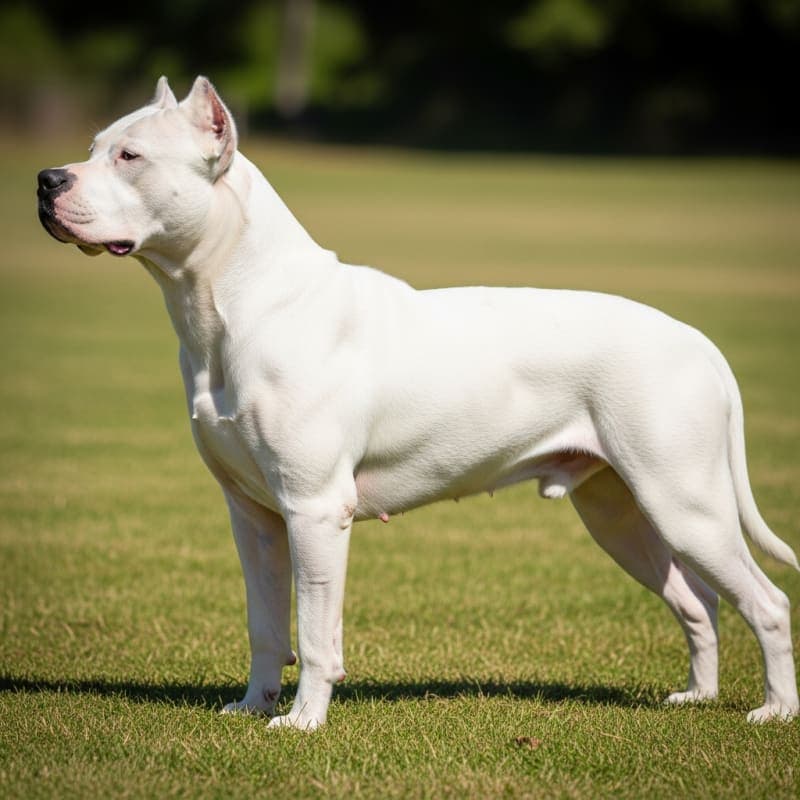
Argentine Dog
FCI Group
2• FCI 292
Size
Large
Origin Country
XX
Height
60-68 cm
Weight
40-45 kg
Lifespan
10-15 years
Temperament
Overview
Dogo Argentino, also known as the Argentine dog, is a unique breed that attracts attention with its fascinating history and extraordinary character. Originally bred in Argentina in the 1930s, this impressive dog was created through the vision of Dr. Antonio Nores Martinez – a surgeon and dog breeding enthusiast. His goal was to create the ideal hunting dog capable of hunting large game such as wild boars, peccaries, and pumas. Through careful selection of breeds, including bulldogs, bull terriers, Great Danes, Pyrenean mastiffs, boxers, pointers, Bordeaux dogs, and Irish wolfhounds, a dog with an exceptionally strong build, excellent sense of smell, and remarkable courage was achieved.
The Dogo Argentino was officially recognized in Argentina in 1964 by the Argentine Kennel Federation, and its international recognition by the FCI occurred in 1973. This dog combines physical strength and a gentle spirit. Its athletic silhouette, strong, well-muscled body, large head, and powerful bite make it extremely impressive. The coat of the Dogo Argentino is short, smooth, and predominantly pure white, although occasional single black spots can be seen on the head.
The character of this dog is equally fascinating. The Dogo Argentino is a dog with immense loyalty to its owner and family. This unconditional devotion makes it an excellent companion, but it requires a responsible approach to upbringing and socialization. Proper socialization from a puppy age is crucial to avoid behavioral problems and develop a balanced character. In active families, where it can participate in various forms of activity – both outdoors and indoors – it feels like a fish in water.
The temperament of the Dogo Argentino is friendly but also alert and protective. It can be a devoted companion and an effective guardian, making it an excellent guard dog. Therefore, potential owners should be experienced caregivers who can manage its strong, confident character. This dog requires not only an adequate amount of physical exercise but also mental stimulation – without it, it may become bored and exhibit undesirable behaviors.
In summary, the Dogo Argentino is not only a magnificent hunting dog with a rich tradition but also a devoted family companion and a reliable guardian. It is a breed that attracts with its majestic appearance and complex character, encouraging further exploration of its history, health, grooming, training, and many other aspects that we will discuss in detail in the following sections of the guide.
The Dogo Argentino is a dog with a strong, athletic build that impresses with its strength, energy, and elegance at the same time. Its silhouette is harmonious and proportional, making this dog look extremely impressive and majestic.
Dimensions and proportions:
- Height at the withers: 62-68 cm for males, 60-65 cm for females
- Weight: 40-45 kg for males, 40-43 kg for females
- Build: strong, muscular, proportional
Head and skull: The head is strong, wide, and massive, with a typical mesocephalic shape for the breed. The skull is convex in both the front-to-back and crosswise directions due to the presence of well-developed occipital and nape muscles. The muzzle is the same length as the skull, with a slightly concave profile line of the nose. The nose is black with well-opened nostrils.
Eyes and ears: The eyes are dark or hazel, almond-shaped, set at a medium distance apart, giving the dog a distinctive, alert appearance. The eyelids may have black or pink edges. The ears are set high on the sides of the head, naturally drooping, of medium length. Traditionally, they are cropped to be triangular and standing, which is in line with breeding tradition, although in many countries ear cropping is now prohibited.
Coat and coloration: The coat of the Dogo Argentino is short, smooth, shiny, and uniformly white, with the possibility of a single black or dark spot on the head (one dark marking on the skull or ear is permissible, not exceeding 10% of the head's surface).
Body structure: The chest is wide and deep, reaching to the elbows, providing adequate space for the lungs and heart. The back is strong, wide, and slightly sloping towards the rear. The loins are strong and hidden under well-developed muscles. The tail is long, thicker at the base, tapering towards the end, but does not reach beyond the hock joint.
Limbs: The front and hind limbs are strong and well-muscled, completely straight, with strong joints. The paws are round, with short toes tightly pressed together, providing excellent grip and stability. The overall build ensures the dog has excellent endurance, agility, and strength in movement.
The Dogo Argentino moves with grace, confidence, and power – its gait is smooth, flexible, and covers ground with great efficiency, making it extremely attractive in the eyes of large working breed dog enthusiasts.
The Dogo Argentino is a dog with a strong, confident character that requires an experienced owner capable of providing proper socialization, consistent training, and strong leadership. This breed is known for its deep loyalty to its owner and family, as well as its brave, alert, and protective temperament.
Relationships with people: A well-raised Dogo Argentino is friendly, gentle, and very affectionate towards its family, especially children, with whom it can be extremely patient. However, it may be reserved or distrustful of strangers, making it an excellent guard dog. It is very intelligent, has a strong will, and an independent character, which is why it requires a consistent yet positive approach in its upbringing.
Hunting instincts: Due to its strong hunting instincts, this breed may show a tendency to chase smaller animals. Therefore, it is very important for owners to ensure proper control over their dog during walks and to avoid situations where the dog might chase prey. A well-socialized Dogo can live with other dogs, but this requires prior socialization and supervision.
Social and emotional needs: The Dogo Argentino is a dog that highly values closeness to its family and needs a lot of attention, interaction, and the presence of its caregivers. It is not a dog that tolerates long periods of solitude well – this can lead to separation anxiety and destructive behaviors. Proper training and socialization at a young age are absolutely crucial to ensure that the dog does not become overly dominant, territorial, or aggressive.
Temperament and behavior: The Dogo Argentino is also known for rarely barking, which makes it an excellent guard dog – it only alerts when it is truly necessary. Its intelligence, willingness to cooperate, and ability to learn quickly make it a dog that can be used in various roles: as a family companion, guard dog, rescue dog, or working dog.
Activity and energy: This is a breed with a high energy level that needs regular physical and mental activity. Without adequate exercise, it can become bored, leading to behavioral problems. The Dogo Argentino feels best in homes with a large, fenced yard where it can safely run and play.
Dogo Argentino, like many other large dog breeds, has its typical health problems that can affect its quality and length of life. However, with proper care, a balanced diet, and regular veterinary check-ups, dogs of this breed can live healthily and actively for 10-12 years.
The most common health issues:
- Hip and elbow dysplasia – common in large breed dogs, it can lead to pain, lameness, and arthritis. It is important to choose puppies from breeders who test the parent lines for dysplasia.
- Deafness – due to their white coat, Dogo Argentino has an increased risk of congenital hearing problems (unilateral or bilateral deafness). Responsible breeders conduct BAER hearing tests on puppies.
- Dermatological problems – dogs of this breed may suffer from food or environmental allergies that lead to skin irritations, itching, and inflammation. This requires veterinary diagnosis and an appropriate diet.
- Sunburn – due to their white fur and light skin, Dogo Argentino is more susceptible to sun exposure. It is recommended to use sunscreen or limit sun exposure during peak hours, especially on the nose and ears.
- Hypothyroidism – underactive thyroid can occur in this breed and manifest as weight gain, lethargy, skin, and coat problems.
- Gastric torsion (GDV) – a serious life-threatening condition that occurs in large breed dogs. It requires immediate veterinary intervention.
Prevention and healthcare: Regular visits to the veterinarian are crucial for early detection and treatment of potential health problems. The following are recommended:
- Annual check-ups with blood tests
- Vaccinations and deworming according to schedule
- Imaging studies of joints (X-rays) in young dogs
- Weight and body condition monitoring
- Monitoring the condition of skin and ears
It is important to regularly check the dog's health and provide it with a proper diet and physical activity, which will help maintain its condition, healthy joints, and optimal weight. With appropriate, proactive care, Dogo Argentino can enjoy a long, healthy, and active life alongside its family.
The care of Dogo Argentino is relatively simple and low-maintenance, making this breed suitable for people who do not want to spend a lot of time on complicated grooming procedures. Thanks to their short, smooth coat, keeping the dog clean and in good condition is easy and enjoyable.
Coat care: Their short, smooth coat only needs to be brushed 1-2 times a week with a soft brush or grooming glove to remove dead hair and dirt and stimulate the production of natural oils. Dogo Argentino tends to shed moderately throughout the year, with a slightly more intense shedding period in spring and fall.
Bathing: Regular baths should be given only when necessary – usually once every 6-8 weeks or when the dog is visibly dirty – to avoid disrupting the skin's natural protective barrier. Gentle dog shampoos, preferably hypoallergenic, should be used.
Ear care: Dogo Argentino tends to accumulate wax in the ears, so regular checking and cleaning of the ears (once a week) is recommended. Special ear cleaning solutions should be used, and signs of infection (redness, unpleasant odor, discharge) should be monitored.
Nail care: It is important to remember to regularly trim the nails (usually every 3-4 weeks) to prevent them from overgrowing, which can lead to discomfort while walking, improper posture, and pain. If the nails click on the floor while walking, it is a sign that they are too long.
Oral hygiene: Taking care of the teeth through regular brushing (preferably daily) or providing dental chews is crucial for the dog's overall health, as oral diseases can lead to more serious systemic conditions (heart, kidneys, liver).
Sun protection: Due to their white coat, sun protection should be applied to the nose, ears, and other sensitive areas of the body on sunny days to prevent sunburn and long-term skin damage.
Regular check-ups: During grooming, it is worthwhile to regularly check the condition of the skin, eyes, ears, and paws to catch any potential health issues early. Proper grooming not only contributes to the health of Dogo Argentino but also to their overall well-being, comfort, and beautiful appearance.
Dogo Argentino is a breed with a very high energy level, requiring a lot of movement and physical activity to maintain good condition, health, and a balanced character. These dogs are very energetic, resilient, and athletic, which is why they need at least 1-2 hours of intense exercise daily.
Types of activities: Dogo Argentino is ideal for:
- Long, energetic walks – at least twice a day for 45-60 minutes
- Running – an excellent companion for jogging or biking (after reaching full skeletal maturity)
- Fetch games – a great form of physical and mental exercise
- Climbing and hiking – they love hilly terrains and adventures in nature
- Swimming – an excellent form of exercise that is gentle on the joints
- Dog sports – agility, obedience, tracking, nosework
Mental stimulation: In addition to physical activity, Dogo Argentino also needs mental stimulation. Without appropriate intellectual challenges, they can become bored, leading to behavioral issues such as excessive barking, destructive behavior, digging, or escaping. It's worth introducing:
- Scent and search games
- Interactive toys and puzzles for dogs
- Regular training sessions with new commands
- Hiding treats for them to find
Important safety rules: Owners should remember that Dogo Argentino is a hunting dog with strong hunting instincts, so:
- Situations where the dog might chase wildlife should be avoided
- It is advisable to walk the dog on a strong leash in areas where other animals may be present
- Letting them off-leash only in safe, enclosed areas
- Avoiding high temperatures due to their white coat (risk of overheating)
Environmental requirements: Dogo Argentino feels best in homes with a large, fenced yard, where they can safely run and play. This is not a dog suitable for living in a small apartment without regular access to outdoor space.
The proper amount of exercise is absolutely crucial for the physical and mental health of Dogo Argentino, as well as for maintaining a harmonious, happy relationship with them. A tired Dogo is a happy Dogo!
The Dogo Argentino is a smart, eager-to-learn breed that quickly absorbs new commands and tasks. However, due to its strong, independent personality and powerful build, it requires a experienced owner who can manage its temperament and provide consistent yet positive leadership.
Early socialization (CRITICAL!): Training and socialization should start from the earliest months of the dog's life – ideally from the 8th week of life. Proper socialization includes:
- Exposure to various environments (city, park, forest, stores)
- Meetings with different people (children, elderly, in various outfits)
- Contact with other dogs and animals (under control)
- Acclimatization to various sounds (traffic, thunder, fireworks)
- Positive experiences in different situations
This is crucial for developing a balanced, confident character and preventing behavioral problems in the future.
Training methods: It is very important to use only positive training methods, such as:
- Positive reinforcement (rewarding with treats, toys, praise)
- Clicker training – precise marking of desired behaviors
- Consistency and predictability in rules
- Patience and calmness
Harsh punishment, yelling, or violence are completely unacceptable and have the opposite effect – they can lead to aggression, fear, and loss of trust.
Clear rules and boundaries: The Dogo Argentino is a dog that needs clear rules and boundaries to feel confident and safe in its environment. It is necessary to establish:
- Fixed household rules (where the dog can stay, where it sleeps)
- Consistent adherence to rules by all family members
- A clear hierarchy – the owner as a calm, confident leader
Basic commands: Training should include basic obedience commands, such as:
- Sit – a basic control command
- Lie down – helps calm the dog
- Stay – crucial for safety
- Come – the most important life-saving command
- Leave it – prevents eating something dangerous
- Heel – walking on a loose leash
Advanced training: After mastering the basics, one can move on to more advanced skills that develop the dog's intellectual abilities:
- Tracking and nosework – utilizing natural scenting abilities
- Obedience – advanced obedience
- Protection training (only under the supervision of a professional!)
- Tricks and interactive games
Training sessions: Regular training sessions should be:
- Short (10-15 minutes) – to maintain focus
- Intense – full of challenges and engagement
- Positive – always ending on a success
- Regular – preferably daily
- Diverse – to avoid boring the dog
Combining with physical activity: Training should be combined with physical activity, which helps keep the dog in good mental and physical condition. A tired dog learns better!
Professional help: Due to the strength and character of this breed, it is highly recommended to seek the help of a professional dog trainer, especially for owners without experience with strong and dominant breeds. Puppy obedience courses and group classes are an excellent way to socialize and learn.
The Dogo Argentino is a breed with a large body mass and a high level of activity, which requires an appropriate, balanced diet to maintain health, good condition, and optimal weight throughout its life.
Basic nutritional requirements: Due to their size and energy level, dogs of this breed should be fed high-quality food that provides all the essential nutrients. A balanced diet should include:
- High-quality protein (22-26% for adult dogs, 28-32% for puppies) – from meat, fish, poultry
- Fats (12-16%) – a source of energy and essential fatty acids (omega-3, omega-6)
- Carbohydrates – from whole grains, vegetables (moderate amount)
- Vitamins and minerals – especially calcium and phosphorus for healthy bones and joints
- Glucosamine and chondroitin – supporting joint health in large breed dogs
Choosing food: It is recommended to choose food specifically designed for large dogs (Large Breed or Giant Breed), which:
- Contains the appropriate amount of protein and joint health-supporting ingredients
- Has the right calcium to phosphorus ratio (for puppies 1.2:1 to 1.8:1)
- Is tailored to the life stage (puppy, adult, senior)
- Comes from reputable manufacturers (Royal Canin, Hill's, Purina Pro Plan)
Amount of food and feeding schedule: Owners should be mindful of the amount of food given to avoid overweight, which can lead to serious health problems such as joint dysplasia, diabetes, or heart disease. Recommendations:
- Puppies (2-6 months): 3-4 meals a day
- Young dogs (6-12 months): 2-3 meals a day
- Adult dogs (12+ months): 2 meals a day
- Amount of food according to the manufacturer's guidelines, adjusted for weight, age, and activity level
Access to water: Water should be always available for the dog in a clean bowl to ensure proper hydration, especially after intense exercise or on warm days.
Introducing a new diet: The Dogo Argentino, like other breeds, should be gradually accustomed to a new diet (over 7-10 days) to avoid gastrointestinal issues such as diarrhea or vomiting. It is important to mix the new food with the old, gradually increasing the proportion of the new food.
Food allergies and intolerances: Some dogs may have food allergies (most commonly to chicken, beef, dairy, wheat, soy), so it is advisable to:
- Monitor the dog for allergy symptoms (itching, skin problems, digestive issues)
- Make dietary changes if necessary
- Consider hypoallergenic food or an elimination diet under veterinary supervision
Preventing gastric torsion: Due to the risk of gastric torsion (GDV) in large breed dogs:
- Divide the daily food allowance into 2-3 smaller meals
- Avoid intense exercise immediately before and after meals (1-2 hours break)
- Feed in a calm environment, free from stress and competition
- Consider elevated bowls (though opinions are divided)
Weight and condition monitoring: Regular veterinary visits will help determine the best diet for the individual dog and monitor:
- Body weight (visible ribs with gentle touch, visible waist)
- Body condition (BCS – Body Condition Score)
- Overall health status
Supplementation: If necessary, the veterinarian may recommend supplementation:
- Glucosamine and chondroitin – for joints
- Omega-3 – for skin and coat
- Probiotics – for gut health
Remember: An appropriate diet is the foundation of health and a long life for your Dogo Argentino!
Characteristic Traits
Pros
- Strong and athletic
- Loyal and devoted companion
- Excellent guard dog
- Intelligent and eager to learn
- Friendly towards family
- Rarely barks.
Cons
- Requires an experienced guardian
- Needs a lot of exercise and stimulation
- Strong character demands consistent training
- May be distrustful of strangers
- Requires early socialization
- Risk of health issues (dysplasia
- deafness)
Behavioral Ratings
Breed History
The Dogo Argentino has a fascinating and rich history that dates back to the 1920s and 1930s, when it was created by Dr. Antonio Nores Martinez in the province of Córdoba, Argentina. Martinez, who was a surgeon and a passionate dog enthusiast and hunter, aimed to create the ideal hunting dog – an animal that would be both strong, brave, and resilient, as well as capable of hunting large game in South America, such as wild boars, peccaries, and pumas.
Vision and breeding goals: This project began in 1928 when Antonio Nores Martinez was just 18 years old. His vision was to create a dog that would combine:
- The strength and courage of a fighting dog
- The excellent sense of smell of a hunting dog
- Endurance and agility for working in difficult terrain
- A white color that would make it easier to distinguish the dog from the game
- A balanced character and loyalty to the owner
Breeds used in the breeding: To achieve his ambitious goals, Martinez used many different breeds, carefully selecting their traits and conducting methodical selection over several generations. The following breeds participated in the creation of the Dogo Argentino:
- Old Fighting Dog from Córdoba (Viejo Perro de Pelea Cordobés) – the base breed, a cross between a bulldog and a bull terrier, provided strength, courage, and fighting spirit
- English Bulldog – jaw strength and bravery
- Bull Terrier – determination and tenacity
- Great Dane – height, elegance of form
- Pyrenean Mastiff – strength, mass, and calm temperament
- Boxer – energy, agility, and vitality
- Pointer – sense of smell and hunting instinct
- Dogue de Bordeaux – jaw strength and powerful build
- Irish Wolfhound – height, speed, and hunting instinct
Selection process: Martinez and his brother Augustin conducted careful, long-term selection, always choosing completely white individuals, not undershot (with correct bite), with heavy heads and long muzzles. After thorough study of character and selection through various generations, their goal was achieved – a breed with a stable genotype and phenotype was created.
Official recognition: By 1947, the breed was fully formed, and its genotype and phenotype had stabilized. That same year, the breed standard was presented at the Hunting Club in Buenos Aires. The breed was officially recognized by the Argentine Canine Federation (FCA) in 1964, and international recognition by the FCI (Fédération Cynologique Internationale) occurred in 1973 (FCI standard no. 292, group 2, section 2.1 – molossers of the dog type).
Tragic end of the creator: Unfortunately, Antonio Nores Martinez did not live to see the full international success of his creation – he died in 1956 as a result of an accident while hunting, still a young man (49 years old). His brother Augustin continued the work on the breed and promoted it on the international stage.
Development and spread: The Dogo Argentino gained popularity first in Argentina, where it became a symbol of Argentine cultural heritage and national pride. The breed then spread to other countries in South America, North America, Europe, and the world. Today, the Dogo Argentino is used not only as a hunting dog but also as:
- A guard and protection dog
- A rescue dog (search and rescue)
- A police and military dog (in some countries)
- A companion and family dog
- A sport dog (agility, obedience, tracking)
Modern times: The Dogo Argentino is still bred with its original hunting purpose in mind, but also with consideration of its value as a devoted companion and reliable guardian. This breed remains one of the most recognizable symbols of Argentina and a testament to the vision, determination, and passion of Antonio Nores Martinez – the man who created one of the most versatile and impressive dog breeds in the world.