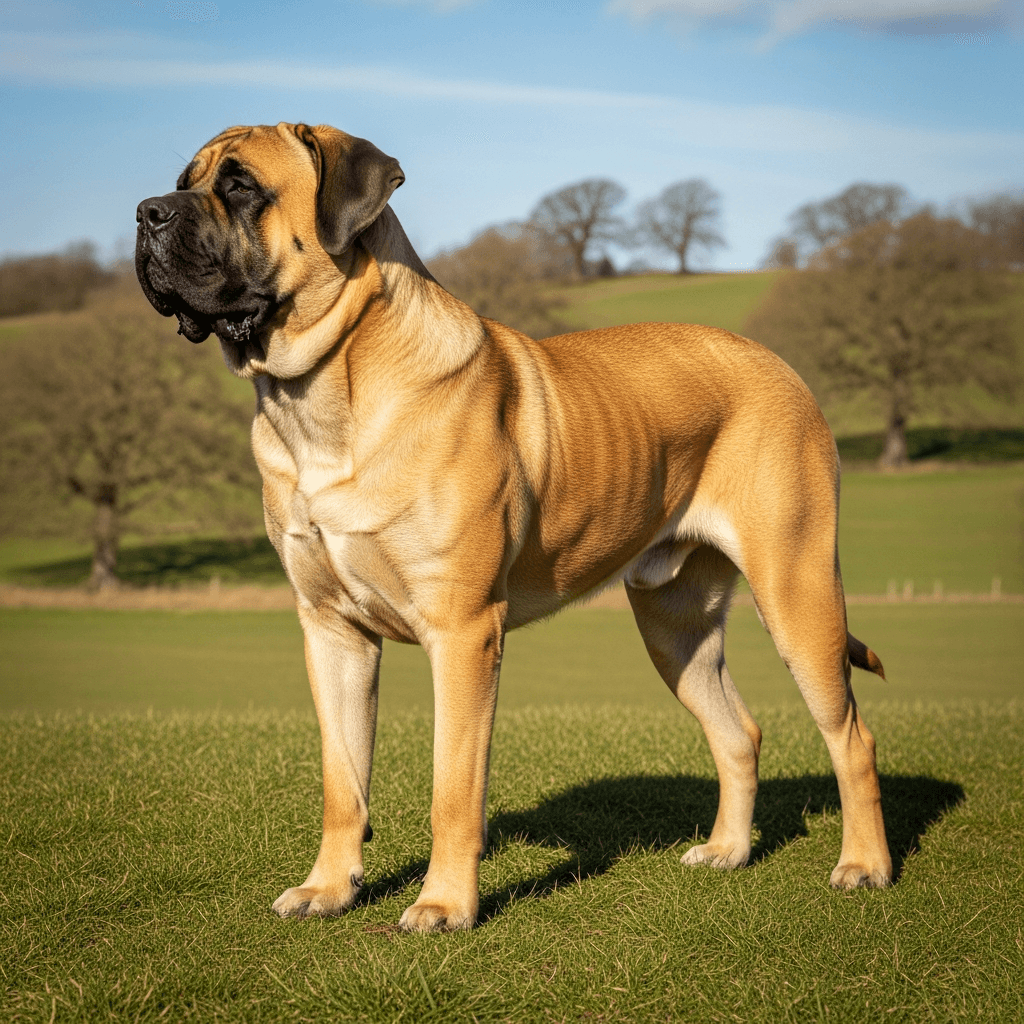
English Mastiff
FCI Group
2• FCI 264
Size
Large
Origin Country
GB
Height
65-80 cm
Weight
54-82 kg
Lifespan
10-12 years
Temperament
Overview
The English Mastiff is one of the oldest and most majestic breeds of guard dogs in the world. Its history dates back to ancient times and is inextricably linked to the history of Great Britain, where it served as a guardian of property, a companion to the nobility, and a war dog.
Even in Roman times, mastiffs were highly regarded for their courage, strength, and impressive appearance. When the Roman legions invaded Britain, they encountered these powerful dogs and were so captivated by them that they took some individuals back to Rome, where they participated in arena battles. The English Mastiff attracts attention with its monumental build, broad massive head, and dignified, serious appearance. This is a dog that no one can pass by indifferent.
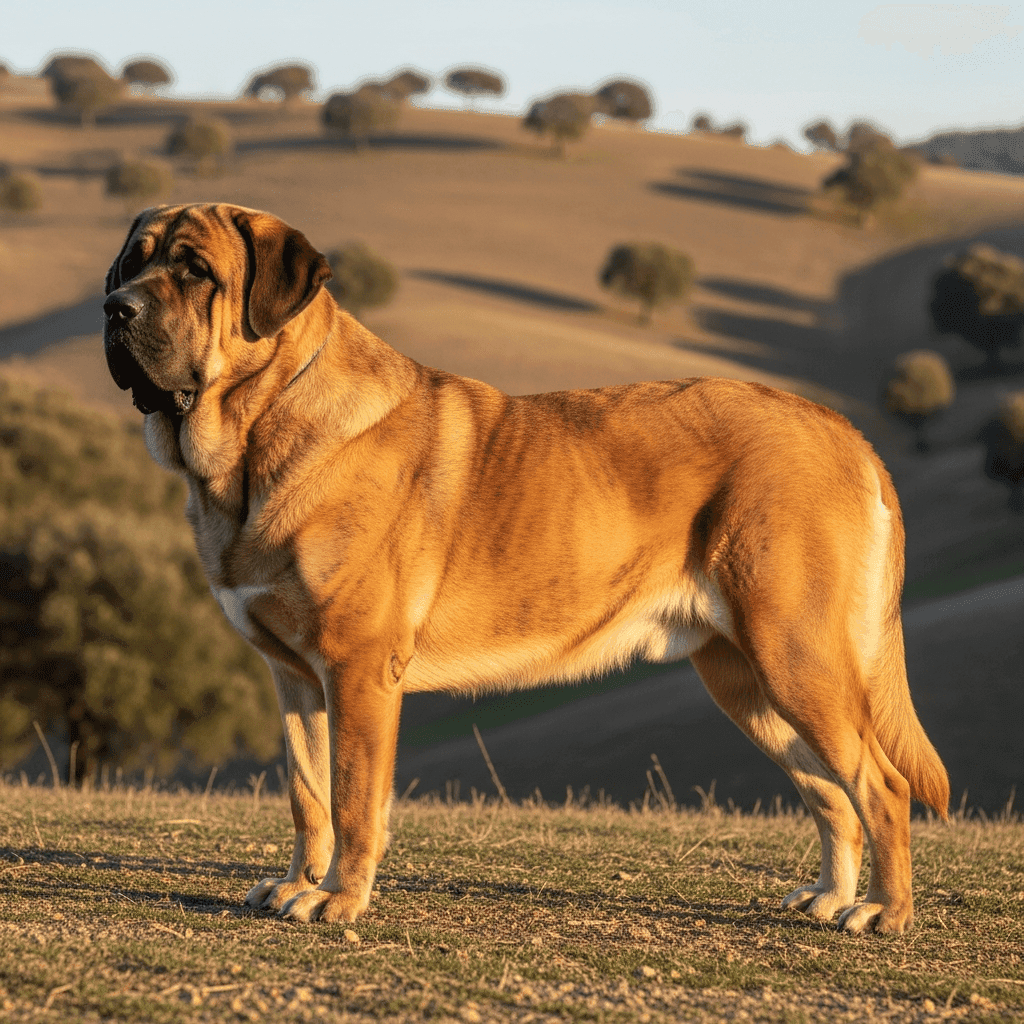
The modern English Mastiff is a true giant in the world of dogs. Its weight can range from 60 to even 100 kg, and its height at the withers varies between 70 and 80 cm. Its body is massive, muscular, with perfectly developed musculature and a wide, deep chest. The short, smooth, and close-lying coat comes in several classic shades: apricot, fawn, silver, and brindle. All variations have a characteristic black mask on their muzzle, which further emphasizes their majestic and noble appearance.
Despite its stern, impressive appearance, the English Mastiff is a dog with an incredibly gentle, balanced, and loyal character. It is deeply devoted to its family and can exhibit remarkable vigilance when the situation demands it. Its temperament is characterized by calmness, patience, and dignity, although in moments of threat, it can be decisive and firm. This breed requires an appropriate amount of exercise, consistent training, and mental stimulation to develop its natural guarding and companionship abilities.
In our detailed guide, you will learn everything about the health, grooming, exercise requirements, training methods, nutrition, fascinating history, distinctive features of appearance, and behavior of the English Mastiff. Each of these aspects is essential to fully understand, appreciate, and properly care for this exceptional breed. We invite you to delve into the knowledge of the English Mastiff – a dog that will surely surprise you with its character, intelligence, and extraordinary grace.
The English Mastiff is a dog of monumental, powerful build that commands respect and admiration with its impressive appearance. The head is massive, wide, and square in outline, with a distinctly marked, broad forehead and characteristically wrinkled skin that appears especially when the dog is alert. These wrinkles add expression and emphasize its dignified, somewhat melancholic look.
The eyes are medium-sized, widely spaced, most often in shades of dark brown or hazel, which give the gaze expressiveness and intelligence. The ears are relatively small compared to the size of the head, set high and wide, thin and hanging flat along the cheeks, which further emphasizes the width of the skull.
The neck is thick, muscular, and slightly arched, leading to an extremely wide, deep, and long body. The chest is very well developed, wide and deep, with clearly defined ribs. The belly has a slightly tucked line, but not excessively. The back is wide, straight, and muscular.
Mastiffs have short, smooth, and dense fur that closely adheres to the body. Acceptable colors are: apricot, fawn, silver, and brindle. Regardless of the coat color, all mastiffs must have a characteristic black mask on the muzzle, black ears, and darker shading around the eyes.
The tail is thick at the base and gradually tapers towards the end, set high, usually carried low or slightly curved, but never over the back. The limbs are massive, strong, perfectly muscled, with large paws and thick pads.
The overall silhouette gives the impression of a powerful, harmonious, and proportional dog that simultaneously emanates calmness, dignity, strength, and unwavering confidence.
The English Mastiff is a dog with an exceptionally gentle, friendly, and balanced character, who is extremely loyal and devoted to its owner and the entire family. Despite its impressive size and stern appearance, it is a gentle giant that loves the calm company of its loved ones and does not show aggression without reason.
The temperament of the mastiff is characterized by calmness, composure, and dignity. It is a patient, emotionally stable dog that rarely gets upset. At the same time, it can be extremely alert and ready to act in the event of a real threat to the family or territory. Their natural guarding instinct makes them excellent protective dogs – they do not require special training in this regard, as defending the family is inherent in their nature.
Mastiffs are generally cautious and distant towards strangers, but do not exhibit unwarranted aggression. They can assess situations well and respond appropriately to the level of threat. They are extremely affectionate, gentle, and patient with family members. They thrive in the company of children, provided they are properly socialized from a young age.
Owners should remember that mastiffs can be somewhat stubborn and independent, which stems from their history as self-sufficient guard dogs. Therefore, it is crucial that training is consistent yet gentle, based on positive reinforcement rather than force or coercion. A mastiff respects a strong, confident leader but cannot tolerate brutality.
Mastiffs tolerate the presence of other dogs well, especially when socialized from a young age. They can coexist with other pets, although their large size requires supervision in interactions with small animals. Early socialization is key for a mastiff to learn appropriate behaviors in various social and environmental situations.
English Mastiffs, like many giant breeds, can be prone to certain specific health issues that primarily stem from their size and body mass. One of the most common conditions is hip dysplasia (HD) and elbow dysplasia (ED), which can lead to chronic pain, lameness, and significant mobility limitations. Therefore, it is extremely important for puppies to come from parents screened for dysplasia.
Mastiff owners must particularly pay attention to their dog's weight, as obesity poses a serious health problem for this breed. Being overweight puts stress on the joints, heart, and the entire musculoskeletal system, leading to accelerated degeneration and a shortened lifespan. Regular weighing, portion control of meals, and appropriate physical activity are crucial in maintaining a healthy body weight.
Due to their large mass and deep chest, mastiffs are especially susceptible to gastric torsion (GDV – Gastric Dilatation-Volvulus), which is a life-threatening condition requiring immediate veterinary intervention. To minimize the risk, it is recommended to feed several smaller meals throughout the day instead of one large meal, avoid intense exercise immediately after feeding, and use elevated bowls.
Additionally, mastiffs may suffer from heart problems, including dilated cardiomyopathy (DCM), as well as respiratory diseases related to their brachycephalic structure (shortened muzzle). They may also experience ocular issues such as cataracts, entropion (inward rolling of the eyelid), or ectropion (outward rolling of the eyelid).
Regular veterinary visits, annual check-ups, a proper diet, parasite prevention, and vaccinations are essential for maintaining the health of the English Mastiff. Early detection of problems significantly increases the chances of effective treatment.
Mastiffs have short, smooth, and dense fur, which makes their grooming relatively simple and not very time-consuming. Regular brushing 2-3 times a week with a natural bristle brush or rubber glove is enough to remove dead hair, stimulate the skin, and distribute natural oils.
During the shedding period, which usually occurs twice a year – in spring and autumn – more frequent brushing is recommended, even daily, to control the amount of shedding fur and keep the coat in good condition. Despite their short fur, mastiffs shed moderately, so regular brushing helps maintain cleanliness in the home.
Baths should only be given when absolutely necessary – typically every 2-3 months or when the dog gets dirty. Too frequent washing can destroy the natural protective layer of the skin and lead to dermatological problems. Use gentle shampoos designed for dogs.
Particular attention should be paid to the hygiene of the skin folds on the mastiff's face. Wrinkles and folds must be regularly cleaned (preferably daily) with a damp cloth and thoroughly dried to prevent moisture buildup, bacteria, and the development of skin infections.
It is also important to maintain ear hygiene, as mastiffs with their floppy ears are prone to ear infections. Check the ears at least once a week and gently clean them with products recommended by your veterinarian.
Oral hygiene is crucial – regularly brush your dog's teeth (at least 3 times a week, ideally daily) with a toothbrush and toothpaste made for dogs to prevent gum disease, tartar buildup, and other dental issues.
Regularly trim the nails (every 3-4 weeks) if they do not wear down naturally during walks. Overgrown nails can lead to walking problems and discomfort.
Mastiffs, despite their gigantic body mass and seemingly lazy appearance, require regular, moderate physical activity to maintain a healthy weight, physical condition, and mental balance. However, their exercise needs are different from those of sporting or herding breeds.
Daily walks are absolutely essential – a minimum of two walks per day is recommended, each lasting 30-45 minutes. Walks should be calm, at a moderate pace, allowing the mastiff to explore the surroundings, relieve themselves, and stimulate their mind through various scents and stimuli.
It is important to avoid excessive exertion, especially in puppies and young dogs during their growth period (up to 18-24 months). Their bones, joints, and ligaments are very delicate at that time, and too intense exercise can lead to permanent damage. Do not allow young mastiffs to jump from heights, run up and down stairs, or engage in long, strenuous runs.
Mastiffs are not typical sporting dogs, but their impressive strength and endurance can be utilized in various activities such as gentle fetching, tug-of-war (with caution), or short obedience training sessions outdoors. Some mastiffs enjoy swimming, which is an excellent form of exercise that does not strain the joints.
It is absolutely necessary to avoid exertion on hot days, as mastiffs are very sensitive to high temperatures. Their short snouts make effective body cooling difficult, putting them at risk of overheating and heatstroke. On hot days, limit walks to early morning or evening hours, and ensure access to shade and fresh water.
The right amount of exercise will help the mastiff maintain a healthy weight, prevent obesity, boredom, and behavioral problems, and strengthen the bond with the owner.
Mastiffs are intelligent and sensitive dogs that quickly learn new commands and behaviors, but they can also show some independence and stubbornness, which stems from their history as independent guard dogs. Therefore, training a mastiff requires patience, consistency, confidence, and a positive approach.
The key to success in training a mastiff is positive reinforcement – rewarding desired behaviors with treats, praise, and play. Mastiffs are sensitive to the tone of voice and mood of their owner, so harsh methods, yelling, or physical punishment are absolutely unacceptable and can destroy trust and the bond with the dog.
Owners should be patient and consistent in applying commands and rules. The mastiff must know what is expected of him and must understand that the rules apply at all times, not just sometimes. A clear, calm, and firm attitude from the owner builds respect and obedience.
Mastiffs respond well to play-based training, making the learning process more enjoyable and engaging for both the dog and the owner. Short, varied training sessions (10-15 minutes) are more effective than long, monotonous repetitions.
Early socialization (from 8-16 weeks of age) is absolutely crucial for a mastiff. The puppy must be exposed to a variety of stimuli: different people, children, other dogs, animals, sounds, places, and vehicles. This will help him learn appropriate behaviors in different situations and prevent fearfulness or excessive distrust in adulthood.
Basic commands such as Sit, Stay, Come, Lie Down, Leave it should be taught as early as possible. Due to the giant size of an adult mastiff, control over his behavior is absolutely essential for safety – even a friendly mastiff can accidentally knock someone over.
With proper training, patience, and positive methods, mastiffs can become obedient, balanced, and socially competent companions.
Proper nutrition is absolutely crucial for the health, development, and longevity of the English mastiff. Due to their gigantic body mass and specific nutritional needs, the diet must be carefully balanced and tailored to age, weight, health status, and activity level.
Mastiffs require a diet rich in high-quality protein (a minimum of 22-26% for adult dogs, 24-28% for puppies), which supports the building and maintenance of muscle mass. Protein sources should come from meat (chicken, beef, turkey, fish), rather than plant products or fillers.
Equally important are healthy fats (12-18%), which provide energy and support skin, coat, and nervous system health. Omega-3 and omega-6 fatty acids are particularly valuable.
The food should contain glucosamine and chondroitin or other ingredients that support joint health, which is crucial for giant breeds prone to dysplasia and joint diseases. The appropriate amount of calcium and phosphorus in the right ratio is essential for proper bone development.
Owners should choose high-quality food designed for giant breeds, which takes into account the specific nutritional needs of these dogs. Foods for large and giant breeds have appropriately sized kibble and a composed nutrient profile.
It is extremely important to avoid overfeeding, which can lead to obesity and associated serious health problems – joint strain, heart disease, diabetes, and shortened lifespan. A mastiff in proper condition should have a noticeable outline of ribs beneath a layer of fat and a visible waist.
It is recommended to feed 2-3 smaller meals a day instead of one large meal, which reduces the risk of gastric torsion. Avoid intense exercise immediately before and after feeding (a minimum of 1-2 hours break).
Mastiffs should have constant access to fresh, clean water, especially on warm days. It is advisable to consult a veterinarian or a nutrition specialist to establish an optimal feeding plan that considers the individual needs of the dog.
Characteristic Traits
Pros
- Exceptionally loyal and devoted to family
- An excellent guard dog with a natural protective instinct
- Balanced and calm temperament
- Gentle and patient with children
- Impressive and majestic appearance.
Cons
- Requires a lot of living space
- High maintenance and feeding costs
- Short average lifespan (6-10 years)
- Prone to health problems (dysplasia
- gastric torsion)
- Intense drooling.
Behavioral Ratings
Breed History
The history of the English mastiff dates back to deep antiquity and is one of the oldest and most fascinating stories in the dog world. The ancestors of modern mastiffs were known over 2500 years ago, when they accompanied ancient civilizations in the Middle East and the Mediterranean region.
When the Roman legions conquered Britain in the 1st century AD, they encountered powerful dogs used by Celtic warriors for defense and combat. The Romans were so captivated by their strength, courage, and impressive appearance that they took some individuals to Rome, where mastiffs participated in gladiatorial fights, battled wild animals in arenas, and served as war dogs in the army.
In the Middle Ages, English mastiffs were widely used as guard dogs, battle dogs on the fields of war, and companions for hunting large game such as bears, boars, and wolves. Their presence was documented in many literary works, historical chronicles, and medieval paintings.
The breed was so valued that during the Norman conquest in 1066, mastiffs gained immense popularity among the aristocracy and nobility. The word mastiff likely comes from the Norman word mastin, meaning a fighting or guarding dog. In medieval times, the breeding of mastiffs was a privilege reserved for the upper classes.
In the Battle of Agincourt in 1415, mastiffs accompanied the English troops and made their mark in history as brave battle dogs. Their role in England's history was so significant that the breed became a symbol of British strength, courage, and determination.
Unfortunately, after World War II, English mastiffs nearly became extinct in Britain. The war, food shortages, and harsh living conditions decimated the population. By the 1940s, the number of mastiffs in England had dwindled to just a few individuals. The breed was saved thanks to the extraordinary determination of breeders who imported mastiffs from the USA and Canada (where the breed was in better condition) and initiated a population recovery program.
Today, English mastiffs are valued worldwide as companion, family, and guard dogs, combining an impressive, majestic appearance with a gentle, loyal, and balanced character. The breed has retained its historical traits – dignity, courage, and steadfastness – but has evolved into calm, affectionate giants, ideal for families seeking a reliable protector and devoted companion.