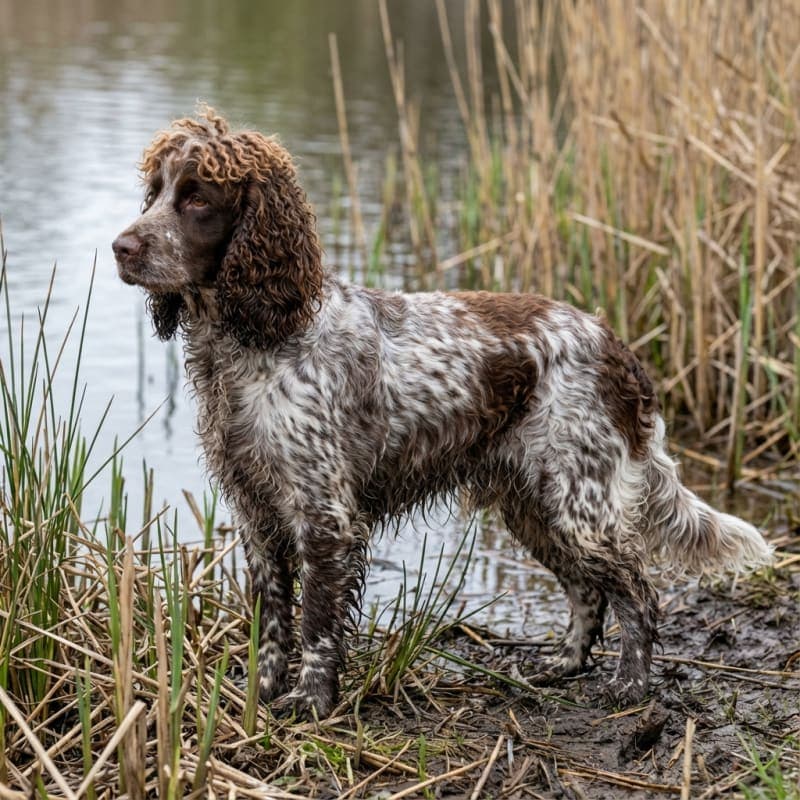
Pont-Audemer Spaniel
FCI Group
7• FCI 114
Size
Medium
Origin Country
FR
Height
52-58 cm
Weight
17-20 kg
Lifespan
12-14 years
Temperament
Overview
Epagneul de Pont-Audemer, also known as the Pont-Audemer Spaniel, is an extraordinary and rare hunting dog breed originating from the picturesque region of Normandy in France. This unique breed was developed in the 19th century in the town of Pont-Audemer, located in the Eure department, where local hunters aimed to breed the ideal dog for waterfowl hunting.
The history of the Epagneul de Pont-Audemer dates back to around 1800, when French breeders began carefully crossing various spaniel breeds. It is believed that the following breeds were used to create this breed:
- French water spaniels (now extinct) - for their ability to work in water
- English water spaniels (Irish Water Spaniel) - for their distinctive curly coat
- English setters - for elegance and retrieving ability
- Local Normandy hunting dogs - for resilience and adaptation to terrain conditions
This careful selection resulted in a dog that excels both on land and in water, particularly during hunts for wild ducks, pheasants, and other waterfowl in the wetlands and marshes of Normandy.
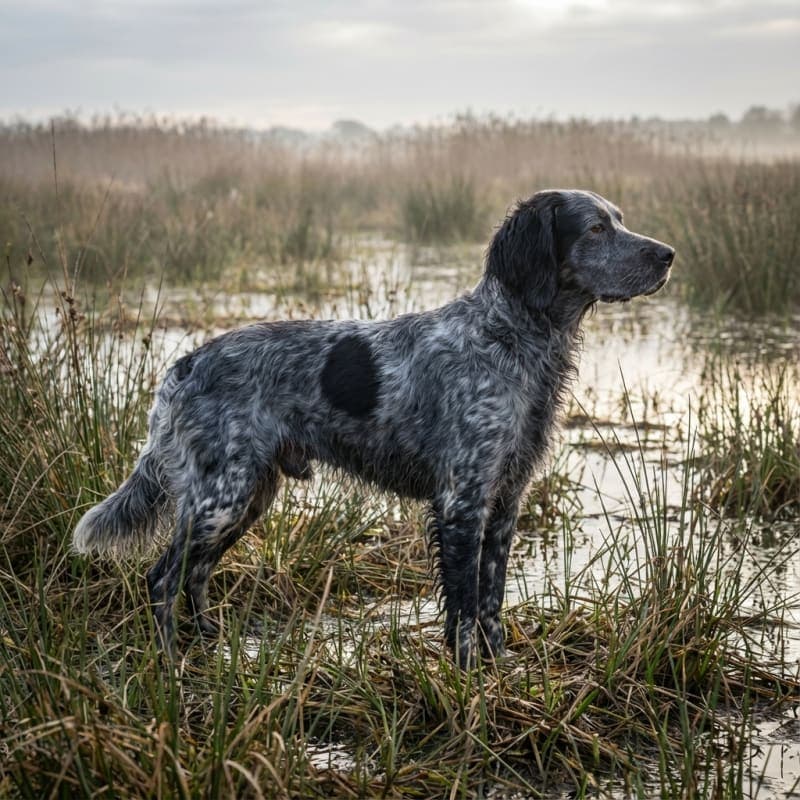
The Epagneul de Pont-Audemer is characterized by its distinctive silhouette - a compact, muscular build and its most recognizable feature: curly hair on its head, which, along with long, wavy ears, creates a unique wig around its head. This feature is so distinctive that the dog is often referred to as le petit clown des marais (the little clown of the marshes) due to its amusing, charming appearance.
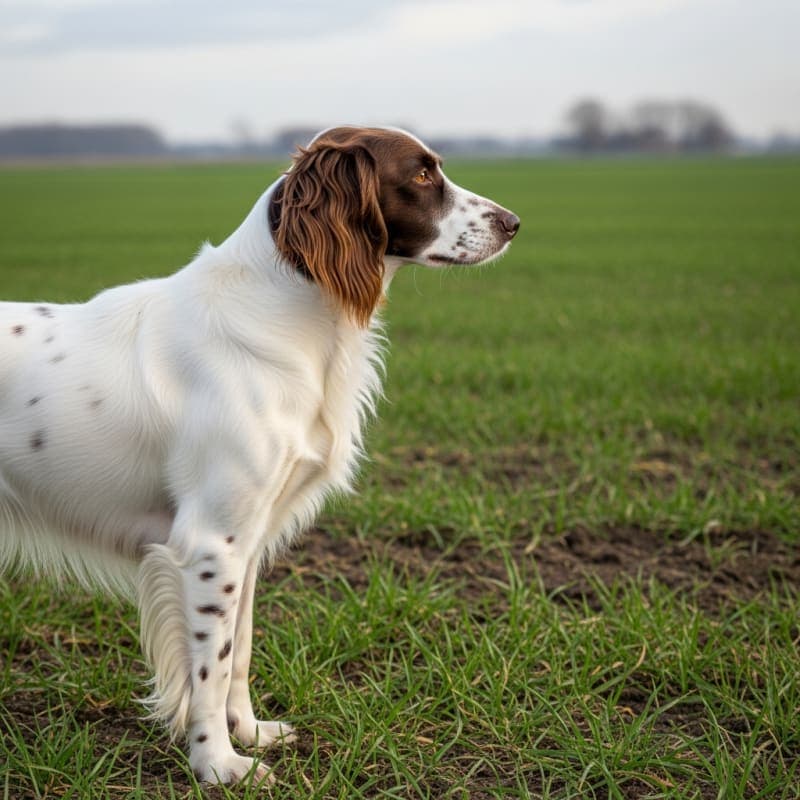
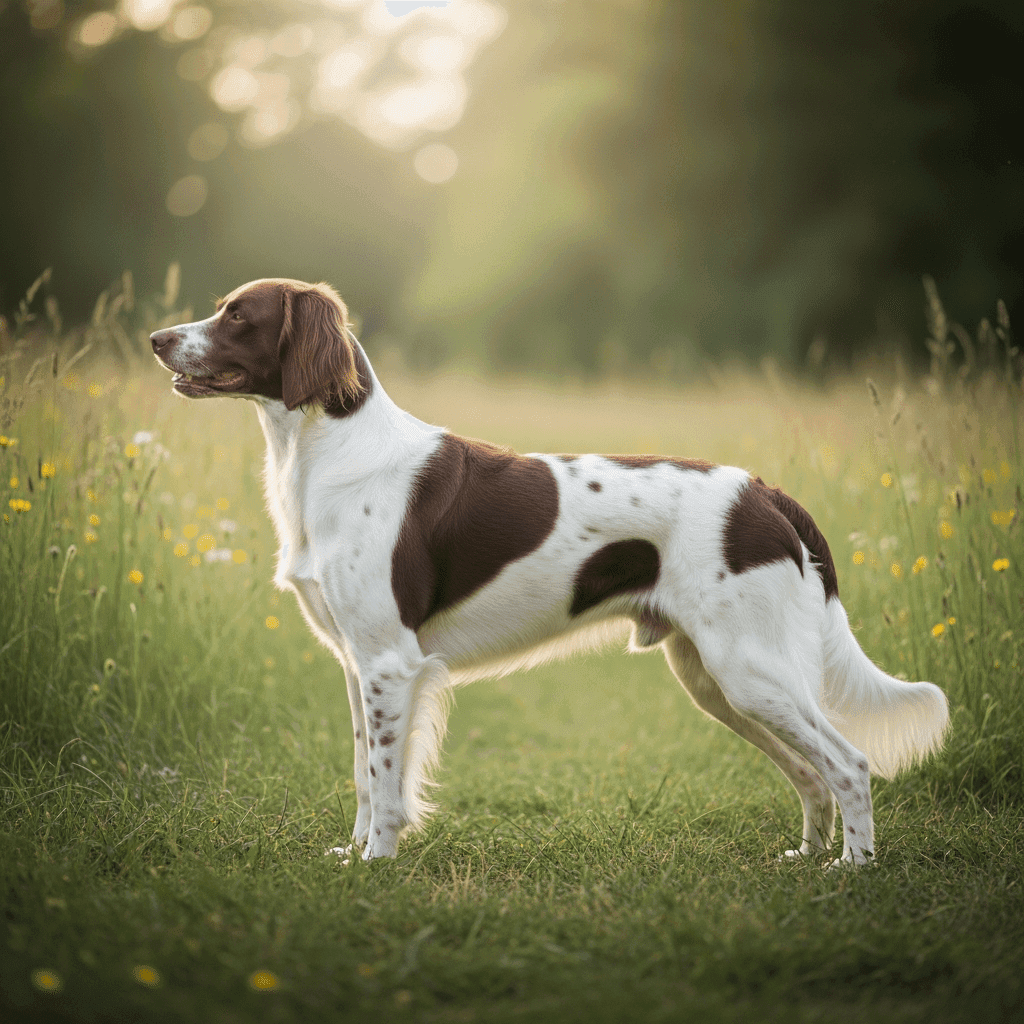
The coat of the Epagneul de Pont-Audemer is usually brown (in liver shades) with possible white spots on the chest, paws, or muzzle. Less commonly, individuals with brown and gray speckling (rouan) are found, giving them a distinguished, aristocratic appearance.
Despite its unique characteristics and long history, the Epagneul de Pont-Audemer is one of the rarest dog breeds in the world. After World War II, the breed was on the brink of extinction, with only a few individuals remaining in France. Thanks to the determination of a small group of enthusiasts, it has been rebuilt, but it remains extremely rare to this day - only 100-200 puppies of this breed are born worldwide each year, mainly in France.
Outside its homeland, the Epagneul de Pont-Audemer is virtually unknown. In the United States, the United Kingdom, or Poland, it is an absolute exotic. However, those who have had the chance to meet this breed agree: it is a unique companion combining the qualities of an excellent working dog with the friendly, cheerful character of a family dog.
The temperament of the Epagneul de Pont-Audemer is characterized by a lively, friendly, and sociable disposition. This is a dog with great energy that loves outdoor activities, especially playing in water. Its strong hunting instinct makes it a tireless worker in the field, but it is also affectionate, gentle, and very attached to its family.
Due to its intelligence and eagerness to learn, the Epagneul de Pont-Audemer is relatively easy to train, even for novice owners. It is a dog that wants to please its owner and excels in various forms of activity - from hunting to obedience training to water sports.
This breed, however, requires an active lifestyle. It is not a dog for people who prefer a quiet, sedentary life. The Epagneul de Pont-Audemer needs daily, intense physical activity - long walks, playtime, swimming - to remain happy and balanced.
In the following sections of this comprehensive guide, you will discover detailed information about the health, grooming, physical activity, training, nutrition, history, appearance, and behavior of this fascinating, rare breed. Each section contains practical advice and in-depth knowledge that will help you better understand the Epagneul de Pont-Audemer and provide it with optimal living conditions.
If you are looking for a unique, energetic companion with a friendly character and a hunting heart, who will eagerly accompany you in the field as well as during family evenings - the Epagneul de Pont-Audemer may be the perfect choice. This is a dog for people who appreciate rarity, history, and authentic hunting heritage.
The Epagneul de Pont-Audemer is a dog with a characteristic, compact appearance that combines strength, elegance, and functionality typical of working dogs. Its silhouette is perfectly adapted for work in difficult terrain - marshes, wetlands, and waters of Normandy.
Basic physical parameters according to the FCI standard:
- Height at the withers: 52-58 cm (without division by sex)
- Weight: about 20-24 kg (standard not specifically defined, but typical for this build)
- Build: Stocky, sturdy, muscular - a medium-sized dog
- Proportions: Square-like silhouette, compact and harmonious
- Expression: Lively, intelligent, friendly
The head of the Epagneul de Pont-Audemer is one of its most characteristic features. It is round and well-developed in the skull area, with a pronounced occipital bump. The parietal bones are quite rounded, giving the head a distinctive, harmonious appearance.
The most recognizable feature is the characteristic topknot on the top of the head - a dense, curly tuft of hair that grows on the crown, leaving the forehead exposed. This topknot is very curly and well-placed, serving as the breed's hallmark.
The stop (transition from forehead to muzzle) is slightly defined, creating a gentle angle, though clearly visible. The muzzle is long and gently curved in the middle, giving it an elegant profile.
The nose is brown, clearly protruding in front of the upper lips, somewhat pointed. The lips are thin and slightly drooping, giving the muzzle a somewhat pointed shape.
The eyes are dark amber or hazel, rather small, well-set in the eye sockets. They express kindness, sincerity, and intelligence - characteristic of this breed.
The ears are medium-thick, flat, set rather low, so they stay away from the cheeks. They are long and abundantly covered with long, silky, very curly hair, which connects with the topknot, creating a beautiful curly wig that truly frames the head. It is this wig that gives the Epagneul de Pont-Audemer its unique, charming appearance.
The neck is slightly arched, elegant, well-muscled, connecting gently with the head and solidly with the shoulders.
The body is strong and functional:
- Back: Straight or slightly arched
- Loin: Quite short, wide, solid, muscular
- Croup: Very slightly sloped
- Chest: Deep, wide, dropping completely to the level of the elbow; ribs long and protruding, with the last rib close to the hip
- Undercarriage and belly: Sides flat and slightly raised
The coat is one of the most characteristic features of the Epagneul de Pont-Audemer:
- Hair type: Medium length, wavy to slightly curly
- Structure: Elastic, not too soft or too rough
- Density: Dense, with a good undercoat protecting against water and cold
- Distribution: Longer on the ears, neck, chest, belly, back parts of the limbs, and tail
- Function: Waterproof, protecting the dog while working in wetlands
- Topknot: Very curly on the top of the head
- Ears: Covered with long, silky, very curly hair
The color of the Epagneul de Pont-Audemer:
- Brown (liver color) - the most typical
- Brown with white spots - on the chest, paws, muzzle
- Brown with gray speckling (rouan marron) - an elegant variant
- Shades: From light brown to dark liver color
The front limbs are strong and well-muscled, set parallel. The paws are round, compact, with thick pads - perfectly adapted for work in difficult terrain. The hind limbs are strong and muscular, with well-defined joint angles.
The tail is medium length, set almost on the line of the loins, carried horizontally or slightly curved, covered with wavy hair. Traditionally, it was docked to about one-third of its length, but in countries where docking is prohibited, it remains at its natural length.
The movement of the Epagneul de Pont-Audemer is smooth, energetic, and efficient. The dog moves with good drive from the rear and free front extension. The movement is harmonious and balanced, indicating a correct body structure and excellent adaptation for work in the field.
The overall expression of the Epagneul de Pont-Audemer is a combination of strength, vigor, and charm with a friendly, amiable character. It is a dog that immediately attracts attention with its characteristic curly wig and energetic, cheerful demeanor. It is one of the most recognizable and unique spaniel breeds in the world.
The Epagneul de Pont-Audemer is a dog with a remarkably friendly, cheerful, and sociable disposition, combining the traits of an excellent working dog with the temperament of a devoted family companion. Its nature is full of energy, intelligence, and a positive outlook on life, making it a wonderful partner both in the field and at home.
Key character traits of the Epagneul de Pont-Audemer:
- Friendly and affectionate - deeply attached to its family, loves closeness with people
- Energetic and lively - full of vigor and enthusiasm for activities
- Intelligent and eager to learn - quickly absorbs new skills
- Sociable - well-adjusted in family settings, enjoys company
- Gentle and patient - especially in contact with children
- Strong hunting instinct - passionate about tracking and retrieving
- Joyful and playful - often referred to as the little clown of the marshes
The Epagneul de Pont-Audemer is exceptionally attached to its family and desires to be a constant participant in family life. This is not a dog that will be happy as a garden dog - it needs close contact with people and active participation in family activities. Its loyalty and devotion are unwavering.
This breed is known for its high energy and enthusiasm for all forms of activity. The Epagneul de Pont-Audemer loves to:
- Run and explore the terrain
- Swim and work in water - it’s its natural passion
- Retrieve - one of its favorite types of play
- Track scents and follow trails
- Participate in games and activities with the family
- Discover new places during walks
Its strong hunting instinct is deeply rooted in its genetics. As a dog bred for hunting waterfowl, the Epagneul de Pont-Audemer naturally:
- Flushes birds and other animals - may run after them
- Is fascinated by water and loves to swim
- Has an excellent sense of smell and can track scents
- Is tireless in searching and retrieving
- May exhibit predatory behaviors towards small animals
For this reason, early socialization and proper training are absolutely crucial, especially if the dog is to live in a home with other pets.
The Epagneul de Pont-Audemer thrives in families with children. It is an extremely:
- Patient - tolerates the noise and energy of children
- Gentle - rarely shows aggression or impatience
- Playful - loves to run and play with children
- Protective - watches over younger family members
However, due to its energy and enthusiasm, it may accidentally knock over a small child during play. Therefore, interactions with very small children should be supervised.
In contact with strangers, the Epagneul de Pont-Audemer is usually friendly and open. This is not a breed that is overly distrustful or cautious - most representatives of this breed:
- Quickly make contact with new people
- Show no aggression towards strangers
- May be slightly reserved at first meeting
- Become friendly after a brief observation
This makes it not a good guard dog - it is more likely to greet an intruder with a wagging tail than to deter them.
Coexistence with other dogs is usually problem-free, especially if the Epagneul de Pont-Audemer has been socialized from puppyhood. This breed is:
- Sociable and enjoys the company of other dogs
- Non-aggressive towards same-sex dogs
- Eager to play and engage in activities together
- Well-functioning in a group of dogs
However, coexistence with cats and small animals can be challenging due to its strong hunting instinct. The Epagneul de Pont-Audemer may:
- Chase cats that did not grow up with it
- Get excited at the sight of small animals (rodents, birds)
- Have difficulty controlling its predatory instinct
Early socialization with cats from a young age can help, but it requires patience and consistency.
The Epagneul de Pont-Audemer cannot stand long periods of solitude. It is a social dog that needs the presence of people. Left alone for long periods, it may:
- Develop separation anxiety
- Become destructive (damaging furniture, cushions)
- Bark excessively out of frustration
- Exhibit compulsive behaviors
- Be sad and depressed
Owners who work all day should provide companionship for the dog (a second dog, a dogsitter) or consider whether this breed is suitable for them.
Barking of the Epagneul de Pont-Audemer is moderate. It is not an overly vocal breed, but it may raise its voice:
- When it sees a bird or another animal
- During play (out of enthusiasm)
- When it is excited
- To get the owner's attention
Proper training can help control this behavior.
At home, the Epagneul de Pont-Audemer is usually calm and relaxed, as long as it has received its daily dose of physical activity. A dog that has been active outside will:
- Calmly lounge at home
- Be content with the closeness of the family
- Rest in its bed
- Observe family activities
However, a dog that has not received enough exercise may be restless, destructive, and frustrating.
In summary, the Epagneul de Pont-Audemer is a wonderful companion for active families who value energetic, friendly dogs with a hunting heart. It requires patience, consistency, and above all - plenty of activity. In return, it offers unconditional love, loyalty, and joy for life, making every day with it an adventure.
The Epagneul de Pont-Audemer is a generally healthy breed with good health condition, especially considering its small population and limited gene pool. The average lifespan is from 12 to 14 years, which is typical for medium-sized dogs. With proper care, a healthy diet, and regular physical activity, many individuals reach the age of 14-15 years in good condition.
This breed has maintained relatively good immunity due to its history as a working dog and a careful breeding program conducted by French enthusiasts who emphasize health and functionality, not just appearance.
However, like any breed, the Epagneul de Pont-Audemer may be prone to certain conditions. The most common health issues include:
- Hip Dysplasia (HD) - abnormal development of the hip joint leading to pain, limping, and arthritis, can be inherited
- Ear Inflammation (otitis externa) - a common issue in breeds with long, drooping ears, requires regular checking and cleaning
- Alopecia (hair loss) - excessive hair loss, may occur in younger dogs, sometimes related to hormones or stress
- Hypothyroidism - decreased production of thyroid hormones leading to lethargy, weight gain, skin problems
- Skin Infections - related to wet fur after swimming
- Allergies - food or environmental, leading to itching and irritation
Particular attention should be paid to ear health because the Epagneul de Pont-Audemer has:
- Long, drooping ears covered with dense fur
- A tendency to work in water (moist environment)
- Limited ventilation of the ear canals
- Susceptibility to collecting debris and bacteria
Owners should:
- Regularly check the ears (at least once a week)
- Clean the ears with special solutions after swimming
- Watch for signs of problems: scratching, shaking the head, unpleasant odor, discharge
- React immediately to the first signs of inflammation
Due to its active lifestyle and work in difficult terrain, the Epagneul de Pont-Audemer may be prone to injuries:
- Cuts on paw pads from sharp stones or branches
- Muscle tears during intense activity
- Injuries while running in dense terrain
- Thorns and brambles getting stuck in fur and skin
Therefore, regular checks after walks in the field are crucial - checking paws, ears, and skin for wounds, parasites, or foreign bodies.
The Epagneul de Pont-Audemer has relatively good tolerance to various weather conditions due to its dense, waterproof coat. However:
- On very hot days, it may overheat during intense activity
- It should have access to shade and water
- Effort should be avoided during the hottest hours (11:00 AM - 4:00 PM)
- Watch for signs of overheating: heavy breathing, drooling, weakness, red tongue
Key preventive actions for maintaining the health of the Epagneul de Pont-Audemer:
- Regular veterinary visits - at least once every 6-12 months, more frequently for puppies and senior dogs (over 9 years)
- Complete vaccination program - protection against infectious diseases (rabies, parvovirus, distemper, parainfluenza, leptospirosis)
- Regular deworming - every 3 months, especially for dogs active in the field and in contact with water
- Parasite prevention - protection against ticks, fleas (especially important for dogs working in the field)
- Check-ups - blood count, biochemical tests, thyroid panel (especially after 7 years of age)
- Hip joint checks - X-rays for young adult dogs (around 18-24 months) to rule out dysplasia
- Dental checks - preventing tartar buildup by brushing 3-4 times a week
- Weight monitoring - regular monitoring to prevent obesity
Responsible breeding plays a key role in the health of the breed. Due to the rarity of the Epagneul de Pont-Audemer, responsible breeders:
- Conduct health tests on breeding dogs (hip X-rays, thyroid tests)
- Avoid breeding related dogs (inbreeding) as much as possible
- Collaborate with breeders from other countries to increase the gene pool
- Monitor the health of offspring and share information about problems
- Are members of breed clubs that adhere to ethical practices
Before purchasing an Epagneul de Pont-Audemer puppy, it is advisable to:
- Check the health test results of the parents (HD X-rays, thyroid test results)
- Know the health history of the breeding line (longevity, health issues)
- Ensure that the breeder is reputable and responsible
- Request health documentation for the puppy (vaccinations, deworming)
- Meet the puppy's parents and assess their temperament and health
- Ask about post-purchase support for the puppy
Special recommendations for owners of the Epagneul de Pont-Audemer:
- After every swim - thoroughly dry the ears and check the ear canals
- After every walk in the field - check paws, ears, belly for thorns, ticks, wounds
- Regularly brush the coat - prevents matting and allows detection of skin problems
- Monitor activity level - a sudden decrease in energy may signal a health problem
- Observe appetite - changes in appetite may indicate health issues
With proper veterinary care, a healthy diet, regular physical activity, and attention to hygiene, the Epagneul de Pont-Audemer can enjoy a long, healthy, and active life. This breed deserves owners who will be aware of its needs and ready to provide optimal living conditions so it can fully realize its natural instincts and be a happy, healthy companion for many years.
The care of the Epagneul de Pont-Audemer requires regular attention and commitment, especially due to its distinctive, wavy to curly coat and long, abundantly furred ears. Although it is not a breed that requires extreme grooming like some show breeds, systematic care of the coat and hygiene is crucial for the dog's health and comfort.
Basic grooming procedures include:
- Brushing the coat - 2-3 times a week (minimum), daily during periods of heavier shedding or after outdoor activities
- Combing with a metal comb - removing dead undercoat, detangling mats
- Bathing - every 4-8 weeks or more frequently for dogs actively working in water and mud
- Cleaning and checking ears - at least once a week, after every swim
- Brushing teeth - 3-4 times a week, ideally daily
- Trimming nails - every 3-4 weeks (if they do not wear down naturally)
- Checking paws - after every walk outdoors, especially between the pads
- Trimming hair - occasional trimming of hair between the paw pads, around the ears
The coat of the Epagneul de Pont-Audemer is its trademark and working tool. It is:
- Medium length - wavy to slightly curly
- Dense - with a good insulating undercoat
- Waterproof - protecting the dog while working in wetlands
- Flexible - neither too soft nor too coarse
- Long in specific areas - ears, forelock, chest, belly, back parts of limbs, tail
This coat requires special attention because:
- It easily tangles, especially on the ears and belly
- It collects dirt, thorns, leaves during outdoor activities
- It remains damp for a long time after swimming
- The curly forelock and ears create a distinctive wig that requires care
Regular brushing is absolutely essential. Recommended tools:
- Slicker brush - for detangling the coat and removing loose hair
- Metal comb with rotating teeth - for gently detangling mats
- Wide-toothed comb - for combing wet hair after bathing
- Narrow-toothed comb - for delicate areas (face, ears)
- Natural bristle brush - for finishing and adding shine
Brushing technique:
- Always brush in the direction of hair growth
- Start from the ends and gradually move towards the skin
- Pay special attention to areas prone to mats: behind the ears, under the armpits, on the belly, between the hind legs
- Never pull hard - gently detangle mats
- After a walk outdoors, thoroughly check the coat for thorns, ticks, dirt
Brushing helps:
- Remove dead hair and prevent matting
- Distribute natural skin oils for a healthy coat
- Check the skin condition for irritations, parasites, wounds
- Minimize the amount of hair in the house
- Strengthen the bond with the dog through positive contact
Bathing the Epagneul de Pont-Audemer should be done every 4-8 weeks, or more frequently if the dog actively works in water and mud. Bathing too often can:
- Weaken the skin's natural protective layer
- Lead to dry skin and irritations
- Reduce the coat's natural waterproof properties
During bathing, one should:
- Use a gentle dog shampoo (preferably for water or long-haired breeds)
- Thoroughly comb the coat before bathing - wet mats are harder to remove
- Protect the ears from getting wet - cotton can be used
- Rinse the shampoo thoroughly - residues can irritate the skin
- Use conditioner to facilitate combing (optional)
- Thoroughly dry the coat - a cool air dryer can be used
- CRITICALLY IMPORTANT: Very thoroughly dry the ears and ear canals
- After drying, comb the coat again
The distinctive forelock and ears of the Epagneul de Pont-Audemer require special attention:
- Regular combing - to prevent matting in dense, curly hair
- Checking after every outdoor activity - removing dirt
- Occasional trimming of excessively long hair obscuring the eyes
- Maintaining cleanliness - hair on the ears easily collects dirt
Ears are a critical grooming area due to:
- Long, drooping structure
- Abundant fur limiting ventilation
- Frequent contact with water
- Susceptibility to infections
Ear care:
- Cleaning at least once a week - more often for swimming dogs
- After every swim - thoroughly dry the ears with special wipes or cotton balls
- Use special ear cleaning solutions for dogs
- Gently massage the base of the ear after pouring in the solution
- Allow the dog to shake its head, then wipe away visible dirt
- Never insert cotton swabs deeply into the ear canal
- Watch for signs of problems: redness, unpleasant odor, excess wax, scratching, head shaking
- At the first signs of infection - immediate visit to the veterinarian
Some groomers recommend careful trimming of hair inside the ear canal for better ventilation, but this should be done by a professional.
Teeth checking and brushing :
- Brushing 3-4 times a week, ideally daily
- Using dog toothpaste (never human - fluoride is toxic)
- Special toothbrush or finger brush
- Providing dental chews
- Regular check-ups at the veterinarian
- Professional teeth cleaning at the veterinarian if necessary (tartar)
Paws require special attention due to an active lifestyle:
- Checking after every walk - especially in rough terrain
- Inspecting pads - wounds, cracks, foreign bodies
- Checking between toes - thorns, grass seeds, clumps of hair
- Trimming hair between pads - prevents dirt and snow accumulation
- Caring for pads - in winter, use protective balms
Nails should be trimmed every 3-4 weeks, if they do not wear down naturally. Overly long nails:
- Cause discomfort while walking
- Can lead to joint problems
- Risk of ingrowth or breakage
- Change the dog's way of moving
Use special nail clippers and be careful not to cut the nerve and blood vessels (the quick - the pink part visible in light-colored nails).
Special recommendations for Epagneul de Pont-Audemer working in water:
- After every swim - rinse the coat with clean water (remove chlorine, salt, mud)
- Thoroughly dry - especially ears, belly, paws
- Check the coat - for foreign bodies, leeches (in natural bodies of water)
- Monitor the skin - excessive moisture can lead to fungal infections
Professional grooming at a groomer can be helpful 2-4 times a year for:
- Thorough bathing and drying
- Professional detangling and removal of mats
- Trimming hair in specific areas
- Cleaning anal glands (if needed)
- Professional nail trimming
Proper, systematic grooming not only improves the appearance of the Epagneul de Pont-Audemer but also contributes to its health, comfort, and well-being. Regular procedures allow for early detection of health issues (tumors, wounds, parasites) and are an excellent opportunity to strengthen the bond with your pet through positive, calm time spent together. For a dog working in water and terrain, proper grooming is absolutely key to maintaining health and functionality.
The Epagneul de Pont-Audemer is a breed with high physical activity requirements, making it an ideal companion for active individuals, sports families, and hunters. This is not a dog for those who prefer a calm, sedentary lifestyle. As a breed developed for intensive work in challenging terrain - wetlands, marshes, and waters of Normandy - it has natural predispositions for prolonged physical effort.
Minimum exercise requirements for the Epagneul de Pont-Audemer:
- At least 60-90 minutes of intense activity daily
- Two or more walks daily - 30-45 minutes each
- Activity in varied terrain - not just pavement routes
- Access to water - ideally several times a week
- Mental stimulation - scent games, training, new challenges
- Opportunity for exploration - sniffing, tracking, discovering
These are the absolute minimum requirements. Most Epagneul de Pont-Audemer will happily accept much more activity and will be happy with 2-3 hours of active movement daily.
The Epagneul de Pont-Audemer needs exercise to:
- Satisfy its natural hunting and exploratory instincts
- Maintain a healthy weight and physical condition
- Prevent behavioral problems resulting from boredom and frustration
- Keep joints, muscles, and cardiovascular health in check
- Release energy and maintain calm behavior at home
- Meet social needs through interactions during activities
- Maintain mental balance and well-being
Ideal forms of activity for the Epagneul de Pont-Audemer:
- Swimming and water work - ABSOLUTE FAVORITE! This is the breed's natural passion:
- Swimming in lakes, rivers, safe water bodies
- Retrieving from the water - toys, training dummies
- Exploring shallow waters and wetlands
- Water training for hunting dogs
- Long walks and hikes - in varied terrain:
- Forests, meadows, fields (safe for the dog)
- Paths along rivers and lakes
- Natural areas with opportunities for exploration
- Avoid monotonous asphalt routes
- Retrieving - this is a natural trait of this breed:
- Retrieving balls, toys, dummies
- Retrieving from water (favorite!)
- Various types of objects to retrieve
- Training from different distances
- Scent games and tracking:
- Hiding treats or toys to find
- Scent trails to follow
- Searching for hidden objects in the field
- Nosework training
- Running alongside a bike - for well-trained dogs:
- Gradually introducing this activity
- Avoiding heat and hard asphalt
- Appropriate pace adjusted to the dog
- Hunting and hunting training - for working dogs:
- Training with birds
- Hunting wild ducks
- Working in wetlands
- Training with shots and birds
- Agility and canine sports:
- Obstacle courses
- Rally obedience
- Fitness training
The Epagneul de Pont-Audemer has an amazing combination of energy and passion for water. If you have access to a safe water body - lake, river, pond - your dog will be in heaven. Water is its natural element, and swimming is:
- An excellent full-body workout
- Low-impact for joints (ideal for older dogs or those with orthopedic issues)
- A great way to release energy
- A source of immense joy for the dog
- A way to cool off on hot days
Swimming recommendations:
- Always supervise the dog in the water
- Start with shallow, calm waters
- Gradually increase swimming time
- Avoid fast currents and dangerous spots
- Rinse the dog with clean water after swimming (chlorine, salt, mud)
- Thoroughly dry the ears after swimming (to prevent infections)
Due to its strong hunting instinct, during walks the Epagneul de Pont-Audemer:
- May react intensely to birds, especially wild ducks
- Loves to sniff and track scents
- May be determined to follow an interesting trail
- Needs strong control and recall training
- May ignore commands when fascinated by a scent
Therefore, leashing is recommended in areas where wildlife or traffic may be present. Off-leash time should only occur in:
- Safe, enclosed areas
- Places away from roads and dangers
- After solid training of the "Come" command
- Under constant supervision of the owner
- In environments with minimal distractions (at first)
Insufficient exercise leads to serious problems in the Epagneul de Pont-Audemer:
- Destructive behaviors - destroying furniture, cushions, shoes
- Excessive barking - from frustration and boredom
- Hyperactivity - inability to behave calmly at home
- Separation anxiety - worse coping with loneliness
- Overweight and obesity - leading to health issues
- Behavioral problems - disobedience, stubbornness, aggression from frustration
- Depression - apathy, lack of joy in life
- Obsessive behaviors - chasing tails, licking paws
It is also important to adjust the intensity and type of exercise to the dog's age:
- Puppies (up to 12 months):
- Shorter, more frequent walks (5-10 minutes per month of life, 2-3 times a day)
- Avoid intense exertion that strains developing joints
- Play on grass instead of hard asphalt
- Swimming allowed (low-impact), but in moderation
- Avoid jumping from heights and long running
- Focus on socialization and basic training
- Young adults (1-2 years):
- Gradually increasing intensity and duration of exercise
- Introducing more demanding activities
- Full range of activities after 18 months
- Adult dogs (2-9 years):
- Standard, full amount of exercise (60-120 minutes daily)
- All forms of activity allowed
- Peak physical condition and endurance
- Seniors (over 9 years):
- Adjust intensity to individual condition
- Shorter but regular walks
- Avoid extreme temperatures
- Swimming (great activity for joints)
- Lower intensity, but continuous activity
- Watch for signs of pain or fatigue
Mental stimulation is just as important as physical:
- Obedience training and new commands
- Puzzles and interactive toys
- Scent games (hiding treats)
- Exploring new places and routes
- Retrieving training (various objects, situations)
- Socialization with other dogs
Regularly engaging the Epagneul de Pont-Audemer in the appropriate amount of physical activity and mental stimulation is key to its happiness, health, and harmonious coexistence with the family. A dog that receives enough exercise is calm, relaxed, and obedient at home, ready for quiet moments of relaxation with the family. This is a dog made for action - let it be what it is, and you will have an incredibly grateful, joyful companion.
Training the Epagneul de Pont-Audemer is relatively easy and enjoyable due to its natural traits - high intelligence, eagerness to learn, desire to please its owner, and lack of stubbornness typical of some hunting breeds. This makes it an excellent choice even for novice owners who are willing to invest time and commitment into consistent training.
Key features that facilitate training:
- High intelligence - quickly understands new commands and concepts
- Willingness to cooperate - naturally wants to please its owner
- Food motivation - treats are an excellent reward
- Energy - loves activity, which makes training easier
- Social character - responds well to positive reinforcement
- Lack of stubbornness - not as stubborn as some terriers or hounds
- Good memory - does not forget commands once learned
Key training principles for the Epagneul de Pont-Audemer:
- Early start - training should begin at 8-10 weeks of the puppy's life
- Positive reinforcement - rewards, treats, praise, play (NEVER physical punishment)
- Consistency - rules must be clear and unchanging for all family members
- Patience - although this breed learns quickly, it requires time for reinforcement
- Short, frequent sessions - 5-15 minutes, 2-3 times a day (long sessions may bore them)
- Variety - diverse exercises and locations keep interest alive
- Firmness without harshness - clear boundaries but gentle approach
- Utilization of instincts - training with retrieving and water work is naturally motivating
The Epagneul de Pont-Audemer responds excellently to positive reinforcement methods:
- Immediate rewards for desired behaviors
- High-value treats (chicken, cheese, special training treats)
- Enthusiastic verbal praise (these dogs love recognition)
- Playing with a favorite toy as a reward
- Retrieving sessions as a reward for well-executed exercises
- Ignoring undesirable behaviors (as long as they are not dangerous)
Basic commands to teach (in order of importance):
- Name - the most important, the dog must respond immediately to its name
- Come - absolutely crucial command for the safety of a dog with hunting instincts
- Stay - control over the dog in various situations
- Sit - basic obedience command
- Lie down - calming and control
- Leave it - preventing picking up dangerous items
- Fetch - natural for this breed, excellent for training and play
- Drop it - returning the retrieved item
- Place - teaching to rest in a designated spot
- No pulling - walking on a loose leash
- Quiet - control over barking
Early socialization is absolutely crucial for the Epagneul de Pont-Audemer. Puppies aged 8-16 weeks go through a critical socialization period during which they should be exposed to:
- Different people:
- Men, women, children, elderly people
- People in different outfits (hats, glasses, uniforms)
- People with strollers, on bikes, with walking sticks
- Groups of people
- Other dogs:
- Different breeds, sizes, temperaments
- Puppies and adult dogs
- Controlled, positive interactions
- Participation in puppy classes
- Different animals:
- Cats (if the dog will live with them)
- Other pets
- Farm animals (horses, cows) if available
- Different environments:
- City - street traffic, noise, crowds
- Park, forest, meadows
- Water bodies
- Dog-friendly stores
- Veterinary clinic (positive visits)
- Different sounds:
- Vacuum cleaner, washing machine, dryer
- Firecrackers, thunder (gradually, with recordings)
- Loud music
- Doorbell
- Gunshots (for hunting dogs - gradually!)
- Different surfaces:
- Grass, asphalt, wood, metal
- Metal grates
- Stairs
- Slippery floors
- Water (gradually)
- Handling and grooming:
- Touching paws, ears, muzzle, teeth, tail
- Brushing
- Veterinary check-ups
- Handling by strangers (groomer, veterinarian)
- Travel:
- Car - short, positive rides
- Public transport (if allowed)
Proper socialization prevents the development of fears, phobias, and behavioral problems in adult life.
Particular attention should be paid to training the Come command, as the Epagneul de Pont-Audemer has a strong hunting instinct:
- Train from a young age
- Start in distraction-free areas, gradually increasing difficulty
- Use a long training leash (10-15 meters) at first
- Always reward for coming back - the best treats, the greatest enthusiasm
- Never punish the dog for returning, even if it takes a long time
- Train in various locations
- Practice with distractions (other dogs, scents, birds - gradually)
- Never call the dog to Come before something unpleasant
For the Epagneul de Pont-Audemer, training related to its natural instincts is the most effective and enjoyable:
- Retrieving:
- Start from short distances
- Gradually increase distance and terrain difficulty
- Introduce retrieving from water
- Teach gentle handing of the item (without biting)
- Diverse objects - balls, dummies, artificial birds
- Water work:
- Gradual introduction to water (positive experiences)
- Start from shallow water
- Retrieving from water as natural training
- Increasing distance and difficulty
- Tracking and scenting:
- Simple scent games - hiding treats
- Scent trails
- Searching for hidden objects
- Nosework training
- Hunting training (for working dogs):
- Getting used to gunshots (gradually!)
- Training with birds
- Working in wetlands
- Cooperation with the handler
The Epagneul de Pont-Audemer may present some potential training challenges:
- Excessive excitement - especially towards birds and water; requires calm training
- Selective hearing - when fascinated by a scent; consistent recall training
- Chasing birds - strong instinct; early control training
- Pulling on the leash - out of enthusiasm; loose leash training from puppyhood
The Epagneul de Pont-Audemer can excel in various forms of canine activities:
- Hunting and hunting training - their original purpose
- Water training - water work trials
- Obedience - precise execution of commands
- Rally obedience - dynamic form of obedience
- Nosework - scent searching
- Agility - obstacle courses (for energetic individuals)
- Dog shows - presentation in the ring
It is important that training is a regular part of the dog's life, not just in its young age. Adult dogs also need mental stimulation and reminders of the rules. Regular, short training sessions:
- Keep skills sharp
- Provide mental stimulation
- Strengthen the bond with the owner
- Prevent boredom and behavioral problems
- Are a source of joy for the dog
Positive experiences with training significantly contribute to building a strong, lasting bond between the Epagneul de Pont-Audemer and its owner. This breed loves to cooperate, learn, and please its caregiver. With consistent, positive training, it becomes an excellently obedient, versatile companion, ready for any adventure and challenge.
Proper nutrition for the Epagneul de Pont-Audemer is absolutely crucial for its health, physical condition, work performance, and overall well-being. Due to its high level of physical activity and specific needs as a working dog, the diet must be carefully considered and tailored to individual requirements.
It is advisable to choose high-quality premium or super-premium dog food designed for medium, active, or sporting breeds, which contains:
- High protein content - 25-30% (meat, poultry, fish as the first ingredients):
- Essential for muscle building and regeneration
- Support for intense activity
- Sources: chicken, turkey, lamb, salmon, game meat
- Moderate to high fat content - 12-18%:
- Main source of energy for active dogs
- Omega-3 and omega-6 fatty acids for healthy skin and waterproof coat
- Support for the nervous system
- Complex carbohydrates - brown rice, oats, sweet potatoes, barley:
- Long-lasting energy
- Stable blood sugar levels
- Fiber - for proper digestion
- Glucosamine and chondroitin - support for joints (important for active dogs)
- Vitamins and minerals - comprehensive composition for optimal health
- Antioxidants - support for the immune system
Typically, an adult Epagneul de Pont-Audemer weighing around 20-24 kg should receive:
- Moderately active dogs: about 300-400 grams of dry food per day
- Very active/working dogs: about 400-500 grams of dry food per day
- Exact amount: depends on the calorie content of the food, the dog's metabolism, age, and activity level
The portion should be divided into two meals a day (morning and evening) to:
- Maintain stable energy levels throughout the day
- Prevent digestive issues
- Reduce the risk of bloat (though rare in this breed)
- Facilitate the digestion of large amounts of food
Due to varying needs, it may be necessary to adjust the amount of food depending on:
- Very active/working dogs in the field:
- Increase portions by 20-30%
- High-energy food for sporting/working dogs
- Possible additional feeding before/after intense activity
- Less active dogs:
- Reduce portions by 10-15%
- Food for less active dogs
- Strict weight control
- Older dogs (over 8-9 years):
- Senior food with lower calorie content
- Reduce portions by 10-20%
- Higher glucosamine content for joints
- Easier to digest ingredients
- Overweight dogs:
- Light weight-loss food
- Control portions and treats
- Increase physical activity
- Puppies (up to 12 months):
- Puppy food with higher protein and calorie content
- 3-4 meals a day (up to 6 months)
- 2-3 meals a day (6-12 months)
- Gradually transition to adult food around 12 months
- Pregnant/nursing females:
- Increase portions by 25-50%
- Food for reproductive females or puppies
- More meals per day
- Dogs after neutering/spaying:
- Reduce portions by 15-25%
- Food for post-surgery dogs
- Strict weight control
Although the Epagneul de Pont-Audemer is an active breed, weight control is important:
- Regularly weigh the dog (monthly)
- Monitor body condition:
- The dog should have a visible waist
- Ribs should be felt under a thin layer of fat, but not visible
- Abdomen slightly tucked
- Adjust portion sizes as needed
Be careful with treats, which can constitute a significant percentage of daily calorie intake:
- Treats should not exceed 10% of daily calorie intake
- Choose healthy, low-calorie treats
- Account for calories from treats in main meals
- Use training treats (very small, low-calorie)
- Avoid giving table scraps - unhealthy and calorie-dense
In addition to commercial food, you can introduce natural, healthy additions to the diet:
- Lean meat - chicken, turkey, beef, game (cooked, boneless, without spices and salt)
- Fish - salmon, cod, sardines (cooked, boneless, rich in omega-3)
- Vegetables - carrots, broccoli, pumpkin, spinach, zucchini, green beans (cooked or raw, chopped)
- Fruits - apples (without seeds), pears, berries, raspberries, watermelon (in small amounts)
- Eggs - cooked (excellent source of protein)
- Plain yogurt - unsweetened, probiotics for gut health (small amounts)
- Salmon oil - for healthy coat and skin
Products absolutely forbidden for dogs (TOXIC!):
- Chocolate and cocoa - contain toxic theobromine, can be fatal
- Onions and garlic - destroy red blood cells, lead to anemia
- Grapes and raisins - damage kidneys, can be fatal
- Avocado - contains toxic persin
- Xylitol (sweetener) - rapid drop in sugar, liver damage, fatal
- Alcohol - toxic to dogs
- Chicken and fish bones - risk of choking and intestinal perforation
- Macadamia nuts - toxic
- Coffee and tea - caffeine is toxic
Remember to always provide your dog with access to fresh, clean water:
- Water bowl available 24/7
- Water changed at least once a day
- Bowl regularly cleaned
- On hot days or after intense activity - frequent refills
- Especially important after swimming - the dog may be thirsty despite contact with water
- During hunting/training in the field - bring water for the dog
Special dietary recommendations for the Epagneul de Pont-Audemer:
- For dogs working in water:
- Higher calorie content for burning energy
- Good balance of omega-3/omega-6 for waterproof coat
- Regularly monitor weight (intense activity = higher calorie needs)
- Do not feed directly before intense activity:
- Wait at least 1-2 hours after a meal before hunting/swimming
- Reduces the risk of digestive issues
- Prevents discomfort during activity
- Possibility of a small meal after intense activity:
- Helps with recovery
- Replenishes energy
When choosing a diet, it is advisable to consult with a veterinarian or pet nutritionist, who will select an optimal feeding plan considering:
- The dog's age
- Current weight and body condition
- Level of physical activity (household companion vs working dog)
- Individual health needs (allergies, intolerances, conditions)
- Reproductive status
- Dog's dietary preferences
A well-balanced diet tailored to individual needs, combined with appropriate physical activity, is the foundation of health and performance for the Epagneul de Pont-Audemer, allowing it to enjoy a long, healthy, and active life as an energetic companion and tireless worker.
Characteristic Traits
Pros
- Friendly and cheerful disposition
- Ease of training and eagerness to learn
- Energetic and active playmate
- Excellent hunter and retriever
- Versatile - works on land and in water
- Loves to swim and engage in water activities
- Good with children and family
- Rare and unique breed.
Cons
- Requires a lot of movement and physical activity
- Strong hunting instinct can be problematic
- May chase birds and small animals
- Requires regular grooming of fur and ears
- Rarity of the breed makes it difficult to find a breeder
- Long ears prone to infections
- Not suitable for those who prefer a calm lifestyle
- Can be destructive without sufficient activity.
Behavioral Ratings
Breed History
The history of the Epagneul de Pont-Audemer is a fascinating tale of the passion of Norman hunters, thoughtful breeding, and the struggle for the survival of a rare breed. It is a story that reflects the history of Normandy itself - a region of marshes, wetlands, and rich hunting grounds, where this unique dog has played a key role for over two centuries.
This breed was created in the 19th century in the town of Pont-Audemer, located in the Eure department of Normandy, France. Pont-Audemer, surrounded by the wetlands of the Risle River valley, was an ideal place for hunting waterfowl, particularly wild ducks, which inhabited these areas in large numbers.
The origins of the breed date back to around 1800, when local hunters and breeders began carefully crossing different breeds to create the ideal dog for hunting waterfowl in the challenging conditions of the Norman wetlands. They sought a dog that would be:
- An excellent swimmer - for work in the water
- Resistant to cold and moisture - for work in the wetlands
- Possessing an excellent sense of smell - for tracking birds
- A great retriever - for bringing back shot birds
- Energetic and durable - for long work in the field
- Gentle and obedient - easy to train
It is believed that the creation of the Epagneul de Pont-Audemer involved crosses with:
- Old French water spaniels (now extinct) - Epagneul de Normandie:
- For water work skills
- For adaptation to local conditions
- For waterproof coat
- English water spaniels (Irish Water Spaniel):
- For the characteristic curly coat
- For excellent swimming abilities
- For strong body structure
- English setters:
- For elegance and noble appearance
- For excellent retrieving abilities
- For intelligence and ease of training
- Possibly other local Norman hunting dogs
This careful selection over many generations resulted in the creation of a dog with exceptional working traits combined with a distinctive appearance - particularly the curly tuft and ears that formed a characteristic wig around the head.
In the second half of the 19th century, the Epagneul de Pont-Audemer gained great popularity among Norman hunters. It was valued as:
- An tireless worker in the wetlands
- An excellent water retriever
- A versatile dog - working both on land and in water
- A gentle household companion
The breed was particularly popular in the Normandy and Brittany regions, where the wetlands and water areas were ideal for this type of hunting.
The first official recognition of the breed took place at the end of the 19th century. In 1886, the first breed standard was written, and the breed was officially registered in French breeding books.
However, by the early 20th century, the breed's popularity began to decline. The reasons included:
- Competition from other spaniel breeds (Epagneul Breton, English spaniels)
- Changes in hunting methods
- Drainage of wetlands for agricultural purposes
- Reduction of hunting grounds
World War I (1914-1918) was catastrophic for the breed. Normandy, being a battleground, lost most of its population of hunting dogs. Many breeding lines were lost, and breeders had to start over with a very limited gene pool.
In the interwar period (1918-1939), French enthusiasts made efforts to rebuild the breed. The population began to slowly increase, although the breed remained relatively rare and unknown outside of Normandy.
World War II (1939-1945) was even more destructive. Normandy, being the site of the Allied landings in 1944 (Operation Overlord), was devastated. The breed was on the brink of extinction - according to some sources, only a few individuals survived.
After the war, a small group of dedicated breeders and enthusiasts undertook a heroic mission to rebuild the breed. The task was extremely difficult due to:
- A very small number of surviving individuals
- A limited gene pool
- Lack of documentation for some breeding lines
- Economic difficulties in post-war France
To increase the gene pool, breeders used careful crosses with the Irish Water Spaniel, which helped strengthen the breeding line while preserving the breed's distinctive traits.
In 1980, the breed was officially recognized by the Fédération Cynologique Internationale (FCI) under standard number 114, in group 7 (Pointing Dogs), section 1.2 (Continental pointing dogs of spaniel type).
The current situation of the Epagneul de Pont-Audemer remains critical. It is one of the rarest dog breeds in the world:
- Approximately 100-200 puppies are born each year worldwide
- About 90% of the population is located in France
- The global breeding population likely numbers less than 1000-1500 individuals
- The breed is virtually unknown outside of France
- It is on the list of endangered breeds by French kennel clubs
Fortunately, there are efforts to protect the breed:
- Club de l'Epagneul de Pont-Audemer - a French breed club actively promoting the breed
- Breeding programs - careful planning of pairings to maintain genetic diversity
- Exhibitions and shows - promoting the breed at canine events
- Hunting training and competitions - showcasing the breed's working abilities
- International cooperation - breeders from other countries (Netherlands, Germany, USA) are beginning to take an interest in the breed
- Social media - growing awareness of the breed
In recent years, there has been a slight but promising increase in interest in the breed, particularly among:
- Hunters looking for versatile dogs for waterfowl hunting
- Lovers of rare breeds
- Active families seeking energetic, friendly companions
- People interested in water sports with dogs
The latest breed standard was updated by the FCI in 2023, which reflects ongoing interest and concern for the development of this breed.
The history of the Epagneul de Pont-Audemer is a reminder of how easily even functional, valuable breeds can be threatened with extinction due to wars, social and economic changes. It is also a story of passion, determination, and love from a handful of people who would not let this unique breed disappear.
Every owner of an Epagneul de Pont-Audemer is part of a living history and a mission to preserve this rare, unique breed for future generations. It is not just a dog - it is a living heritage of the Norman wetlands, French hunting traditions, and a history that has survived two world wars.