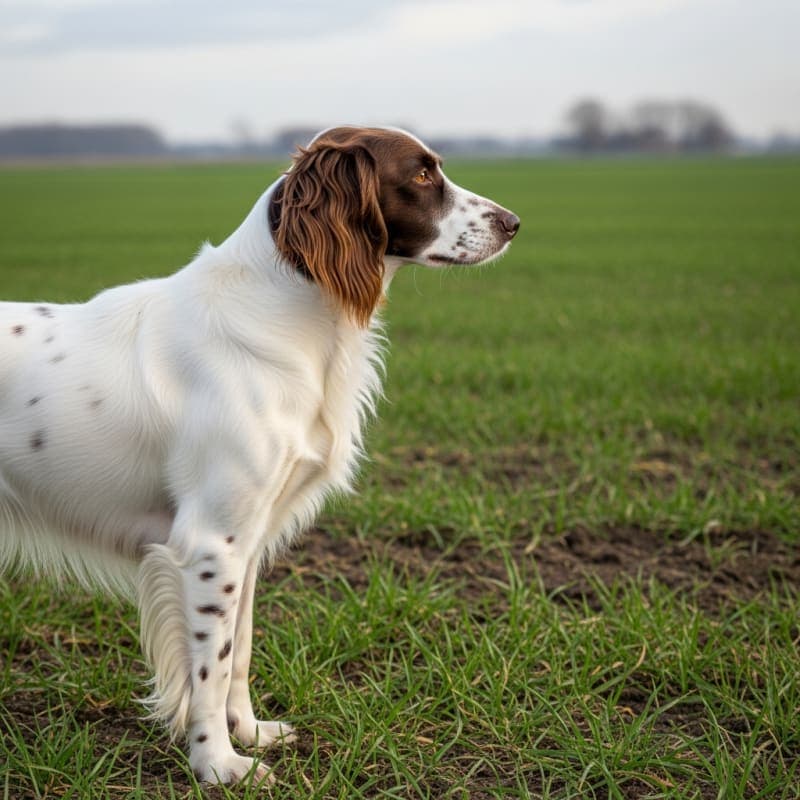
Drentsche Patrijshond
FCI Group
7• FCI 224
Size
Medium
Origin Country
NL
Height
55-63 cm
Weight
25-35 kg
Lifespan
12-14 years
Temperament
Overview
Drentsche Patrijshond, commonly known as Drent, is a unique breed of hunting dogs with a rich history dating back to the 16th century. It developed in the picturesque region of Drenthe in eastern Holland, where breeders have carefully preserved the purity of the breed for centuries, avoiding crossbreeding with other breeds. This isolation has allowed the authentic character of the breed to be maintained.
What distinguishes the Drentsche Patrijshond? Above all, a harmonious combination of hunting traits with a wonderful family temperament. This breed is closely related to the small münsterlander and epagneul français, which is evident in its versatility as a retrieving dog. The Drentsche exhibits an extraordinary ability to work in diverse terrain conditions – it feels equally confident on land and in water.
A characteristic feature of this breed is its strong attachment to family and exceptional loyalty to its owner. Drents are known for their patience and gentleness with children, making them excellent family dogs. Their intelligence and willingness to cooperate make training a natural and enjoyable process. Despite their hunting instincts, they maintain calmness and balance at home.
These are active dogs that require regular exercise and mental stimulation. They are ideally suited for owners who lead an active lifestyle, offering long walks, playtime, and intellectual challenges. Without an adequate amount of activity, they may exhibit frustration. However, their high adaptability allows them to adjust to various conditions, as long as sufficient exercise is provided.
The Drentsche Patrijshond is a breed appreciated not only by hunters but also by families seeking a devoted companion. Their versatility, gentle nature, and attachment to their owners make them increasingly popular beyond Holland. In the following sections, we will discuss in detail the appearance, behavior, health, grooming, exercise needs, training, diet, and the fascinating history of this extraordinary breed. Discover the Drentsche Patrijshond and find out why these dogs are winning the hearts of enthusiasts around the world.
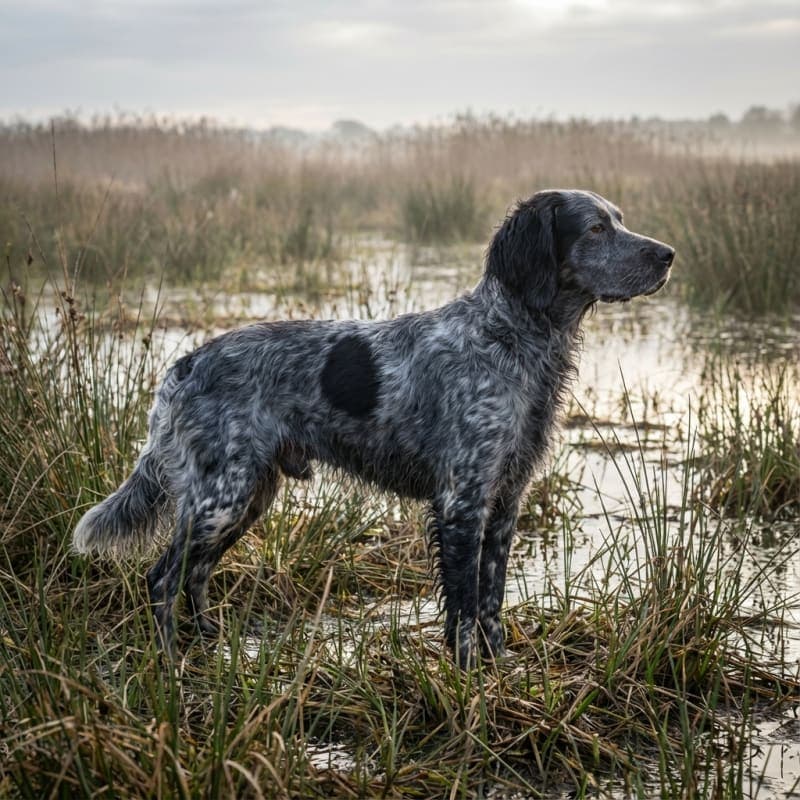
The Drentsche Patrijshond is a harmoniously built dog with a distinct hunting silhouette. Its proportional build combines elegance with a solid structure, highlighting both strength and agility necessary for hunting. This breed showcases dry musculature and clean lines, indicating its physical fitness.
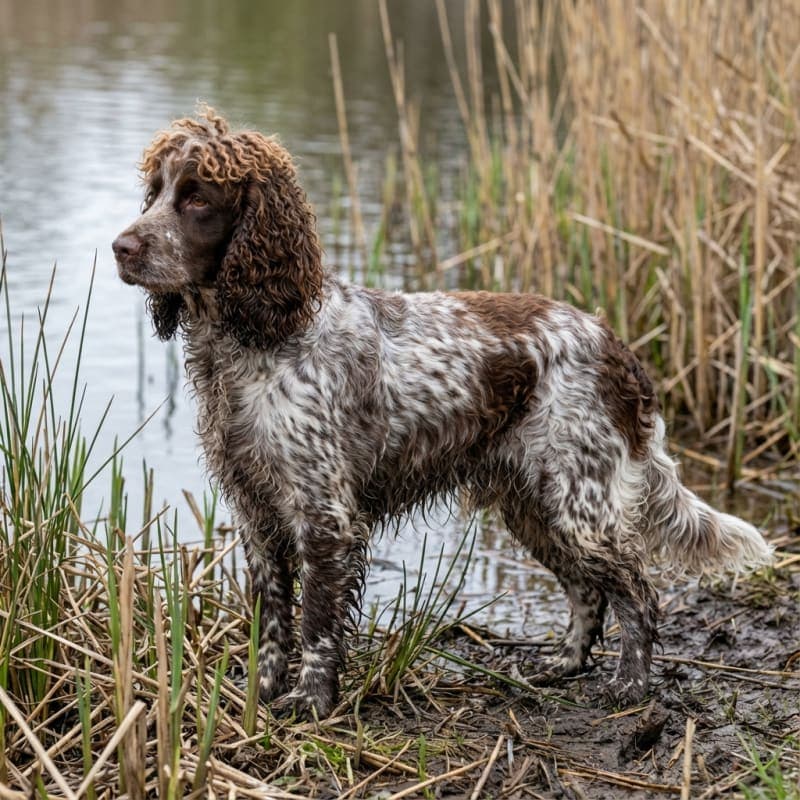
The head has a characteristic, slightly wedge-shaped appearance. The muzzle is somewhat shorter than the skull, dry, without hanging lips, which gives the dog an expression of alertness and intelligence. The eyes, in amber color, express a friendly disposition and loyalty. The ears are set high, of medium length, drooping, and covered with long hair, creating picturesque fringes.
The coat is one of the most distinctive features of its appearance. Although it appears long, it is actually of medium length on the body, dense and waterproof, providing excellent protection against moisture and cold. Longer fringes are found on the ears, neck, chest, hind legs, and tail, giving the dog an elegant look. The hair has a gentle wave but is never curly.
The coloration is always a white background with brown (chestnut) spots that create distinct markings. The spots can vary in size and have clear boundaries. Black or other colored markings are not acceptable. This coat pattern not only looks beautiful but also makes it easier to spot the dog in the field.
Dimensions and weight:
- Height at the withers: males 58-63 cm, females 55-60 cm
- Weight: 25-35 kg depending on gender and build
The tail is set as a natural extension of the back line, carried horizontally or slightly raised, covered with long, lush hair forming a beautiful plume. It is never curled over the back.
The silhouette of the Drentsche Patrijshond emanates nobility and elegance, while maintaining robustness and strength. It is a dog that attracts attention both in the field and at shows, combining beauty with functionality.
The Drentsche Patrijshond is distinguished by its exceptionally balanced and gentle temperament, making it an excellent family dog. Its disposition combines the calmness of a home companion with the energy and passion of a hunting assistant.
The bond with the family is a priority for the Drent. This breed shows strong attachment to its caregivers and desires to spend as much time as possible with them. In interactions with children, they display extraordinary patience and gentleness, making them an ideal choice for families. Drents can adjust their energy level to the situation – they are calm and balanced at home, yet full of vigor outdoors.
The hunting instinct is deeply rooted in the nature of this breed. The Drentsche Patrijshond is a retrieving dog that excels in work both on land and in water. It shows an innate passion for tracking and finding game, working closely with its handler. Despite its strong hunting instinct, it does not exhibit excessive independence – it always stays in contact with the owner.
Intelligence and willingness to learn are other strong traits of character. Drents quickly absorb new commands and happily cooperate with humans. However, their sensitivity requires the use of positive training methods – they respond well to praise and rewards, but poorly to harshness.
Relationships with other animals:
- With dogs – usually very tolerant and friendly
- With cats – can coexist well if socialized from puppyhood
- With small animals – hunting instinct may manifest
Towards strangers, the Drentsche Patrijshond can be somewhat reserved, but never aggressive. After a short observation period, they usually open up to new people, especially if they see acceptance from the owner. They are not guard dogs in the typical sense – they are more likely to alert about visitors than to chase them away.
Activity needs are significant. The Drent is a dog that requires a daily dose of exercise and mental stimulation. Without adequate physical effort and intellectual challenges, it may exhibit frustration or undesirable behaviors. It feels best in homes with gardens and owners who lead an active lifestyle.
The adaptability of this breed is admirable – Drents can adjust to various environmental and climatic conditions, provided that appropriate activity is ensured. They are versatile companions, combining the temperament of a hunter with the devotion of a family dog.
The Drentsche Patrijshond enjoys a well-deserved reputation as a generally healthy and resilient breed. Careful breeding practices and a relatively small number of individuals have contributed to maintaining good genetic health.
Life expectancy averages 12-14 years, which is a very good result for a dog of this size. With proper care, a balanced diet, and regular physical activity, many individuals reach old age in good condition.
Common health issues in the breed:
- Hip dysplasia (HD) – as in most medium and large breeds. Responsible breeders perform X-ray examinations of the parents before allowing them to breed.
- Ear infections – due to the drooping, fur-covered ears, regular checks and cleaning are necessary.
- Entropion – inward rolling of the eyelid, occurs sporadically.
- Atopic dermatitis – some individuals may develop allergies.
Health prevention:
Regular veterinary visits, up-to-date vaccinations, and deworming are essential. Particular attention should be paid to ear checks – their structure promotes moisture accumulation, which can lead to infections. It is recommended to clean the ears once a week with specialized products.
Weight control is important, especially for older or less active dogs. The Drentsche tends to gain weight if it does not get enough exercise. Obesity leads to joint and heart problems, so it is necessary to monitor the dog's condition and adjust food portions according to the activity level.
Health checks before purchasing a puppy:
A responsible breeder should provide the results of the parents' hip dysplasia tests and rule out genetic defects. It is also worth asking about the longevity of the ancestors and any potential health issues in the lineage.
Activity and health – The Drentsche Patrijshond is a breed that requires a lot of exercise. Regular physical activity not only meets mental needs but also maintains the musculoskeletal system's fitness and appropriate weight.
In summary, the Drentsche Patrijshond is a healthy breed that, with proper care and prevention, can enjoy a long, active life alongside its family.
The care of the Drentsche Patrijshond is relatively simple and not very time-consuming, making this breed practical for owners who appreciate the dog's natural beauty without excessive grooming procedures.
Brushing the coat:
Although the coat appears abundant, regular brushing once a week is sufficient to keep it in good condition. It is best to use a natural bristle brush or a comb with wide teeth. Special attention should be paid to:
- Tassels on the ears – they can easily get tangled and require gentle detangling
- Coat on the chest – longer and denser, it can form mats
- Back legs – long hair needs regular combing
- Tail – the bushy plume should be brushed systematically
Shedding:
The Drentsche Patrijshond sheds seasonally, mainly in spring and autumn. During these periods, the frequency of brushing should be increased to 2-3 times a week to remove dead hair and prevent matting. The breed does not shed excessively – hair loss is moderate.
Bathing:
The Drentsche coat is waterproof and dirt-resistant, so it does not require frequent bathing. A bath once every 2-3 months or as needed (after intense play in mud) is sufficient. Bathing too often can weaken the coat's natural protective layer. Gentle shampoos designed for dogs should be used.
Ear care:
This is a key element in the care of this breed! Drooping, fur-covered ears are prone to infections. Recommendations:
- Check the ears once a week
- Clean with a specialized ear solution
- Remove excess hair from the ear canal (gently, you can ask a groomer for help)
- Ventilate the ears after bathing or swimming
Nails:
With the right amount of exercise on hard surfaces, the nails wear down naturally. If the dog spends a lot of time on soft surfaces, they should be trimmed once a month. This can be done at home or by using the services of a veterinarian or groomer.
Oral hygiene:
Regular tooth brushing (ideally daily, at least 2-3 times a week) prevents the formation of tartar and gum disease. It is also worth providing natural chews that help clean the teeth.
Check after walks:
After hiking in the field, check:
- Paw pads – for any wounds, thorns, or burrs
- Hair between the toes – clumps can form painful mats
- Body – ticks, especially in the spring-summer season
In summary, the Drentsche Patrijshond is a dog with low grooming requirements. With regular, basic care, it will maintain its health and natural charm without requiring professional grooming procedures.
Drentsche Patrijshond is a breed that requires a lot of physical activity and mental stimulation. As a hunting dog, it was bred for long hours of work in the field, which translates into high exercise needs.
Minimum requirements:
It is recommended to have at least 2 hours of activity daily, preferably divided into several sessions. However, these cannot just be regular walks – the Drent needs intense effort that engages both body and mind.
Ideal forms of activity:
- Running – accompanying the owner during jogging or cycling
- Fetching – a natural passion of this breed, excellent physical and mental exercise
- Swimming – Drentsche love water; swimming is a great form of movement that spares the joints
- Hiking – long walks through forests, meadows, and varied terrain
- Nosework training – scent searching engages the tracking instinct
- Simulated hunting – for dogs from hunting lines
- Agility – agility and intelligence predispose them to this sport
Mental stimulation:
Just as important as physical effort! The Drentsche Patrijshond is an intelligent dog that needs intellectual challenges. Without them, it can get bored, leading to undesirable behaviors. Recommended activities include:
- Games involving hiding treats
- Learning new tricks and commands
- Dog puzzles and interactive toys
- Scent games (tracking, searching)
- Changing walking routes (new stimuli)
Ideal environment:
The Drentsche Patrijshond feels best in a rural or suburban environment, where it has access to a garden and natural terrain. A house with a large, fenced yard is ideal. This breed is not recommended for residents of small city apartments unless the owners are extremely active and dedicate a lot of time to ensuring the dog gets enough exercise.
Consequences of insufficient activity:
Lack of adequate exercise leads to:
- Destructive behaviors – destroying furniture, chewing on objects
- Excessive barking – out of frustration and boredom
- Weight problems – obesity and related health issues
- Hyperactivity – difficulty calming down
- Mental frustration – apathy or excessive energy
Age adaptation:
- Puppies (up to 12 months): shorter but frequent sessions – avoid overloading the joints
- Adult dogs (1-8 years): full activity, intense exercise
- Seniors (8+ years): gentler forms of movement, adapted to fitness, more walks, less intense running
Weather conditions:
The Drentsche Patrijshond tolerates various weather conditions well due to its waterproof coat. It is not afraid of:
- Rain and humidity – the coat protects against soaking
- Cold – the dense undercoat provides insulation
- Snow – they love playing in the snow
On hot days, however, it is advisable to avoid intense exercise in the middle of the day and provide access to shade and water.
In summary, the Drentsche Patrijshond is a breed for active owners who value shared adventures outdoors and are willing to dedicate time to ensuring their dog gets the right amount of exercise and challenges.
Training the Drentsche Patrijshond is a pleasant experience for both the dog and the owner. This breed combines intelligence, a desire to cooperate, and sensitivity, making learning natural and effective.
Training predispositions:
- High intelligence – quickly absorbs new commands
- Willingness to cooperate – eager to please the owner
- Sensitivity – responds well to subtle signals
- Motivation – both food and praise are effective rewards
- Concentration – can focus on the task
Training methods – positive reinforcement:
The Drentsche Patrijshond responds best to positive training methods based on rewards and praise. Harsh approaches or physical punishments are absolutely discouraged – the sensitive nature of this breed does not tolerate coercion, which can lead to a loss of trust and withdrawal.
Effective techniques:
- Rewarding desired behaviors with treats, toys, or praise
- Consistency in requirements – clear rules
- Short, intense training sessions (10-15 minutes)
- Variety of exercises – avoiding monotony
- Patience and calmness – without nervousness and frustration
Basic commands:
Drentsche quickly master standard commands such as:
- Sit – usually mastered within a few days
- Lie down – takes a bit more time, but comes naturally
- Stay – an important command for safety
- Come – crucial for dogs with a hunting instinct
- Fetch – natural for the breed, learning is intuitive
Socialization:
Early and extensive socialization is key to proper development. Puppies should gradually be introduced to:
- Different people (children, adults, seniors)
- Other dogs and animals
- Different environments (city, forest, water)
- Sounds (traffic, household noises)
- Everyday situations (vet visits, car travel)
A well-socialized Drentsche is confident, balanced, and friendly.
Hunting training:
For dogs intended for hunting, it is recommended to:
- Train fetching from a young age
- Teach water work
- Train obedience at a distance
- Acclimatize to the noise of gunshots
- Work with a professional hunting dog trainer
Training as a family dog:
Drentsche can also be wonderful family dogs if the owners:
- Provide alternative forms of stimulation (agility, nosework)
- Teach self-control and calmness at home
- Consistently reinforce desired behaviors
- Ensure sufficient exercise before training (a tired dog focuses better)
Typical challenges:
- Reserve towards strangers – early socialization resolves this issue
- Hunting instinct – may cause chasing small animals, requires recall training
- Energy – without sufficient exercise, they may be distracted during training
Building bonds:
Training is not just about learning commands, but above all building a strong relationship with the dog. The Drentsche Patrijshond needs an owner who is:
- Consistent but gentle
- Patient and understanding
- Active and engaged
- Ready for shared challenges
With the right approach, the Drentsche Patrijshond becomes an ideally obedient companion who joyfully follows commands and enjoys every shared activity.
Proper nutrition for the Drentsche Patrijshond is crucial for maintaining health, energy, and longevity. As an active, medium-sized dog, it requires a balanced diet tailored to its age, weight, and activity level.
Basic nutrition guidelines:
- High-quality protein – should make up 25-30% of the diet, supporting muscle development and recovery
- Healthy fats – 15-20% (omega-3 and omega-6 fatty acids for coat and skin condition)
- Carbohydrates – a source of energy, preferably from whole grains or vegetables
- Vitamins and minerals – to support the immune system
- Fiber – for proper digestion
Types of food:
1. Dry food (kibble):
- Convenient and economical
- Helps clean teeth
- Choose premium or super-premium foods for active dogs
- Check the ingredients – meat should be listed first
2. Wet food:
- Higher moisture content, better for hydration
- More palatable for picky eaters
- Can be added to dry food
3. BARF diet (raw meat and vegetables):
- A natural way of feeding similar to the diet of ancestors
- Requires knowledge and time for preparation
- Consultation with a veterinarian is recommended
Feeding portions:
The amount of food depends on weight, age, and activity level:
- Adult dog (25-35 kg): about 300-450 g of dry food per day, divided into 2 meals
- Puppies: 3-4 meals a day, puppy food for medium breeds
- Active dogs (hunting, sporting): increased portion by 20-30%
- Seniors: lower-calorie food, adjusted for a slower metabolism
Feeding times:
It is best to feed the dog at regular times, ideally in the morning and evening. Avoid feeding directly before or after intense exercise – risk of gastric torsion, especially in breeds with deep chests.
Weight control:
The Drentsche Patrijshond tends to gain weight if it does not get enough exercise. Regular weight checks are crucial:
- Ribs should be felt under a thin layer of fat
- Waist should be clearly defined when viewed from above
- Stomach should be tucked when viewed from the side
If the dog is gaining weight, reduce portions and increase physical activity.
Hydration:
Fresh water should be available at all times, especially:
- After intense exercise
- On hot days
- When feeding dry food
Drentsche love water – while swimming, they may swallow significant amounts, which is natural.
Snacks and treats:
Use as rewards during training, but remember:
- They should not exceed 10% of the daily calorie intake
- Choose healthy options: dried meat, vegetables (carrots, apples)
- Avoid sweets, onions, chocolate, grapes (toxic to dogs)
Special dietary needs:
- Food allergies: some individuals may show sensitivity to chicken, grains – in such cases, use hypoallergenic food
- Digestive issues: easily digestible food, with added probiotics
- Joint support: supplements with glucosamine and chondroitin for older or very active dogs
Puppy nutrition:
Puppies of the Drentsche Patrijshond develop rapidly and need special puppy food for medium breeds:
- Higher protein and fat content
- Calcium and phosphorus for proper bone development
- Puppy food until 12-14 months of age
- 3-4 meals a day until 6 months, then 2 meals
Nutrition for working dogs:
Drentsche used for hunting have significantly higher energy requirements:
- Food for active or sporting dogs (higher calorie content)
- Electrolyte supplementation after intense exercise
- Additional meals during the hunting season
In summary, a balanced diet tailored to the activity level is the key to a long, healthy life for the Drentsche Patrijshond. Regular weight checks and consultations with a veterinarian will help keep the dog in optimal condition.
Characteristic Traits
Pros
- Strong family bond
- Ease of training
- Versatility in hunting
- Friendly towards children
- Healthy and resilient breed.
Cons
- Requires a lot of exercise
- May be reserved towards strangers
- Hunting instinct towards small animals
- Not suitable for living in the city.
Behavioral Ratings
Breed History
The history of the Drentsche Patrijshond is a fascinating tale of a breed that has survived for centuries thanks to careful breeding and the dedication of hunting dog enthusiasts. Its roots date back to the 16th century when Europe witnessed the migration of various hunting dog breeds from the south to the north of the continent.
The origins of the breed – 16th century:
The ancestors of the Drentsche Patrijshond are dogs known as Spioenen (or Spanjoelen), which arrived in the Netherlands from Spain via France. In Dutch, they were referred to as Patrijshond, which literally means partridge dog. They were spaniel-type dogs used for hunting birds, particularly partridges and quails.
What distinguished Dutch breeding? In the eastern part of the country, especially in the province of Drenthe, breeders carefully maintained the purity of the breed, avoiding crossbreeding with other hunting breeds that were common in other regions. It was precisely due to this geographical isolation and conscious breeding selection that the breed retained its authentic character for hundreds of years.
Name and identity:
The name Drentsche Patrijshond directly refers to its origin:
- Drentsche – from the province of Drenthe in northeastern Netherlands
- Patrijshond – partridge dog
It was in Drenthe, in a rural and forested environment, that the breed developed as a retrieving dog, a loyal companion to hunters.
Official recognition – 20th century:
Despite centuries of existence, the official recognition of the breed only occurred in the 20th century:
- May 15, 1943 – Raad van Beheer op Kynologisch Gebied in Nederland (Dutch cynological organization) officially recognized the Drentsche Patrijshond as a distinct breed
- Key figures in this process were Baroness Van Hardenbroek, Mr. Van Heek Jr., and Mr. Quartero, who actively promoted the breed and documented its unique characteristics
Establishment of the breed club:
Following the official recognition, on June 5, 1948, the Nederlandse Vereniging De Drentsche Patrijshond was established – a Dutch association of breed enthusiasts. This club still oversees the standard, promotes responsible breeding, and organizes events for Drentsche owners.
Relationship with other breeds:
The Drentsche Patrijshond is closely related to:
- Kleiner Münsterländer – a German hunting dog of similar size and function
- Epagneul Français – a French hunting spaniel
These breeds share a common ancestry from old European hunting spaniels, although each has developed in a different region, acquiring unique traits.
Modern population:
Today, there are about 5000 registered Drentsche Patrijshonds in the Netherlands. The breed remains relatively rare outside the country, although it is gaining increasing recognition among hunting and family dog enthusiasts in Europe and North America.
Preserving traditions:
Despite the passage of time, the Drentsche Patrijshond remains true to its roots. It is still a hunting dog, valued for:
- Versatility in work (land and water)
- Close cooperation with the handler
- Gentle, family-friendly character
- Endurance and resilience
Breeders ensure that the original traits of the breed are not lost, avoiding excessive commercialization and selection solely based on appearance.
International recognition:
The Drentsche Patrijshond is officially recognized by the Fédération Cynologique Internationale (FCI) under number 224, in group 7 (pointing dogs), section 1.2 (continental type spaniels). The FCI standards were last approved in 2016.
In summary, the Drentsche Patrijshond is a living heritage of Dutch hunting tradition – a breed that has preserved its authenticity for centuries thanks to the dedication of breeders and geographical isolation. Today, it combines history with modernity, being as good a hunting dog as a beloved family member.