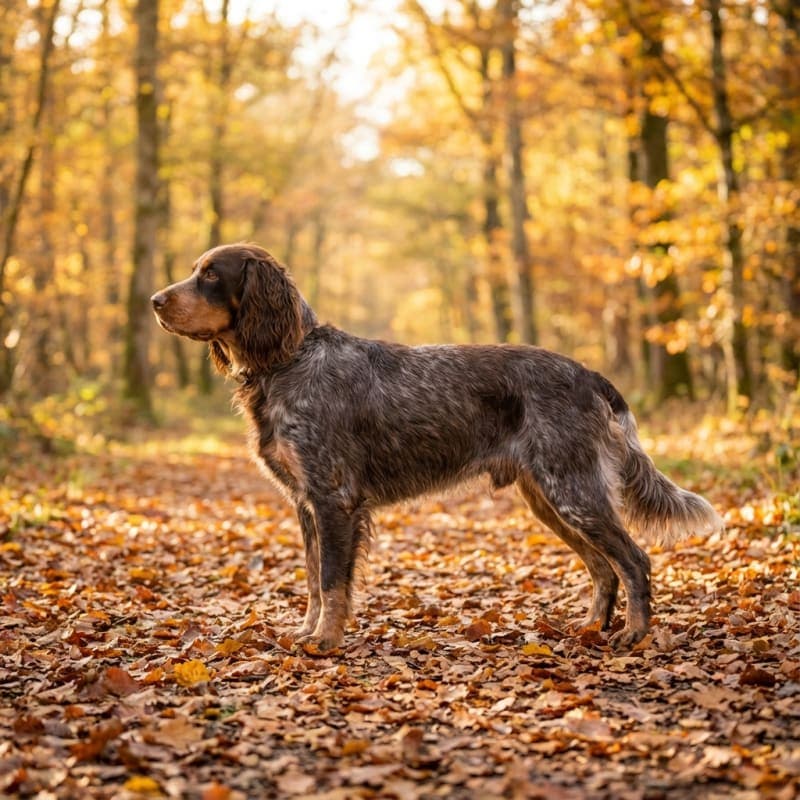
Picardy Spaniel
FCI Group
7• FCI 108
Size
Medium
Origin Country
FR
Height
55-62 cm
Weight
20-25 kg
Lifespan
10-15 years
Temperament
Overview
Epagneul Picard, also known as the Picardy Spaniel, is a wonderful dog breed originating from the picturesque region of Picardy in France. It belongs to the group of continental pointing dogs of the spaniel type, which already speaks to its exceptional hunting traits and versatility.
It is characterized by a strong, well-built body structure and a sturdy bone structure, making it an excellent companion not only during small game hunts but also in everyday family life. Its well-muscled front limbs and proudly carried head with a cheerful expression are a true hallmark of this breed.
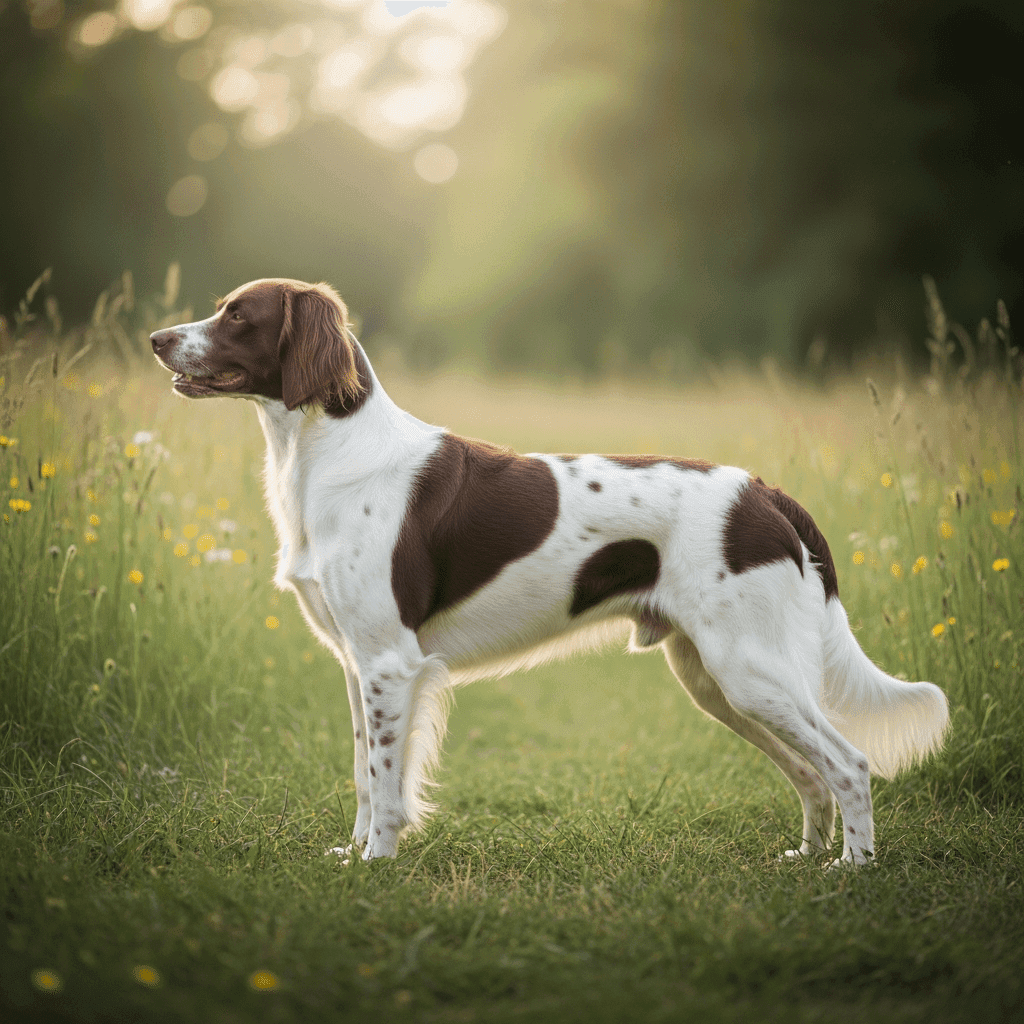
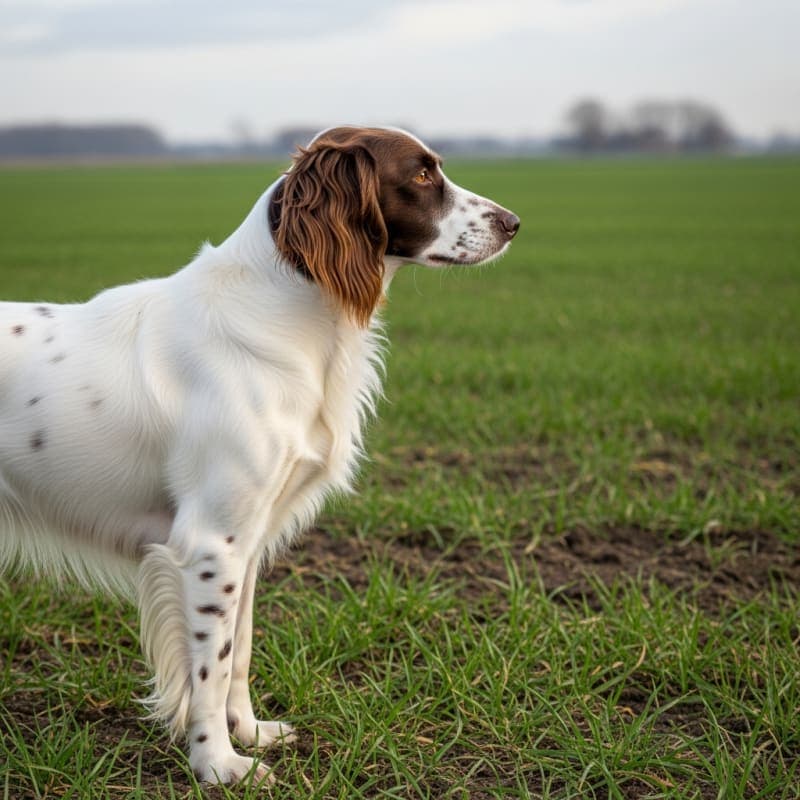
The head of the Epagneul Picard is broad and rounded, with a gentle stop between the forehead and nose, which adds to its warm, friendly expression. The dog's muzzle is long, wide, and slightly rounded, giving it a distinctive, noble profile. Its ears, set low and well back, are covered with beautiful, wavy, silky hair, adding elegance and a unique charm.
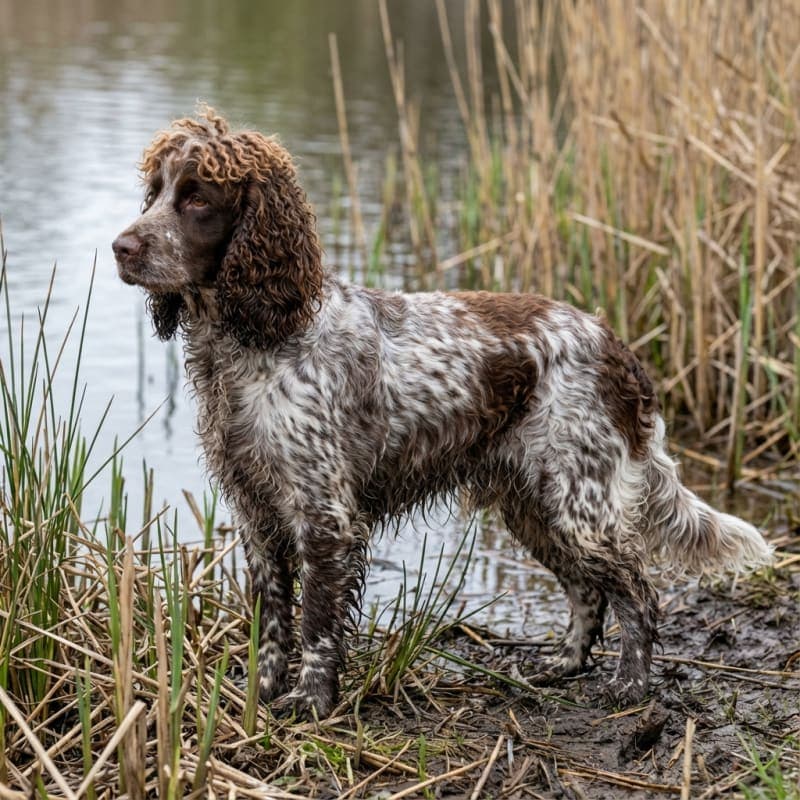
The coat of this breed is dense, slightly wavy, in a distinctive gray-and-spotted pattern with brown patches, which sets it apart from other spaniel breeds. The height of the Epagneul Picard at the withers ranges from 55 to 62 cm for males and from 55 to 60 cm for females, with a weight oscillating between 20-25 kg.
Epagneul Picard is not only beautiful but, above all, intelligent and devoted. Its friendly and gentle temperament makes it an excellent companion for families with children and active individuals who love long walks and adventures in nature. However, to fully develop its potential, it is essential to provide proper training and early socialization from puppyhood. This way, it will become a well-mannered, balanced, and confident dog.
Its natural hunting instincts make the Epagneul Picard thrive in the field. Its ability to make quick decisions, reliable sense of smell, and perseverance are invaluable during hunts. The breed's history shows that it was primarily used as a hunting dog for pointing game, specializing in searching for and retrieving waterfowl and game birds.
Although it remains popular in France, where its hunting skills are highly valued, the number of these dogs remains limited worldwide. This makes the Epagneul Picard a true gem for connoisseurs of rare and unique breeds.
This dog needs not only regular physical activity but also close emotional contact with people to be happy and healthy. It is a breed for committed individuals who want to dedicate time to building a deep bond with their four-legged friend.
The Picardy Spaniel is a medium-sized dog with a strong and harmonious body structure, which gives the impression of a robust, durable, yet elegant companion. The height at the withers ranges from 55 to 62 cm for males and from 55 to 60 cm for females, with a weight oscillating between 20-25 kg. The silhouette is harmonious and well-proportioned, with well-developed front limbs and a solidly built, yet not heavy torso.
The body length from the top of the shoulder to the ischial tuberosities exceeds the height at the withers by about 1/10, giving the dog a compact but not square silhouette. The chest is deep, reaching to the elbows, with well-arched ribs. The loins are straight, strong, and not too long, allowing the dog to move with grace, freedom, and confidence.
The head is wide and round, with a well-defined occipital protuberance and flat sides. The skull is slightly convex, with a gentle but distinct stop between the forehead and muzzle. The muzzle is long, wide, and slightly rounded, tapering towards the nose, but never elongated or pointed. The nose is brown, well-developed, with widely opened nostrils.
The eyes are dark brown, large, oval-shaped, expressing a friendly, open, and intelligent character. The gaze is gentle yet attentive and alert. The ears are set low and well back on the head, long, reaching to the end of the muzzle, covered with beautiful, wavy, silky hair that forms elegant fringes.
The neck is strong, well-muscled, of medium length, without unnecessary loose skin. The nape is slightly arched, emphasizing the overall nobility and proportionality of the silhouette.
The coat is dense, slightly wavy, but never curly, with a good length on the body. The hair on the head is shorter and finer. The characteristic gray-speckled coat with brown spots (gray-brown in FCI terminology) creates a unique, eye-catching pattern. The ears and brown spots cover most of the body, giving the breed its typical, recognizable appearance.
The tail is set not too high, of medium length, covered with silky, wavy hair forming impressive fringes. It is carried horizontally or slightly above the line of the back, creating a characteristic arch or slight curve, which adds vigor and a joyful expression during movement.
Overall, the Picardy Spaniel presents itself as a elegant, graceful dog with an aristocratic charm, making it an visually appealing choice for lovers of continental breeds.
The Picardy Spaniel is a dog with a remarkably gentle, friendly, and joyful temperament. It is very sociable and attached to its family, making it an excellent companion for both families with children and active individuals leading an intense lifestyle.
This breed is characterized by its high intelligence and willingness to cooperate, which makes it quick to learn new commands and enthusiastically participate in training. The Picardy Spaniel excels in the company of children – it is patient, gentle, and loves to play together, without overwhelming the youngest household members with its energy. It is a true friend for little ones, who will happily join in their games while always maintaining the right balance.
With other pets, the Picardy Spaniel usually gets along well, but it is important to remember about proper socialization from a young age to avoid potential behavioral issues. Early contact with various people, dogs, and situations will help shape a balanced, confident, and well-adjusted character.
Natural hunting instincts may manifest as a desire to chase small animals, birds, or moving objects. For this reason, it is advisable to exercise caution during walks in unfamiliar areas and not to let the dog off-leash near potential hazards. However, at home, the Picardy Spaniel is calm, balanced, and well-mannered, provided it receives sufficient exercise and mental stimulation.
The Picardy Spaniel is an active and energetic dog that needs regular physical exercise and intellectual challenges to avoid boredom and frustration. Insufficient activity can lead to behavioral problems such as excessive barking, destruction of objects, or hyperactivity.
Owners should be consistent in training and establish clear, straightforward rules so that the dog knows exactly what is expected of it. The Picardy Spaniel responds best to positive training methods based on rewarding and reinforcing desired behaviors.
Overall, the Picardy Spaniel is a dog that craves close emotional contact with people and feels perfectly at home as a full-fledged family member. It is devoted, loyal, and extremely attached to its caregivers, making it a wonderful companion for many happy years. Its joyful, cheerful disposition and friendly nature make it an excellent choice for those looking for a dog that will be not only a companion but, above all, a faithful friend.
The Picardy Spaniel, like many other dog breeds, can be prone to various health issues, although it is generally considered to be a fairly healthy and resilient breed. Among the most common conditions that may affect this breed are:
- Hip dysplasia (HD) – an orthopedic condition characterized by improper development of the hip joint, which can lead to pain, lameness, and arthritis.
- Eye problems – such as cataracts, progressive retinal atrophy (PRA), or ectropion/entropion of the eyelids, which can affect the quality of vision and the dog's quality of life.
- Otitis externa – inflammation of the outer ear, particularly in dogs with long, floppy ears that hinder ventilation and may promote bacterial or fungal infections.
It is important for future owners of the Picardy Spaniel to be aware of potential health issues and to choose reputable, responsible breeders who conduct appropriate health tests on their breeding dogs (including X-rays of the hip joints and ophthalmic examinations).
A good practice is regular veterinary visits – it is recommended to have a check-up at least once a year to monitor the dog's health and detect any potential problems at an early stage. Early diagnosis significantly increases the chances of effective treatment and maintaining a good quality of life.
This breed also has a tendency to gain weight, so it is extremely important to take care of their diet and ensure they get an appropriate, regular amount of exercise. Overweight leads to additional strain on the joints, heart, and other organs, which can shorten the dog's life and reduce its comfort.
Regular physical exercise, outdoor activity, and a healthy diet consisting of high-quality food can help keep the dog in excellent condition. Special attention should also be paid to ear and dental hygiene to avoid infections, tartar buildup, and dental problems.
With proper, informed veterinary care, high-quality nutrition, and regular activity, the Picardy Spaniel has every chance for a long, healthy, and joyful life alongside its family – often living to be 12-14 years old.
The care of the Picard Spaniel is not particularly complicated or time-consuming, but it requires regularity and consistency. Their coat, although dense, slightly wavy, and of medium length, does not require daily brushing; however, at least 2-3 times a week it is worth thoroughly combing it to remove dead hair, dirt, tangles, and to prevent matting.
In spring and autumn, during the period of intensive shedding, brushing should be increased to even daily to help the dog in the natural process of shedding old fur and keeping the home clean. Slicker brushes and combs with rotating teeth work well, gently detangling the wavy hair without pulling it out.
Ears require special attention due to their structure – long, drooping, and covered with dense hair, which limits ventilation of the ear canal. They should be regularly checked for dirt, excess wax, and unpleasant odors, which may indicate an infection. It is recommended to clean the ears at least once a week using special solutions designed for dogs. In case of any concerning symptoms (redness, swelling, itching, discharge), it is advisable to consult a veterinarian promptly.
Regular teeth cleaning is extremely important to prevent dental problems such as tartar, gum disease, or premature tooth loss. It is recommended to brush the teeth at least 2-3 times a week, preferably daily, using special toothbrushes and toothpaste for dogs. Dental chews are a good supplement.
Baths should only be given when absolutely necessary (e.g., after intense mud play, unpleasant odors) to avoid disrupting the skin's natural lipid protection. Too frequent washing can lead to dry skin, irritation, and dermatological issues. Use gentle shampoos designed for dogs with a pH suitable for canine skin.
Taking care of the dog's nails is also very important – regular nail trimming (every 3-4 weeks) will help prevent excessive growth, breaking, and maintain walking comfort and proper joint alignment. If you hear the nails clicking on the floor, it means they are already too long.
Overall, the Picard Spaniel requires moderate but regular grooming, and consistent hygiene practices will help keep it healthy, in good condition, and looking attractive for many years.
The Picardy Spaniel is a dog with a high energy level and significant exercise needs, requiring regular daily exercise to remain healthy, happy, and emotionally balanced. This breed was developed for intensive work in hunting fields, so it needs activities that allow it to utilize its innate instincts and physical capabilities.
Long walks, jogging, running, and playing fetch are ideal activities that help develop natural hunting skills. It is recommended to provide the Picardy Spaniel with at least 60-90 minutes of intense exercise daily, divided into 2-3 sessions. It's beneficial to introduce a variety of activities to prevent the dog from getting bored with routine and to keep it constantly stimulated both physically and mentally.
Sports activities for dogs are an excellent choice, such as:
- Agility – an obstacle course that develops coordination, speed, and the bond with the owner
- Obedience – advanced obedience training
- Nosework – scent exercises that allow the dog to utilize its natural abilities
- Field trials – ideal for dogs with hunting bloodlines
- Swimming – a great form of exercise, especially for dogs with joint issues
The Picardy Spaniel thrives in active families who regularly spend time outdoors, go on trips, and engage in hiking or cycling. This is not a breed for those who prefer a calm, sedentary lifestyle.
Lack of exercise and stimulation can lead to serious behavioral problems, such as:
- Excessive, persistent barking
- Destruction of furniture, shoes, and household items
- Hyperactivity and inability to focus
- Escaping from home in search of adventures
- Frustration or anxiety-related aggression
A dog that does not get enough activity may also gain weight, leading to further health issues (joint strain, heart problems, diabetes).
Regular interactions with other dogs during walks or at the dog park, playtime, and training not only provide exercise but also strengthen the emotional bond between the dog and the owner, making daily life more satisfying, harmonious, and joyful for both parties.
The training of the Picardy Spaniel should start as early as possible, ideally in the 8-10 week period of the puppy's life, to provide the dog with a solid foundation in obedience, socialization, and proper habits. This breed is intelligent, eager to learn, and cooperative, which makes training a true pleasure for both the dog and the owner.
It is extremely important to use positive training methods based on rewards (treats, toys, praise), which motivate the dog to act and build positive associations with learning. Avoid physical punishment, yelling, and dominance-based methods, which can destroy trust and lead to behavioral problems.
It is worth introducing a variety of commands and exercises to maintain the dog's interest and attention. The basic commands that every Picardy Spaniel should master are:
- Sit – a basic control command
- Stay/Wait – crucial for the dog's safety
- Come/Here – recall, absolutely essential
- Lie down – calming and control
- No/Leave it – protection from dangerous objects
- Heel – walking by the side without pulling on the leash
The Picardy Spaniel responds excellently to training in the form of play, so it is worth introducing activities that will be interesting and exciting for him. A good practice is also intensive socialization with other dogs, people, children, and various environments (city, park, store, public transport), which will help shape a balanced character and the dog's self-confidence.
It is important to remember that the Picardy Spaniel has strong, natural hunting instincts, so it is worth introducing training elements related to:
- Retrieving (dummy, game decoys)
- Tracking (nosework)
- Pointing (indicating game)
- Water work (retrieving from water)
These exercises will allow the dog to utilize its innate skills and provide great satisfaction and fulfillment. Regular mental challenges are just as important as physical ones, so it is worth ensuring variety and creativity in training.
Consistency and patience are key in training the Picardy Spaniel. Set clear rules and stick to them – the dog must know what is expected of it. Short, regular training sessions (10-15 minutes, 2-3 times a day) are more effective than long, exhausting sessions for both parties.
A well-trained Picardy Spaniel will become a wonderful, obedient companion who will enjoy every moment spent with the owner, both at home and during shared adventures in the field.
The diet of the Picard Spaniel should be balanced, high-quality, and tailored to its age, weight, activity level, and health status. It is important to choose high-quality food that contains all essential nutrients, such as complete protein, healthy fats, carbohydrates, vitamins, minerals, and fiber.
This breed of dog has a tendency to gain weight, especially with insufficient physical activity, so it is crucial to carefully monitor the amount of food given, avoid overfeeding, and limit treats to a maximum of 10% of daily calorie intake.
Feeding recommendations:
- Animal protein – should form the basis of the diet (poultry, beef, fish, lamb), essential for maintaining muscle mass, energy, and proper body function.
- Healthy fats – Omega-3 and Omega-6 fatty acids support skin, coat, nervous system, and immune health (salmon oil, flaxseed oil).
- Carbohydrates – provide energy (rice, oatmeal, potatoes, sweet potatoes), but in moderate amounts.
- Vegetables and fruits – sources of vitamins, minerals, and fiber (carrots, broccoli, spinach, blueberries, apples).
It is advisable to avoid foods containing artificial additives, preservatives, colorings, and unnecessary fillers (corn, wheat in large amounts), which can negatively affect the dog's health, cause food allergies, and digestive problems.
In addition to dry food, wet food or homemade meals (cooked meat, vegetables, rice) can also be introduced into the diet, but it is always worth consulting such changes with a veterinarian or pet nutritionist to ensure that the diet is complete and balanced.
Do not forget about water – the dog should have constant, unrestricted access to fresh, clean water, especially after intense exercise, on hot days, and when consuming dry food.
Regular meals should be given at fixed times (twice a day for adult dogs, 3-4 times for puppies), which will help regulate digestion, metabolism, and maintain stable energy levels.
In case of any health issues, such as food allergies, overweight, digestive problems, or sensitive stomach, it is advisable to consult a veterinarian who can help choose an appropriate, personalized diet.
A well-balanced, high-quality diet will contribute to a long, healthy, and energetic life for the Picard Spaniel, supporting its immune system, physical condition, and overall well-being.
Characteristic Traits
Pros
- Friendly and gentle disposition
- High intelligence and eagerness to learn
- Excellent companion for hunters
- Easy to train
- Great with children
- Versatile and persistent.
Cons
- Requires a lot of movement and activity
- Needs early socialization
- Rarely found outside of France
- Tendency to gain weight with lack of exercise
- Requires regular grooming of fur and ears.
Behavioral Ratings
Breed History
Epagneul Picard, also known as the Picardy Spaniel, has a rich and fascinating history that dates back many centuries. This breed originates from the picturesque region of Picardy in northern France, where it has long been used as a versatile hunting dog for hunting waterfowl and game.
The diverse habitat of the Picardy region – marshes, fields, forests, and lakes – prompted local hunters to seek a dog that would be durable, versatile, and generous in work. The Epagneul Picard fully met these expectations, becoming an indispensable companion during hunts.
Their exceptional skills in pointing, retrieving, and tracking made them invaluable companions for hunters, as well as support in hunting both on land and in challenging marshy terrain. Their ability to work is characterized by determination, joy in pointing, and a keen sense of smell that leaves no chance for escape for the game.
Due to local usage, the breed remained little known outside the borders of Picardy for a long time. It is an ancient breed that never gained widespread popularity outside its native region, making it a true gem for connoisseurs to this day.
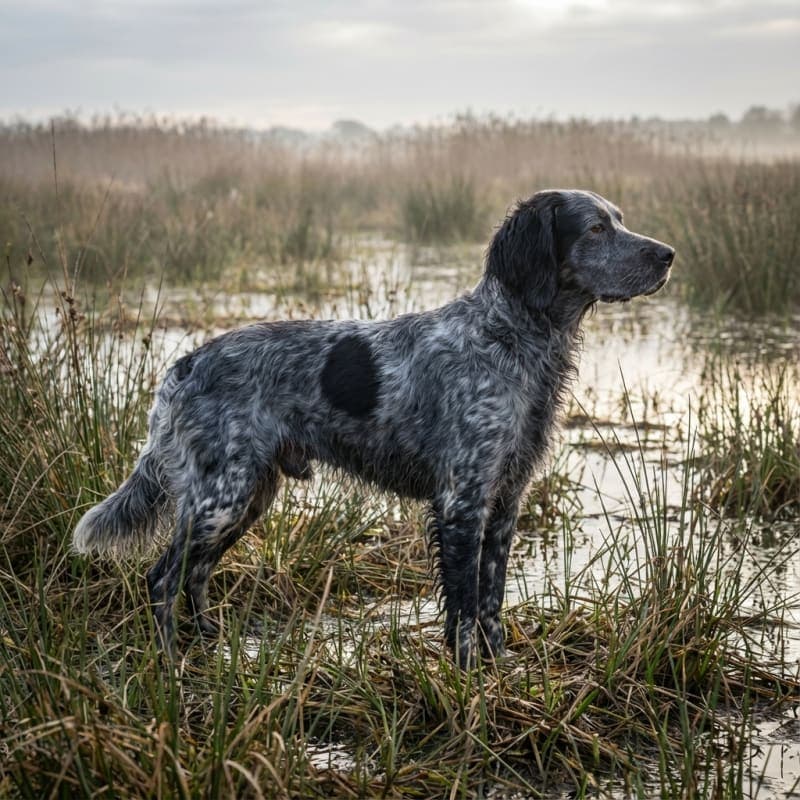
The main difference between Epagneul Bleu de Picardie (Blue Picardy Spaniel) and Epagneul Picard lies in the coat color – both Picardy breeds share many common traits in character and build.
In the 1980s, the breed was officially registered with the International Canine Federation (FCI) under standard number 108, which contributed to its protection, promotion, and revival of interest in breeding. The Epagneul Picard also has its well-deserved place in French culture, often appearing in hunting literature and as favorites of families living in the Picardy region.
Today, the breed enjoys renewed interest – many hunters are happily discovering this long-neglected ally, perfectly suited for small game hunting. Its gentleness and patience also make it an ideal companion at home. It is a true lover of children, eagerly participating in their games without overwhelming them.
Today, the Epagneul Picard is bred in several European countries, and its popularity is gradually increasing among those looking for a dog that is active, intelligent, loyal, and versatile. As the years go by, the breed continues to retain its original hunting traits while perfectly adapting to life in modern families.
However, it is worth remembering that the Epagneul Picard requires proper care, consistent training, and regular activity to be a happy, healthy, and fulfilled dog. It is a breed for true enthusiasts who can appreciate its unique qualities and commit to building a deep bond with this wonderful dog.