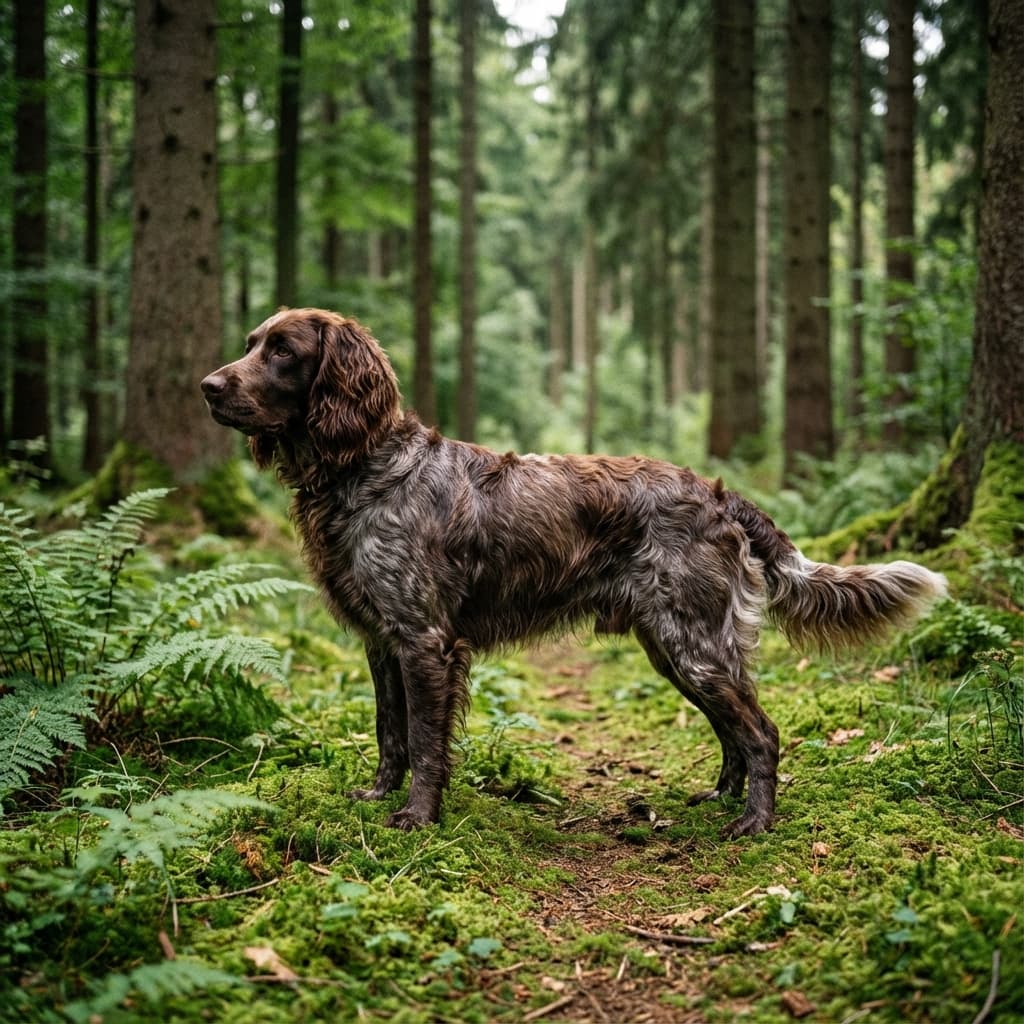
German Spaniel - Wachtelhund
FCI Group
8• FCI 104
Size
Medium
Origin Country
DE
Height
45-54 cm
Weight
18-25 kg
Lifespan
12-14 years
Temperament
Overview
The German Spaniel, also known as Deutscher Wachtelhund, is a unique breed of hunting dog originating from Germany. Its history dates back to the turn of the 19th and 20th centuries when it was bred as a versatile assistant for hunters. The progenitor of the breed was Lord Augusta 1834 L from Staufenberg in Upper Bavaria, whose genes became the foundation for the entire population of modern Wachtelhunds.
The breed is distinguished by its long, dense, and wavy coat, which effectively protects against adverse weather conditions while working in the field. It is a medium-sized dog with a strong bone structure and a proportional, harmonious body. The noble head with long, hanging ears gives it a characteristic, unique appearance that attracts the attention of both hunters and dog lovers.
The German Spaniel exhibits an extraordinary passion for finding game and flushing birds, making it an irreplaceable companion on hunts. Its versatility lies in its ability to work both in water and on land, track wounded game, and retrieve. Besides its exceptional hunting abilities, it is also an excellent family dog – its friendly disposition and adaptability to family life win the hearts of many owners around the world.
This intelligent breed is eager to learn and cooperate with its handler, which greatly facilitates training. It is an ideal choice for those seeking an active companion for shared adventures. However, it is important to remember that it requires regular, intense walks and physical activity due to the high exercise needs typical of hunting dogs. Despite its strong hunting instinct, the Wachtelhund gets along well with children and other household pets, provided it is properly socialized from a young age.
As a hunting dog, it shows considerable independence in fieldwork, yet it can also obey the handler's commands when necessary. It is neither aggressive nor nervous, making it suitable for owners of varying experience levels. The German Spaniel needs close contact with its owner and does not tolerate prolonged solitude. Its unwavering loyalty and deep attachment make it an irreplaceable life companion for active individuals and families.
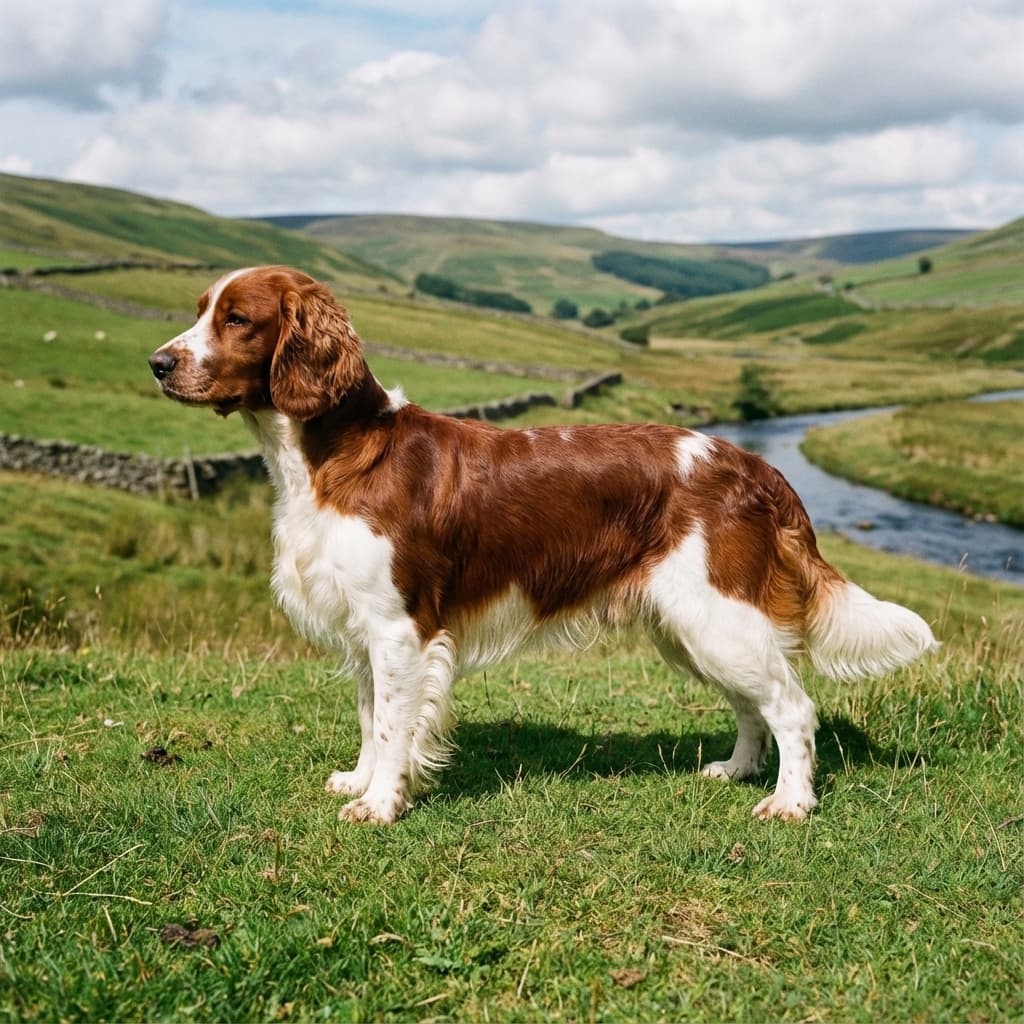
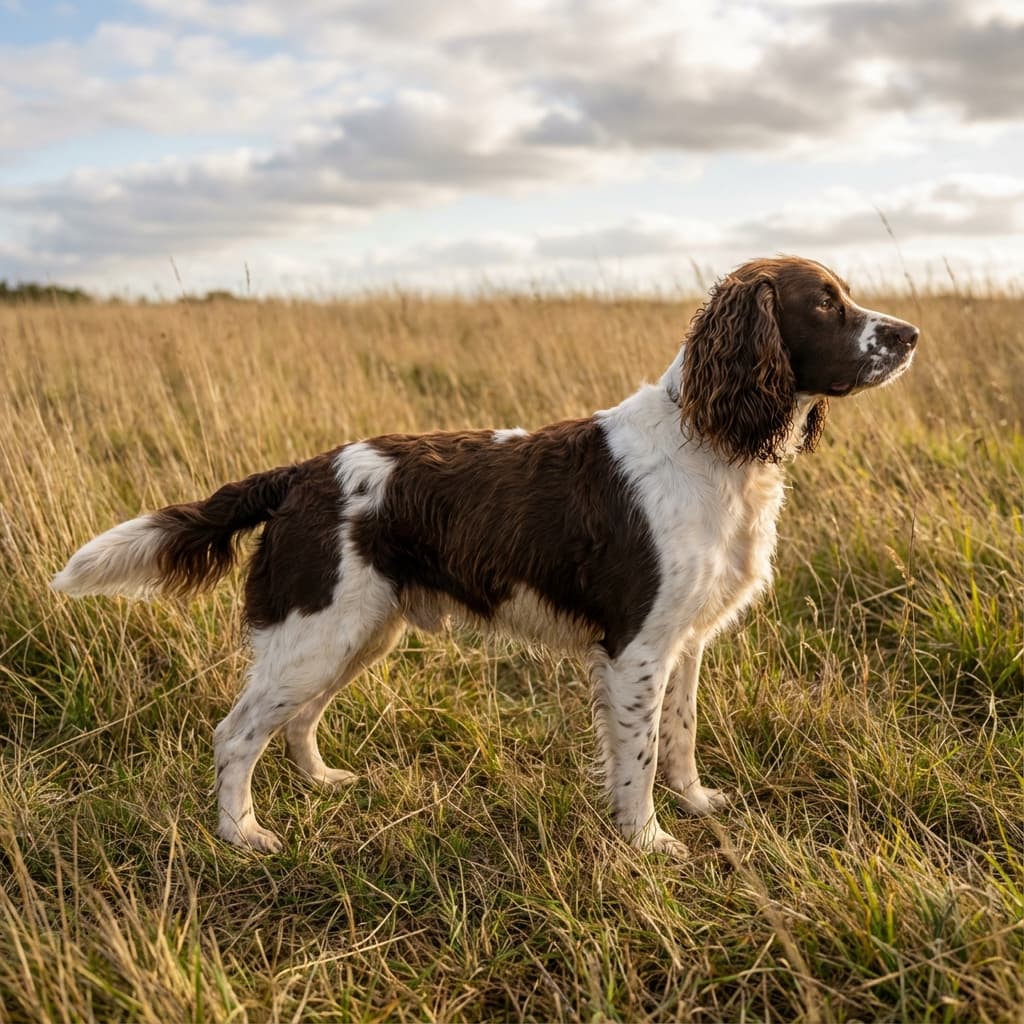
The German Spaniel is a medium-sized dog with a harmonious, proportional body structure. Height at the withers ranges from 45 to 54 cm, with males typically being slightly larger than females. The weight oscillates between 18 and 25 kg depending on gender and physical condition. The breed is characterized by a strong bone structure and an elongated, muscular torso – the body length is clearly greater than the height at the withers, giving the silhouette a rectangular profile typical of spaniels.
The head is noble and proportional to the rest of the body, with a flat skull and a gently defined stop. The ears are long, wide, and hanging, set at the level of the eyes, which gives a characteristic expression. The medium-sized eyes, set slightly obliquely, are dark brown in color and have a friendly, intelligent gaze that expresses readiness to work and cooperate.
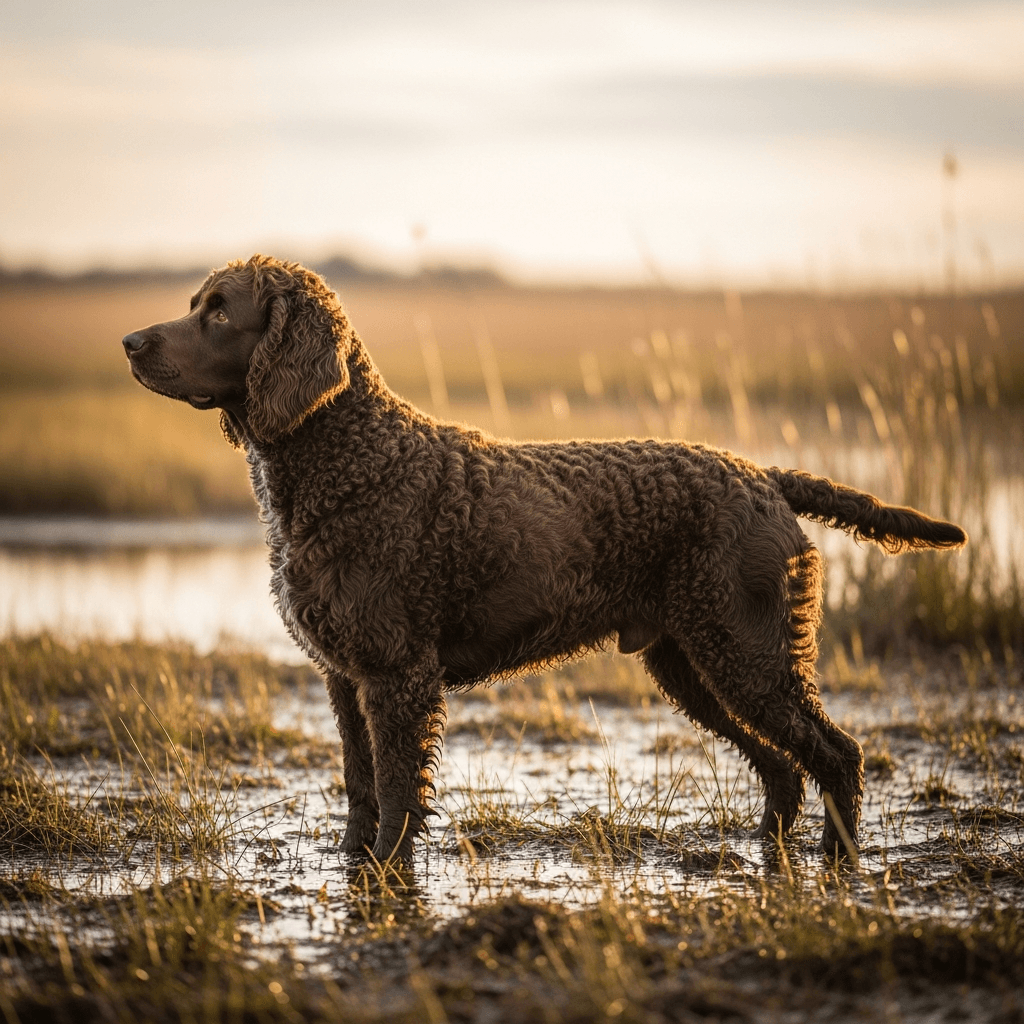
The coat of the German Spaniel is long, dense, and wavy, providing natural protection against cold, moisture, and overgrown terrain. It forms distinctive decorative feathers on the ears, tail, and the back of the limbs. There are two main color variations:
- Solid brown – an even dark brown color, often with white markings on the chest and toes
- Brown roan – brown and white coat with a characteristic marbled pattern, sometimes with tan markings on the head and limbs
The limbs are strong, well angulated, and parallel, providing excellent movement properties and endurance in difficult terrain. The tail is carried naturally, slightly downwards or at the level of the back during work, and is never curled over the back. The overall silhouette presents a harmonious and elegant appearance, combining the functionality of a working dog with an attractive, breed-specific look.
The German Spaniel is a dog with a remarkably friendly and sociable disposition, full of energy and an unending passion for work. This breed is characterized by high intelligence combined with a willingness to cooperate, making it relatively easy to train even for less experienced owners. It has a strongly developed hunting instinct, which manifests as an irresistible need to track, search, and retrieve – traits that make it an excellent hunting dog.
At the same time, the Wachtelhund can perfectly adapt to life in a family home, becoming a calm and balanced companion outside of work or training hours. It is deeply attached to its owner and requires close emotional contact – this is not a breed for people who are often away from home or prefer distance in their relationship with a dog.
The German Spaniel is very sociable and excels in the company of children and other pets. Its gentle, patient nature makes it an ideal playmate for younger family members. It does not exhibit aggression or nervousness, making it a safe choice for families with children of all ages.
Due to its strong hunting instinct, it requires an appropriate amount of exercise, mental stimulation, and opportunities to engage in natural behaviors – such as tracking or searching for hidden objects. Lack of adequate activity can lead to behavioral problems, such as destroying objects, excessive barking, or anxiety. Therefore, regular socialization, obedience training, and activities that engage the senses are crucial for proper mental development.
The Wachtelhund does not tolerate prolonged solitude – left alone for many hours a day, it may develop separation anxiety. Its loyalty and devotion make it an excellent companion for anyone who can dedicate time, attention, and provide an active, adventure-filled lifestyle.
The German Wirehaired Pointer is a breed that is relatively healthy and resilient, with an average lifespan of 12 to 14 years. Thanks to a careful breeding program and maintaining appropriate genetic diversity, the breed is not burdened with numerous hereditary diseases typical of many other purebred breeds.
Some of the most common health issues that certain individuals may be prone to include:
- Elbow dysplasia – a developmental defect affecting the elbow joints, which can lead to lameness and degenerative changes
- Ear infections – long, hanging ears create a moist environment conducive to the growth of bacteria and fungi
- Skin infections – dense, long fur can trap moisture and dirt, increasing the risk of irritation
- Obesity – the breed has a good appetite and, with an inappropriate diet or insufficient activity, can quickly gain weight
The German Wirehaired Pointer has a thick, double coat that provides excellent protection against cold and moisture while working in difficult conditions. However, on hot days, the breed may be prone to overheating, so access to shade, fresh water, and avoiding intense exertion during the hottest hours is essential.
Regular veterinary visits, up-to-date vaccinations, deworming, and prevention against external parasites are crucial for maintaining good health. Weight control, a balanced diet, and adequate exercise significantly affect the quality and length of life. With proper veterinary care and responsible breeding, the German Wirehaired Pointer can enjoy a long, healthy, and active life alongside its owner.
The care of the German Wirehaired Pointer is relatively uncomplicated, even though it has a dense, long coat with a wavy texture. It does not require professional grooming or frequent visits to a groomer, making it a breed that is easy to maintain in terms of grooming.
Regular brushing every 2-3 days is necessary to remove dead hair, prevent matting, and keep the coat in good condition. When brushing, it is important to pay special attention to areas particularly prone to tangling:
- Behind the ears and on the neck
- Under the armpits and in the groin
- On the decorative feathers of the limbs and tail
During the intense shedding period, which occurs twice a year (in spring and autumn), the frequency of brushing should be increased to daily to minimize the amount of hair settling in the home. It is best to use a brush with metal pins and a comb with dense teeth.
Ears require special attention – long, hanging ears create a moist, warm environment conducive to the growth of bacteria and yeast. Ears should be regularly (at least once a week) checked and gently cleaned with a specialized dog ear cleaning solution, removing excess wax and dirt. If any unpleasant odor, redness, or excessive discharge is noticed, a veterinarian should be consulted.
Baths should only be given when absolutely necessary (severe dirt, unpleasant odor) to avoid disrupting the skin's natural lipid protection. Too frequent washing can lead to dry skin and dermatological issues. After bathing, the coat should be thoroughly dried, especially around the ears.
Other grooming elements include:
- Nail trimming – every 3-4 weeks or when they can be heard clicking on the floor
- Dental hygiene – regular brushing or providing dental chews prevents tartar buildup
- Paw inspection – checking paw pads and the spaces between the toes after walks in the field
Proper grooming not only positively affects the external appearance but, most importantly, the health, well-being, and quality of life of the German Wirehaired Pointer.
The German Spaniel is a dog with very high exercise needs, requiring a minimum of 90-120 minutes of intense physical activity daily. As a breed developed for hunting work in challenging terrain, it possesses immense energy and stamina that must be properly channeled.
Ideal forms of activity for the Wachtelhund include:
- Long walks in varied terrain – forests, fields, wetlands
- Running alongside a bicycle (canicross) – an excellent way to exhaust excess energy
- Fetching – satisfies the natural instinct to retrieve game
- Nosework exercises – tracking, searching for hidden objects by scent
- Swimming – the Wachtelhund is an excellent swimmer who loves water
- Field training – simulating hunting work, searching and flushing
Due to its strong hunting instinct, special caution should be exercised during walks in unsecured areas. The German Spaniel may follow an interesting scent, ignoring the owner's call, so it is advisable to teach it a solid recall beforehand. In areas with wildlife or birds, it is better to keep the dog on a long training leash.
Lack of adequate exercise and stimulation leads to serious behavioral problems, such as:
- Destructive behaviors (destroying furniture, chewing objects)
- Excessive barking and whining
- Hyperactivity and inability to settle down calmly at home
- Escaping and wandering in search of adventures
It is important to provide the dog with variety in activities – a combination of physical exertion and mental stimulation yields the best results. Interactions with other dogs during joint walks or visits to dog parks are equally important for proper social and mental development. The German Spaniel is not a breed for people leading a sedentary lifestyle – it requires an active, outdoor owner ready for daily adventures.
Training the German Spaniel is relatively easy and satisfying, even for those with little experience in dog training. This breed is characterized by high intelligence, a willingness to cooperate, and an innate desire to please their handler, which significantly facilitates the learning process.
Methods based on positive reinforcement work best – rewards in the form of treats, toys, verbal praise, and petting motivate the dog to quickly learn new commands. The Wachtelhund reacts poorly to harsh training methods, coercion, or physical punishment, which can destroy their willingness to cooperate and harm the relationship with the owner.
The basic commands that should be taught first include:
- Sit – a basic obedience command
- Stay – crucial for the dog's safety
- Come – the most important command when working with hunting breeds
- Lie down – calms the dog in various situations
- Leave it – prevents picking up dangerous objects
Due to the strong hunting instinct, mastering a solid recall is particularly important. A Wachtelhund working on a scent may become very focused on the task and ignore their surroundings, so recall training should be consistent, regular, and conducted in various conditions with increasing levels of distraction.
Socialization from a young age is key – the dog should be gradually introduced to different people, animals, sounds, and environments. A well-socialized Wachtelhund is confident, balanced, and can respond appropriately in various situations.
Training sessions should be:
- Short but frequent – 10-15 minutes several times a day instead of one long session
- Diverse – different commands, locations, and forms of exercises keep the dog's interest
- Concluded successfully – always end on a positive note when the dog performs the command correctly
It is worth incorporating play elements that mimic hunting work into the training – retrieving, searching for hidden objects by scent, obedience exercises in the field. Such training not only engages the dog's body and mind but also builds a deep bond between them and the handler, making learning a shared pleasure.
The diet of the German Spaniel should be balanced, high-quality, and tailored to the level of physical activity, age, health status, and body condition of the dog. As an active and working breed, the Wachtelhund requires food rich in high-quality protein and an appropriate amount of healthy fats to maintain energy and muscle condition.
Nutritional recommendations:
- Animal protein – a minimum of 25-30% of the food composition, sourced from meat, poultry, or fish
- Fats – 12-18% to maintain energy and healthy skin and coat
- Complex carbohydrates – rice, oats, sweet potatoes as a source of long-lasting energy
- Omega-3 and Omega-6 fatty acids – for healthy skin, shiny coat, and immune system support
- Vitamins and minerals – a complete set for overall health and vitality
The breed has a tendency to obesity, especially with insufficient activity or overfeeding, so portion control and regular weight monitoring are crucial. Obesity leads to joint problems, heart issues, and shortens the dog's lifespan.
Feeding schedule:
- Puppies (2-6 months) – 3-4 meals a day, puppy food for medium breeds
- Young dogs (6-12 months) – 2-3 meals a day, gradually transitioning to adult food
- Adult dogs (over 12 months) – 2 meals a day, splitting the daily portion into morning and evening
- Senior dogs (over 8 years) – 2 meals, senior food with lower calories
Treats and extras should not exceed 10% of the daily calorie portion. It is important to avoid giving table scraps that may contain harmful or toxic ingredients for dogs (onion, garlic, chocolate, grapes, xylitol). Healthy snacks include: carrots, apples (without seeds), small pieces of cooked meat, or specialized dog treats.
Access to fresh water must be provided at all times – an active dog needs proper hydration, especially after intense physical exertion. It is advisable to wait 30-60 minutes after meals before engaging in intense activity to reduce the risk of gastric torsion.
Regular consultations with a veterinarian will help tailor the diet to the individual needs of the dog, taking into account its activity, metabolism, and any potential health issues. Proper nutrition is the foundation of a long, healthy, and energetic life for the German Spaniel.
Characteristic Traits
Pros
- Versatile hunting dog
- Friendly and gentle temperament
- Easy to train and eager to cooperate
- Gets along well with children and animals
- Healthy breed with a long lifespan.
Cons
- Very high exercise needs
- Requires close contact with the owner
- Strong hunting instinct requires control
- Does not tolerate prolonged solitude.
Behavioral Ratings
Breed History
The German Wachtel has a rich and fascinating history that dates back many centuries. Even in medieval hunting literature, there are mentions of dogs resembling the modern Wachtelhund – these were dogs used for flushing game, particularly waterfowl and forest birds.
The name Wachtelhund has historical roots and comes from the German word Wachtel meaning quail – a bird that was one of the main uses for these dogs. This term was already used in ancient hunting texts, emphasizing the breed's specialization in working with birds.
Modern breeding of the German Wachtel according to the breeding book began at the turn of the 19th and 20th centuries. The progenitor of the breed was a dog named Lord Augusta 1834 L, who came from Staufenberg in Upper Bavaria. From him and several carefully selected bitches, a planned breeding program was initiated to stabilize the breed type and working temperament.
Initially, only brown dogs (sometimes with white markings) and white-brown dogs were bred, some with slight tan markings on the head and limbs. It was only thanks to a bitch named Baby auf der Schanze 1838 L that the brown roan color appeared in the breed, which then became one of the two main color varieties of the Wachtelhund.
Rudolf Friess (R.F.) was a key figure in the development of the breed – for decades he shaped the breeding program, introducing separate color lines for brown and roan dogs. Through carefully planned matings within both color lines, he managed to establish a solid genetic foundation for the breed and avoid the pitfalls of inbreeding, despite the relatively small gene pool at the beginning of the breeding.
In 1903, the Verein für Deutsche Wachtelhunde (Association of German Wachtel Dogs) was founded, a breeding organization dedicated to the development and promotion of the breed. Since then, the breed has been primarily bred by German hunters who valued it for:
- Versatility in work (tracking, flushing, retrieving)
- Passion and enthusiasm for tasks performed
- Ability to work both in water and on land
- Independence combined with obedience
For a long time, the breed remained relatively unknown outside Germany, where it was treated as a secret of German hunters. It was only in the second half of the 20th century that it began to gain recognition in other European countries. The Fédération Cynologique Internationale (FCI) officially recognized the breed, classifying it in group 8 (Retrievers, Flushing Dogs, Water Dogs), section 2 (Flushing Dogs), with working trials.
Today, the German Wachtel is valued not only as a hunting dog but also as a family companion capable of living in a home with children and other pets. Thanks to careful breeding selection, the breed maintains excellent health, strong temperament, and longevity. Although it still remains less popular than other spaniel breeds, its unique traits and versatility are gaining it an increasing number of devoted enthusiasts worldwide.