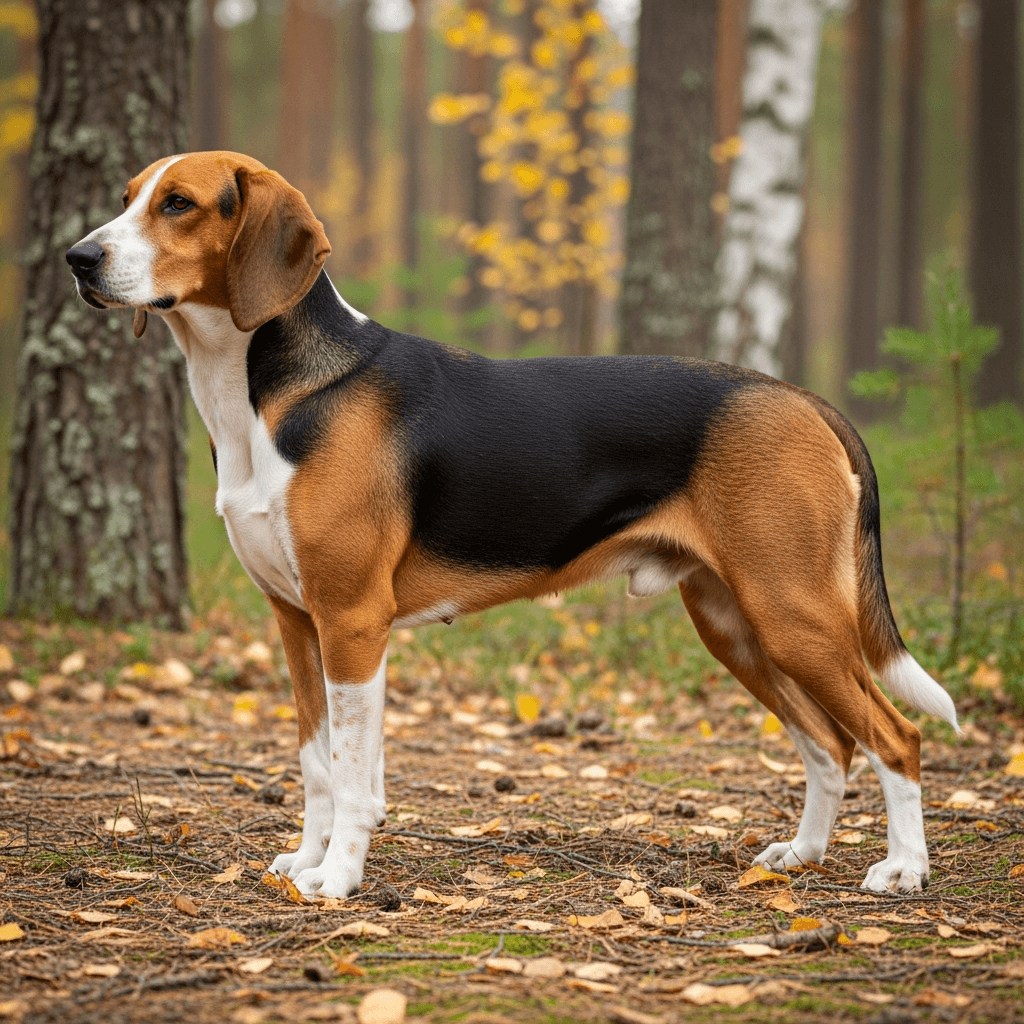
Finnish Hound
FCI Group
6• FCI 51
Size
Medium
Origin Country
FI
Height
52-61 cm
Weight
25-28 kg
Lifespan
11-13 years
Temperament
Overview
The Finnish Hound, also known as Suomenajokoira, is a fascinating breed of hunting dogs from Finland that captivates not only with its distinctive appearance but also with its exceptional hunting abilities.
History and Origin: This extraordinary breed has been developing since the early 19th century when Finnish breeders decided to combine various European hound breeds – Swedish, German, and French – to create a dog with unique skills adapted to the harsh conditions of the north. Thanks to a thoughtful breeding program, a dog perfectly suited for work in the most challenging conditions emerged: deep snow, vast forests, and mountainous terrain.
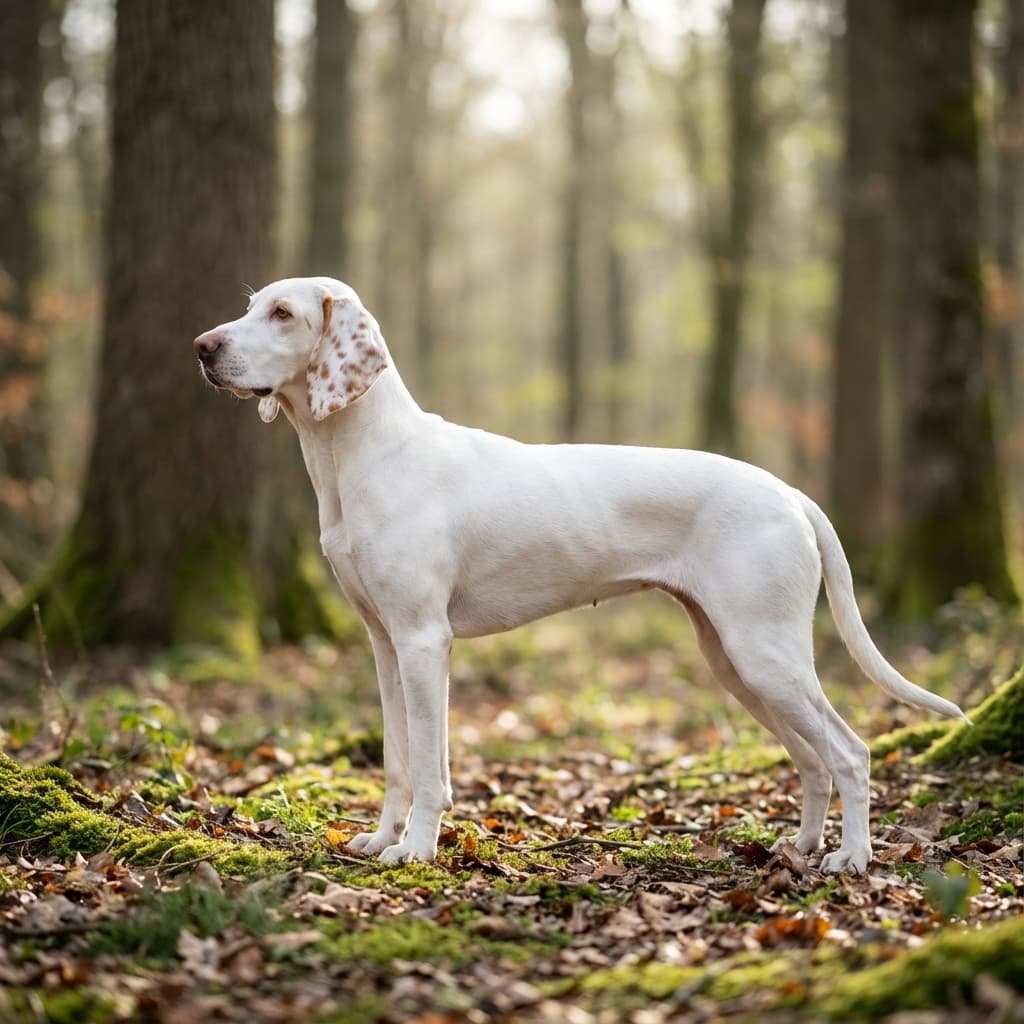
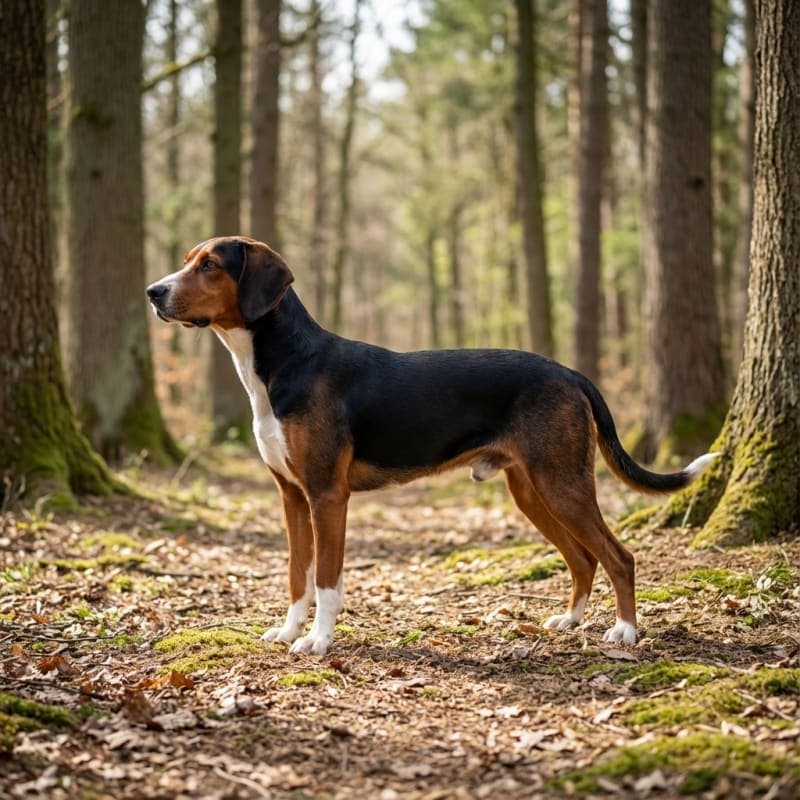
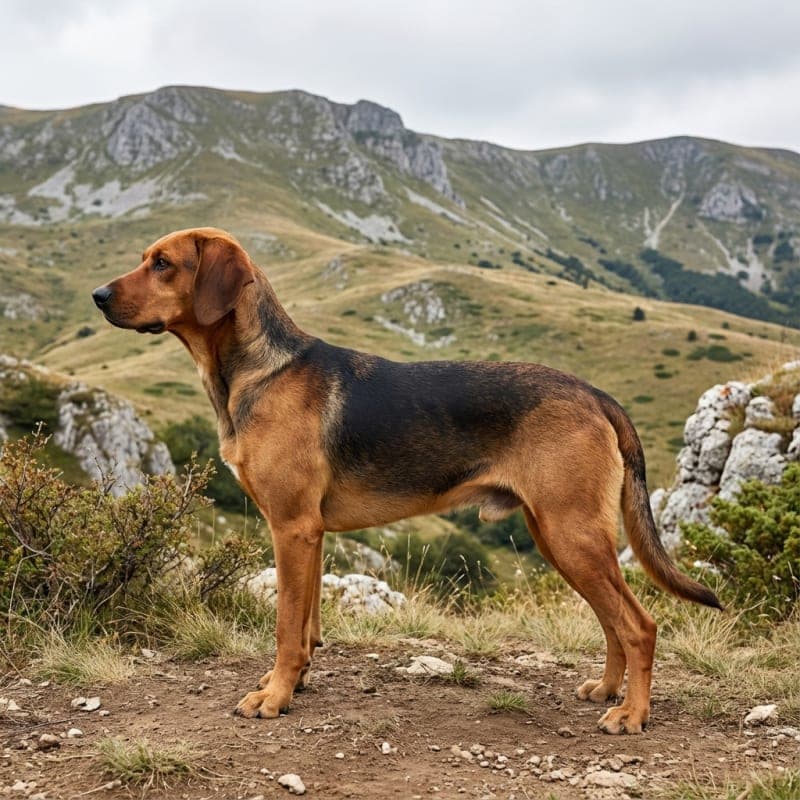
Distinctive Appearance: The Finnish Hound is a medium-sized dog with a strong, yet not heavy build. Its tricolor coat – black, brown, and white – makes it easily recognizable. It stands between 52 to 61 cm tall at the withers and weighs between 25 to 28 kg, making it an agile yet strong companion for hunters.
Personality and Use: Although the Finnish Hound is not commonly kept as a typical house dog, its friendly and energetic nature makes it an excellent companion for active families. It is known for its tracking and chasing skills, and its strong hunting instinct constantly motivates it to act. This dog has an independent character, which can pose a challenge during training, but with the right approach and early socialization, it becomes a loyal and devoted companion.
Exercise Needs: The Finnish Hound has very high exercise needs, requiring daily long walks and intense outdoor play. It loves to run and explore new areas, so it feels best in a spacious environment where it can freely fulfill its natural instincts.
Grooming and Family Life: This breed does not require complicated grooming – its short, smooth coat is easy to maintain, and the average amount of shedding is not a problem for owners. The Finnish Hound is strongly attached to its family and gets along well with children, making it a good choice for families that spend a lot of time outdoors. However, it is important to remember that its strong hunting instincts may affect relationships with other small pets, so proper upbringing and training are crucial for harmonious coexistence.
The Finnish Hound is a medium-sized dog with a strong but not heavy build, combining elegance and functionality. Basic dimensions: the height at the withers ranges from 52 to 61 cm, with males typically being larger and more massive than females. The body is noticeably longer than it is high (ratio 1.1:1), giving the dog a harmonious silhouette perfectly adapted for long chases.
Characteristic coat: The breed is distinguished by its beautiful tricolor coat, which includes black, brown, and white colors:
- Black – creates a characteristic cloak on the back and sides of the body
- Brown (tan) – appears on the head, cheeks, lower parts of the body, and limbs
- White – markings present on the head (list), neck, chest, tips of the legs, and tail
Head structure: The Finnish Hound has a well-developed, strong head with a proportional build, featuring a clearly defined stop (the transition from forehead to muzzle). The nose is black, equipped with large, movable nostrils that provide an excellent sense of smell. The muzzle is proportional to the length of the skull, and the jaws have an even shape. The eyes are medium-sized, brown in color, with a calm and intelligent expression.
Ears and neck: The ears are long, hanging, and lie close to the head at the front, giving the dog a characteristic, gentle appearance typical of hounds. The neck is of medium length, strong, and well-muscled, smoothly transitioning into the line of the back.
Body and limbs: The body is long, with a straight, strong back and a deep chest reaching halfway to the height at the withers. The limbs are strong and well-muscled, with a robust skeleton, allowing for fast and enduring running in difficult terrain. The tail is set low, slightly curved, and reaches the hock joints.
Coat: The coat of the Finnish Hound is short, smooth, and dense, providing effective protection against adverse weather conditions – rain, snow, and cold. Combined with its striking coloration, the Finnish Hound presents itself as a strong, elegant, and agile dog, perfectly adapted for work in the field.
The Finnish Hound is a dog with a friendly, energetic, and balanced temperament. Its nature is gentle, and in relationships with people, it shows a friendly attitude and lack of aggression, making it an excellent companion for families.
Family relationships: This breed gets along very well with children and is patient and gentle with them, making it a suitable choice for families with younger members. The Finnish Hound is loyal and attached to its family, creating strong emotional bonds.
Hunting instinct: At the same time, it possesses strong, innate hunting instincts and may show excessive interest in small animals – both during walks and at home. For this reason, proper socialization from the earliest weeks of life is extremely important, which will help it learn to accept other pets.
Independence and stubbornness: A characteristic feature of this breed is a certain degree of independence, which can sometimes turn into stubbornness. Owners should be consistent and patient during training to help the dog understand which behaviors are desirable. The Finnish Hound does not respond well to harsh methods – it needs positive reinforcement and motivation.
Noise: The Finnish Hound tends to bark frequently, which is a natural part of its hunting skills – in the field, it uses a loud, resonant voice to signal tracking game. In a home environment, this may require appropriate training to control this trait.
Tendency to escape: This breed may show a tendency to escape if it catches an interesting scent from an animal. Therefore, it is necessary to use a leash during walks in unfenced areas and to provide a safe, fenced yard.
Summary: With proper training, early socialization, and sufficient exercise, the Finnish Hound becomes a devoted, joyful companion that fits perfectly into an active family. Its sociable nature makes it enjoy the attention and love of its owners, and its energy and enthusiasm make every day with it an adventure.
The Finnish Hound is generally a healthy and resilient breed, with an average lifespan of 11 to 13 years. This breed shows high resistance to many diseases, making it an ideal choice for active owners looking for a durable companion for outdoor adventures.
Typical health issues: Like any breed, the Finnish Hound can suffer from certain conditions, including:
- Hip dysplasia – a musculoskeletal disease that can lead to lameness and arthritis
- Skin allergies (atopy) – can cause itching, redness, and discomfort
- Ear infections – resulting from long, droopy ears and an active lifestyle in the field
- Joint problems – related to intense physical activity
Prevention and care: To keep the Finnish Hound in good health, it is extremely important to:
- Have regular veterinary check-ups – at least once a year, including joint examinations
- Provide a proper diet – high-quality food tailored to the activity level
- Monitor weight – avoiding obesity, which puts stress on the joints and can lead to dysplasia
- Regularly clean ears – to prevent bacterial and fungal infections
- Ensure physical activity – to maintain good muscle condition supporting the joints
Living conditions: Proper living conditions are crucial for the health of the Finnish Hound. Extreme temperatures should be avoided – both heat and very cold conditions. Although the breed is resistant to cold, prolonged exposure to very low temperatures can affect the musculoskeletal system.
Hereditary factors: Responsible breeders conduct genetic testing on the parents before breeding to minimize the risk of hereditary diseases, especially hip dysplasia. Before purchasing a puppy, it is advisable to ask for the health test results of the parents.
The care of the Finnish Hound is relatively easy and low-maintenance due to its short and smooth coat. This breed is moderate in terms of shedding, which means that owners do not have to worry about excessive hair loss compared to long-haired breeds.
Brushing the coat: Regular brushing – at least once a week – allows for:
- Removal of dead hair and dirt
- Stimulation of the skin and natural oil production
- Monitoring the condition of the coat and skin
- Strengthening the bond between the dog and the owner
It is advisable to use a stiff brush or rubber glove for grooming to effectively remove loose hair and give the coat a healthy shine.
Ear care (CRITICAL): Due to the long, drooping ears that can collect dirt, moisture, and plant debris while working in the field, regular ear cleaning is extremely important. You should:
- Check the ears at least once a week
- Clean them with a gentle dog ear cleaner
- Pay attention to any unpleasant odor, redness, or discharge
- Consult a veterinarian immediately if signs of infection are present
Nails: Regular nail trimming – usually every 3-4 weeks – is essential to prevent overgrowth. Too long nails can cause pain, discomfort while walking, and even joint problems. If the nails click on the floor, it is a sign that they are too long.
Oral hygiene: Regular teeth cleaning – ideally 2-3 times a week – helps prevent:
- Tartar buildup
- Gum disease
- Bad breath
- More serious dental issues
Bathing: The Finnish Hound does not require frequent baths – it is sufficient to bathe it once every 2-3 months or as needed when it is particularly dirty. Too frequent bathing can lead to dry skin and loss of natural protective oils.
Summary: Caring for the Finnish Hound is therefore simple, but requires regularity and attention to ensure the dog's health, comfort, and long life. Most grooming procedures can be easily performed at home.
The Finnish Hound is a dog with a very high energy level that requires a significant amount of exercise to remain healthy, happy, and mentally balanced. As a hunting breed developed to work in challenging terrain, the Finnish Hound needs daily, intense activities to satisfy its natural hunting instincts and maintain excellent physical condition.
Minimum exercise requirements: Owners should provide their dog with:
- At least 1-2 hours of activity per day – long walks, runs, hikes
- Diverse forms of activity – walks are not enough; the dog needs intense movement
- Access to a safe, fenced area – where it can run freely and explore
- Mental stimulation – in addition to physical movement, it needs mental challenges
Recommended activities: The Finnish Hound loves various forms of movement and play:
- Long hikes in the forest – ideal for satisfying the tracking instinct
- Running alongside a bicycle – an excellent cardio workout (after reaching 12 months of age)
- Fetching – a game that combines movement with obedience training
- Obstacle courses (agility) – great physical and mental stimulation
- Tracking exercises – utilizing the breed's natural skills
- Swimming – an excellent full-body workout, gentle on the joints
Exploration and scent challenges: The Finnish Hound is a dog that loves to explore its surroundings and discover new scents. It is worth taking it on various trips to different places – forests, meadows, mountainous areas – so it can explore new smells, sounds, and textures. This mental stimulation is just as important as physical movement.
Consequences of insufficient exercise: Failing to meet the exercise needs of the Finnish Hound can lead to serious behavioral problems:
- Excess energy and anxiety
- Destructive behavior (chewing furniture, digging)
- Excessive barking
- Escaping and wandering
- Concentration problems during training
- Depression and apathy
Age adaptation: Young puppies should not be overexerted – their bones and joints are still developing. Intense exercises (long-distance running, jumping) should be gradually introduced after 12-18 months of age. Older dogs may require less intense but regular exercise tailored to their capabilities.
Summary: Providing the Finnish Hound with the right amount of exercise and stimulation is absolutely crucial for its overall well-being, physical health, and mental balance. This is not a breed for people leading a sedentary lifestyle – it requires an active, engaged owner.
Training a Finnish Hound can be an interesting challenge, but with the right approach, methods, and consistency, very positive results can be achieved. This breed is characterized by independent thinking and sometimes stubbornness, which is a natural trait of hunting dogs bred for independent work in the field.
Basic training principles: Owners should use only positive training methods, based on:
- Rewarding good behavior – treats, praise, play
- Consistency – the same rules always, without exceptions
- Patience – the Finnish Hound learns at its own pace
- Positive reinforcement – avoiding punishment and harsh methods
Punishments and harsh training methods are completely ineffective and can lead to a loss of trust and behavioral problems.
Socialization (CRITICAL): Early socialization is absolutely crucial in the upbringing of a Finnish Hound. From the age of 8 weeks, the puppy should be accustomed to:
- Different situations and environments (city, forest, shops, station)
- Contact with various people (children, adults, seniors)
- Other animals (dogs, cats, farm animals)
- Different sounds (cars, sirens, firecrackers)
- Different surfaces (grass, asphalt, metal, stairs)
Early socialization will help it become a more confident dog that will cope better in various unexpected situations.
Structure of training sessions: The Finnish Hound learns best during short but frequent training sessions:
- Session length: 10-15 minutes (max 20 minutes)
- Frequency: 2-3 sessions a day
- Diversity: change exercises to maintain interest
- Conclusion: always end on a positive note when the dog performs the exercise correctly
Natural skills: The Finnish Hound has innate tracking and hunting skills, which means it can quickly learn basic commands related to:
- Tracking (following scent)
- Recall (returning on command)
- Staying in place while tracking
- Working with its nose (mantrailing, nosework)
Training challenges: When it comes to more advanced commands or routine exercises, owners may encounter certain difficulties:
- The Finnish Hound may quickly become bored with repetitive exercises
- It may be selectively obedient – following commands it finds sensible
- A strong hunting instinct may distract attention during training
- Independence may lead to undermining the owner's authority
Key commands: Basic commands that every Finnish Hound should master:
- Sit – basic control command
- Stay – staying in place
- Come – recall (the most critical command for safety)
- Lie down – calming the dog
- Leave it – preventing the dog from eating dangerous things
Introducing variety: To avoid boredom and keep the dog engaged, it is important to introduce variety into training sessions:
- Change training locations (home, garden, park, forest)
- Use different rewards (treats, toys, praise)
- Introduce new challenges and exercises
- Combine training with play
Summary: A well-trained Finnish Hound will become not only a great companion in life but also a very effective hunting or sport dog (nosework, mantrailing). The key to success is patience, consistency, positive reinforcement, and acceptance of the independent nature of this breed.
The Finnish Hound's diet should be balanced, high-quality, and tailored to its activity level. As a hunting breed with high energy needs, the Finnish Hound requires food that provides all essential nutrients and the energy needed for daily intense activities.
Basic dietary components: Owners should pay special attention to the food's composition to ensure it contains:
- High-quality protein (25-30%) – meat, fish, poultry as the first ingredients
- Healthy fats (12-18%) – a source of energy and omega-3, omega-6 fatty acids
- Carbohydrates – rice, potatoes, sweet potatoes as a source of energy
- Vitamins and minerals – support for the immune system and health
- Glucosamine and chondroitin – joint support (important for active dogs)
Age adaptation: The diet should be adapted to the dog's life stage:
- Puppies (0-12 months): Puppy food for medium breeds, rich in protein and calcium, supporting proper bone and muscle development. Feeding 3-4 times a day.
- Adult dogs (1-7 years): Food for active or working dogs, tailored to high energy levels. Feeding 2 times a day.
- Seniors (7+ years): Food for older dogs, with lower calories, higher fiber content, and joint support. Feeding 2 times a day.
Portion and weight control: It is very important to control portions to avoid obesity, which can lead to serious health problems:
- Overweight puts stress on joints and increases the risk of hip dysplasia
- Can lead to heart disease, diabetes, and a shortened lifespan
- Especially important after the hunting career ends when the dog becomes less active
- Regular weighing and condition checks (ribs should be palpable but not visible)
Access to water: Fresh water must be available at all times, especially:
- After intense physical exertion
- On hot days
- After dry meals
- During and after training
Natural supplements and treats: The diet of the Finnish Hound can be enriched with healthy, natural treats that support its health:
- Vegetables: carrots, broccoli, spinach (in small amounts)
- Fruits: apples (without seeds), blueberries, bananas (in small amounts)
- Meat: cooked chicken, turkey, beef (without seasoning)
- Fish: salmon, sardines (source of omega-3 for skin and coat health)
- Natural chews: dried beef ears, tracheas
Prohibited products: Never feed the Finnish Hound:
- Chocolate and cocoa (toxic to dogs)
- Onions and garlic (destroy red blood cells)
- Grapes and raisins (kidney damage)
- Avocado (contains persin, toxic to dogs)
- Sweets, foods with xylitol (deadly toxic)
Feeding after exertion: After intense training or hunting:
- Wait 30-60 minutes before feeding (to prevent gastric torsion)
- Provide access to water, but in small amounts
- Consider dividing the daily portion into smaller meals
Summary: Proper nutrition is crucial for the longevity, health, and excellent condition of the Finnish Hound. Investing in high-quality food and controlling weight and diet composition will pay off with many years of shared, healthy, and active adventures with your pet.
Characteristic Traits
Pros
- Friendly and energetic character
- Excellent hunting and tracking skills
- Easy maintenance of short coat
- Gets along well with children
- Resilient to harsh weather conditions.
Cons
- Independent nature making training difficult
- Very high exercise needs
- Strong hunting instincts and tendency to chase
- Tendency to bark frequently.
Behavioral Ratings
Breed History
The Finnish Hound, known as Suomenajokoira, has a rich and fascinating history dating back to the early 19th century. This breed was developed in Finland in response to the specific needs of hunters operating in the exceptionally challenging climatic and terrain conditions of northern Scandinavia.
Origins and breed genesis: In the early 19th century in Finland, alongside native rural dogs, there were numerous dogs resembling European hound breeds. Due to the harsh climatic conditions – long, snowy winters, vast forests, and mountainous terrain – there was a need for dogs that could effectively hunt hares and foxes in extreme conditions. Local rural dogs, although resilient, did not possess all the traits necessary for professional hunting.
Breeding program: A thoughtful breeding program was initiated, which combined various hound breeds:
- Swedish hounds – endurance and tracking skills
- German hounds – strong build and intelligence
- French hounds – excellent sense of smell and voice
- Finnish rural dogs – cold resistance and independence
The goal was to create a dog that would be not only effective in hunting and tracking but also resilient to cold weather and capable of working independently in difficult terrain.
Development and standardization: After the establishment of the Finnish Kennel Club in 1889, the organized development of the breed began. This was a milestone in the history of the Finnish Hound, transforming it from a local hunting dog into a recognized breed with defined standards. In 1932, the first official breed standard was developed, which precisely outlined the desired physical traits and temperament of the dog.
Role of breeding associations: Over the years, the breed was developed by various breeding associations in different parts of Finland. These local associations played a key role in the development and establishment of the breed, organizing:
- Working trials (hunting tests)
- Breed exhibitions
- Coordination of breeding programs
- Education for hunters and breeders
Modern times: Crossbreeding conducted in the early 20th century helped create a solid genetic foundation from which the modern Finnish Hound descends. The breed quickly gained popularity in Finland and became one of the most sought-after hunting dogs in the country, valued for:
- Exceptional endurance in difficult conditions
- Excellent sense of smell
- Resonant, carrying voice during the chase
- Independence and intelligence in work
- Resistance to the freezing climate
International recognition: Although the Finnish Hound is less popular outside of Finland, it remains highly valued by hunters and enthusiasts of an active lifestyle in Scandinavian countries and Eastern Europe. This breed is known for its endurance and skills in challenging conditions, making it an ideal companion for adventure lovers and outdoor activities.
Heritage and future: Today, the Finnish Hound continues its role as a superb hunting dog, and it is also recognized as a companion dog for active families. Its history is a testament to the skills of Finnish breeders who created a breed perfectly adapted to the specific conditions of northern Scandinavia, combining resilience, intelligence, and attachment to humans.