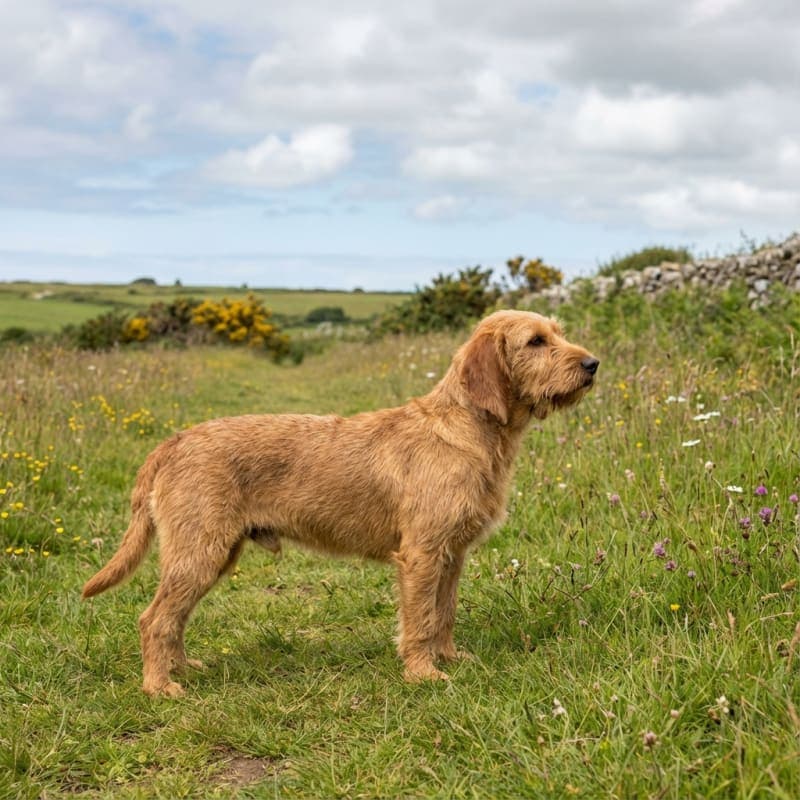
Wire-haired Brittany Spaniel
FCI Group
6• FCI 66
Size
Medium
Origin Country
FR
Height
48-56 cm
Weight
N/A
Lifespan
12-14 years
Temperament
Overview
The Wire-haired Brittany Hound, also known as Griffon Fauve de Bretagne, is an extraordinary dog breed with a fascinating history dating back to the 14th century. Originating from picturesque Brittany in France, it is one of the oldest French scent hound breeds that has been appreciated by hunters for centuries.
As early as the Middle Ages, the nobleman Huet des Ventes owned a pack of these exceptional dogs, used for hunting wolves and other large animals such as boars, deer, and foxes. Although the breed's popularity dramatically declined in the 19th century with the extinction of wolves in Brittany, thanks to the determination of Marcel Pambrun and the establishment of the Club de Fauve de Bretagne in 1949, the breed was saved from oblivion.
Today, under the leadership of Bernard Vallée and in accordance with the club's motto hunting first, the Wire-haired Brittany Hound is regaining recognition not only in France but around the world. In the 1980s, this breed solidified its position among French hounds, appreciated for both its exceptional hunting abilities and friendly character.
This outstanding hunter is distinguished by its extraordinary sense of smell and characteristic repetitive barking known as choppy (short and repetitive notes), used while tracking game. Its strong, muscular build and exceptional resistance to harsh weather conditions and fatigue make it an ideal companion for hunting in challenging terrain.
However, the Wire-haired Brittany Hound is not just a brave and agile hunter. Dogs of this breed are characterized by their gentle temperament, are sociable, attached to their guardians, and full of energy, making them excellent family companions. Their adaptability, determination, intelligence, and a certain degree of independence make them exceptional working dogs.
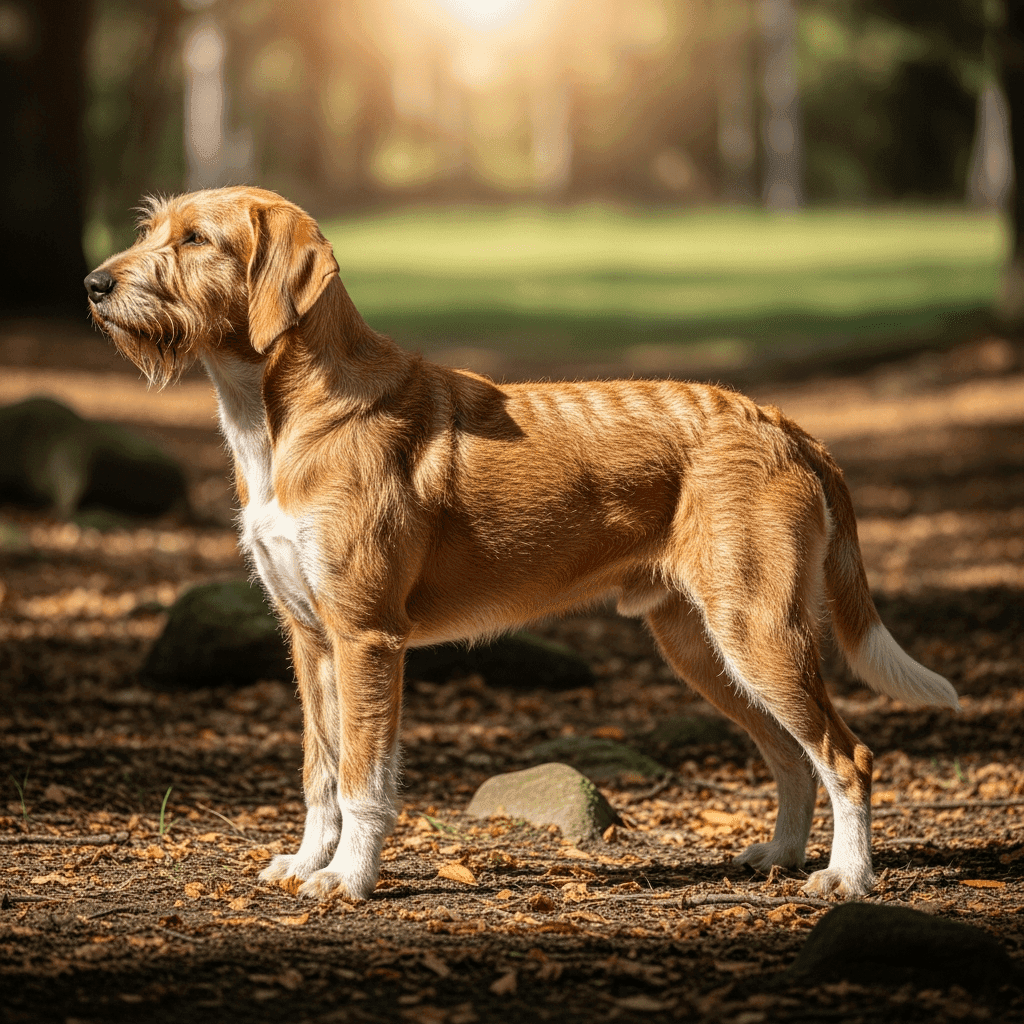
The breed's distinctive appearance includes a long, slightly flattened skull with a moderately pronounced stop, a black or dark brown nose, and dark eyes with a lively, intelligent expression. Their coat has a beautiful shade ranging from golden wheat to brick red, with the possibility of black hairs scattered along the back and ears.
In the following sections of the guide, we present detailed information regarding health, grooming, physical activity, training, nutrition, and the history of this fascinating breed. Before purchasing a dog of this breed, it is crucial to find a reputable breeder who cares for the health and welfare of their dogs, as well as to ensure proper socialization and training that will allow the griffon to fully realize its potential.
The Griffon Fauve de Bretagne is a dog with a distinctive and expressive appearance that immediately attracts attention. Its silhouette is bony and muscular, indicative of strength, endurance, and excellent physical condition developed over centuries of selection as a hunting dog.
Head and skull: Dogs of this breed have a rather long skull with a moderately defined stop. The nose is always black or dark brown, perfectly suited for intensive scent work. The eyes are dark in color, giving them a lively and intelligent expression, full of alertness and interest in their surroundings.
Ears: The ears of the griffon are gently close-fitting and of medium length, ending in a characteristic, slightly rounded point. They are set at the level of the eye line, which gives the breed a recognizable appearance.
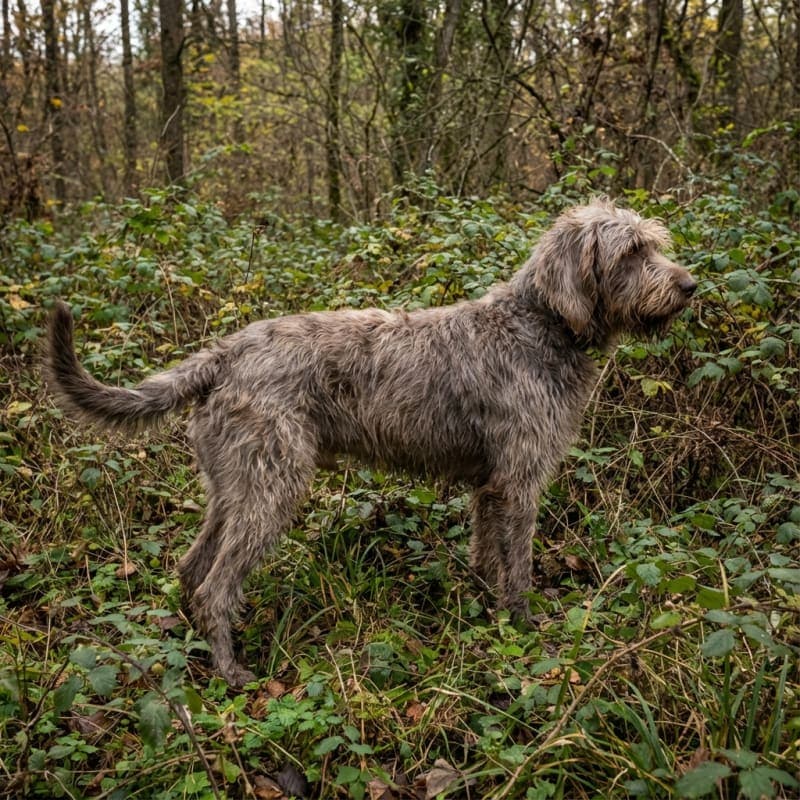
Coat and coloration: The most characteristic feature of this breed is the rough, dense coat, which provides natural protection against harsh weather conditions. The coat is short to medium in length, and should neither be woolly nor curly. The color of the coat ranges from a beautiful shade of wheat gold to deep brick red (fauve), with possible black hairs scattered across the back, sides, and ears, adding extra charm to the breed.
Dimensions: According to the FCI standard, the height of adult individuals is:
- Height at the withers: 48-56 cm
- Tolerance of up to 2 cm for exceptionally good individuals
- Weight is not precisely defined but should be proportional to height
Body structure: The Griffon Fauve de Bretagne exudes energy and vitality. Its build is compact, well-balanced, with a strong back and deep chest. The limbs are strong and muscular, perfectly adapted for running on difficult terrain. The tail is of medium length, carried in a sabre shape.
The overall appearance of the breed reflects its hunting heritage – it is a dog made to work in any conditions, resilient, active, and extremely functional.
The Griffon Fauve de Bretagne is a breed with a balanced temperament, combining a passion for hunting with gentleness towards people. These dogs are characterized by an exceptional blend of working and social traits.
Character towards people: Griffons are loyal, devoted, and extremely attached to their guardians. They form strong emotional bonds with their family and thrive in the company of children, with whom they are patient and gentle. Their social nature makes them enjoy being at the center of family life and they do not tolerate prolonged solitude.
Hunting temperament: According to the club's motto hunting first, griffons are passionate hunters with a strong hunting instinct. When working in the field, they become focused, persistent, and extremely effective. They are characterized by:
- Excellent sense of smell and tracking ability
- Endurance that allows them to work for hours
- Characteristic chopper barking (short, repetitive notes)
- Courage in confronting game
Training and cooperation: Due to their intelligence and willingness to cooperate, griffons are relatively easy to train, although they require an experienced owner who can guide them properly. This breed exhibits a certain degree of independence, typical of hounds – they can make independent decisions while tracking.
Socialization: Proper socialization from a puppy age is crucial to teach the dog appropriate behavior in various situations. Due to their strong hunting instinct, griffons may show a desire to chase smaller animals, so early training to control this impulse is essential.
Vocalization: This breed is quite vocal – their characteristic bark is an inseparable trait of griffons and serves as an important tool during hunting. Owners should be aware of this trait and train their dog accordingly to prevent it from becoming a problem in an urban environment.
As a family dog: Although griffons do not have a strong territorial instinct and are not typical guard dogs, they excel as family companions. Their gentle nature, sociability, and attachment to people make them wonderful dogs for active families who can provide them with the right amount of exercise and stimulation.
In summary, the Griffon Fauve de Bretagne is a dog that thrives best in the home of active owners who appreciate both its hunting abilities and friendly, sociable character.
The Griffon Fauve de Bretagne is generally considered a healthy and resilient breed with good vitality. The average lifespan is 12-14 years, which allows for many years of companionship with the dog when given proper care.
General health condition: This breed is relatively hardy and does not have many specific health issues characteristic solely to griffons. However, like any breed, they can be susceptible to certain conditions, so regular veterinary care is crucial.
Most common health issues:
- Hip and elbow dysplasia – an orthopedic condition that can occur in medium-sized dogs. Choosing a puppy from a breeder who conducts joint tests on the parents significantly reduces the risk.
- Ophthalmic issues – some lines may show susceptibility to eye conditions, so regular eye examinations are advisable.
- Skin allergies – may occur in some individuals, requiring appropriate diet and dermatological care.
- Ear infections – due to their drooping ears, griffons require regular cleaning of their ear flaps to prevent the development of infections.
Tolerance to temperatures: The Griffon Fauve de Bretagne shows good cold tolerance thanks to its dense, rough coat, provided it has adequate shelter. On the other hand, this breed is sensitive to extreme heat – on hot days, the dog should have access to shade, fresh water, and avoid intense exertion during the hottest hours.
Preventing obesity: A key aspect of griffon health is maintaining a healthy body weight. As active working dogs, they require regular exercise and physical activity. Obesity can lead to orthopedic and heart problems and shorten lifespan. Providing adequate exercise and controlling food portions are essential.
Preventive care: Regular veterinary care is recommended, including:
- Annual vaccinations
- Regular deworming and external parasite prevention
- Check-ups, especially for older dogs
- Monitoring dental health and oral hygiene
- Monitoring joint condition in working dogs
With proper health care, a balanced diet, and regular exercise, the Griffon Fauve de Bretagne can enjoy a long, active life in excellent condition.
The care of the Griffon Fauve de Bretagne is relatively simple and low-maintenance, which is one of the advantages of this breed. Their rough coat has a natural texture that does not require intensive care or frequent visits to a groomer.
Coat brushing: The griffon's coat is short to medium in length, rough, and dense, but it should not be woolly or curly. To keep the dog in good condition, it is recommended to brush regularly once a week using a stiff-bristled brush or comb. Brushing helps:
- Remove dead hair and dirt
- Distribute natural skin oils
- Prevent mats (although they are rare in this breed)
- Check the condition of the skin and detect any parasites
During the shedding season (spring and autumn), the frequency of brushing can be increased to 2-3 times a week.
Bathing: Griffons do not require frequent baths – a bath every 2-3 months or as needed when the dog is particularly dirty after hunting or playing outdoors is sufficient. Use gentle shampoos designed for dogs to avoid irritating their skin and damaging the natural texture of the coat. After bathing, thoroughly dry the dog, paying special attention to the ears.
Ear care: Due to their droopy ears, griffons are more prone to ear infections. It is important to regularly check the inside of the ear flaps (preferably once a week) and clean them with a gentle dog ear care product. Pay attention to:
- Unpleasant odor
- Excessive discharge
- Redness or swelling
- Frequent head shaking by the dog
Nails: Regular nail trimming is essential to prevent overgrowth, which can lead to discomfort and walking problems. If the dog runs a lot on hard surfaces, the nails wear down naturally, but they typically require trimming every 3-4 weeks.
Oral hygiene: Keeping the teeth clean is crucial for the dog's overall health. Introduce regular tooth brushing (preferably 2-3 times a week) using toothpaste and a brush designed for dogs. This helps prevent tartar buildup, gum disease, and bad breath.
Post-hunt/walk check: After intense outdoor activity, check the dog for:
- Ticks and other parasites
- Minor wounds, scratches, or thorns
- The condition of the paw pads
Overall, the Griffon Fauve de Bretagne requires moderate grooming, and their rough coat is relatively easy to keep clean and in good condition. This breed is excellent for those who appreciate the natural beauty of a dog without the need for intensive styling.
The Griffon Fauve de Bretagne is a dog with high exercise needs, bred for intensive work during hunting. This breed requires a significant amount of daily physical and mental activity to remain a happy, healthy, and balanced dog.
Daily activity: An adult Griffon Fauve de Bretagne needs a minimum of 2 hours of intense physical effort daily. These are not leisurely walks – this dog needs real movement to burn off excess energy and satisfy its hunting instincts.
Recommended forms of activity:
- Long, vigorous walks – preferably in forested areas or on field trails
- Running – an excellent partner for runners, great for canicross
- Play with other dogs – socialization combined with movement
- Scent games and tracking – engage the dog's natural instincts and mind
- Hunting or training for trial hunts – ideal activity for Griffons
- Agility and other dog sports – a great alternative for active owners
Terrain and environment: Griffons thrive in challenging terrain – forests, hills, fields, and mountains are their natural habitat. Walks in the woods or on mountain trails will be perfect for them. Varied terrain stimulates their senses and allows them to fully utilize their natural abilities.
Important note about leashes: Due to their strong tracking instinct, Griffons tend to explore and follow scents. During off-leash walks (only in safe, permitted areas), one must be vigilant – the dog may wander off in search of an interesting scent. Prior recall training is absolutely crucial.
Diversity is key: To prevent the dog from getting bored and losing interest, it is important to provide variety in activities. Change walking routes, introduce new games and exercises, and allow the dog to explore new places. Griffons are intelligent dogs that need both physical and mental stimulation.
Consequences of insufficient exercise: A dog that does not get enough activity may exhibit behavioral problems:
- Hyperactivity and restless behavior
- Destructiveness (destroying items in the home)
- Excessive barking
- Concentration problems during training
- Frustration and sadness
For owners of this breed: It is important to realistically assess your time and physical capabilities before acquiring a Griffon. This is not a breed for those who prefer a quiet lifestyle – it requires an active owner who loves spending time outdoors and is willing to dedicate several hours a day to activities with the dog.
With the right amount of exercise and stimulation, the Griffon Fauve de Bretagne will be a balanced, happy companion who will fully realize its potential as a working dog and family companion.
The training of the Griffon Fauve de Bretagne is a key element of responsible ownership of this breed. Due to their intelligence, strong hunting instincts, and a certain degree of independence, they require an experienced owner who can guide them properly with consistency and patience.
Early training initiation: It is best to start training at a young age, ideally from 8-10 weeks old, to instill the appropriate habits and rules in the puppy. Young griffons are like sponges – they eagerly learn and absorb new information, which should be utilized to build a solid foundation of obedience.
Socialization – an absolute necessity: Proper socialization is essential to teach the dog how to behave in various situations and in the company of other people and animals. A young griffon should be exposed to:
- Different environments (city, forest, shops, parks)
- Different people (children, adults, seniors, people in uniforms)
- Other animals (dogs of various breeds, cats, farm animals)
- Various sounds and stimuli (traffic, firecrackers, sirens)
Training methods: Griffons respond best to positive reinforcement – rewarding desired behaviors instead of punishing unwanted ones. Use:
- Treats – as a motivator during the learning of new commands
- Verbal praise – enthusiastic recognition for correct execution
- Play – as a reward for obedience
- Short, dynamic training sessions – 10-15 minutes, several times a day
Key commands to learn:
- Sit – a basic control command
- Stay – crucial for safety
- Come – absolutely essential due to the tracking instinct
- Lie down – helpful in calming the dog
- Drop/Leave – important during hunting and walks
Training challenges: Griffons can be somewhat stubborn and independent, which is typical for hound breeds. They may try to test boundaries and make independent decisions. Therefore, the owner must be:
- Consistent – the same rules every day, by all family members
- Patient – learning takes time, especially controlling instincts
- Confident – the dog must see the owner as a leader
- Creative – vary the training to keep the dog from getting bored
Scent training and hunting: For griffons that are working dogs, fieldwork training is a natural need. If you do not plan to use the dog for hunting, consider:
- Nosework training
- Mantrailing (tracking people)
- Trial or simulated hunting
Such activities allow the dog to satisfy its natural instincts and provide a sense of fulfillment.
Barking control: Due to the breed's natural vocality, it is worth introducing barking control training early, especially if you live in an urban environment. Teach the dog the command to be quieter and reward calm behavior.
Advanced training: Intelligent griffons enjoy mental challenges. Consider:
- Training for dog sports (agility, rally obedience)
- Tricks and intellectual games
- Advanced obedience
With proper training, patience, and consistency, the Griffon Fauve de Bretagne can become a well-mannered family companion that retains its natural instincts but can control them and cooperate with the owner in any situation.
The nutrition of the Griffon Fauve de Bretagne is an essential aspect of maintaining the health, well-being, and longevity of this active breed. A proper diet tailored to the individual needs of the dog will provide it with the energy to work, appropriate condition, and health for many years.
Appetite characteristics: Griffons have a healthy appetite, but they are usually not overly greedy or prone to overeating. Nevertheless, as an owner, you must control portion sizes and the quality of food to prevent health problems related to obesity or nutritional deficiencies.
Basic nutritional requirements: It is crucial to provide the dog with high-quality food that meets its nutritional needs depending on:
- Age – puppies, adult dogs, and seniors have different needs
- Activity level – working dogs require more calories than house dogs
- Health status – illnesses may require a special diet
- Condition – underweight or overweight requires adjusting portions
Food composition: Pay special attention to the content of key nutrients:
- Protein (minimum 22-28%) – building block of muscles, essential for active dogs
- Fats (12-18%) – source of energy, support for skin and coat
- Carbohydrates – source of energy, but in moderate amounts
- Vitamins and minerals – support for the immune system, bones, and joints
- Omega-3 and omega-6 fatty acids – health of skin, coat, and joints
Type of food: You can use dry or wet food, or a combination of both. Each has its advantages:
- Dry food – convenient, helps maintain dental hygiene, economical
- Wet food – more palatable, higher water content, easier to digest
- BARF diet (raw diet) – natural option, requires knowledge and planning
What to avoid: Definitely avoid low-quality commercial foods that may contain:
- Harmful additives and preservatives
- Low-nutritional-value fillers
- Low-quality protein sources (meat by-products)
- Excess grains and artificial colors
Feeding frequency:
- Puppies (2-6 months) – 3-4 meals a day
- Young dogs (6-12 months) – 2-3 meals a day
- Adult dogs – 2 meals a day (morning and evening)
- Senior dogs – 2 meals a day, possibly smaller portions more frequently
Adjustment for activity: Increasing the amount of food may be necessary when the dog is more active – for example, during:
- Intensive training sessions
- Hunting season
- Increased physical activity (hiking, dog sports)
Monitor the dog's condition – it should have a visible waistline and palpable ribs under a thin layer of fat.
Water – an absolute necessity: Ensure the dog has constant access to fresh, clean water throughout the day. Active dogs need plenty of fluids, especially after exercise and on warm days.
Supplementation: In some cases, consider supplementation:
- Glucosamine and chondroitin – support for joints in working dogs
- Omega-3 – coat health and anti-inflammatory properties
- Probiotics – support for the digestive system
Consultation with a veterinarian: Consult with a veterinarian to tailor the diet to the individual needs of the dog. Professional advice will help avoid health problems related to obesity, deficiencies, or food allergies.
With a properly balanced diet, the Griffon Fauve de Bretagne will have the energy to work, a healthy coat, and a long, active life alongside its family.
Characteristic Traits
Pros
- Wonderful sense of smell and tracking abilities
- Exceptional resistance to harsh weather conditions and fatigue
- Friendly and gentle nature towards people
- Good adaptability
- Healthy and resilient breed
- Low maintenance requirements.
Cons
- Requires a lot of movement and activity (at least 2 hours a day)
- Needs an experienced caregiver
- Can be independent and stubborn
- Strong hunting instinct (tendency to chase animals)
- Quite loud (characteristic barking).
Behavioral Ratings
Breed History
The history of the Griffon Fauve de Bretagne is a fascinating tale of tradition, decline, and rebirth of one of the oldest French hunting dog breeds. The roots of this breed reach deep into the past – at least to the 14th century, when the existence of these exceptional hunting dogs was first recorded.
Medieval beginnings: Even in medieval times, a nobleman named Huet des Ventes owned a pack of griffons fauve de Bretagne, which he used for hunting. This breed originated in the picturesque region of Brittany in northwestern France, where it was highly valued for its exceptional hunting abilities.
Golden age – wolf hunting: For many centuries, until the 19th century, griffons were intensively used for hunting wolves and other large animals, such as deer, foxes, and wild boars. Their excellent sense of smell, endurance, and courage made them ideal partners for hunters in the challenging conditions of the Breton forests and heathlands.
At that time, the breed enjoyed immense popularity among the Breton nobility and hunters, and packs of griffons were a true treasure for every experienced hunter.
Crises and near extinction: With the extinction of wolves in Brittany in the 19th century, the primary use of griffons began to decline. The breed gradually lost popularity, and the number of breeders dramatically decreased. In the face of a lack of interest and the absence of conservation programs, the Griffon Fauve de Bretagne became an extremely rare breed, on the brink of total disappearance.
Revival – Marcel Pambrun and the Club de Fauve de Bretagne: In the face of the crisis, in 1949, enthusiast and breeder Marcel Pambrun decided to take heroic actions to save this historical breed. He founded the Club de Fauve de Bretagne, which became a key element in the rebuilding and promotion of griffons. Thanks to his efforts, determination, and the work of many enthusiasts, the breed began to be systematically restored, ensuring the preservation of its authentic hunting traits and temperament.
The 1980s – a return to favor: In the 1980s, under the leadership of Bernard Vallée, the Griffon Fauve de Bretagne (as well as the related breed Basset Fauve de Bretagne) gained popularity and established its position among French hunting dogs. The club's motto hunting first became the guiding principle of breeding, ensuring that the breed retained its authentic working abilities and did not become merely a show dog.
Modern times: Today, the Griffon Fauve de Bretagne is recognized as one of the most valuable and authentic scent hound breeds, appreciated not only in France but also in other European countries and around the world. This breed continues to serve hunters as an effective hunting dog while also gaining recognition as a wonderful family companion for active owners.
FCI Standard: The breed has been officially recognized by the Fédération Cynologique Internationale (FCI) and classified in Group 6 (Hounds and related breeds), Section 1.2 (Medium-sized hounds), with working trials. The current FCI standard was approved in 2003.
The history of the Griffon Fauve de Bretagne is a testament to the determination and commitment of people who would not allow centuries of hunting tradition to disappear without a trace. Thanks to their work, modern dog lovers can enjoy the companionship of this unique, historical breed.