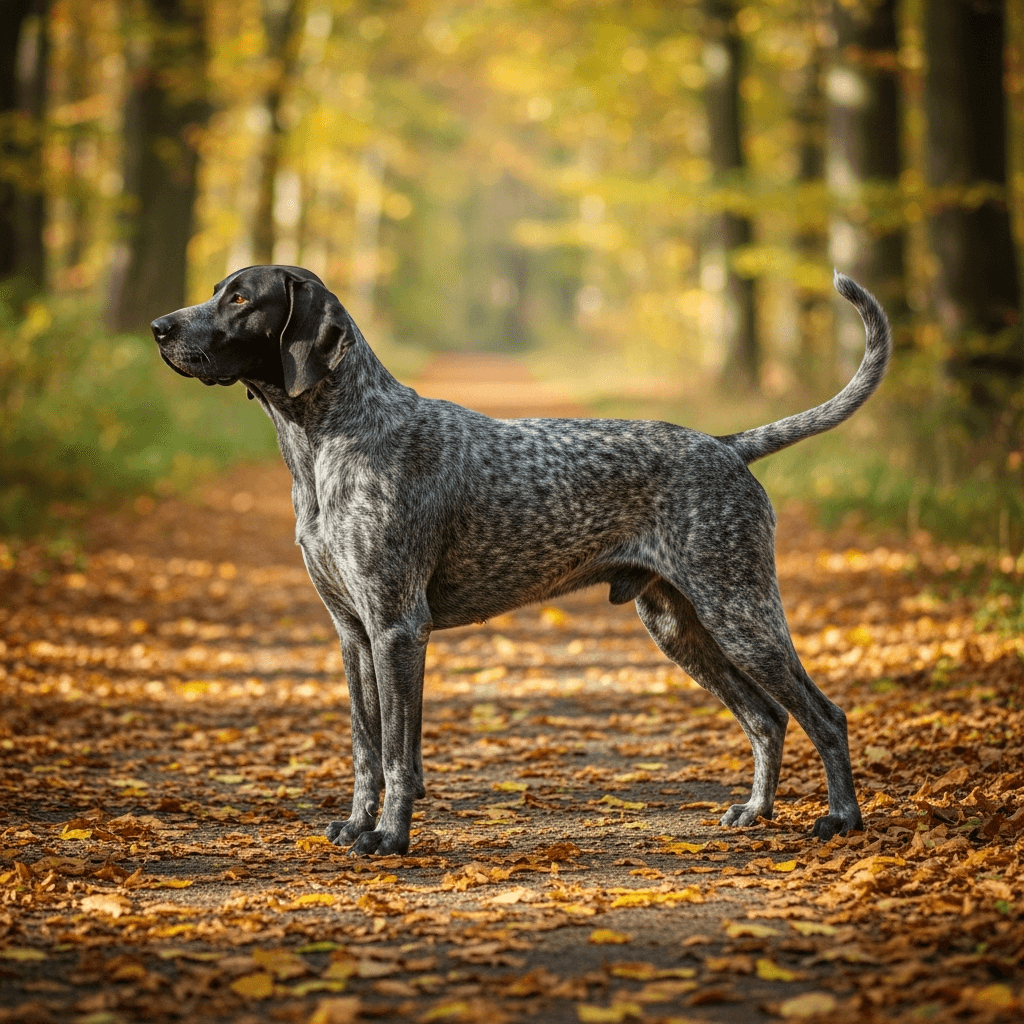
Great Gascon Hound
FCI Group
6• FCI 22
Size
Large
Origin Country
FR
Height
62-72 cm
Weight
32-35 kg
Lifespan
10-15 years
Temperament
Overview
The large Gascon hound, also known as Grand Bleu de Gascogne, is a dog breed that captivates with its majestic presence and rich history dating back to the 14th century. Originating from southern France, this magnificent hound is not only exceptional for its hunting skills but also as a companion for those who appreciate its balanced temperament and noble appearance.
Since medieval times, when it was bred by Gaston Febus, Count of Foix, for hunting wild game – wolves, bears, and boars – this breed has gained recognition as a reliable companion for hunters. Moreover, its genes have contributed to the development of other hound breeds in southern France, highlighting its key role in the history of cynology.
The appearance of the large Gascon hound is impressive and harmonious:
- Build: strong chest, long back, medium-length neck
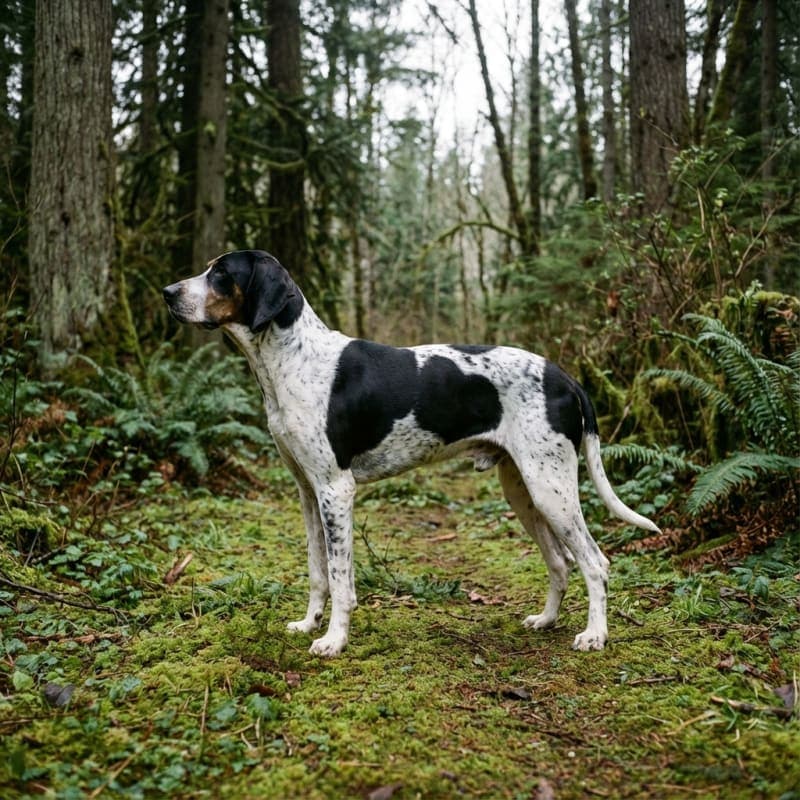
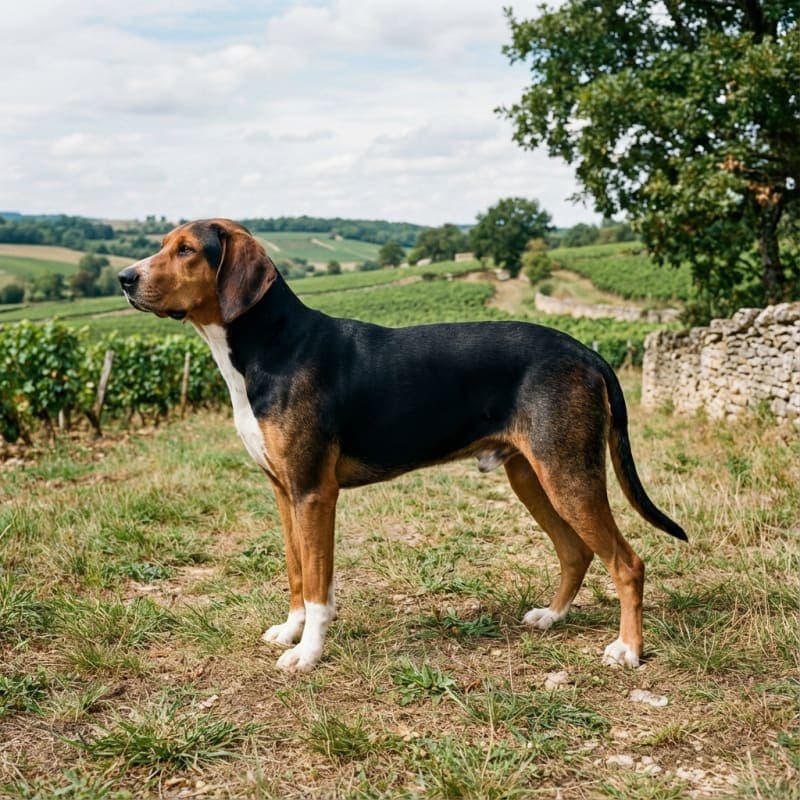
- Coat: characteristic black and white spots with tan markings
- Eyes: brown, expressing gentleness and intelligence
- Character: calm, balanced, affectionate, and easy to handle
This breed excels both as a hunting dog working in a pack and as a devoted family pet. Its calm temperament and natural tendency to cooperate make it easy to train and obedient to commands without resistance.
The large Gascon hound is a dog that requires regular physical activity to maintain health and well-being. It loves long walks, runs, and outdoor play. Its instinct to work in groups makes it an excellent partner for hunting and interacting with other dogs. Training this dog is relatively simple due to its intelligence and willingness to learn.
It is important to note the need for early socialization, which will help it better adapt to family life and teach it proper interactions with other animals and people. Despite its endurance, the breed may be prone to certain health issues, such as joint problems, so providing a proper diet and regular health check-ups is crucial.
Grooming this breed is not complicated – its short, dense coat requires only regular brushing, and maintaining ear and dental hygiene prevents infections. In summary, the large Gascon hound is a breed that combines the traits of a working dog and a companion. Its history, appearance, and character make it an ideal choice for active individuals seeking a loyal and devoted friend with a noble lineage.
The large Gascon hound is a dog with an impressive, noble appearance, distinguished by characteristic physical features typical of old French hunting breeds. Its build is strong and harmonious, with well-developed muscles, making it an ideal companion for long hunts in difficult terrain.
Dimensions and proportions:
- Height at the withers: males 65-72 cm, females 62-68 cm
- Build: long, strong, with a well-developed chest
- Proportions: the dog gives an impression of dignity and calm strength
Head and expression: The head is proportional to the rest of the body, with a distinctly French type. The skull is slightly rounded, not too wide, with a clearly defined occipital bump. The nose is strong, black, with well-opened nostrils. The eyes are oval, dark brown, expressing gentleness and nobility typical of this breed.
Breed-specific ears: The ears are long, thin, wavy, pointed at the tips, and reach beyond the tip of the nose. Set below the eye line, they give the dog a characteristic, melancholic expression. These are typical hunting ears that help direct scents towards the nose while tracking.
Neck and body: The neck is of medium length, strong, with a visible but not excessive dewlap – a feature typical of old French hunting breeds. The body is long and deep, with a strong, straight back. The chest is wide and deep, reaching to the elbows, which provides a large lung capacity necessary for long tracking.
Limbs and paws: The limbs are strong, well-muscled, with bones of large circumference. The front limbs are straight, strong, with wide joints. The hind limbs are well angulated, providing strong propulsion during running. The paws are slightly elongated ovals, with well-arched toes and tough pads – ideal for moving over various surfaces.
Tail: The tail is strong at the base, gradually tapering towards the end, carried elegantly in a sabre shape. During work and excitement, it may be raised, but it is never curled over the back.
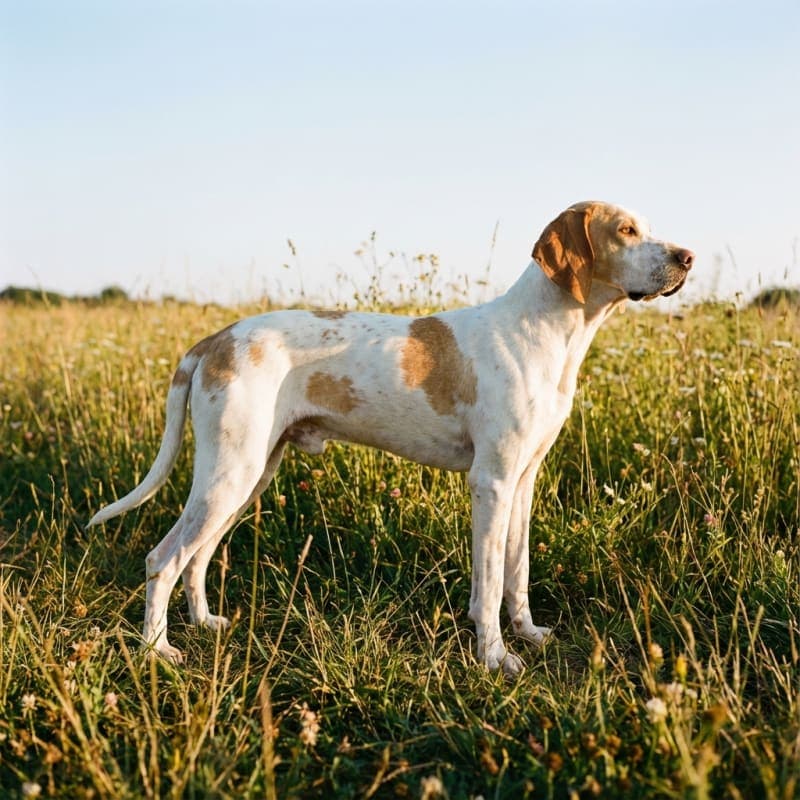
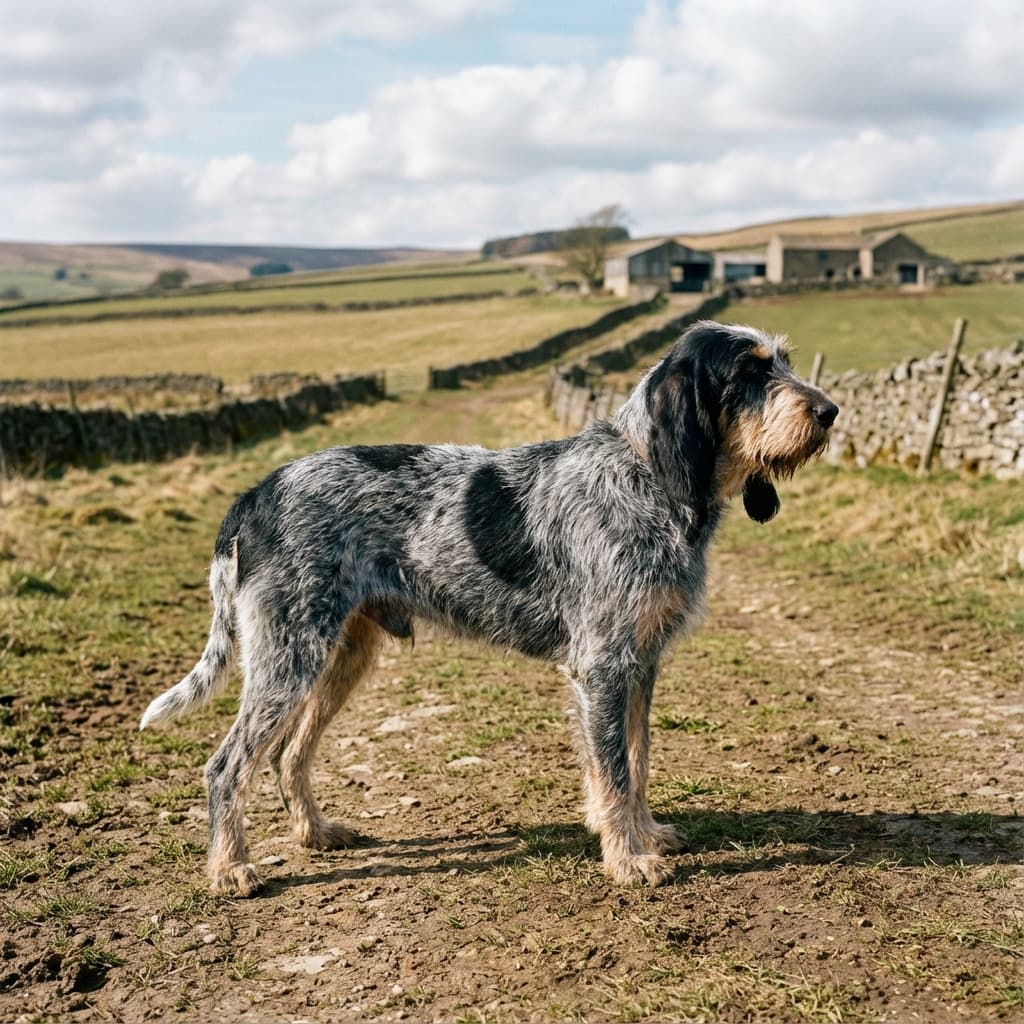
Coat and color: The coat is characteristic and extremely striking – black-and-white spotted with tan markings. The base color is white with black spots creating a bluish effect (hence the name bleu). There are black patches on the head, often with tan markings above the eyes, on the cheeks, and the inner part of the ears. Tan markings (tan) are also present on the limbs and under the tail.
The skin is thick and elastic, often with visible dark pigmentation. The coat is short but dense and slightly rough to the touch, which protects the dog from adverse weather conditions during hunts. The appearance of the large Gascon hound is not only aesthetic but also functional – every element of its build serves effective work as a tracking dog.
The large Gascon hound is a dog with a gentle, balanced, and calm temperament, which perfectly combines the traits of a working dog with the exceptional character of a family companion. Its behavior is full of dignity and composure, although during work its natural energy and determination come to the fore.
Temperament and character:
- Calmness and balance: gentle, patient, and balanced at home
- Ease of training: willingly obeys the owner's commands
- Pack instinct: naturally cooperates with other dogs
- Extraordinary sense of smell: possesses a very sensitive sense of smell and a deep, resonant voice
Behavior during work: During tracking, the large Gascon hound reveals its true nature – it becomes extremely attentive, focused, and persistent. Its hunting instinct is very strong, and working in a pack comes naturally to it. Equipped with an extraordinary sense of smell and a characteristic deep, resonant voice, it assists hunters in locating the dog during tracking.
Relationships with family: It is a dog very devoted to its owner and family. Its gentle nature makes it get along well with children, although due to its considerable size, interactions with small children should be supervised. It has a patient and tolerant character, making it an excellent family companion for active households.
Socialization and relationships with other animals: Thanks to its pack working instinct, the large Gascon hound usually does well in the company of other dogs. It is sociable and enjoys interactions with its peers. Proper early socialization is crucial for its development and will help teach it appropriate interactions with both people and other animals.
However, it is worth noting that it has a strong hunting instinct, so it may show a desire to track small animals. With proper training and socialization, this can be managed, but owners should be aware of this breed trait.
Activity and needs: Despite its calm demeanor at home, the large Gascon hound requires regular, intense physical activity. Without the right amount of exercise and mental stimulation, it may develop behavioral problems such as excessive barking, destructive behaviors, or attempts to escape in order to track on its own.
It needs space to run and explore, which contributes to its mental and physical health. Long walks in the woods, hiking, and of course hunting are ideal for it. Its sociable character and energy make it a wonderful companion for active families or hunters who can devote enough time and attention to it.
Voice and communication: The large Gascon hound is equipped with a characteristic resonant voice with deep tones, which it uses during tracking. At home, it is usually not overly loud, but owners should be aware that as a hound, it has a natural tendency to bark and howl, especially when it senses an interesting trail.
The large Gascon hound is a breed that generally enjoys good health and resilience, partly due to its natural selection as a working dog. However, like any breed with a specific standard, it may be prone to certain health issues that owners should be aware of.
The most common health problems:
- Hip and elbow dysplasia: particularly significant in large active dogs
- Gastric torsion: a risk in dogs with deep chests
- Ear infections: due to long, drooping ears
- Joint problems: arthritis in older individuals
Joint dysplasia: This condition is particularly important for active dogs that run a lot and work in the field. Owners should pay attention to early symptoms such as:
- Lameness or stiffness, especially after resting
- Difficulty getting up or climbing stairs
- Decreased activity or reluctance to play
- Abnormal walking (swaying at the back)
Early diagnosis and appropriate treatment can significantly improve the dog's quality of life. If joint problems are suspected, a veterinarian should be consulted immediately.
Gastric torsion (GDV): This is a sudden, life-threatening condition that large breed dogs with deep chests are at risk for. Symptoms include restless behavior, a bloated abdomen, attempts to vomit without results, excessive drooling, and discomfort. It requires immediate veterinary intervention. Prevention includes:
- Feeding smaller portions (2-3 times a day)
- Avoiding intense exercise right before and after meals
- Using slow-feed bowls or special platforms
- Avoiding stress during feeding
Ear infections: Due to the long, drooping ears characteristic of the breed, the large Gascon hound may be prone to ear infections. Poor air circulation in the ear canal creates a moist environment conducive to the growth of bacteria and fungi. Regular inspection and cleaning of the ears is crucial, especially after baths, swimming, and long walks in damp areas.
Preventive care: The key to maintaining the health of the large Gascon hound is regular veterinary care:
- Check-ups: at least once a year, every 6 months for older dogs
- Vaccinations: according to the veterinarian's recommendations
- Worming: regularly, especially for dogs working in the field
- Flea and tick prevention: mandatory for dogs spending a lot of time outdoors
- Blood tests: annually for mature and older dogs
Diet and weight: Maintaining a proper body weight is crucial for joint health and overall condition. Overweight significantly increases the burden on joints and can lead to serious health problems. A proper, balanced diet and regular physical activity are essential.
Dental hygiene: Regular tooth brushing (ideally daily) and providing appropriate chew toys will help prevent periodontal disease, which can lead to more serious health issues. Neglected oral hygiene can lead to infections that can spread to other organs through the bloodstream.
With proper care, a suitable diet, regular physical activity, and routine veterinary visits, the large Gascon hound can lead a long, healthy life of 10 to 14 years, full of joy and activity. Early detection of health problems and prompt response are key to ensuring the best quality of life for the dog.
The care of the Gascon Hound is relatively simple and low-maintenance due to its short, dense coat. This breed does not require complicated grooming procedures or visits to the grooming salon, but regular attention to the coat, ears, teeth, and nails is crucial for keeping the dog in excellent condition.
Coat care:
- Brushing: 1-2 times a week with a stiff-bristled brush or a rubber glove
- Shedding season: twice a year – increase brushing frequency to daily
- Bathing: as needed, usually every 2-3 months or when the dog gets dirty
- Effects: removal of dead hair, distribution of natural oils, healthy coat appearance
Regular brushing not only serves to remove loose hair but also helps distribute natural oils along the length of the coat, contributing to its healthy, shiny appearance. It is also an excellent opportunity to check the dog's skin condition – watch for any irritations, rashes, ticks, or other abnormalities.
Ear hygiene (CRITICAL for this breed): Due to its long, drooping ears, the Gascon Hound is particularly susceptible to ear infections. Poor air circulation in the ear canal creates a moist environment conducive to the growth of bacteria and fungi.
Recommendations for ear care:
- Regular checks: at least once a week check the inside of the ears
- Cleaning: every 1-2 weeks with a gentle ear cleaning solution
- After water: always dry the ears after bathing, swimming, or walking in the rain
- Signs of infection: unpleasant odor, redness, discharge, head shaking – require a visit to the veterinarian
Oral hygiene: Regular tooth brushing is essential for preventing periodontal disease and other health issues related to neglecting oral hygiene. Ideally, brush the teeth daily using toothpaste designed for dogs (never use human toothpaste!).
Additionally, it is worth offering:
- Dental chews that help mechanically remove tartar
- Chew toys made from natural materials
- Dry dental treats that support oral hygiene
In cases of advanced tartar or gum problems, professional dental cleaning by a veterinarian (scaling) under general anesthesia may be necessary.
Nail care: Nails should be trimmed regularly, usually every 3-4 weeks, unless they wear down naturally during activity. Overly long nails can cause discomfort, walking problems, and even changes in the structure of the paw and joints. If you can hear the nails clicking on the floor while walking, it means they are too long and need trimming.
Special nail clippers or grinders can be used. If the owner does not feel confident in trimming the nails themselves, it is advisable to seek help from a groomer or veterinarian.
General check-up: During grooming procedures, it is worth regularly checking:
- Eyes: for redness or discharge
- Skin: for ticks, fleas, irritations, lumps, or other changes
- Paw pads: for cracks, wounds, or foreign bodies
- Anal area: for irritations or issues with the anal glands
Proper, regular grooming is crucial for the health, comfort, and well-being of the Gascon Hound. Consistency in these activities allows for early detection of potential health problems and prevents more serious complications. Additionally, regular grooming sessions are an excellent opportunity to strengthen the bond between the owner and the dog.
The Great Gascony Hound is a breed that requires regular, intense physical activity to maintain good physical condition, mental health, and balanced behavior. As a dog bred for long-lasting hunts and tracking in difficult terrain, it has natural, high exercise needs that must be systematically met.
Minimum activity requirements:
- Time: at least 1.5-2 hours of activity per day
- Type: intense exercises, not just leisurely walks
- Frequency: daily, without exceptions
- Variety: a combination of different forms of activity for physical and mental stimulation
Recommended forms of activity:
Walks and hikes: Long, daily walks are essential. Ideally, the Great Gascony Hound should have the opportunity to hike in the woods, where it can utilize its natural tracking and scenting instincts. Walks should be varied – changing pace, different terrains (forest, field, mountains), which provides both physical and mental stimulation.
Running: This is a resilient dog that loves to run. It can be an excellent companion for long-distance runners. However, it is important to remember that young dogs (up to 12-18 months) should not be subjected to overly intense exercise due to developing joints and bones.
Scent work – mantrailing and nosework: Excellent activities that utilize the natural instincts of this breed. Searching for trails, hidden objects, or people is a great form of mental stimulation that often tires the dog more than physical exercise. Scent games can be organized both indoors and outdoors.
Hunting: For working dogs, hunting is an ideal form of activity – it utilizes all the natural instincts and skills of the breed. The Great Gascony Hound excels in pack hunting (with a group) for wild game.
Fetching and interactive games: Games involving fetching, frisbee, or other physical games are an excellent way to burn energy and strengthen the bond with the owner. It is worth incorporating training elements into the games.
Interactions with other dogs: The Great Gascony Hound is an instinctive pack-working dog, so contact with other dogs is very important for it. Regular visits to the dog park, walks with other dogs, or organizing joint playtime are excellent forms of socialization and activity.
NOTE – Joint protection for young dogs: Young dogs (up to 12-18 months) are still growing, and their joints and bones are not yet mature. During this period, it is important to avoid:
- Long running on hard surfaces (asphalt, concrete)
- Jumping from heights and intense jumping
- Climbing steep slopes
- Excessive overload (e.g., carrying heavy backpacks)
Instead, young dogs should receive moderate activity – walks, free play, swimming (great for the joints).
Consequences of insufficient exercise: Insufficient physical activity can lead to serious behavioral problems:
- Destructive behaviors (destroying furniture, objects)
- Excessive barking and howling
- Attempts to escape for independent tracking
- Hyperactivity and difficulty concentrating
- Depression and apathy
- Overweight leading to health issues
Weather conditions: The Great Gascony Hound is a resilient dog that does well in various weather conditions. Its dense coat provides protection against cold and rain. One should not forgo activity due to the weather – on the contrary, diverse conditions are an additional form of stimulation for the dog.
Living space: Due to its activity requirements, the Great Gascony Hound is not suitable for living in a small apartment in the city. The ideal environment is a house with access to a garden, preferably in the countryside or on the outskirts of the city, where the dog has access to areas for running and exploring.
In summary, the Great Gascony Hound is a breed for active owners who can dedicate a significant amount of time to daily, intense exercise. Without the proper amount of movement and stimulation, this dog will not be happy, and behavioral problems may arise. However, if the owner can meet its exercise needs, they will receive a wonderful, healthy, and balanced companion.
The training of the Great Gascon Hound should start as early as possible, preferably from the moment the puppy arrives home (around 8 weeks of age). This breed is intelligent, eager to learn, and relatively easy to train, but it requires a consistent, patient approach based on positive training methods.
Basic training principles:
- Positive reinforcement: rewards, praise, play instead of punishment
- Consistency: clear rules followed by all household members
- Short sessions: 5-10 minutes several times a day instead of long, exhausting training sessions
- Patience: respecting the dog's learning pace
- Diversity: varied exercises prevent boredom
Early socialization (CRITICAL): The period from 3 to 14 weeks of age is the most important time for socializing the puppy. During this period, the puppy should be exposed to as many positive experiences as possible:
- Meeting different people (children, adults, seniors, people in various outfits)
- Contact with other dogs (different breeds, sizes, ages)
- Different environments (city, countryside, forest, shops, visits to the vet)
- Various sounds (traffic, construction work, thunder, fireworks)
- Traveling by car, bus, train
Proper socialization will prevent future behavioral problems such as fear, aggression, or excessive shyness.
Basic commands (fundamental): Every dog should know basic commands that ensure safety and control:
- Sit – the basic command, the first to teach
- Lie down – important for calming the dog in various situations
- Stay – crucial for safety (e.g., before crossing the street)
- Come – the most important command, can save the dog's life
- No or Leave it – interrupts unwanted behavior
- Heel – walking calmly at the owner's side without pulling
Teaching recall (COME): This is the most important command for the Great Gascon Hound due to its strong hunting instinct. The tracking dog can easily get lost in pursuit of a scent, so reliable recall is crucial for its safety.
How to train recall:
- Always reward with very high-value treats
- Train in controlled conditions, gradually increasing distance and level of distraction
- NEVER punish the dog after it comes when called (even if it took a long time)
- Use a long training leash (10-15 m) at the beginning of training
- Train in different places and situations
Controlling the hunting instinct: The Great Gascon Hound has a very strong tracking instinct, which can be a challenge during walks. Training should include learning to control this instinct:
- Learning to ignore scents during walks (command Leave it)
- Redirecting the dog's attention to the owner
- Using a long leash in the field for safe training
- Providing legal opportunities to satisfy the instinct (mantrailing, nosework)
Advanced training and sports: The Great Gascon Hound is a breed that excels in various forms of advanced training:
- Mantrailing: tracking people – ideal for this breed
- Nosework: searching for scents – utilizes the natural instinct
- Canicross: running with the dog in a harness
- Practical hunting: fieldwork for working dogs
Strengthening the bond: Training is not just about teaching commands, but above all building a strong bond between the dog and the owner. It is worth incorporating elements of play into training, spending time together, and appreciating even small progress.
Typical challenges:
- Independence: may sometimes show an independent character typical of hounds – requires patience
- Distraction by scents: strong sense of smell makes it easily distracted – requires concentration training
- Voice: as a hound, it tends to bark and howl – requires voice control training
When to seek professional help: If behavioral problems arise (aggression, excessive shyness, separation anxiety, destructiveness), it is advisable to consult a professional behaviorist or dog trainer. Early intervention can prevent the entrenchment of unwanted behaviors.
In summary, the Great Gascon Hound is a smart and eager to cooperate breed that, with proper, consistent training based on positive methods, will become an obedient and well-mannered companion. The key is to start socialization and training early, be patient, and understand the breed's natural instincts.
The diet of the large Gascon hound should be well-balanced, high-quality, and tailored to its age, weight, activity level, and health status. Proper nutrition is the foundation of health, energy, and longevity for the dog, so this aspect should not be overlooked.
Basic nutrition guidelines:
- High-quality food: choose premium or super-premium foods with high meat content
- Appropriate portions: adjusted to weight, age, and activity – avoid overfeeding
- Regular hours: 2-3 meals a day at fixed times
- Access to water: constant access to fresh, clean water
- Weight monitoring: regular weighing and body condition checks
Nutritional requirements based on age:
Puppies (0-12 months): Puppies of the large Gascon hound have special nutritional needs that support the proper development of bones, joints, and muscles:
- Puppy food for large breeds: specially formulated considering the growth rate
- High protein: 25-30% to support muscle development
- Controlled calcium and phosphorus content: prevents growth problems in bones
- Frequency: 3-4 meals a day until 6 months, then 2-3 meals
- Avoid overfeeding: too rapid growth increases the risk of joint dysplasia
Adult dogs (1-7 years): Adult representatives of the breed require a diet rich in high-quality protein that supports their activity and physical condition:
- Protein: minimum 25-28%, mainly from animal sources (chicken, beef, fish)
- Fats: 15-18% for energy and healthy coat
- Complex carbohydrates: rice, oats, sweet potatoes for sustained energy
- Omega-3 and omega-6 fatty acids: for healthy skin, coat, and joints
- Chondroitin and glucosamine: support joint health
Senior dogs (7+ years): Older dogs have different nutritional needs – slower metabolism, possible joint issues:
- Lower calorie content: prevents overweight with decreased activity
- High protein: to maintain muscle mass
- Joint supplements: chondroitin, glucosamine, omega-3 fatty acids
- Antioxidants: vitamins E, C to support the immune system
- Easy digestibility: feeding smaller portions more frequently
Active and working dogs: Large Gascon hounds used for hunting or intensive work have significantly higher calorie requirements:
- Increased amounts of protein and fats: up to 30% protein, 20% fats
- High-calorie food: to maintain weight during intense work
- Electrolytes: supplementation during periods of intense work
- Feeding: 2-3 hours before work and after completion, not directly before
Prevention of gastric torsion (GDV): Due to the deep chest, the large Gascon hound is at risk of gastric torsion – a life-threatening condition. Nutritional guidelines to prevent GDV:
- 2-3 smaller meals instead of one large meal
- Rest after eating: at least 1-2 hours of rest after a meal
- No intense exercise 2 hours before and 1 hour after a meal
- Avoid stressful situations during feeding
- Slow feeders or bowl platforms: slow down eating
- Do not give large amounts of water immediately after eating
Commercial food vs. home diet:
- High-quality dry food: convenient, balanced, supports dental hygiene
- Wet food: higher moisture content, tasty, can be mixed with dry food
- Home diet (BARF): requires knowledge, supplementation, consultation with a veterinary nutritionist
- Mixed feeding: a combination of dry and wet food
Supplementation: For healthy dogs fed a complete diet, supplementation is usually not necessary. However, in special cases, it is worth considering:
- Chondroitin and glucosamine: joint support, especially in older dogs
- Omega-3: for joint, coat, and skin health
- Probiotics: for digestive health
- Antioxidants: to support the immune system in older dogs
All supplementation should be consulted with a veterinarian, as excess of certain ingredients can be harmful.
PROHIBITED products for dogs:
- Chocolate, coffee, caffeine
- Onion, garlic, leek
- Grapes, raisins
- Avocado
- Xylitol (artificial sweetener)
- Alcohol
- Cooked bones (risk of choking and intestinal perforation)
- Products with excess salt, sugar, fat
Weight control: Maintaining proper weight is crucial for joint health and overall condition. Overweight in large dogs significantly increases the risk of dysplasia, arthritis, and other health issues.
How to assess the dog's condition:
- Lightly palpable ribs under a layer of muscle (not protruding)
- Visible waist when viewed from above
- Light abdominal tuck when viewed from the side
If the dog is gaining weight, it is necessary to reduce food portions and increase physical activity. Regular consultations with a veterinarian will help establish optimal diet and supplementation to ensure the dog has a long, healthy life full of energy.
Characteristic Traits
Pros
- Excellent sense of smell and tracking skills
- Loyal and devoted family companion
- Easy to train and eager to cooperate
- Calm
- balanced temperament
- Works well in a pack with other dogs
- Resilient and durable in tough terrain.
Cons
- Requires a lot of daily physical activity
- Strong hunting instinct may lead to escapes
- May be prone to joint problems
- Requires regular ear checks and cleaning
- Not suitable for living in a small apartment
- May be loud (barking
- howling) when it picks up a scent.
Behavioral Ratings
Breed History
The large Gascon hound, known in France as Grand Bleu de Gascogne, is a breed with an extraordinarily rich and fascinating history that dates back deep into the Middle Ages. It is one of the oldest French hound breeds, whose lineage can be traced back to the 14th century, although its roots likely go back even further.
Medieval beginnings: This breed is a direct descendant of the St. Hubert Hounds, legendary hunting dogs bred in the Ardennes by Benedictines at the St. Hubert monastery as early as the 7th-8th century. These powerful tracking dogs were valued for their unmatched sense of smell and endurance in tracking game.
By the 14th century, the large Gascon hound was already a well-established breed in France. Its most famous owner and breeder was Gaston III de Foix, known as Febus (1331-1391), Count of Foix and Viscount of Béarn. Gaston Febus was not only a powerful feudal lord but also an avid hunter and the author of the famous book Livre de chasse (Book of Hunting), one of the most important medieval treatises on hunting.
Gaston Febus's packs: Gaston Febus maintained huge packs of large Gascon hounds at his castle in Pau. These dogs were used for hunting the most dangerous game – wolves, bears, wild boars, and deer. His packs sometimes numbered over 1500 dogs, which speaks to the significance of hunting in the life of medieval aristocracy.
In his work Livre de chasse, Gaston detailed the characteristics of hounds, their breeding, training, and hunting methods. The dogs he described exhibit all the traits characteristic of the modern large Gascon hound – an extraordinary sense of smell, a loud voice, endurance, and the ability to work in a pack.
Distribution in Gascony: The breed's name directly refers to the region of Gascony in southwestern France, where it was particularly popular. This region, characterized by varied terrain – from hills to dense forests – provided an ideal environment for the development of this breed of tracking dogs.
The large Gascon hound became an elite dog – it was bred primarily by the aristocracy and wealthy noble families. Its breeding was treated with great care, and bloodlines were strictly monitored to preserve the breed's exceptional working traits.
Influence on other breeds: The large Gascon hound is recognized as a progenitor breed for many other French hounds collectively referred to as dogs du midi (from the south). Its genes can be found in breeds such as:
- Small Gascon hound (Petit Bleu de Gascogne)
- Gascon Saintonge hound (Grand Gascon Saintongeois)
- Ariège hound (Ariégeois)
- Other local varieties of hounds from southern France
This underscores the breed's immense significance in the development of French hunting dog breeding.
Decline – 19th century: In the 19th century, particularly after the French Revolution (1789), which ruined feudal and aristocratic structures, the breeding of large Gascon hounds significantly weakened. With the decline of the aristocracy, their main occupation – lavish hunting of big game – also disappeared.
The breed began to lose popularity in favor of other, more versatile hound breeds that were easier to maintain and better adapted to changing hunting conditions. During this period, the large Gascon hound was on the brink of extinction.
Revival – 20th century: At the turn of the 19th and 20th centuries, thanks to the efforts of enthusiasts and breeders, the breed was saved from complete disappearance. In 1920, the breed was officially recognized by French kennel clubs, and in later years by the International Canine Federation (FCI).
Breeders focused on restoring the breed's purity and preserving its exceptional working traits. The breed regained recognition, this time not only among the aristocracy but also among hunters and dog lovers from various social backgrounds.
Modern times: Today, the large Gascon hound is valued both by hunters and as a family dog. It is a breed that combines the traits of a companion and a working dog. Although it is not one of the most popular breeds in the world, it has a dedicated following, especially in France and other European countries.
The breed is particularly popular in collective hunts for wild game – deer, wild boars, hares. Its extraordinary sense of smell, endurance, and loud voice make it an ideal tracking dog. Modern packs of large Gascon hounds continue the tradition of their medieval ancestors.
Cultural significance: The large Gascon hound is an important element of French cultural heritage and symbolizes the hunting traditions of the Gascony region. This breed is present in literature, painting, and local folklore as a symbol of nobility, perseverance, and attachment to nature.
Maintaining this breed's purity and continuing its traditions is essential not only for preserving the biodiversity of purebred dogs but also for preserving the cultural heritage of France – a country with a long and rich history of hunting dog breeding.
In summary, the large Gascon hound is a breed with an incredible history dating back to the Middle Ages, which has survived the centuries thanks to its uniqueness, the dedication of breeders, and its enduring value as a hunting dog and companion. It is a living monument to French hunting culture and the noble traditions of Gascony.