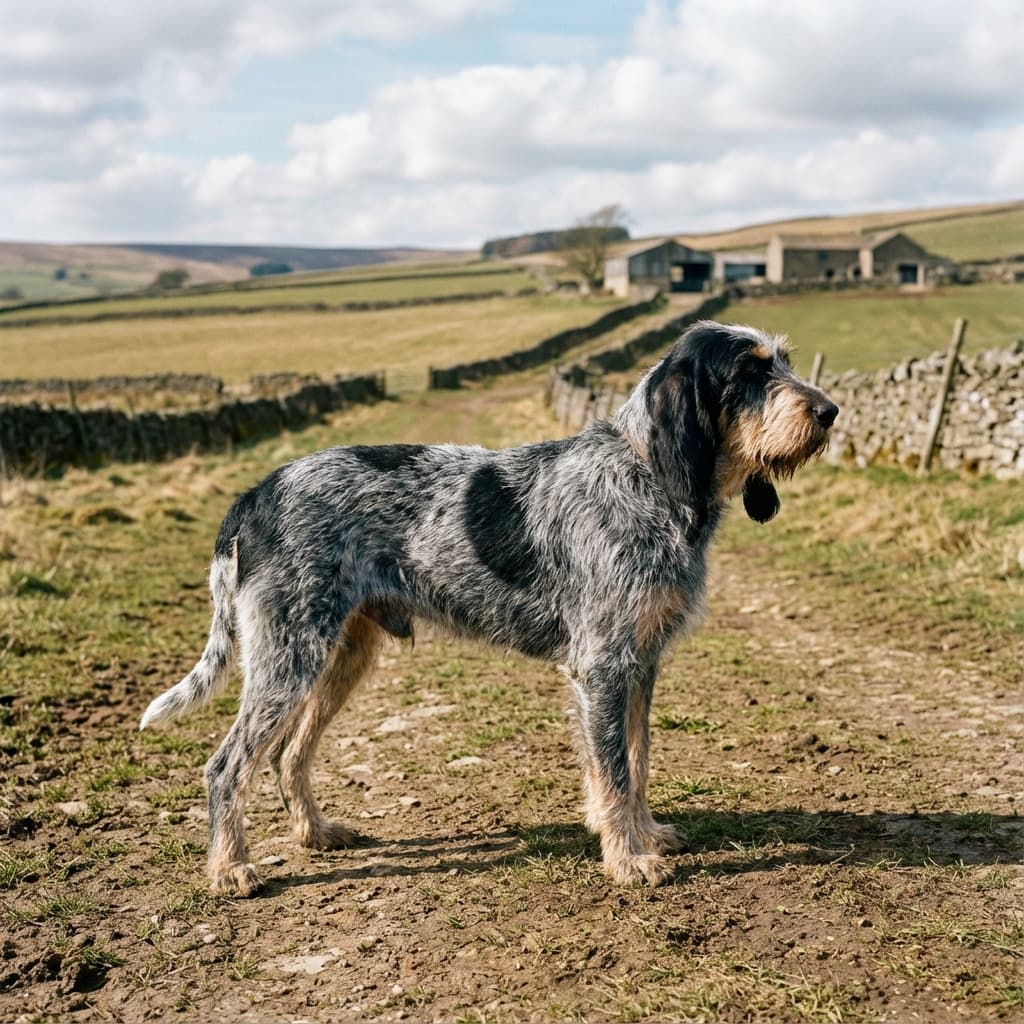
Gascon Saintongeois
FCI Group
6• FCI 32
Size
Large
Origin Country
FR
Height
48-57 cm
Weight
18-25 kg
Lifespan
12-14 years
Temperament
Overview
The Griffon Bleu de Gascogne, also known as the rough-haired Gascon hound, is a fascinating hunting dog breed that captures the hearts of dog lovers around the world. Originating from the picturesque landscapes of southern France, the Gascony region, this dog is distinguished not only by its rich history dating back to the Middle Ages but also by unique traits that make it an ideal companion for both hunters and families leading an active lifestyle.
Its distinctive appearance – rough, resilient coat in a bluish color (the result of mixing white and black hairs) – immediately draws attention. Although this breed was close to extinction after the French Revolution, it is currently experiencing a true renaissance, which attests to its enduring value. Modern breeders are making every effort to preserve the authentic character of this breed and its exceptional hunting abilities.
The rough-haired Gascon hound is a dog with a well-developed sense of smell and boundless energy, making it unmatched in hunting rabbits and a valuable aid in tracking wild boars. Its tracking ability is impressive – it can determinedly follow a trail for many hours. Its enthusiasm for work and perseverance know no bounds, making it not only an effective helper in the field but also a wonderful companion in everyday life.
Thanks to its strong character and unwavering loyalty, this dog forms incredibly deep bonds with its owner. This trait is particularly important in the context of training and daily coexistence – a dog that feels part of the family is more willing to cooperate and learns faster. The temperament of this breed can be described as lively, full of vigor, and sometimes even a bit explosive, though always affectionate towards its loved ones.
However, it is important to remember that the rough-haired Gascon hound is a dog that requires a significant amount of exercise and physical activity. A minimum of 60 minutes of intense effort daily is an absolute necessity. Its natural hunting instincts can sometimes override obedience, so consistency in training is crucial from puppyhood. Although the overall temperament of the breed is cheerful and full of life, this dog can also show stubbornness, which poses a challenge for inexperienced owners.
This breed thrives in homes with gardens, where there is plenty of space to move freely and engage in outdoor activities. The rough-haired Gascon hound needs room to run and regular opportunities to satisfy its hunting needs – even through games of fetch or tracking. However, it is not the best choice for older individuals, residents of small apartments, or those who prefer a calm, low-activity lifestyle. Therefore, it is worth carefully considering the decision to adopt this breed to ensure it has the appropriate conditions and to enjoy a shared life full of adventures.
We invite you to further explore this extraordinary breed. In our comprehensive guide, you will find detailed information about the health, grooming, training, history, and behavior of the rough-haired Gascon hound. Immerse yourself in the fascinating world of this beautiful breed and discover what makes it so unique and valued by hunting dog enthusiasts around the world.
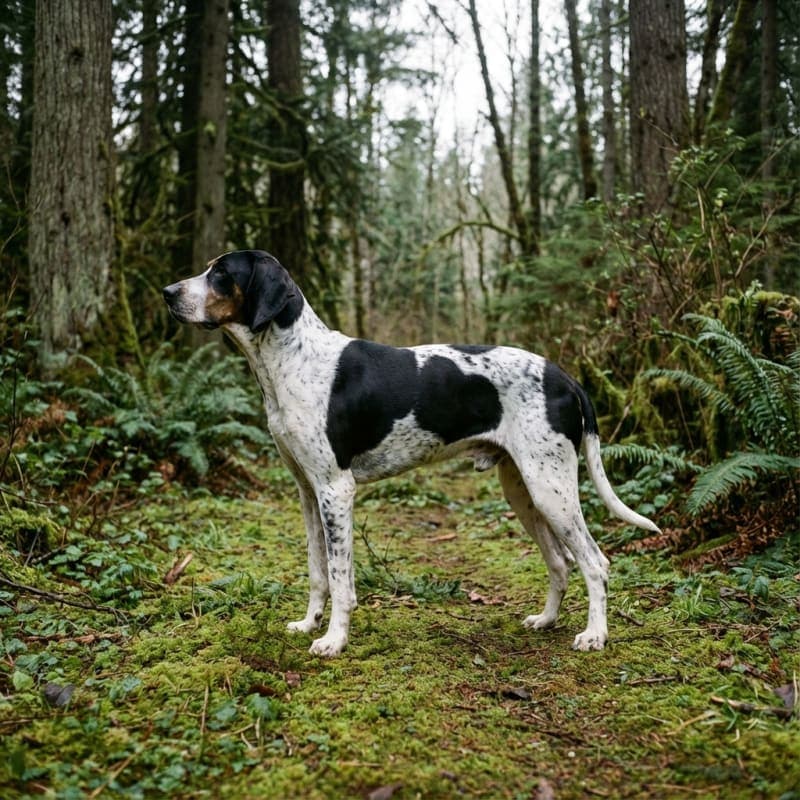
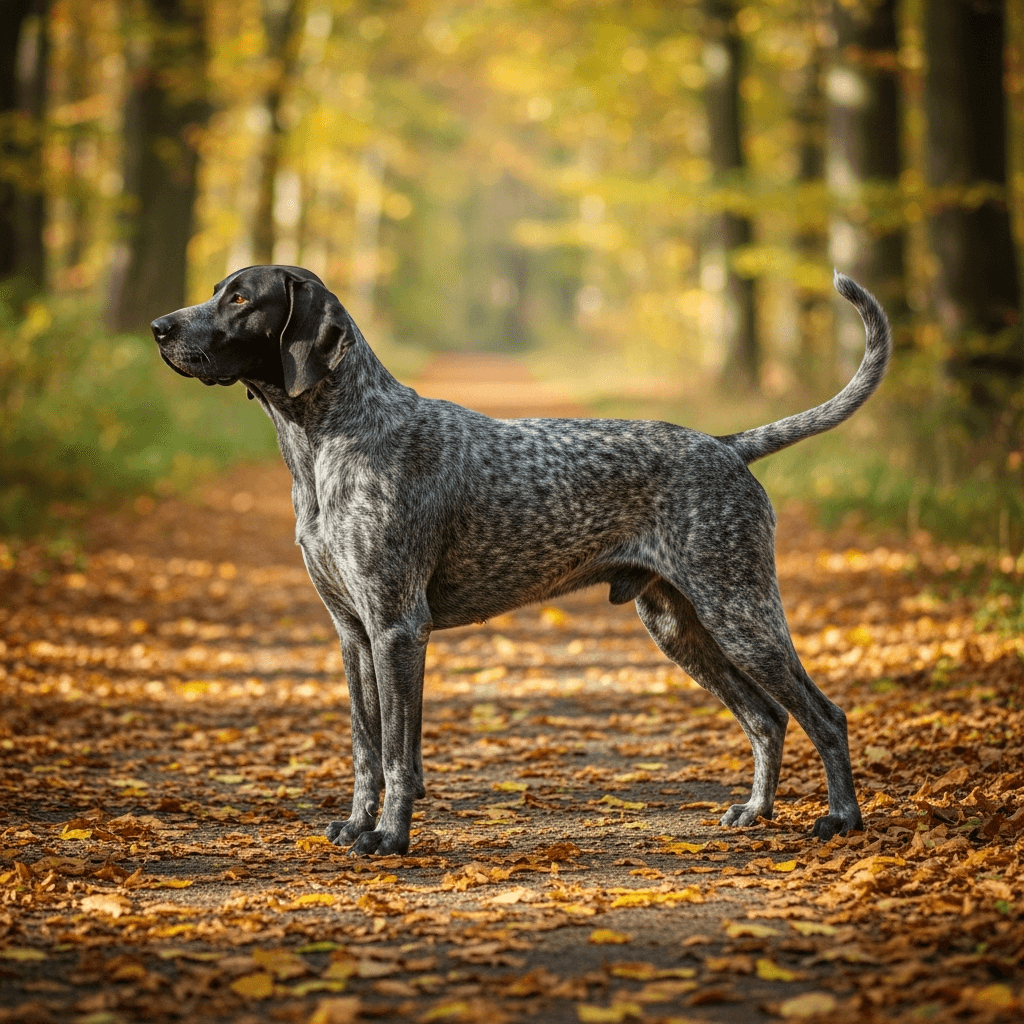
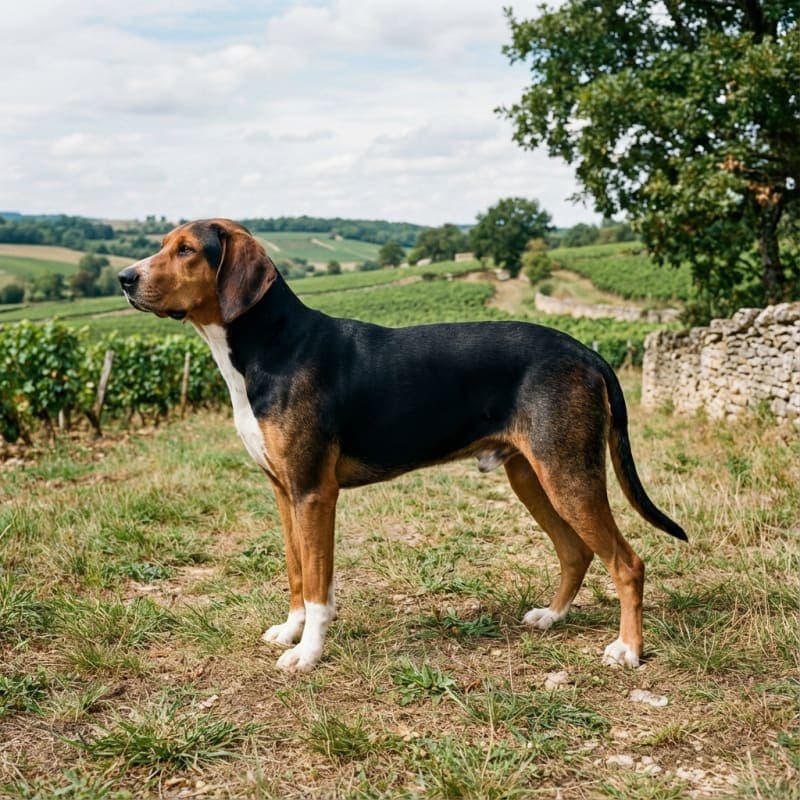
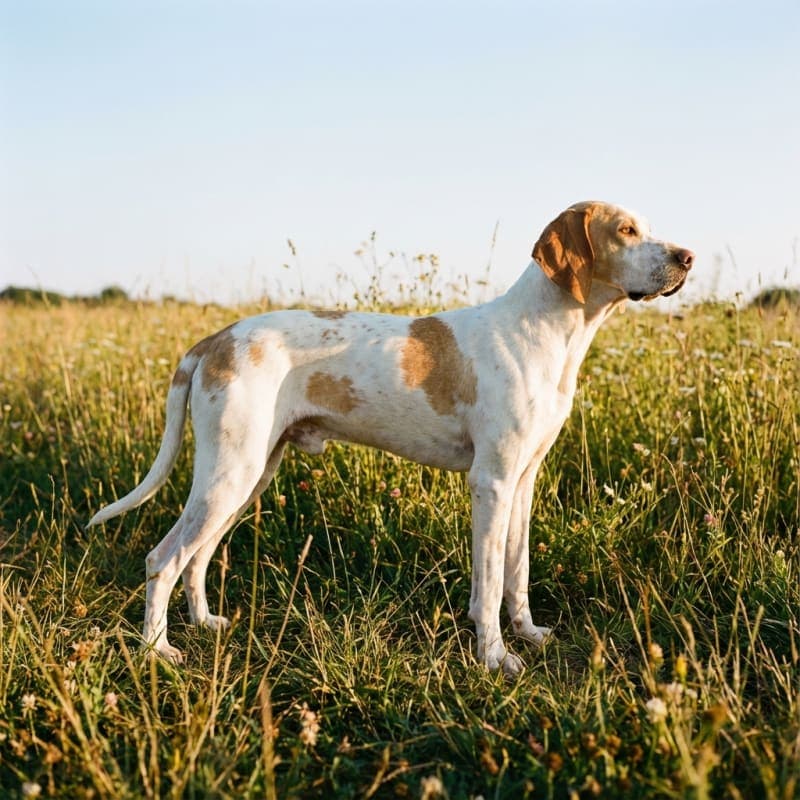
The Griffon Bleu de Gascogne is a dog with a unique, rustic appearance that harmoniously combines the traits of its two ancestral breeds. It is characterized by a solid, strong build while maintaining medium size proportions. Its silhouette is well-balanced – strong limbs provide endurance during long hours of tracking, and its muscular build indicates strength and condition.
The head is moderately wide, slightly rounded, with a clearly defined stop (the transition from forehead to muzzle). The forehead is full, and the occiput is slightly pronounced. The muzzle is practically the same length as the skull, and the bridge of the nose is straight or very gently arched. The eyes are oval, dark brown, expressive, and full of life – the gaze of this breed is remarkably lively and intelligent, reflecting its alert character.
The ears are long, drooping, well-formed, and set at eye level. They reach at least to the tip of the nose, which is typical for hounds. The nose is black, large, with well-opened nostrils – ideal equipment for a dog with such a wonderful sense of smell.
The coat is the breed's hallmark – it is rough, dense, and exceptionally resistant to harsh weather conditions, allowing the dog to work effectively in rain, snow, or dense underbrush. The coat color is mainly white with black patches and speckling, creating a characteristic bluish-gray visual effect (hence the French name bleu – blue). This mix of colors gives the dog a unique, noble appearance.
Physical dimensions:
- Height at the withers: 50-57 cm for males, 48-55 cm for females
- Weight: proportional to height, usually 18-25 kg
The tail is well-furred, carried gracefully, slightly raised during movement, which adds elegance to the dog and emphasizes its alertness. During work, the tail is an indicator of concentration – intense wagging signals that the dog has picked up a scent.
The Griffon Bleu de Gascogne stands out not only for its distinctive, rustic appearance but also for its energetic, lively behavior, which immediately reveals its hunting roots and unwavering character.
The Griffon Bleu de Gascogne has a complex and intense temperament, which can be described as energetic, cheerful, full of life, and at times even a bit sensitive. This breed is known for its strong hunting instinct, which dominates its behavior – the dog is constantly alert, very interested in its surroundings, and all the scents around it. This instinct means that during walks, it can become engrossed in tracks and it is difficult to divert its attention.
Despite a certain independence characteristic of hunting dogs, the Griffon Bleu de Gascogne is also very sociable and gets along well with other dogs, making it an ideal dog for living in a multi-dog family. It was bred to work in packs, so cooperation with other dogs is natural and enjoyable for it.
However, it should be noted that this breed is quite vocal – it tends to bark and howl, which is typical for hounds that communicate with the hunter during a hunt in this way. This trait can pose a problem in apartments or densely populated neighborhoods, where neighbors may not appreciate its vocal talents.
Although it is friendly, open, and full of enthusiasm towards family members, it may show some reserve or distrust towards strangers – it is not a dog that immediately befriends every unfamiliar person it encounters. Early socialization (preferably from the age of 8 weeks) and consistent training are crucial to help it become a confident, balanced dog that can respond appropriately in various social situations.
The Griffon Bleu de Gascogne is also known for being stubborn and willful, especially when it catches an interesting scent – at that moment, the whole world ceases to exist for it. This trait requires owners to have immense patience, consistency, and firmness in training. It is not a dog for novice owners or for those who expect absolute obedience at every command.
On the other hand, this breed is extremely affectionate and loyal to its family. It forms strong emotional bonds and desires to spend time with its people. When its physical and mental needs are met, it becomes a wonderful, joyful companion in life.
In summary – it is a wonderful dog for active families with experience in raising dogs, who can provide it with the right amount of exercise, mental stimulation, and consistent training. It is not a breed for everyone, but in the right hands, it flourishes as an irreplaceable companion and adventure partner.
The Griffon Bleu de Gascogne is a relatively healthy and resilient breed without serious genetic breed-related disorders. The average lifespan is between 12 to 14 years, which is a good result for a medium-sized dog. This breed enjoys a well-deserved reputation for being resistant to many diseases; however, like any dog, it requires regular veterinary visits and appropriate preventive health care.
Conditions it may be prone to:
- Bloat (gastric torsion) – a serious, life-threatening situation, more common in dogs with deep chests. Dogs should be fed 2-3 smaller meals a day instead of one large meal, and intense exercise should be avoided immediately after eating.
- Ear infections – long, droopy ears that are poorly ventilated can be prone to moisture accumulation and bacterial growth. Regular checking and cleaning of the ears is required (at least once a week).
- Entropion – a congenital eyelid defect where the eyelids roll inward, causing irritation of the cornea. It requires surgical intervention.
- Hip and elbow dysplasia – a developmental joint condition that can lead to pain and lameness. Responsible breeders perform X-ray examinations of the parents before breeding.
It is also important to monitor the dog's weight, as the Griffon Bleu de Gascogne has a natural tendency to gain weight, especially if it does not receive enough exercise or is overfed. Obesity is a serious health issue that burdens the joints, heart, and shortens the dog's life.
Preventive recommendations:
- Regular vaccinations and deworming (according to the veterinary calendar)
- Annual check-ups with the veterinarian, including blood tests after the age of 7
- Protection against external parasites (ticks, fleas) – especially important for an active outdoor dog
- Maintaining dental hygiene – regular cleaning prevents tartar buildup and gum diseases
- Providing a healthy, balanced diet rich in animal protein, vitamins, and minerals
It is also a good practice to have health insurance for the dog, which can significantly reduce the costs of unexpected veterinary visits or surgical procedures. With proper care, the Griffon Bleu de Gascogne can enjoy a long, healthy, and active life alongside its family.
The grooming of the Griffon Bleu de Gascogne is relatively simple and low-maintenance, although it requires regularity and consistency. Dogs of this breed have a rough, dense coat with a wiry texture that is naturally weather-resistant and does not require complicated treatments.
Brushing: It is recommended to brush the dog at least once a week with a stiff-bristled brush or a rake to remove dead hair, prevent matting, and minimize shedding. Shedding is moderate throughout the year, with two periods of more intense coat change – in spring and autumn. During these periods, it is advisable to increase the brushing frequency to 2-3 times a week.
Bathing: The rough-coated hound's coat is naturally resistant to dirt and cleans itself, so frequent baths are not necessary. It is sufficient to bath the dog 3-4 times a year or as needed (e.g., when the dog gets very dirty while hunting or walking). Use mild shampoos designed for dogs with rough coats.
Ear cleaning (CRITICAL!): Due to the long, drooping ears that do not ventilate well, regular inspection and cleaning of the ears is absolutely essential. It is recommended to check the ears at least once a week and gently wipe them with a special ear cleaning solution for dogs. Pay attention to signs of infection: unpleasant odor, redness, excessive scratching of the ears.
Nail care: Regularly (every 3-4 weeks) check the length of the nails and trim them using clippers or a grinder to keep them at an appropriate length. Overly long nails can cause discomfort while walking and joint problems. If the dog runs a lot on hard surfaces, the nails may wear down naturally.
Dental hygiene: Brush the dog's teeth 2-3 times a week with a special toothbrush and toothpaste for dogs to prevent tartar buildup and gum disease. You can also use dental chews or water additives.
Post-walk check: Since the Griffon Bleu de Gascogne loves outdoor activities and often explores dense underbrush, check its coat after every walk for any debris (leaves, twigs, thorns) as well as ticks. Pay special attention to the ears, paws, and belly.
Hydration: When spending extended time outdoors, especially in the summer, ensure that the dog has constant access to fresh water and is properly hydrated. Dehydration can quickly lead to serious health problems.
Proper, systematic grooming not only helps to keep the dog in excellent aesthetic condition but, most importantly, supports its health and well-being, preventing many health issues. Regular grooming sessions are also a great opportunity to strengthen the bond with the dog and monitor its health status.
Griffon Bleu de Gascogne is a breed with very high exercise needs, requiring a significant amount of daily physical activity. Due to its hunting background and unwavering work ethic, this dog has a natural demand for intense effort and mental stimulation.
Minimum requirements: At least 60-90 minutes of intense exercise every day is an absolute necessity. A short, leisurely walk around the neighborhood is not enough – this dog needs real physical challenges. Insufficient activity leads to behavioral problems: destructiveness, excessive barking, frustration, and an unhappy dog.
Ideal activities:
- Long walks in the woods (1-2 hours) – preferably in areas where the dog can freely explore scents
- Running – an excellent partner for joggers, it can endure many kilometers of running
- Mountain hiking – endurance and strength make it an ideal companion for trips
- Fetch games – especially using toys that smell like game
- Tracking and scent games – hiding treats or toys satisfies hunting instincts
- Agility and other dog sports – a perfect combination of physical and mental effort
- Swimming (if the dog likes water) – a great, joint-safe type of activity
Mental stimulation: Just as important as physical effort! Griffon Bleu de Gascogne is an intelligent dog that needs intellectual challenges:
- Scent games and logic puzzles for dogs
- Learning new commands and tricks
- Interactive toys (e.g., Kong with hidden treats)
- Mantrailing (tracking people)
IMPORTANT SAFETY RULES:
- Always on a leash or in a safe, fenced area! The dog has an extremely strong hunting instinct – when it picks up a scent, the whole world ceases to exist, and it may run away for miles
- A long training leash (5-10 meters) is a good compromise – it provides freedom of movement while maintaining control
- Avoid intense exercise immediately after meals (risk of bloating)
- In hot weather, limit activity to early morning or evening hours
Consequences of neglect: A dog without the appropriate amount of exercise becomes unhappy, frustrated, and may develop behavioral problems:
- Excessive barking and howling
- Destruction of furniture and belongings
- Digging holes in the garden
- Escaping from home/garden
- Aggression or anxiety
Griffon Bleu de Gascogne is not a dog for sedentary individuals or for residents of small apartments without access to walking areas. This breed is for active, sporty people who see long trips into nature as a pleasure, not an obligation. In the right conditions, this dog becomes an tireless, joyful companion for any adventure.
Training the Griffon Bleu de Gascogne is a fascinating challenge that requires patience, consistency, and experience. This breed is intelligent, but also independent and stubborn, which means it will not blindly follow every command without thinking. This trait stems from its hunting heritage – the hound must make independent decisions while tracking, which translates into a certain independence of character.
Starting training: Owners should begin training as early as possible, ideally from the 8th week of life, to help the puppy understand the basic rules of obedience and hierarchy at home. The first months of life are a crucial period for building the foundations of future behavior.
Training methods (ONLY POSITIVE!): It is absolutely essential to use positive training methods based on reinforcement:
- Rewarding with treats for correctly following commands
- Verbal praise – enthusiastic, joyful encouragement
- Play as a reward – favorite toy, short fetch games
- NEVER physical punishment! – leads only to fear and loss of trust
Key principles of effective training:
- Short training sessions – 5-10 minutes, 3-4 times a day. The Griffon Bleu de Gascogne tends to get bored quickly with long, monotonous sessions
- Diversity – introduce a variety of exercises and activities to keep its interest
- Consistency – all family members must use the same commands and rules
- Firmness – be confident, set clear boundaries, but without aggression
- Patience – progress may be slower than with breeds more prone to training
Basic commands to teach:
- Sit, Lie Down, Stay – the foundations of obedience
- Come/Recall – CRITICALLY important for safety! Requires long, intensive training due to strong hunting instincts
- Leave it – helpful when the dog finds something dangerous
- Go to your place – designating a safe space for the dog
- Loose leash walking – preventing pulling during walks
Socialization (just as important as obedience!):
- Exposure to different environments – city, countryside, crowds of people, various sounds
- Contact with other dogs – regular meetings with well-behaved dogs of different breeds and sizes
- Meeting different people – children, adults, seniors, people in different outfits (hats, glasses, uniforms)
- Positive experiences – every new experience should be associated with a reward
Breed-specific challenges:
- Strong hunting instinct – difficulties with recall when it catches a scent. Training in controlled conditions with a long training line is necessary
- Tendency to bark and howl – teaching the Quiet command takes time and consistency
- Independence – the dog may ignore commands if it finds something else more interesting
- Selective listening – follows commands when it feels like it
Recommendations for owners:
- Puppy school – an excellent opportunity for socialization and learning the basics under the guidance of a professional
- Advanced classes – after mastering the basics, consider tracking, agility, or competitive obedience classes
- Working with a behaviorist – if problems arise, don’t wait – quick intervention by a specialist prevents the establishment of bad habits
The Griffon Bleu de Gascogne is not a breed for novice owners or for those expecting easy, problem-free training. It is a dog for experienced handlers who understand the psychology of hunting dogs and can be both firm, patient, and creative. With the right approach and consistent work, the Griffon Bleu de Gascogne can become a well-mannered, confident, and socially mature dog, although a certain level of independence will always remain part of its charm.
The diet of the Griffon Bleu de Gascogne should be carefully balanced and tailored to its individual needs, taking into account the level of activity, age, weight, and overall health. As a working dog with a high energy level, it requires food rich in high-quality nutrients.
Basic nutrition guidelines:
Choosing food: Owners should select high-quality dog food for medium, active breeds that contains:
- Animal-derived protein as the first ingredient (chicken, turkey, beef, fish) – at least 25-30% of the composition
- Healthy fats (omega-3 and omega-6) for skin, coat, and cognitive function health – about 12-18%
- Vitamins and minerals essential for maintaining health (calcium, phosphorus, vitamins A, D, E)
- Complex carbohydrates (rice, oats, sweet potatoes) as a source of energy
- Minimal amount of unnecessary fillers (corn, wheat, soy in excess)
Feeding frequency:
- Puppies (2-6 months): 3-4 meals a day – smaller portions prevent overloading the digestive system
- Young dogs (6-12 months): 2-3 meals a day
- Adult dogs (over 12 months): 2 meals a day – morning and evening
- Seniors (over 7 years): 2 smaller meals, adjusted to reduced energy needs
Why 2 meals instead of 1? Dividing the daily portion into 2-3 smaller meals reduces the risk of bloat (gastric torsion), which is a serious threat for dogs with deep chests. This potentially fatal condition often occurs after eating a large amount of food and engaging in intense activity.
Portion size: Depends on:
- Activity level – very active dogs need more calories
- Age – puppies and young dogs need more energy for growth
- Weight – regular weighing and adjusting portions
- Manufacturer's feeding guidelines – but this is just a reference point
IMPORTANT PROHIBITIONS:
- DO NOT feed table scraps – leads to obesity, digestive problems, and learned begging
- Avoid harmful products: chocolate, onions, garlic, grapes, raisins, xylitol, avocados, poultry bones (fragile)
- DO NOT overfeed – obesity is a serious health issue that shortens life
- Limit treats to 10% of daily calorie intake – use them primarily for training
Hydration: Constant access to fresh, clean water is absolutely necessary, especially for an active dog like the Griffon Bleu de Gascogne. Change the water daily, and during hot days or after intense activity, check that the bowl is full.
Weight monitoring:
- Weigh the dog once a month – sudden weight changes can signal health issues
- Visual test: you should see the outline of the waist when looking at the dog from above
- Touch test: you should feel the ribs under a thin layer of fat, but they should not be visible to the naked eye
- Adjust portions based on condition – more activity = more food, less activity = less food
Obesity – a serious problem: The Griffon Bleu de Gascogne has a natural tendency to gain weight, especially if insufficiently active. Overweight:
- Puts strain on joints and spine
- Increases the risk of diabetes
- Overloads the heart and respiratory system
- Shortens life by 2-3 years
Special dietary needs:
- Working/hunting dogs: May need food with higher protein and fat content (30%+ protein, 18-22% fat)
- Seniors: Food with lower calories, higher fiber content, joint supplements (glucosamine, chondroitin)
- Overweight dogs: Light or diet food, controlled portions, increased activity
- Dogs with allergies: Hypoallergenic food with a limited number of ingredients
Consultation with a veterinarian: It is a good practice to regularly consult with a veterinarian (at least once a year) to determine the optimal diet for your Griffon Bleu de Gascogne. Every dog is different and may have specific dietary needs.
Supplementation: With a balanced, high-quality diet, additional supplementation is usually not needed. Exceptions:
- Omega-3 (salmon oil) – for healthy skin and coat
- Glucosamine and chondroitin – for older dogs or dogs with joint problems
- Probiotics – for dogs with sensitive digestive systems
Always consult supplementation with a veterinarian before introducing it!
In summary, the right diet is the foundation of health for the Griffon Bleu de Gascogne. Investing in high-quality food, regular weight monitoring, and consultations with a veterinarian will ensure your dog has a long, healthy, and active life full of energy and joy.
Characteristic Traits
Pros
- Excellent sense of smell and outstanding tracking abilities
- Strong bonds and boundless loyalty to the owner
- Joyful
- energetic
- and full of life temperament
- Versatility as a hunting dog and family companion
- Healthy and resilient breed without serious genetic disorders
- Sociable with other dogs.
Cons
- Requires a lot of movement and physical activity (minimum 60-90 minutes a day)
- Can be stubborn and independent during training
- Strong hunting instinct – difficulties with recall
- Noisy – tendency to bark and howl
- Unsuitable for people leading a sedentary lifestyle
- Not for beginner owners.
Behavioral Ratings
Breed History
The Griffon Bleu de Gascogne has a rich and fascinating history, reaching deep back in time to the medieval period. This noble breed of hunting dogs is the product of a long breeding tradition in southern France, specifically in the region of Gascony, which gave it its name.
Ancient roots: It is believed that the ancestors of this breed – griffon-type hounds – accompanied the migrations of peoples from the Middle East to Europe as early as ancient times. The first records of hunting dogs similar to the modern Griffon Bleu de Gascogne appear in chronicles from the 14th century, where they were described as invaluable assistants during big game hunts.
Golden age – French aristocracy: This breed was widely used by the French aristocracy for hunting wild animals, particularly deer, boars, and hares. Its popularity peaked in the 16th and 17th centuries, when hunting was not only a means of obtaining food but also a prestigious pastime for the upper classes. Owning a pack of good hounds was a sign of social status and wealth.
The Griffon Bleu de Gascogne was created by crossbreeding the Grand Bleu de Gascogne with griffon-type dogs, resulting in a breed that combines the excellent scenting ability and endurance of a hound with the resilience and strength of a griffon. This combination created the ideal hunting dog – durable, with an excellent sense of smell and boundless energy.
Decline and near extinction: After the French Revolution (1789), which overthrew the monarchy and aristocracy, many traditional hunting dog breeds faced the brink of extinction. The Griffon Bleu de Gascogne became extremely rare due to:
- Changing preferences in hunting dogs
- The decline of the aristocracy, which was the main patron of breeding
- The Napoleonic Wars and later conflicts
- The industrialization and urbanization of France
For many decades, the breed teetered on the edge of total extinction, preserved only by a handful of enthusiasts in remote rural areas of Gascony.
Renaissance of the breed – 20th and 21st centuries: Thanks to the efforts of dedicated breeders and hunting dog enthusiasts, the Griffon Bleu de Gascogne began to re-emerge on the international stage in the second half of the 20th century. Canine organizations, including the Federation Cynologique Internationale (FCI), officially recognized the breed and established standards, which helped in its revitalization.
Contemporary breeders strive to:
- Preserve the authentic character and appearance of the breed according to FCI standards
- Maintain exceptional hunting abilities
- Promote the breed outside of France – currently, the Griffon Bleu de Gascogne is gaining popularity in other European countries, including Poland
- Conduct responsible breeding that eliminates genetic disorders
Modern status: Today, the Griffon Bleu de Gascogne is a valued breed not only in France but also in many European countries, where it is used both for hunting (mainly for hares and boars) and as a companion dog for active families. Although it is still relatively rare compared to popular breeds, its numbers are steadily increasing due to the growing awareness of its unique traits.
Cultural significance: This breed is part of the cultural heritage of Gascony and a symbol of the hunting traditions of southern France. Local festivals and canine events often celebrate this breed as a living monument to the history of the region.
The history of the Griffon Bleu de Gascogne is a story of survival, passion, and dedication – both of the dogs themselves and the people who would not let this magnificent breed fade into oblivion. It is a living testament to the fact that tradition and modernity can coexist harmoniously, creating a beauty that withstands the test of time.