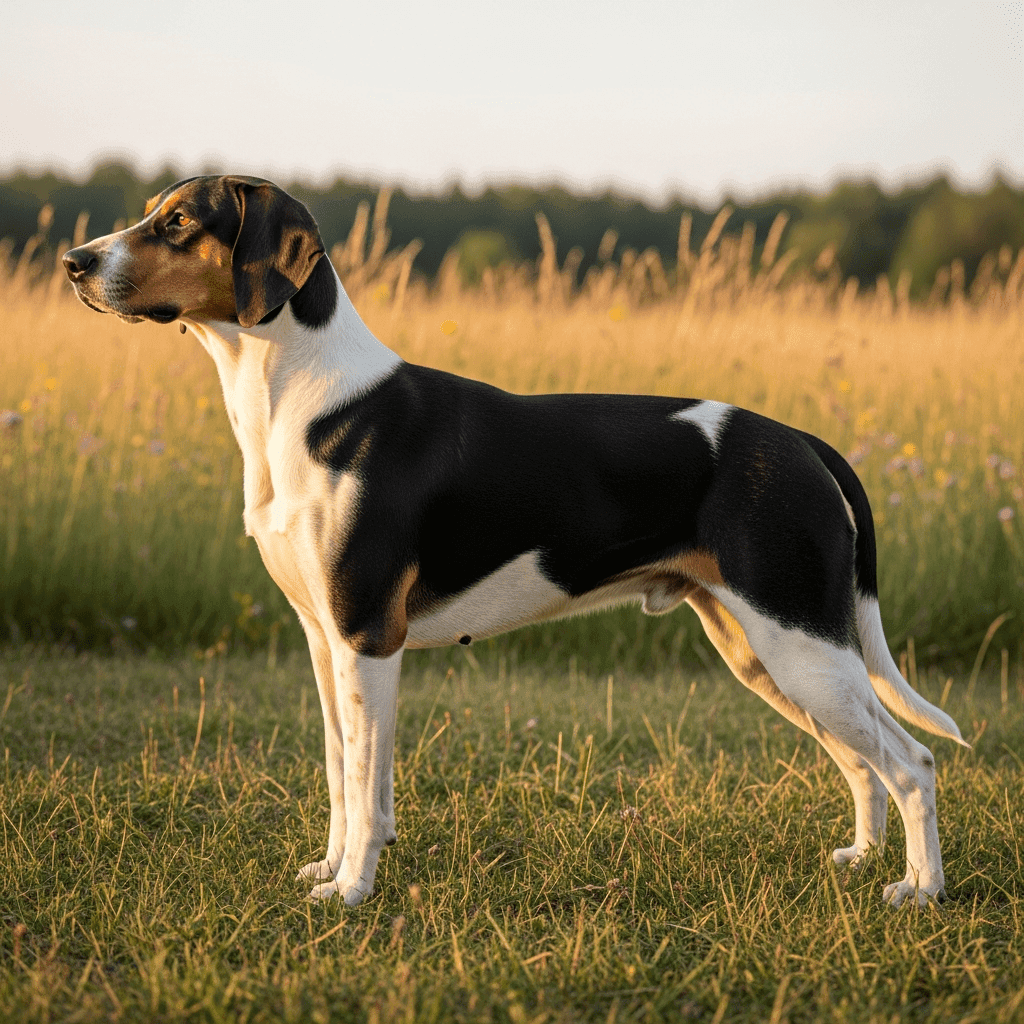
Hamilton Hound
FCI Group
6• FCI 132
Size
Medium
Origin Country
SE
Height
49-61 cm
Weight
23-27 kg
Lifespan
11-13 years
Temperament
Overview
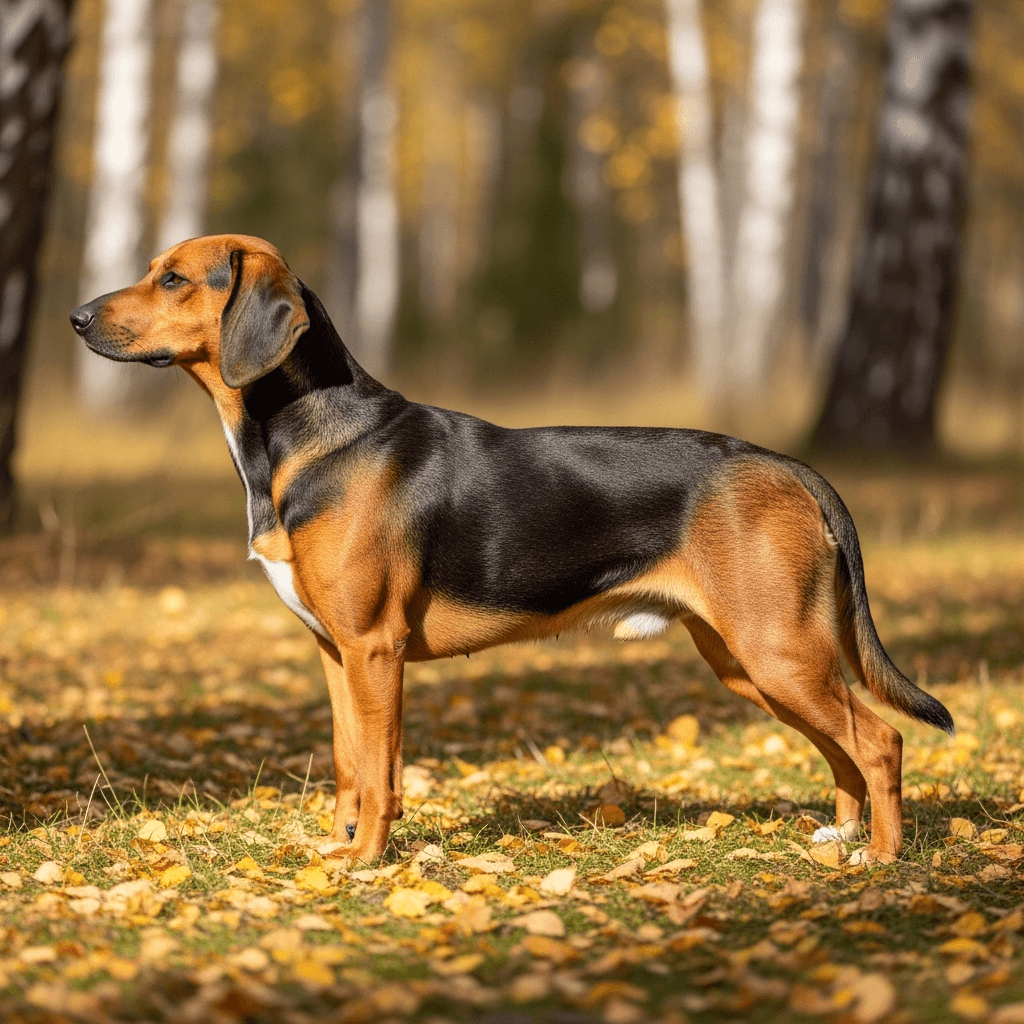
The Hamilton Hound, also known as Hamiltonstövare, is an extraordinary hunting dog originating from Sweden, which has won the hearts of many dog lovers thanks to its unique character traits and excellent hunting skills. Its impressive tracking abilities make it an indispensable companion during small game hunts, particularly for hares and foxes. This medium-sized dog, standing between 49 to 61 centimeters at the withers and weighing between 23 to 27 kilograms, is distinguished by its short, dense, and close-lying coat in a striking tricolor pattern.
The characteristic black, white, and brown coat gives it an elegant and recognizable appearance, while the white interior of its ears and the light-colored underside add to its special charm. Harmonious body proportions and an athletic build make it not only an efficient hunter but also a very aesthetically appealing dog.
One of the most important features of the Hamilton Hound is its exceptional sense of smell and incredible tracking abilities, which make it invaluable in the work of hounds. However, its advantages do not end solely with hunting. This dog is also an excellent family companion with a balanced temperament. Its friendly, cheerful, and gentle disposition makes it great with children and other dogs, forming strong emotional bonds with the entire family.
A strong hunting instinct can, however, cause some difficulties in relationships with cats and other small household pets, which is worth considering when planning a life together with various pets. Proper socialization from a young age can significantly improve the situation.
The Hamilton Hound is a breed that requires regular and intense physical activity and mental stimulation. It is ideally suited to living in a house with a garden or in a place where it can run freely and explore its surroundings. The natural curiosity about the world and an unquenchable desire to discover new trails make daily long walks, diverse games, and outdoor activities a true pleasure and necessity for it.
Thanks to its intelligence, willingness to cooperate, and ease of training, the Hamiltonstövare excels not only in the role of a hunting companion but also as a family dog, and even as a therapy dog. Spending time with the family, participating in daily activities, and receiving the right amount of attention are key to its happiness and emotional balance.
We invite you to continue exploring the fascinating world of the Hamilton Hound in the following chapters, where you will find detailed information about health, grooming, exercise, training, nutrition, history, appearance, and behavior of this exceptional breed. Each of these aspects will bring you closer to fully understanding why the Hamilton Hound is so highly valued and loved by owners around the world.
The Hamiltonstövare is a medium-sized dog with a harmonious and proportional body structure, combining elegance with athleticism. Its silhouette is distinctly rectangular and elongated, giving it the characteristic appearance of a hound well adapted for long-distance running over various terrains.
Dimensions and proportions:
- Height at the withers: from 49 to 61 centimeters (males are usually taller than females)
- Weight: from 23 to 27 kilograms
- Build: strong but not heavy, with clearly defined musculature
- Silhouette: rectangular, with a well-defined chest and strong back
Coat and coloration: The coat is short, dense, close-fitting, and shiny, giving the dog a well-groomed and elegant appearance. The characteristic tricolor coat is the hallmark of the breed. Dominant are intense black, snow-white, and warm brown elements arranged in a specific pattern. The back and sides are mostly black, the limbs and lower body are white with brown markings, and the head combines all three colors in a harmonious composition.
Head and muzzle: The head is proportional to the rest of the body, long and noble, with a clearly defined stop between the forehead and muzzle. The muzzle is strong, of medium length, with a black nose and well-developed nostrils. The jaws are strong with a complete set of teeth and a correct scissor bite.
Eyes: Dark brown, of medium size, set not too deep, expressing intelligence, alertness, and a friendly disposition towards the world. The gaze is lively and expressive.
Ears: Long, hanging, set fairly high, with a soft texture. When the dog is at rest, the ears hang freely along the cheeks. The inside of the ears is white, which is a characteristic feature of the breed's appearance.
Tail: Medium length, strong at the base, tapering towards the end, carried at the level of the back or slightly below. In motion, the tail is raised, emphasizing the dog's joyful and energetic temperament.
Limbs: The Hamiltonstövare has strong, straight, and well-muscled limbs that allow for great dynamism of movement, endurance, and the ability to run long distances over difficult terrain. The paws are compact, oval, with well-arched toes and strong claws. This enables confident movement over both soft forest ground and harder surfaces.
The Hamiltonstövare is a dog with a balanced and friendly temperament, harmoniously combining traits typical of hounds with those of an excellent family companion. It is a breed with a stable psyche that values the company of people and other dogs, showing great loyalty and deep attachment to its family.
Relationships with family and children: Its gentle, friendly, and cheerful disposition makes it an excellent companion for children of all ages. The Hamiltonstövare usually shows great patience towards younger family members, and its natural protective instinct often leads it to ensure that nothing bad happens to them. It loves playing together, outdoor activities, and feels best when it can participate in family life.
Hunting instinct: As a typical hound, the Hamiltonstövare possesses a strongly developed hunting and tracking instinct. During walks, it can be very focused on scent trails and may tend to follow them, even if it leads in unexpected directions. For this reason, it is important to keep the dog on a leash during outings in areas with wild game or to ensure that its recall is perfectly trained.
The presence of smaller animals, such as cats, rabbits, or rodents, may trigger its chasing instinct. Although proper socialization from a young age can significantly improve coexistence with other pets, owners should be aware of this natural behavior and manage it accordingly.
Attitude towards strangers: The Hamiltonstövare is not aggressive towards strangers, but its natural alertness allows it to serve as a good alarm dog, signaling the presence of unknown individuals by barking. However, it is not a typical guarding breed – it will alert to intruders rather than actively drive them away or defend its territory aggressively.
Communication and expression: The Hamiltonstövare tends to be an expressive and communicative dog. As a hound that during hunts voices (barks on the trail), it may have a tendency to bark or howl frequently, especially when excited, bored, or feeling lonely. Proper training from a young age can help control excessive barking.
Relationships with other dogs: It usually coexists very well with other dogs, especially if properly socialized at a young age. Its friendly nature and lack of dominance make it well-suited to dog groups, eagerly participating in play and activities.
Loneliness: This dog deeply needs constant contact with people and does not tolerate long-term solitude well. Left alone for extended periods, it may show signs of separation anxiety, which can lead to destructive behavior, excessive barking, or even attempts to escape. Owners should ensure regular activities, companionship, and an appropriate amount of physical and mental stimulation to meet its needs and provide a sense of security and happiness.
Activity and energy: This is a high-energy breed that requires regular and intense activities. Without the appropriate amount of exercise and engagement, it may become restless, hyperactive, or develop undesirable behaviors. Long walks, running, tracking games, and dog sports are essential for maintaining its physical and mental balance.
The Hamiltonstövare is a breed considered to be relatively healthy and resilient, characterized by good overall health condition. The average lifespan of this breed ranges from 11 to 13 years, although with proper care, a balanced diet, and regular physical activity, many dogs live even longer.
Diseases and conditions characteristic of the breed:
Like many other medium-sized dog breeds, the Hamiltonstövare may be prone to certain genetic and acquired conditions. The most common health issues that may occur in this breed include:
- Hip Dysplasia (HD): A congenital defect in the hip joint that can lead to pain, lameness, and arthritis. Responsible breeders perform X-ray examinations before allowing dogs to breed.
- Elbow Dysplasia (ED): A similar defect affecting the elbow joints, which can also cause discomfort and limited mobility.
- Skin and food allergies: Some individuals may show sensitivity to certain food ingredients or environmental allergens, manifesting as itching, skin redness, and hair loss.
- Ear infections: The long, floppy ears of the Hamiltonstövare may be prone to bacterial and fungal infections, especially after swimming or in humid conditions. Regular cleaning and ear checks are essential.
- Epilepsy: Seizures of unknown origin may occasionally occur in this breed.
Prevention and healthcare:
Due to their high physical activity and breed predispositions, Hamiltonstövare should be regularly checked by a veterinarian. Annual preventive visits are recommended, during which the vet can assess the dog's overall health, check joints, heart, ears, and perform necessary blood tests.
Weather resistance:
This dog tolerates colder weather well due to its dense, close-fitting coat, which provides basic protection against cold and moisture. It can comfortably stay outside even on cooler days, as long as it has access to shelter from extreme conditions.
However, during heat and high temperatures, the Hamiltonstövare should avoid excessive physical exertion to prevent overheating or heat stroke. It is essential to provide access to shade, fresh water, and to avoid intense activities during the hottest hours of the day.
Maintaining fitness:
Keeping the Hamiltonstövare in good physical condition requires providing a healthy, balanced diet and regular, vigorous exercise. Weight control is important, as excess weight can strain the joints and lead to more serious health issues, especially in dogs predisposed to dysplasia.
Proper prevention, conscious care, and early detection of potential health problems allow you to enjoy the companionship of a healthy and happy Hamilton Hound for many years.
The Hamiltonstövare is a dog that requires relatively little grooming, making it a convenient choice for those who appreciate breeds with low grooming needs. Its short, dense, and close-lying coat does not require complicated treatments or professional grooming.
Brushing the coat:
Regular brushing, especially during heavy shedding periods (spring and fall), is sufficient to keep the coat in excellent condition. It is recommended to brush at least once a week using a natural bristle brush or a rubber grooming glove to remove dead hair. During shedding, the frequency of brushing can be increased to 2-3 times a week to effectively remove loose hairs and prevent them from accumulating in the home.
Bathing:
The Hamiltonstövare does not require frequent baths. Typically, bathing the dog every few months or as needed when it gets dirty during walks or play is sufficient. Use gentle shampoos specifically designed for dogs to avoid irritating the skin and damaging the natural protective layer of the coat.
Ear care:
The long, hanging ears of the Hamiltonstövare require special attention. Regular checking and cleaning of the ears is crucial to prevent bacterial and fungal infections. It is advisable to check the ears at least once a week and gently clean them with special ear hygiene products for dogs. If you notice an unpleasant odor, redness, excessive discharge, or if the dog frequently shakes its head, consult a veterinarian.
Dental care:
Maintaining oral hygiene is extremely important for the overall health of the dog. Regular tooth brushing (ideally daily or at least 2-3 times a week) using dog toothpaste will help prevent tartar buildup, gum disease, and bad breath. Special dental chews and treats that support dental hygiene can also be used.
Nail trimming:
It is worth regularly checking the length of the nails and trimming them as needed, usually once a month or more often if the dog does not naturally wear them down during activities on hard surfaces. Overly long nails can cause discomfort, walking problems, and joint damage. If you do not feel confident trimming the nails yourself, seek help from a veterinarian or professional groomer.
Eye check:
Regularly check the dog's eyes for signs of irritation, redness, excessive tearing, or discharge. Gently wipe the corners of the eyes with a damp, clean gauze if needed.
Summary:
The Hamiltonstövare does not tend to shed excessively outside of seasonal periods, making it an ideal choice for those who prefer dogs with low grooming requirements. Regular, basic grooming will ensure the dog looks healthy, feels comfortable, and maintains good well-being throughout its life.
The Hamiltonstövare is a breed characterized by a high level of energy and a great need for movement. As a hunting dog, bred for hours of tracking game across diverse terrain, it requires a significant amount of daily physical and mental activity to remain healthy, happy, and mentally balanced.
Minimum activity requirements:
Owners should provide Hamiltonstövare with at least one to two hours of intense physical exercise every day. Short, leisurely walks around the block are not enough – this dog needs real activity that engages its muscles, endurance, and senses.
Recommended types of activities:
- Long walks and hikes: Regular, long walks in diverse terrain – forests, meadows, mountain trails – allow the dog to utilize its natural tracking and exploratory instincts.
- Running and jogging: Hamiltonstövare is an excellent companion for runners. It loves to run at a steady pace alongside its owner and can easily accompany them during training.
- Fetch games: Throwing a ball, frisbee, or other toys is a great way to expend the dog's energy and strengthen the bond with the owner.
- Dog sports: Agility, rally obedience, nose work, or mantrailing are excellent forms of activity that combine physical effort with mental stimulation.
- Swimming: Most Hamiltonstövare love water, and swimming is a great form of exercise that engages the whole body while being gentle on the joints.
- Tracking games: Setting up artificial scent trails or hiding treats/toys in the environment allows the dog to utilize its strongest sense – smell.
Mental activity:
Just as important as physical effort is mental stimulation. Hamiltonstövare is an intelligent breed that needs intellectual challenges. Dog puzzles, search games, learning new commands and tricks, and various interactive games help prevent boredom and frustration.
Consequences of lack of activity:
Insufficient movement and activities can lead to a range of behavioral and health problems:
- Excessive excitement and nervousness
- Destructive behaviors (destroying furniture, digging holes in the garden)
- Excessive barking and howling
- Attempts to escape in search of entertainment
- Depression and apathy
- Weight problems leading to joint and heart diseases
Ideal environment:
Hamiltonstövare feels best in a house with a garden or in a place where it has easy access to areas for running and exploring. Living in an apartment in the city can be challenging for it unless owners can provide regular, long trips to parks, forests, or other open spaces.
Safety during activities:
Due to its strong hunting and tracking instincts, it is recommended to keep Hamiltonstövare on a leash during walks in areas with wildlife or where other small animals may be present. If you want to let it run freely, make sure the area is safe, fenced, and that the recall command is well-trained.
The Hamiltonstövare enjoys outdoor activities and is happiest when it can spend a lot of time with its family, exploring the world and utilizing its natural talents.
The Hamiltonstövare is a dog that is intelligent, eager to cooperate, and capable of learning, which makes it relatively easy to train, although it may sometimes show a certain level of stubbornness or independence typical of hounds. An appropriate training approach and consistency in actions are key to achieving success.
Training methods:
Owners should be consistent and patient in their training approach, using only positive motivational methods based on positive reinforcement. Rewards in the form of tasty treats, verbal praise, petting, or favorite play are the most effective ways to motivate the Hamiltonstövare to learn. Avoid physical punishment, shouting, or harsh methods – they can harm the relationship with the dog and make it distrustful or unwilling to cooperate.
Early socialization:
Socialization is a key element in raising a Hamilton Hound, allowing the dog to learn proper behavior in various social and environmental situations. It is advisable to start socialization as early as possible, preferably during the puppy stage (between 3 and 16 weeks of age), when the dog is most open to new experiences.
Introduce the puppy to various people (children, adults, seniors), other dogs, animals, sounds (street noise, thunder, vacuum cleaner), surfaces (grass, asphalt, gravel, stairs), and places (park, city, forest, pet store). A well-socialized Hamiltonstövare will be confident, calm, and well-adjusted to life in different environments.
Basic commands:
Start training by teaching basic obedience commands:
- Sit – a basic control command
- Stay – teaches patience and self-control
- Come – crucial for safety, especially with a strong hunting instinct
- Lie down – a calming command
- Leave it – useful in situations when the dog finds something dangerous
- Loose leash walking – essential for comfortable walks
Recall training:
Due to the strong tracking instinct, reliable recall is absolutely crucial for the Hamiltonstövare. Regularly practice the command Come in various situations and environments, gradually increasing the level of distraction. Always reward the dog for returning to you, even if it took longer than you expected.
Consistency and routine:
The Hamiltonstövare responds best to consistent and predictable rules. Establish clear household rules (e.g., whether the dog can get on the couch or must wait before entering the house) and consistently adhere to them. All family members should use the same commands and rules to avoid confusing the dog.
Barking control:
As a hunting dog that naturally vocalizes while tracking, the Hamiltonstövare may tend to bark frequently. It is important to teach the dog a command to control barking from a young age, such as Quiet or Enough. Reward moments of silence and calmness, and gradually the dog will learn when barking is acceptable and when it is not.
Advanced training and sports:
With its intelligence, endurance, and willingness to work, the Hamiltonstövare can be trained in various advanced fields:
- Search and rescue dogs
- Tracking dogs (mantrailing)
- Nose work
- Agility and dog sports
- Therapy dogs
- Advanced obedience (rally obedience)
When to start training:
It is advisable to start training from an early puppy age (around 8-10 weeks old). Young dogs are like sponges, absorbing knowledge quickly and eagerly. Short, positive training sessions (5-10 minutes several times a day) are ideal for puppies.
Family environment:
The Hamiltonstövare thrives in active families that can provide it with the right amount of physical, mental, and emotional stimulation. Families that spend a lot of time outdoors, enjoy hiking, running, or sports are the ideal environment for this breed. With proper training, socialization, and engagement, the Hamilton Hound becomes a wonderful, obedient, and happy life companion.
The Hamilton Hound's diet should be carefully balanced and tailored to its activity level, age, weight, and individual health needs. As an active breed with a high energy level, the Hamiltonstövare requires an appropriate amount of nutrients to support its physical performance, joint health, muscle development, and overall vitality.
Key components of the diet:
Protein: This dog requires a diet rich in high-quality animal protein (meat, poultry, fish), which is essential for muscle building and repair, supports the immune system, and provides energy. The recommended protein content in food for an adult, active Hamiltonstövare is about 25-30%.
Fats: Healthy animal and plant fats (including omega-3 and omega-6 fatty acids) are essential for proper brain function, healthy skin, and a shiny coat, as well as serving as an energy source. The fat content in the food should be around 15-20%.
Carbohydrates: They provide additional energy and support the digestive system. Choose foods with whole grains (brown rice, oats) or grain-free alternatives with sweet potatoes, pumpkin, or peas.
Vitamins and minerals: An adequate amount of vitamins (A, D, E, K, B group) and minerals (calcium, phosphorus, zinc, iron) supports bone, joint, teeth, immune system, and metabolic health.
Choosing food:
Owners should choose high-quality food, preferably premium or super premium class, tailored to the dog's size (medium breeds), age (puppies, adults, seniors), and activity level (active, very active). Dry, wet, or mixed diets can be used, depending on the dog's preferences and the veterinarian's recommendations.
For particularly active dogs participating in sports or hunting, it is worth considering working dog food, which contains an increased amount of protein and energy.
Portion and weight control:
It is important to avoid overweight, which can lead to serious health problems, especially joint strain and the development of dysplasia, heart disease, or diabetes. Monitor food portions according to the manufacturer's recommendations and adjust them to the dog's individual needs.
Regularly check the dog's weight and body condition. In a healthy Hamiltonstövare, you should be able to feel the ribs with gentle pressure, but they should not be visible. The waist should be clearly defined when viewed from above.
Feeding frequency:
- Puppies (2-6 months): 3-4 meals a day
- Young dogs (6-12 months): 2-3 meals a day
- Adult dogs (1+ year): 2 meals a day
- Seniors (7+ years): 2 meals a day, possibly senior dog food
Access to water:
The Hamiltonstövare should have constant access to fresh, clean water to prevent dehydration, especially during intense physical exertion, on warm days, or after play. Regularly check and refill the water bowl.
Snacks and treats:
Treats can be an effective motivational tool during training, but they should make up no more than 10% of the daily calorie intake. Choose healthy, natural low-calorie treats such as:
- Dried meat (beef, chicken, turkey)
- Vegetable pieces (carrot, cucumber, bell pepper)
- Fruits (apple, pear, raspberries – seedless and in small amounts)
- Dental chews that support oral hygiene
Avoid giving the dog chocolate, onions, garlic, grapes, raisins, xylitol, and other products toxic to dogs.
Special diets:
If the Hamiltonstövare has special health needs (food allergies, sensitive stomach, joint diseases, overweight), consult a veterinarian about a veterinary diet or specialized food tailored to the issue.
A properly balanced diet, regular weight monitoring, and access to fresh water are the foundations of health and a long, happy life for the Hamilton Hound.
Characteristic Traits
Pros
- Friendly and cheerful character
- Excellent tracking skills
- Exceptional sense of smell
- Gets along well with children and dogs
- Easy to care for
- Durable and energetic
- Intelligent and eager to learn.
Cons
- Requires a lot of movement and activity
- Strong hunting instinct
- May chase cats and small animals
- Tendency to bark frequently
- Does not tolerate long periods of solitude.
Behavioral Ratings
Breed History
The Hamiltonstövare breed has a fascinating history deeply rooted in Swedish hunting tradition and hound breeding. Its creation is closely linked to the figure of Count Adolf Patrick Hamilton (1852-1927), who was one of the most important pioneers of Swedish cynology and the founder of the Swedish Kennel Club (Svenska Kennelklubben) in 1889.
The beginnings of hounds in Sweden:
Hounds have been known in Sweden since the 16th century. For centuries, hunting with dogs was a privilege reserved exclusively for royal and aristocratic circles. It was only at the end of the 18th century, after the lifting of the ban in 1789, that peasants and townspeople gained the right to hunt on their own lands, which led to the spread of hounds beyond noble circles.
The creation of the breed by Count Hamilton:
At the end of the 19th century, Count Adolf Patrick Hamilton decided to create an ideal Swedish hound that would combine the best traits of various European hunting breeds. In his breeding work, he crossed several different breeds of hounds, including:
- Southern German Hounds – contributing solid build and excellent scent
- Swiss Hounds – known for their endurance and ability to work in difficult terrain
- English Foxhounds – bringing speed and elegance
- Harriers – medium-sized hounds with excellent tracking abilities
The result of these thoughtful crosses was a dog with exceptional hunting abilities, medium-sized, durable, with an excellent sense of smell and the ability to work independently (not in a pack) during hunts for hares and foxes.
The first dog show in Sweden:
A pivotal moment in the breed's history was the first dog show in Sweden in 1886 in Stockholm. At this show, as many as 189 hounds of various types were presented. Among them were two dogs belonging to Count Hamilton – a dog named Pang and a female named Stella. This pair is considered the foundational ancestors of the modern Hamiltonstövare breed.
Official recognition of the breed:
Initially, the breed was known as the Swedish Hound (Swedish Hound). It was not until 1921, as a tribute to the man who created and developed this breed, that the name was changed to Hamiltonstövare – literally Hamilton's Hound. This was also a form of recognition for the significant contribution of Count A.P. Hamilton to the development of Swedish cynology.
Spread and popularity:
The Hamiltonstövare quickly gained popularity in Sweden as the ideal dog for hunting small game in the diverse terrain of Swedish forests, fields, and mountains. Unlike other hounds, the Hamiltonstövare was bred for individual work, not in a pack, making it an excellent companion for hunters.
Over time, the breed gained recognition beyond the borders of Sweden, spreading to other Scandinavian countries and gradually to other parts of Europe and the world. In 1955, the Hamiltonstövare was officially recognized by the Fédération Cynologique Internationale (FCI) under standard number 132, in group 6 (hounds), section 1.2 (medium hounds).
Modern role:
Today, the Hamiltonstövare is still valued as an excellent hunting dog in Scandinavia, primarily used for hunting hares and foxes. At the same time, it increasingly serves as a companion and family dog, appreciated for its friendly disposition, intelligence, and loyalty. In Sweden, it remains one of the most popular breeds, and its unique traits and beautiful coat attract dog lovers worldwide.
The history of the Hamilton Hound is a tale of thoughtful breeding, hunting passion, and a deep bond between man and dog – a tradition that has lasted over a hundred years and is still alive.