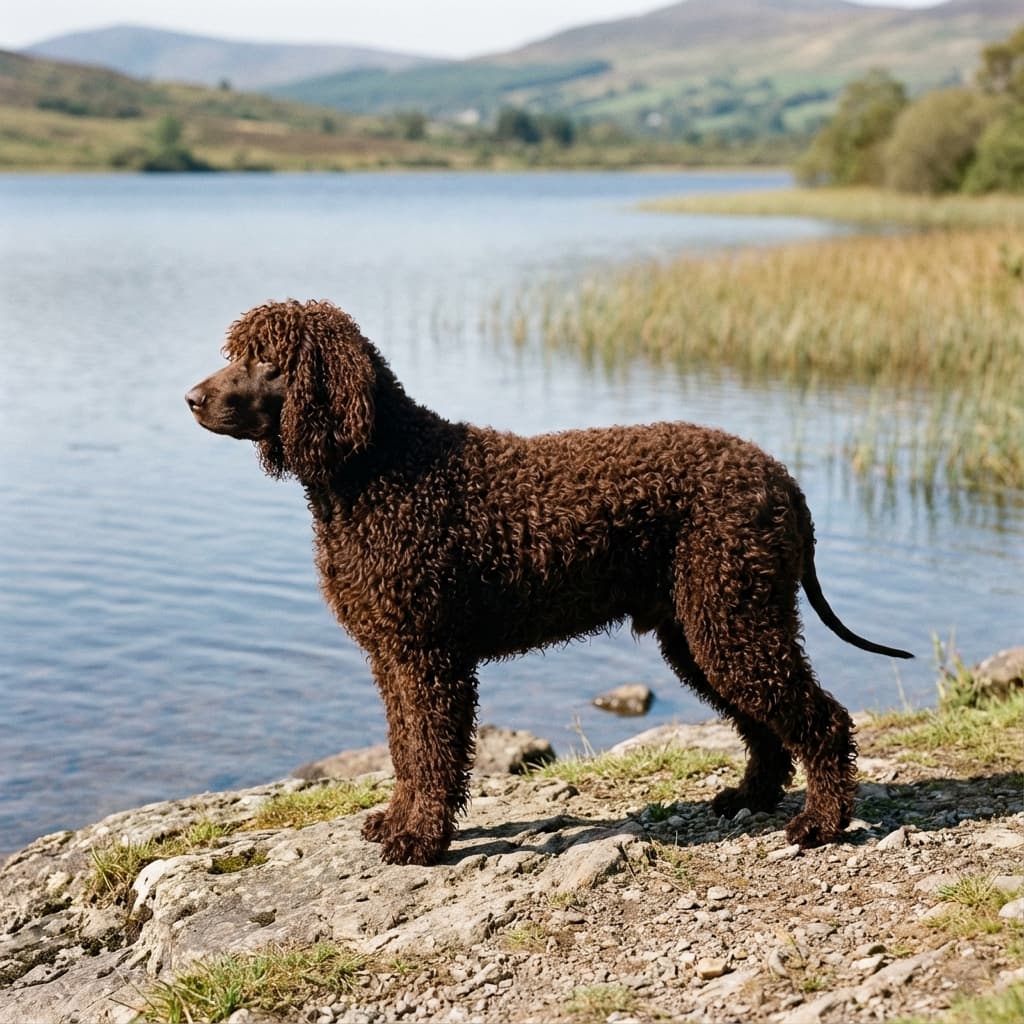
Irish Water Spaniel
FCI Group
8• FCI 124
Size
Medium
Origin Country
IE
Height
51-59 cm
Weight
20-30 kg
Lifespan
10-12 years
Temperament
Overview
The Irish Water Spaniel is the oldest and largest of the nine spaniel breeds, attracting attention with its extraordinary, unique build and distinctive appearance. This exceptional breed, originating from green Ireland, was bred as a specialist in waterfowl hunting and remains one of the best dogs for working in challenging water conditions. Its medium-sized, strong, and compact build makes it an ideal companion for families leading a very active lifestyle and loving outdoor activities.
The origins of this breed date back to the 17th century (the first mention in 1600), when the Irish Water Spaniel gained recognition as an indispensable helper during duck, goose, and other waterfowl hunts. Its high intelligence, remarkable ability to learn, and natural swimming skills make it a dog that quickly absorbs new commands and tasks, feeling at home in the water.
The most distinctive feature of the Irish Water Spaniel is its unique tail, known as the rat tail or whip tail. This thicker base and gradually tapering tail, covered at the base with short curly locks and further with smooth, short hair or almost bare, is absolutely unique - it does not occur in any other similar breed and makes the Irish Water Spaniel instantly recognizable.
The Irish Water Spaniel can be extremely attached to its family, making it a loyal, devoted companion ready to do anything for its people. The FCI standard describes it as smart, upstanding, strongly built - clever, brave, and well-built. At the same time, it maintains a degree of independence and reserve towards strangers, making it a vigilant guardian that does not trust everyone right away. This reserve is not aggression - it is rather distance and observation.
Its dense, curly, and waterproof coat is not only a beautiful adornment but primarily a functional protection. This coat excellently protects the dog from cold, water, and thorny underbrush, making it ideal for work in difficult conditions - from the icy waters of autumn lakes to muddy, dense reed beds.
One cannot forget the playful temperament and sense of humor of the Irish Water Spaniel, which eagerly engages in various family activities, often performing antics and entertaining its family. Its cheerfulness, liveliness, and intelligence make it a favorite among older children (younger ones may be knocked over by its strength and enthusiasm). Moreover, it is known for its generally good health and endurance, although like any breed, it may be prone to certain genetic conditions.
The Irish Water Spaniel requires a significant amount of regular physical activity - this is not a dog for people leading a sedentary lifestyle. At least 60-90 minutes of intense exercise daily is the absolute minimum, and swimming, retrieving from water, and long hikes are its natural elements. Its high intelligence makes it easy to train, as long as one approaches it with patience, consistency, and a sense of humor - this breed has its independence and may sometimes test boundaries.
This dog needs a diet rich in protein and healthy fats to maintain muscle, condition, and energy needed for intense activity. Its dense coat requires regular grooming to maintain health and functionality.
The history of the Irish Water Spaniel hides many interesting facts - from presumed Persian roots, through its journey from Spain to Ireland, to the mysterious ancestor responsible for its unique rat tail. All of this makes it a unique representative of water dogs, worth getting to know better to appreciate its uniqueness, versatility, and distinctive character.
The Irish Water Spaniel is the tallest of all spaniels, a medium to large-sized dog characterized by a strong, compact build and an upright, proud posture. The FCI standard emphasizes that it should be smart (intelligent, elegant) in appearance, showcasing strength and athleticism simultaneously.
Height at the withers:
- Males: 53-59 cm (ideally around 56-58 cm)
- Females: 51-56 cm (ideally around 53-55 cm)
Body weight typically ranges:
- Males: 25-30 kg
- Females: 20-26 kg
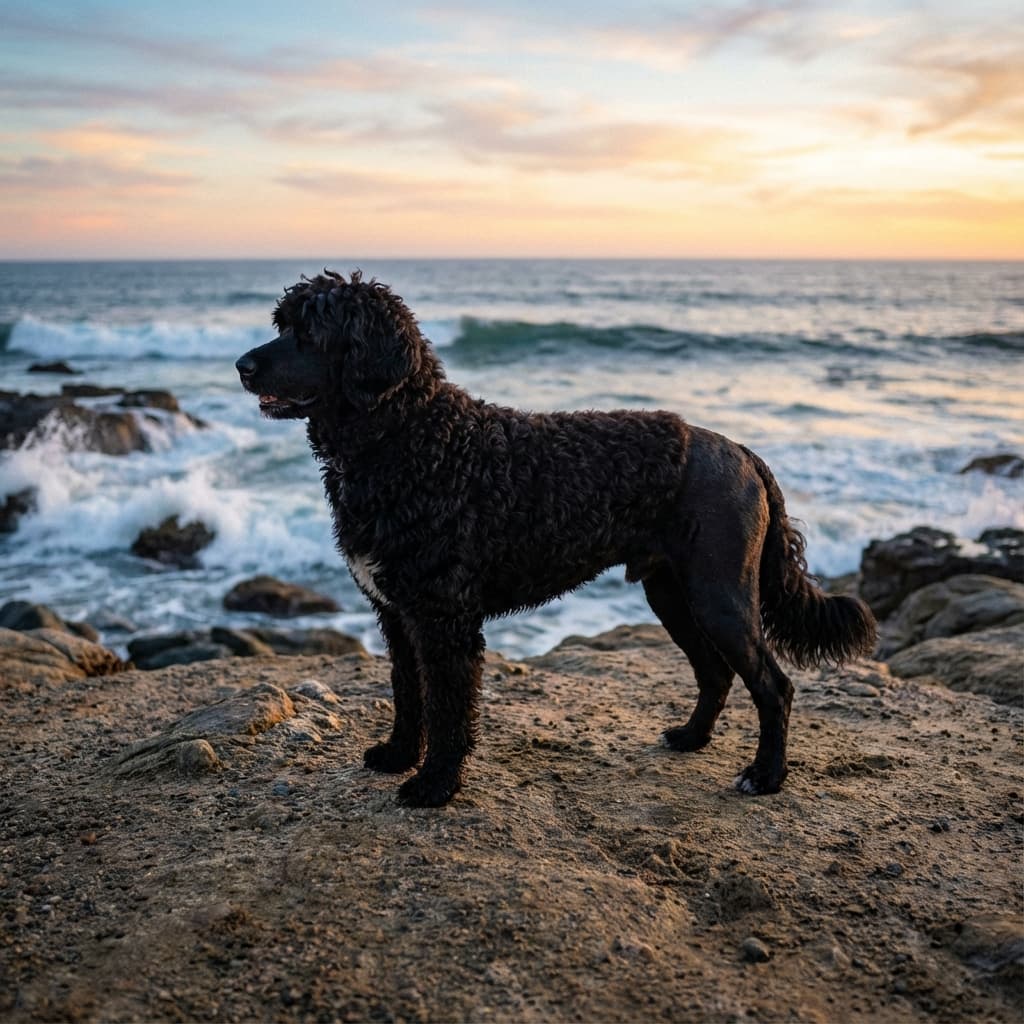
The head of the Irish Water Spaniel is large and impressive, with a distinctly domed skull covered with long, curly locks forming a characteristic topknot - long, loose curls falling between and over the eyes. This topknot is one of the most recognizable features of the breed.
The muzzle is long, strong, and square. The nose is large, well-developed, and dark liver-colored. The jaws are strong, with a perfect scissor bite.
Eyes are relatively small compared to the size of the head, almond-shaped, with colors ranging from dark amber to dark hazel, never yellow. The expression of the eyes is intelligent, alert, but friendly towards familiar people.
Ears are very long - reaching the tip of the nose when stretched forward. They are low-set (close to cheeks), lobular, and covered with long, curly locks that create a spectacular feathering. The ears are very mobile and expressive, often signaling the dog's mood.
The neck is long, muscular, strong, and arched, smoothly transitioning into well-angled shoulders. It gives an impression of strength and elegance simultaneously.
The body is compact and strongly built:
- Chest is deep (reaching the elbows), with well-sprung ribs, providing a large lung capacity
- Back is short, straight, wide, and very strong
- Loin is wide, short, and muscular
- Hindquarters are wide, strong, and slightly sloping
The silhouette should be solid, compact, showing strength without heaviness.
Limbs are strong, straight, and well-angled:
- Front limbs: straight, well-angled, with strong bones
- Hind limbs: very strong and muscular, with well-bent stifle joints
- Paws: large, round, compact, with webbing between the toes (a feature of water dogs!)
TAIL - RAT TAIL - is the most characteristic and absolutely unique feature of the Irish Water Spaniel:
- The tail is thicker and short at the base (5-8 cm), covered with short curly locks
- It gradually narrows further and becomes almost bare or covered with very short, smooth hair
- It ends with a thin, sharp tip
- Length: usually does not reach below the hock joint
- Carried straight or slightly curved, usually at the level of the back or below
- This feature has given the breed nicknames: Rat Tail and Whip Tail
The FCI standard emphasizes: This feature appears in no similar dog - this feature is not found in any similar dog, making it a trademark of the breed.
The coat of the Irish Water Spaniel is one of its most important functional characteristics:
- On the body: dense, curly (tight ringlets or curls), never woolly or soft
- The coat is water-resistant due to a natural oily undercoat
- On the head: characteristic topknot with long, loose curls
- On the ears: long, curly locks creating feathering
- On the limbs: abundant feathering with curls
- On the face, front of the hind limbs below the hock joint, and tail: short, smooth hair
- On the throat: smooth hair forming a V shape
The texture of the coat should be natural, curly, never trimmed or styled (except for minor trimming for hygiene).
Coloration:
The Irish Water Spaniel comes in ONLY one color:
- Rich, dark liver brown with a purple tint
- The color should be deep, saturated, shiny
- NO other colors are allowed
- A very small white spot on the chest is permissible but undesirable
The movement of the Irish Water Spaniel is free, fluid, with strong drive from the hind limbs. When galloping, it moves with great speed and efficiency. In the water, it swims strongly and confidently, utilizing the webbing between its toes.
The combination of the characteristic topknot of curls, long ears covered with curly locks, dense curly coat on the body, and absolutely unique rat tail makes the Irish Water Spaniel one of a kind and instantly recognizable - no other breed looks like it!
The Irish Water Spaniel is a dog with a unique, complex temperament that combines intelligence, confidence, independence, devotion, and... a sense of humor! The FCI standard does not describe temperament in detail (it mainly focuses on structure), but the experiences of owners and breeders over decades have created a consistent picture of this breed's character.
The Irish Water Spaniel is very intelligent - it is one of the sharpest spaniel breeds. However, this intelligence comes with a typical independence of thought found in hunting dogs, which must make independent decisions in the field. This means that the Irish Water Spaniel is not a dog that blindly follows every command - rather, it will consider whether it makes sense!
This breed is known for its sense of humor and playful nature. Irish Water Spaniels often engage in various antics, clowning around and trying to make their family laugh. Owners say these dogs are true clowns - they can come up with new ways to grab attention and entertain people. This trait makes life with an Irish Water Spaniel full of laughter and surprises.
The Irish Water Spaniel is very attached to its family and strongly loyal to its people. It needs to be part of the family, participate in daily activities, and spend time with its humans. Long periods of solitude can lead to separation anxiety and behavioral problems.
However, it is usually reserved and distant towards strangers. This is not aggression - rather, it is observation and caution. The Irish Water Spaniel is not a dog that will immediately greet strangers with a wagging tail - it will rather observe from a safe distance and assess the situation. This reserve makes it a good watchdog, alerting to the arrival of strangers, though it is not aggressive.
Its proud and confident character makes it a dog that fits well as a companion for active individuals and families who can appreciate its unique personality. The Irish Water Spaniel is not a dog for everyone - it needs an owner who:
- Is very active and enjoys outdoor activities
- Has a sense of humor and patience
- Understands canine independence and does not expect blind obedience
- Is consistent in training
- Will dedicate time to socialization and mental stimulation
The Irish Water Spaniel needs a lot of attention and interaction with people, so owners should spend time playing, training, and engaging in activities together. Without proper stimulation, they can become bored and exhibit destructive behaviors - chewing, digging, excessive barking.
With their sense of humor and liveliness, these dogs are excellent companions for older children (over 8-10 years old), with whom they love to play. However, due to their size, strength, and enthusiasm, they may accidentally bump into very small children (under 5-6 years old). Interactions with the youngest should always be supervised.
Their high intelligence makes them relatively easy to train, but they require a consistent, patient, and positive approach. Harsh methods, yelling, or coercion can destroy trust and cause the dog to become stubborn or withdrawn. The Irish Water Spaniel responds best to training based on positive reinforcement, play, and rewards.
Without proper mental stimulation, they can become bored and exhibit behavioral problems. They need tasks to perform, problems to solve, and new things to learn. Obedience training, agility, dummy work, nosework - all of these perfectly meet their needs.
Proper socialization of the dog from a young age (8-16 weeks of age) is absolutely crucial to ensure positive interactions with other animals and people. Puppies should be exposed to a variety of stimuli, environments, people, animals, and sounds.
With other dogs, the Irish Water Spaniel usually gets along well if properly socialized. With other pets (cats, rabbits), it can live in harmony, although its hunting instinct may sometimes manifest.
The Irish Water Spaniel is an excellent family dog for the right owners - very active, with a sense of humor, patient, and consistent. It brings a lot of joy, laughter, and love, and its loyalty makes it an irreplaceable family member. However, this is NOT a breed for people leading a sedentary lifestyle, inexperienced owners, or those who prefer easily obedient, predictable dogs.
The Irish Water Spaniel is a generally healthy and resilient breed with good condition, having an average lifespan of 10-13 years, which is quite a good result for a dog of this size. Their solid build, natural endurance, and history of selection for work in challenging conditions make them relatively robust. However, like any breed, the Irish Water Spaniel can be prone to certain health issues that potential owners should be aware of.
Hip Dysplasia (HD) is one of the orthopedic problems that can affect Irish Water Spaniels. It is a hereditary condition involving improper formation of the hip joint, which can lead to pain, lameness, and arthritis. Responsible breeders conduct hip X-ray examinations of the parents before allowing them to breed. When purchasing a puppy, it is worth asking about the HD test results of the parents.
Elbow Dysplasia (ED) is another orthopedic condition that can occur in this breed. Like HD, it can cause pain and mobility issues.
Hypothyroidism is a hormonal condition that can affect Irish Water Spaniels. Symptoms include:
- Weight gain on a normal diet
- Lethargy, lack of energy
- Skin problems - dry, flaky skin
- Hair loss, thin coat
- Sensitivity to cold
This condition is easy to diagnose (blood test) and treat (regular thyroid hormone supplementation).
Eye diseases can occur in Irish Water Spaniels:
- Cataracts - gradual clouding of the lens leading to vision loss. It can occur at various ages. Requires monitoring by a veterinary ophthalmologist.
- Entropion - inward rolling of the eyelid, causing the eyelashes to rub against the cornea. Causes irritation, pain, and requires surgical correction.
- Distichiasis - extra eyelashes growing on the edge of the eyelid, rubbing against the cornea.
Responsible breeders conduct regular eye examinations on breeding dogs.
Skin allergies can affect Irish Water Spaniels. They can be triggered by:
- Food allergens (chicken, beef, wheat, corn)
- Environmental allergens (pollen, dust mites, mold)
- Contact with chemicals, grooming products
Symptoms include itching, redness of the skin, hair loss, skin infections. It requires identification of the allergen (elimination diet, tests) and appropriate treatment.
Ear infections are quite a common problem in Irish Water Spaniels due to their long, droopy ears covered with abundant curls that restrict airflow. Moisture, heat, and dirt promote the growth of bacteria and fungi, especially after swimming. Regular ear cleaning (at least once a week, more often after swimming) is crucial.
Epilepsy can sometimes occur in Irish Water Spaniels, causing seizures. It can be controlled with anticonvulsant medications.
Overheating problems can affect Irish Water Spaniels on hot days due to their thick, curly coat with an undercoat. Owners should:
- Avoid intense exercise during the hottest part of the day
- Provide access to shade and fresh water
- Walk in the early morning and late evening
- Consider swimming as a way to cool down (Irish Water Spaniels love water!)
- Watch for signs of overheating: heavy breathing, drooling, lethargy, pale gums
However, on cold days, their thick, waterproof coat provides excellent protection against the cold - they can swim in cold water without any problems.
Health prevention includes:
- Regular veterinary visits (at least once a year, twice a year for older dogs)
- X-ray examinations of hips and elbows (especially if planning to breed)
- Regular eye examinations by a veterinary ophthalmologist
- Vaccinations and deworming according to the veterinarian's recommendations
- Parasite prevention (ticks, fleas)
- Maintaining a healthy weight (obesity puts strain on joints)
- Proper diet and regular exercise
- Regular ear cleaning (especially after swimming)
A proper diet, regular exercise, and health monitoring by a veterinarian are crucial for keeping the Irish Water Spaniel in excellent condition for many wonderful years. With proper care, Irish Water Spaniels can enjoy a long, healthy, and active life alongside their loving owners.
Grooming an Irish Water Spaniel is a crucial and regular aspect of maintaining the health and functionality of its distinctive coat. Although this coat is beautiful and functional, it requires proper attention and time to keep it in good condition. The Irish Water Spaniel is NOT a breed that requires minimal grooming.
The coat of the Irish Water Spaniel is dense, curly (tight ringlets), and waterproof due to its natural oily undercoat. This distinctive coat requires:
Brushing: It is recommended to brush at least 2-3 times a week to:
- Remove dead hair and prevent matting
- Distribute natural skin oils
- Check the skin for ticks, wounds, skin changes
- Maintain the health and functionality of the coat
The best tools are:
- Pin brush
- Wide-toothed comb - for detangling curls
- Slicker brush - for removing dead hair
Particular attention should be paid to:
- Topknot - long curls on the head can tangle
- Ears - the abundant curls require thorough detangling
- Leg feathering - can collect dirt, leaves, and mats
- Underbelly and armpits - areas prone to matting
Brushing during shedding: The Irish Water Spaniel has moderate shedding (less than many other long-haired breeds), but during intense shedding periods (spring, fall), more frequent brushing may be necessary.
Bathing: Should be done as needed - usually every 6-8 weeks or when the dog is very dirty. Use:
- High-quality dog shampoo (never for humans!)
- Shampoo specifically for curly or waterproof dogs
- Dog conditioner to facilitate detangling
It is very important to thoroughly rinse all products - residues can cause skin irritation and damage the waterproofing of the coat.
After bathing, the dog should be thoroughly dried, especially the ears. A dryer (on low heat) can be used while brushing the coat. Many owners allow their dog to air dry naturally after swimming - the waterproof coat quickly sheds water.
IMPORTANT: Too frequent washing can destroy the natural waterproofing of the coat by removing natural oils. Therefore, bathe only when truly necessary.
Trimming: The breed standard requires a natural appearance - excessive trimming or styling is undesirable in shows. However, some trimming for hygiene and comfort is acceptable:
- Hair between the paw pads - to prevent mud, ice, and seed accumulation
- Hair around the anus - for hygiene
- Hair behind the ears - if excess curls hinder ventilation
- Light trimming of the topknot - if curls obstruct the eyes
Ears require special attention. Long, drooping ears covered with abundant curls restrict airflow, creating ideal conditions for bacteria and fungi. You should:
- Check the ears at least once a week
- Clean as needed with veterinary ear cleaning solutions
- After every swim - MUST clean and dry the ears
- Watch for signs of problems: unpleasant odor, redness, swelling, excessive wax, the dog shaking its head or scratching its ears
Nails should be trimmed regularly - usually every 3-4 weeks. Overgrown nails cause discomfort, posture problems, and pain. If you can hear the nails clicking on the floor, they are too long.
Dental hygiene: It is recommended to brush the teeth 2-3 times a week using dog toothpaste. Dental chews and teeth-cleaning toys can also be used.
After swimming, walking in the woods or meadows, you should check the dog for:
- Ticks (especially in the ears, neck, armpits)
- Seeds (grass seeds - can embed in the skin, paws, ears)
- Minor wounds, abrasions
- Foreign objects in the paws (stones, glass)
Waterproofing of the coat: To maintain the natural waterproofing of the coat:
- Do not wash too often
- Use gentle shampoos
- Thoroughly rinse products
- Allow the coat to air dry naturally after swimming
- Avoid using excessive grooming products
Maintaining the coat in good condition not only enhances the dog's appearance but also preserves its functionality - waterproofing, protection against cold, and thorny underbrush. Regular grooming is also an excellent opportunity to check the overall health of the dog.
Grooming the Irish Water Spaniel is therefore an important aspect of responsible ownership of this breed, requiring consistency and regularity, but in return provides a beautiful, healthy, and functional companion ready for any water adventure.
The Irish Water Spaniel is a breed with a high energy level and significant exercise needs, requiring regular, intense physical and mental activity to stay healthy, happy, and balanced. This is a working dog, bred for long hours of work in waterfowl hunting, and it is not a breed for people leading a sedentary lifestyle.
It is recommended to provide the Irish Water Spaniel with at least 60-90 minutes of intense physical exercise daily, but many dogs need more - 2 hours or more is not uncommon. An ideal daily activity plan should include:
- Long walks - a minimum of 1-1.5 hours a day (divided into 2-3 outings)
- Swimming - ABSOLUTE FAVORITE! Irish Water Spaniels LOVE water and are excellent swimmers
- Fetching - especially from the water (dummy, ball, frisbee)
- Free running in a safe, fenced area
- Hiking in diverse terrain - forests, meadows, by the water
- Interactive play with the owner
SWIMMING is the natural element of the Irish Water Spaniel. It was specifically bred to work in water, and its:
- Waterproof coat - perfectly protects against cold water
- Webbed feet - a feature of water dogs!
- Strong limbs - powerful propulsion in the water
- Natural instinct - most Irish Water Spaniels jump into the water without hesitation
If you have access to a safe body of water (lake, river, sea, dog pool), regular swimming should be part of the Irish Water Spaniel's routine. It is excellent exercise:
- Engaging the whole body
- Gentle on the joints (important for dogs with dysplasia)
- Mental enrichment (new smells, stimuli)
- Satisfying natural instincts
- Absolute joy for the dog!
IMPORTANT after swimming: Always clean and dry the ears to prevent infections.
Fetching - especially from the water - is another natural passion of the Irish Water Spaniel. They can fetch for hours: dummies, balls, frisbees, sticks. It’s an excellent way to:
- Release energy
- Utilize natural instincts
- Strengthen the bond with the owner
- Train obedience (recall, drop, wait)
It is also worth incorporating dog sports and activities that engage both body and mind into the routine:
- Hunting training - dummy work, fetching from water, tracking (even if we don’t hunt, we can train)
- Dock diving - jumping into the water (Irish Water Spaniels are often natural champions!)
- Agility - obstacle course for agile dogs
- Rally obedience - a combination of obedience and fun
- Nosework - scent training, searching for scents
- Canicross - running with the dog in a harness
However, physical activity alone is not enough - mental stimulation is equally important. Irish Water Spaniels are very intelligent and need tasks to perform, problems to solve. It is worth including in the daily routine:
- Obedience training - short, regular sessions (10-15 minutes, 2-3 times a day)
- Learning new tricks - Irish Water Spaniels love to learn
- Scent games - hiding treats that the dog must find
- Dog puzzles - interactive toys requiring problem-solving
- Variety in the routine - new routes, new environments, new smells
Regular movement and stimulation are absolutely crucial to prevent boredom, which can lead to behavioral problems. A bored Irish Water Spaniel is an unhappy dog that will:
- Bark excessively
- Chew furniture, shoes, pillows
- Dig holes in the garden
- Be hyperactive, nervous
- Exhibit separation anxiety
- Try to escape in search of adventure
A tired Irish Water Spaniel is a happy, calm dog at home - a golden rule for this breed.
Important exercise notes:
- Puppies (up to 12-18 months) - do not subject to too intense exercise. Shorter, more frequent sessions. Avoid jumping, intense running on hard surfaces
- On hot days - Irish Water Spaniels can have overheating issues (thick coat). Walk in the morning and evening, provide access to shade and water, consider swimming as a way to cool down
- In winter - they handle the cold excellently due to their waterproof coat. They can swim in cold water
- After swimming - always clean and dry the ears
The Irish Water Spaniel feels best in homes with a fenced garden and access to water (lake, river nearby). Living in a small apartment without access to regular, long activities and water will be insufficient for them.
Properly meeting the physical and mental needs of the Irish Water Spaniel not only improves their physical condition and health but also strengthens the bond with the owner and makes the dog happy, balanced, and pleasant in daily life. For the right owner - very active, loving water and outdoor activities - the Irish Water Spaniel will be a wonderful, loyal companion in every adventure.
Training an Irish Water Spaniel can be a pleasant yet challenging experience that requires patience, consistency, and a sense of humor. Irish Water Spaniels are very intelligent but independent, which makes them both easy and difficult to train - depending on the owner's approach.
Intelligence vs. independence: The Irish Water Spaniel is one of the smartest spaniels, but this intelligence comes with independent thinking typical of hunting dogs. This means that:
- They learn new commands quickly (often just a few repetitions are enough)
- But they may question the purpose of the command (Why should I do this?)
- They can come up with their own solutions to problems
- Sometimes they prefer to do things their own way
Owners must remember: The Irish Water Spaniel is not a dog of blind obedience. It is a partner that wants to understand why it is doing something. Harsh methods, yelling, or coercion can destroy trust and cause the dog to become stubborn or withdrawn.
Training methods should be based SOLELY on positive reinforcement:
- Treats - as an immediate reward
- Verbal praise - an enthusiastic tone of voice
- Play - retrieving, swimming as a reward
- Petting and affection - physical contact
Training sessions should be:
- Short - 10-15 minutes (Irish Water Spaniels get bored quickly)
- Frequent - 2-3 times a day is better than one long session
- Diverse - change locations, commands, rewards
- Fun - include an element of play and humor
- Ending on a success - always finish when the dog has done something well
Early start: Training and socialization should begin at 8-16 weeks of age. Puppies should be exposed to:
- Diverse people (different ages, appearances)
- Other dogs and animals
- Diverse environments (city, countryside, forest, water)
- Diverse sounds (cars, children, fireworks)
- Diverse situations (vet visits, grooming, car rides)
Proper socialization will prevent behavioral problems, especially excessive shyness towards strangers.
Key commands for the Irish Water Spaniel:
- Come / Recall - THE MOST IMPORTANT! Irish Water Spaniels can be distracted by water or scents
- Leave it / Drop it - important for a dog that retrieves everything
- Stay / Wait - self-control, impulsiveness
- Sit - basic control
- Heel - walking without pulling
- Out of the water - ending swimming/retrieving from the water
Specific training challenges of the Irish Water Spaniel:
- Independence - they may ignore commands if something more interesting is happening. Requires high-value rewards
- Stubbornness - if they decide they prefer something else, it's hard to convince them. Requires patience and consistency
- Sensitivity - they react poorly to harsh methods. They need a gentle, positive approach
- Shyness towards strangers - requires early and intense socialization
- Sense of humor - they may act silly instead of following commands. Requires a sense of humor from the owner
Irish Water Spaniels are great for specialized training:
- Hunting training - dummy work, retrieving from water, tracking (this is their natural purpose!)
- Dock diving - jumping into water (often natural champions)
- Agility - for agile, intelligent dogs
- Rally obedience - a combination of obedience and fun
- Nosework - utilizing natural scenting abilities
- Therapy dog training - for gentle individuals
Common owner mistakes:
- Expecting blind obedience - this is not a working obedience breed
- Using harsh methods - this will destroy trust
- Too long sessions - Irish Water Spaniels get bored
- Lack of consistency - if a rule applies, it must ALWAYS apply
- Lack of sense of humor - this breed requires an owner who appreciates their antics
- Lack of mental stimulation - training is not just about obedience
For inexperienced owners, considering an obedience course or working with a trainer experienced with independent breeds is worthwhile. A professional trainer can help tailor methods to the unique character of the Irish Water Spaniel.
Working with a professional trainer can be beneficial, especially for new owners. It is worth looking for a trainer who:
- Has experience with hunting breeds or spaniels
- Uses positive reinforcement methods
- Understands the independence and intelligence of the breed
- Has a sense of humor and patience
Proper training of the Irish Water Spaniel is an investment in a long-lasting, harmonious relationship with the dog. A well-trained Irish Water Spaniel (even if it retains its independence and sense of humor!) is a obedient, balanced, happy, and reliable companion that brings immense satisfaction for years of shared adventures.
A proper diet is key to the health, energy, and condition of the Irish Water Spaniel. Due to their high physical activity and intensive work in water, these dogs need a balanced diet rich in nutrients that will provide them with energy and support their health.
The basis of the diet should be based on high-quality animal protein:
- Meat - poultry (chicken, turkey), beef, lamb, game, fish
- Fish - salmon, mackerel, herring (rich in omega-3)
- Eggs - an excellent source of complete protein
The protein content in the food should be 24-28% for active adult dogs. The fat content: 14-18%. Healthy fats are essential for:
- Providing concentrated energy
- Supporting healthy skin and coat (especially important for dogs with curly coats!)
- Absorbing fat-soluble vitamins (A, D, E, K)
Omega-3 and omega-6 fatty acids are particularly important for Irish Water Spaniels:
- Supporting joint health (important for breeds prone to dysplasia)
- Healthy skin and coat
- Brain and eye functions
- Supporting the immune system
The amount of food for an adult Irish Water Spaniel (20-30 kg) with high activity:
- Dry food: about 280-400 g per day (divided into 2 meals)
- Wet food: about 700-1000 g per day (divided into 2 meals)
Always adjust to individual needs - if the dog is gaining weight, reduce portions; if losing weight, increase. Ideal condition: ribs palpable under a thin layer of fat, but not visible.
Feeding frequency:
- Puppies 8-12 weeks: 4 meals a day
- 3-6 months: 3 meals a day
- 6-12 months: 2-3 meals a day
- Adults (12 months+): 2 meals a day
Important nutrition rules:
- Adjust the amount of food to the activity level - a working or very active dog needs more calories
- Avoid obesity - excess weight burdens the joints and can lead to health problems
- Fresh water always available - especially after swimming and intense activity
- Do not give table scraps - they may contain harmful ingredients
- Control treats - they should make up MAX 10% of daily calorie intake
TOXIC products for dogs (NEVER give):
- Chocolate, caffeine
- Onion, garlic, leeks
- Grapes, raisins
- Xylitol (artificial sweetener)
- Avocado
- Alcohol
- Macadamia
Puppies need food for medium breed puppies, which has the appropriate calcium to phosphorus ratio for proper bone and joint development.
Older dogs (over 7-8 years) may need senior food with:
- Lower calorie content (metabolism slows down)
- Added glucosamine and chondroitin for joints
- Antioxidants for immune system support
Supplements beneficial for the Irish Water Spaniel:
- Glucosamine and chondroitin - joint support
- Salmon oil - omega-3
- Probiotics - digestive system support
In case of food allergies (itching, skin problems), an elimination diet under the supervision of a veterinarian may be necessary. The most common allergens: chicken, beef, wheat, corn, soy.
If in doubt about the diet, consult a veterinarian, who will help choose the optimal feeding plan for the specific dog, taking into account age, health status, and activity level.
Proper nutrition is the foundation of health, energy, and longevity for the Irish Water Spaniel. A well-fed dog has strong muscles, healthy joints, a shiny coat, and plenty of energy for work and play.
Characteristic Traits
Pros
- The oldest and most unique of all spaniels
- Absolutely one-of-a-kind appearance - rat-like tail
- curly cap
- curly coat
- Excellent swimmer with a natural love for water
- Waterproof coat perfect for working in tough conditions
- Webbed toes
- Very intelligent and quick to learn
- Sense of humor and playful character
- Loyal and attached to family
- Good guardian - reserved towards strangers without aggression
- Generally healthy and resilient breed
- Ideal for very active families who love water.
Cons
- Requires a LOT of exercise (minimum 60-90 minutes a day)
- Regular access to water for swimming is essential
- Dense
- curly coat requires regular grooming
- Long ears are prone to infections (especially after swimming)
- Independent nature - can be stubborn during training
- Reserve towards strangers requires early socialization
- Cannot tolerate long periods of solitude
- Can be destructive when bored
- Prone to overheating on hot days
- Relatively rare breed - hard to find a responsible breeder
- Not suitable for inexperienced owners
- Not suitable for living in a small apartment without access to water.
Behavioral Ratings
Breed History
The Irish Water Spaniel has a rich, fascinating, and partially mysterious history that dates back at least to the 17th century, and probably much earlier. This breed is the oldest of all spaniels and one of the most distinctive water dogs in the world.
Origin - a mystery: The exact origin of the Irish Water Spaniel remains unclear and shrouded in mystery. The FCI standard states: The exact origins of the breed remain obscure. There are several theories:
Persian theory: It is generally accepted that water spaniels evolved from dogs originating in Persia that arrived in Ireland via Spain. This theory would explain the curly coat and natural skills in the water. Ancient water dogs from the Caspian Sea region were likely brought to Western Europe by traders and travelers.
First historical mention: The first Irish mention of water dogs that pursue water fowl dates back to 1600, so we know that dogs with waterproof coats were used in Ireland before the advent of firearms for hunting (fowling piece).
The mystery of the rat tail: There is no real evidence of the origin of the Irish Water Spaniel, except for its most distinctive feature - the rat tail. The FCI standard emphasizes: This feature appears in no similar dog. This makes it very likely that the modern breed had a native Irish ancestor. The tail gave rise to the nicknames: Whip Tail and Rat Tail.
Breed development in the 19th century: In any case, the descendants of these dogs were accepted and achieved great success at dog shows in the second half of the 19th century. The Irish Water Spaniel became very popular as:
- Working dog - valued by hunters pursuing waterfowl (ducks, geese)
- Show dog - its unique appearance attracted attention at shows
- Companion - its intelligence and loyalty made it a good family dog
1890 - Breed Club: In 1890, the Irish Water Spaniel Club was established to promote the interests of the breed. This club played a key role in:
- Establishing the breed standard
- Organizing shows
- Organizing field trials
- Preserving the purity of the breed
- Promoting the breed
Use of the breed: The FCI standard describes: The Irish Water Spaniel can be easily adapted to suit most forms of shooting; he will hunt, often point and retrieve readily from heavy cover. The Irish Water Spaniel can be easily adapted to most forms of hunting; it will track, often point, and retrieve from dense cover. The breed's build and nature have traditionally made it the choice of hunters for waterfowl.
The Irish Water Spaniel was particularly valued for:
- Excellent skills in water - natural swimming, waterproof coat
- Endurance - could work for hours in cold water
- Intelligence - learned quickly and made independent decisions
- Soft mouth - retrieved birds without damage
- Versatility - hunt, point, retrieve
20th century - decline in popularity: In the 20th century, the popularity of the Irish Water Spaniel began to decline due to the rising popularity of other retriever breeds (Labrador, Golden) and other spaniels (English Springer, Cocker). The breed became relatively rare, but retained its devoted fans.
Today: The Irish Water Spaniel remains a relatively rare breed, but has its dedicated admirers around the world, especially among:
- Hunters of waterfowl
- Dog sports enthusiasts (dock diving, agility)
- Active families who love water
- People who appreciate its unique appearance and character
The breed is valued for:
- Unique, distinctive appearance - rat tail, curly cap, curly coat
- Excellent skills in water - still used in hunting
- Intelligence and sense of humor
- Loyalty and devotion to family
- Versatility - hunting, sports, family
Irish Water Spaniels participate in field trials, working tests, shows, and dog sports, where they regularly demonstrate their natural abilities and unique character.
In Poland, the Irish Water Spaniel is a very rare breed, mainly found among hunters and enthusiasts of water breeds. The breed has its devoted fans who appreciate its uniqueness.
The Irish Water Spaniel is a living symbol of Irish culture and tradition, and its history is closely tied to hunting and life on the waters of Ireland. For the right owner - active, water-loving, with a sense of humor and patience - the Irish Water Spaniel remains one of the most unique and satisfying choices among water dogs, combining functionality, beauty, and a unique character.