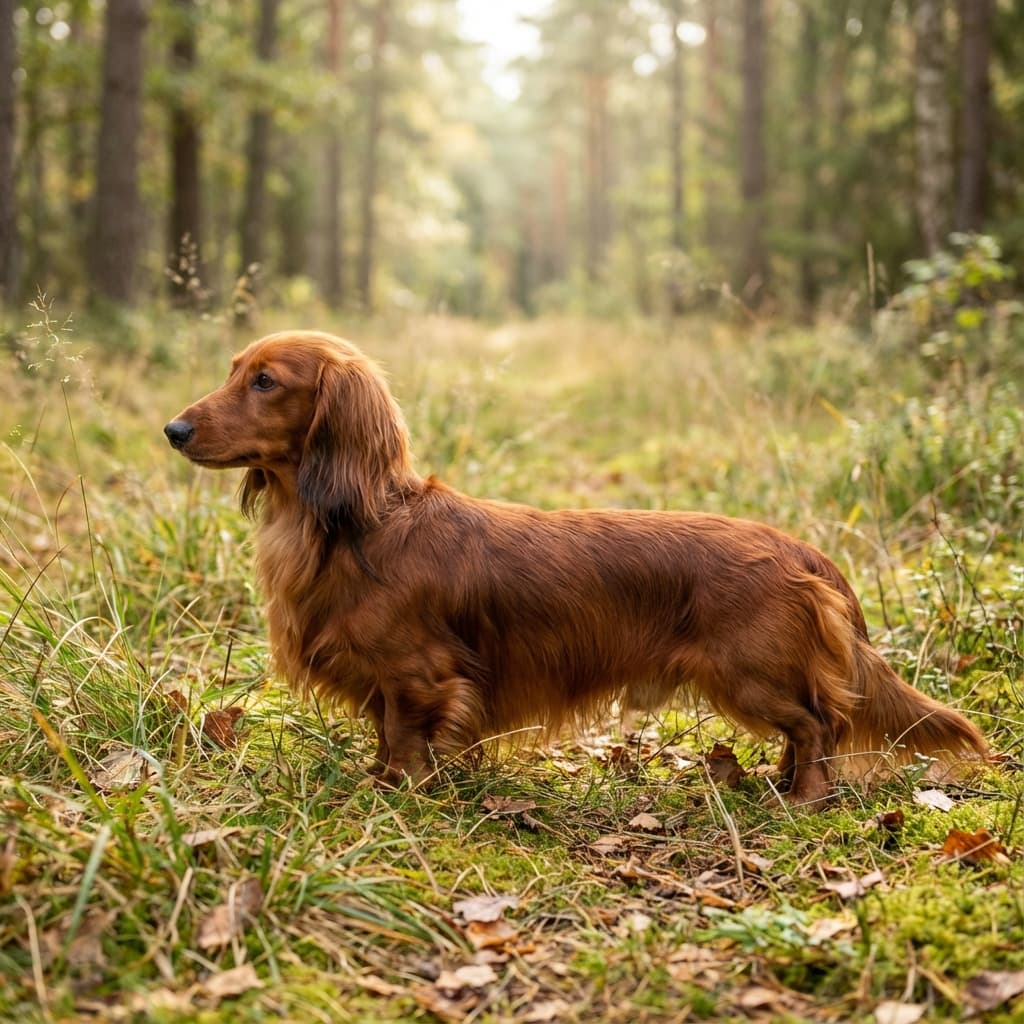
Standard long-haired dachshund
FCI Group
4• FCI 148C
Size
Medium
Origin Country
DE
Height
20-27 cm
Weight
7-14 kg
Lifespan
12-16 years
Temperament
Overview
The long-haired standard Dachshund, also known as Dackel or Teckel, is a dog breed with an unusual, distinctive silhouette that has fascinated dog lovers for centuries. Thanks to the harmonious combination of hunting and companion traits, the long-haired Dachshund is not only an agile, relentless hunter but also a wonderful, devoted companion for the whole family.
The history of these dogs dates back to the Middle Ages, when they were used for demanding hunts for game in burrows, primarily foxes, badgers, and rabbits. Their long, muscular body and short, strong limbs allow them to move freely in tight underground corridors, making them ideal hunters in challenging terrain conditions. Independence, determination, and courage are traits embedded in the DNA of the Dachshund.
However, the long-haired standard Dachshund is much more than a hunting dog. Its friendly, warm character and balanced temperament make it an excellent household pet and companion for active owners. It is persistent, full of passion and life energy, which makes it a loyal companion, ready to spend every free moment with its beloved family. Its intelligence, curiosity about the world, and eagerness to learn make training relatively smooth, although it requires patience and consistency due to the breed's inherent stubbornness and independence.
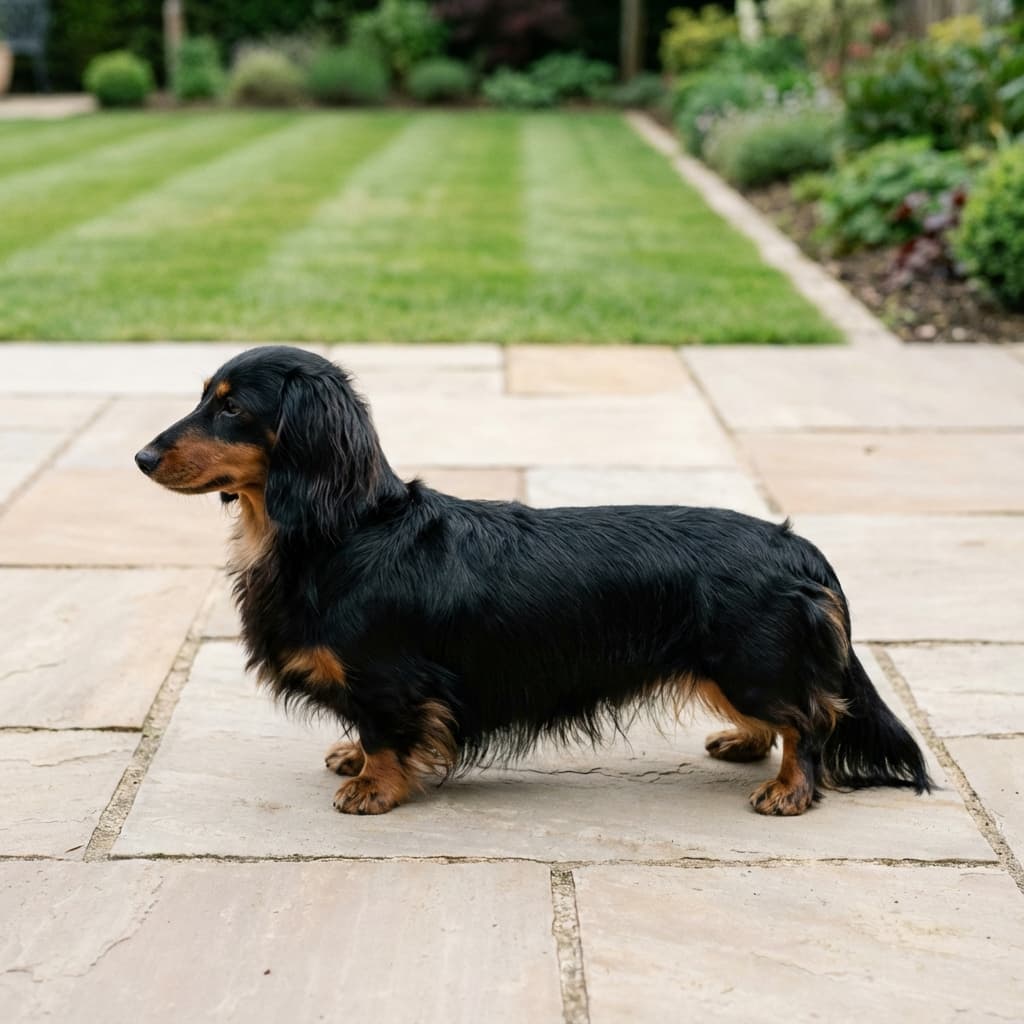
The long-haired Dachshund is characterized by soft, slightly wavy fur with a dense undercoat. This coat is longer on the neck, chest, ears, and lower parts of the limbs, creating impressive, shiny fringes. On the tail, it forms a full, beautiful flag. The variety of coat colors – solid (from light red to dark mahogany), bi-colored (with tan markings), brindle, or rare striped – adds to its unique charm and individual character.
Regular physical and mental stimulation is absolutely essential for maintaining the health, mental balance, and happiness of the Dachshund. Long, varied walks, fetch games, scent exercises, and time outdoors will allow it to utilize its natural hunting instinct and expend excess energy. Owners should also ensure a proper, balanced diet that meets all the dog's energy and health needs, preventing obesity – the number one enemy for the long spine of the Dachshund.
In summary, the long-haired standard Dachshund is a remarkable, characterful dog that can bring immense joy, loyalty, and energy to the lives of its guardians. Its unique combination of traits – the courage of a hunter, intelligence, devotion, and friendly character – makes it an ideal choice for those seeking a loyal, active, and full-of-personality companion. We invite you to explore the next chapters of our detailed guide, which will shed light on all aspects of life with this exceptional, unforgettable dog.
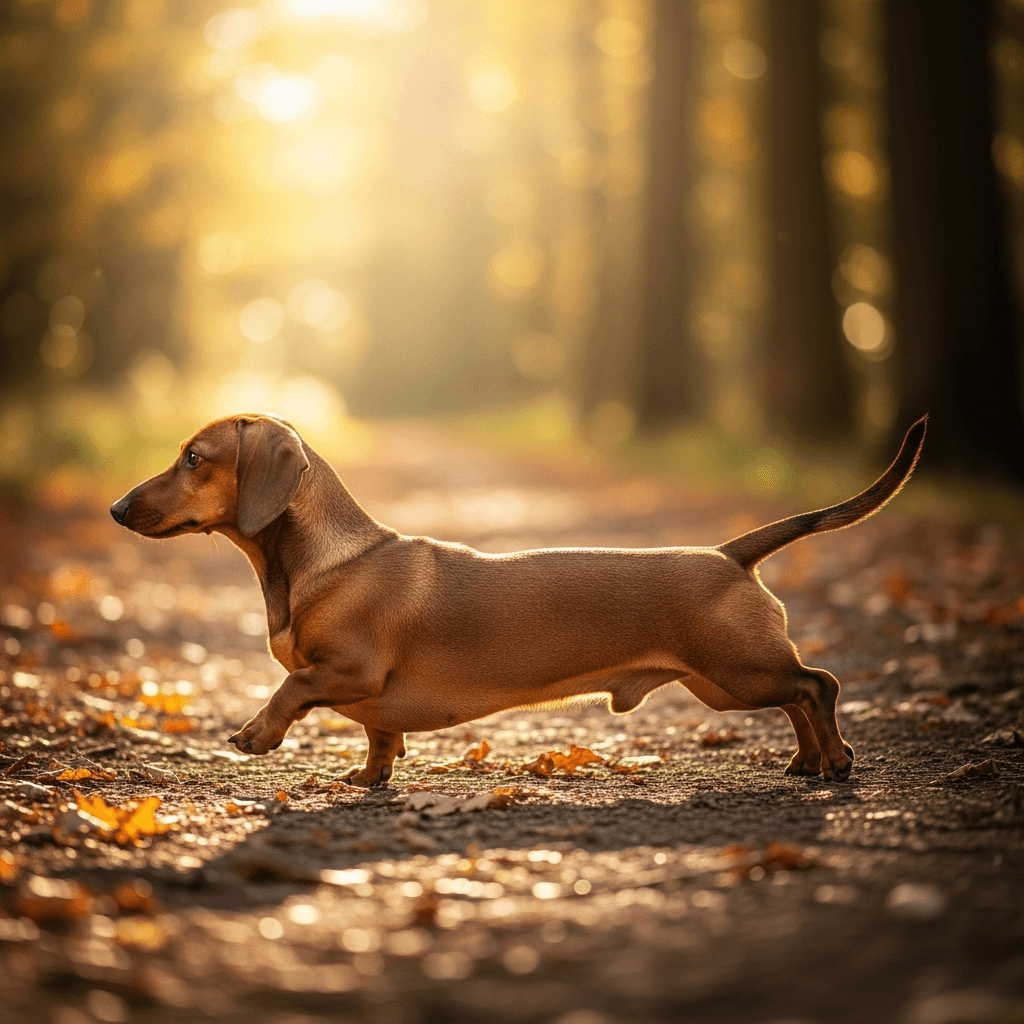
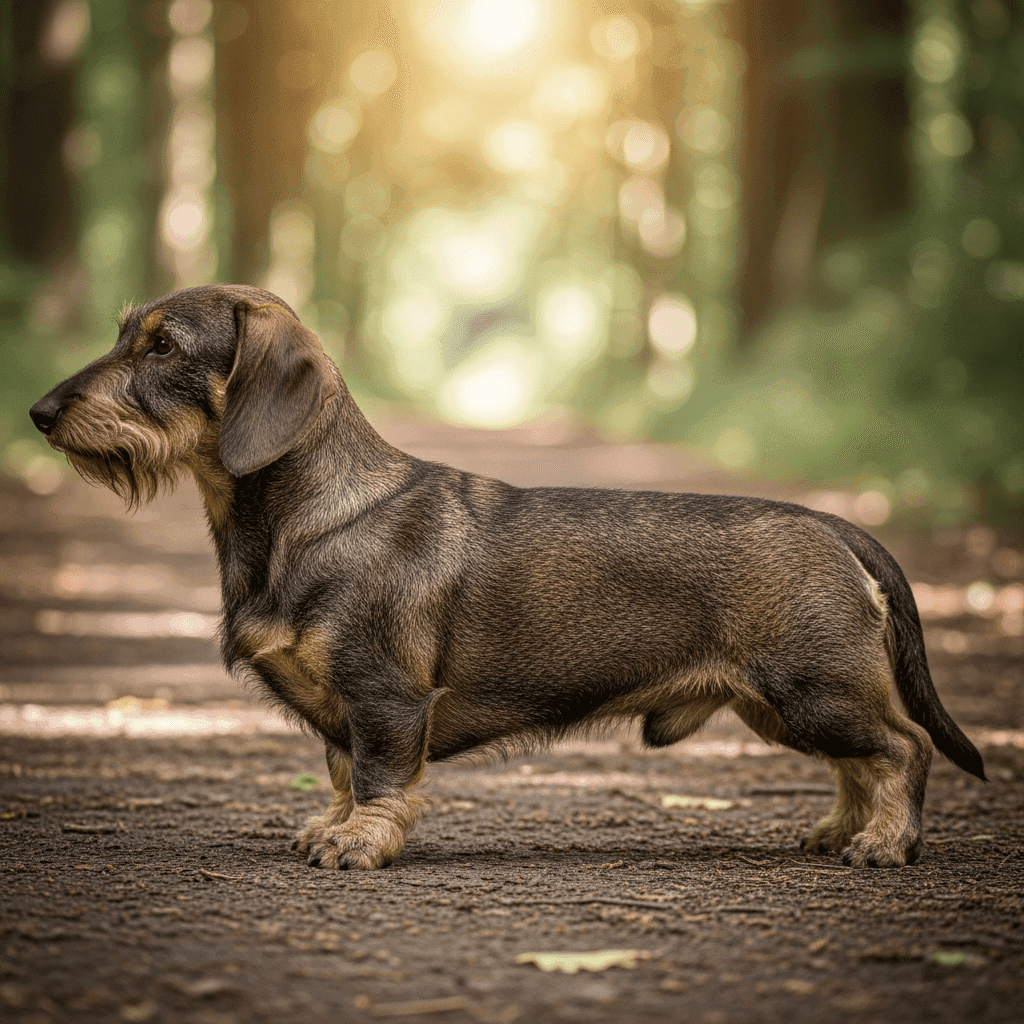
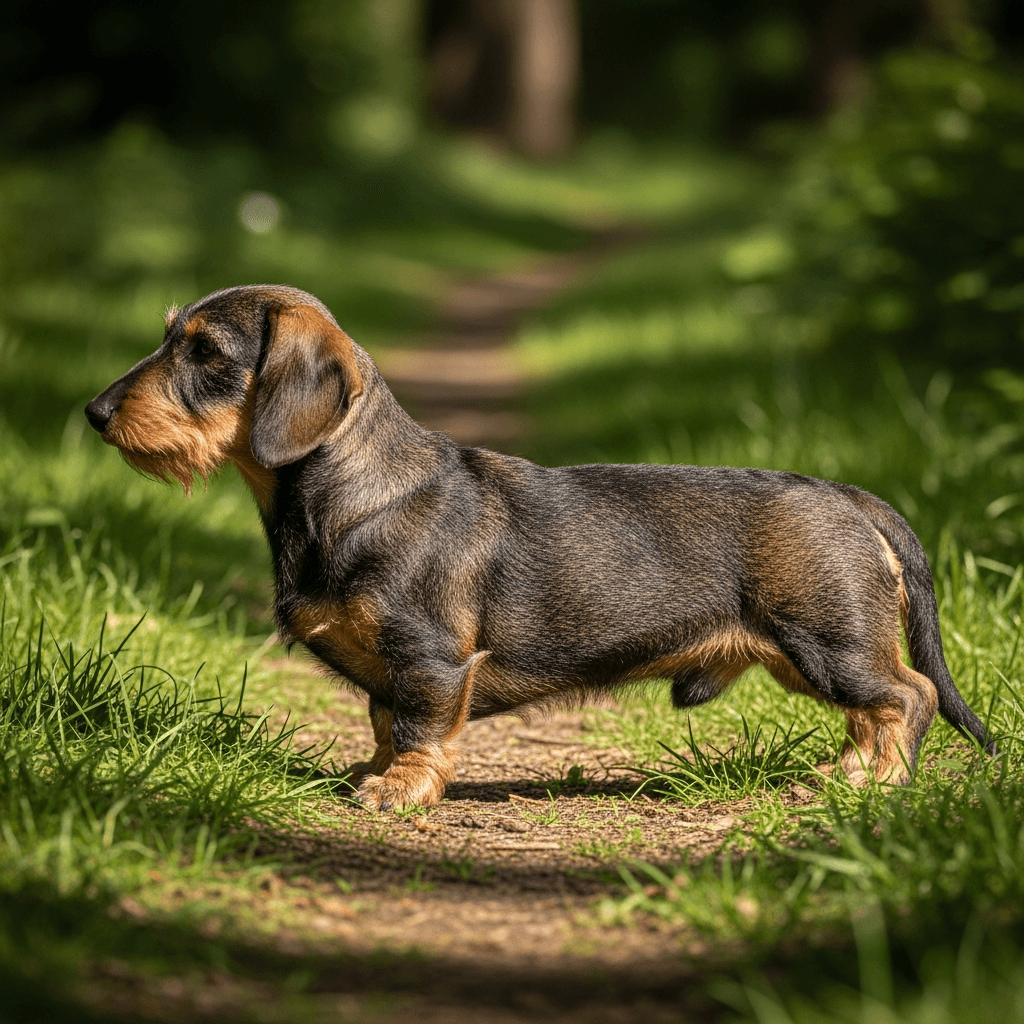
The long-haired standard dachshund is a dog with a characteristic, very elongated silhouette, which immediately distinguishes it from other breeds. Its unique body structure – with short, muscular legs and a long, flexible torso – allows it to move excellently in narrow, underground burrow spaces, which was crucial in its historical role as a hunting dog.
Dimensions: The chest circumference of standard dachshunds is over 35 cm (measured after reaching 15 months of age). The height at the withers usually ranges from 20-27 cm, and the weight between 7-14 kg, depending on gender and individual build. Dachshunds have a well-muscled, compact body, which makes them incredibly strong, agile, and resilient despite their low stature.
Head and expression: The head is elongated, elegant, with a gently rounded top of the skull. The eyes are almond-shaped, in color ranging from dark reddish-brown to black-brown (in merle dogs, pearl or mismatched eyes are acceptable). The dachshund's gaze is full of intelligence, curiosity, and confidence. The ears are long, widely set, rounded at the tips, hanging along the cheeks, giving the dachshund a friendly, alert appearance.
Coat: Long-haired, soft, slightly wavy, shiny, and well-adhering to the body with a dense undercoat. The coat creates impressive decorative hair (feathers) on the neck, chest, lower body, limbs, and a full flag on the tail. The longest hair is found on the lower neck line, on the chest, and on the back of the limbs. It requires regular grooming to maintain health and a beautiful appearance.
Coloration: Diverse:
- Solid – from light to dark reddish-brown, reddish-brown, mahogany (deep, intense colors preferred)
- Two-colored – black and tan, chocolate and tan
- Merle – dark spots on a light background
- Brindle – rarer, dark stripes on a reddish background
Structure: The chest is long, deep, well-muscled, providing adequate space for the heart and lungs. The back is straight and strong, with a slightly arched loin. The tail is carried as an extension of the back line, slightly drooping or raised in a saber-like arc (never curled or held too high). The long-haired dachshund has a harmonious, proportional body structure, which allows it to move with grace, charm, and elegance – its movements are fluid, energetic, and full of determination.
Overall, the dachshund is not only a functional hunting dog with extraordinary abilities but also an aesthetic, beautiful companion with a unique appearance.
The long-haired standard dachshund is a dog with a balanced temperament, friendly disposition, and lively character. This breed is naturally incredibly curious, intelligent, brave, and full of energy. Dachshunds are known for their strong, innate hunting instinct, which makes them very active, alert, and in need of regular, varied physical and mental stimulation to maintain their mental balance and well-being.
Family character: Their friendly, warm disposition makes them get along excellently with children (especially older ones who treat the dog with respect) and other pets, making them an ideal companion for active families. Dachshunds are extremely loyal to their owners and form deep, lasting emotional bonds with all family members. Their cheerful, joyful nature and natural desire to play make them delightful, fun companions that can bring plenty of smiles and positive energy to any home.
Courage and alertness: Despite their small, low stature, dachshunds are incredibly brave, self-confident, and uncompromising. They are not afraid to defend their territory and family, which makes them excellent watchdogs. Their deep, resonant bark effectively deters intruders and informs owners of any unusual situations.
Intelligence and stubbornness: Dachshunds are very intelligent but also independent and sometimes stubborn. Training requires patience, consistency, and positive reinforcement methods (treats, praise, play). Due to their sharp nature, they quickly learn new commands and tricks but require motivation and the owner's involvement. Early socialization (from puppy age) is absolutely crucial for dachshunds to get acquainted with different people, animals, sounds, and situations, which will help them become balanced, self-confident adults.
Activity: Owners should provide dachshunds with an adequate amount of physical activity (walks, play, scent exercises) and mental stimulation (training, interactive toys, search games) to avoid behavioral problems such as boredom, excessive activity, destructive behaviors, or excessive barking.
In summary, the long-haired dachshund is a characterful, lively, and loyal dog that combines the courage of a hunter, intelligence, independence, and deep attachment to family. It requires an engaged owner who will provide the right amount of activity, training, and love.
The long-haired standard dachshund is generally a healthy, resilient breed with an average lifespan of 12-16 years. However, like any breed with a specific body structure, it is prone to several characteristic conditions that owners should be aware of to ensure the best possible health and quality of life.
Spinal Problems (IVDD – Intervertebral Disc Disease): Due to their long body and short legs, dachshunds are particularly susceptible to intervertebral disc herniation, which can lead to pain, limited mobility, paralysis, and in extreme cases – paralysis of the hind limbs. Owners should:
- Avoid allowing the dachshund to jump from high surfaces (sofas, beds, stairs)
- Carry the dog properly (supporting the chest and rear end)
- Prevent obesity, which further strains the spine
- Use steps or ramps for dogs at home
- Monitor for symptoms: difficulty moving, reluctance to move, a crooked gait, pain when touching the back
Overweight and Obesity: Dachshunds love to eat and are prone to gaining weight. Excess weight is the biggest enemy of their spine and joints. Regular portion control, avoiding excessive treats, and daily physical activity are absolutely crucial.
Hip and Elbow Dysplasia: Although rarer than in larger breeds, it can occur and lead to pain and limited mobility.
Eye Diseases: Dachshunds can suffer from progressive retinal atrophy (PRA), cataracts, and glaucoma. Regular eye examinations are recommended, especially for breeding dogs.
Dental and Gum Problems: Dachshunds are prone to periodontal disease, tartar buildup, and cavities. Regular teeth cleaning (daily or several times a week), dental chews, and periodic veterinary visits are essential.
Epilepsy: Idiopathic epilepsy can occur in dachshunds. Symptoms include seizures that require veterinary diagnosis and treatment.
Health Prevention:
- Regular veterinary visits (check-ups every 6-12 months)
- Up-to-date vaccinations according to schedule
- Parasite prevention (deworming, protection against ticks and fleas)
- Proper, balanced diet tailored to age, weight, and activity
- Daily physical activity without overloading the spine
- Weight control (the dachshund should have a noticeable waist, visible ribs under the fingers)
Proper care, diet, and activity will allow your dachshund to enjoy a long, healthy, and happy life by your side.
The long-haired dachshund requires regular, systematic grooming to keep its coat in excellent, healthy condition and beautiful appearance. Their long, soft, slightly wavy hair can easily become tangled and form mats, especially in areas prone to friction (behind the ears, under the armpits, on the limbs), so owners should dedicate an appropriate amount of time to grooming.
Brushing: It is recommended to brush the long-haired dachshund's coat daily or at least 3-4 times a week, using a brush with natural bristles or a metal comb with long teeth. Regular brushing not only keeps the coat clean and shiny but also:
- Allows for controlling and removing excess dead hair
- Prevents the formation of painful mats
- Stimulates the skin and improves blood circulation
- Distributes natural skin oils, giving the coat a healthy shine
- Provides an excellent opportunity to strengthen the bond between the owner and the dog
Shedding: During the intense shedding period, which usually occurs twice a year – in spring and autumn – grooming should be even more intensive (daily brushing) to effectively remove dead undercoat and prevent it from spreading throughout the house.
Bathing: Baths should be given only when truly necessary, usually every 6-12 weeks, to avoid excessive loss of natural oils in the skin that protect against dryness and irritation. Use gentle, dedicated shampoos for long-haired dogs, and after bathing, thoroughly dry the coat with a towel or a hairdryer on a low setting.
Ears: The dachshund's ears (long and drooping) require special attention as they are prone to wax buildup, moisture, and infections. They should be regularly checked (weekly) and gently cleaned with specialized ear cleaning solutions for dogs. Watch for signs of infection: unpleasant odor, redness, itching, waxy discharge.
Eyes: The eyes also require daily inspection. Any discharge should be gently removed with a soft, clean cloth dampened with lukewarm water or a special eye solution. If you notice redness, swelling, or excessive tearing – consult a veterinarian.
Nails: Regular nail trimming (every 3-4 weeks) is crucial for ensuring comfort in movement and avoiding joint problems. Overly long nails can cause pain, difficulty walking, and damage to floors. If you hear the sound of nails clicking on the floor – it’s a sign they need to be trimmed.
Teeth: Dachshunds are prone to dental problems, so daily or at least 3-4 times a week brushing with a specialized toothbrush and dog toothpaste is essential to prevent tartar buildup, periodontal disease, and tooth loss.
Proper, regular grooming of the long-haired dachshund not only affects its beautiful external appearance but, most importantly, its health, hygiene, and well-being of your beloved companion.
The long-haired standard dachshund is a dog that requires regular, moderate physical activity to maintain health, physical condition, and mental balance. Their natural, strong hunting instinct makes them highly value long walks, running in the park, exploring new areas, and active play outdoors.
Daily activity: Owners should provide their dachshunds with at least 45-60 minutes of activity daily, preferably divided into 2-3 walks and play sessions. Activities may include:
- Walks: Long, leisurely walks (2-3 times a day) that allow for exploring new scents and terrain
- Ball games: Fetching a ball or frisbee (without excessive jumping)
- Scent games: Nosework exercises, searching for hidden treats or toys
- Interactive games: Puzzle toys, scent mats, hide and seek games
- Socialization: Play with other dogs in a controlled environment
Exploration and mental stimulation: Dachshunds are very curious, so it's worth taking them to new places (forests, fields, parks, beaches) to explore, discover new scents, and utilize their natural tracking instincts. Well-organized walks that allow for free wandering and terrain exploration are ideal for these dogs. Training and mental activity also play a key role in a dachshund's daily routine, so it's worth investing in interactive toys, mind-stimulating exercises (tricks, commands, low-impact agility), and regular obedience training.
IMPORTANT RESTRICTIONS (spine protection): Due to their specific body structure (long spine, short legs), dachshunds should NOT be exposed to:
- Jumping from heights: Avoid allowing the dachshund to jump from sofas, beds, cars – use steps or ramps
- Climbing steep stairs: Limit or supervise stair walking
- Intensive running on hard surfaces: Prefer soft ground (grass, forest paths)
- Excessive loads: Avoid overtraining and overly intense exercises that may lead to injury
- Games requiring extreme jumps or twists: Agility, extreme fetching
Weather: Long-haired dachshunds usually tolerate various weather conditions well, but on cooler days, it's advisable to use warming clothing, and on hot days, ensure access to shade and water while avoiding activity during the hottest hours.
In summary, the long-haired dachshund needs regular, varied physical and mental activity, but always in a manner suited to its specific body structure to ensure health, happiness, and a long life free from injuries.
The long-haired dachshund is a smart, clever, and naturally curious about the world dog, which makes it easy to train, provided the owner uses appropriate, positive methods and demonstrates patience. However, their independent, sometimes stubborn character (a legacy from their hunting ancestors who had to make decisions on their own in burrows) can sometimes lead dachshunds to test boundaries and try to negotiate commands.
Training methods: Owners should approach training with patience, consistency, and enthusiasm, using only positive reinforcement methods such as:
- Treats: Small, fragrant treats as an immediate reward for following a command
- Praise: Enthusiastic, joyful verbal and physical praise (petting)
- Play: Favorite toy as a reward
- Positive attitude: Avoiding physical punishment or yelling, which can damage trust and motivation
Early socialization (key!): Early, intensive socialization is absolutely crucial for dachshunds. From puppy age (ideally 8-16 weeks of life), dachshunds should be gradually introduced to:
- Different people (children, adults, seniors, people in various clothing)
- Other animals (dogs of various breeds and sizes, cats, farm animals)
- Diverse sounds (traffic, household appliances, loud noises)
- Various situations (vet visits, car rides, being in crowds)
- Diverse surfaces (grass, asphalt, wood, snow)
A well-socialized dachshund will be a balanced, confident, friendly adult dog.
Basic commands: Training basic obedience commands should be introduced as early as possible (from 8-10 weeks of life). The most important commands are:
- Sit – the foundation of obedience
- Down – calmness and control
- Come – safety during walks
- Stay – patience and self-control
- Leave it – safety (preventing the ingestion of dangerous objects)
- No – boundaries of behavior
Advanced training: Dachshunds respond well to various forms of training that utilize their intelligence and agility:
- Advanced obedience: Precise execution of commands at a distance
- Scent work: Searching for scents – excellent for their hunting instinct
- Agility (low-impact version): Obstacles adapted to their body structure (without high jumps)
- Tricks: Learning fun tricks (shaking paws, rolling over, playing dead)
Training sessions: It is important for training sessions to be short (5-15 minutes), frequent (2-3 times a day), and engaging to maintain the dog's attention and prevent boredom. They should end on a positive note (reward and praise), which will encourage the dog to repeat the exercises in the future and associate training with pleasure.
House training: Dachshunds can be a bit more challenging to house train (especially males) due to their stubbornness. Key points include:
- Frequent outings for the puppy (every 2-3 hours)
- Immediate rewards after going outside
- Consistency and patience
- Avoiding punishment for accidents in the house – instead, ignore and thoroughly clean the area
Training not only strengthens the deep emotional bond between the dog and the owner, but also provides the dachshund with confidence, calmness, obedience, and the mental stimulation that is essential for this intelligent breed.
The diet of a long-haired dachshund is absolutely key to its health, physical condition, and longevity. Owners should choose high-quality dog food for small or medium breeds that are closely tailored to the individual energy needs of the dog, taking into account its age (puppy, adult, senior), weight, gender, level of physical activity, and any potential health issues.
Risk of overweight: Dachshunds, due to their short legs and long body, are particularly prone to obesity, which poses a significant threat to their spine, joints, and overall health. Excess weight increases the risk of intervertebral disc herniation, joint dysplasia, heart disease, diabetes, and shortens the dog's lifespan. Therefore:
- It is necessary to strictly control portion sizes according to the recommendations of the food manufacturer and the veterinarian's advice
- Avoid giving excessive amounts of treats and snacks (maximum 10% of daily calories)
- Do not feed the dog table scraps
- Regularly monitor weight and body condition (the dachshund should have a noticeable waist and visible ribs under gentle pressure from fingers)
Meal regularity: Adult dachshunds should receive 2-3 meals a day at consistent times, which helps maintain a steady energy level, prevents overeating, and supports regular digestion. Puppies (up to 6 months old) should be fed 3-4 times a day with smaller portions.
Food composition: Good food for a dachshund should contain:
- High-quality animal protein (25-30%): Chicken, beef, fish, turkey – supports the development and maintenance of muscle mass
- Healthy fats (12-18%): Omega-3 and Omega-6 (from fish, flaxseed oil) – support skin, coat, brain, and immune system health
- Fiber (3-5%): Supports proper digestion and prevents constipation
- Complex carbohydrates: Brown rice, potatoes, sweet potatoes – source of energy
- Vitamins and minerals: Calcium, phosphorus (for bones), glucosamine, and chondroitin (for joints and cartilage)
- Antioxidants: Vitamins C and E – support the immune system
Avoid food containing:
- Excess fillers (corn, wheat, soy)
- Artificial colors, preservatives, and flavors
- Unspecified meat products (by-products)
Hydration: Fresh, clean water should be always available in a clean bowl to ensure proper hydration, which supports kidney function, digestion, and body temperature regulation.
Diet adjustment: Owners should regularly (every 3-6 months) assess and adjust the diet to the changing needs of the dog, especially depending on:
- Age: Puppies need calorie-rich and calcium-rich food, seniors need easily digestible food with joint supplements
- Physical activity: Very active dogs need more calories
- Health status: Dogs with health issues (overweight, allergies, digestive problems) require veterinary diets
- Season: In winter, dogs may need slightly more calories
Regular veterinary check-ups: Visits to the veterinarian (every 6-12 months) will help professionally assess whether the diet is appropriate and whether it needs adjustments to ensure the dachshund's best health, condition, and long life.
In summary, a balanced, high-quality diet + portion control + regular activity is the recipe for a healthy, happy dachshund at an ideal weight.
Characteristic Traits
Pros
- Friendly and loyal character
- Balanced temperament
- Intelligent and curious about the world
- Ease of training (with patience)
- Excellent family companion
- Low housing requirements.
Cons
- Requires regular physical and mental stimulation
- Can be stubborn and independent
- Prone to spine problems (IVDD)
- Needs a proper diet (prone to weight gain)
- Requires regular grooming
- May bark excessively (alarm instinct).
Behavioral Ratings
Breed History
The standard long-haired dachshund has a long, rich, and fascinating history, dating back to the Middle Ages, and according to some sources even ancient Egypt, where images of dogs with a similar elongated silhouette were found. However, the modern breed of dachshund as we know it today was developed in Germany in the 15th-16th century, where it was intensively bred as a specialized hunting dog for hunting game in burrows and underground.
The origin of the name and purpose: The German name Dachshund (or Dackel, Teckel) literally means badger dog (Dachs = badger, Hund = dog), which perfectly reflects the original purpose of the breed. Dachshunds were used for demanding, dangerous hunts for:
- Badgers – the main target (hence the name)
- Foxes – in burrows and tunnels
- Rabbits – fast animals in tight corridors
- Wild boars – larger dachshunds (standard) also hunted wild boars in groups
- Birds – retrieving hunted birds
Excellence in hunting structure: The dachshund was created with versatility, endurance, and courage in mind as a self-sufficient, intelligent hunting dog. Its roots trace back to German hounds (Bracke), which were crossed with local dogs with shorter legs to create a low-statured but muscular dog. The unique body structure of the dachshund – long, flexible torso, short, strong limbs, powerful jaws, deep voice – allowed it to:
- Move freely in narrow, dark burrows
- Make independent decisions underground (without contact with the hunter)
- Fight aggressive game (badgers, foxes)
- Track and chase game on the surface
Varieties of the breed: Over the centuries, the dachshund has been bred in various varieties to meet diverse hunting needs:
- Sizes: Standard (the oldest, for hunting badgers and wild boars), Miniature (for smaller game), Rabbits (for rabbits in the tightest burrows)
- Coat types: Smooth-haired (original, most popular), Long-haired (developed through crossing with spaniels and setters, gentler temperament), Wire-haired (developed through crossing with terriers, more resistant to weather conditions)
Breed development and standards: The oldest and most prestigious dachshund club in the world is the Deutsche Teckelklub e.V. (DTK), founded in 1888 in Germany, which contributed to the systematic development, protection, and standardization of the breed. The first official breed standard for the dachshund was developed in 1879. The FCI (Fédération Cynologique Internationale) recognized the dachshund as a breed originating from Germany and assigned it FCI standards in group 4 (dachshunds).
Popularity as a companion dog: Throughout the 19th and 20th centuries, the dachshund gained immense popularity as a companion and family dog, especially during the interwar period. Its friendly, loyal character, intelligence, small size, and ease of care made it a favorite among European and American families. The dachshund was often depicted in art, literature, and pop culture as a symbol of courage, loyalty, and character.
Dachshunds in culture and history: Dachshunds have been the favorite dogs of many famous individuals, including:
- Queen Victoria – popularized dachshunds in Britain
- Pablo Picasso – the painter loved his dachshund Lump
- Napoleon Bonaparte – reportedly had a dachshund named Grenouille
- Emperor Wilhelm II – a known dachshund enthusiast
Modern times: Contemporary dachshunds are not only hunting dogs (still used in Germany, France, and other countries for hunting badgers, foxes, and wild boars), but above all wonderful, loving companions that bring joy, loyalty, humor, and love to their owners around the world. Their extraordinary history, unique physical and character traits make them one of the most recognizable, valued, beloved, and iconic dog breeds in the world.