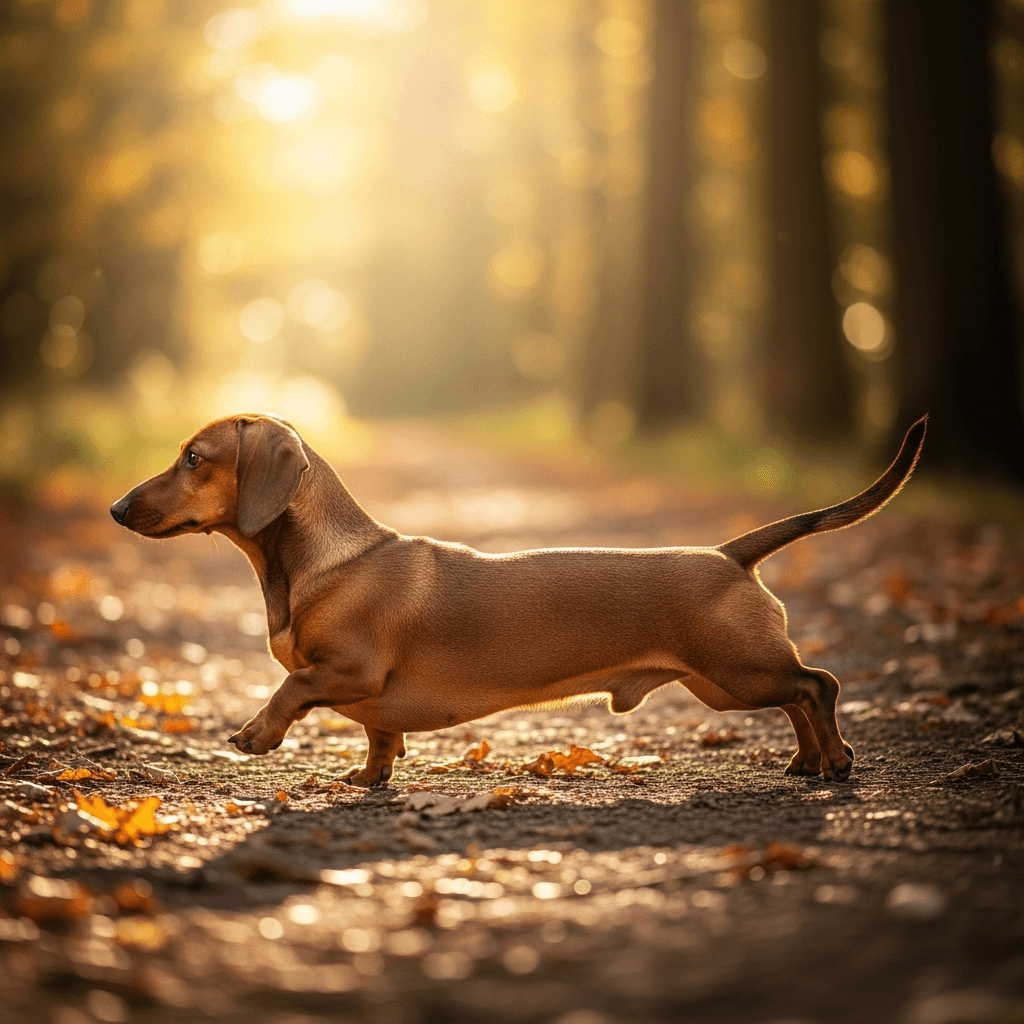
Standard smooth-haired dachshund
FCI Group
4• FCI 148F
Size
Medium
Origin Country
DE
Height
20-27 cm
Weight
7-14 kg
Lifespan
12-16 years
Temperament
Overview
The standard smooth-haired Dachshund, often called Dackel or Teckel, is a breed with a fascinating history dating back to the Middle Ages. Originating from Germany, it was originally used for hunting burrowing animals such as foxes, badgers, and rabbits. Its unique body structure – characterized by a long torso and short, muscular legs – allows it to move agilely in tight underground tunnels. Thanks to this specific build, the Dachshund became an indispensable companion for hunters, successfully penetrating burrows and forcing game to flee.
The standard smooth-haired Dachshund is a dog with a strong hunting instinct, which manifests in its daily behavior – it loves to sniff, track, and explore its surroundings. Despite its hunting origins, it is also a smart and loyal family member that forms strong emotional bonds with household members. Over the centuries, breeders have developed three different sizes of Dachshunds: standard, miniature, and rabbit, as well as three types of coats: smooth, long-haired, and wire-haired. Despite this diversity, each variety retains the characteristic traits of the breed in terms of temperament and build.
The standard smooth-haired Dachshund is a dog full of energy and a vibrant personality. It needs regular exercise and mental stimulation to maintain physical and mental health. It is friendly, balanced, but also tenacious and brave – traits that make it an excellent companion for both families with children and active singles. Its exceptionally developed sense of smell means it is still used in tracking work. Despite its generally balanced temperament, the Dachshund can be stubborn and independent, which requires a consistent but positive approach in training.
The average lifespan of a standard smooth-haired Dachshund is 12 to 16 years, and with proper care, some individuals live even longer. To ensure a long and healthy life, regular health care, a balanced diet tailored to activity levels, and regular veterinary visits are crucial. Its coat is short, dense, and shiny, which significantly eases grooming. Despite its hunting purpose, Dachshunds are wonderful family dogs – they love spending time with loved ones, running around the garden, and participating in various activities. With their cheerful disposition and lively character, the standard smooth-haired Dachshund can be the perfect companion for anyone willing to dedicate time to its upbringing, socialization, and daily activities.
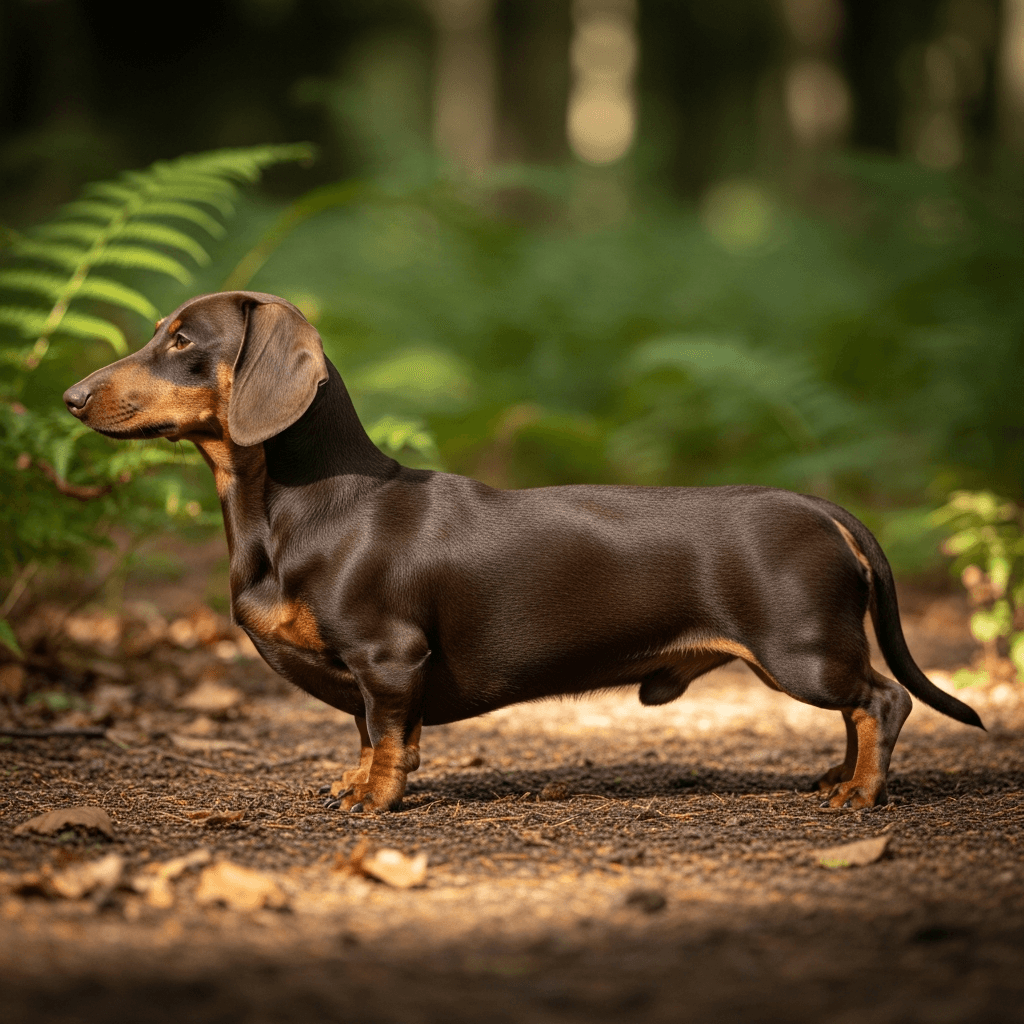
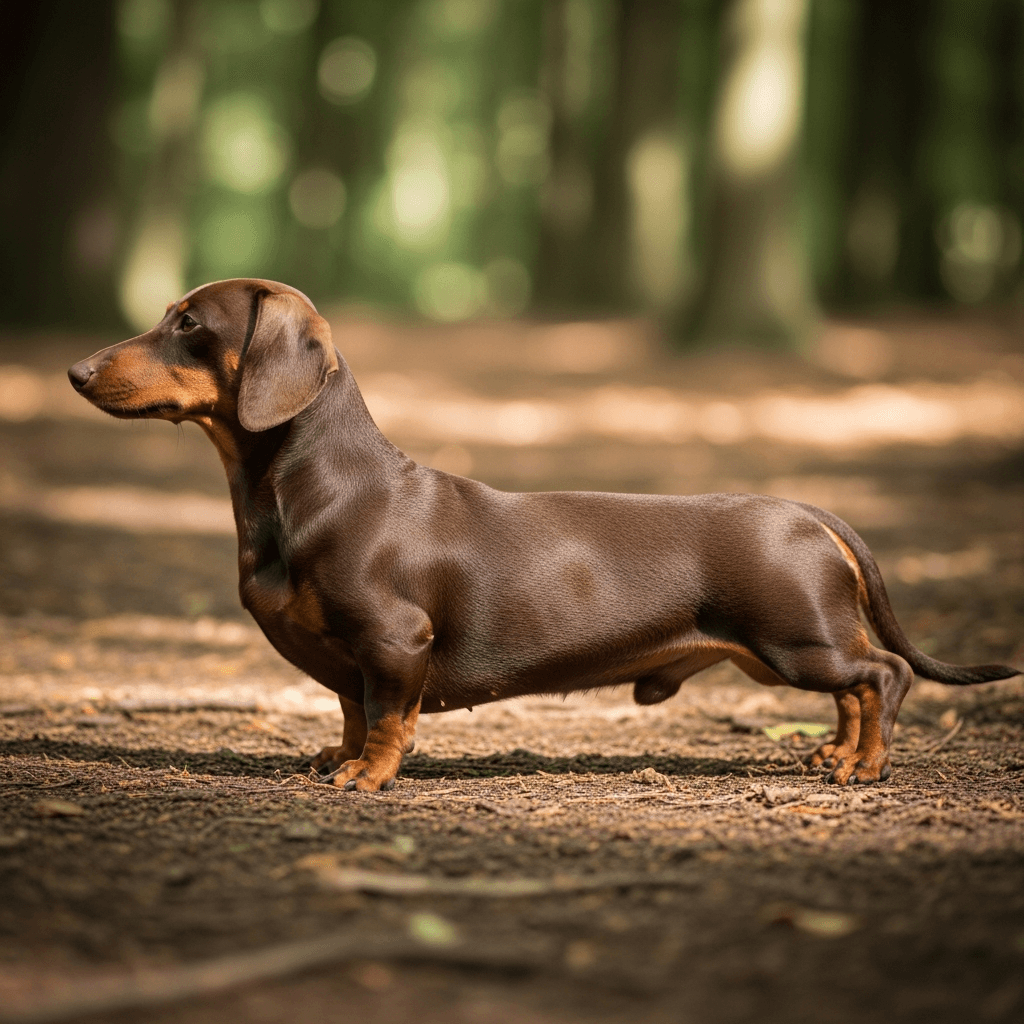
The standard short-haired dachshund is a dog with a characteristic elongated silhouette, which makes it easily recognizable around the world. According to the FCI standard, the chest circumference should be over 35 cm (measured at a minimum age of 15 months). The height at the withers typically ranges from 20 to 27 cm, with the ideal body length to height ratio being about 1.7-1.8:1.
The body of the dachshund is strong, muscular, and well-built, with a clearly defined upper line that runs from a well-developed withers to a slightly sloping hindquarters. The dachshund has a long, straight back and strong, muscular loins. Its chest is deep, long, and well-ribbed in an oval shape, providing adequate capacity for the heart and lungs – essential during intense hunting work in burrows.
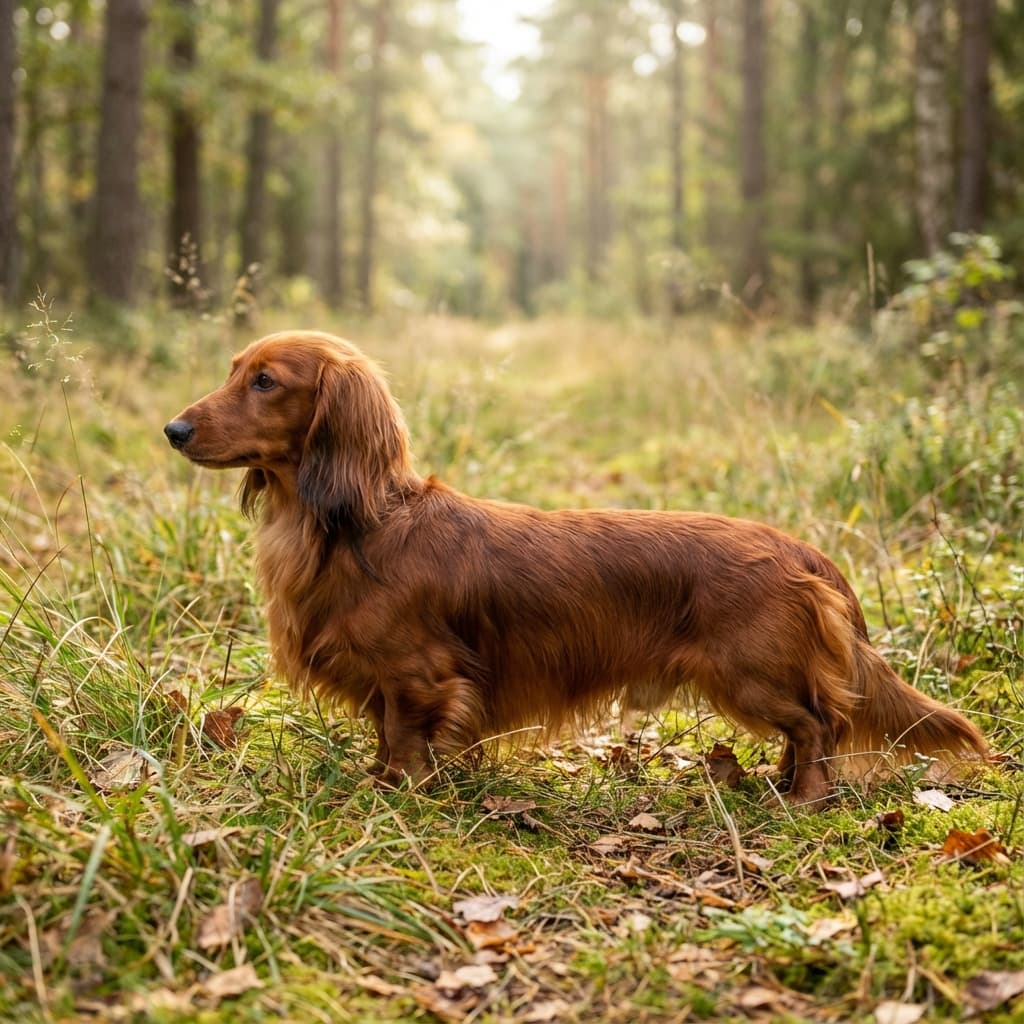
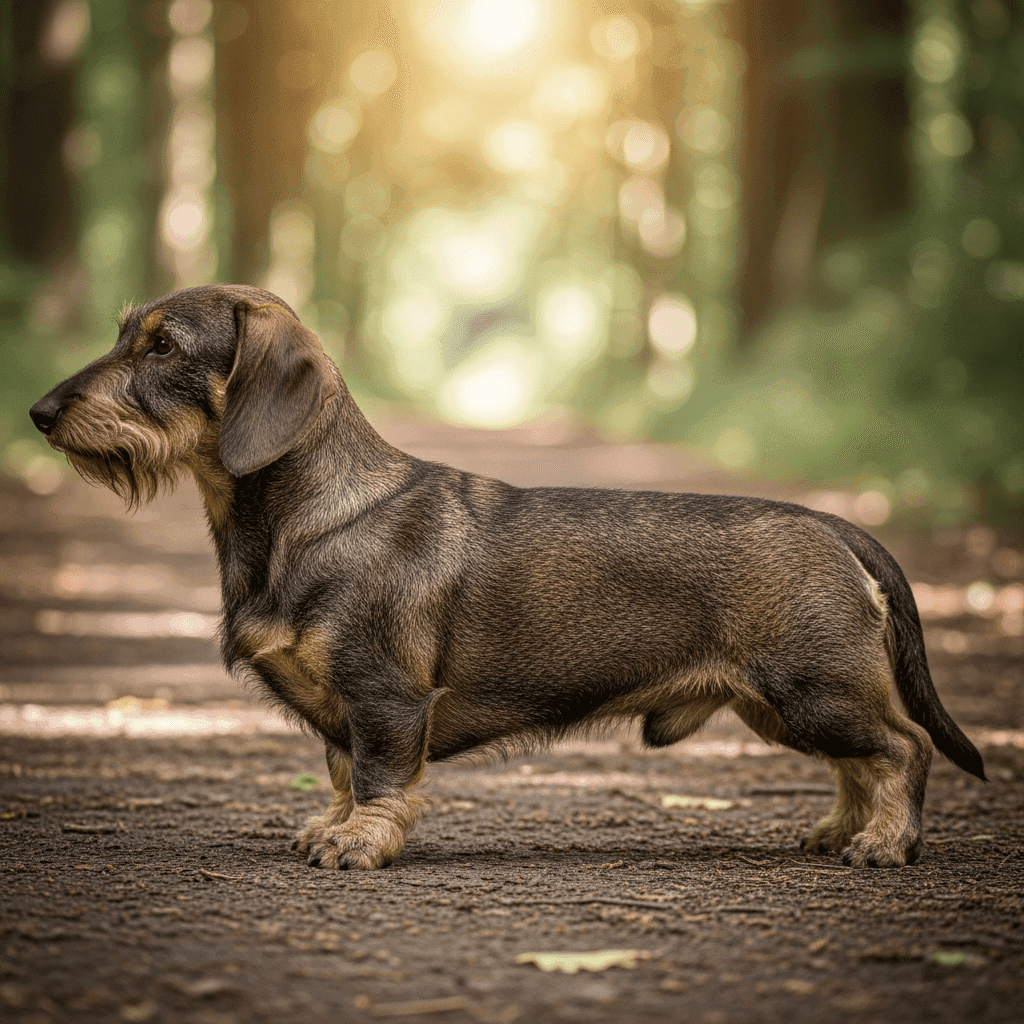
The short-haired dachshund has a short, dense, and shiny coat that closely adheres to the body and is hard to the touch. The coloration can be diverse:
- Solid: red (from light to dark), red-yellow, yellow
- Two-colored: black and tan, brown and tan
- Marbled: merle in various shades
- Brindle: brindle on a red or yellow background
The head of the dachshund is elongated and elegant, with well-defined eyebrows and expressive almond-shaped eyes that are dark in color and give the dog a friendly yet alert expression. The ears are rounded, hanging, and mobile, set high and wide on the head. The dachshund has a long muzzle with strong jaws, well-developed teeth, and a correct scissor bite (42 teeth).
The tail is a harmonious continuation of the spine, carried in line with the back or slightly above, never excessively curved. The front limbs are strong, short, but not disproportionate, with strong, flexible paws and well-arched toes. The hind limbs are equally muscular, with well-angled knee and hock joints, providing the dachshund with agility, speed, and endurance. Due to its unique body structure and distinctive physical traits, the standard short-haired dachshund is one of the most recognizable and beloved dogs in the world.
The standard smooth-haired dachshund is a dog with a friendly, brave, and balanced temperament, perfectly combining the traits of a hunting dog with those of a family companion. By nature, it is social, loyal, and deeply devoted to its owners, forming strong emotional bonds with the entire family. Dachshunds are known to be very intelligent, alert, and eager to learn, but they can also exhibit stubbornness and independence – traits that stem from their hunting heritage. They require a consistent yet positive training approach based on rewards and motivation.
In relation to children, dachshunds are usually patient, gentle, and caring, making them wonderful playmates for younger family members. However, proper socialization from a puppy age and supervision during interactions with small children are important, as a dachshund may not tolerate rough play or being pulled by the tail. With proper upbringing, they become patient and affectionate friends to the youngest.
The dachshund is a dog that is curious, full of energy, and constantly ready for adventures. It loves to explore new environments, sniff, and track – its hunting instinct gives it an exceptionally developed sense of smell, and it may be inclined to chase small animals or run after an interesting scent. For this reason, it is important to keep the dachshund on a leash or in a safe, fenced area during walks, especially in places where wild animals may appear.
Dachshunds also have a natural tendency to bark, which makes them very good watchdogs – they quickly alert to approaching strangers or unusual sounds. However, it is worth remembering that their barking can be effectively controlled through proper training, positive reinforcement, and early socialization. Without this, dachshunds can become excessively noisy.
Dachshund owners should provide them with adequate physical exercise and mental stimulation to prevent boredom, frustration, and resulting behavioral problems such as furniture destruction or excessive barking. Dachshunds love a variety of activities: playing with a ball, fetching, scent exercises (nosework), and even agility tailored to their body structure.
Overall, the standard smooth-haired dachshund is a dog full of life, energy, and character, bringing joy, laughter, and endless entertainment to any home. Its courage, intelligence, and devotion make it a unique companion for those who value an active lifestyle and are willing to dedicate time to its upbringing and meet its natural needs.
The standard smooth-haired dachshund, like many breeds with a specific body structure, has characteristic predispositions to certain health problems. One of the most common and serious conditions affecting dachshunds is intervertebral disc disease (IVDD), which results from their elongated spine and short legs. Disc damage can lead to serious neurological problems, including paralysis of the hind limbs. Symptoms include: back pain, stiffness of movement, difficulty walking, reluctance to jump, and in extreme cases, loss of control over the limbs.
To minimize the risk of IVDD, owners should:
- Avoid jumps from high furniture (sofa, bed) – use ramps for dogs
- Control the dog's weight, as being overweight significantly increases the strain on the spine
- Use a harness instead of a collar during walks to avoid pressure on the neck
- Provide regular, moderate exercise that strengthens the back muscles
Another common health issue in dachshunds is hip dysplasia, which can lead to pain, lameness, and limited mobility. Early detection of this condition through X-rays allows for appropriate therapy – supplementation, physiotherapy, or in extreme cases, surgical intervention.
Dachshunds can also suffer from skin diseases, including:
- Food or environmental allergies – manifested by itching, skin redness, hair loss
- Black skin acanthosis – darkening and thickening of the skin in folds
- Fungal and bacterial skin infections – especially in the belly and paw areas
It is important for owners to regularly check the skin and coat of their dachshund to identify any potential problems early and consult a veterinarian regarding appropriate treatment.
Additional conditions that may affect dachshunds include:
- Eye diseases: cataracts, progressive retinal atrophy (PRA), glaucoma
- Dental problems: tartar, periodontal disease – requiring regular oral hygiene
- Diabetes – more common in older overweight individuals
- Epilepsy – occasionally occurring in the breeding line
Regular veterinary visits (at least once a year), a proper diet tailored to age and activity level, weight control, and systematic vaccinations and deworming are key to maintaining the health of a dachshund. Owners should be particularly vigilant for symptoms of spinal pain and consult a veterinarian immediately if concerning symptoms arise.
With proper healthcare, regular check-ups, and attention to physical condition, dachshunds can lead a long, healthy, and active life – often exceeding 14-16 years, enjoying full vigor and joy of life.
The care of a standard short-haired dachshund is relatively simple and low-maintenance compared to many other breeds, making it an ideal choice for those looking for a dog with low grooming needs. Its short, dense, and shiny coat requires only minimal attention to keep it in excellent condition and maintain its natural luster.
Brushing: Regular brushing once or twice a week using a soft rubber brush or grooming glove will help remove dead hair, dirt, and stimulate blood circulation in the skin, contributing to the health and shine of the coat. During shedding periods (spring and autumn), it is advisable to increase the brushing frequency to 3-4 times a week to effectively remove loose hair.
Bathing: Short-haired dachshunds do not require frequent baths – a bath once every 2-3 months or as needed when the dog is particularly dirty or has an unpleasant odor is sufficient. It is important to use gentle dog shampoos with a pH suitable for animal skin to avoid irritating their sensitive skin or damaging the natural protective layer of the coat. After bathing, it is crucial to thoroughly dry the dog, especially around the belly and paws.
Ear cleaning: The droopy ears of a dachshund are prone to accumulating dirt, moisture, and wax, which can lead to ear infections. Ears should be regularly (once a week) checked and cleaned using special dog ear cleaning solutions and cotton balls or pads. Never insert cotton swabs deeply into the ear.
Oral hygiene: Dachshunds are prone to dental problems, including tartar and periodontal disease. Regular tooth brushing is recommended (ideally daily, at least 2-3 times a week) using dog toothpaste and a soft toothbrush. Additionally, dental treats can be given to mechanically clean the teeth and freshen breath.
Nail trimming: Regularly, once every 3-4 weeks, the length of the nails should be checked and trimmed if necessary using dog nail clippers. Overly long nails can cause discomfort, walking problems, and even deformities of the paws. If the nails click on the floor while walking, it means they are too long.
Skin check: During brushing, it is worth regularly checking the dachshund's skin for:
- Redness, rashes, itching
- Ticks and fleas (especially after walks in the woods)
- Skin changes, lumps, dryness
Eye cleaning: The area around the eyes should be gently wiped daily with a damp, soft cotton pad to remove discharge and prevent inflammation.
Overall, caring for a short-haired dachshund is easy, quick, and enjoyable, and regular attention to its coat, hygiene, and overall health will help keep it in excellent physical and aesthetic condition for many years.
The standard short-haired dachshund is a active, energetic, and resilient dog that, despite its small stature and short legs, requires regular physical activity to maintain health, good condition, and mental balance. Dachshunds were bred for hunting work that required endurance, agility, and strength, which is why their exercise needs are significantly greater than one might think at first glance.
Minimum activity requirements: A dachshund should receive at least 30-60 minutes of moderate to intense physical activity daily, divided into 2-3 walks. An ideal daily activity plan may include:
- Morning walks (20-30 minutes) – an active walk at a moderate pace
- Afternoon playtime (15-20 minutes) – fetching, interactive games
- Evening walks (20-30 minutes) – a relaxing walk, scent exercises
Types of activities suitable for dachshunds:
- Leashed walks – the best form of activity, allowing control over pace and direction
- Fetching games – excellent for stimulating hunting instincts
- Scent exercises (nosework) – hiding treats, searching for toys, scent trails
- Garden play – running, exploring, digging (in designated areas)
- Swimming – a great low-impact exercise, especially for dachshunds with spine issues
- Mini agility – obstacles adapted to the dachshund's low height (no jumping!)
CRITICAL SAFETY NOTES:
- ❌ Avoid jumping from high surfaces (sofa, bed, stairs) – risk of spinal injury
- ❌ Do not allow standing on hind legs – puts strain on the spine
- ❌ Do not overexert with long runs or extreme exercises
- ✅ Use ramps for getting on and off furniture
- ✅ Carry the dachshund correctly – supporting both the chest and the rear simultaneously
Leash required: Due to their strong hunting instinct, dachshunds tend to chase small animals, track scent trails, and wander away from their owner. When walking in public places or near wildlife, it is absolutely essential to keep the dachshund on a leash to avoid escapes, disappearances, or dangerous situations.
Mental stimulation: Dachshunds are very intelligent and need intellectual challenges to avoid boredom and behavioral problems. Recommended mental activities include:
- Interactive games (dog puzzles, scent mats)
- Obedience training and learning new commands
- Hiding treats in the house or garden
- Kong toys filled with food
Obesity prevention: Regular physical activity is crucial for preventing overweight, which is particularly dangerous for dachshunds due to increased strain on the spine and joints. Obesity significantly raises the risk of intervertebral disc disease (IVDD), joint dysplasia, and cardiovascular problems.
Benefits of regular activity:
- Maintaining a healthy weight and physical condition
- Strengthening back muscles that support the spine
- Improving cardiovascular health
- Reducing stress, anxiety, and behavioral problems
- Strengthening the bond between dog and owner
- Socialization with other dogs and people
With the right, regular, and varied dose of physical activity and mental stimulation, the standard short-haired dachshund will be happy, healthy, balanced, and full of energy – ready to share the joy of life with its beloved owners every day.
Training a standard short-haired dachshund can be a challenge for beginner owners, but with the right approach, consistency, and patience, it is entirely achievable and rewarding. Dachshunds are intelligent, quick learners with excellent memories, but they can also be stubborn, independent, and selective in following commands – traits stemming from their hunting heritage, where they had to make independent decisions in the burrow without direct contact with the hunter.
Key training principles for dachshunds:
- Positive reinforcement – rewarding for correct behavior (treats, praise, play)
- Consistency – clear, unchanging rules and commands from all family members
- Patience – accepting that the dachshund may need more time to learn obedience
- Short training sessions – 5-10 minutes several times a day instead of long, exhausting sessions
- Early start – beginning training and socialization from puppy age (8-12 weeks)
Basic commands to teach: It is recommended to start training with fundamental commands that form the basis for further learning:
- Sit – basic impulse control command
- Down – calming and relaxation
- Stay – self-control and patience
- Come (recall) – the most important safety command
- No or Leave it – interrupting undesirable behavior
- Heel – walking at heel without pulling the leash
Training method: Training should be dynamic, fun, and full of positive emotions, as dachshunds quickly lose interest in monotonous, long sessions. Use:
- High-value treats – small pieces of cheese, chicken, liver as rewards
- Verbal praise – enthusiastic, cheerful tone of voice
- Play – favorite toy as a reward for following commands
- Variety – changing training locations (home, garden, park)
Socialization – the foundation of behavior: Socialization is a key element in raising a dachshund and should start as early as possible. Dachshunds should be regularly exposed to:
- Diverse environments – city, park, forest, pet stores
- Different sounds – street noise, thunder, doorbells, vacuum cleaners
- Other people – children, adults, elderly individuals, in various outfits
- Other animals – dogs of various breeds and sizes, cats, farm animals
- Different surfaces – grass, asphalt, metal, wood, stairs
Positive experiences during the critical socialization period (8-16 weeks of life) will help shape a confident, balanced, and friendly adult dog.
Behavioral problems and their solutions:
- Excessive barking – training for quietness, rewarding for calmness, identifying causes (boredom, anxiety, alarm)
- Digging – providing a designated digging area in the garden, more activities
- Aggression towards other dogs – positive socialization, group training, consulting a behaviorist
- Separation anxiety – gradually getting used to being alone, interactive toys
Advanced training activities: Dachshunds can excel in various dog sports and activities:
- Nosework – utilizing natural tracking talents
- Mini agility – obstacles suited for small stature (no jumps!)
- Obedience – advanced commands and precise execution
- Animal-assisted therapy – visits to hospitals, nursing homes
What to avoid in training:
- ❌ Physical punishment – leads to fear, aggression, and loss of trust
- ❌ Yelling and aggressive tone – the dachshund becomes scared or stubborn
- ❌ Long, monotonous sessions – the dachshund loses interest
- ❌ Inconsistency in commands – different commands from different people
Training a dachshund should be conducted in a pleasant, supportive atmosphere, where the dog does not feel intimidated, frustrated, or forced. The right approach based on positive reinforcement, patience, and consistency will help raise a well-behaved, obedient, and balanced dachshund, who will be a pride and joy of their family for many years.
The diet of a standard short-haired dachshund should be carefully balanced, high-quality, and appropriately tailored to its age, weight, activity level, and specific health needs. Due to its characteristic body structure and predisposition to spinal problems, maintaining a proper weight is absolutely crucial for the dachshund's health – being overweight drastically increases the risk of intervertebral disc disease (IVDD) and joint problems.
Basic nutritional principles:
- High-quality food – choose premium or super-premium foods with a high content of animal protein (chicken, beef, fish)
- Appropriate calorie content – adjusted to the activity level (active vs. less active dogs)
- Meal division – 2-3 smaller meals a day instead of one large meal to prevent bloating and stabilize energy levels
- Portion control – strictly adhere to the recommended serving size indicated on the packaging or established by the veterinarian
- Fresh water – access to clean, fresh water throughout the day
Nutrients essential for dachshunds:
- Protein (25-30%) – building and repairing muscles; sources: meat, fish, eggs
- Fats (10-15%) – energy, healthy skin and coat; sources: salmon oil, flaxseed oil
- Carbohydrates (30-40%) – energy; sources: brown rice, sweet potatoes, vegetables
- Fiber – healthy digestive system; sources: vegetables, fruits, whole grains
- Vitamins and minerals – overall health, immune system; especially calcium, phosphorus, vitamin D (for bones and joints)
- Glucosamine and chondroitin – support for joints and cartilage (especially for older dogs)
- Omega-3 and omega-6 fatty acids – anti-inflammatory, healthy skin, shiny coat
Feeding recommendations by age:
- Puppies (2-12 months): Puppy food for small/medium breeds, high protein content (28-32%), calcium and phosphorus for proper bone development. Feed 3-4 times a day in small portions.
- Adults (1-7 years): Adult dog food, balanced in protein (25-28%) and fats (12-15%). Feed twice a day, monitor weight.
- Seniors (7+ years): Senior dog food, reduced calorie content, higher fiber content, joint supplements (glucosamine). Feed 2-3 times a day in smaller portions.
CRITICAL: Weight control and obesity prevention
Dachshunds have a strong tendency to gain weight, which is extremely dangerous for their spine. Every extra kilogram significantly increases the load on the intervertebral discs and the risk of paralysis.
How to prevent overweight:
- ✅ Strict portion control – measure food with a measuring cup, not by eye
- ✅ Limit treats – max 10% of daily caloric intake, choose low-calorie options (carrots, apples, green beans)
- ✅ Regular weighing – once a week or every 2 weeks, record results
- ✅ Body condition assessment – you should be able to feel the ribs under a thin layer of fat, the dog should have a visible waist
- ✅ Regular activity – 30-60 minutes a day
- ❌ Avoid table scraps – high-calorie, fatty, often harmful
- ❌ Do not feed ad libitum – never leave a full bowl out all day
Food allergies and sensitive stomach: Some dachshunds may suffer from food allergies, manifested by:
- Skin itching, redness, hair loss
- Digestive problems: diarrhea, vomiting, bloating
- Ear infections
Solutions:
- Elimination diet (identification of the allergen)
- Hypoallergenic food (lamb, duck, fish, sweet potato)
- Food for dogs with sensitive digestive tracts
- Consultation with a veterinarian or animal nutritionist
Supplementation (after consultation with a veterinarian):
- Glucosamine and chondroitin – joint support, especially for older dogs or those with dysplasia
- Salmon oil – omega-3 fatty acids, healthy skin and coat, anti-inflammatory action
- Probiotics – healthy gut bacterial flora
- Multivitamins – if homemade diet or food does not provide a full spectrum of nutrients
Toxic products – NEVER feed:
- ❌ Chocolate, cocoa
- ❌ Onion, garlic, leek
- ❌ Grapes, raisins
- ❌ Avocado
- ❌ Xylitol (artificial sweetener)
- ❌ Alcohol, coffee, tea
- ❌ Fatty meat, poultry bones (choking hazard)
Regular monitoring and consultations: Regularly consult with a veterinarian regarding the dachshund's diet, especially if:
- The dog is gaining/losing weight rapidly
- Digestive problems arise
- Activity level changes
- The dog has health issues requiring a special diet
An appropriate, carefully selected and controlled diet is one of the foundations of a long, healthy, and happy life for a standard short-haired dachshund. Investing in high-quality food and strict weight control significantly reduces the risk of serious health problems and allows the dachshund to enjoy full vigor for many years.
Characteristic Traits
Pros
- Friendly and loyal character
- Easy to care for
- Excellent sense of smell and tracking abilities
- Wonderful companion for families with children
- Long lifespan (12-16 years)
- Intelligent and eager to learn.
Cons
- Can be stubborn and independent
- Requires a lot of exercise and mental stimulation
- Needs consistent training
- Prone to spinal problems (IVDD)
- Tendency to bark
- Susceptible to obesity.
Behavioral Ratings
Breed History
The standard short-haired dachshund has a long and fascinating history that dates back to medieval Germany, where its ancestors were used as hunting dogs specialized in hunting burrowing animals. The very name dachshund comes from the word Dachs (badger in German), which perfectly reflects the original purpose of this breed – hunting badgers living in underground burrows.
Early historical records from the 15th and 16th centuries mention dogs with elongated bodies and short legs that accompanied hunters in hunting small game. At that time, dachshunds, then called Dachshunde or Teckels, were valued for their exceptional hunting abilities – courage, perseverance, a strong sense of smell, and a unique body structure that allowed them to move freely in the narrow, dark tunnels dug by badgers, foxes, or rabbits.
Systematic breeding of dachshunds began in the 17th and 18th centuries, when German hunters started intentionally crossing dogs with desirable traits – long bodies, short legs, strong character, and excellent scenting ability. As a result, three main size varieties of dachshunds emerged:
- Standard – the largest, originally for hunting badgers and foxes
- Miniature – smaller, for hunting rabbits
- Rabbit – the smallest, for penetrating the narrowest rabbit burrows
In addition to the size classification, dachshunds were also differentiated by coat type:
- Short-haired – the original, oldest variety
- Long-haired – developed from crosses with spaniels
- Wire-haired – developed from crosses with terriers
In the 19th century, the dachshund gained immense popularity not only as a hunting dog but also as a companion dog and family member. Its charming physical traits – long body, short legs, expressive eyes – and friendly, loyal character made dachshunds begin to win the hearts of the aristocracy and bourgeoisie across Europe.
The oldest and most prestigious dachshund club is the Deutsche Teckelklub e.V. (DTK), founded in 1888 in Germany, which is still responsible for maintaining the purity of the breed, developing breeding, and organizing exhibitions and hunting trials. This club established the first breed standards and systematic breeding records, ensuring uniformity and quality in dachshund breeding.
At the beginning of the 20th century, dachshunds gained international fame and were officially recognized by the Fédération Cynologique Internationale (FCI) as a separate breed, classified in group 4 (dachshunds) – the only FCI group dedicated exclusively to one breed, which attests to its uniqueness and significance.
During the First and Second World Wars, dachshunds, as symbols of German cultural heritage, went through a difficult period – in English-speaking countries, their popularity declined due to anti-German sentiments. However, after the war, the breed quickly regained its position thanks to the dedication of breeders and dachshund enthusiasts worldwide.
In the second half of the 20th century, the standard short-haired dachshund became one of the most commonly chosen companion dog breeds in Europe and the United States. Its charismatic personality, small size (ideal for apartments), ease of grooming, and unique appearance attracted millions of owners.
Dachshunds were also the favorite dogs of many famous personalities, including:
- Queen Victoria – owned several dachshunds and contributed to their popularity in Britain
- Pablo Picasso – his dachshund Lump was captured in many photographs and drawings
- Andy Warhol – had dachshunds Archie and Amos, who accompanied him in the studio
Today, short-haired dachshunds are popular worldwide – valued both as hunting dogs in countries where hunting traditions are alive (Germany, Austria, France) and as excellent family dogs and companions in cities and suburbs. Their unique appearance, temperament, and versatility ensure that dachshunds regularly rank among the most popular dog breeds.
This breed is also often used in animal-assisted therapy, in educational programs for children, and in numerous media campaigns due to its gentleness, empathy, and photogenic appearance.
Despite its rich hunting past, the standard short-haired dachshund has primarily become a wonderful family dog that brings much joy, humor, and warmth to the lives of its owners – combining the legacy of a brave hunter with the heart of a loving companion.