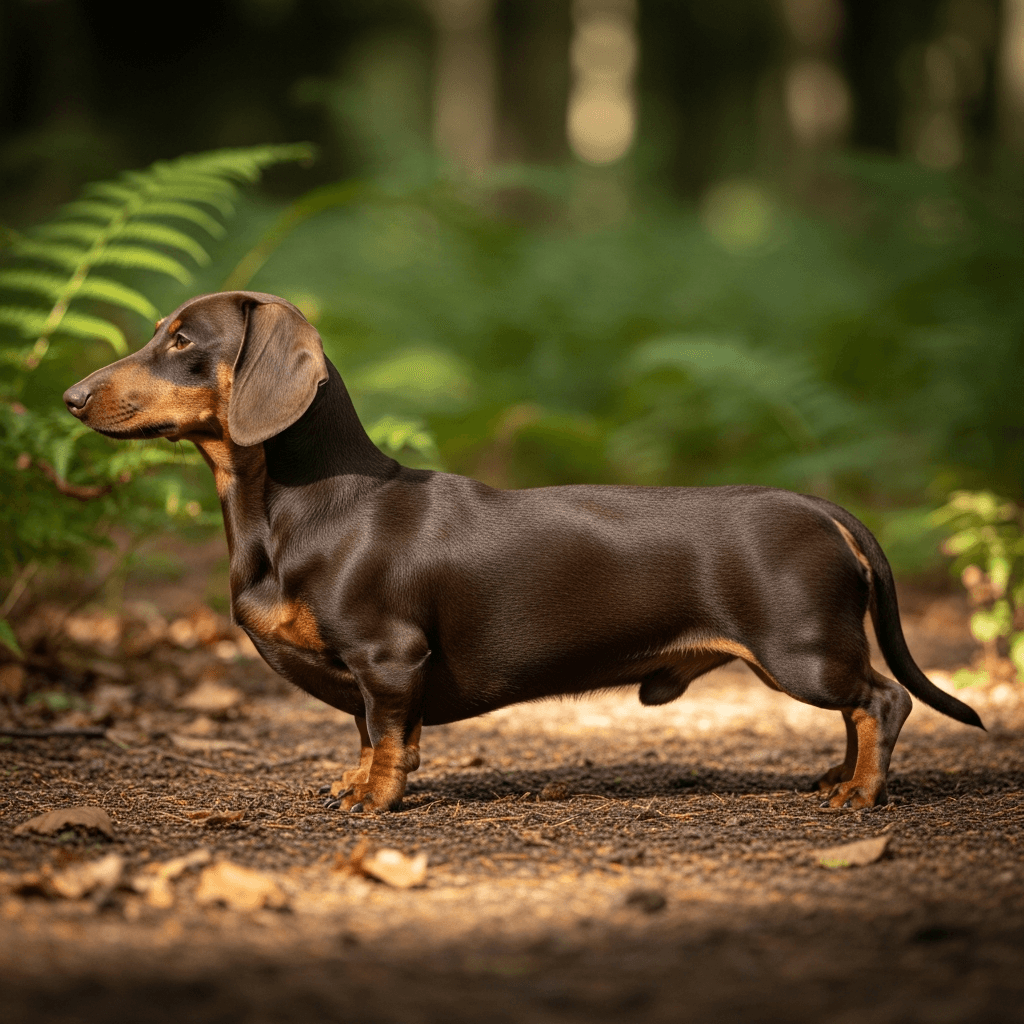
Short-haired rabbit dachshund
FCI Group
4• FCI 148D
Size
Small
Origin Country
DE
Height
12-15 cm
Weight
3.5-5 kg
Lifespan
12-16 years
Temperament
Overview
Rabbit Dachshund, also known as Miniature Dachshund, is the smallest variety of Dachshund, consistently captivating with its distinctive silhouette and extraordinary temperament. Bred in Germany as a specialized hunting dog, the rabbit Dachshund was an indispensable helper during hunts for small burrowing game – particularly rabbits, from which it derives its name, as well as foxes and badgers. Its elongated, muscular body and short, strong legs enable it to efficiently navigate narrow burrows and underground tunnels, demonstrating its excellent adaptation to demanding hunting conditions.
This smallest variety of Dachshund typically weighs between 3.5 to 5 kg, although the standard also allows for individuals up to 7 kg. Rabbit Dachshund is not only charming in appearance but also functional and versatile. Its dense, shiny coat, which smoothly adheres to the body, adds elegance even during the most active walks. This dog has a strong, determined character and is extremely devoted to its owner and family. Its balanced temperament combined with outstanding intelligence makes it a wonderful companion for aware owners, although its independent nature and hunting roots can sometimes pose challenges in the training process.
Despite its pronounced hunting instinct, rabbit Dachshund responds excellently to positive, motivational training methods based on rewards and praise. Playtime, scent training, and interactive educational toys stimulate its natural curiosity and desire to learn, significantly facilitating the education process. It is important to remember that the Dachshund needs a lot of attention, consistency, and love – its friendly, albeit sometimes stubborn character makes it best suited for families that understand the specifics of its breed. The curiosity about the world that accompanies this breed leads to many amusing and touching situations, bringing joy and charm to everyday life.
Dogs of this breed have a natural tendency to gain weight, so responsible management of their diet and ensuring regular, tailored physical activity is extremely important. Their grooming needs are minimal due to their short, self-cleaning coat, which requires only occasional brushing with a rubber glove or soft brush. This is an excellent choice for those who wish to have a dog with low hygiene requirements while also expecting a companion with a strong personality and extraordinary character. The rabbit Dachshund is a unique, spirited dog that undoubtedly gains recognition for its unique appearance, intelligence, and boundless loyalty.
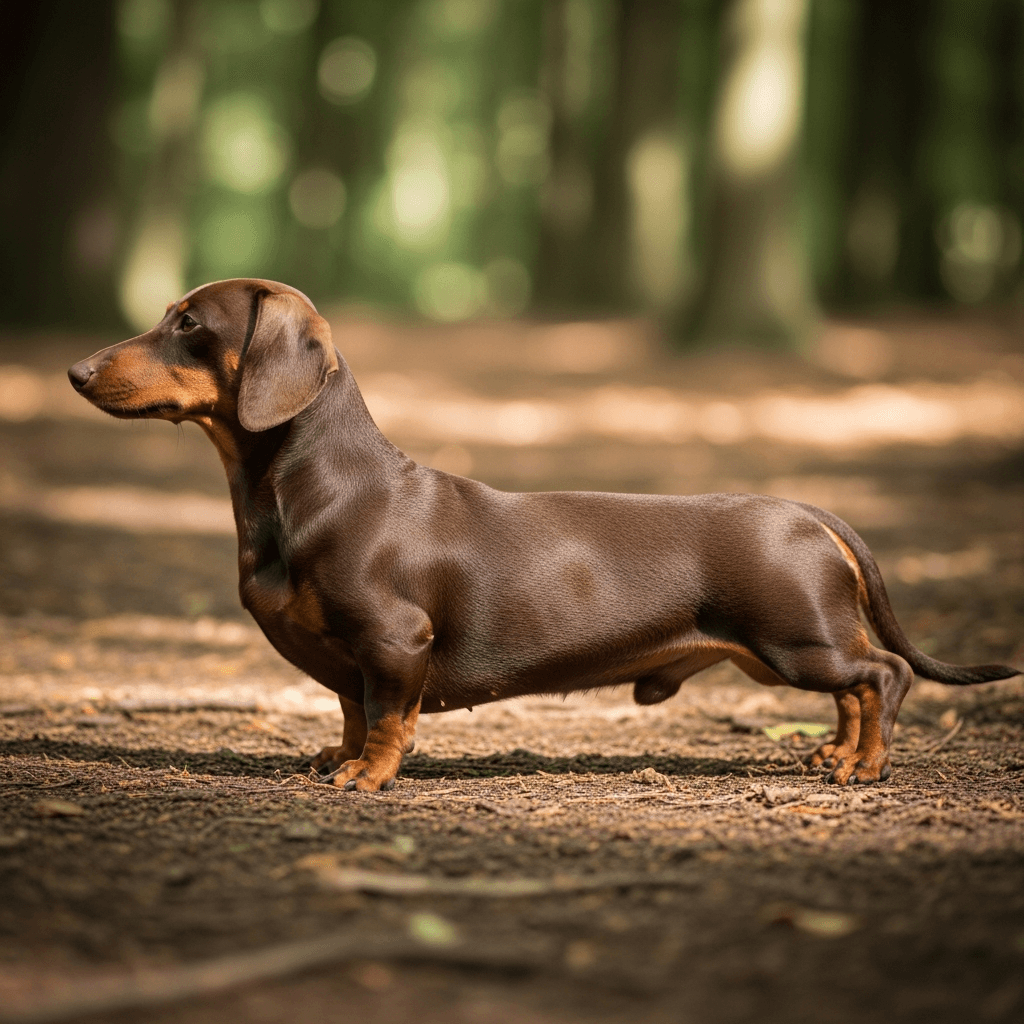
The short-haired rabbit dachshund is a dog with an extremely characteristic, elongated silhouette and proportionally short, muscular legs, giving it a unique, recognizable appearance. The chest circumference should be a maximum of 30 cm, which is the basic criterion for classification into the rabbit variety. The height at the withers usually ranges from 12 to 15 cm, and the weight oscillates between 3.5 to 5 kg, although the FCI standard also allows individuals up to 7 kg.
The body of the rabbit dachshund is compact, solidly built, and well-muscled, with a clearly defined, straight top line and a harmoniously sloping rear. The back is strong, the loins are short and muscular, and the chest is spacious, with well-arched ribs. The head is long, narrow, and noble, with a slightly rounded forehead and a distinctly, though not overly pronounced, stop. The eyes are medium-sized, almond-shaped, dark brown, with a keen, intelligent, yet friendly and lively expression. The ears are long, fleshy, rounded at the tips, set high, and perfectly adhering to the cheeks, which emphasizes the nobility of the head.
The coat of the short-haired dachshund is short, dense, shiny, and elastic, smoothly adhering to the body without an undercoat, which highlights its elegant, slender silhouette. The hair structure should be hard to the touch, which protects the dog while working in the field. The coloration of the rabbit dachshund can be diverse and includes solid colors (red in various shades, red, yellow), bicolor (deep black or brown with rust or yellow markings above the eyes, on the sides of the muzzle, lips, edges of the ears, front part of the chest, inner and back parts of the legs, paws, around the anus, and from there to the middle of the lower part of the tail), as well as brindled and marbled.
The tail is quite thin, of medium length, forming a harmonious extension of the back line, slightly drooping or carried in a gentle arc, but it should never be carried high or curled. The fore and hind limbs are short but strong, straight, and well-set, with clearly defined musculature that is essential for working in difficult terrain. The paws are round, compact, with thick pads and strong claws.
The rabbit dachshund, thanks to its unique and proportional appearance, consistently attracts attention and gains the affection of both hunting breed enthusiasts and all those who appreciate distinctive, expressive dogs.
The behavior of the rabbit-haired dachshund is one of its most valuable breed characteristics and attracts the attention of owners worldwide. By nature, it is a friendly, open, energetic, and confident dog, but at the same time, it exhibits a strong hunting temperament. Rabbit dachshunds are extremely sociable and love to be at the center of family life, engaging in all household activities. Their balanced character makes them excellent companions for children and, with proper socialization, they get along well with other pets.
Despite their hunting background and fearless nature, rabbit dachshunds are not aggressive towards people and rarely show fearfulness, although they can be alert and suspicious of strangers. Their curious, inquisitive nature leads to many funny and unexpected situations, and their unwavering desire to explore the world makes them very active and lively dogs. However, dachshunds can also be quite stubborn, independent, and self-reliant in decision-making, which directly stems from their hunting heritage and requires owners to have patience, consistency, and an understanding of the breed's specifics during training and upbringing processes.
They are also very intelligent, endowed with excellent memory and the ability to learn quickly, which makes them receptive to training, provided that only positive, motivational methods based on rewards and encouragement are used. It is crucial for their proper behavior and mental well-being to provide them with an appropriate, systematic amount of stimuli, both physical (walks, outdoor play) and mental (training, educational games, interactive toys). Regular, varied walks, diverse play, and frequent interactions with other dogs and people have an extremely positive impact on their mental health, emotional balance, and overall well-being.
Rabbit dachshunds may also be prone to alert barking, which is a natural element of their guarding and alarm instinct, so it is essential to teach them from a young age to recognize situations that require a response and appropriate, controlled behaviors in this regard. With their friendly, devoted temperament, fearless character, and boundless loyalty to the family, rabbit dachshunds become irreplaceable, personality-filled companions in every responsible home.
The short-haired rabbit dachshund, like all varieties of dachshunds and other dogs with elongated body structures, can be particularly susceptible to certain health issues, especially those related to the spine, joints, and musculoskeletal system. Their specific, characteristic anatomical structure with short limbs and proportionally long, elongated torso exposes them to an increased risk of intervertebral disc disease (IVDD), commonly referred to as discopathy, which can lead to severe pain, neurological problems, limb paralysis, and significant difficulties in movement.
To effectively minimize the risk of these conditions, it is extremely important to systematically manage their body weight, prevent overweight and obesity, avoid any excessive strain on the spine – for example, by preventing jumping from high surfaces (sofas, armchairs, stairs), going up and down stairs without supervision, and using special ramps or steps for dogs. Regular, systematic check-ups with a veterinarian are absolutely crucial for monitoring the health status of the dachshund and for early detection of potential health problems, which can significantly improve the prognosis in case of a diagnosis.
The most common conditions that rabbit dachshunds may be prone to include primarily obesity and overweight, which dramatically increase the risk of spinal problems, heart disease (especially valvular heart disease in older individuals), periodontal disease and dental problems (tartar, gingivitis), therefore it is absolutely essential to provide them with a balanced, calorie-controlled diet and regular, tailored physical activity. Rabbit dachshunds are also susceptible to skin allergies (allergic dermatitis, atopy), chronic ear infections (otitis externa and media), which requires regular, systematic cleaning and monitoring of their health, especially around their long, drooping ears that can promote moisture accumulation.
It is also worth particularly caring for their teeth, regularly brushing them with special dog toothpaste and brushes, and offering natural dental chews to effectively avoid periodontal and oral diseases, which can lead to much more serious systemic health problems, including heart, kidney, and liver diseases. Conscious health prevention, appropriate diet, controlled physical activity, and regular veterinary visits are the foundation for a long, healthy, and happy life for the rabbit dachshund.
The care of a short-haired rabbit dachshund is relatively simple, not very time-consuming, and does not require advanced skills or specialized equipment, which makes this breed very convenient for owners who value low hygiene requirements. Their short, smooth, and dense coat does not require regular professional grooming; however, it is definitely advisable to subject it to occasional weekly brushing using a soft rubber glove, a natural bristle brush, or a special massaging glove to effectively remove dead hair, dirt, and stimulate blood flow in the skin.
During the seasonal shedding period, which usually occurs twice a year (in spring and autumn), the intensity and frequency of brushing should be significantly increased to daily brushing to effectively minimize the amount of shedding fur in the home and prevent it from accumulating on furniture and carpets. Rabbit dachshunds are also prone to various skin problems, including allergic dermatitis, so it is extremely important to regularly and thoroughly check their skin for any concerning changes, rashes, redness, irritations, scabs, excessive itching, or hair loss.
Ear cleanliness and hygiene are equally important, as their characteristic long, drooping ears can promote the accumulation of dirt, moisture, wax, and the development of bacteria and fungi, which can lead to painful and recurring ear infections. Regular, systematic ear cleaning at least once a week using special veterinary ear cleaning products (liquids, wipes) available in pet stores and veterinary clinics will help effectively maintain them in excellent health and prevent serious infections.
In addition to the above, it is extremely important to check the condition of their nails daily or at least several times a week and, if necessary, regularly and carefully trim them using special guillotine or scissor-type clippers for small breed dogs to effectively avoid excessive overgrowth, which can cause noticeable discomfort, pain, changes in gait, and orthopedic problems while walking and running. It is also essential to systematically care for the overall hygiene of the rabbit dachshund by regularly bathing it with gentle shampoos designed for dogs with sensitive skin, but no more often than every 6-8 weeks or when there is a real need (visible dirt, unpleasant odor), to avoid exposing its delicate skin to excessive drying, irritation, and loss of the natural lipid protective layer.
Dachshunds, also known as rabbit dachshunds, are dogs that absolutely require regular, systematic, and appropriately tailored physical activity to their anatomical structure in order to effectively maintain optimal condition, healthy body weight, and mental and physical health. Although their relatively small size and compact build may give a misleading impression that they are dogs with low exercise needs, their strong hunting instinct, high energy levels, and naturally active, curious nature require daily, varied walks, outdoor play, and mental stimulation.
Ideally, rabbit dachshunds should receive at least 30 to 60 minutes of physical activity each day, which can be effectively achieved through two or three moderately long, calm walks, playing fetch in open spaces, hiking in the woods, running on a leash, or controlled play with other dogs in parks or dog runs. It is extremely important to give them enough time and opportunities during walks to freely explore their surroundings, intensely sniff, track, and follow scent trails, which provides them with a highly stimulating, natural, and satisfying activity that satisfies their hunting instincts.
Rabbit dachshunds are also excellent, enthusiastic companions for various physical games, such as fetching balls, frisbees, or toys, and searching for hidden treats (nose work), which allows them to fully utilize their natural hunting instinct, sense of smell, and intelligence. However, it is imperative to remember and adhere to the rule of never overexerting them with overly intense, strenuous training, long runs on hard surfaces, or high jumps, as such activities can lead to serious injuries to the spine, joints, muscles, and long-term orthopedic issues.
It is absolutely crucial to consistently avoid jumping from high places (sofas, armchairs, beds, stairs, walls), running up and down stairs without control, and excessive standing on their hind legs, which can be particularly dangerous for their uniquely built, injury-prone spine and can lead to disc disease. Regular, thoughtfully planned physical exercises not only effectively help maintain their condition and healthy weight but also have an extremely positive impact on their overall mental well-being, emotional balance, life satisfaction, and significantly reduce the risk of behavioral problems related to boredom, frustration, and pent-up energy, such as excessive barking, destruction of objects, or compulsive behaviors.
Training and raising a short-haired rabbit dachshund can be both a satisfying challenge and a great pleasure for a conscious, patient owner who understands the specifics of this breed. Their undeniable intelligence, outstanding memory, and natural willingness to cooperate make them capable of quickly and effectively learning new commands, tricks, and rules of coexistence. However, their deeply rooted independent character, strong personality, and hunting heritage can lead to stubbornness, selective obedience, and resistance during training, which is why it is absolutely crucial to consistently apply only positive, motivational training methods based on rewards, encouragement, and reinforcements.
Patience, consistency, gentleness, and a full understanding of breed specifics are absolutely essential to achieve the desired, lasting educational effects and to build a deep bond based on mutual trust and respect. Rabbit dachshunds respond excellently and enthusiastically to food rewards, such as high-value training treats (dried meat, liver, cheese), verbal praise expressed with enthusiasm, petting, and favorite toys, which should form the foundation of every training and educational session. It is absolutely advisable to start systematic training with basic, essential obedience commands, such as Sit, Lie down, Stay, Come, Leave it, and then gradually move on to more advanced, complex skills and tricks.
Joint, regular obedience training not only effectively strengthens the emotional bond between the dog and the owner but also provides the extremely important mental stimulation for this intelligent breed, which is as crucial as physical activity for their overall mental well-being. Regular, consistent behavioral exercises and intensive, early socialization with various friendly dogs, people of different age groups, children, and different environments are also absolutely key to their proper mental and emotional development, building self-confidence, and preventing anxiety and aggression problems.
Rabbit dachshunds are enjoying growing popularity in various canine sports disciplines, such as agility (obstacle courses adapted for small breeds), obedience, rally obedience, nose work (scent work, tracking), and dog dancing, which allows them to fully and creatively utilize their natural energy, intelligence, agility, and cooperation with humans. It is absolutely crucial and necessary to never use physical punishment, shouting, violence, or aversive methods, which can lead to deep fear, trauma, loss of trust, defensive aggression, or complete withdrawal, and instead consistently focus on positive reinforcements, patience, empathy, and building a relationship based on mutual respect and trust.
The diet of a short-haired rabbit dachshund should be carefully balanced, well thought out, and closely tailored to their individual age, current body weight, level of daily physical activity, and any special health needs. Owners should consciously choose high-quality, complete commercial foods (dry kibble or wet canned foods) or, after consulting with a veterinary nutritionist, prepare balanced homemade diets that contain appropriate, optimally balanced amounts of high-quality animal protein, healthy fats, complex carbohydrates, dietary fiber, and essential vitamins and minerals.
Typically, rabbit dachshunds require a diet primarily based on high-quality meat, as they are carnivorous dogs with clear protein needs. It is particularly advisable to choose foods containing at least 25-30% protein from identifiable animal sources (poultry, beef, lamb, fish), 12-18% fat, and a moderate carbohydrate content. It is extremely important to consciously avoid foods containing excessive amounts of cheap grain fillers (wheat, corn, soy), artificial colors, preservatives, and sweeteners that can lead to food allergies, obesity, digestive issues, and other metabolic disorders.
Due to their clear, genetically predisposed tendency towards overweight and obesity, which dramatically increases the risk of serious spinal and joint problems, it is extremely important and absolutely crucial to systematically and precisely control daily food portions according to the recommendations of the manufacturer or veterinary nutritionist and consistently avoid giving excessive amounts of treats, table scraps, and unhealthy snacks. Regular meals, preferably divided into two or three smaller portions daily (morning, noon, evening), help effectively maintain a healthy, optimal body weight and stabilize energy levels and metabolism.
It is also imperative to ensure a constant, unlimited supply of fresh, clean drinking water, which should be available throughout the day and regularly changed. It is worth seriously considering responsible supplementation of the diet with active ingredients that support joint, cartilage, and spinal health, such as glucosamine, chondroitin, MSM, omega-3 fatty acids (salmon oil, flaxseed oil), and collagen, which is particularly important for this breed due to their genetic predispositions to orthopedic problems with the spine and disc disease. In case of any doubts, questions, or concerns regarding optimal diet, weight control, or supplementation, it is always strongly advisable to consult a qualified veterinary nutritionist who can professionally help tailor the best individual nutrition plan for the rabbit dachshund.
Characteristic Traits
Pros
- Friendly and loyal to family
- Low grooming requirements
- Intelligent and quick to learn
- Excellent for apartment living
- Brave and alert guardian
- Long lifespan and good genetics.
Cons
- Tendency to overweight and obesity
- Susceptibility to spine diseases
- Stubborn and independent character
- Requires consistent training
- May bark excessively
- Strong hunting instinct.
Behavioral Ratings
Breed History
The short-haired rabbit dachshund is a specialized hunting dog with an incredibly rich, centuries-old history, whose roots reach deep into European medieval times. Its direct ancestors, historically known by the German names Dackel or Teckel, have been intensively used by hunters for demanding hunts on small and medium-sized burrowing game, particularly rabbits (hence the name rabbit variety), foxes, badgers, as well as ferrets and raccoons. Their unique, highly specialized anatomical structure with characteristic short, muscular limbs and proportionally long, flexible torso allowed for extremely efficient movement in narrow, tight burrows, underground corridors, and tunnels, where other, larger hunting dogs could not physically penetrate.
The dachshund breed was systematically developed, standardized, and refined in Germany, where dachshunds quickly and permanently became exceptionally popular, valued, and respected among professional hunters, foresters, and the aristocracy. In the 19th century, during a period of intense development of cynology and breed breeding, the first official, organized breed clubs dedicated to the professional breeding, selection, and promotion of dachshunds were established, including the prestigious Deutsche Teckelklub (German Dachshund Club), officially founded in 1888, which still actively sets breed standards and coordinates breeding activities.
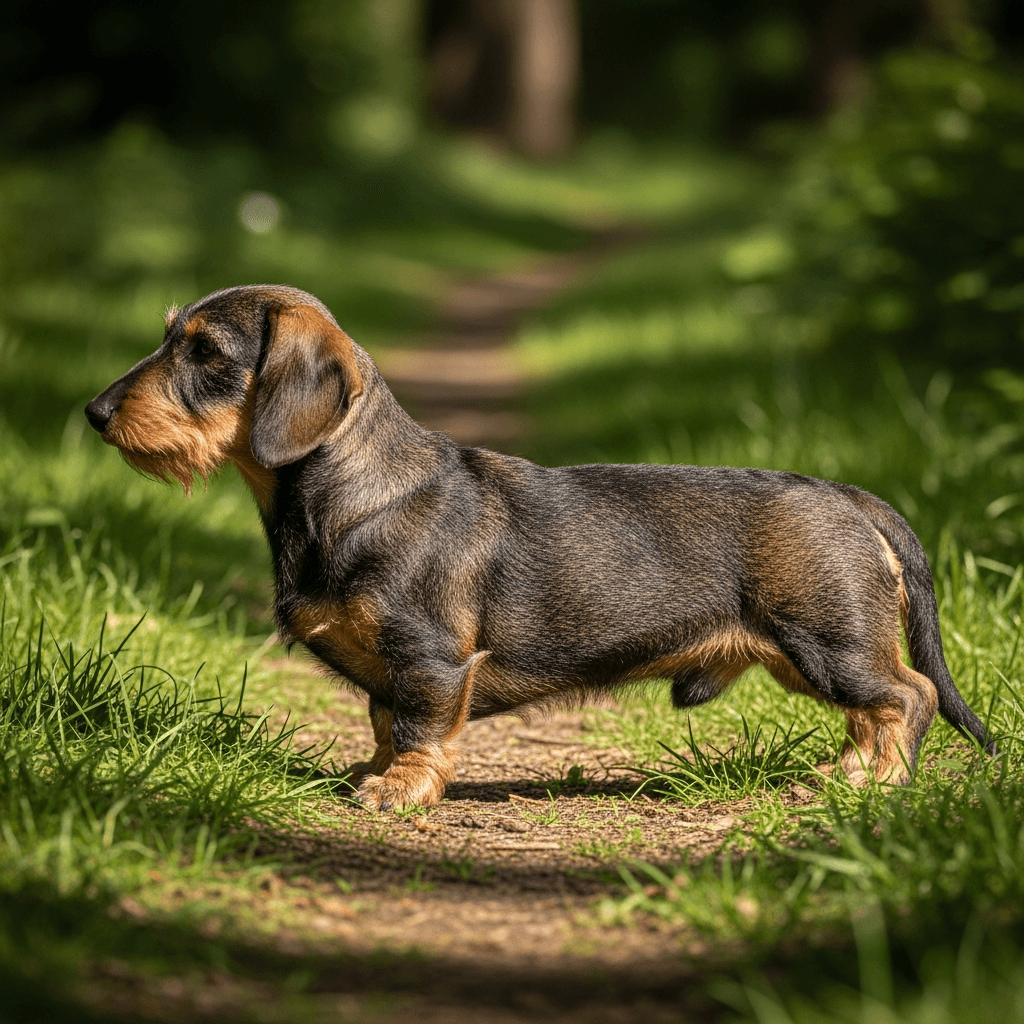
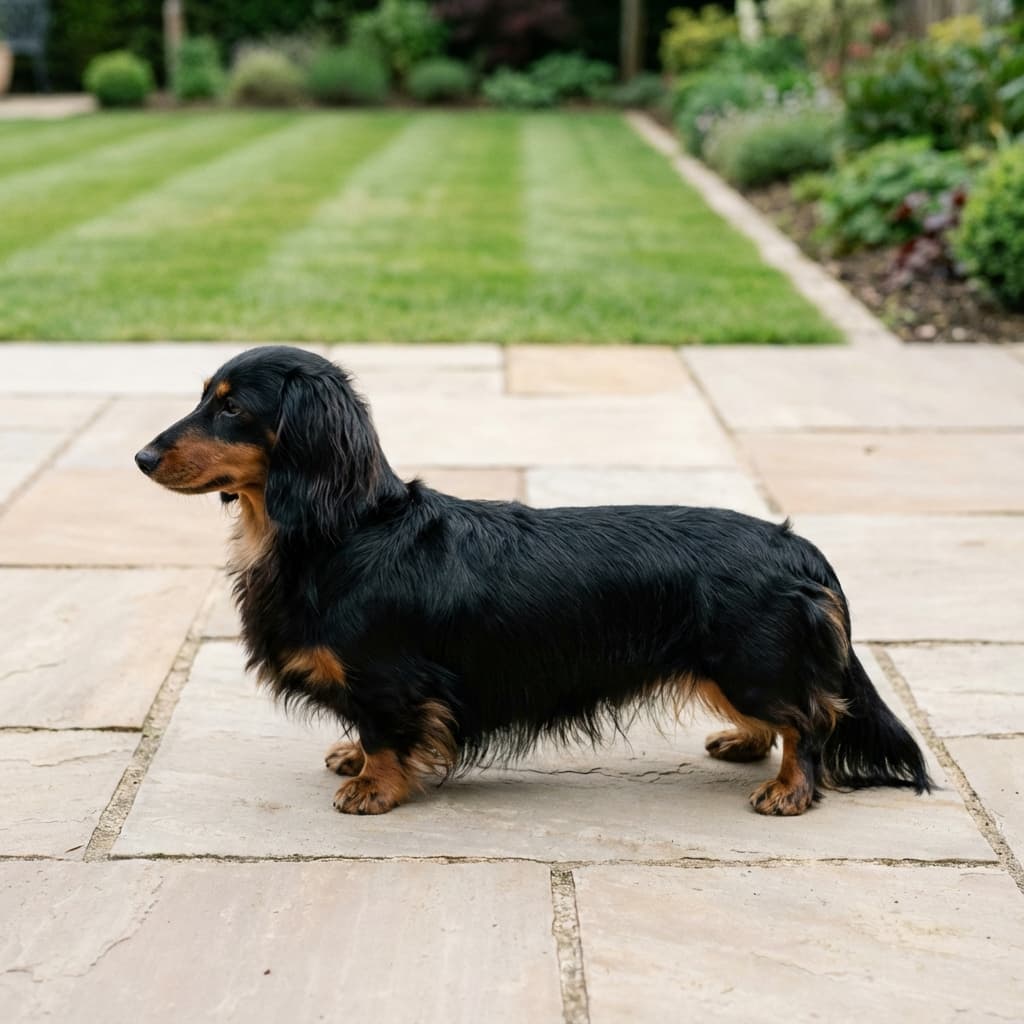
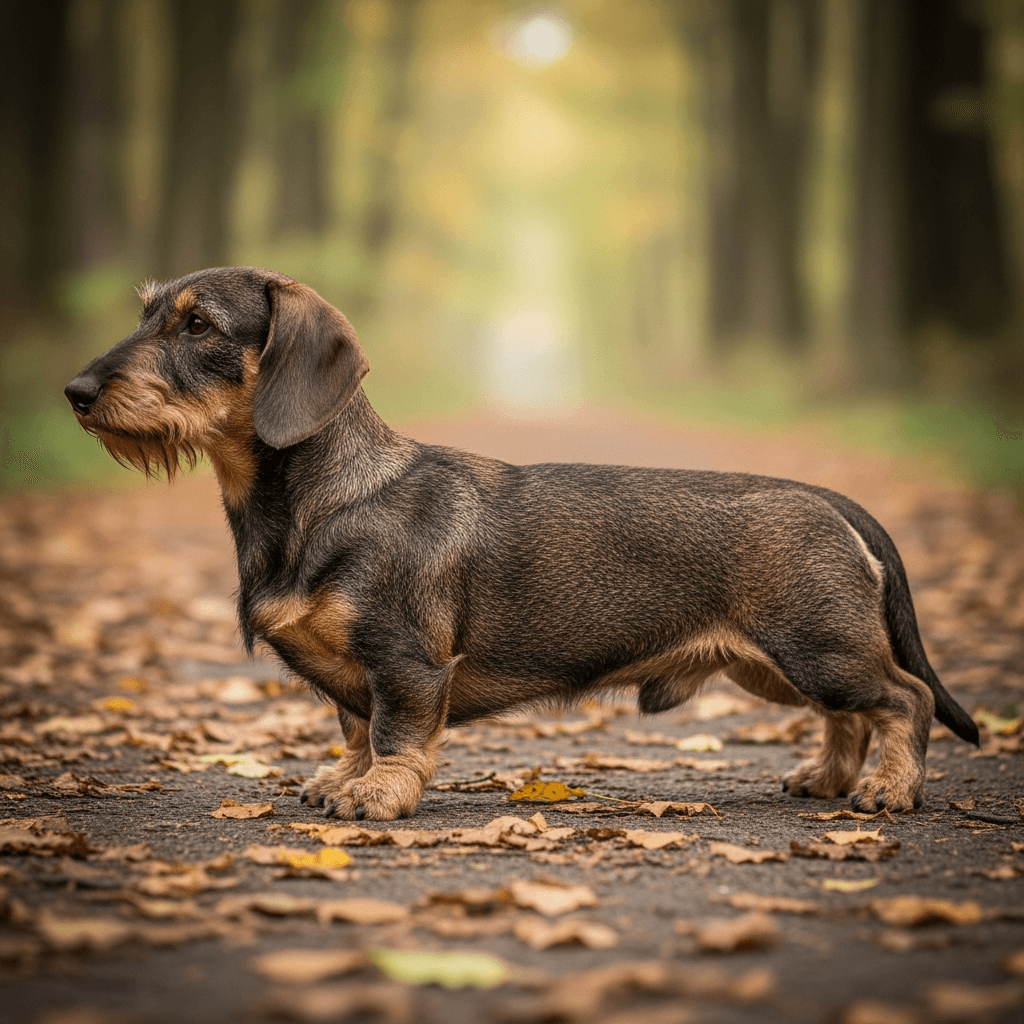
Over the following decades of intensive, selective breeding, dachshunds systematically gained increasing popularity not only as highly specialized, professional hunting dogs with unmatched working abilities but also as devoted, loyal family companions and show dogs of unparalleled charm. Today, the dachshund breed is officially available in three distinctly defined size varieties: standard (chest circumference over 35 cm), miniature (circumference 30-35 cm), and rabbit (maximum circumference 30 cm), as well as in three different coat types: short-haired (smooth, shiny), long-haired (soft, wavy), and wire-haired (hard, with an undercoat), resulting in a total of nine officially recognized breed combinations.
Modern rabbit dachshunds are particularly highly valued, sought after, and respected for their exceptionally friendly, balanced temperament, boundless loyalty, and unwavering devotion to their owners and family. Their versatility, adaptability, and universality make them an ideal choice and excellent companions for both active, sporty families with children and older, solitary individuals seeking a faithful, sociable, yet independent and low-maintenance dog with a strong personality. Despite their deeply rooted hunting heritage and pronounced hunting instincts, rabbit dachshunds harmoniously find their place as household dogs, family companions, and show dogs, making them extremely popular, recognizable, and beloved worldwide in over 80 countries across all continents.