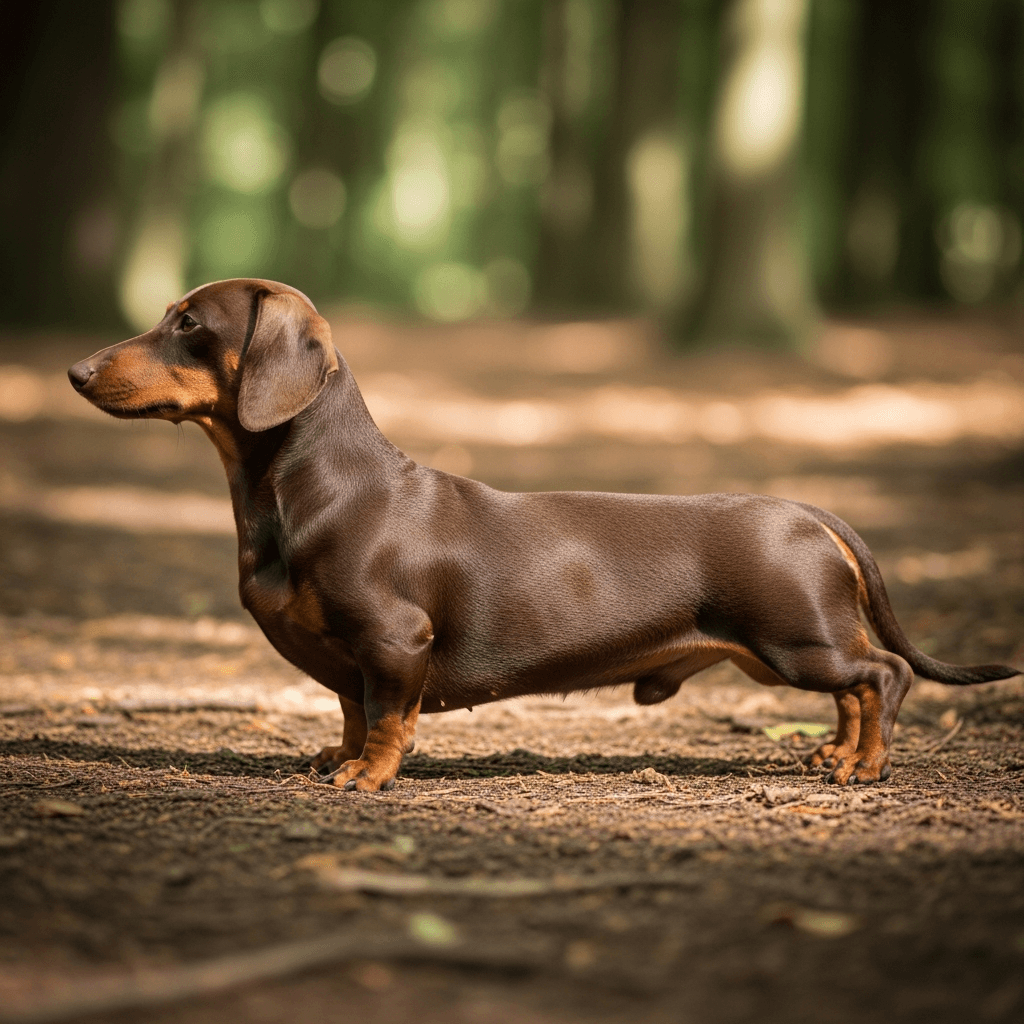
Miniature smooth-haired dachshund
FCI Group
4• FCI 148E
Size
Small
Origin Country
DE
Height
13-18 cm
Weight
4-5 kg
Lifespan
12-16 years
Temperament
Overview
Miniature Smooth Dachshund is a fascinating breed that invariably attracts attention with its distinctive silhouette and extraordinary character. Its elongated body set on short, muscular legs makes it an incredibly agile and nimble dog, perfectly adapted for work in difficult terrain. Miniature dachshunds are ideal companions for both hunting enthusiasts and those looking for an active, energetic dog for outdoor adventures.
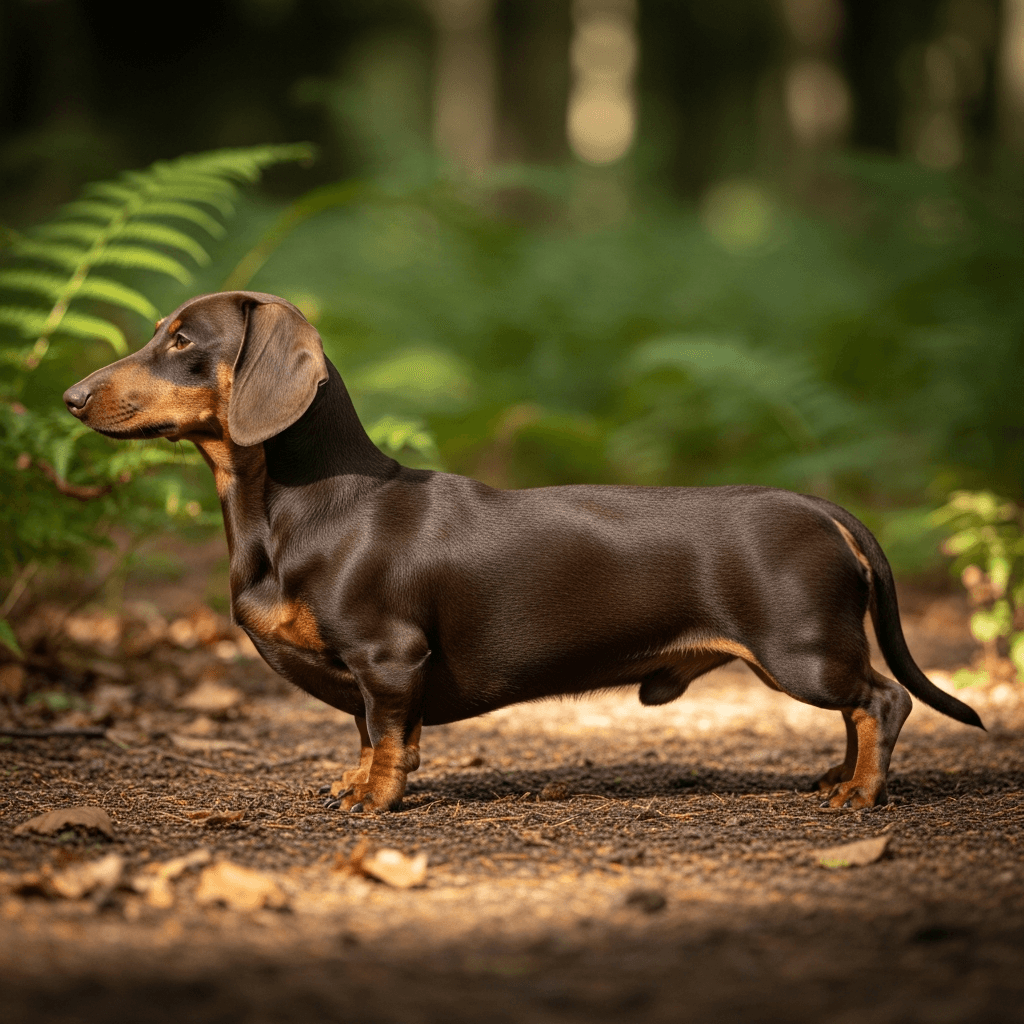
The appearance of the dachshund is as charming as its personality. Deep-set, almond-shaped eyes give it a friendly yet alert expression, indicating its intelligence and perceptiveness. Long, rounded ears add extra charm and expression. The short, dense, and shiny coat ensures that the miniature smooth dachshund always looks well-groomed and elegant. The coat colors of this breed are incredibly diverse – ranging from solid shades of red, through two-tone with characteristic tan markings, to striking marbled and brindle patterns.
It is worth emphasizing that the miniature smooth dachshund is not only a wonderful family companion but primarily a hunting dog with exceptional abilities. Its excellent sense of smell and remarkable endurance make it an indispensable assistant during hunts. The history of the dachshund dates back to the Middle Ages when dogs of this breed were used for hunting rodents and larger animals such as foxes and wild boars. Over the centuries, the dachshund has transformed from a pure hunting breed into a versatile family companion, while still retaining all its original hunting instincts.
The temperament of the dachshund is characterized by balance and a harmonious blend of friendliness and alertness. Dachshunds are extremely loyal to their owners and can form strong emotional bonds with family members. At the same time, they can be wary and cautious around strangers, making them excellent guard dogs despite their small size. Thanks to their intelligence and eagerness to learn, dachshunds respond well to training, although their natural stubbornness and independence require consistency, patience, and experience from their owners.
Miniature dachshunds attract not only with their unique appearance but primarily with their fascinating personality, which combines courage, intelligence, and loyalty. They are excellent companions in everyday life, perfectly suited for both apartments and homes with gardens. They enjoy immense love and recognition worldwide. Although owning a dachshund comes with certain challenges, their countless advantages definitely outweigh any difficulties. We encourage you to explore the following sections to learn more about health, grooming, physical activity requirements, training, nutrition, the fascinating history, detailed appearance description, and behavior of these extraordinary dogs.
The miniature short-haired dachshund is characterized by its unique and distinctive body structure, which sets it apart from all other dog breeds. It has a characteristic elongated, compact silhouette with short, muscular legs, giving it a unique and easily recognizable appearance.
Body proportions: The height at the withers ranges from 30 to 35 cm, while the body length is significantly greater than the height – the length-to-height ratio is about 1.7-1.8:1, which provides a harmonious proportion characteristic of this breed. The chest circumference of miniature dachshunds measured at 15 months should be between 30 and 35 cm.
Head structure: The head of the dachshund is elongated and elegant, with well-defined brow arches and a long, narrow nose. The skull is slightly convex, and the stop (the transition from forehead to nose) is subtly marked. The nose is always black or brown, depending on the coat color. The lips are well-fitting, and the jaws are strong with a correct scissor bite.
Eyes and ears: The eyes are medium-sized, almond-shaped, with a keen and friendly yet alert expression. They can be dark brown or lighter in the case of dogs with light coats. The ears are long, wide at the base, rounded at the tips, and carried close to the head. When the dog is alert, the ears lift slightly but do not stick out to the sides.
Coat and coloration: The coat of the short-haired dachshund is dense, short, shiny, and well-adhering to the body, giving it a healthy and well-groomed appearance. The coloration can be extremely diverse:
- Solid: red in various shades (from light to dark brown)
- Two-colored: black, brown, or gray with tan markings in characteristic places
- Marbled (merle): dark base with lighter spots
- Brindle: with dark stripes on a red or yellow background
Body structure: The dachshund has a strong, well-muscled body structure that makes it agile and nimble despite its unusual proportions. The chest is deep and oval, providing adequate space for the lungs and heart. The back line is straight or slightly sloping towards the rear. The limbs are short but very strong and muscular, well-placed under the body.
Tail: The tail of the dachshund is strong at the base, gradually tapering towards the end. It is carried at the height of the back line or slightly above, never too high or curled over the back. It serves as a natural extension of the spine, emphasizing the elegant appearance of the dog.
The miniature dachshund is a dog that certainly attracts attention with its unique, distinctive silhouette, elegance, and extraordinary beauty. Its body proportions, although unusual, are perfectly harmonious and functional, allowing it to move efficiently even in difficult terrain.
The miniature smooth-haired dachshund is a dog with an exceptionally balanced and harmonious temperament, which is friendly, loyal, and extremely active. By nature, it is a sociable dog that loves spending time with family and joyfully participates in shared activities. Dachshunds thrive in the company of other dogs, especially representatives of their own breed, with whom they happily play and form friendships.
Guarding instincts: Dachshunds are known for being very alert and having a well-developed guarding instinct, which makes them excellent alarm dogs. Despite their small size, a dachshund will not hesitate to warn its owner with loud barking about approaching strangers or unusual sounds in the environment. Their vigilance and perceptiveness make them reliable guardians of the home.
Family relationships: The friendly and gentle nature of the dachshund makes it an excellent fit for families with children. They are patient and tolerant dogs that can form a deep bond with the youngest family members. However, due to their small size and specific spinal structure, playtime with little ones should always be supervised to avoid accidental injury to the dog's back during overly vigorous play or improper lifting.
Character and temperament: Dachshunds can be stubborn and independent, which can pose a challenge during training. This trait stems from their hunting past – these dogs had to make independent decisions while hunting in burrows, where they could not rely on their owner's commands. However, with consistency, patience, and positive reinforcement methods, a dachshund can learn many commands and tricks. Early socialization and training are crucial for shaping a well-mannered dog.
Hunting instinct: Dachshunds have a strong hunting and tracking instinct, which often leads them to show intense interest in small animals such as squirrels, rabbits, or rodents. This can lead to undesirable situations during walks when the dog decides to follow an interesting scent. Owners should be aware of this behavior and properly secure their garden, as well as use a leash during walks in areas where small animals may be present.
Activity needs: Owners should be aware that dachshunds require regular physical activity and mental stimulation to avoid behavioral problems such as excessive barking, destructiveness, or depression. Their natural curiosity, energy, and intelligence make them lively dogs that will undoubtedly be wonderful companions for active owners willing to dedicate the appropriate amount of time and attention to them.
Adaptability: Miniature dachshunds adapt well to living in both apartments and houses with gardens. They are relatively quiet at home, although they may bark at outside noises. They prefer a warm place to sleep, often burrowing into blankets or pillows. They do not tolerate being left alone for long periods and may develop separation anxiety if not properly accustomed to short absences from their owner.
The miniature smooth-haired dachshund, like any dog breed, may be prone to certain specific health problems. Knowing these conditions and being aware of the symptoms allows for early detection and effective veterinary intervention.
Spinal problems: Due to their characteristic long body and short legs, dachshunds are particularly susceptible to spinal issues, including intervertebral disc disease (IVDD). This is the most serious health problem affecting this breed. Disc herniations can lead to pain, paralysis, and in extreme cases, permanent spinal cord damage. Owners should be vigilant for symptoms such as:
- Difficulty getting up or walking
- Stiffness of movement, especially after resting
- Reluctance to jump or climb stairs
- Unusual body posture (arched back)
- Whining when the back is touched
- Weakness or paralysis of the hind limbs
Prevention of spinal problems: To minimize the risk of spinal injuries, it is essential to avoid situations that strain the dog's back, such as jumping off furniture, walking on steep stairs, or standing on hind legs. Maintaining a proper weight is crucial – being overweight significantly increases the load on the spine.
Hip dysplasia: Although less common than in larger breeds, dachshunds can also suffer from hip dysplasia. This genetic condition leads to improper development of the hip joint, resulting in pain, stiffness, and difficulty moving. Responsible breeders conduct hip joint examinations on breeding dogs.
Obesity: Another significant health issue is obesity, which can lead to many other conditions, including heart disease, diabetes, and a substantial increase in the risk of spinal problems. Therefore, it is extremely important for dachshunds to be regularly weighed and maintained in proper condition through a suitable diet and regular physical activity tailored to their abilities.
Eye problems: Dachshunds may also suffer from various eye issues, such as progressive retinal atrophy (PRA), cataracts, or dry eye syndrome. Regular eye examinations allow for early detection of these conditions. Symptoms of eye problems include excessive tearing, redness, cloudiness of the cornea, or difficulty seeing in low light.
Epilepsy: Dachshunds may be prone to idiopathic epilepsy, a neurological condition that causes recurrent seizures. The first symptoms usually appear between 6 months and 3 years of age. Epilepsy requires long-term pharmacological treatment.
Skin problems: Some dachshunds may suffer from food or environmental allergies, leading to skin itching, rashes, or hair loss. Dermatological issues require identification of the allergen and appropriate treatment.
Veterinary care: Regular visits to the veterinarian are crucial for monitoring the dog's health and detecting potential problems at an early stage. Annual check-ups, vaccinations, and blood tests for older dogs are recommended. The average lifespan of a miniature smooth-haired dachshund is 12-16 years, and with proper care, they can live up to 18 years.
The care of a miniature short-haired dachshund is relatively simple and low-maintenance, thanks to its short, smooth coat. It does not require specialized treatments or visits to a grooming salon, making this breed ideal for those looking for an easy-to-maintain dog.
Brushing the coat: Owners should regularly brush their dog to remove dead hair, stimulate the production of natural skin oils, and minimize shedding. Usually, gentle brushing once or twice a week with a soft brush or rubber glove is sufficient. During periods of heavy shedding, which occur in spring and autumn, daily brushing may be necessary to effectively remove loose hair.
Bathing: Short-haired dachshunds do not require frequent baths. It is enough to bathe the dog once every 2-3 months or as needed when it is dirty or has an unpleasant odor. Too frequent bathing can lead to dry skin and loss of natural protective oils. It is advisable to use gentle shampoos specifically designed for dogs with sensitive skin to avoid irritating their epidermis. After bathing, the dog should be thoroughly dried, especially on cooler days.
Ear cleaning: Regular cleaning of the dachshund's ears is important, as their structure (long, drooping) can make them prone to infections. Ears should be checked at least once a week for dirt, excessive wax buildup, unpleasant odors, or signs of infection (redness, discharge). A special ear cleaning solution for dogs and cotton balls or gauze should be used for cleaning. Never use cotton swabs, as they can damage the ear canal.
Nail care: The dachshund's nails should be regularly checked and trimmed when they are too long. Overly long nails can affect the dog's proper gait, cause discomfort, and lead to joint problems. Most dachshunds require nail trimming every 2-4 weeks. If the nails make a clicking sound on the floor when walking, it means they are too long. This can be done at home using special nail clippers or by asking for help from a veterinarian or groomer.
Oral hygiene: Owners should regularly care for their dog's oral hygiene to prevent gum disease, tartar buildup, and tooth decay. Ideally, daily tooth brushing with dog toothpaste (never human toothpaste, which is toxic to dogs) is recommended. Additional oral hygiene aids such as dental chews, toys, or water additives can also be used. Regular dental check-ups with a veterinarian are also advisable.
Eye cleaning: The area around the eyes should be gently wiped with a damp gauze regularly to remove discharge and dirt. If you notice excessive tearing, redness, or discharge, consult a veterinarian.
Skin inspection: While brushing, it is also worth checking the dog's skin for any changes, such as lumps, pigmentation changes, rashes, or parasites (ticks, fleas). Early detection of skin problems allows for quick intervention.
The miniature short-haired dachshund is an active and energetic dog that requires regular physical activity and mental stimulation to maintain health, good physical condition, and mental well-being. Despite its small size and short legs, dachshunds are surprisingly resilient and enjoy long walks and various forms of activity.
Minimum activity requirements: Owners should provide their miniature dachshund with at least 30-60 minutes of physical activity daily, divided into 2-3 shorter sessions. Ideally, two walks a day lasting 20-30 minutes each, supplemented with playtime at home or in the garden, would be best.
Forms of activity: Good forms of activity for dachshunds include:
- Walks: Regular walks at a moderate pace, preferably on different surfaces and varied terrain
- Fetching: Dachshunds love to fetch balls, toys, or frisbees (but thrown low to the ground)
- Scent games: As hunting dogs, dachshunds enjoy games involving searching for hidden treats, tracking, and following scents
- Play with other dogs: Socialization and play with other friendly dogs, preferably of similar size
- Obedience training: Short training sessions that stimulate the dog's mind
- Play with interactive toys: Treat balls, scent mats, dog puzzles
Important restrictions: It is essential to avoid intense exercises and activities that excessively strain the dachshund's spine, particularly:
- Jumping from high surfaces (sofas, beds, furniture)
- Walking or running up and down stairs (especially steep ones)
- Standing on hind legs and begging
- Jumping over high obstacles during agility
- Intensive running on hard surfaces
Spine protection: This is especially important for puppies and young dogs (under 12 months), as their spine is still developing and particularly susceptible to injury. It is recommended to use steps or a ramp so the dog can safely get onto furniture without jumping. When carrying a dachshund, always support both the front and back of the body to prevent excessive strain on the back.
Adaptation to conditions: Dachshunds do not tolerate extreme temperatures well. In winter, it is advisable to equip the dog with protective clothing during walks, as their short coat and proximity of the belly to the ground make them cold quickly. On hot days, avoid walks during the hottest hours and ensure the dog has access to shade and water.
Benefits of regular activity: Regular physical activity tailored to the dachshund's capabilities will help:
- Prevent obesity, which is extremely dangerous for the spine
- Maintain proper muscle mass supporting the back
- Provide mental stimulation and prevent boredom
- Reduce behavioral problems (excessive barking, destructiveness)
- Strengthen the bond between the dog and the owner
Swimming: One of the best forms of activity for dachshunds is swimming, which provides excellent full-body exercise without straining the spine and joints. If the dog enjoys water, regular swimming (in supervised conditions) can be an excellent addition to the exercise program.
The training of a miniature smooth-haired dachshund should be conducted with consistency, patience, and using methods based on positive reinforcement. Dachshunds are intelligent and capable of learning, but they can also be stubborn and independent, which requires the owner to have the right approach and perseverance.
Early training: Owners should start training as early as possible, ideally from the 8-10 week mark of the puppy's life. Early training and socialization are crucial for shaping a well-behaved, balanced dog. Young puppies are more flexible and more willing to adopt new behaviors than adult dogs with established habits.
Basic commands: Training should include teaching the dog basic obedience commands, such as:
- Sit – a basic command for controlling the dog
- Lie down – useful during veterinary visits
- Stay – teaches the dog patience and self-control
- Come – a key safety command during walks
- No – a command prohibiting unwanted behavior
- Go to your place – sends the dog to its bed
Positive reinforcement methods: The most effective methods for working with dachshunds are those based on positive reinforcement, which reward desired behaviors rather than punishing unwanted ones. Rewards can include:
- Treats (small, low-calorie snacks)
- Verbal praise (in an enthusiastic, cheerful tone)
- Play with a favorite toy
- Petting and affection
Sensitivity to tone of voice: Dachshunds are extremely sensitive to their owner's tone of voice. A gentle, encouraging, and cheerful tone should be used when praising good behavior, while a firm but not aggressive tone should be used when correcting unwanted behaviors. Yelling or harsh punishments can lead to fear, anxiety, and a deterioration of the relationship with the dog.
Short and regular sessions: Training should be regular but not too long, so the dog does not lose interest and focus. Ideal training sessions are short, lasting 5-10 minutes, repeated 2-3 times a day. Dachshunds have a relatively short attention span and can quickly become bored with monotonous exercises.
Fun and engagement: It is worth ensuring that training is fun, varied, and engaging, which will help maintain the dog's motivation. Elements of play can be introduced, new exercises can be added, and training can be conducted in different locations to reinforce behaviors in various contexts.
Dealing with stubbornness: The stubbornness of a dachshund stems from its hunting history – these dogs had to make independent decisions while working in burrows. To overcome stubbornness, one should:
- Be consistent in demands and not give in
- Make cooperation rewarding for the dog
- Avoid repeating commands – wait for a response
- End training on a positive note
Socialization: Just as important as obedience training is the socialization of the puppy. Dachshunds should be exposed to various people, dogs, environments, sounds, and situations from a young age. Proper socialization prevents the development of fears, aggression, and behavioral problems in adult life.
House training: Miniature dachshunds can be a bit more challenging to house train than larger breeds. This requires patience, consistency, and regular outings (every 2-3 hours for puppies). The dog should be rewarded for going to the bathroom in the right place and never punished for accidents.
Advanced training: As progress is made in basic obedience, more advanced commands and exercises can be introduced that will stimulate both the dog's mind and body:
- Tricks (shake paw, spin, play dead)
- Scent training and tracking
- Rally obedience
- Training for earthdog trials (tests in artificial burrows)
Behavioral problems: If a dachshund develops behavioral problems such as excessive barking, separation anxiety, aggression, or destructiveness, it is advisable to consult a dog behaviorist or trainer who specializes in positive training methods. Early intervention is key to resolving issues.
The diet of a miniature smooth-haired dachshund should be carefully balanced and tailored to its age, weight, level of physical activity, health status, and individual needs. Proper nutrition is crucial not only for maintaining health but also for preventing obesity, which poses a serious threat to the dachshund's spine.
Choosing food: Owners should select high-quality dog foods that are specifically designed for small breeds. Small breed foods have smaller kibble sizes suited for their small mouths and appropriately modified caloric values. Options include:
- Dry food – economical, helps mechanically clean teeth
- Wet food – more aromatic and tasty, better for dogs with dental issues
- Mixed diet – a combination of dry and wet food
- Homemade diet – prepared under the supervision of a veterinary nutritionist
Feeding frequency: Feeding a miniature dachshund should occur at regular intervals:
- Puppies (2-6 months): 3-4 meals per day
- Young dogs (6-12 months): 2-3 meals per day
- Adult dogs (over 12 months): 2 meals per day
- Senior dogs (over 8 years): 2 meals per day, possibly senior food
Portion and weight control: Overfeeding must be strictly avoided, as dachshunds are very prone to obesity, which can lead to catastrophic consequences for their spine and cause numerous health issues such as diabetes, heart disease, joint problems, or shortened lifespan. The amount of food should be adjusted to the dog's weight, activity level, and individual metabolism. A miniature dachshund in proper condition should have a noticeable but not clearly visible waist and slightly palpable ribs under a thin layer of fat.
Nutrients: The diet of a dachshund should include all essential nutrients in appropriate proportions:
- Protein (18-25%) – high-quality sources of animal protein (chicken, turkey, beef, fish) for muscle building and repair
- Fats (8-15%) – essential fatty acids omega-3 and omega-6 for healthy skin and coat
- Carbohydrates – sources of energy (rice, oats, sweet potatoes, vegetables)
- Fiber – supports proper digestion
- Vitamins and minerals – calcium and phosphorus for healthy bones, vitamins A, D, E for overall health
Water: It is important to provide the dog with constant access to fresh, clean drinking water throughout the day. A water bowl should always be available, especially after meals and physical activity. Regularly change the water and clean the bowl.
Treats and rewards: Treats should make up no more than 10% of the dog's daily caloric intake. Choose healthy, low-calorie treats and account for them in the daily food portion to avoid excess calories. Options include:
- Small pieces of cooked chicken or turkey
- Carrots, apples (without seeds), cucumber
- Special low-calorie training treats
Prohibited products: Never give a dachshund:
- Chocolate (toxic to dogs)
- Grapes and raisins (damage kidneys)
- Onions and garlic (destroy red blood cells)
- Avocado (contains persin, toxic to dogs)
- Poultry bones (can splinter and injure the esophagus)
- Salty snacks, sweets, and table scraps
Special diets: If in doubt about proper nutrition, food allergies, digestive issues, or chronic conditions, it is advisable to consult a veterinarian or veterinary nutritionist who can help select the best, individually tailored food or elimination diet for the specific dog.
Weight monitoring: Regularly weighing the dog (monthly) and monitoring body condition will allow for early detection of overweight and adjustments in the diet. A miniature dachshund should weigh around 4-5 kg, depending on gender and build.
Characteristic Traits
Pros
- Agile and nimble
- Loyal and devoted to the owner
- Intelligent and easy to teach basic commands
- Friendly temperament and good with children
- Excellent sense of smell.
Cons
- Stubborn and independent temperament
- Distrustful of strangers
- Requires a consistent owner
- Prone to spinal problems
- Susceptible to overweight.
Behavioral Ratings
Breed History
The miniature smooth-haired dachshund has a long, fascinating, and rich history dating back to the Middle Ages. This breed developed in Germany, where it was specifically bred and used for hunting burrowing game, mainly rodents, foxes, and badgers. In later periods, dachshunds were also used for hunting larger animals, such as wild boars.
Origin of the name: The German name for the dachshund, Dachshund, literally means badger dog (dachs – badger, hund – dog), indicating the original purpose of this breed. Thanks to their unique and distinctive build – elongated body, short, strong legs, and small size – dachshunds were able to enter narrow animal burrows and track, and then flush out or fight with game underground.
Development of the breed: Their exceptional agility, courage, perseverance, and excellent sense of smell made them valued and irreplaceable hunting dogs among the German nobility and hunters. Dachshunds were particularly popular in the forests of Baden and Bavaria, where hunting for burrowing game was common.
Varieties of the breed: In the 18th and 19th centuries, dachshunds gained popularity throughout Europe and began to be bred in various varieties in terms of size and coat type. Three size varieties emerged:
- Standard dachshund – the largest, with a chest circumference above 35 cm
- Miniature dachshund – medium-sized, with a circumference of 30-35 cm
- Rabbit dachshund – the smallest, with a circumference below 30 cm
And three coat types:
- Smooth-haired – with a smooth, shiny coat (the oldest type)
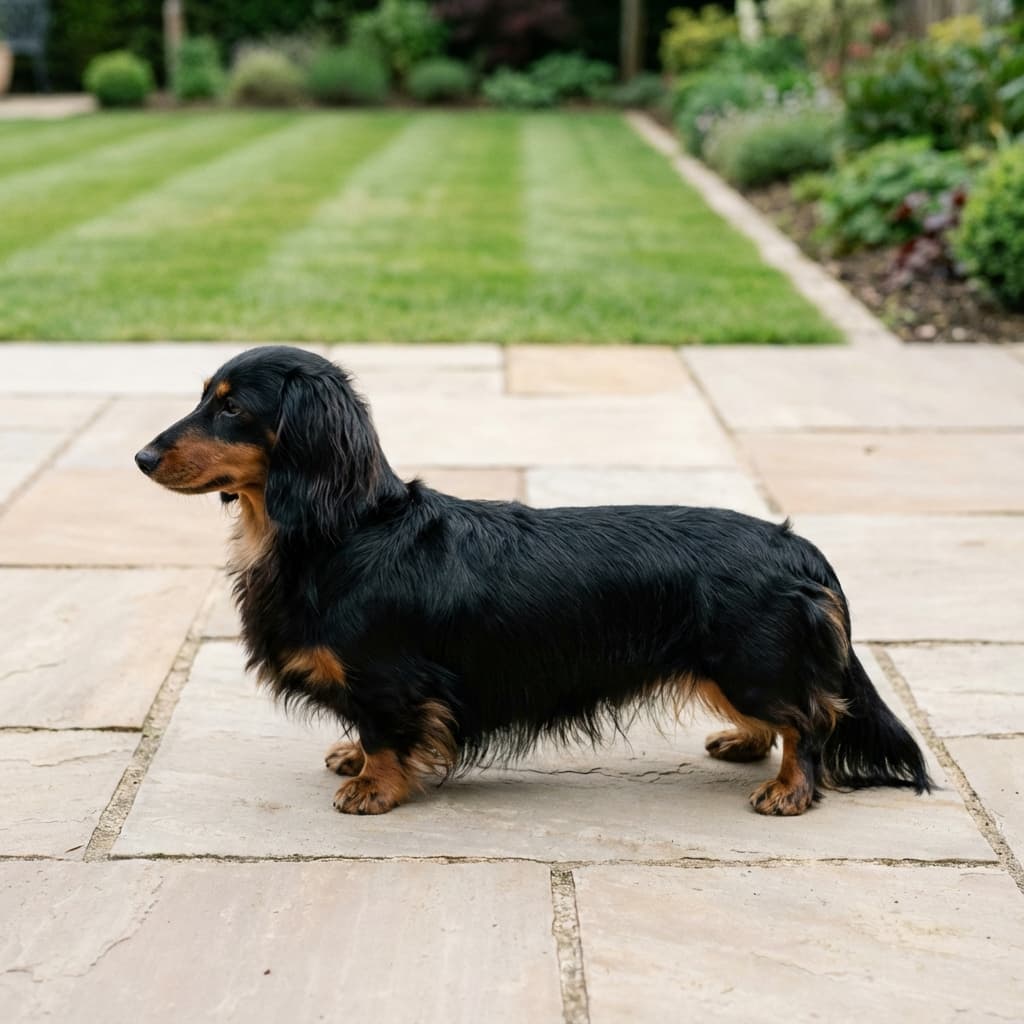
- Long-haired – with a long, silky coat
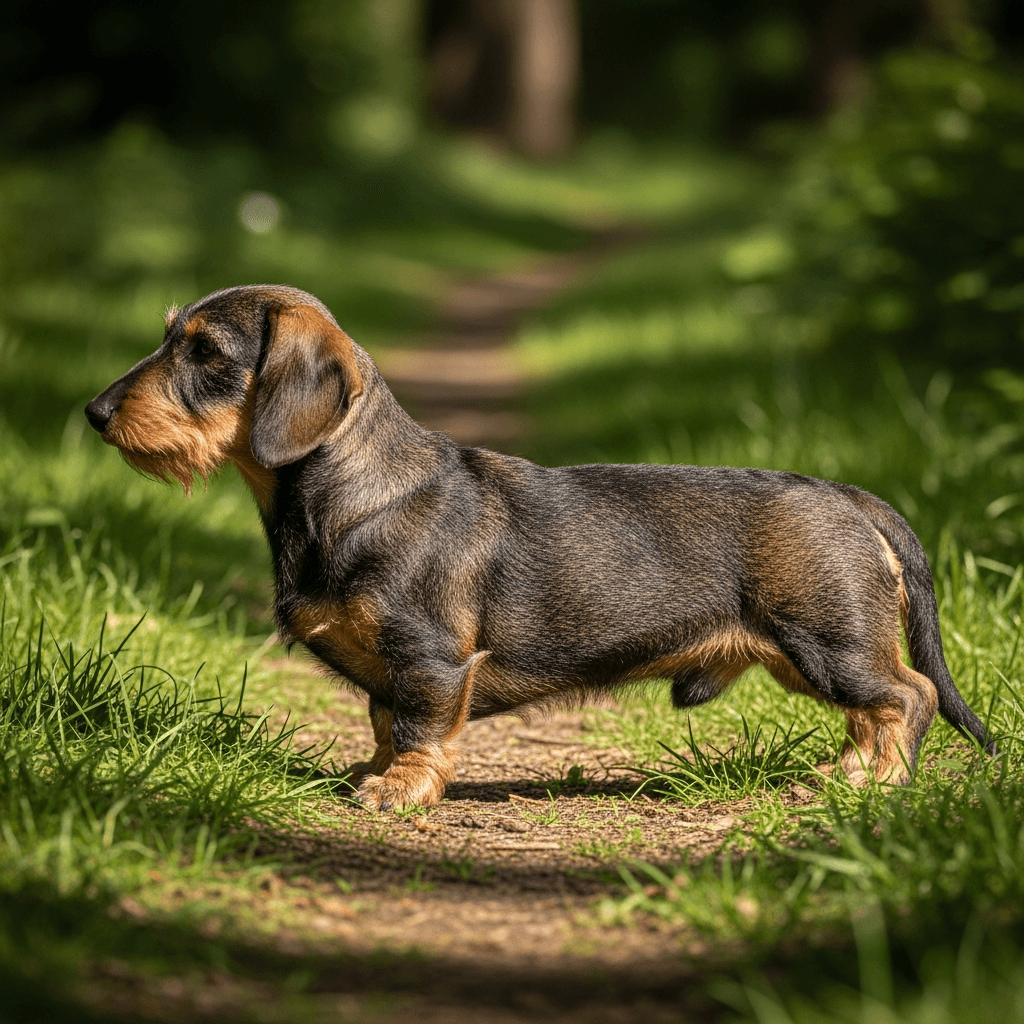
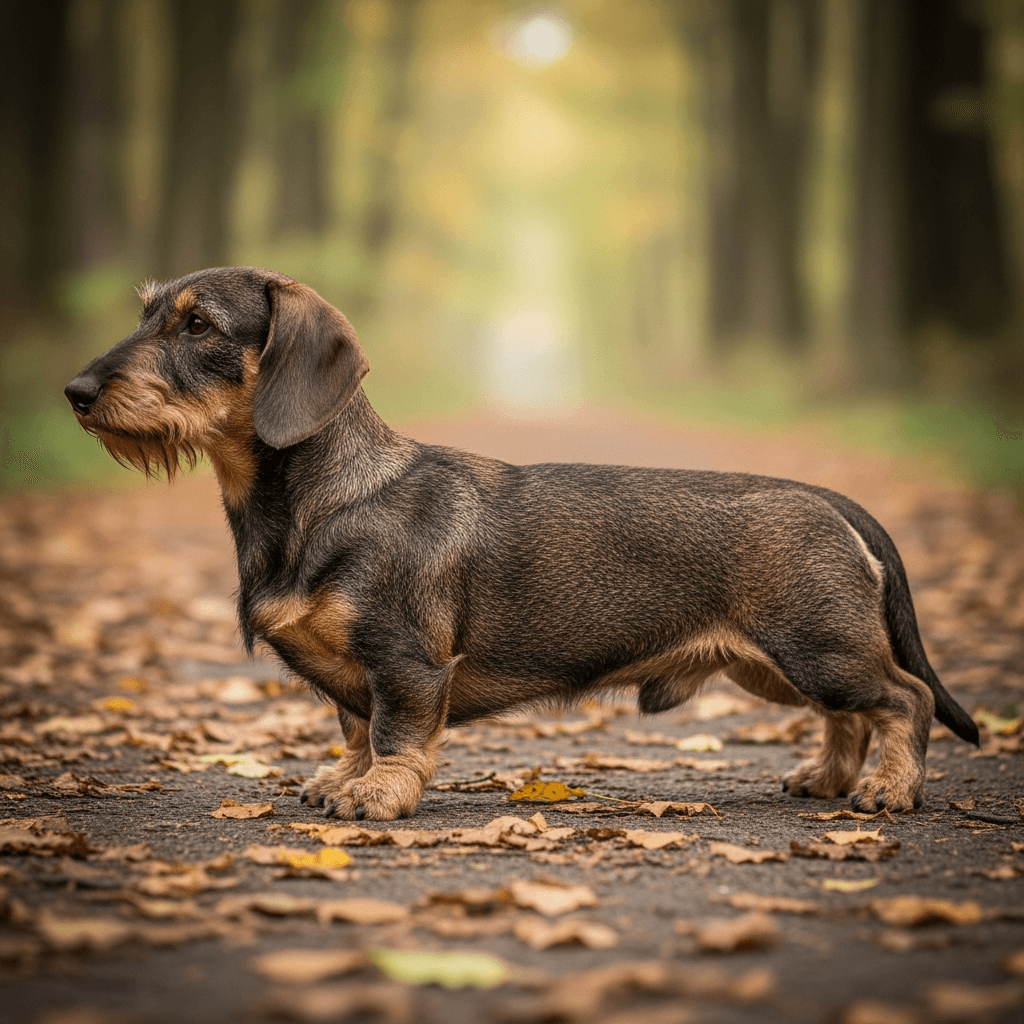
- Wire-haired – with a hard, protective coat
Breeding organizations: The oldest and most prestigious dachshund club in the world is the Deutscher Teckelklub (DTK), founded in Germany in 1888. This organization still sets breed standards, organizes breeding exhibitions, and ensures the purity of bloodlines and health of dogs of this breed.
Transformation of role: Over the past decades, dachshunds have evolved from pure hunting breeds into versatile companion dogs. Their friendly, loyal temperament, intelligence, and charming appearance have made them immensely popular and loved by many people around the world as family and city dogs. Despite this transformation, dachshunds have retained all their original hunting instincts and characteristics typical of hunting dogs.
Contemporary popularity: Today, dachshunds are among the most popular dog breeds in the world, often found in homes as companion dogs. They are particularly popular in Germany, the United States, the United Kingdom, and Scandinavian countries. In popular culture, dachshunds appear in movies, books, advertisements, and as symbols of various brands.
Dachshunds in Poland: In Poland, dachshunds are also very popular as both hunting and family dogs. The Polish Dachshund Lovers Club has been active for many years, promoting the breed, organizing exhibitions, and supporting responsible breeding.
FCI recognition: Dachshunds are officially recognized by the International Canine Federation (FCI) and classified in group 4: dachshunds, divided by standards according to size and coat type. FCI standard number 148 describes the detailed requirements regarding the appearance, temperament, and structure of dachshunds.