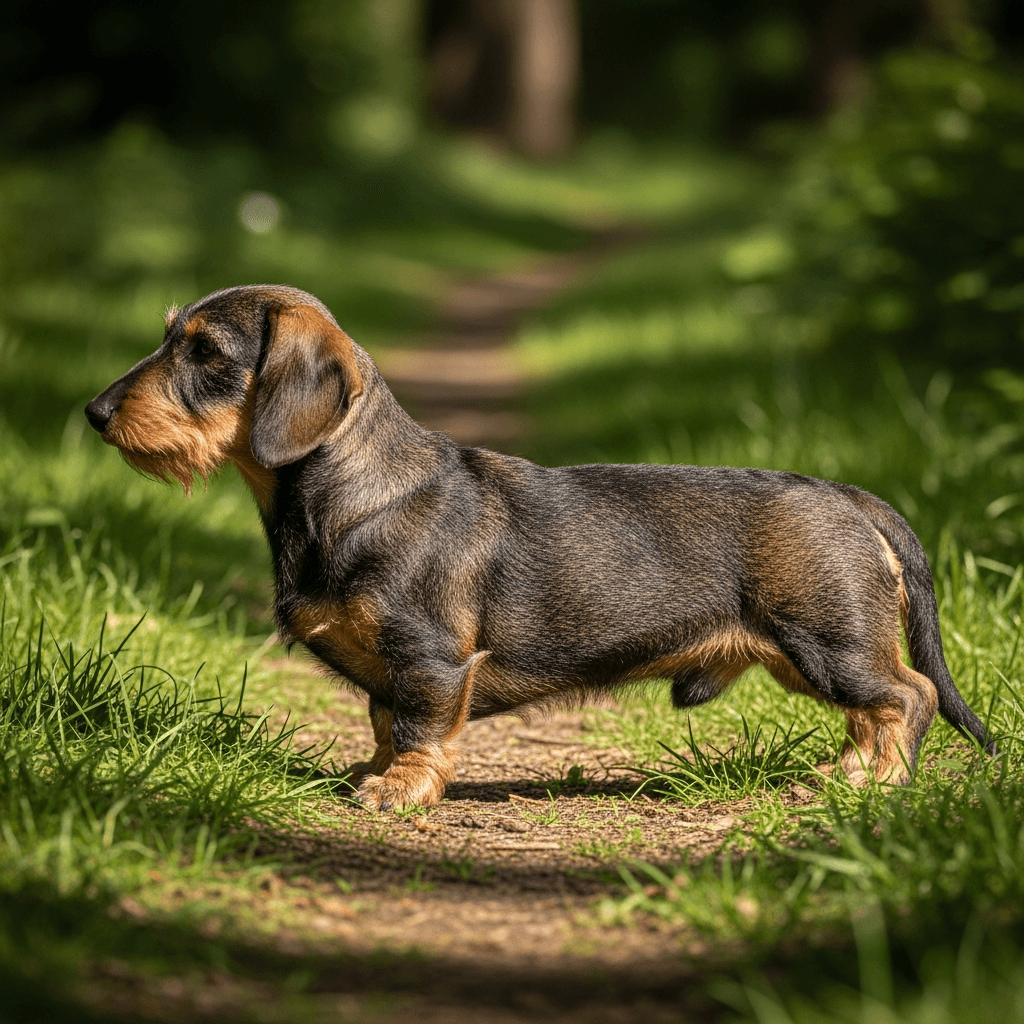
Miniature wire-haired dachshund
FCI Group
4• FCI 148H
Size
Small
Origin Country
DE
Height
N/A
Weight
N/A
Lifespan
12-16 years
Temperament
Overview
The miniature wire-haired dachshund is a unique breed that captivates with its distinctive appearance and energetic temperament. This German variety of dachshund is characterized by its long, low body and short legs, making it an excellent companion both in family life and during hunts. Thanks to its coarse, dense coat, it is not only stylish but also resistant to changing weather conditions.
The versatility of this breed makes it extremely popular. The miniature wire-haired dachshund excels as a hunting dog – confirmed by its FCI standard no. 148. It is an invaluable assistant during ground and underground hunting, particularly in tracking and flushing game. The history of dachshunds dates back to the Middle Ages when they were indispensable in the forest due to their agility and low stature, allowing them to move through dense underbrush. Over time, breeding has developed into nine different variants – differing in size and coat type.
The miniature wire-haired dachshund is a balanced, loyal, and brave dog, combining the traits of a hunter with those of a family friend. It is perfectly suited for active families who value outdoor life. It is neither cowardly nor aggressive – instead, it shows strong will and determination. Its body structure allows for quick, agile movement, which is essential during hunts.
Owners must remember that the miniature wire-haired dachshund requires regular physical activity and mental stimulation to remain happy and healthy. Its intelligence facilitates training, but it needs a consistent approach. Dachshunds have a natural, strong hunting instinct, which can lead to chasing smaller animals. Therefore, it is crucial to provide them with appropriate living conditions and training to control their instincts.
The miniature wire-haired dachshund is also an ideal apartment dog – provided it is given daily walks and playtime. Its compact size allows it to adapt to smaller spaces, but its exercise needs must not be neglected. In summary, the miniature wire-haired dachshund is a dog full of character, combining the traits of a hunter and a loyal family friend, making it an ideal companion for active individuals and families with children.
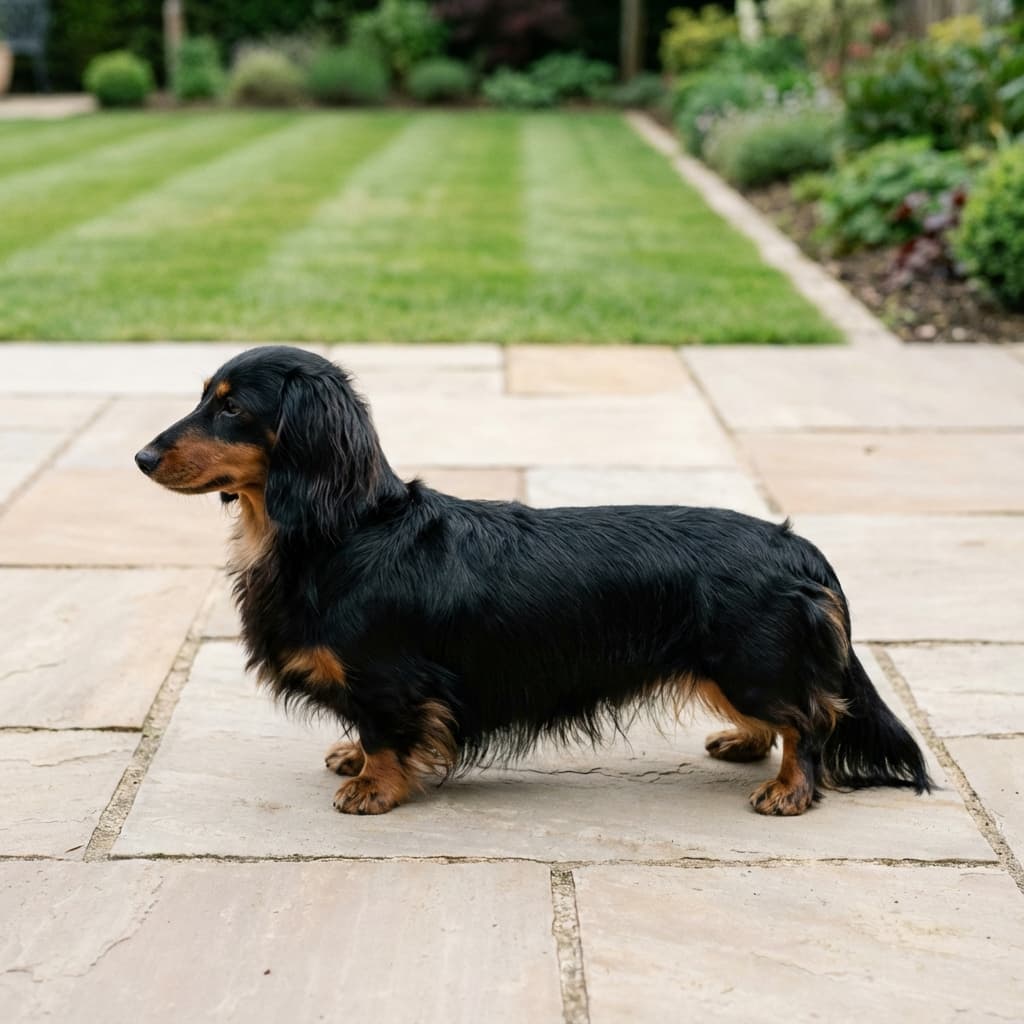
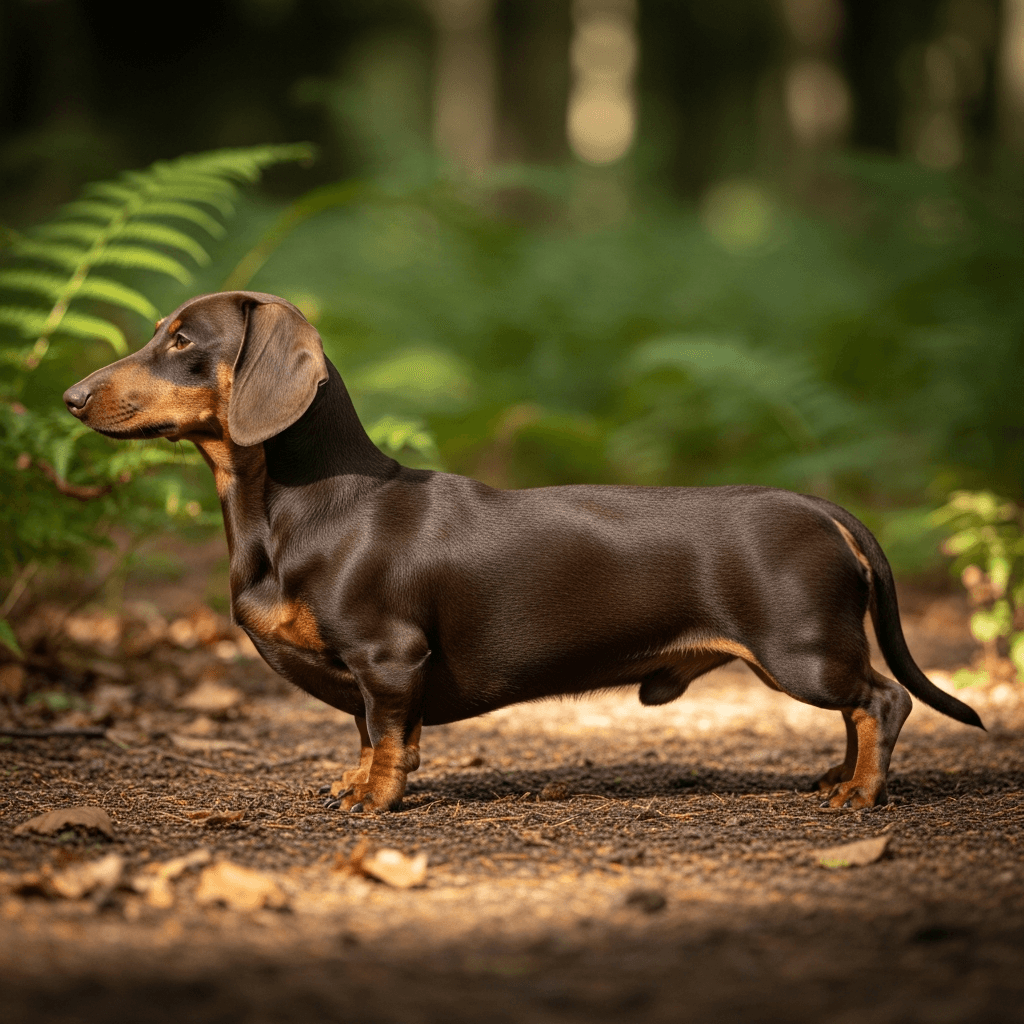
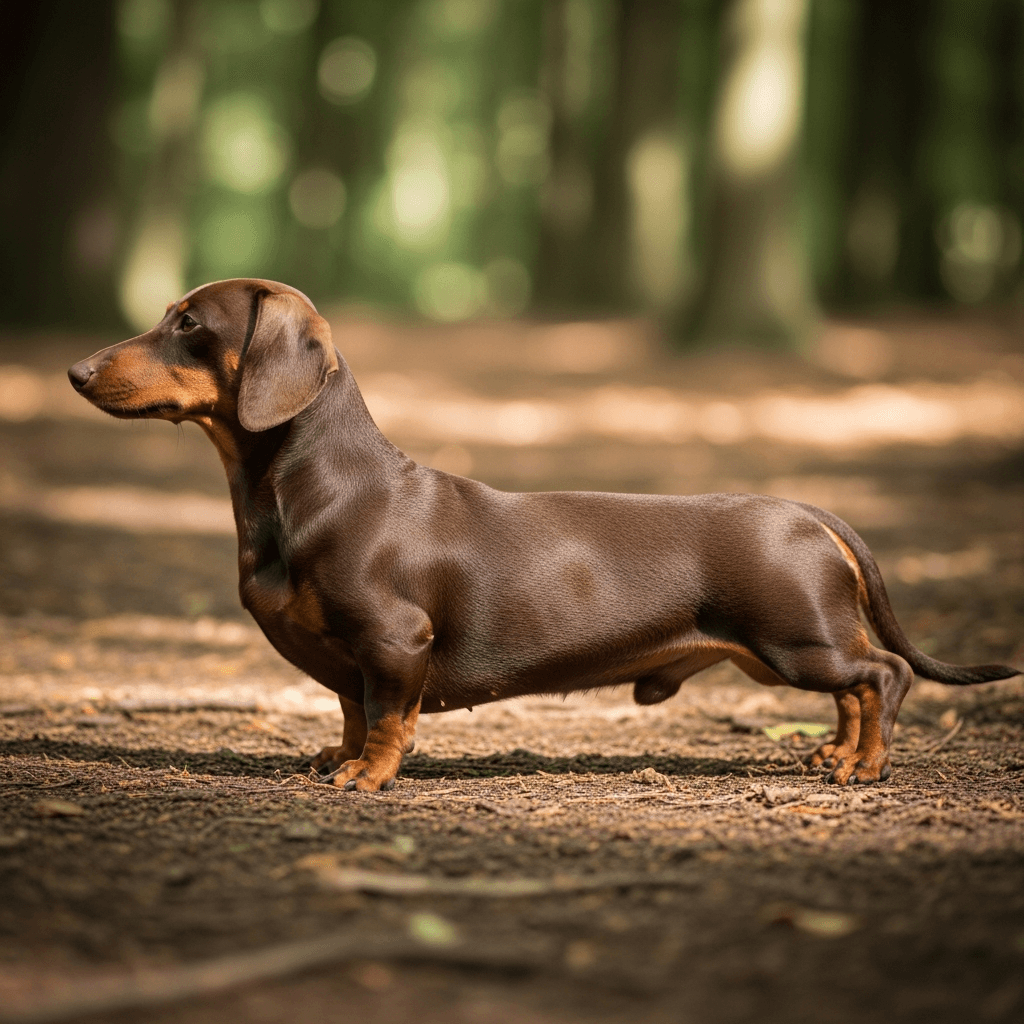
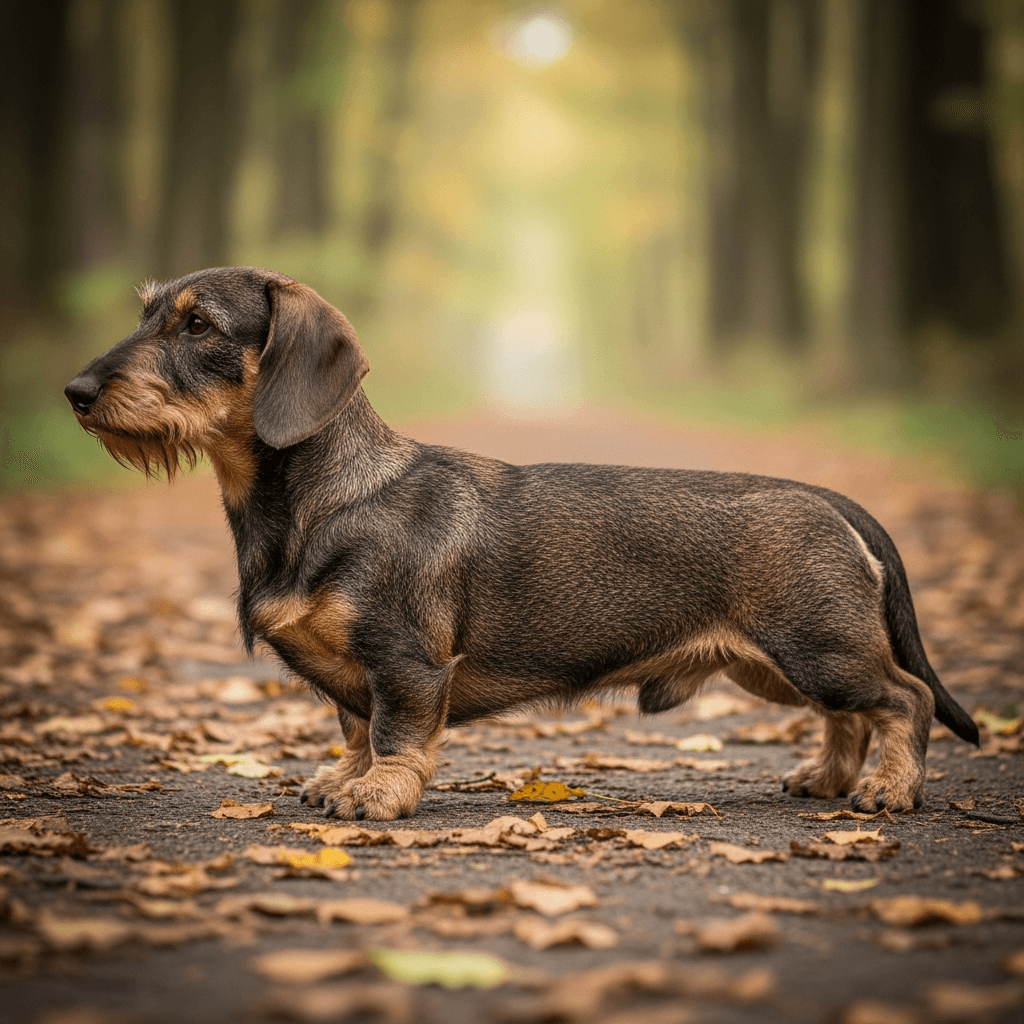
The miniature wire-haired dachshund is characterized by its unique appearance, which attracts the attention of many dog lovers. Its low stature, long body, and short legs give it a distinctive silhouette that is both charming and functional.
- Dimensions: The chest circumference ranges from 30 to 35 cm (measured at a minimum age of 15 months), making the miniature wire-haired dachshund an ideal apartment dog.
- Head: Elongated, with a clearly defined stop and a long, strong muzzle.
- Eyes: Medium-sized, almond-shaped, widely spaced, giving the dog a bright, friendly expression.
- Coat: Short, dense, and rough to the touch, providing protection against adverse weather conditions.
- Coloring: Solid, bi-colored, or marbled, most commonly in shades of red, black, and brown.
The miniature wire-haired dachshund has a well-muscled body with a broad chest and strong limbs, which provide agility and speed. The tail is set high, carried slightly lowered, and its tip may be slightly curved upwards.
Due to its body structure, the dachshund is an excellent hunting dog – its ability to move in tight spaces makes it extremely agile in difficult terrain. The appearance of the miniature wire-haired dachshund is not only attractive but also functional, making it an ideal companion both for hunting and in everyday family life.
The miniature wire-haired dachshund has a balanced temperament, making it an excellent companion for both active individuals and families. By nature, it is friendly, loyal, and full of energy, which makes it an ideal pet.
Dachshunds are known for their strong hunting instinct, which means they may be prone to chasing smaller animals. Therefore, owners must provide appropriate training to help control these behaviors. The miniature wire-haired dachshund is also intelligent and easy to train, but it may exhibit stubbornness, requiring a patient approach. Owners should use positive reinforcement to motivate the dog to learn.
Dachshunds are usually very attached to their owners and show a strong need for closeness, making them excellent family dogs. However, it is worth noting that dachshunds can be prone to barking, which can be problematic in certain living situations. Owners should work on the socialization of their dogs to ensure positive interactions with other dogs and people from a young age.
The miniature wire-haired dachshund is a dog that will be an excellent companion for active individuals who can dedicate time to training, play, and regular walks. Their friendly nature and loyalty make them not only great hunters but also wonderful companions in everyday family life. Brave and confident, the dachshund is neither cowardly nor overly aggressive – it exhibits a strong personality and independence.
The miniature wire-haired dachshund, like many dog breeds with a specific build, can be prone to certain health issues. Awareness of these concerns allows owners to provide appropriate prevention and care.
- Disc disease (intervertebral disc disease): Due to their long body and short legs, dachshunds are particularly susceptible to spine problems. Disc disease can lead to pain, mobility issues, and in extreme cases – paralysis. Owners should avoid allowing their dog to jump from heights and limit movement on stairs.
- Hip dysplasia: A condition where the hip joint does not develop properly, which can lead to pain and limited mobility. Controlling the dog's weight is crucial, as being overweight puts additional strain on the joints.
- Skin diseases and allergies: Dachshunds may be prone to food and environmental allergies that cause itching and discomfort. Owners should monitor changes in the skin and consult a veterinarian if concerning symptoms arise.
- Ophthalmic problems: Some breeding lines may be susceptible to eye conditions such as cataracts or progressive retinal atrophy.
Regular veterinary visits and maintaining a healthy diet and appropriate physical activity can help prevent many health problems. Keeping an ideal body weight is crucial for protecting the dachshund's spine and joints. Overall, caring for the health of a miniature wire-haired dachshund requires vigilance, regular veterinary check-ups, and a proper diet and physical activity, which are essential for their longevity and quality of life.
Caring for a miniature wire-haired dachshund is an essential element in ensuring its health and well-being. Its characteristic rough coat requires regular grooming to maintain its condition and appearance.
Unlike short-haired dachshunds, which only require occasional brushing, the wire-haired dachshund needs more intensive care:
- Brushing: It is recommended to brush the coat regularly at least once a week to remove dead hair, dirt, and prevent matting. Special attention should be paid to the areas around the ears, where the hair may be more prone to tangling.
- Trimming: Periodically (2-3 times a year), the wire-haired dachshund should be trimmed, meaning removing dead hair. This can be done manually or with the help of a professional groomer.
- Bathing: The miniature wire-haired dachshund may require occasional bathing, especially if its coat is very dirty or if there are skin issues. Gentle shampoos designed for rough-coated dogs should be used.
- Ears: Regular checking and cleaning of the ears is essential to prevent infections. Dachshunds have floppy ears, which encourages moisture accumulation.
- Teeth: Daily oral hygiene prevents dental problems and tartar buildup.
- Nails: Regular nail trimming prevents excessive growth, which can lead to discomfort and walking issues.
It is worth investing in high-quality brushes and grooming tools that will not damage the coat. After bathing, it is important to thoroughly dry the coat to avoid skin infections. Caring for a miniature wire-haired dachshund requires consistency and time, but it contributes to its health, well-being, and attractive appearance.
The miniature wire-haired dachshund is a dog that needs regular physical activity to stay healthy and happy. Despite their small size, dachshunds are full of energy and vigor, and their exercise needs are at an average level.
Owners should ensure their dachshunds have daily walks that allow them to explore their surroundings and satisfy their natural curiosity. The ideal solution is to provide at least one longer walk each day lasting from 30 to 60 minutes.
It is worth introducing various forms of activity:
- Walks: Daily outings in fresh air to different terrains – parks, forests, meadows
- Fetch games: Ball or toy games that develop hunting instincts
- Scent exercises: Searching for treats or toys hidden in the grass
- Agility: An obstacle course adapted to the small size of the dachshund
- Swimming: An excellent form of exercise that does not strain the spine
Dachshunds have a strong hunting instinct, so it is important to keep them on a leash during walks or in a safe, fenced yard. Owners must be aware that dachshunds are prone to spine problems – they should avoid:
- Jumping from heights (couches, chairs, beds)
- Too intense exercises that strain the spine
- Frequent running up and down stairs
- Standing on their hind legs
Regular physical activity sessions should be tailored to the dog's age and physical condition to avoid injuries and overtraining. The miniature wire-haired dachshund happily accompanies its owner in outdoor activities, so it is worth investing time in shared walks and games that positively impact the well-being and bond between the dog and human.
Training a miniature wire-haired dachshund is a key aspect influencing its development and behavior. Dachshunds are intelligent dogs eager to learn new commands and tricks, but they can also be stubborn, which requires a patient and consistent approach from the owner.
Training should start at an early age to facilitate the dog's acquisition of new skills and habits. Owners should use positive reinforcement, such as treats or praise, to motivate the dog to learn. It is important for the training to be varied and interesting, so that the dachshund does not lose interest.
Basic elements of training:
- Basic commands: Sit, Lie down, Stay, Come, No – the foundation of obedience
- Socialization: Interaction with other dogs, people, and various situations from puppyhood
- Control of hunting instinct: Learning recall commands and stopping chasing
- Fetching: Developing natural skills and bonding with the owner
- Scent exercises: Utilizing natural hunting predispositions
Training should be regular and tailored to the individual needs of the dog depending on its temperament and energy level. Dachshunds have a strong hunting instinct, so it is important to teach them appropriate commands that allow for controlling behaviors during walks and play.
Owners should pay special attention to their dog's socialization to avoid issues with anxiety or aggression in the future. Introducing the dachshund to various situations and contact with other dogs and people will help it become a more balanced dog.
If difficulties arise in training, it is advisable to seek the help of a professional trainer who can assist with learning and implementing appropriate methods. Training a miniature wire-haired dachshund is an investment in its future and the comfort of the entire family, so it is worth dedicating time to teach and develop your pet's skills.
Proper nutrition for the miniature wire-haired dachshund is crucial for its health and longevity. Owners should pay special attention to the quality of the food, choosing high-quality products tailored to the needs of small breeds.
Dachshunds have a tendency to gain weight, so controlling portions and avoiding excessive treats is extremely important. Obesity in dachshunds is particularly dangerous due to the structure of their spine – excess weight further burdens the joints and can lead to serious health problems.
Basic nutrition guidelines:
- High-quality protein: Essential for proper muscle development and maintaining energy (chicken, turkey, beef, fish)
- Balanced fats: Provide energy and support healthy skin and coat
- Carbohydrates: Source of energy, preferably from vegetables and whole grains
- Vitamins and minerals: Support the immune system and bone health
- Omega-3 and omega-6 fatty acids: For healthy skin and a shiny coat
Owners can choose between dry and wet food, but it is important to select products that do not contain artificial additives or preservatives. Dry food helps with teeth cleaning, while wet food is more palatable and easier to digest.
Regular provision of fresh water is essential for proper hydration. It is also worth paying attention to changes in appetite and the dog's weight to quickly respond to any potential health issues.
Feeding recommendations:
- Feeding meals at regular times (2-3 times a day for adult dogs)
- Avoiding feeding leftovers from the table
- Limiting treats to a maximum of 10% of daily calorie intake
- Adjusting portions to the dog's activity level
- Regularly weighing the dog and monitoring its condition
If there are any doubts regarding the diet, it is advisable to consult a veterinarian who can help choose the appropriate nutrition for the miniature wire-haired dachshund. A proper diet and regular physical exercise are the keys to the health and well-being of the dachshund.
Characteristic Traits
Pros
- Friendly and loyal companion
- Excellent hunting dog
- Intelligent and easy to train
- Ideal for active families
- Resilient to changing weather conditions.
Cons
- Requires a lot of exercise and mental stimulation
- Strong hunting instinct requires control
- Can be stubborn during training
- Prone to spine problems
- Likely to bark.
Behavioral Ratings
Breed History
The miniature wire-haired dachshund has a long and rich history dating back to the Middle Ages. Its ancestors, known as dackel or teckel, were used as hunting dogs for hunting burrowing animals such as rabbits, foxes, and badgers. Their low stature and long body made them ideal companions for hunters needing dogs capable of moving through narrow underground tunnels.
Over the centuries, dachshunds have undergone many breeding changes, leading to the emergence of various varieties differing in size and coat type. Currently, there are three size varieties (standard, miniature, rabbit) and three coat types (short-haired, wire-haired, long-haired), resulting in a total of nine variants of this fascinating breed.
In the 20th century, the dachshund gained popularity not only as a hunting dog but also as a companion dog, contributing to its increased popularity in various countries. In 1888, the Deutsche Teckelklub e.V. was established – the oldest dachshund club in the world, aimed at promoting and protecting the breed.
During the interwar period, dachshunds enjoyed immense popularity in Europe and the United States. They became symbols of determination, courage, and intelligence. After World War II, the breed regained its status, and today the dachshund is one of the most popular breeds in the world.
The wire-haired dachshund was created by crossing short-haired dachshunds with local dogs with rough coats, probably terriers. The goal was to obtain a dog with greater resistance to cold and moisture, better suited for hunting in difficult terrain conditions.
Today, the miniature wire-haired dachshund is one of the most popular varieties in Europe and around the world. Its history as a hunting dog and a loyal companion to humans continues to thrive. With its unique appearance, character, and skills, the miniature wire-haired dachshund has gained recognition among dog lovers worldwide, combining hunting heritage with the role of a beloved family member.