King Charles Spaniel
FCI Group
9• FCI 128
Size
Small
Origin Country
GB
Height
25-30 cm
Weight
3.6-6.3 kg
Lifespan
10-15 years
Temperament
Overview
The King Charles Spaniel is one of the most recognizable companion dog breeds, with a history dating back to the 17th century. These small, charming dogs gained immense popularity in England, where they became favorites of the royal family, particularly King Charles II, from whom the breed gets its name.
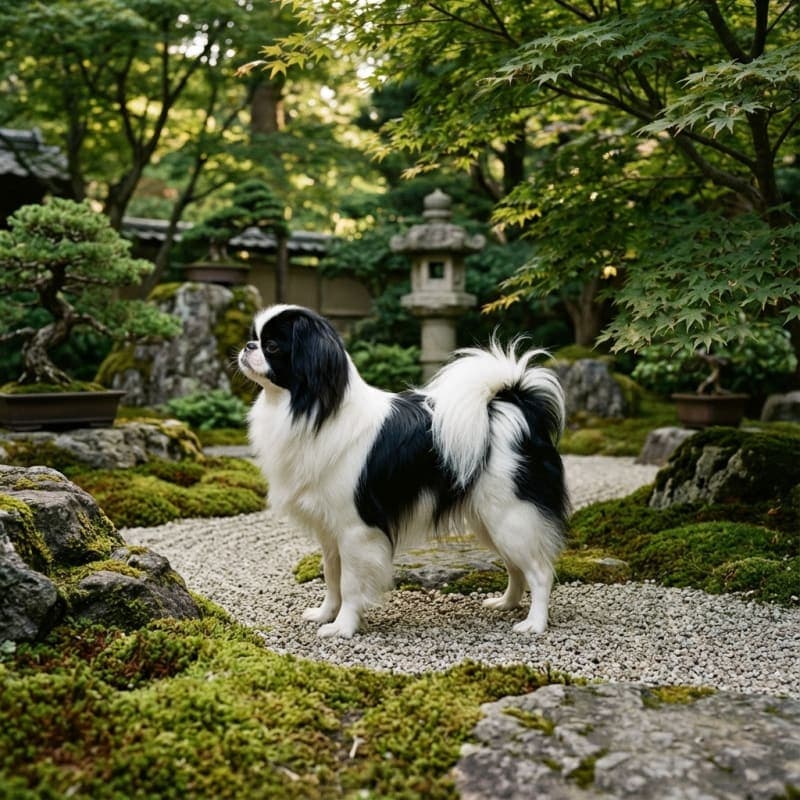
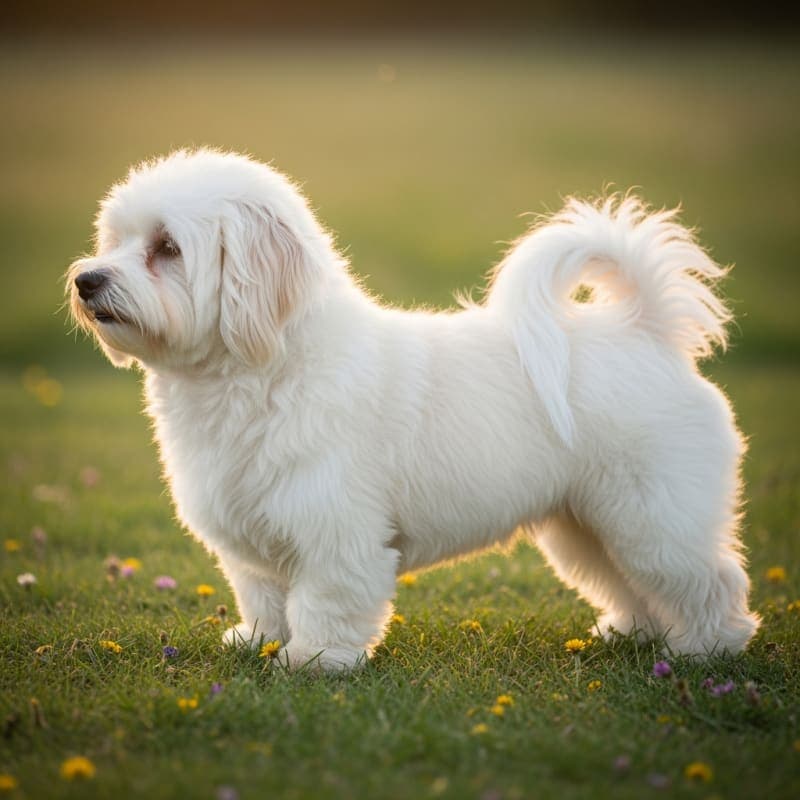
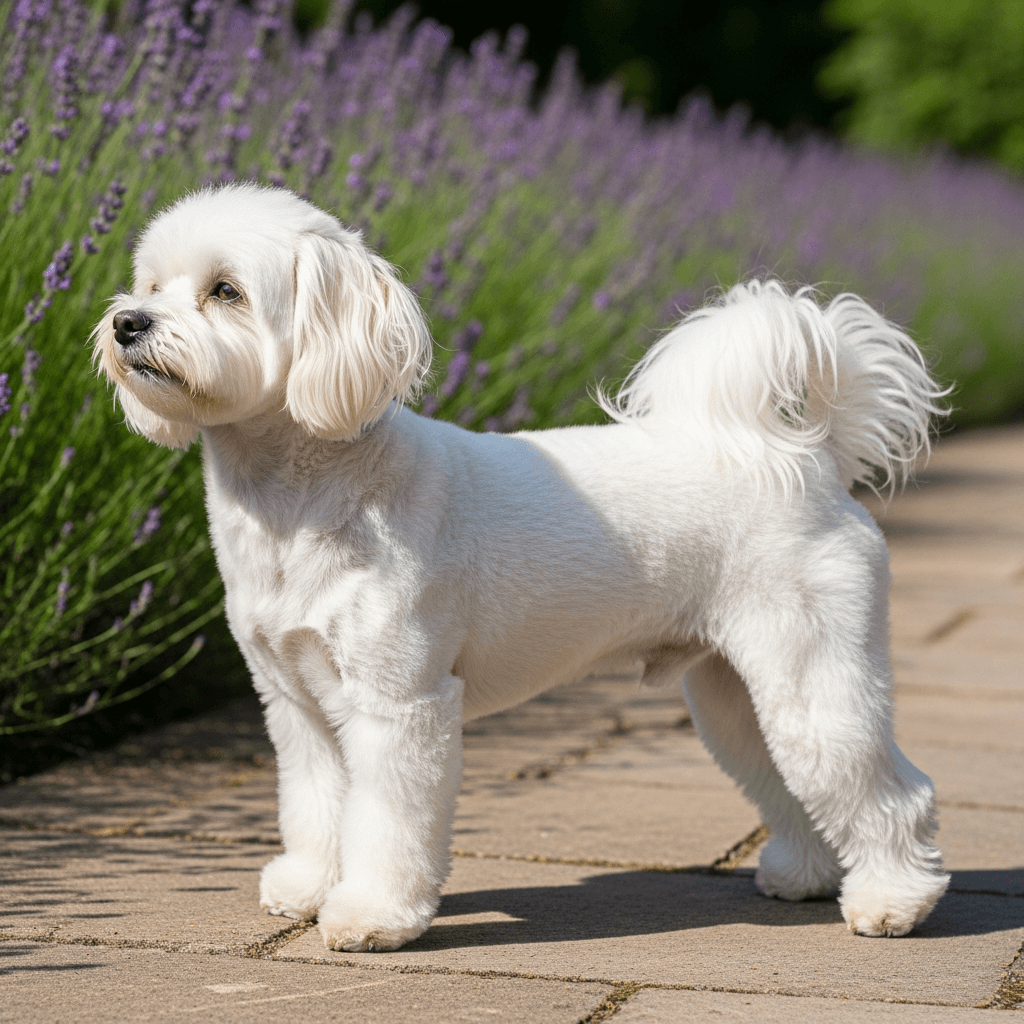
King Charles Spaniel is characterized by an elegant, compact silhouette with a short back and rounded shapes. The distinctive features of this breed include a clearly prominent skull, large dark expressive eyes, and long, decorative ears that hang close to the cheeks.
Their coat is long, silky, and straight, occurring in four color variations:
- Black and Tan - black with mahogany markings
- Tricolour - pearly white with black patches
- Ruby - intense chestnut-red without white patches
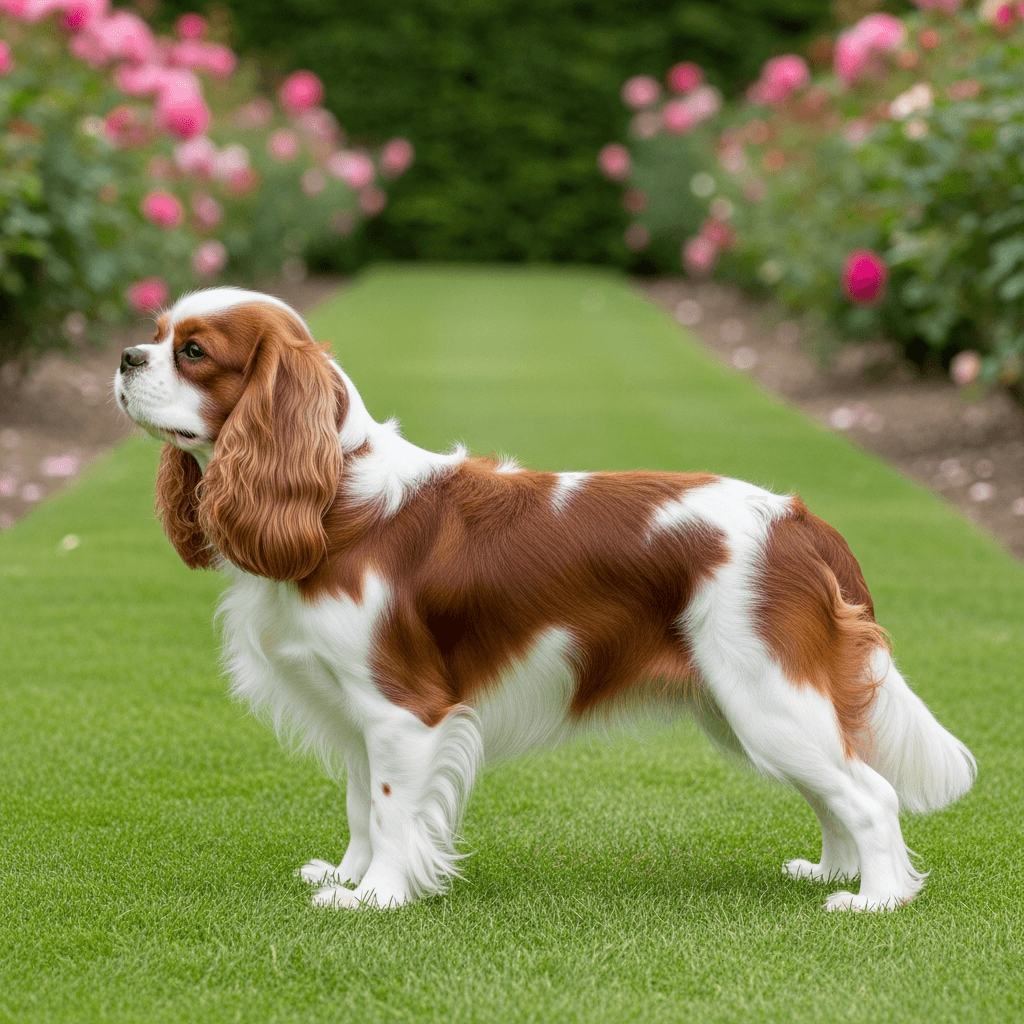
- Blenheim - pearly white with chestnut patches
The King Charles Spaniel not only delights with its appearance but also with its character. They are intelligent, cheerful, and full of energy, making them ideal companions for families and elderly individuals. Their gentleness and willingness to interact make them great with children and other pets.
It is important to remember that King Charles Spaniels are social dogs that do not cope well with prolonged loneliness. Their love for closeness with people is immense, so they require a stable, loving environment. This breed adapts well to various living conditions - both to apartments and houses with gardens. Their presence in the home brings much joy, improving the well-being of their owners with their positive attitude and cheerful nature.
The King Charles Spaniel is a dog with a very distinctive appearance that attracts attention with its elegance and grace. Its silhouette is sturdy, compact, and stocky, which gives it a refined character.
Physical dimensions:
- Height at the withers: 25-30 cm
- Weight: 3.6-6.3 kg
- Proportions: compact body structure
Head and muzzle: The head is proportional to the rest of the body, with a distinctly rounded skull (a characteristic feature of the breed). Large, dark eyes give the dog a gentle and friendly expression. The ears are long, hanging, and richly feathered, which further emphasizes their charm. The muzzle is short and slightly upturned, with a black nose and wide nostrils - a typical feature of brachycephalic dogs.
Jaw: The lower jaw is wide, with a slight overbite. The cheeks are well-filled, not sunken under the eyes, giving the face a full, soft expression.
Coat and colors: The coat is long, silky, and straight, with a dense undercoat. The breed comes in four classic colorations:
- Black and Tan - jet black with mahogany markings on the cheeks, above the eyes, the inner side of the ears, chest, legs, and underside of the tail
- Tricolour - pearl white with well-distributed black spots and mahogany markings
- Ruby - completely chestnut red without white spots (the rarest and most valued)
- Blenheim - pearl white with well-distributed chestnut spots and a distinctive spot on the forehead (the so-called prince's dot)
Movement: The movement is elegant and airy, with a smooth step reflecting a joyful personality. The tail is thick and plume-like, carried at the level of the back or slightly below, never curled over the back. The rich fringe on the tail adds charm to the dog while in motion.
Combined with a cheerful temperament and intelligence, the King Charles Spaniel remains one of the most beloved companion dogs in the world - beautiful, distinguished, and full of grace.
The King Charles Spaniel is a breed known for its extremely pleasant and gentle temperament. FCI standards describe these dogs as happy, intelligent, with a characteristic round head, reserved, delicate, and affectionate.
Social character: These are extremely social dogs that love spending time with people and other animals. Their cheerful disposition makes them ideal companions for families with children and older individuals seeking a loyal friend. King Charles Spaniels show exceptional tolerance towards children and coexist well with other pets.
Intelligence and learning abilities: These dogs are extremely intelligent and easy to train. They eagerly learn new commands and tricks, making training with them a pure pleasure. They exhibit a natural curiosity about the world, although this can sometimes lead to distractions. Therefore, it is important to provide them with appropriate mental and physical stimulation.
Attachment to the owner: This breed is known for its deep attachment to its caregivers. King Charles Spaniels have a strong need for closeness - they enjoy being at the center of family life, participating in all household activities. They often choose a favorite person, although they show affection to all family members.
Emotional sensitivity: Despite their cheerful disposition, King Charles Spaniels can be quite sensitive and prone to stress. They are characterized by:
- Negative reactions to loud noises and sudden movements
- The need for a calm, stable environment
- They do not cope well with prolonged loneliness
- They require a gentle, positive approach in training
Royal temperament: They retain a certain degree of royal distinction - they can be reserved towards strangers, though not aggressive. After getting to know a new person, they quickly open up and become friendly.
Spending time together, playing, and regular training are key to building a strong bond between the dog and the caregiver. This bond is the foundation of the happiness and well-being of the King Charles Spaniel, who, in return, bestows unconditional love and devotion upon its family.
The King Charles Spaniel, like many purebred breeds, has specific predispositions to certain health issues that owners should be well aware of. Conscious healthcare can significantly extend and improve the quality of life for these charming dogs.
Heart diseases - the main threat: The most serious health problem in this breed is congenital heart defects, particularly mitral valve disease (MVD - Mitral Valve Disease). This is the most common cause of death in King Charles Spaniels. Symptoms may include:
- Coughing, especially at night
- Difficulty breathing
- Reduced exercise tolerance
- Fainting or weakness
Regular cardiology check-ups (echocardiography) are crucial, especially for dogs over 5 years old.
Ophthalmic problems: The breed is prone to various eye conditions:
- Dry eye syndrome (keratoconjunctivitis sicca) - insufficient tear production
- Cataracts - clouding of the lens leading to vision loss
- Retinal dysplasia - developmental disorder of the retina
- Protrusion of the eyeballs - associated with a flat skull structure
Respiratory problems - brachycephalic syndrome: Due to their short, upturned snouts, King Charles Spaniels belong to brachycephalic breeds. This can cause:
- Difficulty breathing, especially in heat
- Snoring and loud breathing
- Intolerance to high temperatures
- Increased risk of overheating
On hot days, physical activity should be limited, and access to an air-conditioned room should be provided.
Syringomyelia (SM): A serious neurological condition associated with abnormal skull structure, leading to the formation of cavities in the spinal cord. Symptoms include head/neck pain, scratching without visible cause, and weakness of the limbs.
Other health issues:
- Orthopedic problems (patellar luxation)
- Ear infections (due to long, floppy ears)
- Dental problems (crowded teeth)
- Tendency to obesity
Health prevention: Key elements of care include:
- Regular veterinary visits (at least twice a year)
- Cardiology check-ups starting at 5 years of age
- Weight control - obesity exacerbates heart and breathing problems
- Vaccinations and deworming according to schedule
- Ophthalmic examinations for older dogs
- Avoiding thermal stress - do not expose to heat
The diet should be tailored to individual needs, and exercise should be regular but moderate to avoid straining the heart. With proper care, a King Charles Spaniel can enjoy good health for 9-14 years.
The care of the King Charles Spaniel is an essential aspect of looking after this breed. Their long, silky coat requires regular attention to maintain a healthy appearance and prevent skin problems.
Brushing - the most important element: It is recommended to brush daily, especially during shedding periods (spring and autumn). The benefits of regular brushing include:
- Preventing matting and tangles in the coat
- Removing dead hair and minimizing its presence in the home
- Stimulating the skin and improving circulation
- Early detection of skin problems, parasites, or changes
- A moment to build a bond with the dog
Particular attention should be paid to areas prone to matting: behind the ears, under the armpits, on the belly, and around the genitals.
Bathing: Regular baths are recommended every 3-4 weeks to keep the coat clean and healthy. Important rules include:
- Use only dog shampoos (pH adjusted for the dog's skin)
- Apply a conditioner to help detangle long hair
- Thoroughly rinse all products
- Carefully dry the ear area (moisture promotes infections)
- A low-temperature hairdryer can be used
Ear care - critical! The long, drooping ears of King Charles Spaniels are prone to infections. It is necessary to:
- Check the ears at least once a week
- Clean with special ear solutions for dogs
- Remove excess moisture after bathing
- Pay attention to unpleasant odors, redness, or discharge
- If an infection occurs, consult a veterinarian immediately
Nail trimming: Regular nail trimming is necessary, usually every 3-4 weeks. Overgrown nails can:
- Cause discomfort and pain while walking
- Lead to orthopedic problems
- Disrupt the natural alignment of the joints
- Break and bleed
If you hear the nails clicking on the floor - it's a sign they need trimming.
Oral hygiene: King Charles Spaniels, like many small breeds, are prone to dental problems:
- Brush teeth 2-3 times a week (ideally daily)
- Use toothpaste formulated for dogs
- Provide dental chews
- Regularly check the condition of gums and teeth
- Professional cleaning at the veterinarian every 1-2 years
Eye area care: Due to their large, protruding eyes, it is necessary to:
- Remove discharge from the corners of the eyes daily
- Use a damp, soft cloth
- Check for irritation or redness
- Gently trim hair around the eyes if it obstructs vision
Coat trimming: Although not mandatory, some owners gently trim the coat:
- Between the paw pads (to prevent slipping)
- Around the genitals and anus (for hygiene)
- On the underside of the belly (to prevent soiling)
Caring for a King Charles Spaniel is not only a necessity but above all a great opportunity to strengthen the bond between the dog and the owner. Regular attention to appearance and hygiene ensures that the dog feels comfortable, healthy, and beautifully presents its characteristic royal elegance.
Despite their small size, the King Charles Spaniel has moderate physical activity needs. Although they are not dogs that require extreme exertion, regular exercise is crucial for their physical and mental health.
Daily exercise requirement: Owners should ensure at least 30-60 minutes of activity per day, divided into 2-3 sessions. Optimal forms of exercise include:
- Walks - 2-3 walks a day at a moderate pace
- Play in the park - interactions with other dogs
- Fetching - bringing back balls or toys
- Searching for treats - mental and physical stimulation
- Short running sessions - at a moderate pace
Nature of activity: The King Charles Spaniel is a dog that loves companionship during exercise. Family activities work best:
- Walks in places where they can meet other dogs
- Trips to parks and green areas
- Playing with family members in the garden
- Learning tricks and simple commands during walks
Important limitations - brachycephalic syndrome: Due to their short snout, caution should be exercised:
- Avoid exertion in hot weather - walks early in the morning or in the evening
- Watch for signs of fatigue - heavy breathing, slowing down
- Provide access to water during and after exercise
- Do not force intense running on hot days
- Avoid exercise immediately after meals (risk of gastric torsion)
Diversity of activities: To prevent boredom and maintain interest, it is worth introducing variety into daily activities:
- Changing walking routes
- Visits to different parks
- Playing fetch with various toys
- Simple obedience training during walks
- Scent games - hiding treats
- Meetings with other dogs (socialization)
Mental stimulation - equally important! King Charles Spaniels are intelligent and curious about the world, so they also need mental challenges:
- Learning new tricks and commands
- Interactive games (treat balls)
- Simple scent tasks
- Educational games for dogs
Puppy vs. adult dog activity:
- Puppies (up to 12 months): Shorter, more frequent sessions (15-20 min, 3-4 times a day), avoid jumping and intense running
- Adult dogs (1-7 years): Standard 30-60 minutes a day, full range of activities
- Senior dogs (7+ years): Gentler, shorter walks adjusted to their condition, more frequent breaks
Health issues and activity: For dogs with heart conditions, it is essential to consult a veterinarian about the appropriate level of activity. Generally, it is recommended to:
- Take shorter, calmer walks
- Avoid intense exertion
- Monitor for signs of fatigue (coughing, shortness of breath)
- Take regular breaks for rest
The King Charles Spaniel is a versatile dog - it can adapt to both an active family lifestyle and a calmer lifestyle of an older person. The key is regular, moderate activity combined with plenty of time spent with family. These dogs are not made for marathons, but they joyfully participate in daily family activities, bringing their joy and enthusiasm everywhere.
Training a King Charles Spaniel can be a pleasant experience, as this breed is characterized by intelligence and a willingness to learn. However, their sensitive nature requires the use of appropriate training methods based on positive reinforcement.
Training methods - only positive reinforcement: Due to their gentle temperament, King Charles Spaniels respond best to:
- Rewarding with treats - food motivation works wonderfully
- Verbal praise - an enthusiastic, cheerful tone of voice
- Play as a reward - a short session with a favorite toy
- Petting and affection - physical contact as confirmation
It is important to avoid punishment, yelling, and force - such an approach can cause fear, stress, and worsen the relationship with the dog.
Basic commands - where to start: It is recommended to start training with basic commands:
- Sit - a fundamental obedience command
- Lie down - calming and control
- Stay - self-control and safety
- Come - the most important command, can save a life
- Leave it - protection from eating dangerous items
- Heel - walking at the heel during walks
Characteristics of training sessions: King Charles Spaniels learn quickly, but have a short attention span. Optimal training sessions are:
- Duration: 5-10 minutes per session
- Frequency: 2-3 short sessions daily
- Timing: Before meals (greater motivation with treats)
- Location: A calm environment without distractions (at first)
- Ending: Always on a positive note (successful command + reward)
Socialization - a critical element: Early and wide socialization is key to developing a balanced character. Puppies should be introduced to:
- Different people - adults, children, people in uniforms, wearing glasses
- Different animals - other dogs (various breeds and sizes), cats, small animals
- Different environments - city streets, parks, forests, vehicles, staircases
- Different sounds - street noise, vacuum cleaner, thunder, fireworks
- Different situations - visits to the vet, groomer, car trips
Socialization should occur gradually and positively, without forcing the dog into situations that scare them.
Specific training challenges:
- Distraction: King Charles Spaniels are curious about the world - train in calm places, gradually increasing the level of distractions
- Sensitivity: They may be startled by loud tones - use patience and gentleness
- Stubbornness: They can sometimes be stubborn - don’t give up, but also don’t force
- Separation anxiety: Train gradual alone time (start with 5 minutes)
Potty training (puppies): King Charles Spaniels are relatively easy to train in terms of potty training:
- Take the puppy outside every 2-3 hours
- Always after eating, sleeping, and playing
- Reward immediately after going in the right place
- Do not punish for accidents - just ignore and clean up
- Be consistent and patient
Advanced training - possibilities: Once the basics are mastered, you can move on to:
- Tricks: Shake, Spin, Play dead, Weave between legs
- Scent games: Searching for hidden treats
- Agility: Obstacles suitable for small dogs (no jumps for puppies)
- Animal therapy: King Charles Spaniels excel as therapy dogs
Behavioral problems and their solutions:
- Excessive barking: Teach the command Quiet, reward for silence
- Separation anxiety: Gradually acclimate to being alone, leave interactive toys
- Bothering guests: Teach the commands Stay and Place
- Pulling on the leash: Train walking on a loose leash, stop when the dog pulls
Tips for success:
- Consistency: Everyone in the family must use the same commands and rules
- Patience: Every dog learns at its own pace
- Positivity: Always end on a success
- Regular practice: Daily repetition is key to success
- Fun: Training should be enjoyable for both the dog and the owner
The King Charles Spaniel is a smart dog that wants to please its owner. With the right approach - based on positive reinforcement, patience, and love - training becomes a pleasure that builds a deep bond between the dog and the family. Regular training and socialization will help develop a balanced, happy dog that is a joy in every home.
The nutrition of the King Charles Spaniel is a key element in maintaining its health and well-being. This breed requires a carefully balanced diet, tailored to its specific needs, age, and activity level.
Basic dietary requirements: The King Charles Spaniel needs high-quality food that provides:
- High protein content (22-26% for adults, 26-30% for puppies) - for muscle building and repair
- Healthy fats (12-16%) - for energy, healthy skin, and a shiny coat
- Vitamins and minerals - calcium, phosphorus, vitamins A, D, E for bone health and immune system
- Omega-3 and Omega-6 - for healthy coat and cognitive function
- Taurine - particularly important for heart health (breed predisposed to heart diseases)
Choosing food - what to pay attention to:
- Dry vs. wet food: Both can be combined (dry helps clean teeth, wet increases water intake)
- High-quality ingredients: Meat as the first ingredient (chicken, beef, fish)
- Avoid fillers: Excess corn, wheat, soy
- Food for small breeds: Kibble tailored to small mouths
- Specialized food: For dogs with heart problems (lower sodium content)
Portion size and feeding frequency: The King Charles Spaniel has a tendency to gain weight, so portion control is crucial:
- Puppies (2-6 months): 3-4 meals a day, totaling 150-200g of food
- Young dogs (6-12 months): 2-3 meals a day, 120-180g
- Adult dogs (1-7 years): 2 meals a day, 80-140g (depending on weight and activity)
- Senior dogs (7+ years): 2 meals a day, reduced calories (lower activity)
The exact amount depends on the type of food - always check the manufacturer's recommendations and adjust to the dog's condition.
Obesity problem - how to prevent it: Overweight is a serious issue in King Charles Spaniels, especially as it burdens the heart (breed predisposed to heart diseases). To prevent obesity:
- Regularly monitor weight (weigh every 2-4 weeks)
- Control portions - use a measuring cup, don’t guess
- Avoid overfeeding - follow the manufacturer's recommendations
- Limit treats - a maximum of 10% of daily caloric intake
- Do not give table scraps - fatty, salty, unhealthy for the dog
- Ensure regular activity - 30-60 minutes daily
Treats - sensible usage guidelines:
- Use as rewards in training
- Choose low-calorie options (dried meat, vegetables)
- Healthy treats: carrot, apple (without seeds), blueberries, pieces of chicken
- NEVER give: chocolate, grapes, onions, garlic, avocado, xylitol, cooked bones
Hydration - just as important as food:
- Fresh water should be always available
- Change water at least once a day
- Wash the bowl daily
- On hot days, check more often and encourage drinking
- Wet food increases water intake
Special diet - in case of health problems:
- Heart diseases: Food with low sodium content, with taurine and L-carnitine
- Food allergies: Hypoallergenic food (salmon, duck, lamb as protein)
- Overweight: Low-calorie food, increased fiber content
- Joint problems: Supplementation with glucosamine and chondroitin
- Senior dogs: Senior food with antioxidants, lower caloric content
Supplementation - is it necessary? With a balanced high-quality diet, supplementation is usually not needed. Exceptions:
- Omega-3 (salmon oil) - for coat and heart health
- Probiotics - for gut health
- Glucosamine - for older dogs (joints)
- Taurine - additional supplementation for heart health (after consultation with a vet)
Always consult supplementation with a veterinarian - excess of certain vitamins can be harmful.
Changing food - how to do it safely: A sudden change in food can cause gastrointestinal issues. The transition process should take 7-10 days:
- Days 1-2: 75% old food + 25% new
- Days 3-5: 50% old + 50% new
- Days 6-8: 25% old + 75% new
- Days 9-10: 100% new food
Feeding schedule - a sample day for an adult dog:
- 7:00 - First meal (50% of daily dose)
- 8:00 - Walk (30 min after meal)
- 12:00 - Small treat during play/training
- 18:00 - Second meal (50% of daily dose)
- 19:00 - Walk (30 min after meal)
- All day - Fresh water available
Practical tips:
- Feed at regular times - dogs like routine
- Do not feed directly before/after intense exercise (risk of stomach torsion)
- Calm place to eat - stress-free
- Separate bowls for each dog in the house
- Monitor stool - an indicator of health and proper diet
Consultations with a veterinarian: Regularly consult the diet with a veterinarian, especially:
- When changing life stages (puppy → adult → senior)
- In case of health problems
- With sudden weight changes
- If the dog refuses to eat for >24h
- With digestive issues (diarrhea, vomiting)
Proper nutrition for the King Charles Spaniel is a investment in its long, healthy life. A balanced diet, appropriate portions, and regular weight monitoring can significantly impact the dog's quality of life, especially regarding the prevention of heart diseases and maintaining proper physical condition. A healthy dog is a happy dog!
Characteristic Traits
Pros
- Gentle and affectionate nature
- Excellent companion dogs for families and seniors
- Intelligent and cheerful
- Adaptable to various living conditions
- Get along great with children and other animals.
Cons
- Sensitive to prolonged loneliness
- Health issues (heart
- eyes
- breathing)
- Require regular coat care
- Tend to obesity
- Need a stable environment.
Behavioral Ratings
Breed History
The history of the King Charles Spaniel dates back to the 17th century and is inextricably linked to the English aristocracy, particularly to King Charles II Stuart (1630-1685), who was a great lover of these small dogs.
The origins of the breed - royal favorites: Small companion spaniels were popular among European nobility as early as the 16th century. They appeared in portraits by Italian, Flemish, and Spanish painters, often alongside ladies of the court. They were called Toy Spaniels or Comforter Spaniels, as it was believed they warmed and brought relief to the sick.
The era of King Charles II (1660-1685): It was King Charles II who gave the breed a special status and name. The monarch was so devoted to his spaniels that:
- They accompanied him everywhere - to state council meetings, in royal bedrooms
- He issued a decree allowing spaniels entry into all public places, including Parliament
- He bred them in large numbers at court
- He allegedly spent more time with them than on state affairs
Samuel Pepys, a chronicler of the era, wrote that King Charles II played with his dogs more than he dealt with the affairs of the kingdom. It was from this monarch's name that the breed received the name King Charles Spaniel.
The golden age - 18th and 19th centuries: Over the following centuries, King Charles Spaniels remained favorites of the British aristocracy. They appeared in family portraits painted by famous artists such as:
- Van Dyck - portrayed the children of Charles I with dogs
- Gainsborough - often included spaniels in portraits of ladies
- Reynolds - his paintings captured the appearance of the breed
Crossbreeding with Eastern breeds - change in appearance: In the mid-19th century, a turning point in the history of the breed occurred. Breeders began to cross traditional King Charles Spaniels with toy dogs imported from China and Japan (probably Pekingese and Japanese Chin). The result was:
- Shortened snouts (brachycephaly)
- More rounded skulls (dome effect)
- Larger, more protruding eyes
- Smaller body size
This new version of the breed gained immense popularity during the Victorian and Edwardian eras, becoming a symbol of luxury and status.
Recognition by kennel clubs:
- 1886 - The Kennel Club (UK) officially recognized the breed
- Early 20th century - The American Kennel Club (USA) registers King Charles Spaniels
- 1945 - A separate FCI (Fédération Cynologique Internationale) standard is established
Separation from the Cavalier King Charles Spaniel: In the 1920s, some breeders, influenced by American millionaire Roswell Eldridge, attempted to recreate the historical appearance of the breed before crossbreeding with Eastern dogs (longer snout, less protruding skull). This led to the creation of the Cavalier King Charles Spaniel - a separate breed resembling that in Van Dyck's paintings.
Since 1945, there have officially been two separate breeds:
- King Charles Spaniel - with a short, upturned snout (the subject of this description)
- Cavalier King Charles Spaniel - with a longer snout, resembling the historical appearance
Modern times - 20th and 21st centuries: The King Charles Spaniel has gone through various periods of popularity:
- 1950s-70s - Decreased popularity in favor of the Cavalier
- 1980s-90s - A revival of interest in the breed
- 21st century - A stable, though smaller than the Cavalier, breeding population
Contemporary breeding focuses on:
- Maintaining the health of the breed (especially heart health)
- Improving anatomical structure (reducing respiratory problems)
- Preserving the characteristic, royal appearance
- Promoting the breed as a companion and therapy dog
King Charles Spaniel in culture: The breed has appeared in:
- Films and series as a symbol of aristocracy
- British literature (works of Charles Dickens, George Eliot)
- Contemporary productions as family dogs
FCI standard: The current version of the breed standard was approved in 2021 (valid from 27.07.2021), confirming the ongoing work to enhance and preserve the character and appearance of this historical breed.
The history of the King Charles Spaniel is a story of love, loyalty, and friendship that has lasted for almost four centuries. From the royal chambers of the 17th century to modern family homes - these small, charming dogs have always remained a symbol of elegance, devotion, and royal charm. Their presence in human life is a living testament to how deep the bond can be between people and their four-legged companions.