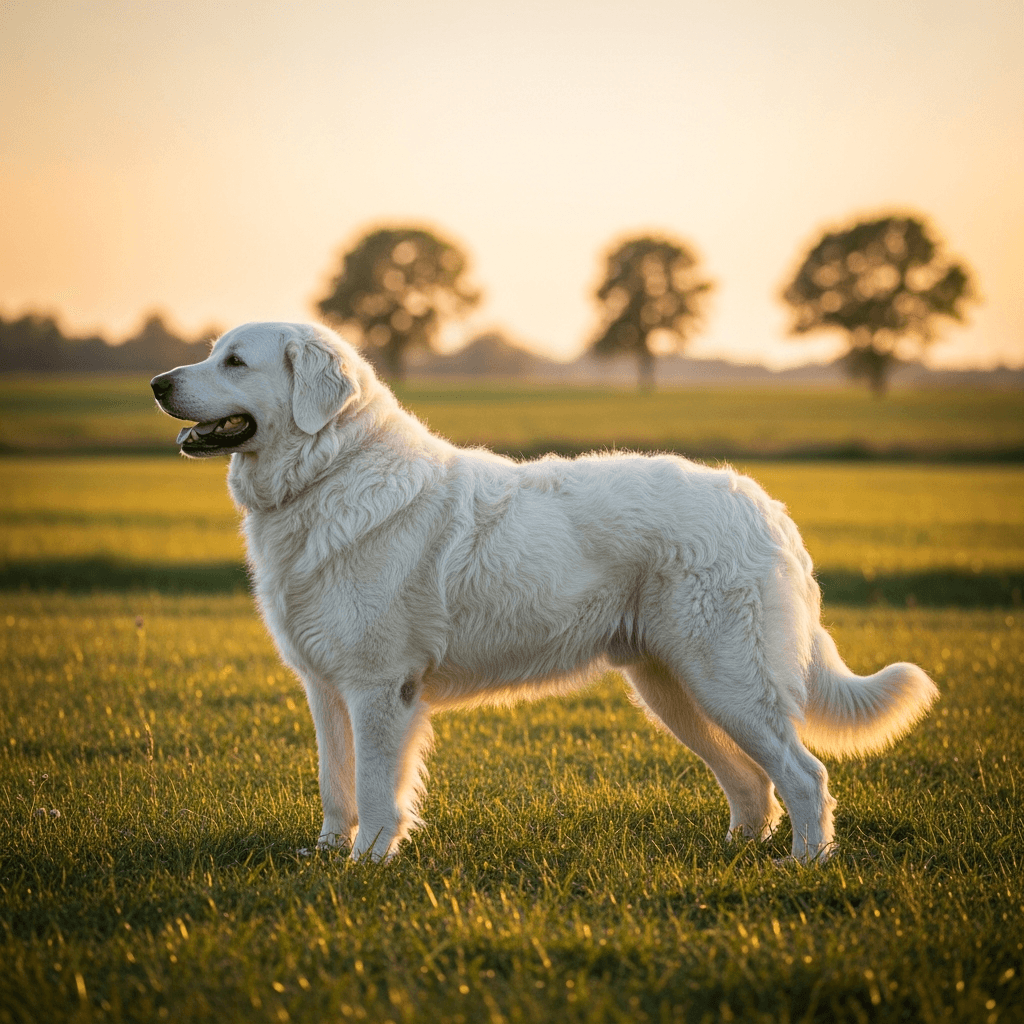
Komondor
FCI Group
1• FCI 53
Size
Large
Origin Country
HU
Height
65-70 cm
Weight
40-60 kg
Lifespan
10-12 years
Temperament
Overview
When we mention dog breeds that attract attention with their unique appearance and character, Komondor certainly deserves a special place. This Hungarian herding dog, also known as a guardian and protector of herds, has fascinated people for centuries with its history and extraordinary functionality.
Komondor is a breed with deep historical roots, dating back to the nomadic Magyars who arrived in the Carpathian Basin with these majestic dogs by their side. Its ancestors came from Asia and for centuries served as reliable guardians of flocks of sheep and cattle.
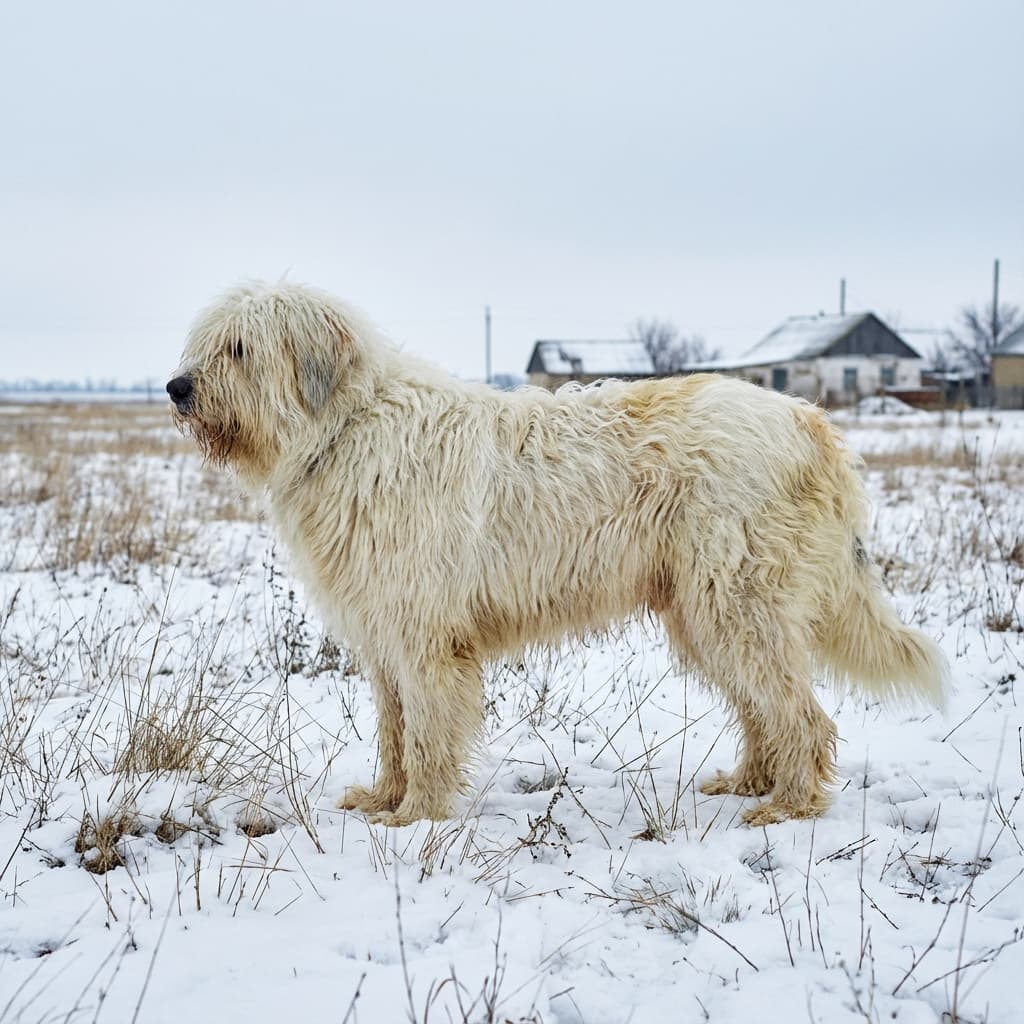
This is a dog of large, powerful build that immediately catches the eye. Its impressive, long, corded coat not only fascinates with its uniqueness but also serves a protective function – protecting against harsh weather conditions and predator attacks. Owners of this breed appreciate not only its extraordinary appearance but also its strong protective instinct and unwavering loyalty.
Interestingly, during the day, the Komondor may seem calm and relaxed, but with the onset of dusk, it becomes a vigilant guardian, patrolling its territory. This trait makes it an excellent choice for those looking for a dog with natural guarding abilities. Its calmness in the face of danger commands respect – the Komondor does not attack hastily but reacts with full determination when the situation demands it.
Despite its impressive stature, the Komondor requires an appropriate amount of physical activity and mental stimulation. It feels best in large spaces where it can freely perform its herding tasks. However, this does not mean that it cannot fit into a family – on the contrary, its relationships with household members can be very positive, provided that we offer it the right conditions and consistent training.
Despite its independence, the Komondor needs an owner who understands its needs and is willing to dedicate time to its upbringing. This is a breed for experienced individuals who are looking for more than just a household pet. It is a companion that requires consistency, patience, and determination, but in return offers unmatched loyalty and devotion.
Discover more about this extraordinary breed in the following sections of our guide, where we will discuss details regarding health, grooming, training, and its fascinating history. Let the Komondor inspire you to deepen your knowledge of what an exceptional companion it can be in everyday life.
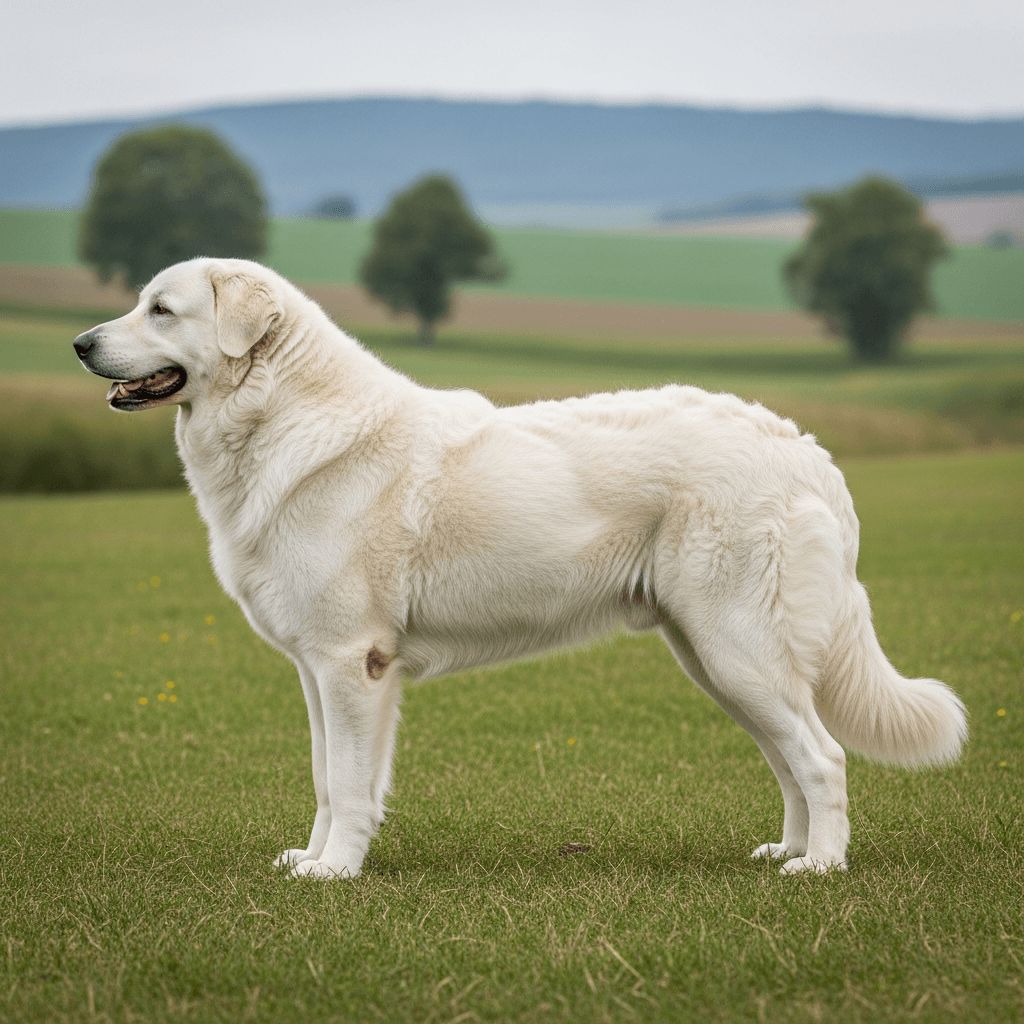
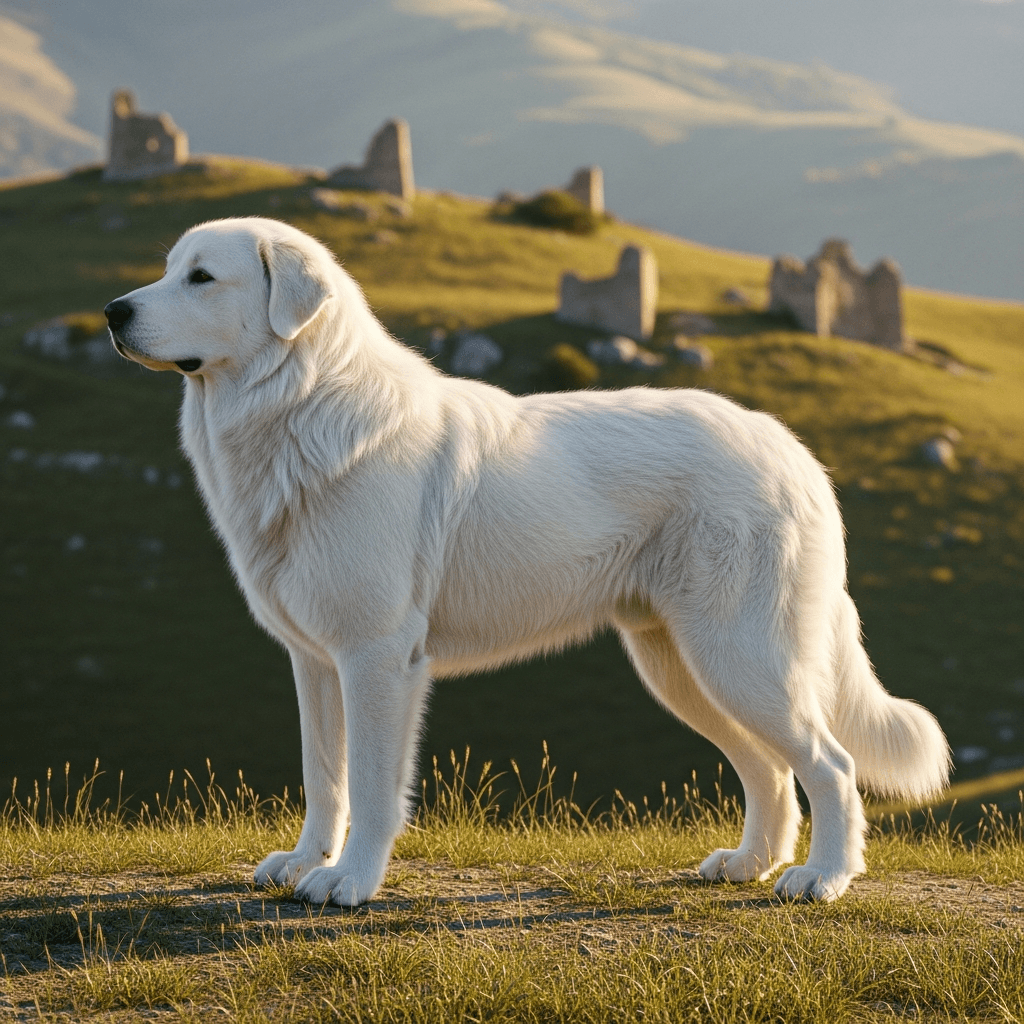
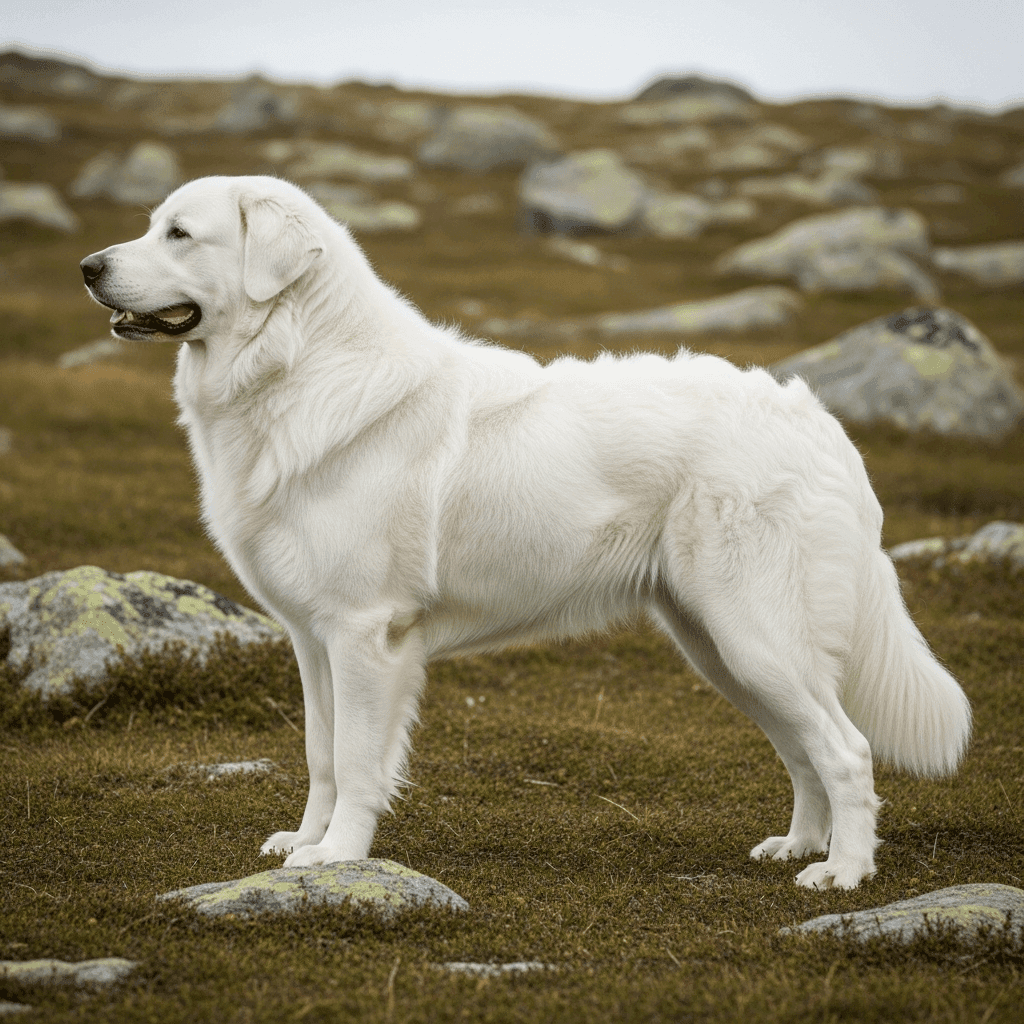
The Komondor is a dog with an impressive, powerful appearance that attracts attention with its unique coat. Its body is solid, well-muscled, and muscular, emphasizing the strength and endurance of this breed.
Dimensions and build:
- Height at the withers: minimum 70 cm for males, 65 cm for females
- Weight: from 40 to 60 kg
- Body shape: rectangular, close to square, with a well-developed chest
Head and face:
The Komondor has a wide, proportional head with distinctly outlined brow ridges. The eyes are dark brown, set horizontally, emanating calmness and alertness. The ears are shaped like a V or U, hanging down the sides of the head and covered with dense fur.
Characteristic coat:
The coat of the Komondor is the most recognizable element of its appearance. Long, coarse, and corded, it forms natural ropes resembling dreadlocks that can reach the ground. The coat is always in the color of ivory, less frequently white. This unique fur structure not only attracts attention but also makes the Komondor extremely resistant to adverse weather conditions.
Limbs and tail:
This breed has strong, muscular limbs that provide excellent stability and agility, despite its large size. The tail is set low, carried down, with the tip slightly raised horizontally. During movement, it may be lifted higher, but it is never curled over the back.
The temperament of the Komondor is closely related to its purpose as a herding and guarding dog. By nature, it is a brave, loyal, and territorial animal that defends its entrusted territory with unwavering determination.
Relations with strangers:
The Komondor is not a sociable dog towards strangers – it is suspicious of intruders and does not tolerate the presence of outsiders on its territory without the owner's consent. This trait makes it an excellent guardian, but it requires early socialization to teach it proper behavior in various social situations.
Character and disposition:
Despite its territoriality, the Komondor is relatively calm and balanced, allowing it to carefully observe its surroundings. It is not a dog that reacts hastily – it first analyzes the situation and then takes action. This is a trait highly valued by owners who appreciate its prudence and caution.
Relations with family:
In interactions with family, the Komondor is loyal and devoted, although it is not a dog that requires constant attention or affection. It is independent and self-sufficient, meaning it can spend time alone without signs of distress. In relations with children, it is gentle and patient, but one should not expect it to become a playmate – it is primarily a guardian and protector.
Activity needs:
Despite its calm demeanor, the Komondor requires regular exercise and tasks that engage its mind. It feels best when it has specific duties to fulfill – whether it's guarding the territory or taking care of a flock. Without adequate stimulation, it may become bored, which can lead to undesirable behaviors.
The Komondor is a breed of dog that generally enjoys good health, but like any large breed, it is susceptible to certain conditions characteristic of dogs of significant size.
Life expectancy:
The average life expectancy of a Komondor is 10 to 12 years, which is typical for large breed dogs.
Most common health problems:
- Hip dysplasia (CHD): a condition common in large breeds, causing mobility issues
- Gastric torsion: a life-threatening condition requiring immediate veterinary intervention
- Cataracts: which can lead to vision loss in older age
- Skin problems: sebaceous gland cysts, dermatoses, fungal infections under thick fur
- Entropion: inward rolling of the eyelids, causing eye irritation
Sensitivity to temperature:
The Komondor, despite its cold resistance due to its thick coat, is sensitive to high temperatures. Its dense fur can lead to overheating on hot days, so owners should provide a cool place and access to fresh water.
Health prevention:
Regular veterinary check-ups, a properly balanced diet, and physical activity can help minimize the risk of developing conditions. It is also advisable to regularly check the condition of the coat and skin under the fur to detect any potential problems early. Additionally, this breed is not particularly prone to obesity, which is beneficial for the overall health of the joints and cardiovascular system.
Grooming a Komondor may seem complicated due to its distinctive, long, corded coat, but in reality, it primarily requires patience and consistency, rather than frequent grooming sessions.
NOTE: Never brush a Komondor!
A Komondor should not be brushed, as it would destroy the natural shape of its coat. The cords form naturally as the dog matures and are its greatest asset both visually and functionally.
Basics of coat care:
- Regularly separating the cords: to avoid matting, owners should systematically separate the forming cords by hand
- Checking for cleanliness: inspecting the coat for dirt, food residues, or debris
- Removing foreign bodies: leaves, twigs, or grass can get tangled in the coat during walks
Baths:
It is recommended to wash a Komondor several times a year (2-4 times) to keep its coat in good condition. Bathing is time-consuming – the coat takes a long time to dry (even 1-2 days!), so it is best done on warm, sunny days. After bathing, the cords should be thoroughly dried to prevent unpleasant odors or fungal infections.
Other grooming elements:
- Ear checks: regular checking and cleaning to prevent infections
- Dental hygiene: brushing teeth 2-3 times a week
- Nail trimming: every 4-6 weeks, if they do not wear down naturally
- Skin checks: regularly inspecting the skin under the coat to detect any potential issues
Note for beginners:
Grooming a Komondor requires time and commitment. It is advisable to consult with an experienced groomer or breeder to learn the proper grooming techniques for this unique breed.
The Komondor is a breed of dog that requires a significant amount of exercise, despite its large size and seemingly calm disposition. It is an active and energetic dog that needs daily physical activity to maintain good health and mental balance.
Minimum exercise requirements:
- Daily walks: at least 1-2 hours a day
- Free running: access to a safe area where it can run off-leash
- Mental activity: tasks that engage its herding and guarding instincts
Ideal environment:
The best environment for a Komondor is open spaces, such as rural areas, farms, or large properties with gardens, where it can fully utilize its natural herding skills. This dog needs territory to patrol – it is its natural instinct that should be satisfied.
Types of activities:
- Long walks: over varied terrain, allowing for exploration
- Running: in safe, fenced areas
- Agility: for dogs in good condition (adapted for large breeds)
- Obedience: training that engages the dog's mind
- Herding tasks: an ideal form of activity for this breed
Consequences of lack of activity:
Without sufficient exercise, a Komondor may become bored and frustrated, leading to behavioral problems such as:
- Excessive barking
- Destructive behaviors (digging, chewing)
- Hyperactivity or apathy
- Obedience issues
Note:
Owners living in cities should seriously consider whether they can provide a Komondor with the appropriate amount of space and activity. This breed is not suitable for living in an apartment or a small flat without access to a garden.
Training a Komondor is a process that requires consistency, patience, and experience. Due to its independent nature and strong, determined character, the Komondor can be a challenge, especially for those without prior experience in training large breed dogs.
Training characteristics:
- Independence: The Komondor has a strong will and often makes decisions independently
- Intelligence: learns quickly, but must see the purpose in following commands
- Territoriality: natural defensive instinct requires proper guidance
- Late maturity: dogs of this breed mature slowly (2-3 years)
Training methods:
Owners should use positive training methods, rewarding the dog for good behavior. Physical punishment or aggression is absolutely discouraged and can destroy the dog's trust and provoke undesirable defensive reactions.
Key elements of training:
- Early socialization (8-16 weeks): crucial for acceptance of other animals and people
- Consistency: clear rules and adherence to them by all family members
- Patience: one should not expect quick results
- Respect: The Komondor requires to be treated with respect, does not tolerate violence
Basic commands:
The Komondor should master basic obedience commands:
- Sit
- Stay
- Come
- Lie down
- Leave it (important due to the defensive instinct)
Control of the defensive instinct:
The most important element of training a Komondor is teaching it when it is the right time to defend and when to remain calm. The Komondor has a natural protective instinct, so the owner must become the pack leader for the dog to trust their assessment of the situation.
Recommendations:
Consider working with a professional dog trainer who has experience with large guarding breeds. Regular training that engages both the mind and body of the dog is essential for its well-being and proper behavioral development.
The Komondor's diet should be carefully balanced to meet its energy needs and support the health of this large, active breed. Proper nutrition is crucial for maintaining condition, healthy joints, and a beautiful coat.
Basic nutrition guidelines:
- High-quality food: rich in animal protein (minimum 22-26% for adult dogs)
- Age-appropriate: puppies, adult dogs, and seniors have different nutritional needs
- Consideration of activity: more active dogs require more calories
- Animal protein: essential for maintaining muscle mass and condition
Preventing bloat:
The Komondor, like all large breeds, is prone to the serious condition of bloat. To minimize the risk:
- Feed 2-3 smaller meals a day instead of one large meal
- Avoid intense activity immediately before and after meals (1-2 hours break)
- Do not allow the dog to drink large amounts of water right after eating
- Feed the dog in a calm environment
Weight control:
The Komondor is not particularly prone to obesity, but excess calories can lead to health problems, especially joint strain. Regular weighing and monitoring of body condition are advisable. The owner should adjust food portions to the individual needs of the dog, observing its body shape and energy level.
Supplementation:
- Glucosamine and chondroitin: support joint health (especially important in large breeds)
- Omega-3 fatty acids: support skin and coat health
- Probiotics: support digestive health
Hydration:
Fresh water should be always available for the dog to ensure proper hydration. This is especially important on warm days when the Komondor is more prone to overheating due to its thick coat.
Note:
Before making any changes to the diet or supplementation, consult with a veterinarian who can help tailor nutrition to your dog's individual needs.
Characteristic Traits
Pros
- Unmatched loyalty and devotion
- Excellent guardian of property and family
- Unique
- eye-catching appearance
- Resilience to harsh weather conditions
- Calm and balanced temperament.
Cons
- Requires regular grooming of the corded coat
- Needs a lot of space to live
- Requires an experienced owner
- Long drying time after bathing
- Distrustful of strangers (requires socialization)
Behavioral Ratings
Breed History
The Komondor is a breed whose history dates back over a thousand years, making it one of the oldest herding dog breeds in the world. Its fascinating past is inextricably linked to the history of Hungary and the nomadic peoples of Asia.
Asian origin:
It is believed that the ancestors of the Komondor arrived in the territory of present-day Hungary with the nomadic Magyars around the 9th-10th century AD. These ancient shepherds led a nomadic lifestyle, herding sheep and cattle, and their canine companions were essential for protecting the herds from predators such as wolves and bears.
Guardian role, not herder:
Unlike many other herding breeds, the Komondor was not used for driving herds – its primary task was protecting the animals. Its impressive appearance and powerful build made it valued by farmers as a reliable guardian. Its white, corded coat allowed it to blend in among the sheep, making it easier to surprise intruders.
Recognition as a national treasure:
In Hungary, the Komondor gained a reputation as a national treasure and was a symbol of rural life. For centuries, this breed has been carefully protected and bred to preserve its unique characteristics.
Difficult times of war:
During World War II, many Komondors were killed by invaders – these dogs defended their homes to the last breath, not allowing outsiders to enter without the owners' permission. The population of the breed was dramatically decimated, and its future was in question.
Rebuilding and modernity:
After the war, Hungarian breeders made heroic efforts to rebuild the population of the Komondor. Thanks to their determination, the breed survived and continues to enjoy popularity, especially in Hungary, where it is still regarded as a symbol of national heritage.
International recognition:
In recent decades, the Komondor has also gained recognition in other countries as a guard dog and companion. It has been registered by the FCI (Fédération Cynologique Internationale) in Group 1, Section 1 – herding dogs. Despite its growing popularity, it remains a relatively rare breed outside of Hungary, making it even more unique.
Contemporary use:
Today, the Komondor is valued both as a working dog (herd protection, property guarding) and as a family companion for those seeking a loyal, independent, and respected partner.