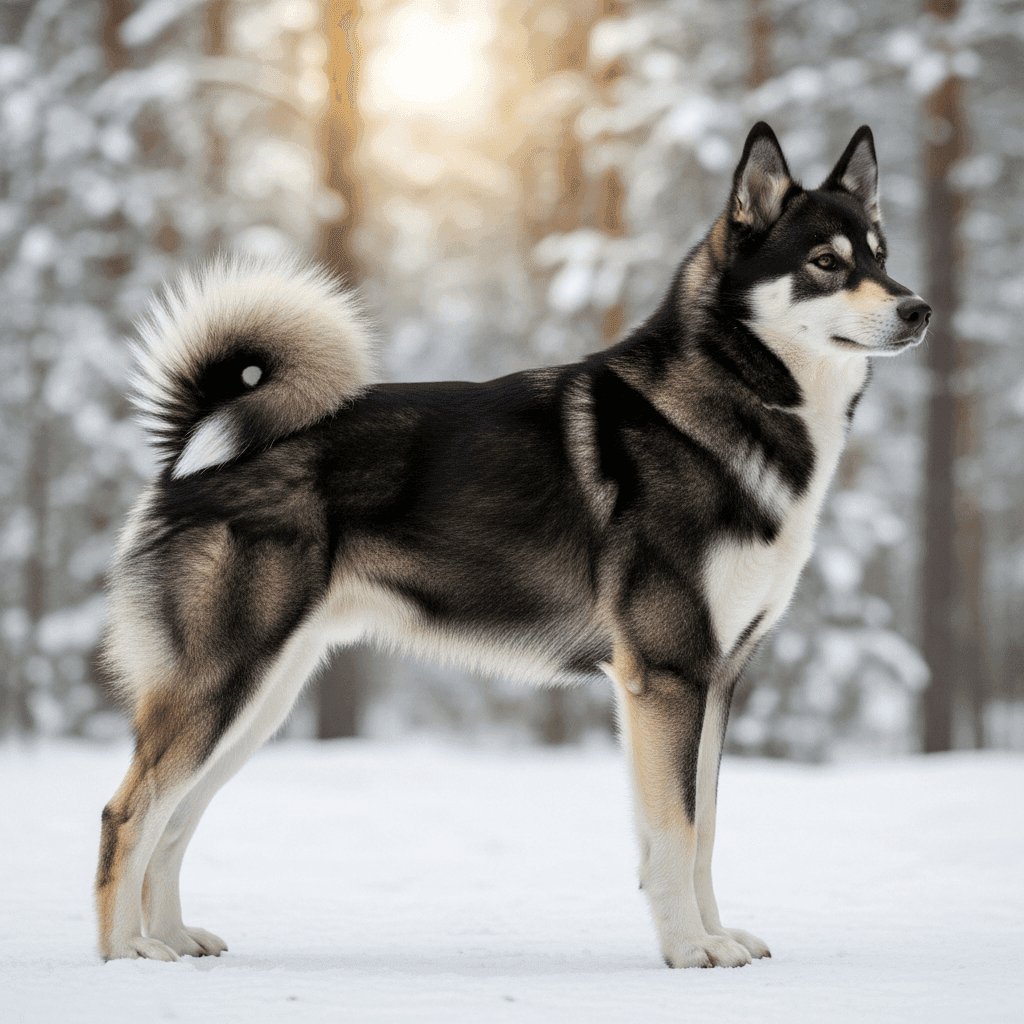
East Siberian Laika
FCI Group
5• FCI 305
Size
Medium
Origin Country
XX
Height
53-64 cm
Weight
20-30 kg
Lifespan
12-14 years
Temperament
Overview
The East Siberian Laika, also known as Vostotchno-Sibirskaïa Laïka, is a fascinating dog breed originating from the vast areas of eastern Siberia. It is one of the largest and most versatile hunting dog breeds in Russia, characterized by its slim, harmonious body structure and impressive character.
Developed in the harsh, severe conditions of Siberia, the East Siberian Laika was created for multi-purpose hunting – from tracking small game to hunting bears. Local tribes such as the Tungus, Yakuts, and residents of the Baikal and Pre-Amur regions used these dogs not only for hunting but also for pulling sleds across snow-covered wilderness. Today, the East Siberian Laika is valued both as a specialized working dog and a loyal family companion.
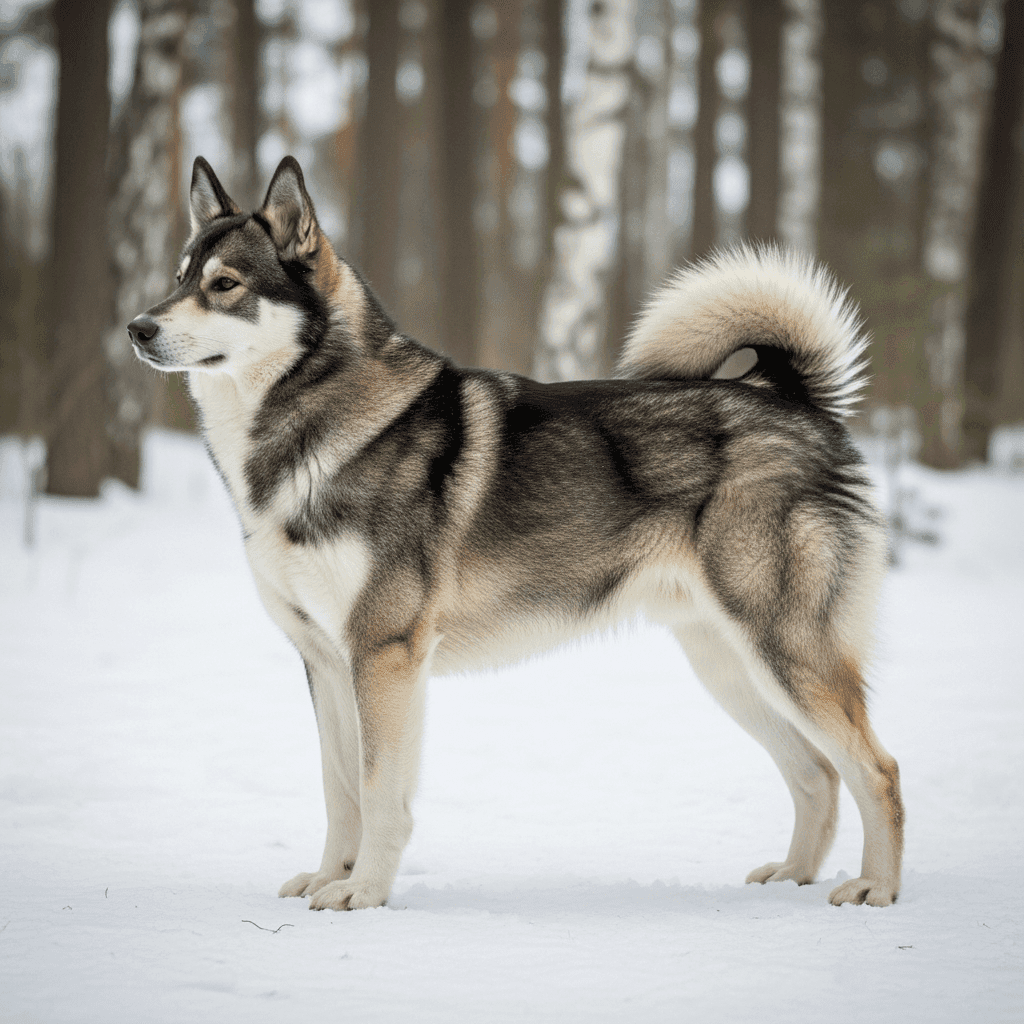
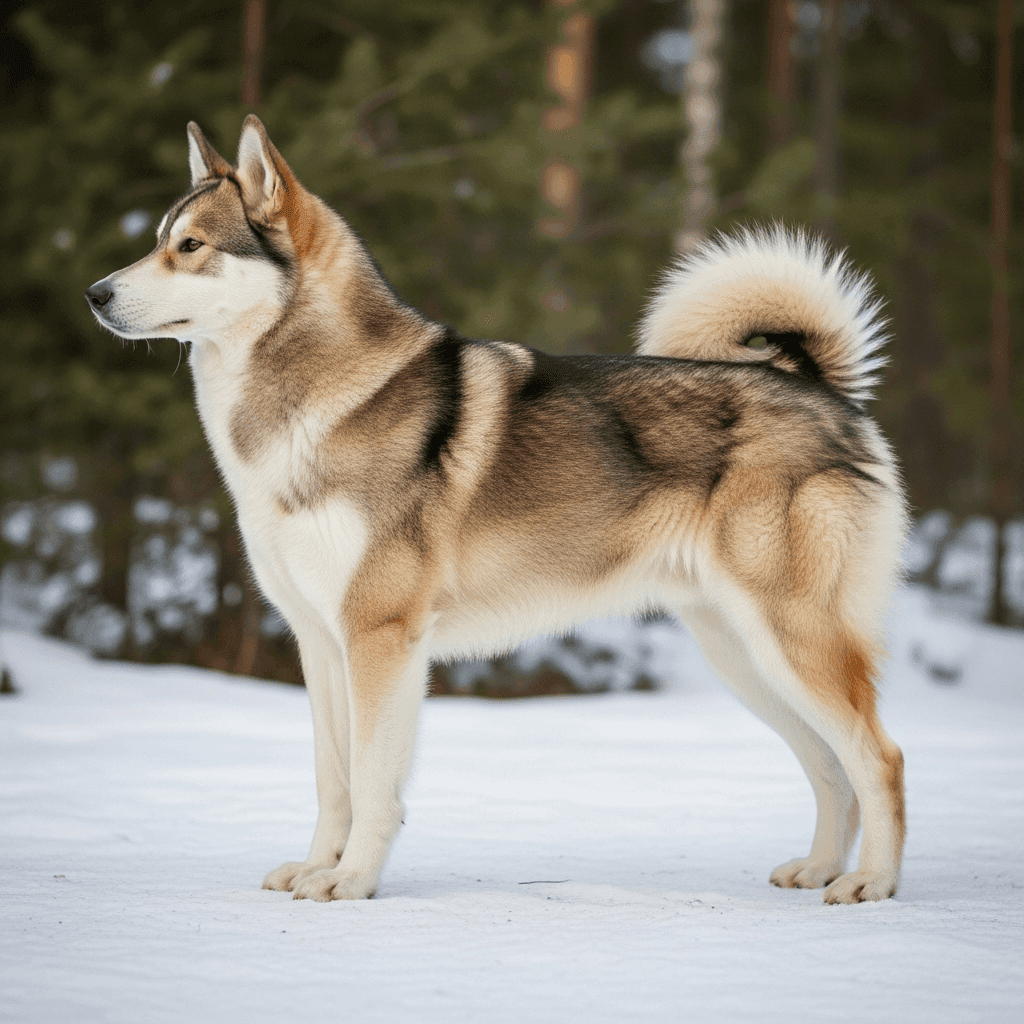
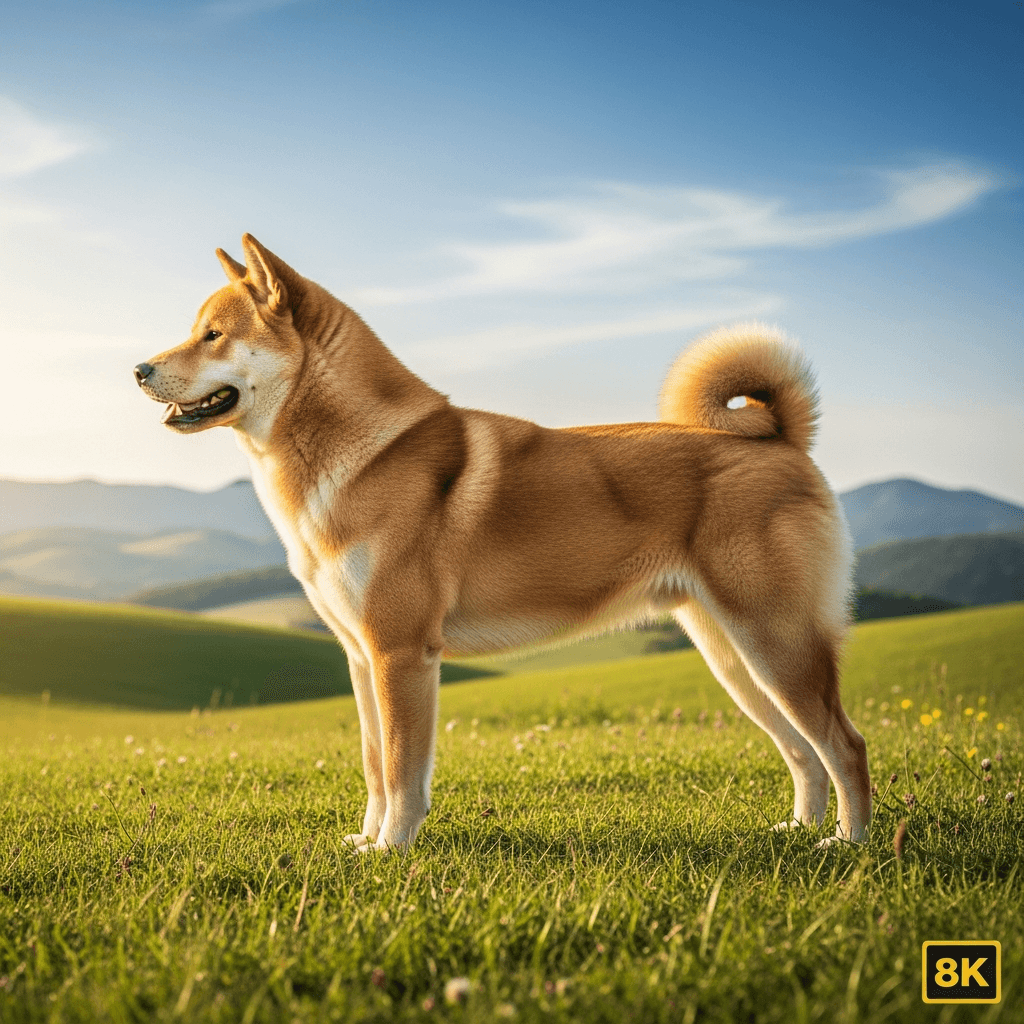
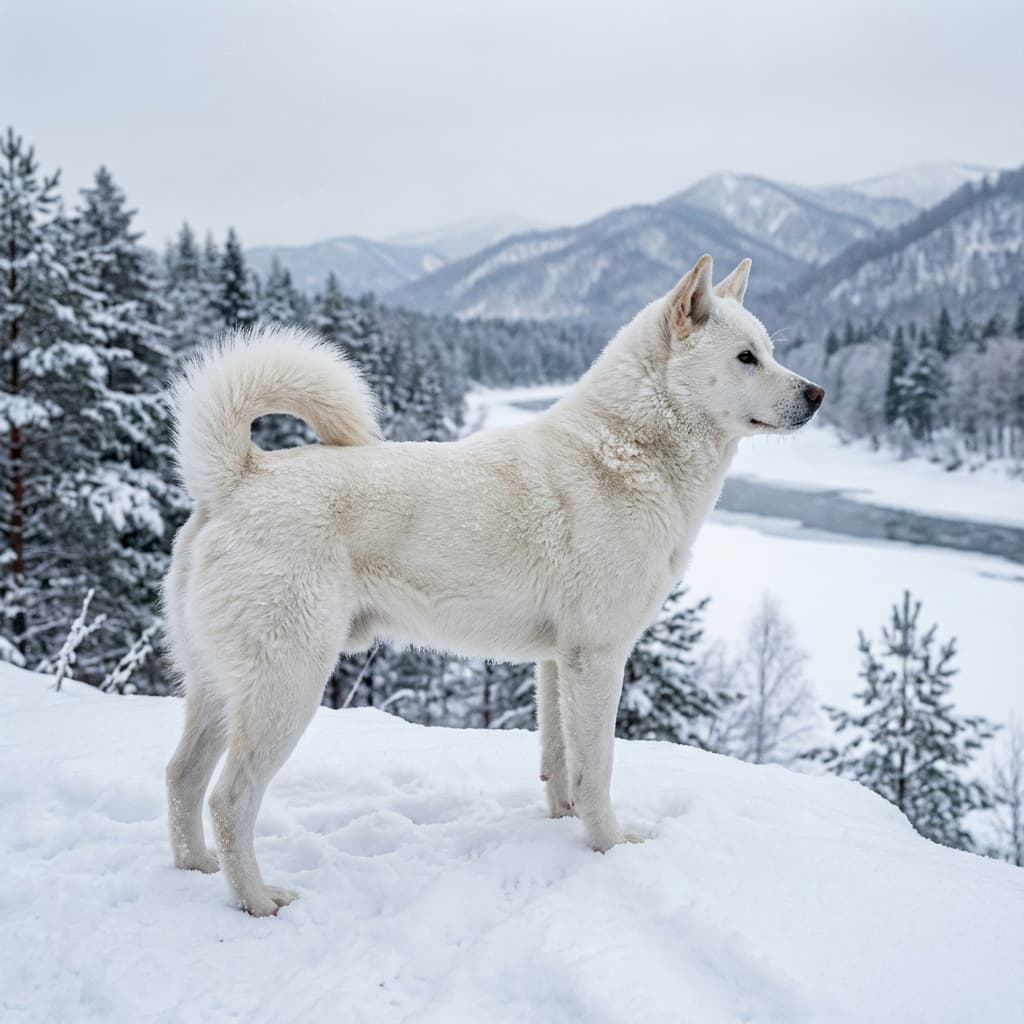
Dogs of this breed reach a height of 53-64 cm at the withers, with males typically being larger (55-64 cm) than females (53-60 cm). Their thick, double coat provides excellent protection against freezing temperatures reaching as low as -50°C. The coat color can be very diverse: white, gray, black, red, brown, often with distinctive patches, speckling, or a mask on the muzzle.
The East Siberian Laika stands out for its high intelligence and ability to make independent decisions while hunting, making it an exceptional partner in the field. However, its strong will and independent character require an experienced, consistent owner. This breed is characterized by a high energy level – it needs daily, intense physical and mental exercise to avoid behavioral problems.
East Siberian Laikas are known for their balanced temperament – they can be calm at home but immediately mobilize for action in the field. Their guarding instinct makes them wary of strangers, but they show deep loyalty and devotion to their family. The ideal living conditions for this breed include a spacious home with a large, fenced garden and an active owner leading an outdoor lifestyle.
Owners of East Siberian Laikas often describe them as dogs with a unique bond with their family, capable of vocal communication through characteristic barking, howling, and other sounds. Their rich history, temperament, and unique skills make them a fascinating breed, ideal for active families, hunters, or individuals living close to nature. We invite you to continue reading to explore topics related to the health, grooming, exercise, training, nutrition, history, appearance, and behavior of this exceptional Siberian breed.
The East Siberian Laika is a dog with a strong, harmonious body structure, characterized by well-developed musculature and strong bones. It is the largest of the Siberian Laika breeds, giving it an impressive appearance and significant physical strength.
Dimensions: The height at the withers is:
- Males: 55-64 cm
- Females: 53-60 cm
- Weight: 20-30 kg (depending on sex and size)
Coat: The coat is long, dense, and double, providing excellent protection against extremely low temperatures (even down to -50°C). The guard hairs are stiff, straight, and shiny, while the undercoat is soft, dense, and woolly. The thickness of the undercoat changes seasonally – it is thinner in summer and much denser in winter. A characteristic collar of longer fur forms around the neck, and the tail is abundantly furred.
Coloration: East Siberian Laikas come in a variety of colors:
- White (often with dark patches)
- Black with white markings
- Gray in various shades
- Red/rust
- Brown
- Piebald – white with large colored patches
- Ticked
A characteristic mask on the muzzle and darker coloration around the eyes are often present.
Head: Wedge-shaped, with a broad skull and a distinctly marked occipital bump. The muzzle is almost equal in length to the skull, giving the head a proportional appearance. The stop (transition from forehead to muzzle) is moderately pronounced. The nose is large, black or brown (depending on the coloration).
Eyes: Oval, set slightly obliquely, dark or brown. The gaze is lively, intelligent, and alert, reflecting the character of a hunting dog.
Ears: Erect, triangular, of medium size, set high on the skull. The tips of the ears are slightly rounded. The dog can move its ears independently, listening for sounds in the environment.
Tail: Sickled or ringed, carried high up or curled over the back. When resting, it may be lowered. The tail is densely furred, which further emphasizes the dog's silhouette.
Limbs: Strong, straight, and parallel. The paws are compact, oval, with strong, curved claws adapted for running on snow and ice. Strong limbs allow for dynamic movement and effective navigation in difficult, mountainous terrain.
Overall silhouette: The East Siberian Laika exudes strength, confidence, and endurance. Its appearance reflects its wild ancestry and functionality as a working dog, making it an excellent companion both in hunting across vast Siberian landscapes and in the daily family life of active individuals.
The East Siberian Laika is a dog with a balanced yet lively temperament, combining the traits of a loyal companion and an independent hunter. It is a breed with a strong personality that requires an experienced owner who understands its nature.
Family relationships: Dogs of this breed are exceptionally loyal and devoted to their family. They form a deep emotional bond with household members and can be very affectionate towards children, provided they are properly socialized from a young age. At home, they can be calm and composed, although they always remain alert to their surroundings.
Attitude towards strangers: East Siberian Laikas can be wary and cautious of strangers. Their natural guarding instinct makes them excellent alarm dogs – they alert with loud barking about approaching individuals. However, they are not aggressive without reason, and their behavior can be shaped through early socialization.
Hunting instincts: This breed has extremely strong hunting instincts. East Siberian Laikas are used for hunting a variety of game – from squirrels, martens, and foxes to wild boars, bears, and lynxes. During hunting, they exhibit:
- Independence – they can make decisions without the owner's command
- Perseverance – they can track game for many hours in difficult terrain
- Vocal communication – characteristic barking informs the hunter of the game's location
- Spatial orientation – they always know how to find their way back
A strong hunting drive means that Laikas may chase smaller animals (cats, rabbits, birds), which requires a secure, fenced area or walking the dog on a leash in public places.
Intelligence and independence: East Siberian Laikas are exceptionally intelligent and can be very independent, making them somewhat stubborn in training. They are not a breed that blindly follows commands – they prefer to understand the purpose of the action. They require a consistent yet positive training approach based on rewards.
Activity and energy: These dogs have a very high energy level and need daily, intense physical and mental exercise. Lack of sufficient activity leads to:
- Hyperactivity and nervousness
- Destructive behavior (destroying furniture, digging)
- Excessive barking and howling
- Attempts to escape in search of adventure
Vocal communication: East Siberian Laikas are very vocal in communication and often use barking, howling, whining, and other sounds to express emotions. This is a natural trait of the breed, which was crucial during hunts (informing the hunter about the game). Owners must be aware of this trait and be prepared for frequent vocalizations.
Behavior in a pack/group of dogs: East Siberian Laikas generally get along well with other dogs, especially if socialized from a young age. In Siberian villages, they often lived in groups and hunted together.
Summary: The East Siberian Laika is a loyal, intelligent, and energetic dog that combines the traits of a wild ancestor with the devotion of a domestic companion. It requires an active lifestyle, space to run, and an experienced owner who will understand and accept its independent nature. For the right individuals and families, it will become a unique, irreplaceable companion for many years.
The East Siberian Laika is typically a healthy and resilient breed that has evolved in the harsh, severe conditions of Siberia, contributing to its endurance and longevity.
Life expectancy: The average lifespan is 12-15 years, which is typical for dogs of this size. With proper care, a balanced diet, and regular physical activity, many individuals live to be 14-15 years old in good condition.
Genetic resistance: The East Siberian Laika is considered a breed with a relatively low risk of genetic diseases, mainly due to the natural selection process in the harsh Siberian climate. Weak individuals did not survive, leading to a strong gene pool.
Common health issues:
- Cryptorchidism – the failure of one or both testicles to descend into the scrotum (a problem occurring in males, requiring breeding attention)
- Hip dysplasia (HD) – abnormal formation of the hip joint leading to pain and lameness (less common than in large breeds, but possible)
- Elbow dysplasia (ED) – abnormal development of the elbow joint (rare, but worth screening before breeding)
- Age-related joint problems – natural wear and tear on joints in older individuals
Prevention and healthcare:
- Regular veterinary visits – check-ups every 6-12 months, vaccinations, deworming
- Pre-breeding examinations – breeders should screen dogs for hip and elbow dysplasia (X-rays)
- Weight control – excess weight puts strain on joints and the heart; the dog's condition should be monitored
- Physical activity – regular exercise supports the health of the musculoskeletal, circulatory, and digestive systems
- Healthy diet – balanced nutrition rich in protein, healthy fats, vitamins, and minerals
Resistance to climatic conditions:
- Cold – the East Siberian Laika tolerates freezing temperatures excellently thanks to its thick, double coat. It can function in temperatures as low as -50°C without issues.
- Heat – dogs of this breed are sensitive to high temperatures. During hot days, they should have access to shade, fresh water, and an air-conditioned room. Intense exercise in the heat should be avoided (risk of overheating and heat stroke).
Hygiene and health care:
- Ear care – erect ears are less prone to infections, but they should be checked and cleaned regularly
- Dental hygiene – brushing teeth 2-3 times a week prevents tartar buildup and gum disease
- Nail care – active dogs usually wear down their nails naturally, but they should be checked and trimmed if necessary
- Eyes – check for cleanliness, removing debris from the corners of the eyes
Notes for owners: A responsible owner should be aware of the health needs of the East Siberian Laika and take proactive steps to meet them. Regular veterinary care, a healthy diet, vigorous physical activity, and proper grooming are key to a long, happy life for this unique Siberian dog.
The care of the East Siberian Laika requires regular treatments, mainly due to its dense, double coat. Proper care of the coat is crucial for skin health, the dog's appearance, and maintaining cleanliness in the home.
Coat structure: The East Siberian Laika has a long, dense double coat:
- Guard hair – stiff, straight, shiny, resistant to moisture and dirt
- Undercoat – soft, dense, woolly, providing thermal insulation
The thickness of the undercoat changes seasonally – very dense in winter (protection against frost), thinner and lighter in summer.
Shedding: Dogs of this breed shed hair year-round, but particularly intensely during two main shedding periods:
- Spring – the change from thick winter coat to lighter summer coat
- Autumn – the buildup of thick undercoat for winter
During these periods, the amount of shed hair is very large – entire tufts of undercoat can be collected. This is a natural process of adaptation to changing climatic conditions.
Brushing:
- Basic frequency – at least 1-2 times a week outside of shedding periods
- During intense shedding – preferably daily, to remove dead hair and reduce the amount of fur in the home
- Tools – brush with metal pins, furminator (tool for removing undercoat), wide-toothed comb
- Technique – brushing in the direction of hair growth, carefully detangling mats (especially behind the ears, under the paws, and on the tail)
Bathing:
- Frequency – the East Siberian Laika does not require frequent bathing. A bath 2-4 times a year or as needed (heavy soiling, unpleasant odor) is sufficient.
- Important – too frequent washing removes natural protective oils from the skin and coat, which can lead to dryness, irritation, and dermatological issues.
- Shampoo – use mild shampoos designed for dogs with long, double coats
- Drying – thoroughly dry with a towel or a low-temperature hairdryer (especially important for the dense undercoat to avoid moisture and skin mold)
Ear care:
- The upright ears of the Laika are less prone to infections than drooping ears, but require regular checks
- Check once a week – remove dust, debris, excess wax
- Clean with a gentle ear solution or a damp cotton ball (do not insert deeply into the ear canal)
Dental hygiene:
- Brush teeth 2-3 times a week (preferably daily) with a dog toothbrush and toothpaste
- Prevents tartar buildup, gum disease, and bad breath
- Supplement: dental chews, dried chewing products
Nail care:
- Active Laikas usually naturally wear down their nails while running on various terrains
- If nails are too long (you can hear them clicking on the floor), they should be trimmed with scissors or clippers
- Be careful – avoid cutting the living part of the nail (which contains blood vessels and nerves)
Eye check:
- Check daily – remove debris from the corners of the eyes with a damp cotton ball
- In case of redness, excessive tearing, or discharge – consult a veterinarian
Special notes:
- After walks in the woods or fields – check the coat for ticks, grass seeds, and mats
- In winter – remove clumps of snow and ice between the paw pads (they can cause injuries)
- In summer – check the paws after running on hot surfaces (asphalt can burn the pads)
Summary: Proper care of the East Siberian Laika is key to maintaining skin health, beautiful coat, and the dog's well-being. Regular brushing (especially during shedding), occasional baths, hygiene of ears, teeth, nails, and eyes – these are the basic treatments that every owner of this breed should incorporate into their routine. With proper care, the East Siberian Laika will be healthy, beautiful, and comfortable all year round.
The East Siberian Laika is a breed with a very high energy level that requires regular and intense physical exercise to remain healthy, balanced, and happy. It is a working dog, designed for hours of tracking game in the challenging, mountainous Siberian terrain – its exercise needs are therefore significantly greater than those of an average pet dog.
Minimum activity requirements:
- Daily walks – at least 2-3 walks per day, each lasting at least 30-45 minutes
- Intensity – not just walking, but fast walking, running, tracking or other activities that engage muscles and fitness
- Total – at least 2-3 hours of physical activity per day
Types of exercises ideal for the East Siberian Laika:
- Long hikes in the terrain – forests, mountains, off-road areas where the dog can track scents and explore the environment
- Running – accompanying the owner during jogging or running; Laikas can run for many kilometers
- Fetching – throwing a ball, frisbee, stick (engages hunting instinct)
- Scent exercises – searching for hidden objects, tracking scents (excellent mental stimulation)
- Swimming – many Laikas love water; swimming is a great low-impact exercise for the joints
- Agility – obstacle courses, tunnels, slaloms (combines physical activity with mental stimulation)
- Obedience – obedience training in the field
- Dog frisbee, flyball – dynamic dog sports
- Simulated hunting – tracking artificial scents, mantrailing
- Pulling sleds/carts (in winter) – a natural activity for this breed
The importance of a safe, fenced area:
Due to their strong hunting instinct, East Siberian Laikas tend to chase after game (cats, squirrels, rabbits, birds). For this reason:
- Walks in public places – always on a leash (unless in a safe, fenced area designated for dogs)
- Off-leash time – only in a safe, fenced area (high fence, at least 1.5-2 m) or in the wilderness, where there are no threats
- Recall training – crucial, but Laikas may ignore recall in the presence of game
Consequences of insufficient activity:
If an East Siberian Laika does not receive sufficient exercise, serious behavioral problems may arise:
- Hyperactivity and nervousness – the dog becomes restless and cannot calm down
- Destructive behavior – destroying furniture, floors, doors, digging holes in the garden
- Excessive barking and howling – frustration manifests as loud vocalization
- Escape attempts – jumping over fences, digging under the fence, escaping during walks
- Aggression or anxiety – excess unused energy can lead to emotional problems
- Overweight – lack of movement + normal eating = health problems
Mental stimulation:
In addition to physical activity, East Siberian Laikas need mental stimulation:
- Scent games – hiding treats, searching for objects
- Dog puzzles – interactive toys that require problem-solving
- Learning new commands – regular obedience training
- Changing walking routes – new places, new scents, new experiences
Ideal owners for the East Siberian Laika:
- People leading an active lifestyle – runners, hikers, hunters
- Owners with a large, fenced garden (at least several hundred square meters)
- Families living close to natural areas – forests, mountains, parks
- People willing to dedicate at least 2-3 hours a day to activities with the dog
Summary: The East Siberian Laika is a dog that requires a huge amount of movement and stimulation. It is not a breed suitable for people leading a sedentary lifestyle, living in small apartments without access to green areas, or working all day. Owners of this breed must be prepared for long-term commitment to daily, intensive physical activity. In return, they will receive a loyal, resilient, and energetic companion who loves shared adventures outdoors.
Training the East Siberian Laika can be both a satisfying experience and a challenge, requiring patience, consistency, and experience. This breed combines high intelligence with a strong will and independent character, which requires a special training approach.
Training characteristics:
- High intelligence – Laikas quickly learn new commands and understand the rules
- Independence – their history as hunting dogs has developed self-reliance in decision-making
- Strong will – they can be stubborn and will not always blindly follow commands
- Need to understand the purpose – Laikas prefer to understand why they should do something rather than just mechanically follow orders
Recommended training approach:
1. Positive reinforcement (rewarding):
- Using rewards – treats, verbal praise, playing with a favorite toy
- Rewarding immediately after the command is performed – the dog must associate the reward with the behavior
- Avoiding physical punishment and shouting – leads to fear and loss of trust
2. Consistency:
- Clear commands – always use the same words for the same commands (Sit, Stay, Come, Lie down, Stand)
- Enforcing rules – if something is forbidden once, we cannot allow it next time
- All family members – apply the same rules and commands
3. Early start to training:
- Best from puppy age (8-12 weeks) – young dogs are most receptive to learning
- Basic commands: Sit, Stay, Come, Lie down, No
- Puppy kindergarten – socialization with other dogs and people
4. Socialization:
- Early exposure (3-14 weeks of life) to various stimuli:
- Different people (children, adults, elderly, in various clothing)
- Other dogs and animals
- Different environments (city, park, forest, dog-friendly stores)
- Various sounds (cars, trains, fireworks, vacuum cleaners)
- Goal: the dog becomes confident, balanced, and not fearful
5. Short, frequent training sessions:
- Session length – 5-15 minutes (Laikas can get bored with long sessions)
- Frequency – 2-3 times a day
- Variety – changing exercises to maintain interest
Basic commands to teach:
- Sit – the dog sits on command
- Stay/Wait – the dog remains in place until released
- Come/Here – recall (the most important safety command!)
- Lie down – the dog lies down on the ground
- No/Leave it – the dog stops doing something undesirable
- Heel/By my side – the dog walks calmly by the owner's side
Challenges in training the East Siberian Laika:
- Stubbornness and independence – they may ignore commands if they deem them irrelevant
- Strong hunting instinct – difficulties with recall in the presence of game
- Excessive vocalization – a natural trait of the breed, difficult to eliminate completely
- Boredom – repetitive exercises quickly become dull
Solutions:
- Variety – change exercises, training locations, rewards
- Motivation – use high-value rewards (e.g., meat, cheese) in challenging situations
- Patience – do not give up, be consistent for months/years
- Professional trainer – consider working with a trainer experienced in primitive/hunting breeds
Advanced training:
Once basic commands are mastered, East Siberian Laikas can participate in:
- Hunting training – tracking, retrieving, fieldwork
- Agility – obstacle courses
- Obedience – advanced obedience
- Mantrailing – tracking people
- Nose work – scent work
Errors to avoid:
- Physical punishment – destroys trust and leads to fear
- Inconsistency – allowing something one time and forbidding it another = the dog does not know what is expected of it
- Too long sessions – the dog gets bored, loses motivation
- Lack of socialization – leads to fear, aggression towards strangers
- Giving up – Laikas test boundaries; if we give in once, they will repeat it
Who should train the East Siberian Laika:
- Experienced dog owners – individuals who understand dog psychology
- Consistent and patient – ready for long-term commitment
- Active individuals – training requires time and energy
- Not for beginners – the first dog should be an easier breed to train
Summary: Training the East Siberian Laika is a long-term commitment that requires patience, consistency, and understanding of the independent nature of this breed. With the right approach – positive reinforcement, early socialization, and varied exercises – excellent results can be achieved. However, owners must be aware that the East Siberian Laika will never be a dog that blindly follows commands – it will always retain a degree of independence. For experienced, patient owners, it will become a unique, intelligent companion with whom working is a true pleasure.
Proper nutrition is crucial for the health, condition, and longevity of the East Siberian Laika. Due to their high physical activity and fast metabolism, dogs of this breed require a diet rich in high-quality protein and healthy fats to support their energy, musculature, and overall condition.
Basic nutrition principles:
- High-quality food – premium or super-premium, made from natural ingredients
- Main ingredient: meat – chicken, beef, lamb, fish (minimum 40-60% of the food composition)
- Avoid cheap foods – they contain fillers (grains, low-quality meat meals), artificial colors, and preservatives
- Suitable for active dogs – foods labeled as Active, Working Dog, Performance
Nutrients:
- Protein (25-35%) – muscle building, tissue regeneration; sources: meat, fish, eggs
- Fats (15-25%) – source of energy, healthy skin and coat; sources: salmon oil, flaxseed oil, poultry fat
- Carbohydrates (20-40%) – long-term energy; sources: rice, oats, sweet potatoes (avoid wheat and corn – allergens)
- Vitamins and minerals – support the immune system, bones, joints (calcium, phosphorus, vitamins A, D, E)
- Omega-3 and omega-6 fatty acids – healthy skin, shiny coat, brain functions
Types of food:
- Dry food (kibble) – the most popular, convenient, helps clean teeth
- Wet food (cans) – tastier, more moisture, better for dogs with dental issues
- BARF diet (raw meat + vegetables) – natural, similar to a wolf's diet; requires knowledge and time to prepare
- Homemade food (cooked) – control of ingredients, but requires supplementation with vitamins and minerals
Portions and feeding frequency:
- Puppies (2-6 months) – 3-4 meals a day
- Young dogs (6-12 months) – 2-3 meals a day
- Adult dogs (over 12 months) – 2 meals a day (morning and evening)
- Amount – according to the manufacturer's recommendations (depends on weight, age, activity); typically 300-500 g of dry food per day for an adult dog (20-30 kg)
Note: Dividing into two meals reduces the risk of gastric torsion (a serious condition in active, large dogs).
Adjusting diet to activity:
- Very active dogs (hunting, long daily hikes) – increase portions by 10-20% or choose Performance/Working Dog food
- Less active dogs (basic walks) – standard portions or Maintenance food
- Older dogs (over 8-10 years) – Senior food (fewer calories, more joint-supporting ingredients)
Hydration:
- Fresh water available 24/7 – especially important for active dogs
- Water change – at least twice a day
- Attention in heat – Laikas are sensitive to high temperatures; provide access to shade and water
Natural treats (training rewards):
- Dried meat – chicken, beef, game
- Dried fish – salmon, cod
- Dental chews – clean teeth, keep the dog occupied
- Vegetables and fruits – carrots, apples, pears (without seeds), blueberries
- Natural yogurt, cottage cheese – source of probiotics (in small amounts)
PROHIBITED products (toxic to dogs):
- Chocolate (toxin: theobromine)
- Onion, garlic (destroy red blood cells)
- Avocado (toxin: persin)
- Grapes, raisins (kidney damage)
- Xylitol (artificial sweetener – deadly)
- Alcohol, coffee, tea
- Cooked bones (splinter, injure intestines; raw large bones OK)
Weight control:
- Regular weighing – monthly; adult Laika: 20-30 kg
- Condition check – ribs should be palpable but not visible; visible waist when viewed from above
- Overweight – burdens joints, heart; reduce portions, increase activity
- Underweight – increase portions, consult a veterinarian (possible parasites, diseases)
Supplements:
- Glucosamine and chondroitin – joint support (especially in older dogs)
- Salmon oil – omega-3, healthy skin and coat
- Probiotics – gut health
- Vitamins and minerals – if homemade or BARF diet (consultation with a veterinarian)
Special notes:
- Food allergies – if the dog is scratching, has skin problems, diarrhea → consult a veterinarian; possible elimination diet (lamb + rice, fish + sweet potatoes)
- After intense exercise – wait 30-60 minutes before feeding (reduces the risk of gastric torsion)
- Changing food – introduce gradually over 7-10 days (mixing old with new) to avoid digestive issues
Summary: Proper nutrition for the East Siberian Laika is the foundation of its health and condition. High-quality food rich in protein and healthy fats, tailored to the level of activity, served at regular times – is the key to a long, happy life for this exceptional Siberian dog. Owners should monitor their dog's weight, adjust portions to activity, and consult a veterinarian if in doubt. With the right diet, the East Siberian Laika will enjoy excellent condition for many years.
Characteristic Traits
Pros
- Exceptional loyalty to family
- High hunting and tracking skills
- Ability to make independent decisions
- Excellent protection against cold due to thick fur
- Balanced temperament
- Endurance and high energy
- Healthy breed with long longevity.
Cons
- Requires an experienced
- consistent owner
- Needs daily
- intense physical activity (minimum 2-3 hours)
- Strong hunting instincts may lead to escapes and chasing wildlife
- Stubborn and independent nature makes training difficult
- Sensitive to heat
- Excessive vocalization (barking
- howling)
- Not suitable for novice owners.
Behavioral Ratings
Breed History
The East Siberian Laika has a rich and fascinating history, dating back hundreds, if not thousands of years, when it was an invaluable companion to local tribes inhabiting the vast, harsh lands of eastern Siberia. This breed emerged as a result of natural selection and deliberate crossbreeding of various types of Siberian Laikas, which contributed to the development of its unique physical traits and hunting skills.
Origins and Territories:
The East Siberian Laika evolved in the regions of central and eastern Siberia, particularly in the areas of:
- Irkutsk Oblast (Lake Baikal region)
- Yakutia (Sakha Republic)
- Amur Region (eastern Siberia, border with China)
- Tungus Areas (taiga forests)
The breed was created through the crossing of:
- Tungus Laikas (Evenks – nomadic reindeer hunters)
- Yakut Laikas (Yakuts – one of the coldest regions in the world)
- Baikal Laikas (Lake Baikal region)
- Preamur Laikas (Amur River valley)
These local types of dogs, used by indigenous Siberian tribes, were crossbred and naturally selected over centuries, leading to the emergence of a uniform type – the East Siberian Laika.
Role in the Life of Siberian Tribes:
For the indigenous people of Siberia, East Siberian Laikas were essential for survival:
- Hunting – tracking and barking indicated the presence of game (from squirrels, martens, and foxes to wild boars, bears, and lynxes); the meat provided food, and the fur was a trade commodity
- Sled pulling – transporting people and goods across snowy wastelands (though to a lesser extent than huskies or malamutes)
- Guarding – protecting camps from wild animals
- Companionship – bonding with people in harsh living conditions
First Descriptions and Breed Standardization:
- Early 20th century – first written descriptions of the Preamur Laika (which later became the basis for the East Siberian Laika standard)
- 1947 – official recognition of the breed as a separate type of Laika by Soviet canine institutions
- 1949 – publication of the temporary breed standard
- 1981 – approval of the final breed standard
Soviet Era – Development and Breeding:
During the USSR, the East Siberian Laika was a valued working breed:
- State Breeding – breeding programs were established in Siberian regions (Irkutsk, Yakutia)
- Hunting Work – dogs used by professional hunters and trappers
- Export – the beginning of the breed's spread beyond Siberia (mainly to the European part of Russia)
Population Crisis and Recovery:
At one point, the number of East Siberian Laikas decreased due to:
- Urbanization of Siberia
- Decline in traditional hunting
- Crossbreeding with other breeds
However, thanks to the efforts of passionate breeders, the breed was restored and preserved. Breeding programs in the Irkutsk, Yakut, and Leningrad Oblast (St. Petersburg) played a key role in maintaining the purity of the breed.
Modern Times:
Today, the East Siberian Laika is:
- Valued in its native regions – still used as a hunting dog in Siberia
- Popular in the European part of Russia – particularly in the oblasts of: Leningrad (St. Petersburg), Smolensk, Tver, and Moscow
- Appreciated in Scandinavia – breeders in Finland, Sweden, and Norway have begun to recognize its hunting and companionship qualities
- Rare outside of Russia – still little known in Western Europe and North America
FCI Recognition:
- FCI Standard No. 305
- Group 5 – Spitz and Primitive Breeds
- Section 2 – Northern Hunting Dogs
- With working trials
Heritage Characteristics:
The East Siberian Laika is a breed deeply rooted in the history and culture of Siberia. Its independent character, strong hunting instincts, and ability to survive in extreme conditions are a direct legacy of centuries of natural selection and cooperation with humans. It is not just a dog – it is a living cultural heritage of the indigenous Siberian tribes that has survived to the present day.
Symbolism:
In Russia, the East Siberian Laika symbolizes:
- The wild, untamed spaces of Siberia
- Traditional hunting
- Resilience and endurance
- The bond between humans and nature
Summary: The East Siberian Laika is a breed with a remarkable history that combines wild origins with a deep bond with humans. For centuries, it has served Siberian tribes as an indispensable companion in the harsh life of the north, and today it is valued both as a specialized hunting dog and a loyal family companion. Its history, temperament, and skills make it a unique breed that retains the traits of its wild ancestors while being a devoted friend to humans. It is a dog for those seeking a companion with a true spirit of the Siberian wild dog.