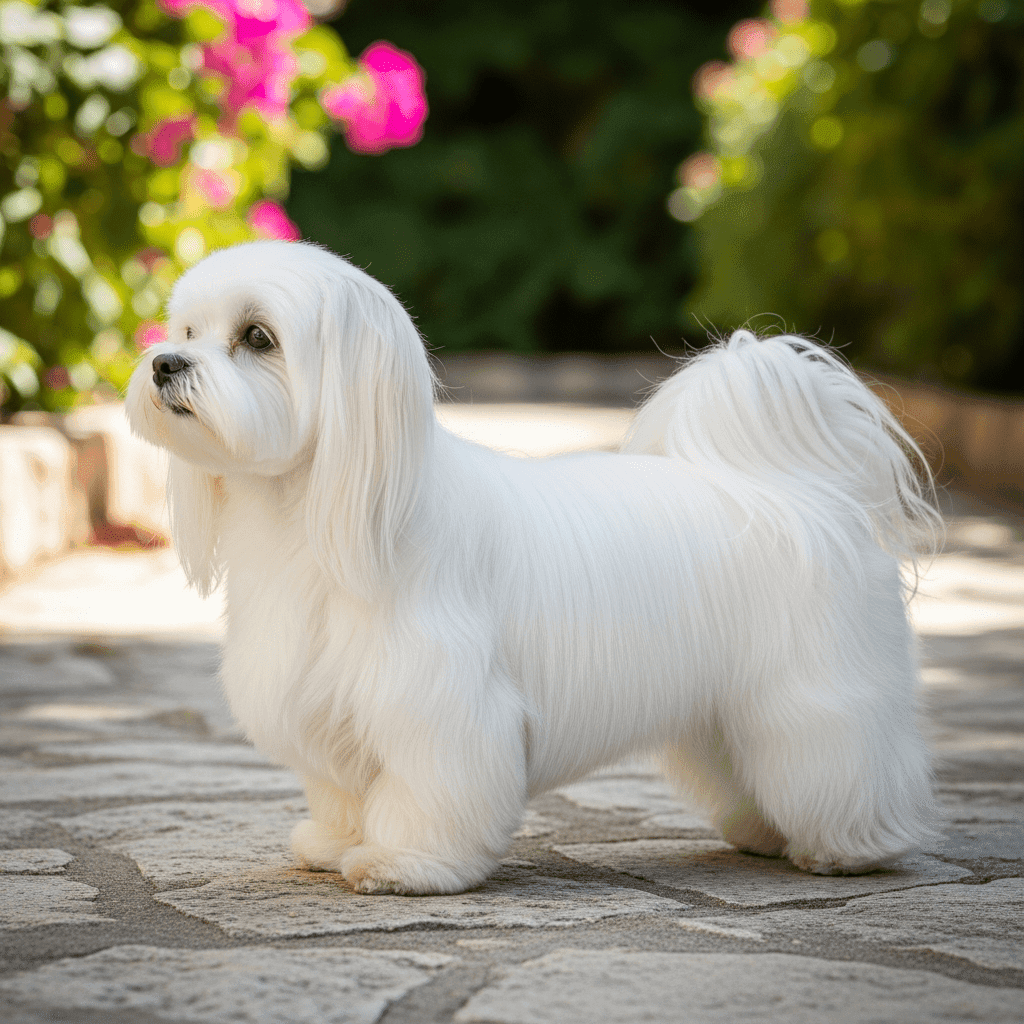
Maltese dog
FCI Group
9• FCI 65
Size
Small
Origin Country
XX
Height
20-25 cm
Weight
3-4 kg
Lifespan
12-15 years
Temperament
Overview
Maltese, also known as Maltese, is an incredibly charming decorative dog that has captivated people for centuries with its elegant appearance and attachment to humans. Its history dates back to ancient times – it was a favorite of Roman matrons, depicted in Renaissance artworks alongside aristocrats.
The breed's name does not come from the island of Malta, as one might think. It derives from the Semitic word màlat, meaning harbor or shelter. The ancestors of Maltese lived in the ports of the Mediterranean basin, where they hunted mice and rats in warehouses and on ships.
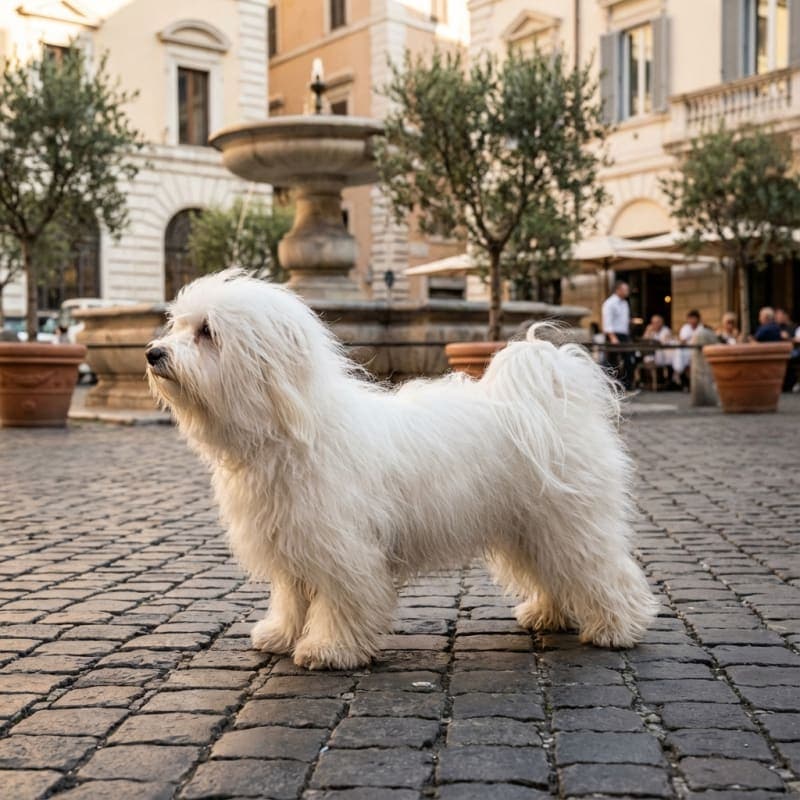
The most characteristic feature of the Maltese is its long, snow-white, silky coat, which resembles a cloak flowing to the ground. This appearance requires regular grooming, but the effect is stunning – the Maltese is a living picture of elegance.
Despite their small size (weight 3-4 kg), Maltese are full of energy and joy for life. Their intelligence makes training easy, and their adaptability allows them to thrive in almost any environment. They do well in families with children as well as with elderly individuals. They are ideal dogs for apartment living – their exercise needs can be met with daily 20-30 minute walks.
The temperament of the Maltese is a combination of gentleness, sociability, and courage. They are extremely attached to their owners and do not tolerate loneliness well. They need a lot of attention and affection – they feel best at the center of family life. Their devotion and loyalty are unmatched.
However, it is important to remember the health challenges. Maltese are prone to obesity (which can lead to serious health issues), dental problems, and cataracts. They require a proper diet, regular veterinary visits, and daily oral hygiene.
In summary, the Maltese is a dog that brings immense joy to its owners. Its love and devotion are unconditional, and its presence in the home can make every day better. We invite you to continue exploring the fascinating world of Maltese in the following chapters of our guide!
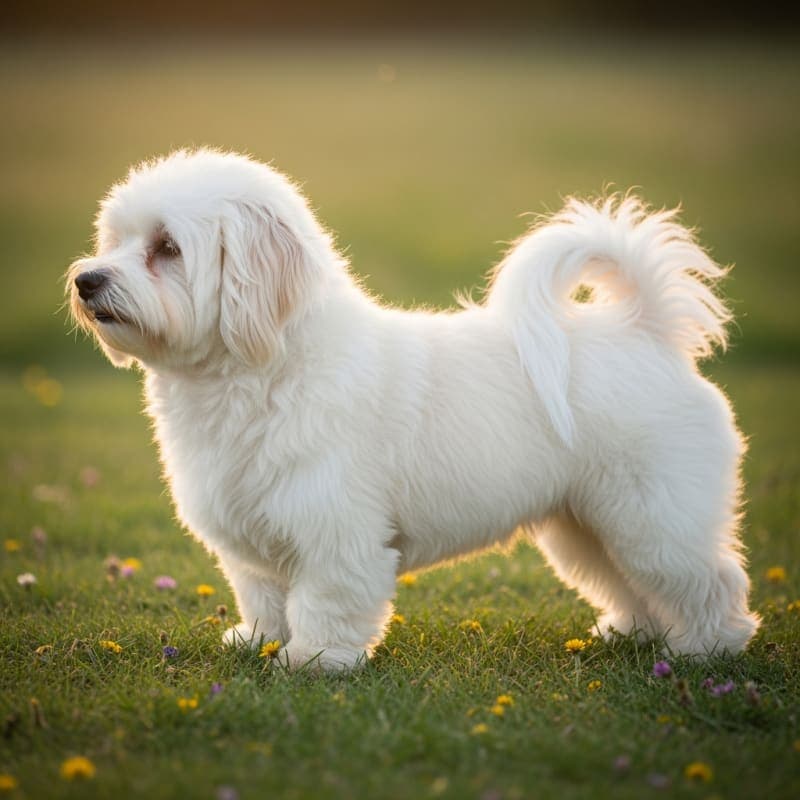
The Maltese is a small-sized dog, whose most important feature is the long, snow-white, silky coat without an undercoat, flowing down to the ground. The FCI standard allows only pure white or a very light shade of ivory.
Breed dimensions:
- Height at the withers: 20-25 cm (males) and 20-23 cm (females)
- Weight: 3-4 kg
- Body shape: elongated – the length of the body exceeds the height at the withers by about 38%
Head and face: The head is proportional to the body, with a clearly defined stop (the transition from the forehead to the muzzle). The nose is large, black, serving as a natural point at the end of the muzzle. The eyes are large, round, dark, and very expressive – giving the Maltese a charming appearance. The ears are set high, slightly rounded, and lie close to the sides of the head.
Body structure: The neck is long and slender, the body is proportional with a well-defined chest. The tail is thick at the base, tapering towards the end, carried high in an elegant pose – curved over the back so that the tip of the tail touches the hindquarters.
Coat: Very long all over the body (from head to tail), falling straight without waves or curls. The texture is silky, shiny, with a dense structure. The absence of an undercoat means that the coat does not mat easily, but it requires daily brushing to prevent tangles.
Movement: Smooth, even, not high off the ground. Typical movement is a trot with quick, short steps.
The Maltese is a dog with an exceptionally friendly and sociable disposition. This small four-legged friend is extremely attached to its owners and does not cope well with loneliness – it requires a lot of attention, interaction, and the presence of people. The Maltese is happiest when it can be at the center of family life.
Relationships with people:
- With family: deeply devoted, loyal, seeks closeness and physical contact
- With children: gentle and patient, but requires caution – due to their small size, children must learn to handle the dog gently
- With strangers: moderately distrustful – a good watchdog that will signal the arrival of guests, but not suitable as a guard dog
Temperament and behavior: Maltese are intelligent and easy to train, and can learn many tricks and commands. Their temperament is usually calm, but they can be energetic and eager to play. They love interactive toys and mental games.
Communication: The main way they express emotions is through barking – they use it to communicate joy, frustration, uncertainty, or to warn about strangers. It is worth teaching the Maltese to control its barking to avoid issues with excessive noise.
Relationships with other animals: Maltese get along well with other dogs and cats, especially if they have been socialized from a young age. They do not tend to be dominant or aggressive.
Separation and loneliness: This is a breed that does not cope well with being left alone. Prolonged loneliness can lead to separation anxiety, destructive behaviors (chewing furniture, scratching doors), and excessive barking. If owners are often absent, it is worth considering getting a second dog for companionship or providing the Maltese with activities such as dog daycare.
Good to know: Maltese do not have a tendency to escape – they are too attached to home and their owners. Their world revolves around their loved ones.
The Maltese, despite its small size, is a relatively healthy dog, but like many purebred breeds, it is predisposed to certain health issues. The average lifespan is 12-15 years, and with proper care, it can live up to 18 years.
The most common health problems in Maltese:
1. Obesity – the most serious threat to the breed. Being overweight leads to:
• Heart diseases
• Diabetes
• Joint and spine problems
• A shortened lifespan by up to 2-3 years
Prevention: portion control, avoiding table scraps, regular physical activity, weighing the dog every 2-3 months.
2. Dental problems – very common in small breeds:
• Gum diseases (periodontitis)
• Cavities
• Tartar
• Loss of teeth at a young age
Prevention: daily oral hygiene (tooth brushing), special treats for teeth cleaning, regular veterinary visits for dental check-ups, tartar removal under anesthesia (every 1-2 years).
3. Eye diseases:
• Conjunctivitis
• Cataracts (often in senior age)
• Retinal degeneration
Prevention: daily cleaning around the eyes, veterinary check-ups every 6 months.
4. White Shaker Syndrome – a neurological condition characteristic of white breeds. It manifests as tremors throughout the body, especially in stressful situations. It is treatable with medication.
5. Other conditions:
• Patellar luxation
• Peritonitis (can occur in puppies)
• Skin allergies
• Tracheal collapse (in obese dogs)
Temperature sensitivity: Due to their white coat and lack of undercoat, Maltese are sensitive to high temperatures and strong sunlight. On hot days, they should be provided with a cool, shaded area and access to fresh water. Avoid walks in direct sunlight – best in the early morning or evening.
Preventive recommendations:
- Regular veterinary visits (every 6 months)
- Vaccinations and deworming according to schedule
- Blood tests once a year (especially after the age of 7)
- Weight and condition monitoring
- Healthy, balanced diet
- Daily hygiene: eyes, teeth, ears
Grooming a Maltese is essential to ensure its long, silky coat looks healthy and aesthetically pleasing. This breed requires a lot of grooming – owners must dedicate time to daily care or opt for regular visits to a professional groomer.
1. Brushing the coat – DAILY (15-30 minutes):
- Use a natural bristle brush or a metal comb with long teeth
- Brush in layers – from the skin to the tips of the hair
- Pay special attention to areas prone to mats: behind the ears, under the paws, in the groin, under the collar
- After walks, check the coat for dirt, sticks, leaves
- If mats appear – gently detangle with your fingers using conditioner, as a last resort, cut them out with scissors
2. Bathing – every 3-4 weeks (or more often if heavily soiled):
- Use specialized shampoos for long-haired dogs or white breeds (bleaching but gentle)
- Before bathing, thoroughly brush the coat – wet mats tighten even more
- Dilute the shampoo with water and massage it thoroughly into the coat
- Rinse thoroughly – soap residue causes itching and dullness of the coat
- Apply conditioner or serum – it will make detangling easier and add shine
- Dry with a towel and a hairdryer on low heat while brushing
3. Eyes – daily cleaning:
- Maltese dogs tend to tear up, causing brown discoloration around the eyes
- Every day, wipe around the eyes with damp wipes or a cotton ball with boiled water
- Special solutions for removing discoloration can be used (available in pet stores)
- Regularly trim the hair around the eyes to prevent irritation of the eyeball
4. Ears – check and clean once a week:
- Check for excess wax, unpleasant odor, or redness in the ears
- Clean the ears with a special ear solution for dogs (do not insert cotton swabs deeply!)
- Gently pluck the hair growing in the ear canal every 4-6 weeks (or have it done by a groomer)
5. Teeth – cleaning DAILY:
- Maltese dogs are very prone to gum disease – oral hygiene is essential
- Brush teeth with a dog toothbrush and dog toothpaste (never human toothpaste!)
- Give special dental treats
- Regularly visit the veterinarian for tartar removal
6. Nails – trimming every 2-3 weeks:
- Maltese dogs have clear nails, so the quick is visible – avoid cutting it!
- Use a special guillotine for small breed dogs
- If you hear the nails clicking on the floor – it’s time to trim them
7. Haircut – an option for busy owners:
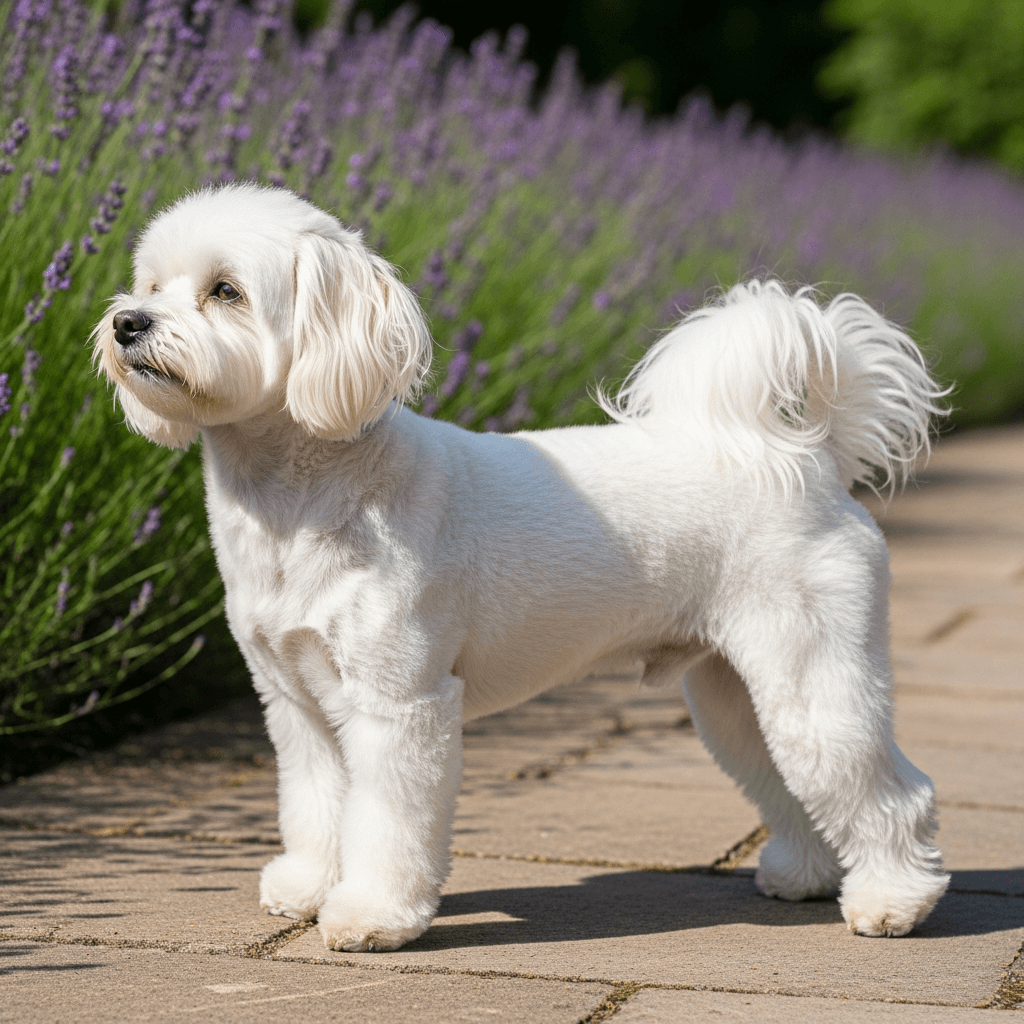
Many people choose to cut the Maltese's hair short (known as puppy cut or summer cut). This reduces grooming time to 10-15 minutes a day. Visits to the groomer every 6-8 weeks help maintain a neat appearance.
8. Grooming intimate areas:
- Regularly trim the hair around the anus and genitals to prevent soiling
- After the dog relieves itself, check if the hair is soiled
Summary: Grooming a Maltese requires regularity and time commitment, but the results are worth it. A well-groomed dog looks like a living porcelain figurine and enjoys excellent skin and coat health.
The Maltese is a breed with relatively low exercise needs, making it an ideal companion for apartment living. Although these small dogs are energetic and enjoy play, they do not require long walks or exhausting physical activity.
Minimum exercise requirements:
- Daily walk: 20-30 minutes (can be split into 2 walks of 10-15 minutes each)
- Playtime at home: 15-20 minutes a day – fetching small toys, interactive games, playing hide and seek with treats
- Mental stimulation: dog puzzles, learning tricks, scent games – more important than intense physical effort
Recommended activities:
- Neighborhood walks – at a calm pace, without overexertion
- Play in the garden or park – running after a ball, playing with other dogs (with proper socialization)
- Fetching – Maltese love to bring back small toys
- Interactive games – toys with hidden treats, scent mats
- Obedience exercises – basic commands, tricks (providing a sense of purpose and stimulating the mind)
What to avoid:
- Long, intense walks – Maltese have short legs and tire quickly
- Activities in full sun – white fur does not protect against radiation, easy to overheat
- Jumping from heights – risk of patellar dislocation and joint damage
- Aggressive play with large dogs – risk of injury due to size difference
Social and emotional needs:
Maltese do not cope well with prolonged loneliness – they need the presence of people more than intense exercise. If owners are often absent, it is advisable to:
- Provide companionship for the dog (another dog, cat, or caregiver during the day)
- Enroll in dog daycare (socialization and activity)
- Leave interactive toys that will keep the dog occupied for an hour or two
Adjusting exercise to age:
- Puppies (up to 6 months): short, frequent walks (3-4 times a day for 10 minutes), plenty of play at home
- Adult dogs (6 months – 7 years): standard requirements (20-30 minutes a day)
- Seniors (over 7 years): shorter, calmer walks adjusted to fitness, more rest
Summary: The Maltese is a dog that prefers a calmer lifestyle – much more important than long walks is the closeness to the owner, playtime at home, and mental stimulation. An ideal companion for those who value peace and home comfort.
Training a Maltese is a pleasant and rewarding experience, as they are intelligent, lively, and eager to learn dogs. However, many people make the mistake of thinking that training is unnecessary due to the small size of the dog. This is a misleading approach – even small dogs need clear boundaries and education to function properly in society.
Rules for effective Maltese training:
1. Start training early (from 8 weeks of age):
- Socialization is key – getting to know people, dogs, sounds, environments
- Basic commands: Sit, Lie down, Stay, Come, No
- Potty training – consistently taking them to designated spots, praising them for going outside
2. Use only positive reinforcement:
- Reward with treats, praise, and petting for appropriate behaviors
- Ignore undesirable behaviors or redirect the dog's attention to the right action
- Never physically punish or yell – Maltese are sensitive, punishment leads to fear and loss of trust
3. Be consistent:
- Rules must be followed by all household members
- Don’t allow certain behaviors sometimes and not others (e.g., getting on the couch)
- Regularity – short training sessions (5-10 minutes), but every day
4. Teaching to stay alone:
Maltese often suffer from separation anxiety. It is important to teach the dog from a young age that being alone is normal:
- Start with short absences (5 minutes), gradually increasing
- Don’t make a big fuss when leaving and returning home
- Leave safe toys for the dog (e.g., a Kong filled with treats)
- Never return when the dog whines or barks – you will reward undesirable behavior
5. Bark control:
Maltese tend to bark excessively. Teach the dog the command Quiet:
- When the dog starts barking, calmly say: Quiet
- When they stop barking (even for 2 seconds), immediately reward
- Gradually increase the time of silence required to receive a reward
- Never yell at a barking dog – they will think you are joining in
6. Tricks and mental games:
Maltese love to learn and are eager to show off their skills. Teach the dog tricks:
- Shake paw – an easy, basic trick
- Spin – the dog turns around in a circle
- Play dead – the dog lies on its side and stays still
- Search – the dog finds hidden treats
- Agility for small breeds – tunnels, slalom, obstacles
7. Walking on a leash:
- Teach the dog to walk beside you without pulling
- Use a harness instead of a collar (less risk of trachea injury)
- Stop when the dog pulls – only move when the leash is loose
8. Avoid small dog syndrome:
Many people treat small dogs differently than large ones, excusing behaviors they wouldn’t tolerate in larger breeds:
- Don’t carry the dog all the time – let them be a dog
- Don’t tolerate growling, biting, or aggression – even from a small dog
- Don’t overprotect – allow the dog natural interactions with other dogs (while ensuring safety)
- Don’t skip training – a Maltese needs boundaries just like a German Shepherd
Group classes and professional trainer:
Consider enrolling your Maltese in puppy group classes or consulting with a dog trainer. Benefits:
- Socialization with other dogs and people
- Professional help in resolving behavioral issues
- Motivation for regular training
- Learning proper training techniques
Summary: The Maltese is a smart and easy-to-train dog, but requires consistency, patience, and a positive approach. A well-trained Maltese is a joy for the owner – obedient, calm, and confident.
The diet of a Maltese should be carefully balanced to ensure proper nutrition, health, and maintenance of an ideal weight. Due to their strong tendency to obesity, controlling the amount of food given is crucial for the dog's longevity and quality of life.
Basic nutrition guidelines for Maltese:
1. Choice of food:
- Dry food for small or toy breeds – adjusted calorie content and kibble size
- Wet food as a supplement or variety (no more than 25% of the daily portion)
- BARF diet (raw meat, vegetables, bones) – requires consultation with a veterinarian or pet nutritionist
- Look for food with high animal protein content (minimum 25-30%), low carbohydrate content, and no artificial additives
Ingredients to avoid in food:
- Corn, wheat, soy as main ingredients (poor nutritional value, fillers)
- Meat meals of unknown origin
- Artificial colors, preservatives, flavors
- Excess salt and sugar
2. Portions and feeding frequency:
- Puppies (2-6 months): 3-4 meals a day, special puppy food
- Young dogs (6-12 months): 2-3 meals a day
- Adult dogs (over 12 months): 2 meals a day (morning and evening)
- Seniors (over 7 years): 2 meals a day, senior food with reduced calories
Daily portion amount: For an adult Maltese (weight 3-4 kg), it is usually 60-100 grams of dry food per day, depending on the level of activity, metabolism, and type of food. Always follow the manufacturer's recommendations on the food packaging and adjust the portion according to the dog's condition.
3. Weight control – CRUCIAL for Maltese:
- Weigh the dog every 2-3 weeks on the same scale
- Optimal weight: 3-4 kg (according to breed standard)
- Palpate the ribs – they should be felt under a thin layer of fat but not visible
- If the dog is gaining weight – reduce the portion by 10-15% or increase activity
4. Treats – use wisely:
- Treats should not make up more than 10% of the daily caloric intake
- Choose healthy options: dried meat, vegetable pieces (carrots, broccoli), special dental treats
- Avoid: sweets, chocolate, cookies, table scraps
- Count calories from treats against the food portion
5. Nutrition and dental health:
Maltese are prone to gum disease. Support oral hygiene through diet:
- Dry food helps mechanically clean teeth while chewing
- Special dental treats (e.g., Dentastix)
- Raw bones with cartilage (not cooked! – they can splinter and cause blockages)
- Avoid excess soft foods – they do not clean teeth
6. Access to fresh water – ALWAYS:
- A bowl of water available all day
- Change the water at least twice a day
- Clean the bowl daily (bacterial biofilm)
- On hot days, provide an additional bowl in the dog's resting area
7. Toxic products for Maltese – NEVER give:
- Chocolate – contains theobromine, toxic to dogs (can cause death)
- Onions and garlic – destroy red blood cells
- Grapes and raisins – damage the kidneys
- Avocado – contains persin, toxic to dogs
- Xylitol (sweetener) – causes a sudden drop in blood sugar, liver failure
- Alcohol, coffee, tea – toxic to the nervous system
- Cooked bones – splinter into sharp pieces, can puncture the digestive tract
- Raw yeast dough – ferments in the stomach, causing bloating
- Macadamia nuts – cause paralysis of the hind limbs
8. Special diets for Maltese with health issues:
- Food allergies: hypoallergenic food with a single protein source (e.g., lamb, fish)
- Digestive problems: food for dogs with sensitive stomachs
- Overweight: light food with reduced calories
- Dental issues: wet food or soaked dry food (for older dogs with tooth loss)
- Kidney or liver diseases: therapeutic food prescribed by a veterinarian
9. Changing food – do it gradually:
Sudden changes in food can cause diarrhea and vomiting. The transition process should last 7-10 days:
- Day 1-2: 75% old food + 25% new
- Day 3-4: 50% old food + 50% new
- Day 5-6: 25% old food + 75% new
- Day 7: 100% new food
10. Supplementation – is it necessary?
If the dog eats high-quality, balanced food, supplementation is usually not necessary. However, in some cases, a veterinarian may recommend:
- Omega-3 and Omega-6 – for skin and coat health
- Glucosamine and chondroitin – for joint health (especially in older dogs)
- Probiotics – for gut health (after antibiotic treatment or with digestive issues)
- Vitamins and minerals – only in case of deficiencies confirmed by tests
Never give supplements without consulting a veterinarian – excess vitamins (especially A and D) can be toxic.
Summary: Proper nutrition for a Maltese is the key to their health, longevity, and beautiful coat. Monitor portions, avoid obesity, choose high-quality foods, and consult regularly with a veterinarian. A well-nourished Maltese is a happy Maltese!
Characteristic Traits
Pros
- Gentle and friendly nature
- Elegant appearance with silky fur
- Easy to train and intelligent
- Ideal for apartment living – low exercise requirements
- Excellent companion for families and seniors.
Cons
- Requires daily coat care
- Prone to obesity and dental problems
- Very poorly tolerates loneliness
- Tendency to excessive barking
- Sensitive to high temperatures.
Behavioral Ratings
Breed History
The history of the Maltese dates back to ancient times, making it one of the oldest companion dog breeds in human history. Its roots are deeply embedded in the culture of the Mediterranean basin, where for centuries it served as a companion, rodent hunter, and a symbol of elegance and luxury.
The origin of the name – not from the island of Malta!
Contrary to popular belief, the name Maltese does not come from the island of Malta. It derives from the Semitic word màlat, meaning harbor, port, or shelter. This same Semitic etymology appears in the names of many port cities and islands in the Mediterranean:
- The island of Méléda (today's Mljet in Croatia)
- The Sicilian city of Melita
- The island of Malta
The ancestors of Maltese dogs lived in these port cities and harbors, where they hunted mice and rats in warehouses and on ships.
Antiquity – dogs of the aristocracy:
In ancient Greece and Rome, Maltese dogs were highly valued. Aristotle (384-322 BC) mentioned small dogs in his writings, which were given the Latin name canes melitenses (Maltese dogs). Strabo, a Roman poet of the 1st century AD, described these dogs as the favorite companions of Roman matrons – women of high society.
Maltese dogs were a symbol of wealth and social status. Kept by nobles and aristocrats, they often wore jewelry and were cared for by servants. Their white, silky fur was considered a sign of purity and elegance.
The Middle Ages and the Renaissance – dogs of court ladies:
During the Middle Ages and the Renaissance, Maltese dogs continued to enjoy immense popularity among European aristocracy. They appear in paintings by Renaissance masters, depicted alongside beautiful court ladies. The famous art of this period immortalized Maltese dogs as symbols of elegance, luxury, and affection.
The breed was particularly popular at the courts of Italy, France, and Spain. Queens and princesses carried them in the sleeves of their dresses or on cushions.
The 19th century – formal recognition of the breed:
In the 19th century, during the Victorian era, Maltese dogs arrived in Great Britain, where they quickly won the hearts of the British aristocracy. In 1873, the breed was officially recognized by The Kennel Club in the United Kingdom.
During this period, Maltese dogs also made their way to the United States. The American Kennel Club (AKC) recognized the breed in 1888. The first Maltese dogs exhibited at American dog shows dazzled judges and audiences with their elegance.
The 20th century – global popularity:
In the 20th century, Maltese dogs became one of the most popular toy dog breeds in the world. Their small size, beautiful coat, and gentle temperament made them ideal companions for both families and individuals.
In 1954, the Fédération Cynologique Internationale (FCI) officially recognized the breed, granting patronage to Italy as the country responsible for the development and maintenance of the breed standard. The current FCI standard (no. 65) has been in effect since 2015.
Modern times – an icon of toy breeds:
Today, the Maltese is one of the most frequently chosen companion dog breeds worldwide. Its small size makes it ideal for apartment living, and its long, white coat and elegant posture make it a popular choice among lovers of aesthetics and elegance.
Maltese dogs appear in popular culture, at dog shows, and as pets of celebrities. Despite social changes and lifestyle shifts over the centuries, the Maltese has remained a loyal companion to humans – just as it was thousands of years ago.
Summary: The Maltese is a breed with a rich history spanning over 2000 years. From the port harbors of the Mediterranean, through Roman courts and Renaissance salons, to modern family homes – the Maltese has always been a symbol of elegance, loyalty, and attachment to humans.