Neapolitan Mastiff
FCI Group
2• FCI 197
Size
Large
Origin Country
IT
Height
60-75 cm
Weight
50-70 kg
Lifespan
8-10 years
Temperament
Overview
The Mastino Napoletano, also known as the Neapolitan Mastiff, is a dog breed that has captivated with its majestic appearance and rich history dating back to ancient Rome. This powerful guardian combines unwavering loyalty with a deep attachment to family, creating a bond that goes far beyond the typical relationship between dog and human.
Its impressive silhouette and distinctive wrinkles on the head create a unique appearance that commands respect and admiration. The height of the Neapolitan Mastiff ranges from 60 to 75 cm at the withers, while its weight varies between 50 and 70 kg, making it one of the most massive representatives of guarding dogs. However, behind this powerful appearance lies a balanced temperament and a gentle heart that beats particularly strongly for family members.
Owners of the Neapolitan Mastiff must be aware that this dog requires not only adequate living space but also consistent upbringing based on mutual respect and understanding. Its outstanding intelligence makes the training process potentially very rewarding, provided that methods based on positive reinforcement are used. Early socialization and systematic training are key to raising a balanced and confident dog.
The Mastino Napoletano is a dog that does not tolerate prolonged solitude and needs constant contact with the family. Its deep need for closeness means that extended separations can lead to behavioral problems and separation anxiety. Despite its impressive appearance, this giant is extremely gentle with children, although reasonable supervision should always be exercised during playtime.
Living with a Neapolitan Mastiff is not only a responsibility but above all a privilege to share everyday life with a dog of incomparable loyalty and devotion. Its ability to quickly assess situations of danger and protective instinct make it an excellent guardian, always standing watch over the safety of its family. In return for proper care, consistency, and love, the Neapolitan Mastiff offers a lifelong friendship and protection whose value cannot be overstated.
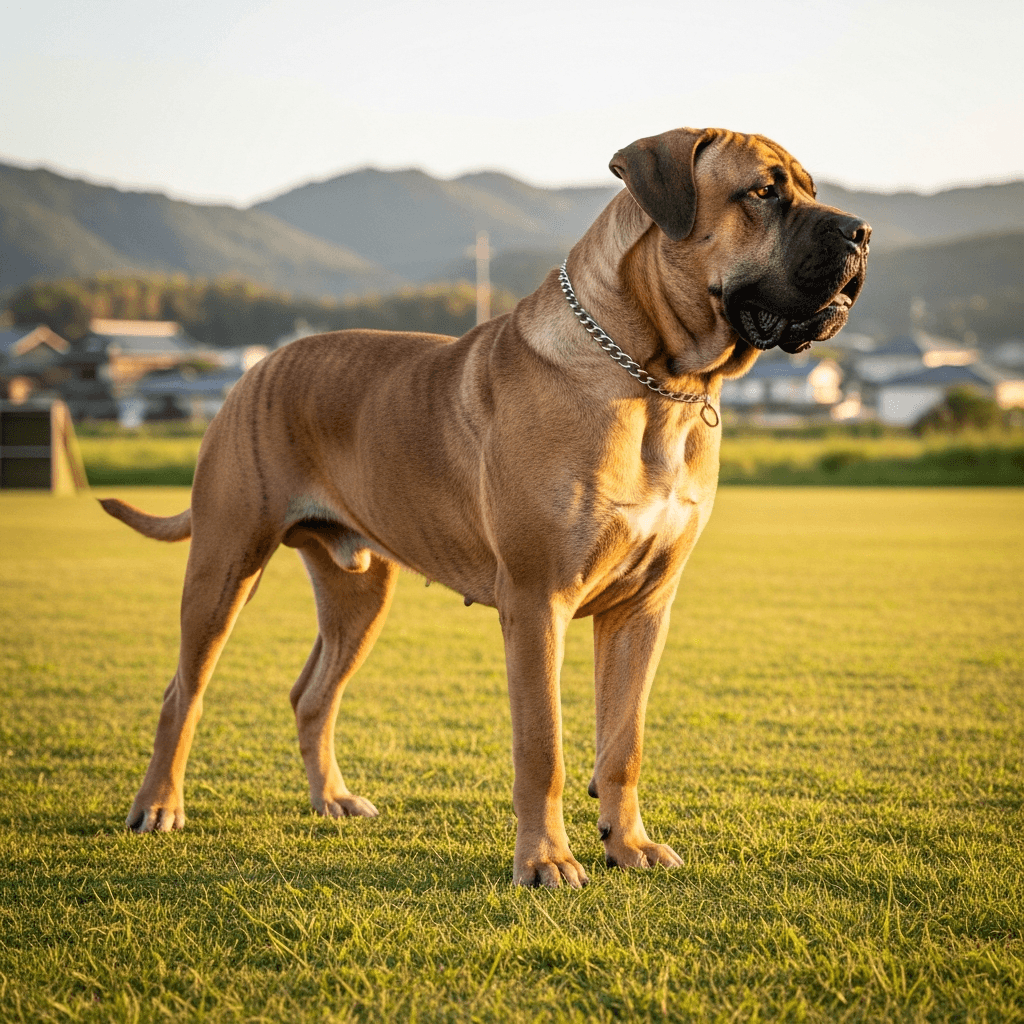
The Mastino Napoletano presents an impressive and massive body structure that leaves an indelible impression at first glance. Its characteristic, stocky silhouette stands out with proportions where the body length exceeds the height at the withers by about 15%, giving it a unique, recognizable shape.
Dimensions and proportions:
- Height at the withers: 60-75 cm
- Weight: 50-70 kg
- Head length is about 3.8/10 of the height at the withers
- The ratio of the skull to the muzzle is 2:1
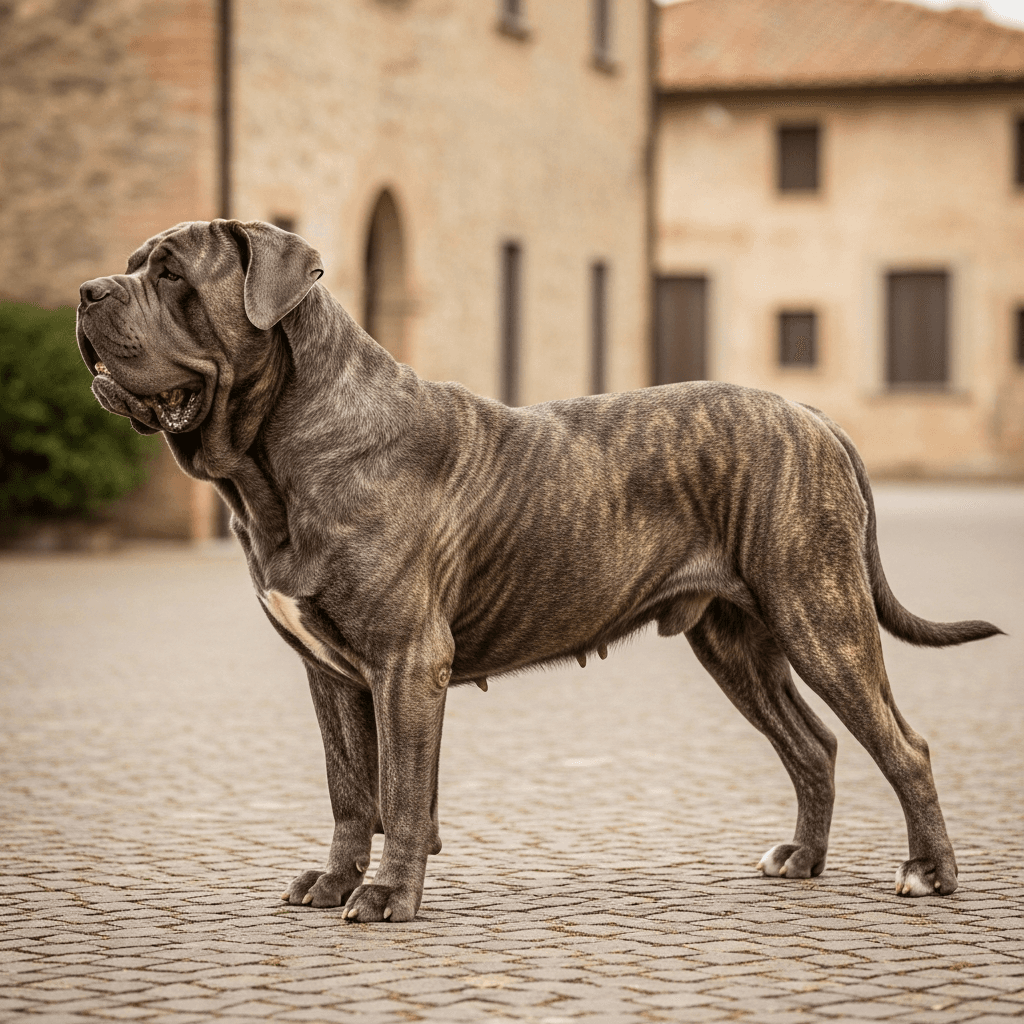
The head and face are the most characteristic parts of the Neapolitan Mastiff's body. It is short, wide, and extremely massive, with a clearly defined stop. The skull has a flat structure, with strongly developed zygomatic arches that give the dog a unique, commanding expression. The skin on the head is abundant and forms numerous wrinkles and folds, particularly visible around the eyes and lips, serving as the breed's hallmark.
The eyes are set frontally and have a dark iris, which emphasizes a serious and attentive expression. The ears are relatively small compared to the size of the dog – triangular, hanging, and close to the cheeks. The neck is short, strong, and perfectly muscled, with a distinct dewlap that further accentuates the majestic appearance of this breed.
The torso and limbs are characterized by a powerful build. The chest is wide and spacious, with well-developed pectoral muscles. The back is strong and harmoniously transitions into well-muscled loins. The limbs are strong, muscular, and perfectly proportional to the size of the dog, providing stability and confidence in movement.
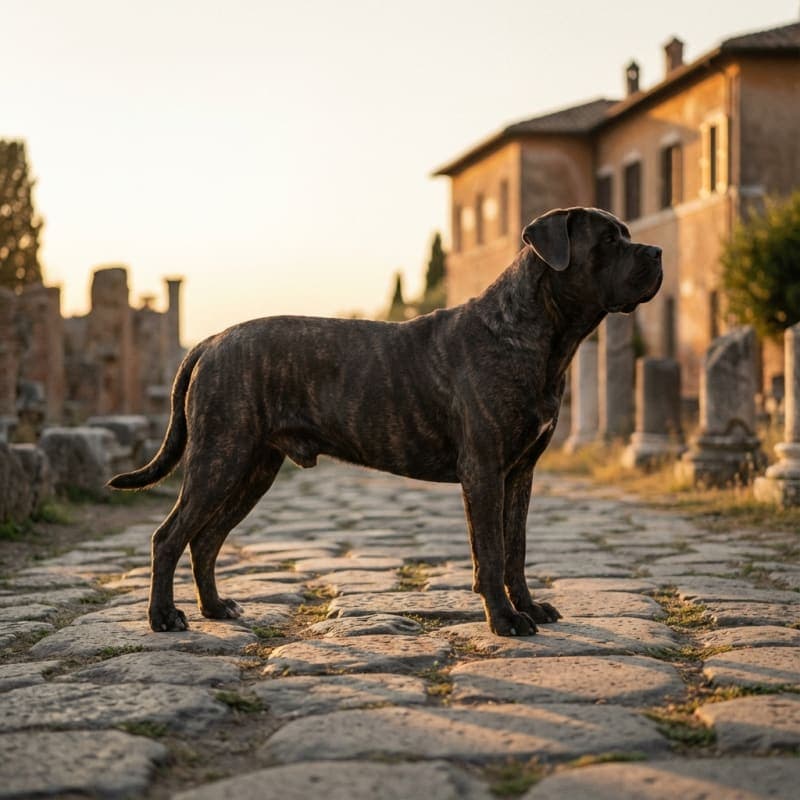
The tail is thick at the base and gradually tapers towards the end, reaching the hock. The coat of the Mastino Napoletano is short, hard, and dense, closely adhering to the body, which greatly facilitates daily grooming. The coloration occurs in a wide spectrum of colors, including various shades of gray, black, brown, fawn, and brindle variants.
The overall image of the Neapolitan Mastiff is the quintessence of strength, power, and majesty – a dog with an incredibly expressive appearance that leaves no one indifferent.
The Mastino Napoletano is a dog with a exceptionally balanced temperament, characterized by deep loyalty and predictable behavior. Its distinctive traits include calmness combined with natural alertness, making it an excellent guard dog with extraordinary defensive abilities.
Character traits:
- Unwavering loyalty to the family
- Calm and composed temperament
- Natural alertness without excessive aggression
- Strong attachment to the owner
- Friendly attitude towards children
The Mastino Napoletano is naturally suspicious of strangers, but does not show aggression unless it feels a direct threat to itself or its family. In familiar surroundings, it presents itself as an extremely open and friendly dog, especially in relationships with children, towards whom it shows angelic patience and gentleness.
This breed is characterized by strong attachment to its owner, which can lead to an intense need for close contact with the family. The Neapolitan Mastiff absolutely does not tolerate prolonged solitude – leaving it alone at home for extended periods can result in serious behavioral problems, such as separation anxiety, destructive behaviors, or excessive vocalization.
The Mastino stands out with its moderate yet insightful intelligence, allowing it to deeply analyze situations and make thoughtful decisions based on the observation of its surroundings. It is a thinking dog that does not react impulsively but always assesses the situational context before taking action.
In the training process, positive reinforcement is crucial – the Neapolitan Mastiff responds best to a system of rewards, praise, and gentle guidance. Its strong personality can sometimes manifest as stubbornness, so owners must demonstrate consistency and perseverance in teaching while maintaining a positive and supportive atmosphere.
The Mastino Napoletano is not particularly loud – it rarely barks without reason, yet its deep, resonant voice serves as a sufficient deterrent for potential intruders. Every bark from the mastiff carries weight and significance, making it an excellent warning system.
The behavior of this dog is largely shaped by early socialization and systematic training. From a young age, it is essential to introduce the puppy to various life situations and interactions with other dogs, animals, and people. Proper socialization ensures the development of a balanced, confident dog that can respond appropriately in different circumstances.
Despite its impressive, sometimes even stern appearance, the Mastino Napoletano thrives in a family environment, provided that its basic emotional and physical needs are fully met and its natural personality is respected and appropriately shaped by an experienced owner.
The Neapolitan Mastiff, like most giant breeds, is characterized by specific health predispositions that can significantly affect the quality and length of life. The average lifespan of representatives of this breed is 8-10 years, which is typical for large-bodied dogs.
The health status of the Neapolitan Mastiff largely depends on three fundamental factors: genetics, proper diet, and lifestyle. Responsible breeders conduct systematic screening tests to minimize the risk of hereditary diseases and ensure the best possible health condition for their offspring.
Most common health issues:
- Hip and elbow dysplasia – an orthopedic condition leading to pain, stiffness, and limited mobility, particularly dangerous for dogs with such massive body structure
- Cardiomyopathy – a disease of the heart muscle that can manifest as weakness, shortness of breath, coughing, and decreased exercise tolerance
- Entropion and ectropion – eyelid structural defects causing corneal irritation or excessive tearing
- Cataracts – gradual loss of transparency of the eye's lens leading to impaired vision
- Gastric torsion – a sudden, life-threatening condition requiring immediate veterinary intervention
Owners of the Neapolitan Mastiff must ensure regular veterinary check-ups, including cardiovascular examinations, joint assessments, and monitoring of eye conditions. Early detection of health problems significantly increases the chances of effective treatment and maintaining a good quality of life for the dog.
Due to their massive body structure, obesity poses a serious threat to the health of the Neapolitan Mastiff. Excess weight further burdens the joints, heart, and respiratory system, making it crucial to maintain a proper body weight through a balanced diet and appropriately dosed physical activity.
This breed also shows sensitivity to high temperatures. On hot days, it is important to avoid intense exertion and provide the dog with access to shaded, cool areas and fresh water. Thermal overload can lead to heat stroke, which is a life-threatening condition.
Health prevention should include:
- Regular veterinary examinations (at least twice a year)
- Monitoring body weight and physical condition
- A balanced diet tailored to age and activity level
- Moderate, regular physical activity
- Monitoring symptoms such as limping, coughing, shortness of breath, or changes in behavior
Responsible health care, quick response to concerning symptoms, and collaboration with an experienced veterinarian can significantly extend and improve the quality of life for the Neapolitan Mastiff.
The care of the Mastino Napoletano is relatively simple compared to long-haired breeds, but it requires regularity and special attention regarding the characteristic skin folds that are the hallmark of this breed.
Coat care:
The coat of the Neapolitan Mastiff is short, dense, and closely adheres to the body, which significantly facilitates daily grooming. It is recommended to brush the coat at least once a week using a natural bristle brush or a rubber grooming glove. Regular brushing removes dead hair, dirt, and stimulates blood circulation in the skin, which positively affects its condition and prevents irritation.
Care of skin folds (CRITICALLY IMPORTANT):
The characteristic wrinkles and skin folds require particularly careful care, as they can harbor bacteria, yeast, and other microorganisms. The folds should be thoroughly cleaned several times a week using:
- Moistened, gentle dog wipes
- Special preparations for skin fold care
- A soft, clean cloth dampened with warm water
After cleaning, the folds must be thoroughly dried to prevent moisture accumulation, which promotes the development of infections. Neglecting this task can lead to skin inflammation, itching, and unpleasant odors.
Eye care:
The eyes of the Neapolitan Mastiff require daily inspection and cleaning. Due to the structure of the eyelids, there may be tendencies for excessive tearing. Gently wiping the corners of the eyes with a clean, damp gauze prevents discoloration and irritation.
Saliva control:
The Mastino Napoletano is characterized by excessive salivation, which increases after drinking water, during eating, or in emotional situations. Owners should be prepared to frequently wipe the dog's mouth using towels or wipes. It is advisable to keep wipes handy in various places around the house.
Bathing:
Bathing should be done only when absolutely necessary to avoid disrupting the skin's natural protective barrier. It is recommended to use gentle veterinary shampoos designed for dogs with sensitive skin. Bathing frequency: once every 2-3 months or in case of heavy soiling.
Additional grooming tasks:
- Nail trimming – every 3-4 weeks or as needed
- Ear cleaning – once a week using a special preparation
- Oral hygiene – regular tooth brushing prevents tartar buildup
- Paw pad inspection – checking for wounds, cracks, or foreign bodies
Regular visits to a professional groomer and systematic consultations with a veterinarian will ensure the Neapolitan Mastiff's health, comfort, and well-groomed appearance. Proper grooming is not just a matter of aesthetics but primarily health prevention and an element of responsible care for a dog of this breed.
The Neapolitan Mastiff does not belong to breeds that require intense physical activity; however, regular, moderate walks are absolutely crucial for maintaining its physical and mental health as well as proper condition.
Due to its massive build and significant weight, dogs of this breed tire quickly, so physical activity must be regulated and tailored to the individual capabilities of each dog. Excessive exertion can lead to problems with joints, the cardiovascular system, and thermal overload.
Recommended activity plan:
- Two walks a day totaling 60-90 minutes
- Pace: slow to moderate – no running over long distances
- Duration of a single walk: 30-45 minutes
- Best time: early morning or late evening (avoiding heat)
Important safety rules:
The Neapolitan Mastiff is not a running breed and should not be forced into long runs, intense agility training, or extreme sports activities. Such burdens can lead to serious damage to joints, ligaments, and the musculoskeletal system.
Particular caution should be exercised on hot days – this breed shows high sensitivity to high temperatures and can easily become overheated. On hot days:
- Limit the length of walks
- Choose cooler times of the day
- Ensure access to fresh water
- Avoid walking on hot asphalt
- Provide access to shade
Mental stimulation:
In addition to physical activity, the Neapolitan Mastiff needs mental stimulation, which is just as important as exercise. This breed possesses keen intelligence that should be utilized through:
- Scent and search games
- Learning new commands and tricks
- Interactive toys and puzzles for dogs
- Obedience training
- Games involving hiding treats
Need for social contact:
The Neapolitan Mastiff should not be an exclusively outdoor dog. It must have the opportunity to spend time with family and participate in daily household activities. Social isolation leads to behavioral problems and deterioration of mental well-being.
Regular walks and joint activities with the owner:
- Build a strong emotional bond
- Provide necessary socialization
- Support physical and mental health
- Allow for territory control and satisfaction of natural instincts
- Prevent boredom and destructive behaviors
Well-planned, moderate physical activity combined with mental stimulation is the key to a happy, balanced, and healthy Neapolitan Mastiff. Remember that every dog is an individual – adjust the level of activity to your pet's age, health condition, and capabilities.
The training of the Mastino Napoletano is a task that requires patience, consistency, and experience in working with dogs with strong personalities and dominant characters. This breed is definitely not suitable for novice owners – the Neapolitan mastiff needs a confident, assertive guardian who can establish clear boundaries while maintaining a positive, supportive atmosphere.
Key training challenges:
- Learning to walk on a leash – due to the dog's immense strength, it is essential to teach walking without pulling early on
- Controlling protective instincts – the natural guarding instinct requires skilled management
- Eliminating stubbornness – the mastiff may show tendencies to make decisions independently
- Socialization – early acclimatization to the presence of strangers, dogs, and various situations
- Preventing dominant behaviors – establishing a clear hierarchy within the family
Principles of effective training:
1. Positive reinforcement (THE FOUNDATION OF SUCCESS)
The Mastino Napoletano responds best to reward-based methods, praise, and motivation. Any forms of violence, shouting, or physical punishment are absolutely unacceptable and can irreparably damage the relationship and cause behavioral problems. Effective rewards include:
- High-value treats
- Enthusiastic verbal praise
- Play with a favorite toy
- Petting and physical expressions of approval
2. Early start to training
Training should begin immediately after bringing the puppy home, ideally at 8-10 weeks of age. Young mastiffs are more mentally flexible and more easily absorb new behaviors. Delaying training can lead to the reinforcement of undesirable behavior patterns.
3. Socialization (CRITICALLY IMPORTANT)
The socialization period (weeks 3-16) is the most important phase in the development of the Neapolitan mastiff. During this time, the puppy should be systematically exposed to:
- Different people (children, adults, seniors, people in uniforms)
- Other dogs and animals
- Diverse environments (city, forest, shops, train station)
- Various sounds (cars, trains, storms, fireworks)
- Different surfaces (grass, asphalt, stairs, bridges)
4. Consistency and assertiveness
The Neapolitan mastiff quickly picks up on inconsistencies in the behavior of its guardians. Rules must be clear, consistent, and followed by all family members. What is forbidden today cannot be allowed tomorrow. Lack of consistency leads to confusion for the dog and obedience problems.
Basic commands to master:
- Sit – basic control command
- Stay – maintaining position
- Come – key safety command
- Lie down – relaxation and control position
- Leave it – preventing the ingestion of dangerous objects
- Heel – walking at heel without pulling
Common training mistakes with mastiffs:
- Sessions that are too short or too long (optimal: 10-15 minutes)
- Lack of patience and overly high expectations
- Training in distracting environments in the early stages
- Inconsistent enforcement of rules
- Neglecting socialization
- Using punishment instead of positive reinforcement
Professional help:
Due to the demanding nature of the breed, it is highly recommended to seek the help of a professional dog trainer, preferably one specializing in molosser breeds. Group classes for puppies and individual behavioral consultations can significantly accelerate the training process and prevent problems.
Remember: the Neapolitan mastiff is a dog with a strong personality that requires an equally strong, confident, and experienced handler. A properly trained mastiff is a loyal, obedient, and balanced life companion. A poorly trained or untrained one can pose a challenge for both the owner and the environment. Investing time in proper training is the best decision you can make for your mastiff and your entire family.
The Mastino Napoletano diet requires special attention and careful planning to ensure this powerful dog receives all the necessary nutrients while avoiding health problems associated with improper nutrition.
Basic nutrition guidelines:
Due to its large body size and relatively low level of physical activity, the Neapolitan Mastiff needs a balanced, high-quality diet specifically tailored to the needs of giant breeds. Key nutrients include:
- Animal protein (22-26%) – for muscle building and repair
- Fats (12-16%) – a source of energy and support for the skin
- Carbohydrates – a controlled source of energy
- Glucosamine and chondroitin – support for joints
- Omega-3 and Omega-6 fatty acids – healthy coat and skin
- Calcium and phosphorus (in the right ratio) – bone health
Choosing food:
Owners should choose high-quality premium foods dedicated to giant or large breeds. Economic foods should be avoided, as they often contain excess fillers, artificial preservatives, and low-quality ingredients. Foods with a high meat content as the first ingredient are preferred.
Feeding frequency and portions:
The Neapolitan Mastiff should be fed 2-3 times a day at regular intervals. Dividing the daily portion into smaller meals:
- Reduces the risk of gastric torsion (a life-threatening condition)
- Facilitates digestion
- Prevents excessive hunger
- Stabilizes energy levels throughout the day
CRITICALLY IMPORTANT - Preventing gastric torsion:
- Avoid feeding immediately before or after intense exercise
- Ensure at least 1 hour of rest before and after meals
- Use elevated feeding bowls
- Avoid rapid food consumption (special slow-feed bowls)
- Do not allow drinking large amounts of water immediately after eating
Body weight control:
Due to the natural tendency to obesity, it is necessary to systematically monitor the weight and body condition of the mastiff. Overweight additionally burdens:
- Joints and the musculoskeletal system
- The heart and circulatory system
- The respiratory system
- Quality and length of life
Proper condition: the ability to feel ribs with gentle pressure, visible waist when viewed from above, slightly visible belly tuck from the side.
Adjusting the diet to age:
- Puppies (2-12 months): food for giant breed puppies, 3-4 meals a day, controlled growth
- Adult dogs (1-7 years): food for adult giant breeds, 2 meals a day
- Senior dogs (7+ years): senior food, reduced calorie content, joint support
Supplementation:
It is worth considering supplementation that supports joint health and overall condition:
- Glucosamine and chondroitin – cartilage regeneration
- Omega-3 fatty acids – anti-inflammatory action
- Probiotics – support for the digestive system
- Antioxidants – protection against free radicals
Before introducing any supplements, it is important to consult with a veterinarian.
Access to water:
The Neapolitan Mastiff must have constant access to fresh, clean water. Due to the tendency to drool and wet its mouth, the water in the bowl should be changed several times a day.
Prohibited products:
- Chocolate
- Grapes and raisins
- Onions and garlic
- Avocado
- Cooked bones (risk of splintering)
- Sweets and products containing xylitol
- Alcohol and caffeine
A properly balanced diet is the foundation of health and longevity for the Neapolitan Mastiff. In case of any doubts regarding nutrition, digestive issues, or unclear symptoms, it is essential to consult a veterinarian who can help adjust the diet to the individual needs of the dog.
Characteristic Traits
Pros
- Unwavering loyalty to family
- Balanced and predictable temperament
- Excellent guard and protective dog
- Friendly and patient with children
- Low need for intense physical activity.
Cons
- Requires an experienced owner
- Does not tolerate prolonged solitude
- Needs consistent training from puppyhood
- Tendency for health issues typical of giant breeds
- Excessive drooling
- Requires care for skin folds.
Behavioral Ratings
Breed History
The Neapolitan Mastiff has a fascinating and rich history that dates back to ancient times and is closely intertwined with the history of the Roman Empire. This majestic breed is a living testament to millennia of canine service to humanity.
Ancient roots:
The Neapolitan Mastiff is a direct descendant of the great Roman molossers – powerful war and guard dogs that accompanied Roman legions during territorial conquests. The first written mentions of dogs of this type date back to the 1st century AD and can be found in the work of the Roman writer and agronomist Lucius Moderatus Columella entitled De re rustica (On Rural Matters).
Columella described these powerful dogs in detail, emphasizing their extraordinary strength, courage, and steadfastness in defending the territories entrusted to them. These dogs were valued not only as guardians of estates but also as participants in arena fights and companions of legions in military campaigns.
Spread across Europe:
As the Roman Empire expanded, these powerful molossers were dispersed by Roman legions throughout Europe. These dogs participated in battles alongside soldiers, guarded military camps, and served defensive roles. They became the ancestors of many modern mastiff breeds found in various European countries, including:
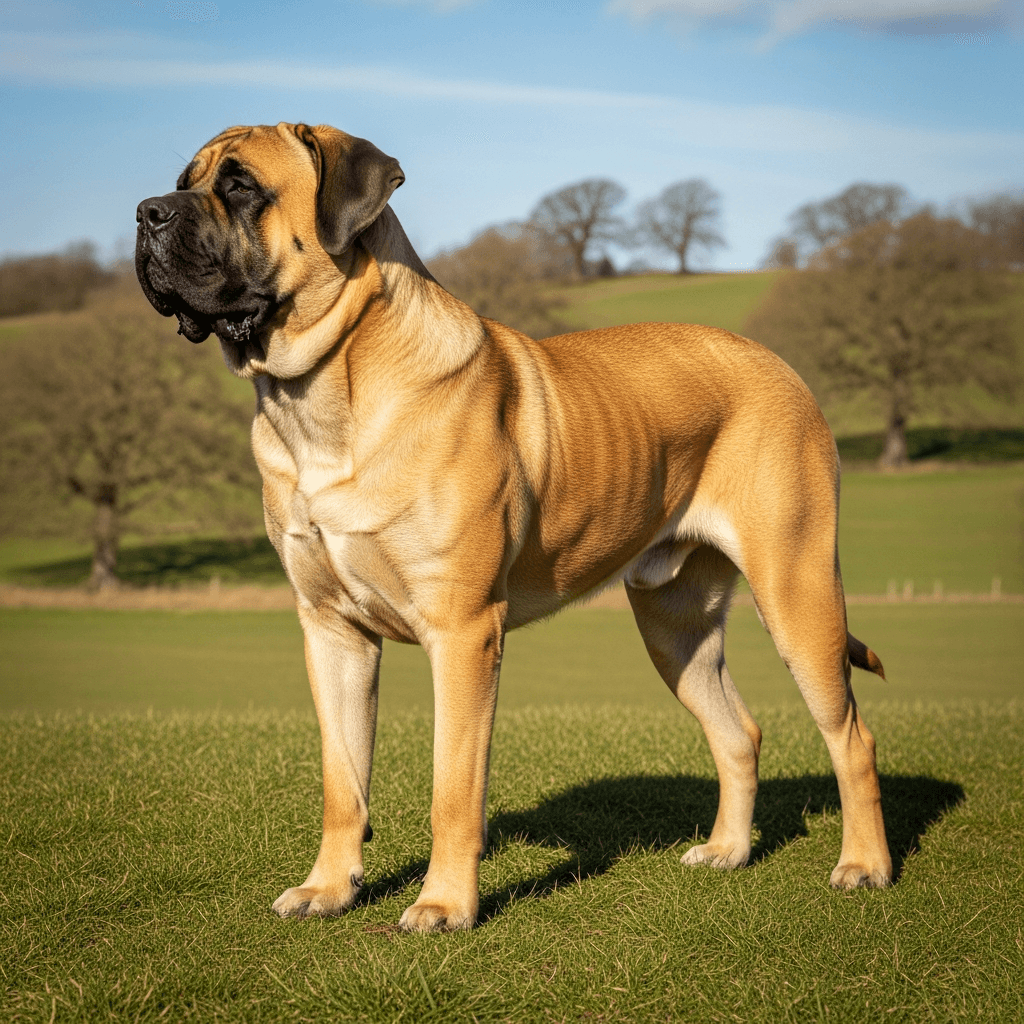
- English Mastiff
- Spanish Mastiff
- Dogue de Bordeaux
- Cane Corso
Survival in the Naples region:
After the fall of the Roman Empire, these powerful dogs survived mainly in southern Italy, particularly in the Campania region, at the foot of Vesuvius and around Naples. For many centuries, these mastiffs lived in geographical isolation, becoming an integral part of the local rural culture. They were primarily used as guard dogs for estates, protectors of herds, and defenders of families against bandits and wild animals.
During this period, the breed developed naturally, shaped by local environmental conditions and the needs of the inhabitants. The characteristic wrinkles on the head, massive build, and protective instinct were traits particularly valued by the local population.
Crises and near extinction:
After World War II, the Neapolitan Mastiff found itself on the brink of extinction. War destruction, economic difficulties, and social changes led to a drastic decline in the population of this breed. Many individuals perished during the war or due to hunger and diseases in post-war Italy.
Breed revival:
The rescue of the Neapolitan Mastiff came thanks to the determination of a group of Italian cynologists and breed enthusiasts. A key figure was Piero Scanziani – an Italian writer, journalist, and dog enthusiast who initiated a program for the breed's restoration and standardization in 1946.
Scanziani, along with other enthusiasts:
- Sought out surviving purebred representatives in remote villages of Campania
- Developed the first standard description of the breed
- Established the first breeding books
- Promoted the breed at dog shows
In 1949, during a dog show in Naples, Scanziani officially presented the renewed breed under the name Mastino Napoletano. The first dog of this breed was registered in the Italian pedigree book under the name Guaglione.
Official recognition:
The breed was officially recognized by the Ente Nazionale della Cinofilia Italiana (ENCI) in 1956, and subsequently by the Fédération Cynologique Internationale (FCI) in 1956 as breed number 197, classified in group 2 (pinschers, schnauzers, molossers, and Swiss herding dogs), section 2.1 (mastiff-type molossers).
Modern times:
Today, the Neapolitan Mastiff enjoys recognition worldwide as an excellent guard dog and a loyal family companion. The breed has retained its original traits – unwavering loyalty, protective instinct, and majestic appearance. It is valued by breeders and owners in Europe, North and South America, Asia, and Australia.
Despite the modernization of breeding and standardization of appearance, the Neapolitan Mastiff remains a living monument to ancient history, carrying in its genes the legacy of the great Roman molossers. Its presence in today's world is a testament to the enduring bond between humans and dogs, as well as a testament to the strength, courage, and loyalty that have defined this extraordinary breed for thousands of years.