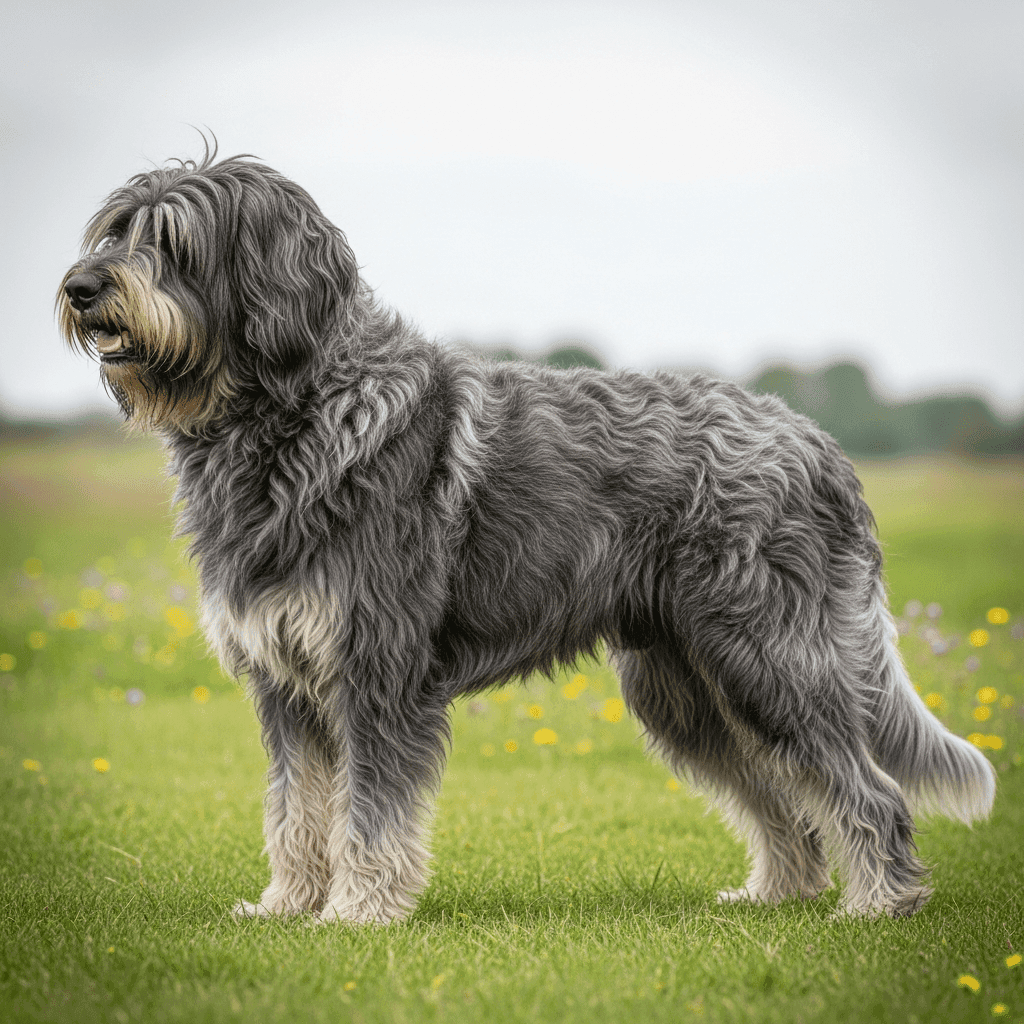
Dutch Schapendoes
FCI Group
1• FCI 313
Size
Medium
Origin Country
NL
Height
40-50 cm
Weight
10-18 kg
Lifespan
12-14 years
Temperament
Overview
The Nederlandse Schapendoes, also known as the Dutch Sheepdog, is a unique herding breed originating from the Netherlands. Its history dates back to the late 19th century when these dogs were indispensable helpers for Dutch shepherds on vast heathlands and pastures. The Schapendoes is distinguished by its long, dense coat covering its entire body and head, which protects it from harsh weather conditions while working in the field.
This breed stands out not only for its exceptional appearance but primarily for its extraordinary intelligence and independence in decision-making. The Schapendoes possesses impressive herding skills – its endurance, agility, and ability to leap quickly allowed it to effectively guide flocks of sheep even in the toughest terrain conditions. Although it was originally a working dog, it is now also used as an excellent companion dog and in dog sports, particularly in agility, where its nimbleness and intelligence are invaluable.
The Schapendoes is a dog filled with energy and joy for life, requiring an active lifestyle and regular stimulation both physically and mentally. Its friendly and cheerful temperament makes it easy to bond with people, making it an ideal family member. The Nederlandse Schapendoes is extremely loyal and attached to its owners but requires commitment from them – this breed is not suitable for people leading a sedentary lifestyle.
In the following sections of this guide, we will explore all aspects of life with a Schapendoes – from its distinctive appearance, behavior, and temperament to health, grooming, exercise requirements, training, and nutrition. We will also learn about the fascinating history of this breed, which barely survived the challenging period of World War II. Each of these aspects illustrates why the Nederlandse Schapendoes is so unique and valued among herding breed enthusiasts worldwide.
The Nederlandse Schapendoes is a medium-sized dog with a light, harmonious body structure that does not compromise its strength and endurance. The height at the withers ranges from 40 to 50 cm, with males typically being slightly larger than females. The weight oscillates between 10 and 18 kg, which, combined with its abundant coat, may give the impression that the dog is bulkier than it actually is.
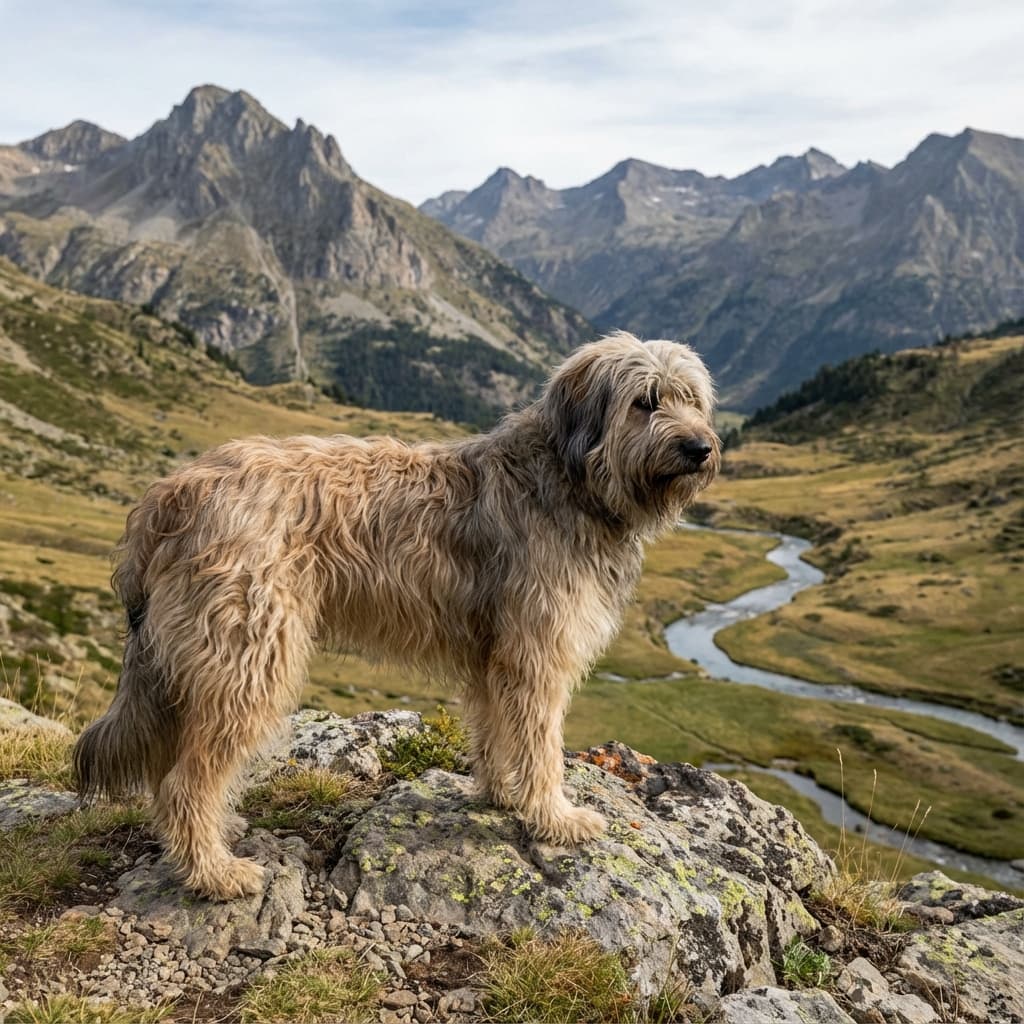
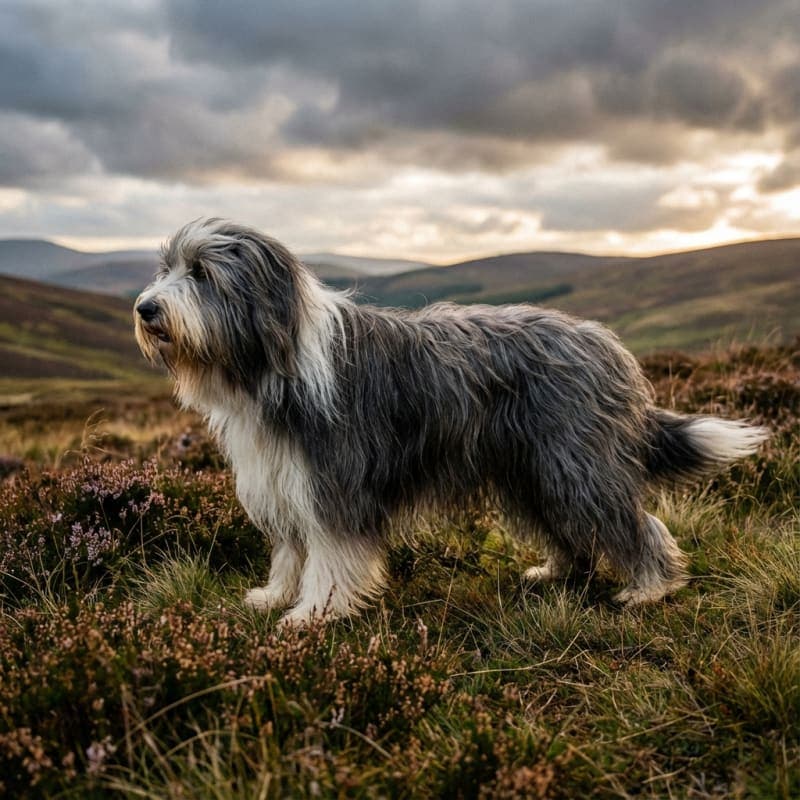
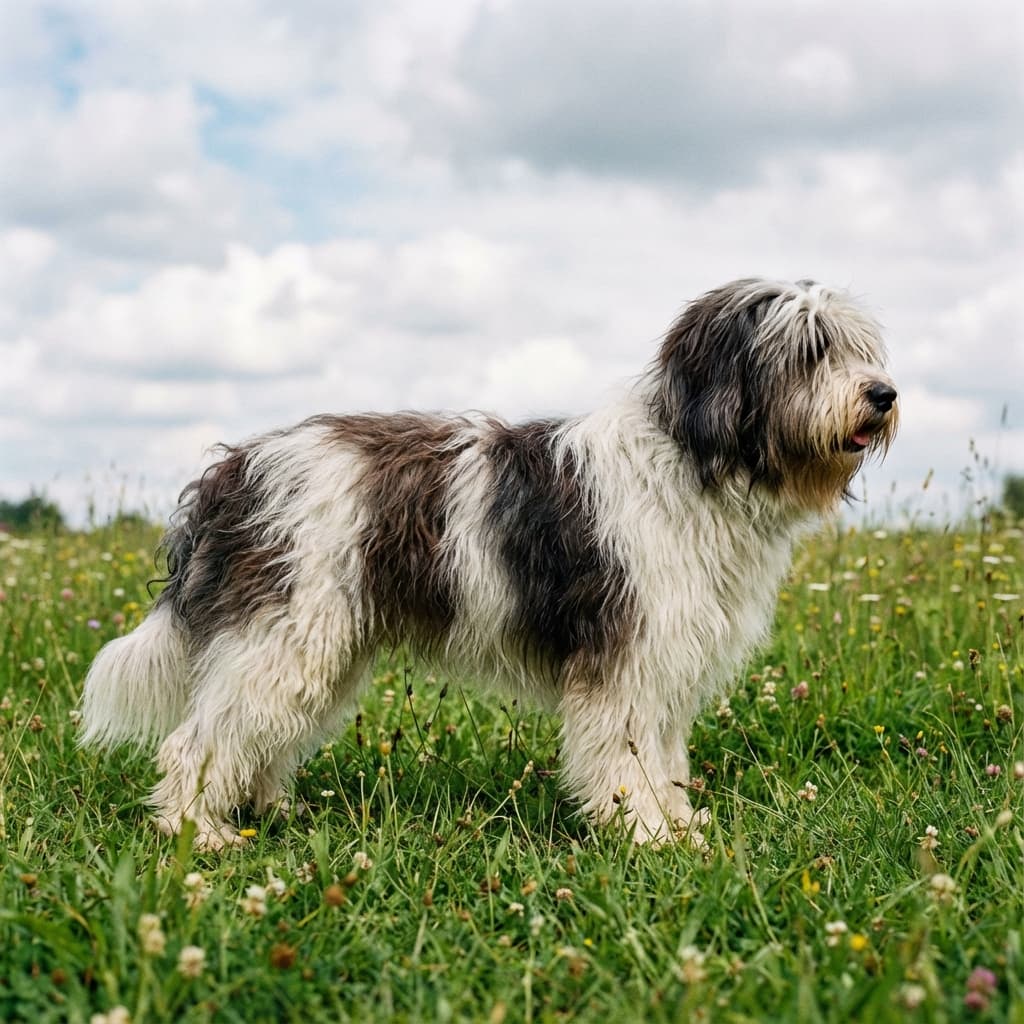
A characteristic feature of the breed is its long, dense coat, which covers the entire body and gives the dog a unique, shaggy appearance. The coat is slightly wavy but not curly or frizzy, with a length of at least 7 cm on the body. It is dense enough to protect the dog from adverse weather conditions, yet not overly silky. The head is particularly well-furred – long eyebrows and facial hair create a distinctive beard and whiskers, giving the Schapendoes a striking, almost human-like expression.
The eyes are relatively large, round, and brown, exuding intelligence and sincerity. The medium-sized ears, which are drooping and well-furred, lie close to the head. The tail is long and abundantly furred, carried low at rest, but raised high in motion or during work, and may curl over the back, which is typical for herding dogs.
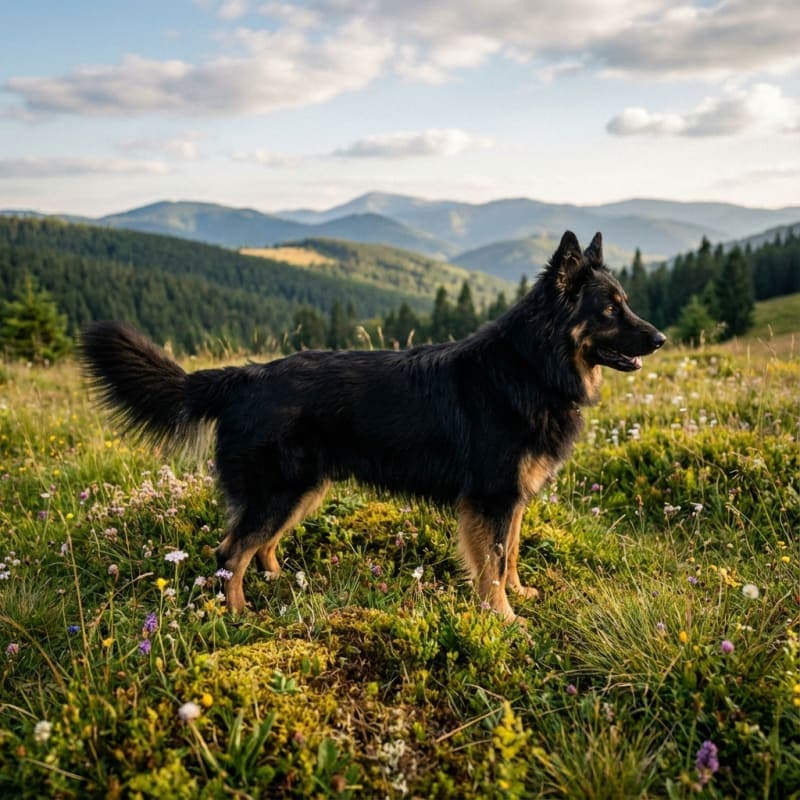
The limbs are straight, strong, and well-muscled, providing the dog with exceptional agility and springiness of movement. The paws are oval, neat, with well-arched toes. The overall silhouette of the Schapendoes is a harmonious combination of lightness and strength, making it an ideal working dog and companion for active individuals. All coat colors are acceptable, although shades of blue-gray, black, or brown with possible white markings are most commonly seen.
The Nederlandse Schapendoes is distinguished by its friendly, cheerful, and energetic temperament, making it an excellent family dog. This breed is highly intelligent, alert, and full of life. The Schapendoes is extremely sociable and strongly attached to its owners, which makes it a loyal companion ready to accompany the family in all activities. Its cheerful nature and playful character make it well-suited for homes with children, although owners should be aware of its herding instincts.
Due to its herding background, the Schapendoes may exhibit a tendency to herd and nudge, especially small children, trying to treat them as members of the flock. This behavior is not aggressive but can be misinterpreted, so it is advisable to supervise interactions with the youngest family members and teach the dog appropriate behavior. This breed has a moderate tolerance for solitude – it can be left alone, but it requires gradual acclimatization to this from a young age.
The Schapendoes has a low hunting instinct, which means it usually does not chase smaller animals and can coexist with other household pets. It is open to new acquaintances and generally friendly towards strangers, although its alertness may cause it to bark at unknown individuals, serving as a watchdog. However, this is not an aggressive breed – the Schapendoes tends to warn rather than attack.
A characteristic feature of this breed is also a certain independence and self-reliance in decision-making, which was essential during herding work. Sometimes this may manifest as stubbornness, so it requires consistent but positive training. Proper socialization from a young age, regular physical activity, and mental stimulation are key to raising a balanced, happy, and well-adjusted Schapendoes.
The Nederlandse Schapendoes is generally a resilient and healthy breed, characterized by good health condition. However, like all purebred dogs, it may be prone to certain genetic disorders and breed-specific health issues. Awareness of these potential threats allows owners and breeders to detect and treat any ailments early.
One of the most serious conditions occurring in this breed is progressive retinal atrophy (PRA), a hereditary eye disease that leads to gradual vision loss and can result in blindness. Responsible breeders conduct genetic testing on their breeding dogs to minimize the risk of passing this disease to future generations. Other ocular issues that may arise include cataracts and eye anomalies.
Schapendoes may also be susceptible to hip and elbow dysplasia, especially if they come from lines where appropriate screening has not been conducted. Regular orthopedic check-ups and maintaining a proper body weight can help minimize the risk and issues associated with these conditions. Due to their drooping, well-furred ears, this breed may be prone to ear infections, so regular inspection and cleaning of the ears are essential parts of routine care.
The average lifespan of the Nederlandse Schapendoes is 12 to 14 years, making this breed relatively long-lived. The key to a long and healthy life is regular veterinary visits, up-to-date vaccinations, parasite prevention, and a healthy, balanced diet. Owners should also remember to monitor their dogs' weight, as despite their high activity level, Schapendoes can have a tendency to gain weight with an improper diet or lack of exercise.
Grooming a Nederlandse Schapendoes requires regular commitment and time, but it is essential for maintaining the health, comfort, and distinctive appearance of this dog. The long, dense, and slightly wavy coat requires special attention to remain in good condition and not become tangled.
Brushing at least once or twice a week is the absolute minimum, but during periods of heavy shedding, it is worth increasing the frequency to daily grooming. Regular brushing not only removes dead hair and prevents matting but also distributes natural skin oils, giving the coat a healthy shine. Special attention should be paid to areas particularly prone to tangling, such as around the ears, belly, groin, and paws.
Bathing should be done only when absolutely necessary, as too frequent washing can lead to dry skin and loss of the natural protective fatty layer of the coat. When a bath is necessary, it is advisable to use gentle shampoos designed for dogs with long hair. After bathing, the dog should be thoroughly dried, especially in cooler weather.
Regular nail trimming is essential to prevent excessive growth, which can lead to discomfort and walking problems. Checking and cleaning the ears should be done at least once a week, especially since the drooping, well-furred ears of the Schapendoes can be prone to moisture accumulation and infection development. Regular teeth brushing, preferably a few times a week, helps prevent periodontal disease and maintains oral health.
Although grooming a Nederlandse Schapendoes requires time and consistency, most owners quickly find that these shared moments become a pleasant ritual that strengthens the bond with their dog.
The Nederlandse Schapendoes is a breed with a high energy level that requires a significant amount of regular physical activity and mental stimulation. As an authentic herding dog, designed for tirelessly long work in the field, the Schapendoes needs much more exercise than the average companion dog. This breed is not suitable for people leading a sedentary lifestyle or living in small spaces without access to running areas.
Ideally, the Schapendoes should receive at least two long walks a day, each lasting at least 45-60 minutes. However, walks alone are not enough – this dog needs the opportunity to run freely, preferably in a safe, fenced area where it can release its energy. Excellent complementary activities include running alongside the owner, swimming, hiking, or cycling with the dog running beside.
The Schapendoes stands out for its exceptional jumping ability and agility, making it great for dog sports, especially agility, flyball, or frisbee. These activities not only provide the necessary physical exercise but also offer mental stimulation, which is equally important for this intelligent breed. It's worth introducing various forms of play, such as fetch, searching for hidden treats, learning new tricks, or scent games.
Lack of adequate exercise and stimulation can lead to serious behavioral problems, including destructive chewing, excessive barking, nervousness, and difficulty controlling the dog. A Schapendoes that does not receive enough activity becomes unhappy and may develop undesirable habits. Therefore, prospective owners must be aware that this breed requires daily, significant time commitment to ensure an adequate amount of exercise.
Training a Nederlandse Schapendoes can be both a satisfying and challenging experience. This breed combines high intelligence and a willingness to cooperate with a certain degree of independence and self-reliance in thinking – traits that were essential during herding work, when the dog had to make decisions without constant commands from the shepherd.
Schapendoes quickly learns new commands and tricks, often after just a few repetitions. However, its independence can sometimes manifest as stubbornness, especially if the dog does not see the point in the command being given or finds it boring. Therefore, the key to success is consistency in training combined with patience and creativity. Monotonous, repetitive training will quickly bore this intelligent breed, so it is worth introducing variety into the exercises.
The most effective are positive reinforcement methods – rewards in the form of treats, toys, praise, and play motivate the Schapendoes to learn and cooperate. Harsh, punitive methods are ineffective and can destroy the bond with the dog and undermine its trust. Schapendoes learns best when training is fun and an intellectual challenge, rather than a chore.
Training should begin as early as puppy age, ideally right after the puppy arrives home. Basic obedience commands, house training, and socialization with various people, dogs, and situations are the foundation for the future behavior of the adult dog. Socialization is particularly important – Schapendoes that have been exposed to a variety of stimuli from a young age are more balanced and confident.
Due to their herding background, it is worth channeling their natural herding instinct in appropriate directions – herding training courses or dog sports such as agility allow the dog to express its natural abilities in a controlled manner. Proper training and socialization will help raise a balanced, obedient, and happy Schapendoes that will be an excellent companion for many years.
Proper nutrition for the Nederlandse Schapendoes is crucial for maintaining its health, energy, and condition. Due to its high level of physical activity, this breed requires a diet rich in high-quality nutrients that will provide the necessary energy for daily activities.
The foundation of the diet should be high-quality complete food designed for medium-sized dogs with high activity levels. A key ingredient is animal-based protein (from meat, poultry, or fish), which should be the main component of the food. Protein supports muscle development and regeneration, which is particularly important for active herding dogs. Fats provide energy and support skin and coat health, while complex carbohydrates supply long-lasting energy.
Owners can choose between dry food, wet food, or a natural diet (BARF), although each of these options has its advantages and disadvantages. Regardless of the chosen feeding method, it is important that the food is of high quality, properly balanced, and tailored to the dog's age (puppies, adult dogs, seniors have different nutritional needs), activity level, and any special health requirements.
Portion control and regular meal portioning are essential for preventing overweight. Despite their high activity level, Schapendoes can gain weight if they receive too many calories or too many treats outside of main meals. It is recommended to feed an adult dog twice a day, while puppies require more frequent, smaller meals – usually three to four times a day.
Schapendoes should have constant access to fresh, clean water, especially after intense physical activity or on warm days. Owners should avoid feeding the dog directly before or after intense exercise to minimize the risk of gastric torsion. It is also advisable to regularly consult with a veterinarian to adjust the diet to the individual needs of the dog, its age, health status, and activity level.
Characteristic Traits
Pros
- Extremely intelligent and quick to learn
- Friendly and cheerful temperament
- Excellent companion for active families
- Performs well in dog sports
- Low hunting instinct.
Cons
- Requires a lot of movement and activity
- Needs regular mental stimulation
- Sometimes stubborn and independent
- Requires regular grooming
- May exhibit herding instincts towards children.
Behavioral Ratings
Breed History
The history of the Nederlandse Schapendoes is a fascinating tale of survival and dedication by a few enthusiasts who saved this breed from total extinction. The origins of the Schapendoes date back to the late 19th and early 20th centuries, when these dogs were commonly found on heathlands and pastures in various regions of the Netherlands, particularly where sheep were raised.
Dutch shepherds valued the Schapendoes for its tireless work ethic, intelligence, and independence. These dogs could guide flocks of sheep for hours across vast, often difficult terrains, demonstrating exceptional perseverance, agility, and the ability to make decisions independently. The Schapendoes belongs to a broad group of long-haired herding breeds characterized by a densely coated head, being related to breeds such as the Bearded Collie, Puli, Polish Lowland Sheepdog, Bobtail, Briard, Bergamasco, and the German Schafspudel.
The tragic period of World War II nearly brought the breed to total extinction. During the occupation, dog breeding was almost impossible, and many dogs died or were crossed with other breeds. After the war, the situation looked dramatic – only a few pure representatives of the breed remained. If it weren't for the extraordinary commitment of a group of Dutch breeders, particularly Mr. P.M.C. Toepoel, who began systematic searches and the rebuilding of the breed, the Nederlandse Schapendoes would likely have disappeared forever.
In 1947, the Nederlandse Schapendoes Club was established, marking the official beginning of the breed's recovery. In 1952, the breed received preliminary recognition from the Raad van Beheer (Dutch Kennel Club), and in 1954, the first official breed standard was developed and approved. Full, final recognition occurred in 1971. Since then, the breed has gradually rebuilt its population, although even today it remains relatively rare, especially outside the borders of the Netherlands.
Today, the Nederlandse Schapendoes is valued not only as a working dog but also as a wonderful family companion and participant in dog sports. This breed is appreciated by those who recognize its unique character, intelligence, and authentic herding heritage. Despite its growing popularity, the Schapendoes still requires conscious breeders and owners who care for the preservation of its distinctive traits and genetic health to ensure this remarkable breed a long and healthy future.