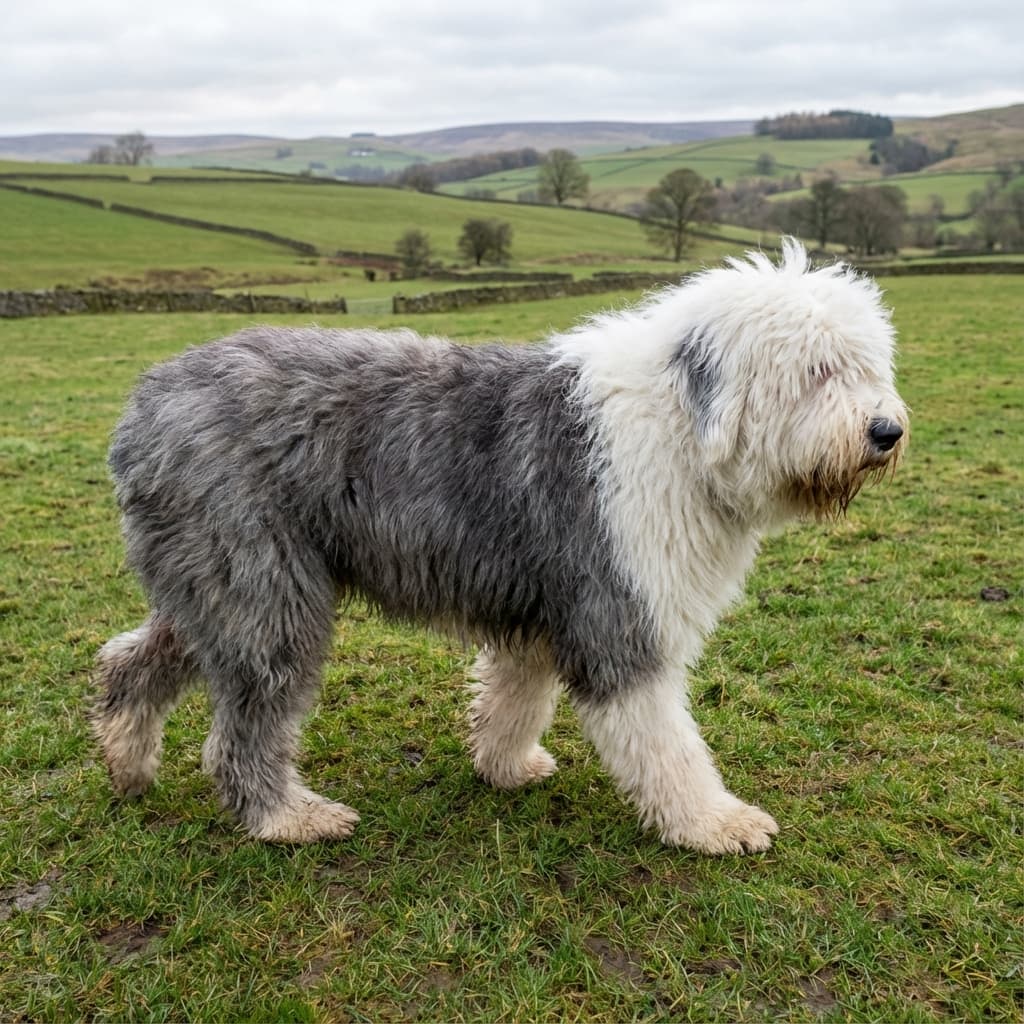
Old English Sheepdog - Bobtail
FCI Group
1• FCI 16
Size
Large
Origin Country
GB
Height
56-66 cm
Weight
35-40 kg
Lifespan
10-12 years
Temperament
Overview
The Old English Sheepdog, also known as the Bobtail, is one of the most recognizable herding dog breeds in the world. This British breed boasts a rich history as an invaluable assistant to shepherds, who appreciated its exceptional agility in herding sheep. The characteristic thick, long coat with waterproof properties allowed these dogs to work in the most demanding weather conditions, protecting them from rain, wind, and cold. Its extraordinary appearance with a distinctive falling fringe over the eyes and a massive build makes the Old English Sheepdog an unforgettable and easily recognizable dog at first glance.
What sets the Old English Sheepdog apart is the combination of impressive intelligence with a friendly, gentle disposition. This is an energetic dog that devotedly serves its family and forms strong emotional bonds with them. Its nickname "nanny dog" is not accidental – Old English Sheepdogs show exceptional patience with children and eagerly participate in their games, becoming their natural guardians. However, it is important to remember that this active breed requires a daily dose of intense exercise and regular intellectual stimulation. A strongly rooted herding instinct manifests in these dogs in a fascinating way – it is not uncommon to observe them trying to "organize" family members or other animals by gently nudging them in a specific direction.
Raising an Old English Sheepdog is a task that requires consistency, patience, and some experience. Representatives of this breed can be stubborn and independent thinkers, which can pose a challenge for inexperienced owners. Nevertheless, their deep loyalty, willingness to cooperate, and natural intelligence mean that properly conducted training yields excellent results. Old English Sheepdogs love to be the center of family attention and feel best in the company of people, which is why they are ideal for active, engaged households where they will receive the right amount of time, attention, and opportunities to develop their natural talents.
Although the Old English Sheepdog is a fantastic companion, potential owners should be aware of certain health challenges typical of this breed. Regular veterinary check-ups are essential, especially due to the genetic predisposition to hip dysplasia, eye problems, and other hereditary conditions. Proper health prevention, a balanced diet, and the right amount of exercise can significantly contribute to a long, happy life for this wonderful canine. The Old English Sheepdog combines intelligence, devotion, and boundless energy, making it an excellent choice for families ready to invest time and heart into its upbringing and ensuring it leads an active lifestyle.
The Old English Sheepdog is a dog with a massive, square body structure that exudes strength and confidence. The height at the withers for males is at least 61 cm, while females reach a minimum of 56 cm. The weight of representatives of this breed typically ranges from 32 to 45 kg, with males being noticeably heavier and more massive than females. The characteristic sturdy build with well-developed musculature and a deep chest gives these dogs an exceptionally solid appearance.
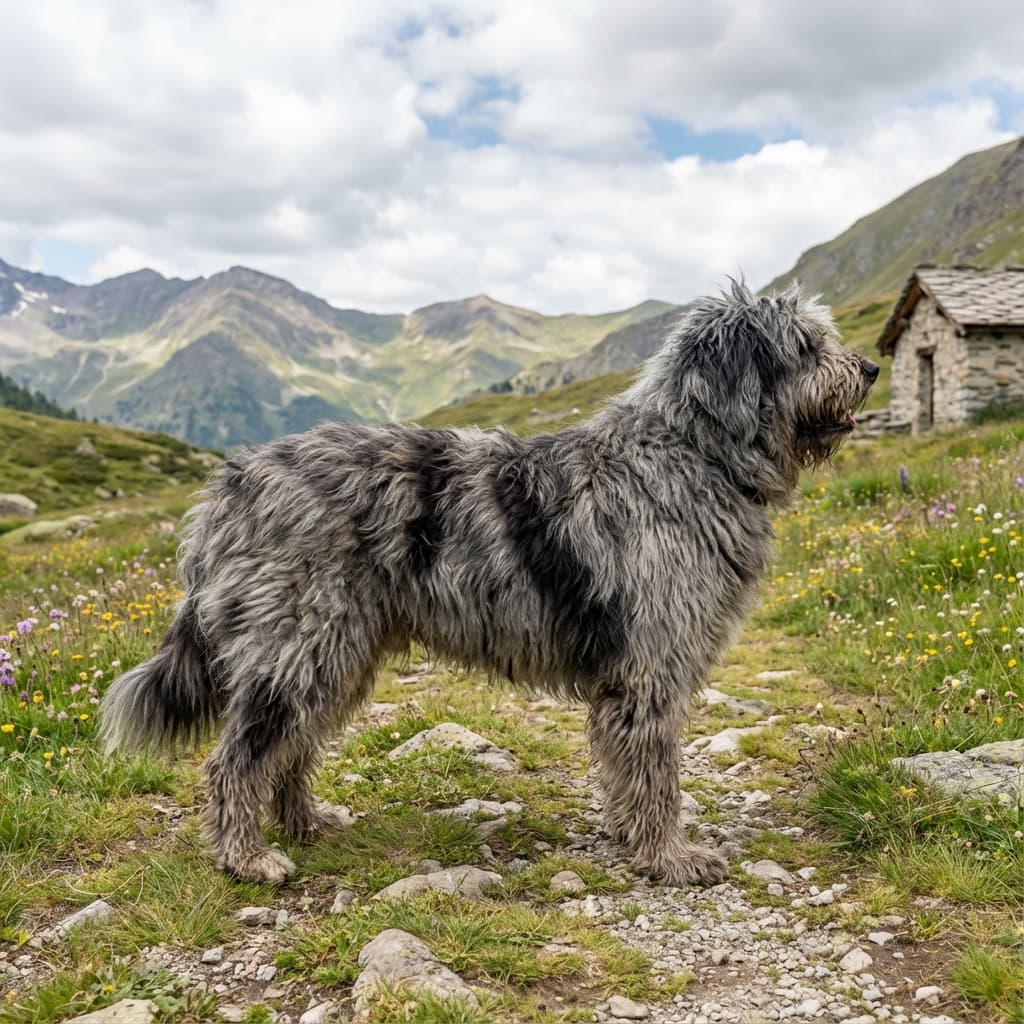
The most recognizable feature of the Old English Sheepdog is its abundant, double coat – the thick, dense undercoat protects against the cold, while the long, rough outer layer repels water and mud. This natural "armor" provided the dogs with excellent protection while working in harsh mountain and weather conditions. The coat color can take on various shades: from gray to blue-gray (known as grizzle) to blue, always with characteristic white markings on the head (creating a "cap" effect), neck, front limbs, belly, and tip of the tail.
The head of the Old English Sheepdog is proportionally large, square, and covered with long hair that often obscures the eyes, creating a distinctive tuft. The eyes are medium-sized and can be dark brown or – interestingly – porcelain (blue-white), giving the dog a particularly intriguing expression. The ears are relatively small, lying flat against the skull and also hidden under the abundant coat. The muzzle is strong and well-developed, with a distinct stop, ending in a large, black nose.
Particularly fascinating is the characteristic way of moving of the Old English Sheepdog – its gait resembles that of a rolling bear, with a slight sway of the sides and a typical "bear-like" motion. This specific trot is a result of anatomical structure and is one of the breed's distinguishing features. Traditionally, Old English Sheepdogs were born with naturally short tails or were purchased shortly after birth (hence the name "Bobtail" – short tail), although nowadays, in many countries, the practice of purchasing is banned, and more and more dogs have natural, long tails. This breed, with its impressive appearance, abundant coat, and friendly expression, certainly attracts the attention and hearts of dog lovers around the world.
The Old English Sheepdog is a dog with a remarkably balanced and gentle temperament, which perfectly combines the courage of a herding dog with the tenderness of a family companion. In relationships with people, especially children, it shows extraordinary patience and protectiveness, making it one of the best dogs for families with small children. Its nickname "nanny dog" is well-deserved – Old English Sheepdogs intuitively sense that children require special gentleness and joyfully engage in play, while remaining alert and protective.
By nature, this is an extremely social and companionable breed that does not tolerate prolonged solitude well. Old English Sheepdogs crave constant contact with their family and are happiest when they can participate in all daily activities of their household. They may initially show some reserve towards strangers, but after getting to know them, they quickly become friendly. Their deep, resonant voice makes them excellent alarm dogs – they immediately alert to the approach of strangers, although they do not show aggression and will not attack an intruder.
The strong herding instinct means that Old English Sheepdogs may try to "organize" their family by gently nudging people or other animals in a certain direction. This is a natural behavior that should be appropriately directed through consistent training. It is also worth noting that due to their massive build, these dogs can be somewhat clumsy – in puppyhood and adolescence, they may have "accidents" involving accidentally knocking over furniture or children, which stems from their energy and lack of awareness of their own size.
The breed is characterized by a certain degree of independence and self-reliance in thinking, which is a remnant of years of herding work that required making decisions without human intervention. Sometimes this can lead to the impression that the dog is ignoring commands or is stubborn. Therefore, it is extremely important to start early, consistent training based on positive reinforcement, which will help develop proper habits and obedience.
Old English Sheepdogs are very active and energetic dogs that require daily, intense stimulation both physically and mentally. Insufficient exercise and boredom can lead to the emergence of undesirable behaviors, such as excessive barking, destructiveness, or hyperactivity at home. Proper socialization from a puppy age, regular interactions with other dogs and people, and participation in various activities will help shape a well-balanced, confident, and friendly companion. Those deciding to adopt an Old English Sheepdog should be prepared to devote a significant amount of time to its upbringing, play, and activity – in return, they will receive an incredibly loyal, loving, and devoted friend who will become an integral part of the family.
The Old English Sheepdog, despite its impressive size and massive build, is a relatively healthy breed with proper care and prevention. The average lifespan of representatives of this breed ranges from 10 to 12 years, although with luck and proper care, some individuals can live up to 13-14 years. Nevertheless, potential owners should be aware of certain health issues to which this breed is particularly susceptible.
Hip dysplasia is one of the most common conditions affecting Old English Sheepdogs. It is a developmental defect of the hip joint, leading to improper fitting of the acetabulum and the head of the femur, which over time causes pain, stiffness, and lameness. Due to the genetic basis of this disease, it is extremely important to acquire puppies from responsible breeders who conduct breeding radiographs and eliminate dogs with joint defects from reproduction.
Another significant issue is eye diseases, including cataracts, progressive retinal atrophy (PRA), and entropion (inward rolling of the eyelids). Regular eye examinations allow for early detection of these conditions and the implementation of appropriate treatment. Primary ciliary dyskinesia is a rare but serious genetic condition affecting the respiratory tract – dogs affected by it suffer from chronic breathing problems, coughing, and recurrent lung infections.
Gastric torsion (dilatatio ventriculi cum volvulo) is a sudden, life-threatening condition, particularly affecting large dogs with deep chests, including Old English Sheepdogs. The stomach fills with gas and twists around its axis, preventing the outflow of food contents. Symptoms include restlessness, unsuccessful attempts to vomit, a bloated abdomen, and weakness – in such a situation, immediate veterinary intervention is essential. To minimize the risk, it is recommended to feed the dog twice a day in smaller portions, avoid intense exercise immediately before and after meals, and use slow-feed bowls.
Hypothermia and overheating are other issues that require attention. The dense, double coat protects against the cold but also makes these dogs very sensitive to high temperatures. On hot days, they should have access to shade, fresh water, and physical activity should be limited to cooler times of the day. It may be necessary to trim their coat in the summer, although this should be done carefully to avoid damaging its structure.
Regular veterinary visits, up-to-date vaccinations, deworming, and flea and tick prevention are the foundation of good health for the Old English Sheepdog. It is also important to monitor the dog's weight – obesity can exacerbate joint problems and negatively affect overall condition. Proper healthcare, combined with a balanced diet and adequate exercise, will significantly contribute to a long, happy, and energetic life for this wonderful dog.
Grooming an Old English Sheepdog is one of the most demanding tasks associated with owning this breed. The characteristic, abundant coat requires regular and systematic grooming to remain in good condition and to prevent matting. Owners must be prepared to dedicate a significant amount of time – even several hours a week – to properly groom their dog's coat.
Daily brushing is an absolute necessity for the Old English Sheepdog. Appropriate tools should be used: pin brushes, combs with varying tooth densities, and slicker brushes to remove dead undercoat. The brushing process should be thorough – it is not enough to just brush the surface of the coat; one must reach down to the skin to prevent matting close to the skin. Particular attention should be paid to areas especially prone to tangling: behind the ears, under the armpits, around the groin, and on the hind legs.
During periods of heavy shedding, which occur in spring and autumn, even more frequent grooming is required, sometimes several times a day. Old English Sheepdogs lose huge amounts of undercoat, which without regular brushing can lead to the formation of massive mats that are difficult or impossible to comb out. Some owners opt for periodic trimming by a professional groomer, which significantly eases grooming, especially in the summer months.
Baths should be given every 6-8 weeks, or more frequently if the dog is particularly active and gets dirty often. High-quality shampoos for long-haired dogs should be used, and the coat must be thoroughly rinsed – leftover shampoo can cause skin irritation. After bathing, it is essential to thoroughly dry the coat using a dryer (on a low setting) while simultaneously brushing to prevent matting in the wet coat.
Grooming does not end with the coat. Regular checking and cleaning of the ears is crucial, as long, drooping hair and small, close-fitting ears create a moist environment conducive to infection. Weekly ear checks and gentle cleaning with special products are recommended. Oral hygiene also requires attention – regular tooth brushing (ideally daily) prevents tartar buildup and gum disease. Nails should be regularly trimmed, usually every 3-4 weeks, to prevent them from becoming too long and affecting walking comfort.
Particular attention is also required around the eyes – long hair falling into the eyes can cause irritation and infections, which is why many owners choose to regularly trim the fringe or tie back the hair above the eyes. Equally important is the inspection of the area around the rear opening, where hair can get dirty and requires regular trimming for hygiene maintenance.
Professional grooming at a groomer every 2-3 months can be an excellent complement to home grooming. An experienced groomer will not only thoroughly bathe and dry the dog but also remove dead undercoat, trim hair in problematic areas, and check the overall health of the skin and coat. Proper, systematic grooming not only gives the Old English Sheepdog a beautiful appearance but, most importantly, protects against health issues related to neglecting the coat, such as skin infections, overheating, or troublesome mats causing pain and discomfort.
The Old English Sheepdog is a breed that requires a significant amount of daily exercise and physical activity to remain healthy, happy, and well-balanced. Despite their massive build and seemingly slow, swaying gait, they are energetic and resilient dogs that were bred for intensive physical work herding sheep for many hours a day. Owners must be prepared to provide them with the right amount of activity.
A minimum of two long walks a day, each lasting at least 45-60 minutes at a moderate pace, is essential. However, just walking on a leash is not enough – Old English Sheepdogs need the opportunity to run freely, play, and expend their energy. The ideal solution is to regularly take the dog to safe, fenced areas where it can run and explore its surroundings without hindrance. Playing with other dogs is an excellent way to burn off energy while also maintaining proper social skills.
Due to their strong herding instinct, Old English Sheepdogs excel in various forms of activities that utilize their natural talents. Agility, flyball, frisbee, or treibball (a discipline resembling sheep herding but using balls) are excellent ways to engage both the body and mind of the dog. Mental stimulation is just as important as physical – intelligent Old English Sheepdogs need intellectual challenges, such as learning new commands, scent games, or dog puzzles.
It is worth noting that representatives of this breed tend to "organize" everything around them – during walks, they may try to gather a group, push other dogs or people in a specific direction. This natural behavior stemming from their herding instinct should be properly directed and controlled to avoid undesirable situations. In public places, it is advisable to keep the dog on a leash to prevent situations where it might try to "herd" strangers or animals.
Health limitations should also be kept in mind. On hot days, the intensity of exercise should be significantly reduced and activities should be avoided during the hottest hours, as their thick coat makes Old English Sheepdogs very sensitive to overheating. Walks should take place early in the morning or late in the evening, always with access to fresh water and shade. For older dogs and individuals with joint problems, the intensity of exercise should be adjusted to their capabilities, avoiding jumps and sudden movements that could further strain the joints.
A lack of adequate exercise and stimulation can quickly lead to behavioral issues. A bored Old English Sheepdog may become destructive, start barking excessively, chew on furniture, or dig up the garden. It may also develop undesirable compulsive behaviors or become hyperactive and difficult to handle. Therefore, regular, varied physical and mental exercises are absolutely crucial for the well-being of this breed. Owners leading an active lifestyle who can provide the right amount of daily activity will receive in return an energetic, happy, and well-balanced companion eager to participate in all family adventures.
Training an Old English Sheepdog is a task that requires consistency, patience, and some experience in working with dogs. This breed combines intelligence and a natural desire to work with a certain degree of stubbornness and independence of thought, which is a remnant of centuries of independent herding work. Therefore, raising a well-trained Old English Sheepdog is a challenge, but with the right approach, it brings extremely satisfying results.
The key to success is to start training at the youngest age possible – ideally from the moment the puppy crosses the threshold of its new home (around 8-10 weeks of age). Young Old English Sheepdogs are like sponges, absorbing knowledge quickly and eagerly, so early shaping of proper habits will greatly facilitate later upbringing. The first steps should be basic commands: sit, stay, come, leave it, and learning to walk on a leash without pulling.
Methods based on positive reinforcement are absolutely essential when working with this breed. Old English Sheepdogs react poorly to harsh training methods, physical punishment, or raised voices – such an approach will quickly discourage the dog, destroy the relationship with the owner, and may lead to behavioral problems. Instead, desirable behaviors should be rewarded with treats, praise, play, or petting. Consistency is key – all family members must apply the same rules and expectations towards the dog to avoid confusing it.
Due to their natural tendency for independence and independent thinking, Old English Sheepdogs may sometimes seem to ignore commands or be willfully disobedient. In reality, they are often just contemplating whether following a command makes sense in a given situation. Therefore, training must be not only consistent but also interesting and varied – monotonous repetition of the same exercises quickly bores this intelligent breed. It is worth introducing variety, teaching new tricks, changing training locations, and keeping sessions short (10-15 minutes) but frequent.
Socialization is just as important as basic training. Old English Sheepdog puppies should be systematically and positively exposed to various stimuli: other dogs (small and large), people (children, elderly individuals, those in hats, in wheelchairs), different environments (city, park, forest), sounds (traffic, fireworks, vacuum cleaner), and situations (vet visits, car rides, encounters with other animals). A properly socialized dog will be confident, calm, and well-balanced in various situations.
Due to their strong herding instinct, special attention should be paid to controlling behaviors such as pushing, herding people or other animals, and excessive alertness. The dog should be taught when such behaviors are acceptable (e.g., during treibball training) and when they are undesirable (during walks in the park). Learning to control emotions and behave calmly in the presence of other dogs and people is essential, especially since, due to their size, an Old English Sheepdog may inadvertently cause harm if overly excited.
Participating in group classes led by an experienced trainer is an excellent investment, especially for novice owners. Classes provide a controlled environment for socialization, allow learning proper training techniques, and offer professional guidance tailored to the individual needs of the dog. Engaging in dog sports such as agility, obedience, or treibball can also be considered, which not only develop the dog's skills but also deepen the bond with the owner.
Proper, consistent, and positive training of an Old English Sheepdog is not only a matter of safety and order in the home but, above all, the foundation of a deep relationship based on mutual understanding and respect between the dog and the owner. A well-trained Old English Sheepdog is an incredibly pleasant companion to live with, fully realizing its potential as an intelligent, devoted, and energetic family friend.
Proper nutrition for the Old English Sheepdog is crucial for its health, condition, and longevity. This large, active breed requires a carefully balanced diet that provides the right amount of energy, nutrients, and supports joint, skin, and coat health.
The foundation of the diet should be high-quality food – dry, wet, or natural (BARF diet), tailored to the size, age, and activity level of the dog. For Old English Sheepdogs, it is particularly important to choose foods designed for large breeds, as they contain the appropriate proportions of ingredients that support joint health, such as glucosamine and chondroitin. The main ingredient of the food should be high-quality meat (chicken, beef, fish, lamb), which provides essential protein for building and maintaining muscle mass.
The amount of food must be appropriately adjusted to the age, weight, and activity level of the dog. An adult Old English Sheepdog weighing 35-40 kg typically needs about 3-4 cups of high-quality dry food per day, divided into two meals. Feeding twice a day (morning and evening) is strongly recommended instead of one large meal, as it reduces the risk of dangerous gastric torsion, to which large dogs with deep chests are particularly susceptible. Additionally, after meals, the dog should rest for at least an hour – intense exercise should be avoided immediately before and after eating.
Weight control is extremely important. Old English Sheepdogs tend to gain weight, especially if their level of physical activity is insufficient or they receive too many treats. Overweight in large breed dogs is particularly dangerous, as it further burdens the joints and can exacerbate hip joint problems and contribute to the development of heart disease and diabetes. Regular weight monitoring (at least once a month) and body condition assessment will allow for quick response and dietary adjustments if needed.
Snacks should make up no more than 10% of daily calorie intake. When training and rewarding, it is advisable to use healthy options, such as small pieces of cooked chicken, carrots, or special low-calorie training treats. It is important to avoid salty, fatty, or sugary human snacks that can be harmful to the dog's health. Some foods are toxic to dogs, including chocolate, grapes, raisins, onions, garlic, or xylitol (a sweetener), so special care should be taken.
Hydration is as important as nutrition. The Old English Sheepdog must have constant access to fresh, clean water, especially after intense physical activity or on warm days. Due to their thick coat, these dogs are prone to overheating, so proper hydration is crucial for their health.
For dogs with health issues, such as food allergies, sensitive digestive systems, or joint diseases, it may be necessary to implement a specialized veterinary diet. Before making any changes to the diet or using dietary supplements (e.g., omega-3 oils, glucosamine, probiotics), it is advisable to consult a veterinarian who can help choose appropriate solutions tailored to the individual needs of the dog.
Puppies and young Old English Sheepdogs (up to about 18-24 months) have special nutritional requirements. They should receive food specifically formulated for large breed puppies, which controls the growth rate – too rapid growth can lead to joint problems later in life. The transition to adult dog food should occur gradually after reaching physical maturity.
A properly selected, balanced diet combined with weight control, regular exercise, and veterinary care will significantly contribute to a long, healthy, and energetic life for the Old English Sheepdog. Nutrition is not only a way to satisfy hunger but, above all, the foundation of good health and condition for many years to come.
Characteristic Traits
Pros
- Extremely friendly and gentle character
- Excellent companion for children
- Very intelligent and eager to learn
- Devoted and loyal to the family
- Great guard dog with a deep voice.
Cons
- Requires very intensive coat care
- Needs a lot of daily exercise
- Prone to hip dysplasia
- Can be stubborn in training
- Susceptible to overheating on hot days
- Large dog requiring space.
Behavioral Ratings
Breed History
The Old English Sheepdog is a breed with a long and fascinating history, whose roots likely date back to the 16th-17th century, although the exact beginnings remain a topic of discussion among historians and dog breeders. This breed originated in Great Britain, most probably in the western counties – Devon, Somerset, and Cornwall – where herding dogs have been bred for centuries to tend sheep and cattle.
Although the name Old English Sheepdog suggests a native British origin, many historians believe that the breed was developed from the crossing of native herding dogs with European herding dogs that arrived in the British Isles with settlers and traders. It is thought that the ancestry of the Old English Sheepdog may include breeds such as berger de Brie (briard), berger des Pyrénées, bergamasco, or Russian shepherds of the ovcharka type. The deliberate crossing aimed to create a dog that combined strength, intelligence, resilience to harsh weather conditions, and reliability in herding work.
In the 18th and 19th centuries, Old English Sheepdogs were widely used by shepherds for herding sheep and driving them to markets. Their distinctive feature – a short tail (either natural or docked) – was not accidental. Working dogs were officially exempt from taxation, and docking the tail served as a designation for working dogs. Hence, the alternative name of the breed – Bobtail, meaning short tail (from bob – short and tail – tail).
The first documented mentions of the breed appear in the 18th century, and in 1873 the breed was first showcased at a dog show in Birmingham. It generated immense interest due to its unique appearance and friendly character. The official breed standard was developed by The Kennel Club (the British dog association) in the late 19th century, which initiated a more systematic breeding focused on preserving desired traits of appearance and character.
At the turn of the 19th and 20th centuries, the popularity of the Old English Sheepdog extended beyond the borders of Great Britain. The breed reached the United States, where it quickly gained recognition as both a working dog and a household companion. In 1904, the Old English Sheepdog Club of America was established to promote and breed the breed in the USA. Old English Sheepdogs appeared at shows, in films, and advertisements, further increasing their recognition.
In the 20th century, there was a significant shift in the breed's function. From working dogs, Old English Sheepdogs primarily transformed into family and show dogs. Their friendly, nurturing character, intelligence, and spectacular appearance made them favorites among families worldwide. The breed earned the nickname nanny dog due to its exceptional patience and gentleness with children. Old English Sheepdogs appeared in popular culture – in Disney films, animated series, and as company mascots (including in Dulux paint advertisements in the UK).
Today, the Old English Sheepdog is a valued breed recognized worldwide, although its popularity has somewhat declined compared to its peak in the 1970s and 1980s. Today, the breed is maintained by dedicated breeders who care for preserving its unique traits, both in terms of appearance and temperament. The Old English Sheepdog remains a living testament to the history of herding dogs in Great Britain and an ideal example of the successful transformation of a working dog into a beloved family companion. Its legacy of centuries of herding work continues to manifest in the intelligence, endurance, and strong nurturing instinct that make it one of the most distinctive and valued dog breeds.