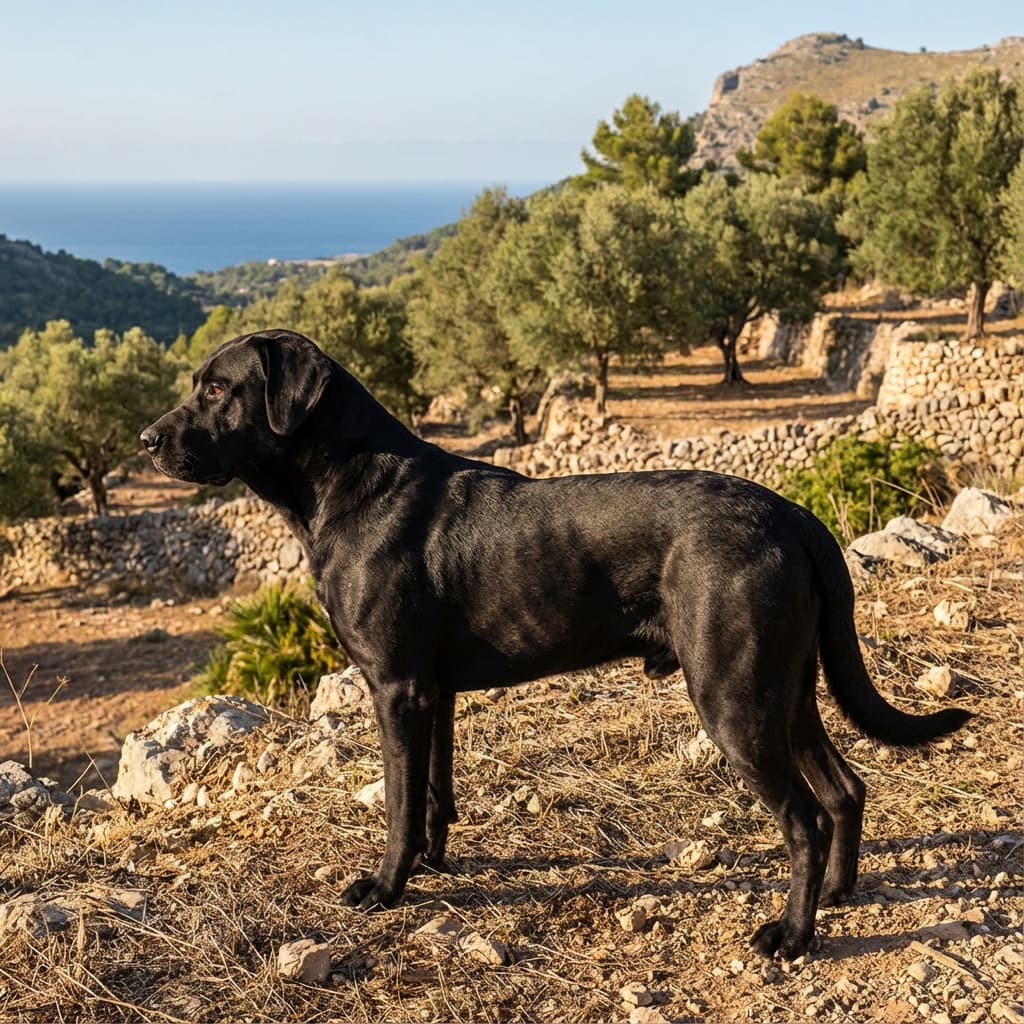
Short-haired shepherd from Mallorca
FCI Group
1• FCI 321B
Size
Large
Origin Country
ES
Height
62-73 cm
Weight
35-40 kg
Lifespan
10-15 years
Temperament
Overview
Short-haired Majorcan Shepherd, also known as Ca de Bestiar, is an impressive breed of herding dogs originating from the picturesque island of Mallorca in Spain. This unique dog gained recognition from the FCI as early as 1982, which attests to its special traits and skills developed over centuries of selection.
Build and size of this breed is impressive – it is characterized by a medium size, strong constitution, and a well-muscled body, making it not only an ideal herding dog but also an excellent guardian. Males reach a height of 66 to 73 cm at the withers, while females measure 62 to 68 cm, and their weight hovers around 35-40 kg, providing them with an impressive presence while maintaining agility.
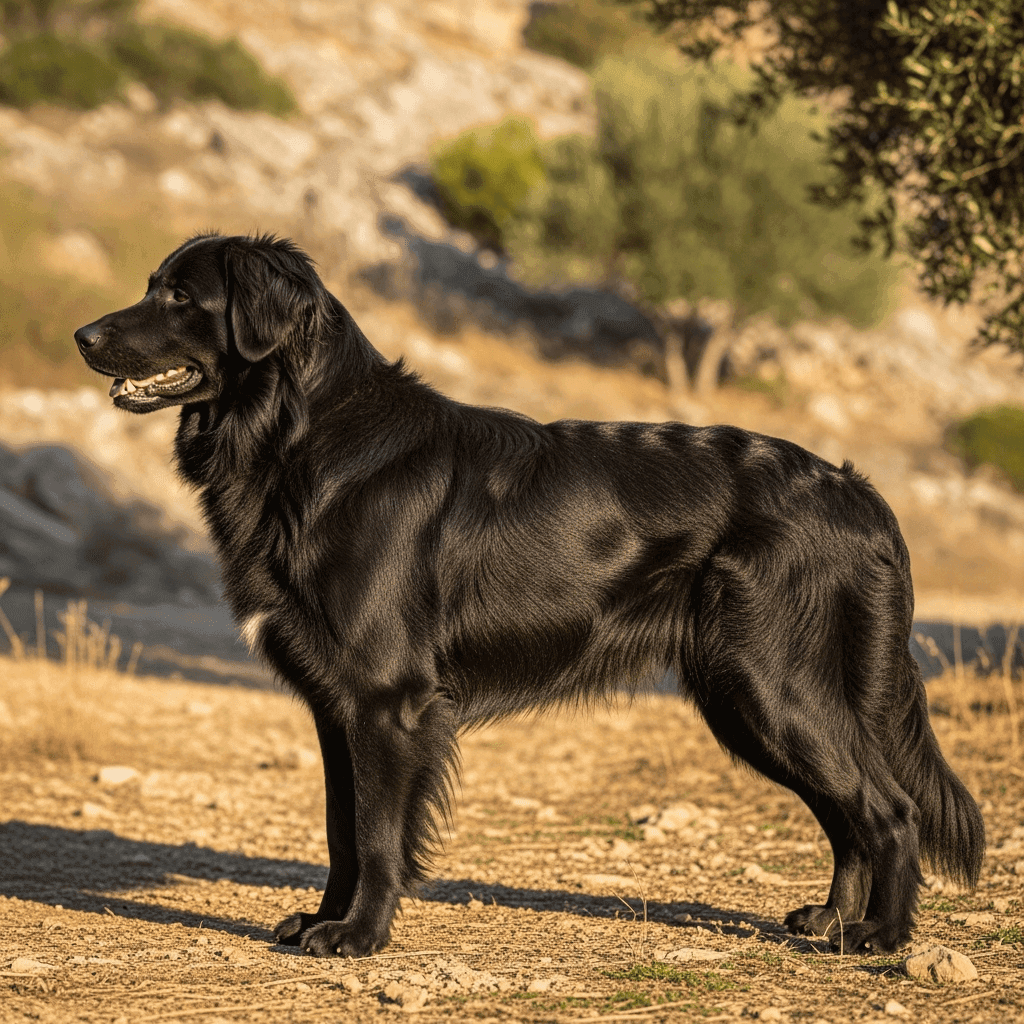
Coat and coloration – the Majorcan shepherd, as the name suggests, comes in a short-haired variety, which is more common than the long-haired one. Its coat is smooth, hard, and closely adheres to the body, providing effective protection against weather conditions. The undercoat is sparse or completely absent. The coloration of this breed is uniformly black, with permissible white markings on the chest and limbs, adding elegance and distinguishing it against the backdrop of the island's landscape.
Character and temperament of the Majorcan shepherd are marked by great pride, independence, and boundless loyalty to its owner. This is a dog that forms a particularly strong bond with one person – its master – making it an exceptionally devoted companion. Its balanced temperament combines with natural energy, courage, and alertness, making it ideally suited for people leading an active lifestyle and needing a confident, independent partner.
This breed is known for its high intelligence and innate ability to work independently, making it an excellent companion for active individuals, experienced dog owners, and breeders. Proper training and early socialization are crucial, enabling it to function correctly in the presence of people and other animals, alleviating its natural distrust of strangers.
History and purpose – the traditional role of this breed dates back to when it guarded flocks of sheep, goats, and cattle on Majorcan farms, as well as serving as a guardian on agricultural estates. For centuries, it has been an indispensable helper to shepherds, valued for its independence, courage, and unwavering loyalty. Today, it is also gaining popularity as a family dog and companion, making it a versatile partner in various life roles.
However, it requires a significant amount of physical activity and mental stimulation, making it an ideal choice for those who value an active lifestyle, long mountain hikes, or walks in nature. Short-haired Majorcan Shepherd can thrive in families with children, provided it receives proper training and children are taught respect and appropriate behavior towards animals.
We invite you to explore the next sections of our guide to learn more about the health, grooming, training, nutrition, and other aspects of this extraordinary, still relatively unknown herding dog breed outside of Spain.
General appearance – the Majorcan Shepherd is a dog with a large, yet harmonious and proportional body structure. Its silhouette is strong and well-muscled, which makes it appear powerful, agile, and ready to work. It presents the typical image of a working dog – functional, durable, and flexible in movement.
Head and expression – the head of the Majorcan Shepherd has a characteristic, slightly triangular shape. It is massive but not heavy, which emphasizes its intelligence and determined character. The skull is wide and slightly rounded, with a distinct stop. The muzzle is strong, with a proportional length relative to the skull. The nose is always black, large, and well-developed.
Eyes and ears – the eyes have a characteristic almond shape and dark brown color, harmonizing with the black coat. The gaze is intelligent, alert, and expresses confidence, while at the same time it may seem somewhat melancholic. The ears are triangular, medium-sized in relation to the head, set high, and usually held in a semi-erect position or drooping forward, giving the dog a distinctive expression.
Coat and coloration – the coat of this breed is short (1.5-3 cm in length) and closely adheres to the body, with a hard, smooth texture. The undercoat is soft and sparse, often completely absent. The intense black coloration can have various shades – from deep black to slightly brownish tones. White markings on the chest (a spot or a transverse stripe) and on the toes and pads of the limbs are permissible.
Body structure – the body is strong, rectangular, slightly elongated in relation to the height at the withers. The back line is straight and strong, with short and muscular loins. The chest is deep, well-developed, reaching to the elbows, providing adequate capacity for the lungs and heart – necessary for a working dog.
Limbs and movement – the limbs are strong, with a robust bone structure, perfectly muscled, and positioned perpendicular to the ground, ensuring stability, agility, and endurance during prolonged exertion. The paws are round, compact, with strong pads and black claws. The movement is smooth, energetic, and efficient – typical of a herding dog that must cover large distances in mountainous terrain.
Tail – the tail is set at medium height, thicker at the base and tapering towards the end, with a round cross-section. At rest, it hangs down, reaching to the hock, while in motion it is raised but never thrown over the back. It serves as a natural extension of the back line and emphasizes the harmonious body structure.
Sizes and proportions – the height at the withers ranges from 66 to 73 cm for males and from 62 to 68 cm for females, classifying the Majorcan Shepherd as a medium to large-sized dog. The weight hovers around 35-40 kg, proportionate to height and gender. The length of the body slightly exceeds the height at the withers, creating a slightly rectangular silhouette – functional for a working dog that must combine strength with agility.
Temperament and personality – the Majorcan shepherd is a dog with an exceptionally balanced, yet independent and proud temperament. It is characterized by boundless loyalty and devotion to its owner, creating an exceptionally strong bond with them. This breed has a distinctly developed trait of single-owner loyalty – it recognizes only one master, which makes it a faithful companion for life, but also means that changing owners in adulthood can be a difficult experience for it.
Guarding and protective instinct – the Majorcan shepherd possesses a strong, natural defensive and territorial instinct, making it an excellent watchdog. It is alert, attentive, and extremely confident in its role as a protector of the home and family. However, it shows natural reserve and distrust towards strangers – this is not aggression, but healthy caution typical of herding and guarding breeds. It needs time to accept new people in its surroundings.
Socialization and early experiences – during its youth, the Majorcan shepherd may exhibit shyness, distance, and caution towards unfamiliar situations. Timely (from 8-12 weeks of age) and systematic socialization is crucial, helping it to establish proper relationships with other people, animals, and to acclimatize to various stimuli in the environment. Proper socialization will not change its natural character, but will allow it to develop confidence and balanced reactions.
Intelligence and learning abilities – the Majorcan shepherd is a very intelligent dog, independent in thought, and easily acquires new skills. However, its independent character and confidence require the owner to be consistent, patient, and able to build authority based on mutual respect rather than dominance. This is not a breed for novice owners – it works best with experienced individuals who understand the specifics of herding dogs.
Relationships with family and children – the Majorcan shepherd can adapt well in families with children, especially if it grows up with them from puppyhood. It is patient and nurturing towards younger family members, treating them as its flock that needs protection. However, due to its size, strength, and independent character, it is essential to teach children the proper, respectful approach to the dog and to provide supervision during playtime.
Activity and behavioral needs – the Majorcan shepherd has a significant need for physical activity and mental stimulation. It requires regular, intense exercise and interactions that satisfy its working instincts. It feels best when it has tasks to perform – this can be guarding the property, participating in dog sports (e.g., obedience, tracking, herding), or simply spending active time with the owner. A dog deprived of appropriate exercise and activities may develop behavioral problems such as excessive barking, destructiveness, or hyperactivity.
Relationships with other animals – the Majorcan shepherd usually tolerates other dogs well, especially if it has been properly socialized. Its herding instinct may lead to attempts to herd and control other animals on the farm. It can coexist with cats and other small pets if it grows up with them from a young age, although this requires proper introduction and supervision.
A well-raised, socialized, and appropriately stimulated short-haired Majorcan shepherd becomes an excellent companion for active, experienced individuals looking for a loyal, devoted, and independent friend with a strong character and distinct personality.
General health – the Mallorcan Shepherd, like many traditional working breeds, generally exhibits good health and resilience. It is a natural breed, shaped over centuries of work in the challenging conditions of the mountainous island, which has contributed to its selection for endurance and robustness. However, like any breed, it may be prone to certain health issues, particularly those related to body structure and size.
Hip (HD) and elbow (ED) dysplasia – these are the most common orthopedic conditions found in medium and large breed dogs, including the Mallorcan Shepherd. Dysplasia involves improper joint development, leading to instability, pain, and eventually degenerative changes. Owners should require breeders to provide HD and ED testing for the parents before purchasing a puppy and monitor the dog's weight while ensuring appropriate, non-excessive physical activity during the growth period (up to 12-18 months of age).
Eye disorders – some lines of the Mallorcan Shepherd may be prone to eye disorders such as cataracts or progressive retinal atrophy (PRA). Regular eye examinations, especially for breeding dogs, can help detect problems at an early stage and prevent them from being passed on to future generations.
Oral health – as with most breeds, maintaining oral hygiene is important for the Mallorcan Shepherd. Tartar, gingivitis, and periodontal disease can lead to pain, tooth loss, and in extreme cases, systemic problems. Regular tooth brushing (ideally daily, at least 2-3 times a week), providing dental chews, and periodic veterinary check-ups are crucial for maintaining healthy teeth and gums.
Gastric torsion (GDV) – medium and large dogs with deep chests are more susceptible to gastric torsion – a potentially fatal condition in which the stomach fills with gas and twists on itself. To minimize the risk, feed the dog several smaller meals throughout the day instead of one large meal, avoid intense exercise immediately before and after meals, and provide a calm, stress-free environment during feeding.
Prevention and regular check-ups – a key element in maintaining the health of the Mallorcan Shepherd is regular veterinary check-ups (at least once a year, and for older dogs – every 6 months). It is important to adhere to the vaccination schedule, conduct regular deworming (every 3 months), and protect against external parasites (ticks, fleas) – especially for dogs that spend a lot of time outdoors.
Diet and weight control – proper nutrition tailored to the dog's age, activity level, and individual needs has a direct impact on its health and lifespan. Avoiding obesity is particularly important, as extra pounds put strain on the joints, heart, and other organs, increasing the risk of many conditions. Owners should regularly monitor their dog's weight and condition, adjusting the amount of food according to the activity level.
Physical activity and mental health – regular, appropriately dosed physical activity and mental stimulation not only keep the dog in good physical shape but also support its mental health. The Mallorcan Shepherd is an active and intelligent breed that needs challenges – both physical and mental – to maintain balance and well-being.
Owners should be aware that each dog is individual and may have specific health needs. Regular collaboration with an experienced veterinarian, observing changes in behavior and condition, and responding quickly to any concerning symptoms are crucial for ensuring a long, healthy, and happy life for the short-haired Mallorcan Shepherd.
General ease of care – caring for the Short-haired Majorcan Shepherd is not particularly time-consuming or complicated, making this breed attractive to owners who value functionality and practicality. Its short, close-lying coat is relatively easy to keep clean and does not require the intensive grooming routines characteristic of long-haired breeds.
Brushing the coat – the coat of the Short-haired Majorcan Shepherd requires regular, but not overly frequent brushing – once a week is sufficient to remove dead hair, dirt, and stimulate skin circulation. It is best to use a brush with natural bristles or a rubber grooming glove. During periods of heavier shedding (spring and autumn), it is advisable to increase the brushing frequency to 2-3 times a week to effectively remove dead hair and prevent it from accumulating in the home.
Long-haired variety – if someone chooses the less common long-haired variety (Ca de Bestiar de pèl llarg), grooming requires a bit more attention and regularity. The longer coat is more prone to tangling and requires brushing at least 2-3 times a week, and during shedding periods even daily, to prevent matting, especially behind the ears, on the legs, and around the tail.
Bathing – the Majorcan Shepherd does not require frequent baths. It should only be bathed when absolutely necessary – when the dog is very dirty or emits an unpleasant odor. Too frequent bathing can destroy the skin's natural protective layer (sebum), leading to dryness, irritation, and dermatological issues. 3-4 baths a year are sufficient unless the dog tends to roll in mud. Mild dog shampoos suitable for the skin type should be used.
Ear care – the ears of the Majorcan Shepherd should be checked regularly (at least once a week) for redness, unpleasant odor, or excessive wax buildup – these may be signs of infection. The ears should be gently cleaned with a damp gauze or a special ear cleaning solution for dogs. Cotton swabs should never be used, as they can damage the eardrum. If the ears are healthy and clean, a gentle wipe every 2 weeks is sufficient.
Nail trimming – nails should be regularly checked and trimmed when they become too long. Active dogs that spend a lot of time on hard surfaces may naturally wear down their nails, but most dogs require trimming every 3-4 weeks. Overly long nails cause discomfort while walking, can lead to improper paw positioning, and joint pain. If the owner does not feel confident in trimming the nails, it is advisable to seek help from a veterinarian or groomer.
Oral hygiene – regular tooth brushing is crucial for oral health and the overall well-being of the dog. Ideally, teeth should be brushed daily using a dog toothbrush and toothpaste. If daily hygiene is not possible, a minimum of 2-3 times a week is recommended. Additionally, dental chews can be given, which mechanically help remove plaque. Neglecting oral hygiene can lead to tartar buildup, periodontal disease, and may require costly cleaning under anesthesia.
Skin check – during brushing, it is worth regularly checking the skin for ticks (especially in the spring-summer season), fleas, wounds, irritations, lumps, or other abnormalities. Early detection of problems allows for quick intervention and prevents health complications.
Diet supporting healthy coat and skin – external care should be complemented by a proper diet rich in omega-3 and omega-6 fatty acids, high-quality protein, vitamins (especially A and E), and minerals that support healthy skin and a shiny coat. If the dog's coat is dull, brittle, or the skin shows a tendency to dryness, it is advisable to consult a veterinarian regarding supplementation.
Overall, maintaining the hygiene of the Short-haired Majorcan Shepherd is not demanding and takes little time, provided there is consistency. Regular grooming not only keeps the dog in good condition and looking aesthetically pleasing but also provides an excellent opportunity to build bonds, monitor health, and detect potential problems early.
High need for activity – the Mallorcan shepherd dog is a breed characterized by a significant amount of energy, endurance, and a natural need for physical and mental activity. As a working dog, derived from herding and guarding lines, it requires regular, intense exercise to maintain physical health, mental balance, and overall well-being. This is definitely not a breed for those who prefer a calm, low-activity lifestyle.
Minimum dose of movement – the Mallorcan shepherd needs at least 60-90 minutes of intense physical activity daily, divided into 2-3 sessions. This can include a combination of long walks, running, outdoor play, and obedience training. A short walk around the block is not enough – the dog needs the opportunity to run freely, explore diverse terrain (fields, forests, hills), and have stimulating sensory experiences.
Ideal forms of activity – the Mallorcan shepherd loves various activities that allow it to utilize its natural instincts and abilities:
- Long walks and hikes – especially in hilly terrain, which naturally corresponds to the environment from which the breed originates
- Running alongside a bike – for adult, healthy individuals (not for puppies and young dogs during their growth period)
- Agility – an excellent sport combining physical effort with concentration and cooperation with the owner
- Obedience – obedience training that also serves as mental stimulation
- Herding – if available, activities with sheep allow the dog to fulfill its natural instincts
- Tracking – utilizing excellent scenting abilities and natural searching skills
- Canicross – running with the dog in a special harness, ideal for active owners
Mental stimulation – just as important as physical effort is mental stimulation. The Mallorcan shepherd is an intelligent and independent-thinking dog that needs intellectual challenges. Interactive toys, scent games (hiding treats), learning new commands, problem-solving tasks, or simply variety during walks (new routes, new environments) help keep the dog in good mental condition and prevent boredom.
Socialization and contact with other dogs – owners should also ensure that the dog has regular opportunities to interact with other well-socialized dogs and diverse people. Joint walks, visits to dog parks (if the dog tolerates strange dogs well), or participation in group training sessions positively influence the social development, self-confidence, and overall well-being of the Mallorcan shepherd.
Problems resulting from lack of movement – a Mallorcan shepherd deprived of adequate physical and mental activity may develop a range of behavioral problems, such as:
- Excessive, persistent barking
- Destructiveness (destroying furniture, objects, digging holes in the garden)
- Hyperactivity and nervousness
- Frustration-induced aggression
- Obsessive behaviors (chasing its own tail, licking paws)
- Escaping and wandering
Adjusting activity to age and condition – it is important to tailor the type, intensity, and duration of exercise to the age, physical condition, and individual needs of the dog:
- Puppies (up to 12-18 months) – avoid excessive strain on joints and bones during growth; shorter but more frequent sessions; play on soft surfaces; gradually increase effort
- Adult dogs – full intensity of exercise adjusted to condition and energy level
- Seniors (over 7-8 years) – gentler exercises tailored to capabilities; avoid excessive strain on joints; more frequent but calmer walks
Weather conditions – the Mallorcan shepherd is resilient to various weather conditions and tolerates both heat (coming from Mediterranean areas) and cold well. However, on hot days, it is advisable to adjust walking times (early morning, late evening), provide access to shade and water, and avoid intense effort during the hottest hours. In winter, despite good cold tolerance, it is wise to shorten outdoor time in extreme conditions.
Regular, varied, and appropriately dosed physical effort and mental stimulation not only keep the short-haired Mallorcan shepherd in excellent physical condition but also ensure mental balance, satisfaction, and strengthen the bond with the owner. It is an investment of time and energy that pays off multiple times in the form of a healthy, happy, and well-behaved companion.
Intelligence and Independence – the Mallorcan Shepherd is an exceptionally intelligent dog, capable of quick learning and independent problem-solving. However, its natural independence, self-confidence, and strong character require the owner to have experience, consistency, and the ability to establish authority based on mutual respect rather than force or dominance. This breed is definitely not suitable for novice dog owners.
The Key Role of Early Socialization – socialization is the process of introducing a puppy to various people, animals, places, sounds, and experiences, ideally between 8 to 16 weeks of age (the so-called sensitive socialization period). For the Mallorcan Shepherd, which naturally exhibits reserve and distrust towards strangers, early and intensive socialization is absolutely crucial. A well-socialized puppy has a much greater chance of becoming a balanced, confident adult dog that can respond appropriately in various situations.
Positive Training Methods – the Mallorcan Shepherd responds best to positive training methods based on positive reinforcement (rewards, praise, play) rather than punishment and coercion. Using harsh, authoritarian methods can lead to a lack of trust, fear, defensive aggression, or complete withdrawal of the dog. Owners should build a relationship based on:
- Consistency – clear, unchanging rules help the dog understand what is expected of it
- Patience – the dog needs time to learn new skills
- Respect – treating the dog as a partner, not as an object
- Communication – clear signals and commands
- Rewards – treats, play, and praise motivate cooperation
Play-Based Training – the Mallorcan Shepherd responds excellently to training that combines learning with play. Creative, varied activities, scent games, problem-solving tasks, and training in the form of play make the learning process enjoyable for both the dog and the owner. Monotonous, repetitive exercises can quickly bore an intelligent dog and reduce its motivation to cooperate.
Variety and Challenges – to maintain the interest and motivation of the Mallorcan Shepherd, it is worth introducing variety into the training: new commands, new environments, different levels of difficulty, different types of rewards. A dog that is intellectually stimulated and has the opportunity to utilize its natural abilities is more engaged and eager to learn.
Basic Commands and Obedience – every Mallorcan Shepherd should master basic obedience commands that are essential for safety and proper functioning in society:
- Sit – a basic control command
- Lie down – calming, control
- Stay / Wait – preventing impulsive actions
- Come / Recall – a key safety command
- Leave it / No – preventing dangerous behavior
- Loose leash walking – comfortable walks
Consistency and Patience – the Mallorcan Shepherd is a dog that requires time to learn new commands and skills, especially if they contradict its natural instincts (e.g., distrust of strangers). It is crucial to maintain consistency in training – using the same commands, signals, and rules by all family members. A lack of consistency causes confusion in the dog and hinders learning.
Preventing Behavioral Problems – early training and socialization help prevent the development of behavioral problems such as:
- Aggression towards strangers or other dogs (resulting from distrust and lack of socialization)
- Excessive barking (guarding instinct requires control)
- Separation anxiety (the dog is too strongly attached to one owner)
- Destructiveness (boredom and lack of stimulation)
- Escaping (unmet exploration needs)
Working with an Instructor – due to the specific nature and requirements of the Mallorcan Shepherd, especially for less experienced owners, it is recommended to work with a professional dog obedience instructor or behaviorist who has experience with herding and guarding breeds. Group puppy classes are an excellent opportunity for socialization and learning basic skills in a controlled environment.
Building Bonds – regular training not only teaches the dog obedience and proper behaviors but also strengthens the bond between the dog and the owner. For the Mallorcan Shepherd, which forms a deep, one-on-one bond with its owner, the time spent together during training, play, and activities is invaluable for building trust, respect, and devotion.
Proper, early, consistent, and positive-method-based training is absolutely crucial to ensure that the short-haired Mallorcan Shepherd will be a well-adjusted, balanced, confident, and socially acceptable companion with whom one can safely and comfortably function in various everyday situations.
The importance of a balanced diet – proper nutrition is the foundation of health, vitality, longevity, and overall condition of the Mallorcan Shepherd. This breed, being an active, working dog of medium to large size, requires a balanced diet that provides all essential nutrients in appropriate proportions, supporting the function of muscles, joints, internal organs, as well as healthy skin and coat.
High-quality food – owners should choose premium or super-premium dog foods that contain:
- High-quality animal protein (meat, poultry, fish) as the first ingredient – a minimum of 25-30% for active adult dogs, more for puppies and working dogs
- Moderate fat content (12-18%) – a source of energy and omega-3 and omega-6 fatty acids that support healthy skin and a shiny coat
- Low glycemic index carbohydrates – brown rice, oats, sweet potatoes providing long-lasting energy
- Vitamins and minerals – especially calcium and phosphorus for bone and joint health, vitamins A, E, C for the immune system
- Glucosamine and chondroitin – supporting joint health, particularly important for active dogs
- Probiotics and prebiotics – supporting digestive health
Food for active dogs – the Mallorcan Shepherd, being a highly active dog, may require food designed for active or working dogs, which contains higher levels of protein and fat to provide adequate energy. However, specific needs depend on the individual dog's activity level, age, and metabolism.
Adjusting the diet to the life stage – nutritional needs change depending on age and life stage:
- Puppies (0-12 months) – food for medium/large breed puppies, rich in protein (min. 28-30%) and calcium for proper bone and muscle development; feeding 3-4 times a day until 6 months, then 2-3 times
- Adult dogs (1-7 years) – food for active adult dogs, tailored to the activity level; feeding 2 times a day
- Seniors (over 7-8 years) – senior food with reduced calories, enriched with glucosamine and chondroitin for joints; easily digestible ingredients
Portion size and weight control – the amount of food should be strictly adjusted to the dog's weight, age, activity level, and metabolism. Pet food manufacturers provide guideline amounts on packaging, but these are only suggestions – each dog is individual. Regular monitoring of the dog's weight and condition is crucial:
- A dog in ideal condition has palpable but not visible ribs
- A clearly defined waist when viewed from above
- A tucked abdomen when viewed from the side
Avoiding overweight – overweight and obesity are serious health issues that burden the joints (increasing the risk of dysplasia and arthritis), heart, liver, pancreas, and shorten the dog's lifespan. The Mallorcan Shepherd, despite its natural activity, may tend to gain weight if its diet is not properly controlled. Owners should be disciplined in feeding, avoid giving table scraps, and limit treats to no more than 10% of daily caloric intake.
Dietary supplements – in addition to dry food, the following can be cautiously introduced into the diet:
- Fresh meat (cooked or raw as part of a BARF diet, after consulting with a veterinarian)
- Fish (salmon, mackerel – a source of omega-3)
- Vegetables (carrots, broccoli, spinach, zucchini – a source of vitamins and fiber)
- Fruits (apples, blueberries, raspberries – in small amounts as treats)
PROHIBITED foods for dogs – owners should NEVER give:
- Chocolate (toxic)
- Onions and garlic (destroy red blood cells)
- Grapes and raisins (kidney damage)
- Xylitol (artificial sweetener – hypoglycemia)
- Avocado (toxic persin)
- Alcohol, coffee, tea (toxic)
- Cooked bones (they splinter, damaging the digestive system)
Hydration – the dog must have constant, unrestricted access to fresh, clean drinking water. The water bowl should be regularly cleaned and refilled, especially on hot days and after intense physical activity. An active dog, such as the Mallorcan Shepherd, may drink significant amounts of water – this is normal and healthy.
Supplementation – in healthy dogs fed high-quality complete food, supplementation is usually not necessary. However, in some cases, a veterinarian may recommend:
- Glucosamine and chondroitin – to support joints in older or active dogs
- Omega-3 fatty acids – for healthy skin and coat, supporting the immune system
- Probiotics – after antibiotic therapy or in case of digestive issues
Feeding and preventing bloat – to minimize the risk of gastric torsion (GDV), a dangerous life-threatening condition:
- Feed the dog 2-3 smaller meals instead of one large one
- Avoid intense exercise for an hour before and after meals
- Provide a calm, stress-free environment during feeding
- Avoid excitement and rapid eating (slow feeder bowls can be used)
Observation and adjustment – owners should regularly observe their dog's condition, weight, coat quality, energy, and overall well-being. If the dog is gaining weight, losing weight, has a dull coat, digestive issues, or allergic skin reactions, it is advisable to consult a veterinarian regarding dietary modifications or switching to another food.
A properly balanced, high-quality diet tailored to individual needs is one of the most important investments in the health and longevity of the short-haired Mallorcan Shepherd. Proper nutrition supports not only physical condition but also immunity, energy, and overall well-being of this wonderful working dog.
Characteristic Traits
Pros
- Loyal and devoted to the owner
- High intelligence and learning abilities
- Excellent guard and herding dog
- Ideal for active individuals and families
- Resilient and healthy
- Low grooming requirements.
Cons
- Requires a lot of physical and mental activity
- Needs early socialization and consistent training
- Distrustful of strangers
- Not for novice owners
- Strong prey drive
- Can be too independent and stubborn.
Behavioral Ratings
Breed History
Ancient roots of the breed – the Majorcan Shepherd, also known by its Catalan name Ca de Bestiar (literally cattle dog or dog for cattle), has a long, rich, and fascinating history dating back at least several centuries. It is considered one of the oldest indigenous (native) breeds of herding and guarding dogs in the Balearics, particularly on the island of Mallorca in Spain. Its ancestors have accompanied the island's inhabitants since time immemorial, guarding flocks of sheep, goats, and cattle in the mountainous, often challenging terrain of the Mediterranean island.
Traditional role and functions – for centuries, the Majorcan Shepherd has performed various, highly valued functions in the lives of Majorcan farmers and shepherds:
- Herding dog – watching over, directing, and controlling flocks of sheep, goats, and cattle during grazing in the island's mountainous areas
- Guard dog – protecting farms (masías), buildings, and family from intruders and wild animals
- Livestock protection dog – defending livestock against predators and thieves
- Companion and helper – a loyal companion to farmers and shepherds in their daily work
Natural selection and functionality – for centuries, Ca de Bestiar has undergone natural functional selection rather than aesthetic selection. Shepherds and farmers bred only those dogs that exhibited:
- Endurance and resilience to harsh climatic conditions
- Independence and intelligence in decision-making
- Courage and alertness in protection
- Loyalty and devotion to the owner
- Ability to work independently with minimal supervision
This pragmatic selection has shaped a breed with exceptionally stable health, resilience, and functionality – characteristics typical of authentic working breeds.
Two coat varieties – historically, the Majorcan Shepherd comes in two coat varieties that served slightly different functions:
- Ca de Bestiar de pèl curt (short-haired) – more widespread, especially in the lower, warmer regions of the island; preferred for guarding flocks on hot days and as a guard dog
- Ca de Bestiar de pèl llarg (long-haired) – rarer, more often found in mountainous, cooler areas; its longer coat provided better protection against cold and rain
Both varieties are recognized as the same breed and share identical character traits and working functions, differing only in coat length and structure.
Official recognition and standardization – despite its centuries-old history, the official recognition of the breed by the Fédération Cynologique Internationale (FCI) occurred relatively late – in 1982. The Majorcan Shepherd was entered into FCI Group 1 (Herding and Cattle Dogs – except Swiss herding dogs), Section 1 (Shepherds) under standard number 321. Previously, the breed was known and valued only locally, in the Balearics, where it functioned as an indispensable helper in agriculture and shepherding.
Threat of extinction and revitalization – in the 20th century, with the mechanization of agriculture, urbanization, and the decline of traditional shepherding, the population of Majorcan Shepherds drastically decreased. The breed was on the brink of extinction, threatened by the loss of genetic purity due to crossbreeding with other breeds. Thanks to the dedication of a group of enthusiasts, breeders, and Majorcan cynological organizations in the 1970s and 1980s, a program was initiated to save and revitalize the breed, which was successful – resulting in the creation of a standard, official recognition by the FCI, and gradual rebuilding of the population.
Modernity and growing popularity – today, the Majorcan Shepherd is regaining its position, becoming increasingly popular not only in Spain but also in other European countries. Thanks to its versatility, the breed is finding new roles in the modern world:
- Family dog and companion – for active families valuing loyalty and intelligence
- Sporting dog – participant in agility, obedience, herding, canicross competitions
- Guard dog – protecting properties and farms
- Herding dog – still used in traditional shepherding in Mallorca and other regions
Preserving cultural heritage – the Majorcan Shepherd is not only a dog breed but also a living cultural heritage of the Balearics, a symbol of traditional rural and shepherding life on the island of Mallorca. Its protection and promotion are seen as an important element in preserving local identity and history.
The future of the breed – despite regaining population stability, the Majorcan Shepherd remains a relatively rare and little-known breed outside of Spain. However, the growing interest in traditional working breeds, valued for their intelligence, functionality, and natural health, suggests that the future of Ca de Bestiar looks promising. Proper, responsible breeding focused on preserving working traits, health, and temperament will ensure that this extraordinary breed continues its centuries-old tradition as a loyal, intelligent, and versatile companion to humans.
The Majorcan Shepherd has not only retained its original herding and guarding functions but has also adapted well to life in modern families, becoming an ideal dog for active, experienced individuals who value authenticity, functionality, and a deep bond with a dog of strong, independent character and rich history.