Spanish Pointer from Burgos
FCI Group
7• FCI 90
Size
Large
Origin Country
ES
Height
59-67 cm
Weight
25-30 kg
Lifespan
13-15 years
Temperament
Overview
Spanish Pointer from Burgos, also known as Perdiguero de Burgos, is a unique breed of hunting dog originating from picturesque Spain. It attracts attention with its noble appearance, harmonious character, and extraordinary hunting abilities. The history of this breed dates back over 500 years, with its roots deeply embedded in central Spain, where it has served hunters as a reliable assistant for centuries.
The Spanish Pointer from Burgos is a medium-sized dog with a strong, athletic build, designed for hunting small game and game birds. The breed was originally bred for hunters who needed a dog that was not only strong and durable but also obedient and endowed with an excellent sense of smell. Its ability to adapt to various terrain conditions and work in any weather makes it an incredibly versatile companion for active individuals.
The temperament of the Spanish Pointer from Burgos is calm, balanced, and gentle, making it an excellent companion both during hunting and in everyday life. Its character allows for harmonious coexistence in home conditions. It has a well-formed head with a noble expression, a strong body, and characteristic drooping ears that give it an aristocratic appearance.
The coat of this breed is short, dense, and smooth, which significantly facilitates grooming. It most commonly appears in an eye-catching white coat with brown spots or a mottled pattern. The Spanish Pointer from Burgos requires a large amount of exercise and mental stimulation, making it an ideal companion for those leading an active lifestyle.
Its intelligence and ability to learn quickly make it easy to train, and positive training methods yield excellent results. Despite its hunting nature, the Spanish Pointer from Burgos is also very attached to its owner and family, making it a unique companion both in the field and at home. We encourage you to explore the following sections of our guide, where we will discuss in detail the health, grooming, physical activity, training, nutrition, and fascinating history of this wonderful breed.
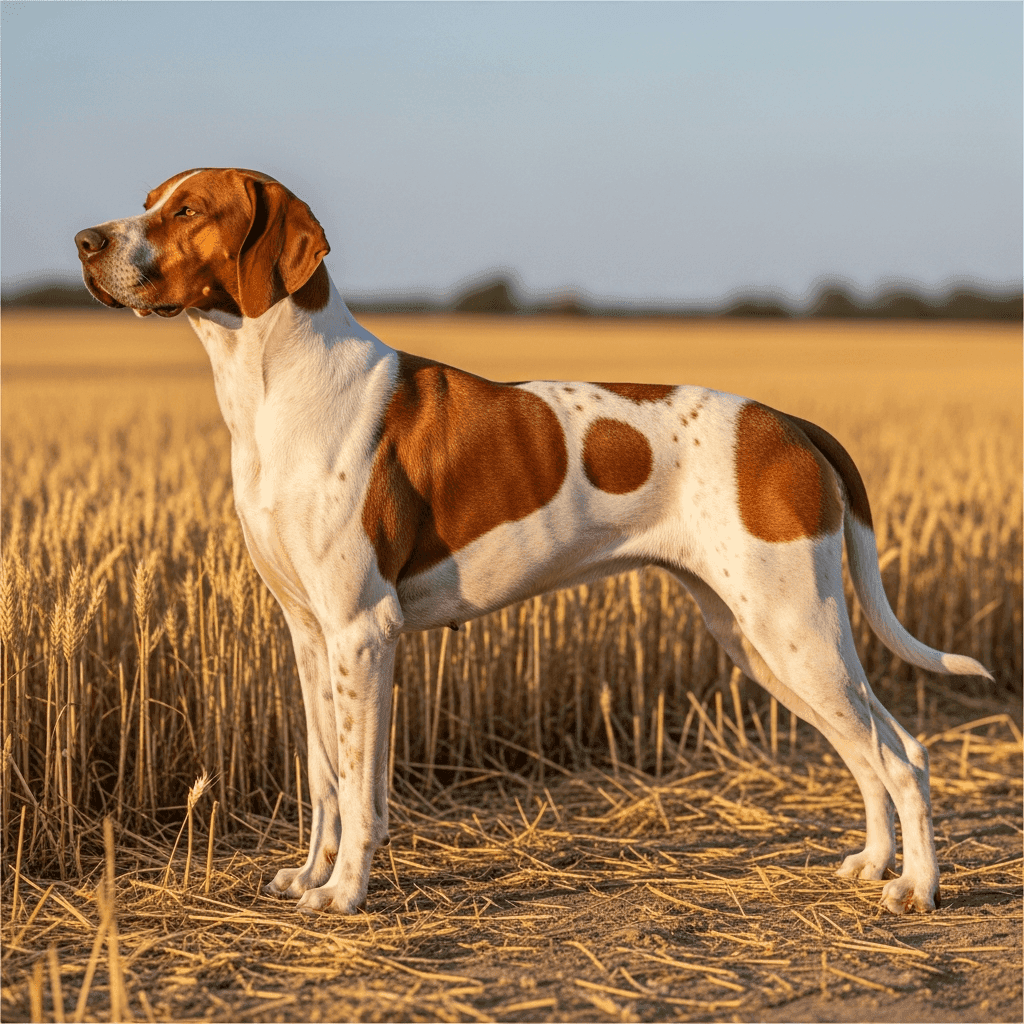
The Spanish Pointer from Burgos is a dog with a strong and balanced physique, characterized by harmonious proportions and an athletic build. Its appearance reflects its hunting function, combining strength with elegance.
Basic breed dimensions:
- Males: height at the withers 62-67 cm
- Females: height at the withers 59-64 cm
- Ideal body length equal to height at the withers
- Weight proportional to build (usually 25-30 kg)
Head characteristics: The head is large, strong, and well-formed, with a clearly defined stop. The skull is broad and rounded, and the muzzle is strong and proportional. The nose is dark brown, wide with well-opened nostrils, indicating excellent olfactory abilities. The eyes have a almond shape and a dark, hazel color, giving the dog a gentle and noble expression. The pointer's gaze is intelligent and expressive.
Ears and neck: The ears are long, hanging, set at the level of the eyes, with a wide base and rounded tips. The neck is strong, muscular, slightly arched, without any unnecessary throat.
Body structure: The torso is strong and deep, with a well-developed chest reaching to the elbows. The back is straight and strong, the loins are powerful and muscular. The limbs are straight, muscular, and robustly built, with well-developed joints. The paws are compact, oval-shaped with strong, dark claws.
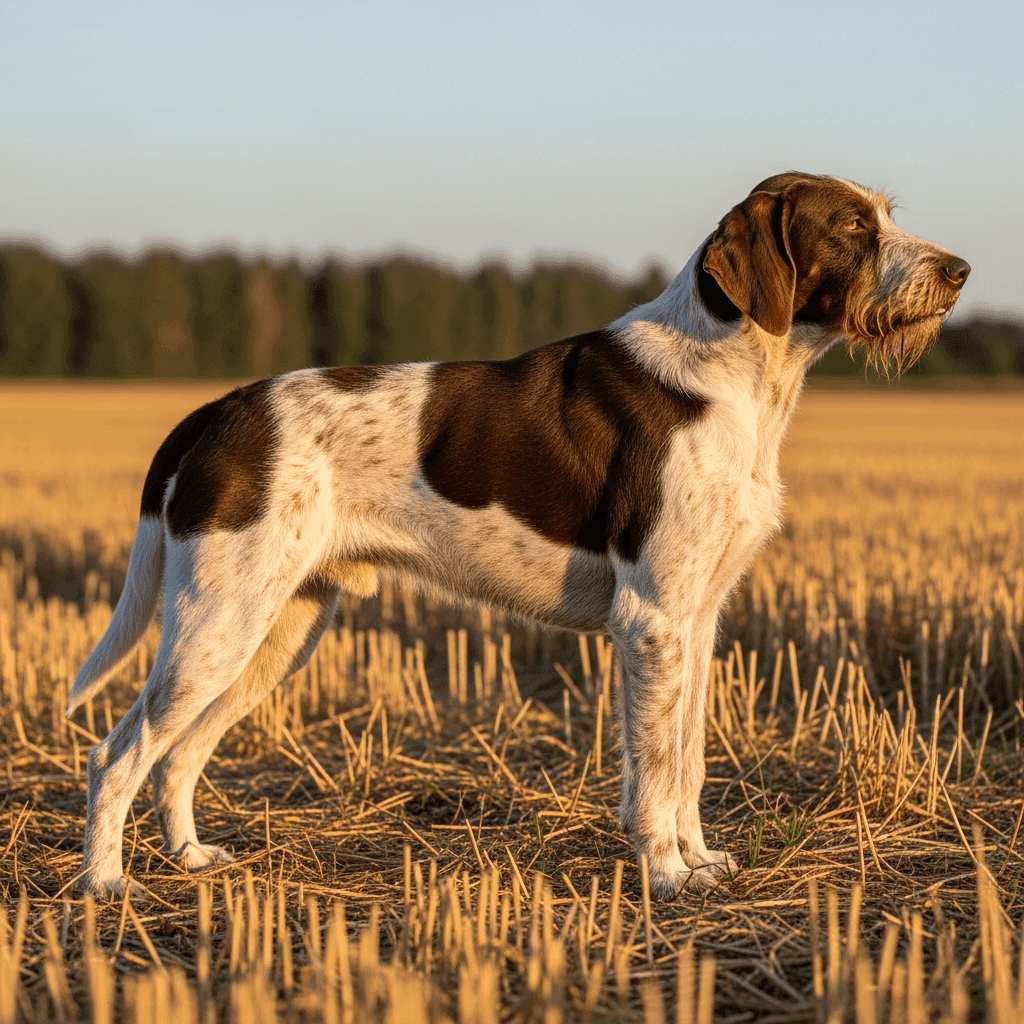
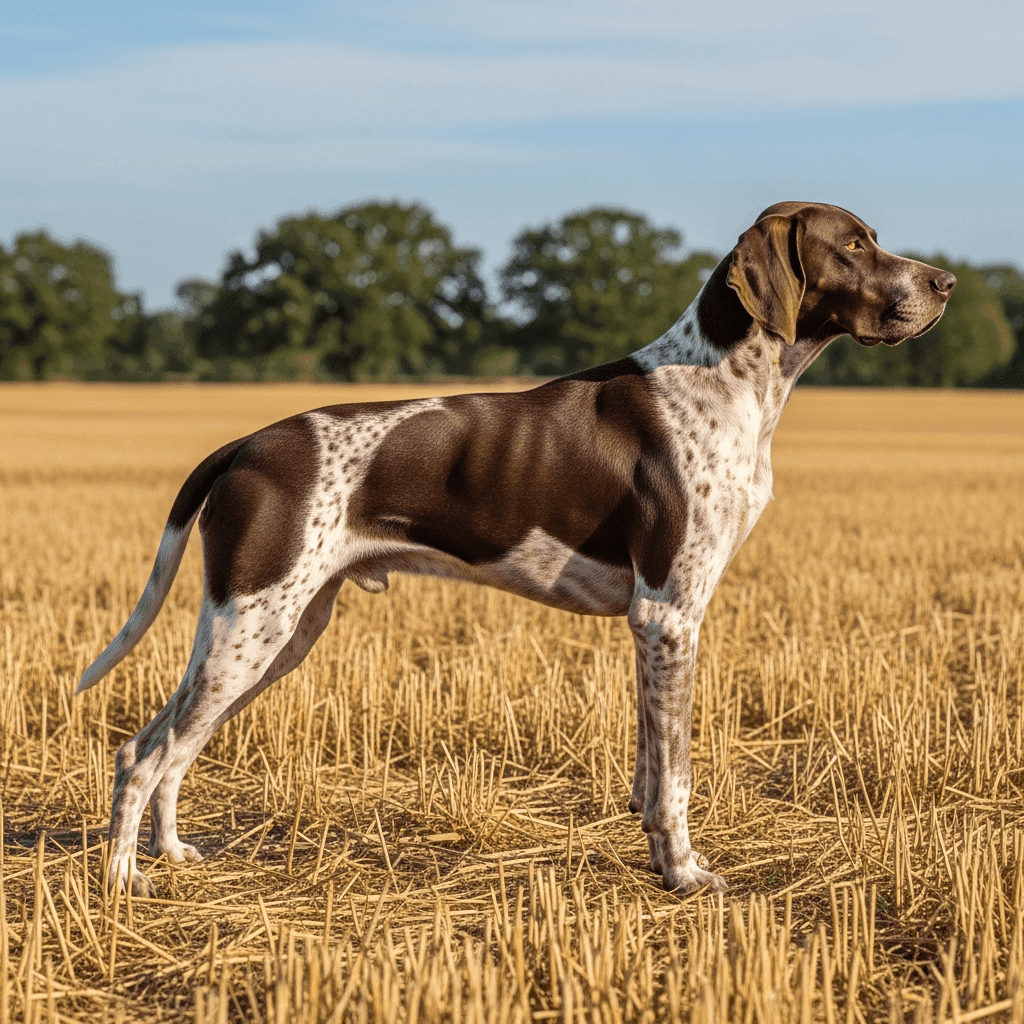
Coat and coloration: The coat is short, dense, smooth, and well-adhering to the body, providing protection against weather conditions. The characteristic coloration is white with brown spots or white with a brown mottled pattern. The spots can vary in size, often with a distinct patch on the head. Other shades of brown from light to dark are also acceptable.
The overall appearance of the Spanish Pointer from Burgos exudes strength, endurance, and nobility, making it not only a functional hunting dog but also a beautiful representative of its breed.
Spanish Pointer from Burgos is a dog with an excellent, balanced temperament that combines the traits of an ideal hunting dog with a wonderful family companion. Its characteristic calm disposition sets it apart from other hunting breeds.
Key character traits:
- Intelligence and loyalty: The pointer exhibits high intelligence and a strong attachment to its owner and the entire family.
- Patience with children: It feels great in the company of children, being patient, caring, and gentle.
- Calm disposition: Unlike many hunting breeds, it is characterized by exceptional calmness and composure.
- Moderate alertness: It is not overly suspicious, although it may initially be wary of strangers.
Social relationships: The Spanish Pointer from Burgos is quite a sociable dog that works well and gets along with other dogs. Due to its balanced nature, it rarely gets into conflicts. However, due to its strong hunting instincts, it may show a tendency to chase smaller animals, such as cats or rabbits, especially if it has not been properly socialized from a puppy.
Behavioral requirements: This breed requires a clear but gentle hierarchy in its relationship with the owner. This dog is not particularly dominant but appreciates consistent and fair treatment. The Spanish Pointer from Burgos is not overly noisy - it barks moderately, usually only when it notices something interesting or wants to get the owner's attention.
Mental and physical needs: To prevent boredom and destructive behaviors, the pointer requires regular physical and mental activity. Without proper stimulation, it may become restless or exhibit undesirable behaviors. Ideal activities include:
- Hunting or hunting training
- Long walks with tracking elements
- Scent games and intelligence games
- Obedience training
The Spanish Pointer from Burgos is a great choice for active families that can provide it with enough exercise, attention, and mental challenges. In the right conditions, it becomes a wonderful, devoted companion for years.
The Spanish Pointer from Burgos is a breed with good overall health condition and natural resilience. The average lifespan of this breed is from 12 to 14 years, which is a very good result for a medium-sized dog.
Overall health status: Compared to many other purebred breeds, the Spanish Pointer from Burgos is not burdened with numerous genetic problems. Its strong build and natural selection made by hunters over the centuries have contributed to the creation of a healthy and durable breed. Nevertheless, like any dog, it can be prone to certain conditions.
Most common health issues:
- Ear infections: Due to its long, drooping ears, the pointer may be susceptible to bacterial and fungal ear infections, especially if it frequently swims or works in damp terrain. Regular cleaning and ear checks are crucial.
- Terrain injuries: Due to intensive hunting work in difficult terrain, cuts on paw pads, muscle strains, joint sprains, or scratches may occur.
- Hip dysplasia: Although less common than in larger breeds, hip dysplasia may occur, particularly with overweight or improper nutrition during the growth period.
- Skin problems: Allergic dermatitis or reactions to tick bites may occur in sensitive individuals.
Health prevention: To ensure the pointer has a long and healthy life, the following are key:
- Regular veterinary check-ups (at least once a year)
- Vaccinations according to schedule and deworming
- Prevention against ticks and fleas
- Weight and physical condition monitoring
- Ear hygiene, especially after baths and swimming
- Pre-breeding examinations (hip dysplasia, eye diseases)
Diet and activity: Proper nutrition tailored to the activity level and regular physical exercise are crucial for maintaining health and good condition. A working pointer in the field has a significantly higher caloric requirement than a house dog, so the diet should be individually tailored.
Proper health care, regular veterinary check-ups, and an active lifestyle will allow the Spanish Pointer from Burgos to enjoy good health for many years.
The care of the Spanish Pointer from Burgos is relatively simple and low-maintenance, making this breed easy to keep in terms of hygiene. The short, dense coat does not require specialized treatments or visits to a groomer.
Coat care:
- Brushing: This breed is moderately shedding, so regular brushing once a week is sufficient to remove dead hair and dirt. During periods of heavier shedding (spring, autumn), it is advisable to increase the frequency to 2-3 times a week.
- Cleaning after walks: After outdoor excursions, it is enough to wipe the coat with a damp cloth or towel to remove mud, dust, and dirt. Thanks to the short coat, dirt is easily removed.
- Bathing: The Spanish Pointer from Burgos is naturally clean and does not require frequent baths. Bathing is recommended only when truly necessary (heavy soiling, unpleasant odor), preferably using a mild dog shampoo.
Ear care: Due to their long, drooping ears, regular checking and cleaning of the ears is extremely important. Ears should be checked at least once a week to ensure they are clean and free from excess wax, moisture, or signs of infection. This is especially important for dogs working in the field or frequently swimming. Special veterinary ear cleaning products should be used.
Oral hygiene: Regular tooth brushing (2-3 times a week) prevents the formation of tartar and periodontal disease. It is also advisable to provide the dog with appropriate chewing treats or dental toys that help with mechanical cleaning of the teeth and maintaining fresh breath.
Nail care: Nails should be regularly checked and trimmed if necessary, especially for dogs that do not naturally wear them down while running on hard surfaces. Overly long nails can cause discomfort and walking problems.
Paw pad inspection: After intense walks or hunts, it is worth checking the paw pads for scratches, cuts, or embedded thorns. For dogs working in difficult terrain, it is a good practice to use protective balms on the paw pads.
Skin inspection: During brushing, it is worth checking the skin for ticks, wounds, rashes, or other abnormalities. Early detection of skin problems allows for quick intervention.
Thanks to its low grooming requirements, the Spanish Pointer from Burgos is an ideal dog for active individuals who value simplicity in maintaining a pet while ensuring its aesthetic appearance and health.
The Spanish Pointer from Burgos is a dog with a high energy level and significant exercise needs, which is a natural consequence of its hunting purpose. This breed is ideal for active families and individuals who can provide the dog with the appropriate amount of exercise and stimulation.
Minimum activity requirements:
- Time: At least 1.5 to 2 hours of intense physical activity daily
- Type: Long walks, running, swimming, hunting work, or field training
- Frequency: Daily, regardless of the weather (the breed tolerates various weather conditions well)
Ideal forms of activity:
- Hunting: The Spanish Pointer from Burgos loves hunting and tracking scents - it is its natural calling. Working in the field provides not only physical exercise but also mental stimulation
- Long field walks: Adventures through forests, meadows, and fields, where the dog can freely explore the surroundings and utilize its excellent sense of smell
- Running: Accompanying the owner during jogging or cycling (after completing full bone development)
- Swimming: An excellent form of exercise that engages the whole body and is gentle on the joints
- Fetch games: Bringing back balls, retrieves, or frisbees, especially in water
Mental activity: In addition to physical movement, the Spanish Pointer also requires mental stimulation. The following activities work well:
- Obedience training and advanced training
- Scent games and tracking
- Intelligence games and dog puzzles
- Learning new commands and tricks
- Dummy training or simulated hunting
Consequences of lack of exercise: Inadequate physical and mental activity can lead the Spanish Pointer to:
- Become overly active and nervous at home
- Exhibit destructive behaviors (chewing furniture, destroying objects)
- Bark excessively out of frustration
- Develop behavioral problems
- Gain weight, leading to health issues
Social activity: The Spanish Pointer from Burgos feels comfortable in the company of other dogs, so walking together with other dog owners can be an excellent form of activity. This allows for socialization as well as additional fun and interaction.
Adjusting activity to age:
- Puppies (up to 12 months): Avoid excessive strain on joints, shorter but more frequent walks, play without jumping
- Adult dogs (1-8 years): Full hunting and sports activity
- Seniors (8+ years): Adjust intensity to fitness, maintain regularity, but with gentler forms of movement
The Spanish Pointer from Burgos is an excellent companion for active individuals and families who lead an outdoor lifestyle. Providing the right amount of exercise and stimulation is key to a happy, balanced, and healthy dog.
The training of the Spanish Pointer from Burgos is relatively easy and enjoyable, as this breed is characterized by high intelligence, a willingness to cooperate, and a strong desire to please its owner. Early socialization and consistent training are crucial for raising a well-balanced dog.
Basic training principles:
- Early start: Training should begin in puppyhood (from 8-10 weeks of age) to acclimate the dog to various situations, people, animals, and environments.
- Positive reinforcement: The Spanish Pointer responds best to positive training methods based on rewards, praise, and play. Harsh punishments and aggressive methods should be avoided.
- Consistency: Clear rules and consistent enforcement are essential. The dog must understand the hierarchy and the owner's expectations.
- Patience and calmness: The pointer is sensitive to the owner's tone of voice and mood. A calm, composed approach yields the best results.
Early socialization (8-16 weeks of age):
- Meeting different people (children, adults, seniors)
- Contact with other dogs and animals
- Acclimatization to various environments (city, forest, water, traffic)
- Getting used to different sounds (cars, gunshots, storms)
- Acquaintance with different surfaces (grass, asphalt, water, snow)
Basic commands (mandatory):
- Sit
- Stay
- Come (recall)
- Lie down
- Heel
- Leave it (or drop it)
- Stand
Hunting training: As a hunting dog, the Spanish Pointer from Burgos has natural instincts for chasing and tracking. If we plan to use it for hunting, specialized hunting training should begin:
- Fieldwork: Tracking scent, searching for game
- Retrieving: Bringing back game (dummy, artificial birds)
- Pointing: Characteristic freezing in a pointing position to indicate the presence of game
- Getting used to gunshots: Gradual acclimatization to the noise of firearms
- Water work: Swimming, retrieving from water
Training challenges:
- Hunting instinct: A strong hunting instinct can make recall difficult when the dog is tracking game. This requires intensive recall training.
- Distraction by scents: During walks, the pointer may become absorbed in a scent, requiring training to focus on the owner.
- Independence: Although eager to cooperate, it may show some independence in thinking, which requires patience and consistency.
Advanced training and canine sports: The Spanish Pointer from Burgos excels in many disciplines:
- Practical hunting
- Field trials
- Nosework (scent detection)
- Agility (for energetic individuals)
- Sport obedience
- Mantrailing (tracking human scents)
Advantages in training:
- High intelligence - quickly learns new commands
- Loyalty: Strong attachment to the owner motivates cooperation
- Willingness to cooperate: Loves to work with humans
- Sensitivity to praise: Positive reinforcement works extremely effectively.
Common training mistakes (to avoid):
- Harsh punishments and yelling (the pointer is sensitive and may become discouraged)
- Inconsistency in enforcing rules
- Too long training sessions (lead to boredom)
- Lack of rewards and motivation
- Monotonous training without variety
Recommended approach: Short (10-15 minutes), frequent training sessions with plenty of praise, treats, and play yield the best results. The Spanish Pointer from Burgos loves to learn if the process is positive and engaging.
With its intelligence, loyalty, and eagerness to learn, the Spanish Pointer from Burgos is an excellent choice for both novice owners (with appropriate support) and experienced trainers who will appreciate its hunting abilities and versatility.
Proper diet and balanced nutrition are crucial for the health, condition, and longevity of the Spanish pointer from Burgos. Due to its active lifestyle and high energy requirements, special attention should be paid to the quality and composition of the food.
Basic nutrition principles:
- High-quality food: Choose premium or super-premium foods tailored to the size, age, and activity level of the dog
- Balanced composition: The food should contain all essential nutrients in appropriate proportions
- Adjustment to activity: Hunting dogs require significantly more calories than house dogs
- Regularity: Adult dogs should be fed twice a day at consistent times
Key nutrients:
- Protein (25-30%): High-quality animal protein (chicken, beef, fish, turkey) is crucial for muscle development and regeneration, especially in active dogs. It also supports the proper functioning of the body
- Fats (12-18%): Healthy fats provide energy, support skin and coat health, and are a source of omega-3 and omega-6 fatty acids
- Carbohydrates (30-40%): Provide energy, preferably from natural sources such as rice, oats, sweet potatoes, or vegetables
- Fiber: Supports proper digestion and gastrointestinal function
- Vitamins and minerals: Essential for proper metabolism, strong bones and teeth, and immunity
Feeding types:
- Dry food (kibble): Convenient, long-lasting, helps clean teeth. Choose high-quality foods without unnecessary fillers
- Wet food: More palatable, contains more water, but is more expensive and spoils faster after opening
- BARF diet (raw): A natural diet based on raw meat, bones, and vegetables. Requires knowledge and careful balancing
- Homemade cooked diet: Possible, but requires consultation with a veterinary nutritionist for proper balancing
Adjusting diet to activity level:
- Working dog (hunting, intense training): Food with higher protein content (28-32%) and fats (16-20%), larger portions, possible additional meals
- Active dog (regular walks, play): Standard food for active dogs with an appropriate calorie count
- Less active dog (household): Light food or with controlled calories to avoid overweight
Nutrition for puppies (up to 12 months):
- Food for medium breed puppies
- Higher protein and calcium content for proper bone and muscle development
- More frequent meals: 3-4 times a day until 6 months, then 2-3 times a day
- Avoid excessive calcium supplementation (risk of joint problems)
Nutrition for senior dogs (8+ years):
- Senior food with lower calorie content
- Addition of joint-supporting ingredients (glucosamine, chondroitin)
- Easier to digest ingredients
Important safety rules:
- Fresh water: Provide unlimited access to fresh, clean water throughout the day, especially after exercise
- Avoid table scraps: Human food may contain harmful ingredients (spices, salt, onion, garlic, chocolate) and disrupt the balance of the diet
- Safe treats: Use healthy training treats (dried meat, vegetables, special chews), avoid excessive amounts
- Weight control: Regularly monitor the dog's weight and condition to avoid overweight or underweight
Prohibited products for dogs:
- Chocolate (toxic)
- Onion and garlic (destroy red blood cells)
- Grapes and raisins (kidney damage)
- Avocado (toxic)
- Cooked bones (risk of choking, intestinal perforation)
- Xylitol (artificial sweetener - deadly dangerous)
Supplementation: In most cases, high-quality food provides all necessary nutrients. Supplementation may be needed in cases of:
- Intensively working dogs (electrolytes, vitamins)
- Joint problems (glucosamine, MSM, omega-3 fatty acids)
- Senior dogs (joint support, antioxidants)
- Veterinary recommendations for specific conditions
Monitoring condition: Regularly check the dog's body condition:
- Ribs should be palpable but not visible
- Defined waist seen from above
- Abdominal tuck seen from the side
- No excessive fat deposits
A properly balanced diet, tailored to individual needs and activity level, is the foundation of health for the Spanish pointer from Burgos and will provide it with energy for an active life for many years.
Characteristic Traits
Pros
- Exceptional hunting skills and excellent sense of smell
- Calm
- balanced
- and gentle temperament
- Ease of training and willingness to cooperate
- Strong attachment to the owner and family
- Good health condition and natural resilience.
Cons
- Very high demand for movement and activity
- Requires an experienced caregiver or trainer support
- May be too energetic for less active families
- Strong hunting instinct may complicate off-leash walks
- Needs mental stimulation in addition to physical.
Behavioral Ratings
Breed History
The Spanish Pointer from Burgos, also known as Perdiguero de Burgos, boasts a rich and fascinating history that dates back several centuries. This breed originated in central Spain, in the regions of Castile and León, and its name comes from the city of Burgos, which played a key role in its development.
Origins of the breed (15th-16th century): The Spanish Pointer from Burgos descends from very old lines of hunting dogs that were used on the Iberian Peninsula as early as the Middle Ages. The ancestors of this breed were likely ancient hunting dogs of the bracco type that arrived in Spain with various peoples and cultures over the centuries.
The main breeds that contributed to the development of the Spanish Pointer from Burgos:
- Sabueso Español: A Spanish hound known for its excellent sense of smell and tracking abilities
- Pachon Navarro: An ancient Spanish hunting breed, now nearly extinct, known for its distinctive double nose
- Old Spanish bracco: Various local varieties of pointing dogs, bred for centuries in Castile
Development of the breed (17th-19th century): For centuries, the Spanish Pointer from Burgos was a valued companion of hunters, both nobility and common people. These dogs were used to hunt a variety of game:
- Small game birds (partridges, quails, pheasants)
- Rabbits and hares
- Deer and wild boars (larger game)
The breed survived due to its excellent sense of smell, endurance, and tracking abilities, which made it an invaluable assistant to hunters in the challenging mountainous terrain of Castile. Over the centuries, the Spanish Pointer from Burgos underwent natural selection - only those individuals that performed best in hunting work survived.
Near extinction (20th century): In the 20th century, the breed went through a difficult period. With the development of modern hunting breeds imported from other countries (mainly from the UK and France), the Spanish Pointer from Burgos began to lose popularity. Additionally, the wars in Spain (the Civil War 1936-1939) and overall urbanization contributed to a dramatic decline in the breed's numbers. In the 1960s and 1970s, the breed was on the brink of extinction.
Revival of the breed (1980s): Fortunately, a group of Spanish enthusiasts and breeders took action to save the Spanish Pointer from Burgos. In 1982, the first official breed standard was published, and in 1990, a breed club (Club del Perdiguero de Burgos) was established. Thanks to systematic breeding efforts and promotion, the breed began to revive.
Modern times (21st century): Today, the Spanish Pointer from Burgos enjoys growing recognition, although it still remains little known outside of Spain. In its homeland, it is valued by hunters who appreciate its:
- Calm and balanced temperament
- Excellent hunting abilities
- Endurance on difficult terrain
- Versatility in work
- Ease of training
Modern dogs of this breed are increasingly used not only for hunting but also in various sports disciplines, such as:
- Field trials
- Nosework (scent detection)
- Competitive obedience
- Mantrailing (tracking human scents)
International recognition: The Spanish Pointer from Burgos was officially recognized by the Fédération Cynologique Internationale (FCI) in 1982 and is classified in Group 7 (Pointing Dogs), Section 1.1 (Continental Pointing Dogs of the Braque type). FCI standard number 90.
Population and breeding: Although the breed is still rare compared to popular hunting breeds, its population is gradually increasing, especially in Spain. Breeding programs are also emerging in other European countries, including France, Germany, and Italy. In Poland, the breed is virtually unknown, although its versatility and excellent character traits deserve greater attention.
Cultural significance: The Spanish Pointer from Burgos is part of Spain's canine heritage and serves as a living testament to the hunting traditions of the Castile region. These dogs are showcased at breed exhibitions, in canine literature, and in documentation dedicated to traditional Spanish hunting.
The history of the Spanish Pointer from Burgos is a story of survival, passion, and dedication from enthusiasts who saved this wonderful breed from oblivion. Today, thanks to their efforts, we can enjoy the presence of these noble, hardworking, and loyal dogs that proudly continue the traditions of their ancestors.