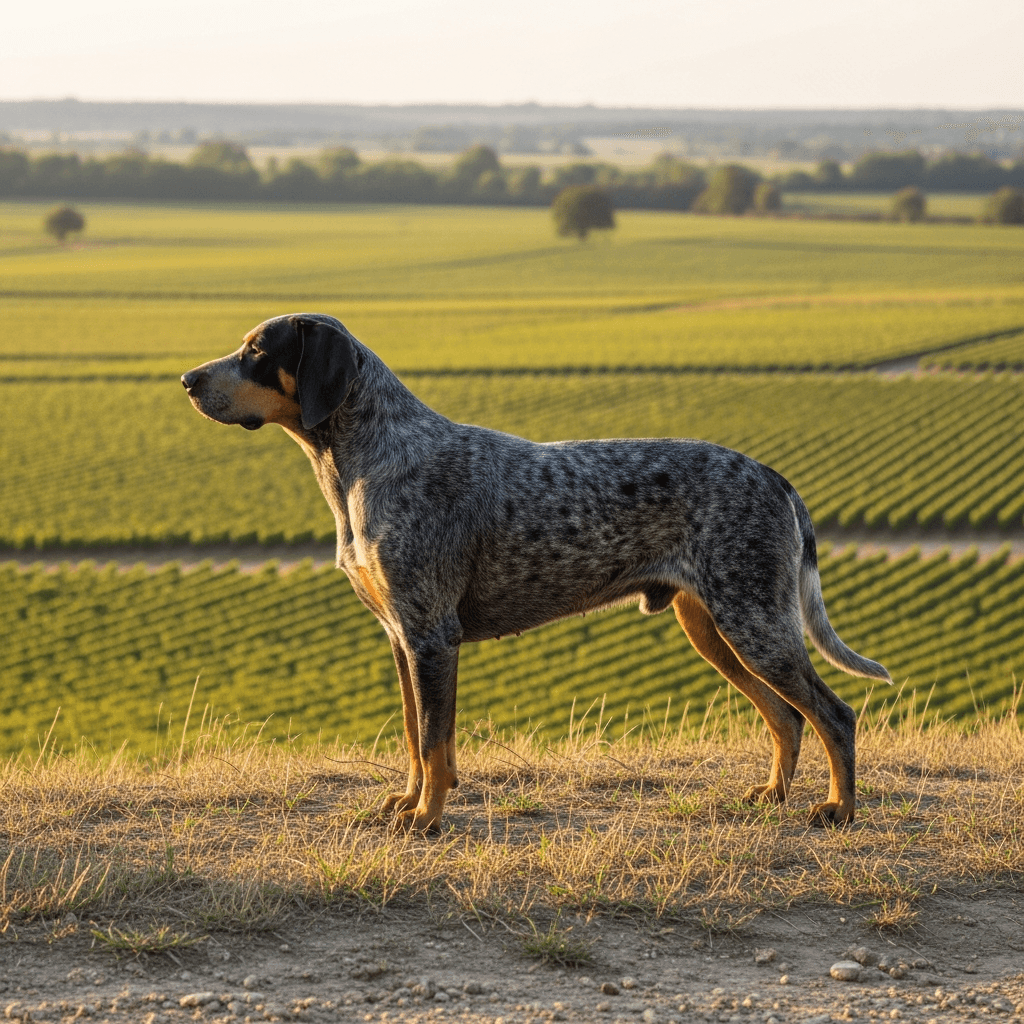
Small Gascon Hound
FCI Group
6• FCI 31
Size
Medium
Origin Country
FR
Height
50-58 cm
Weight
18-25 kg
Lifespan
10-15 years
Temperament
Overview
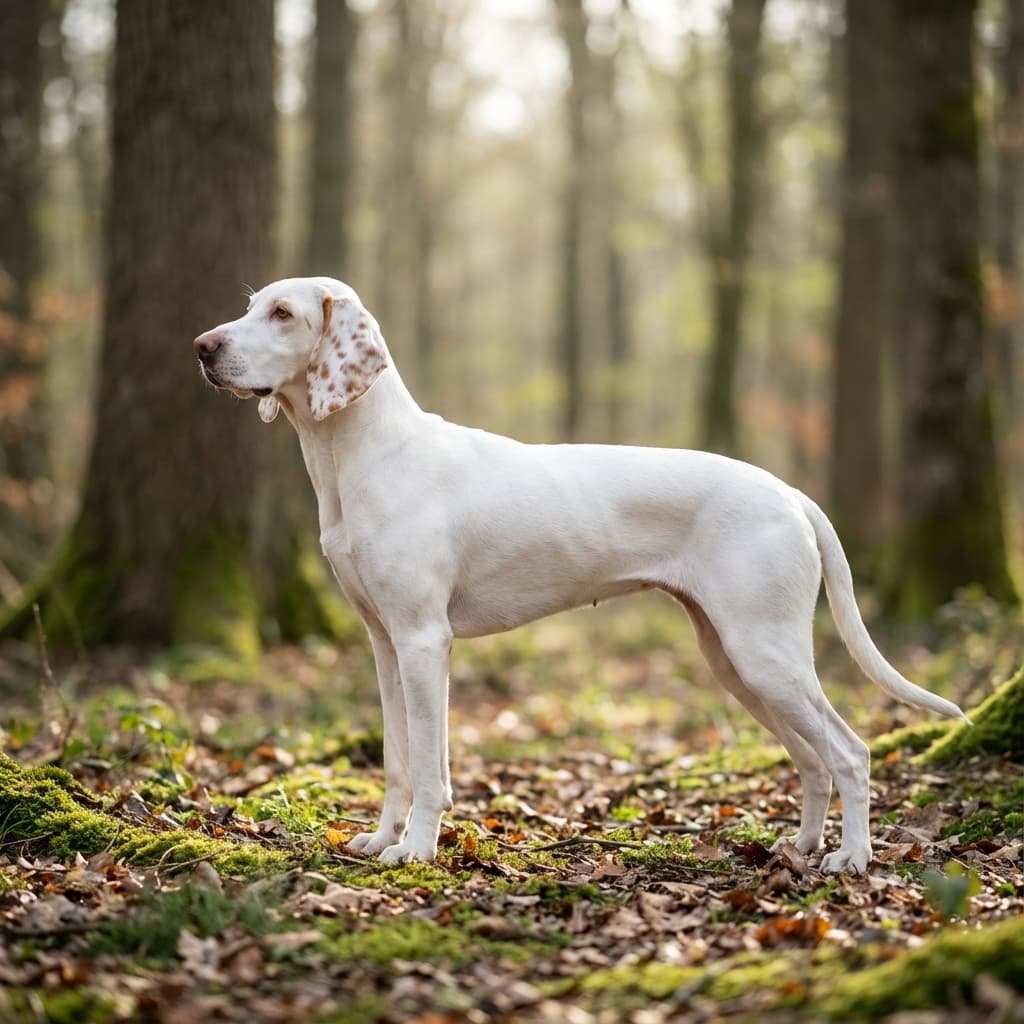
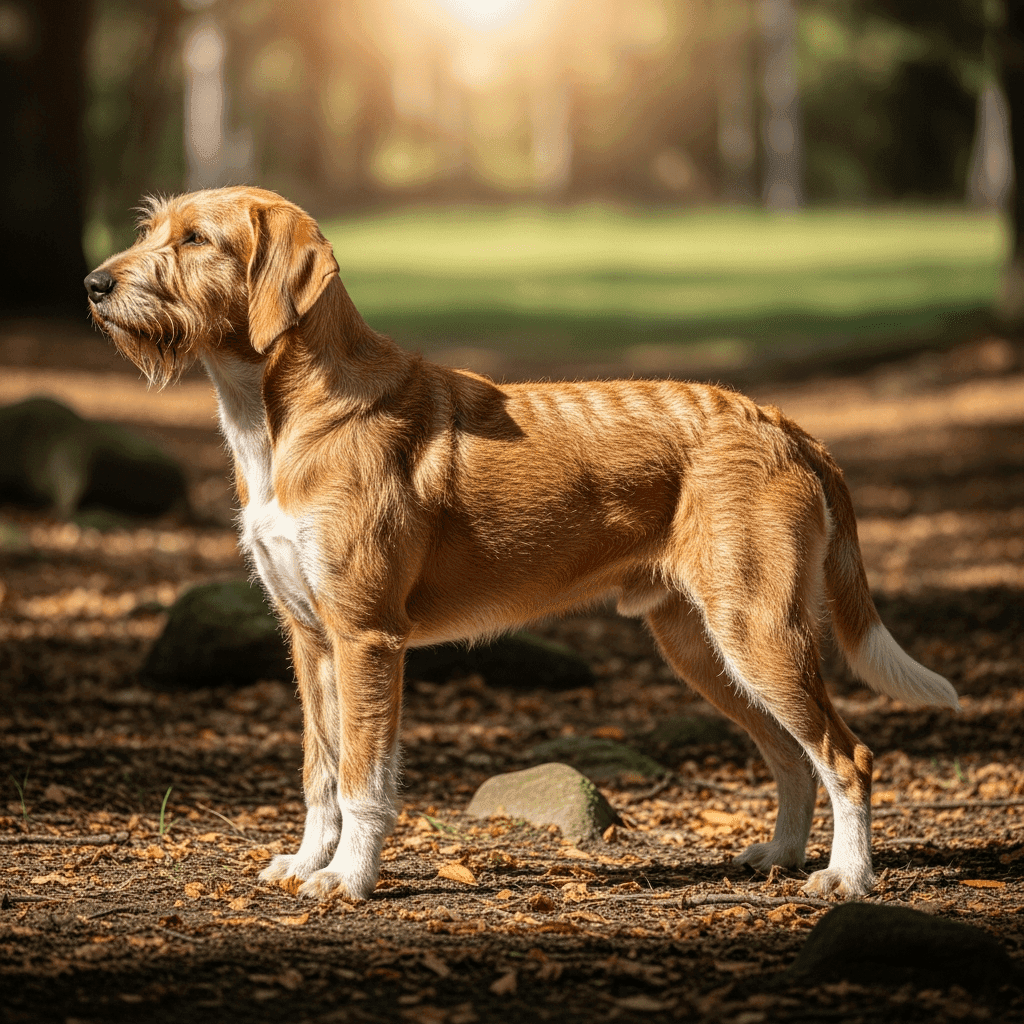
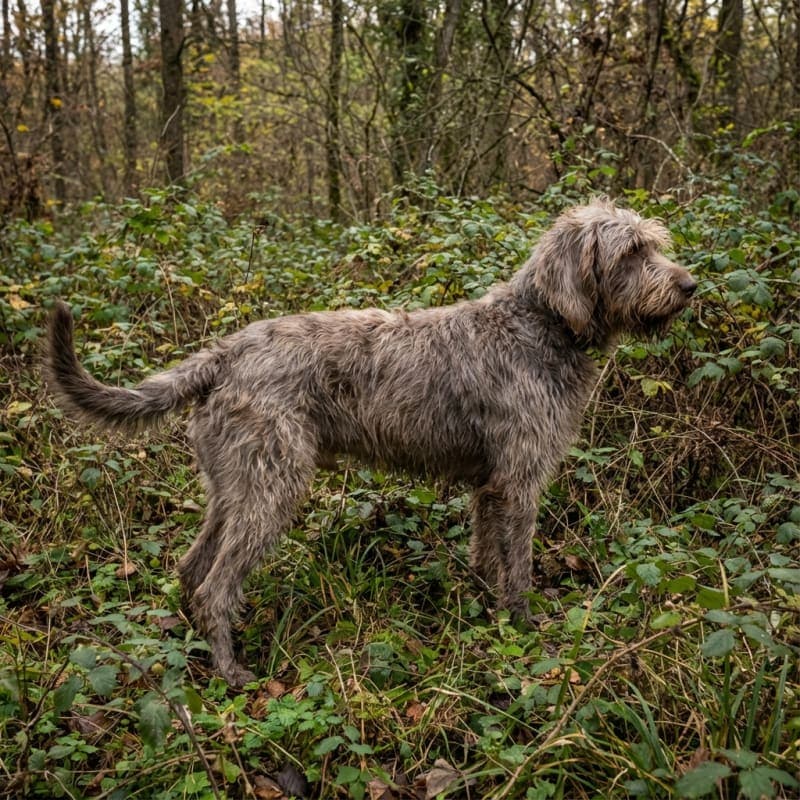
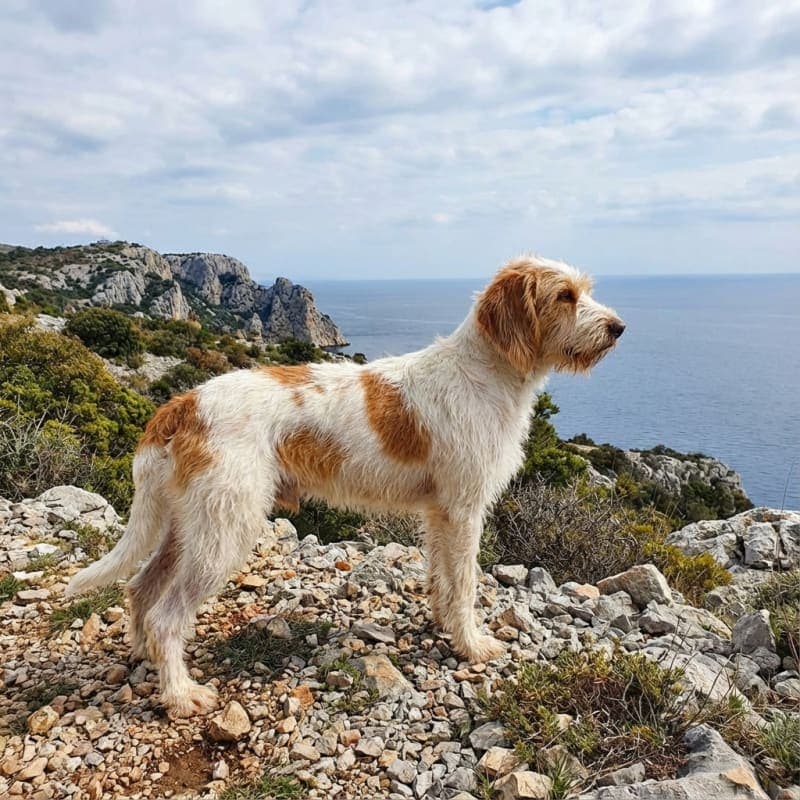
The Petit Bleu de Gascogne, also known as the Small Gascon Hound, is a medium-sized hunting dog with exceptional working traits and temperament. Intentional size reduction compared to its larger counterpart – the Grand Bleu de Gascogne – has made this breed ideal for both hunting hares and tracking larger game. Its proportional silhouette and distinguished appearance make it not only an effective worker in the field but also an attractive companion at home.
It is characterized by a superb sense of smell and a beautiful, resonant voice, making it an ideal dog for pack work. However, despite its strong hunting instincts, the Petit Bleu de Gascogne displays a calm and affectionate nature in family life. Its gentleness and attachment to the owner make it an excellent companion, especially for families leading an active lifestyle.
Originating from the southwest of France, from the region of Gascony, the Petit Bleu de Gascogne has a long tradition of accompanying hunters in the field. Its ability to work in diverse terrains – from dense forests to open fields – attests to its versatility. With its ease of learning commands and obedience, this breed is well-regarded among both experienced hunters and owners seeking a devoted companion.
However, it is important to remember that the Petit Bleu de Gascogne requires a significant amount of exercise and mental stimulation. Regular long walks, opportunities to run in open spaces, and tracking games are essential for its physical and mental well-being. Its strong hunting instincts may lead to attempts to chase small animals, so leash walking in public places is a necessity.
In summary, the Petit Bleu de Gascogne is a versatile hunting dog with a gentle temperament, making it an excellent partner for hunting as well as a family companion. Its elegance, intelligence, and loyalty make it a perfect choice for active individuals who value time spent outdoors and closeness to nature.
The Petit Basset Griffon Vendéen is a medium-sized hound with a proportional build and a distinguished appearance. According to the FCI standard, the height at the withers is:
- Males: 52-58 cm
- Females: 50-56 cm
The silhouette of the breed presents a harmonious balance between elegance and strength, making it ideally suited for prolonged work in the field.
The head is characteristic of this breed – viewed from the front, it is only slightly arched, without excessive width. The occipital protuberance is slightly pronounced, and when viewed from above, the back of the skull has a gently arched shape. The forehead is full, and the stop (the transition from the forehead to the muzzle) is only slightly accentuated. The nose is large and black, with well-opened nostrils. The muzzle is the same length as the skull, strong, and the nasal bridge is often slightly arched.
The eyes are oval-shaped and brown in color, giving them a gentle expression. The ears are relatively thin, folded, and should reach at least to the tip of the nose. The lips are not too thick or overly developed, with the upper lip covering the lower one.
The coat is short, semi-dense, and abundant, with a characteristic black-and-white coloration creating a blue speckled effect. Typical for the breed are two black patches on either side of the head, covering the ears, surrounding the eyes, and ending on the cheeks. At the top of the head, there is a white extension with a black spot in the center, creating a recognizable pattern for this breed.
The skin is elastic and black or heavily speckled with black spots. The body presents a well-developed chest, strong limbs, and a tail carried with characteristic grace during movement. Overall, the Petit Basset Griffon Vendéen combines elegance and an athletic build, making it an excellent dog for both hunting work and presentation at shows.
The Petit Basset Griffon Vendéen is distinguished by its calm and affectionate temperament, making it an excellent companion both in hunting work and family life. Its character combines gentleness, attachment to the owner, and ease of obedience. The FCI standard emphasizes that this breed is calm, affectionate, and easily follows commands.
Excellent sense of smell and a beautiful, loud voice make the Petit Basset Griffon Vendéen an ideal dog for working in a pack during hunts. It is focused in its tracking method, showing determination and perseverance in the field. Its favorite game is hares, but this breed also excels in hunting larger game.
In relationships with people, the Petit Basset Griffon Vendéen presents itself as friendly and sociable. It is loyal to its family and shows strong attachment to its owner. At home, it is usually relaxed and calm, making it an excellent companion dog for families. Its gentleness makes it well-suited for interactions with children.
In relationships with other dogs, it is usually well-socialized, which stems from its predisposition to work in a pack. It can play and interact with other animals, provided it has been properly socialized at a young age. It is important to ensure it has contact with various dogs and situations from puppyhood to avoid behavioral problems in the future.
However, it should be noted that the Petit Basset Griffon Vendéen has strong hunting instincts, which means it may show a tendency to chase small animals. In such situations, it is necessary to keep it on a leash or provide a safe, fenced area. With proper socialization, consistent training, and adequate exercise, the Petit Basset Griffon Vendéen is a dog with a balanced temperament, bringing joy to its owners both as a hunting partner and a companion in everyday life.
The Petit Basset Griffon Vendéen is a relatively healthy breed, but like any dog with a specific anatomical structure, it can be prone to certain health issues. Proper preventive care and regular veterinary visits are crucial for maintaining the dog's good health for many years.
Ear infections are one of the most common ailments affecting Petit Basset Griffon Vendéens. Due to their long, drooping ears, this breed is more susceptible to problems related to insufficient ventilation of the ear canal. Moisture and heat can lead to the development of bacteria and fungi. Regularly checking the ears – at least once a week – and cleaning them with appropriate veterinary products helps prevent infections. Special attention should be paid after walks in damp conditions or baths.
Eye diseases, such as cataracts or retinal dysplasia, can also occur in this breed. Regular eye examinations by a veterinarian, especially in middle-aged and older dogs, will allow for early detection of problems and implementation of appropriate treatment. Symptoms such as lens cloudiness, difficulty moving in the dark, or decreased activity should be a signal to visit a specialist.
Bone and joint problems, particularly hip dysplasia, may arise in Petit Basset Griffon Vendéens, especially in older age. A proper diet, weight control, and regular, moderate physical activity help keep the joints in good condition. Supplementation with glucosamine and chondroitin may be beneficial for middle-aged and older dogs.
In general, with proper veterinary care, a balanced diet, and regular physical activity, a Petit Basset Griffon Vendéen can lead a healthy and active life for 12-14 years. It is important for owners to be aware of potential health issues and to respond quickly to any concerning symptoms, ensuring the dog has a long and happy life alongside the family.
The care of the small Gascon hound is relatively simple and does not require excessive time commitment, but it does require regularity. Their short, semi-thick coat is easy to maintain, making the breed suitable for owners who do not have a lot of time for complicated grooming procedures.
Brushing should be done at least once a week to remove dead hair and minimize shedding. It is recommended to use a brush with natural bristles or a grooming glove that gently massages the skin while removing loose hairs. During the heavy shedding periods – in spring and autumn – the brushing frequency should be increased to 2-3 times a week.
Baths should be given as needed, usually every 6-8 weeks or when the coat becomes dirty. Too frequent washing can lead to dry skin and disrupt the natural lipid balance. It is advisable to use mild shampoos designed for dogs with short coats.
Regular ear checks are particularly important for the small Gascon hound. Due to their long, drooping ears, this breed is more susceptible to infections. It is recommended to check the ears at least once a week and clean them with appropriate veterinary products. After walks in damp areas or baths, it is worth gently drying the ears to prevent bacterial growth.
Eyes also require regular checks. Dried discharge from the corners of the eyes should be removed with a soft, damp cloth. Nails should be trimmed when they become too long – usually every 3-4 weeks. If the dog spends a lot of time on hard surfaces, its nails may wear down naturally, reducing the need for trimming.
Oral hygiene is also important. Regular tooth brushing – preferably 2-3 times a week – helps prevent tartar buildup and periodontal disease. Special dental treats that support oral hygiene can also be used.
Overall, the small Gascon hound requires moderate grooming, which does not take too much time with regularity. Proper care of its coat, ears, eyes, and nails will ensure the dog’s comfort, health, and attractive appearance for many years.
The Petit Basset Griffon Vendéen is a breed with a high energy level that requires a significant amount of daily physical activity to remain healthy and mentally balanced. These dogs were bred for hunting and tracking game, which is why their exercise needs are much greater than many companion breeds.
Daily activity should include at least 60-90 minutes of intense physical effort. Ideal solutions are long walks, runs in the park or forest, and outdoor play. The Petit Basset Griffon Vendéen loves tracking, so walks in wooded areas where it can use its sense of smell will be particularly satisfying for it.
Due to its strong hunting instincts, it is important to keep the dog on a leash during walks or provide it with a safe, fenced area to run freely. The Petit Basset Griffon Vendéen may try to chase small animals, so without proper recall training, it should not be let off-leash in areas where wild animals may be present.
This breed excels in various sporting activities, such as:
- Scent tracking (mantrailing, nosework) – an ideal activity that utilizes the breed's natural predispositions
- Agility – a great way to stimulate both mentally and physically
- Canicross – running with the dog attached to the owner's waist
- Obedience – training that develops the bond with the owner
It is also important to remember about mental stimulation. The Petit Basset Griffon Vendéen is an intelligent dog that needs mental challenges. Scent games, searching for hidden treats, or learning new commands will help satisfy its cognitive needs and prevent boredom.
Walking with other dogs can be beneficial for both the Petit Basset Griffon Vendéen and its companions. This breed does well in the company of other dogs, which stems from its predisposition to work in packs. Socialization during walks will also help develop appropriate social behaviors.
A lack of adequate exercise can lead to behavioral problems, such as excessive barking, destructive behaviors, or hyperactivity. Therefore, owners of the Petit Basset Griffon Vendéen should be aware that this breed requires an active lifestyle and will not thrive in homes of people who prefer a calm, sedentary lifestyle.
Training a small Gascon hound can be a very satisfying experience, but it requires consistency, patience, and the right approach. This breed is intelligent and eager to learn, which, according to the FCI standard, is reflected in their ease of following commands. However, their strong hunting instincts and sometimes stubborn temperament can pose challenges during training.
Early socialization is crucial for developing a balanced character. It is recommended to start socialization as early as 8-10 weeks of the puppy's life. The dog should be gradually accustomed to various situations, sounds, people, and animals. The more positive experiences the puppy gathers at a young age, the more confident and balanced it will be as an adult dog.
Basic commands, such as Sit, Stay, Come, Lie down, and Heel, should be introduced in the first weeks of the puppy's life in its new home. The small Gascon hound responds best to positive reinforcement, which means rewarding correct behavior with treats, praise, or play. Physical punishment or aggressive training methods are unacceptable and can lead to behavioral problems.
The recall command is particularly important for this breed due to their strong hunting instincts. Training the Come command in controlled conditions, gradually increasing the distance and level of distraction, will help ensure safe off-leash walks in appropriate locations. It is advisable to use a long training leash when teaching this command.
Training sessions should be short but frequent – 10-15 minutes 2-3 times a day is better than one long session. The small Gascon hound can get bored with repeating the same exercises, so it is worth varying the training and introducing new challenges. Scent work-based training, which utilizes the breed's natural predispositions, is also very effective.
Consistency is key in training a small Gascon hound. All family members should use the same commands and rules to avoid confusing the dog. An inconsistent approach can lead to confusion and hinder the learning process.
It is also worth considering participation in obedience courses or working with a professional trainer, especially for owners without previous experience in training hunting dogs. A professional can help tailor training methods to the individual needs of the dog and owner, which will accelerate the learning process and provide a solid foundation for a good relationship.
The nutrition of the small Gascon hound is a key element in ensuring its health, physical condition, and well-being. The diet should be carefully selected, balanced, and tailored to the dog's age, weight, activity level, and individual needs.
High-quality food is the foundation of proper nutrition. It is recommended to choose foods rich in animal protein, which should be the primary ingredient. Meat (poultry, beef, lamb, or fish) should be listed first in the ingredients. Low-quality foods containing excessive amounts of grain fillers, artificial colors, preservatives, or so-called meat meals of unknown origin should be avoided.
For active hunting dogs, it is important to provide an adequate amount of energy. The food should contain:
- Protein: 22-28% – for growth and muscle recovery
- Fat: 12-18% – as a source of energy
- Carbohydrates: a moderate amount (rice, potatoes, sweet potatoes)
- Vitamins and minerals: for proper body function
- Omega-3 and omega-6 fatty acids: for healthy skin and coat
Feeding frequency depends on the dog's age. Puppies should be fed 3-4 times a day, young dogs (6-12 months) 2-3 times a day, and adult dogs 2 times a day. Regular meals at fixed times help maintain proper metabolism and prevent digestive problems.
Weight control is particularly important. The small Gascon hound, like many other breeds, can be prone to obesity, especially if it does not receive adequate exercise. Obesity leads to many health problems, including joint diseases, diabetes, and cardiovascular issues. Owners should regularly monitor their dog's weight and adjust the amount of food according to its activity level.
Access to fresh water should be provided throughout the day. This is especially important after intense physical exertion or on warm days. Water should be changed at least once a day, and the bowl should be regularly cleaned.
It is also worth considering supplementation for older dogs, especially working ones. Glucosamine and chondroitin support joint health, while omega-3 fatty acids help maintain healthy skin and coat. Before introducing any supplements, it is advisable to consult a veterinarian.
If there are any doubts regarding diet, food allergies, or digestive problems, it is always worth consulting a veterinarian, who can help tailor nutrition to the individual needs of the dog and ensure it has a long, healthy life.
Characteristic Traits
Pros
- Calm and gentle temperament
- Excellent sense of smell and tracking abilities
- Ease in following commands
- Works well in a pack
- Loyalty to the owner
- Friendly in relationships with other dogs.
Cons
- Requires a lot of movement and physical activity
- Strong hunting instincts necessitate being walked on a leash
- Needs proper socialization from puppyhood
- Long ears prone to infections
- Can be stubborn during training.
Behavioral Ratings
Breed History
The Petit Bleu de Gascogne, known as the small Gascon hound, is a breed with a long and rich history, dating back to at least the 16th century. It originates from the region of Gascogna, located in southwestern France, where it was primarily bred for hunting hares and other small game. This breed was developed as a deliberate reduction in size of the Grand Bleu de Gascogne, which, according to the FCI standard, is directly related to its intended use.
The breed's origins trace back to a time when hunters in the Gascogna region sought dogs with suitable traits for hunting in the local terrain. The size of the dog was crucial – a smaller dog was more agile in dense underbrush and better suited for tracking hares. The breed emerged from careful selection of various hound breeds, contributing to its exceptional hunting skills – excellent scenting ability, endurance, and a beautiful, resonant voice.
The small Gascon hound quickly gained popularity among French hunters. Its ability to work both individually and in packs, along with its versatility in hunting various game species, made it one of the favorite hunting dogs in the region. The breed was particularly valued for its calm temperament and ease of training, making it suitable for both experienced hunters and owners looking for a companion.
In the 19th century, the small Gascon hound began to be appreciated not only as a hunting dog but also as a companion dog. Its gentle nature, loyalty, and attachment to its owner led to the breed gaining popularity beyond France. The spread of the breed beyond the borders of Gascogna contributed to its presence in other regions of France and, over time, in other European countries.
The breed standard was officially recognized by the International Canine Federation (FCI) under number 31 in group 6 (Hounds), section 1.2 (Medium-sized hounds). The latest version of the standard was approved in August 2023, reflecting ongoing efforts to preserve the breed's characteristics and typicity.
Today, the small Gascon hound is valued worldwide not only for its hunting skills but also for its gentle disposition and loyalty. The breed is still used for hunting in many countries, but it also finds its place in many homes as pets and companions. Its versatility, intelligence, and beautiful appearance make it an excellent choice for both hunters and families seeking a devoted, active companion.