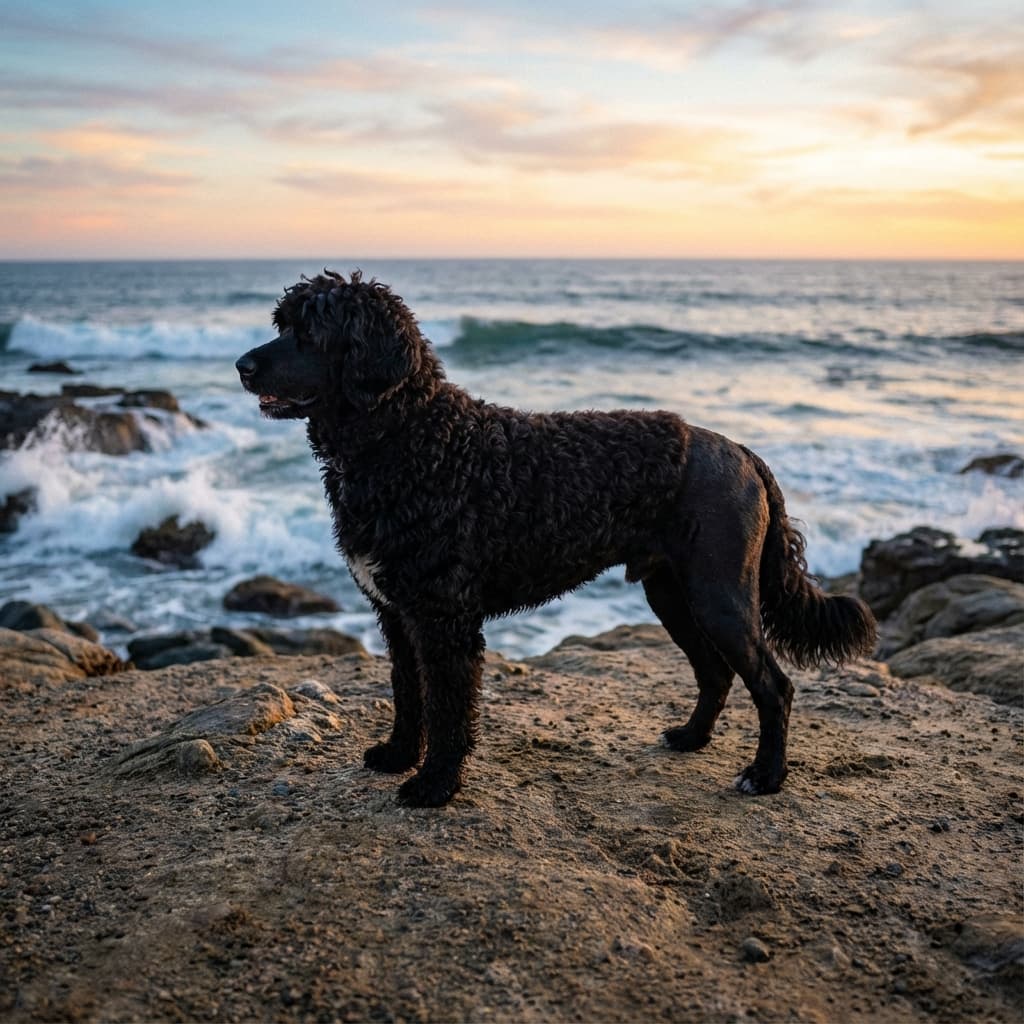
Portuguese water dog
FCI Group
8• FCI 37
Size
Medium
Origin Country
PT
Height
43-57 cm
Weight
19-25 kg
Lifespan
12-14 years
Temperament
Overview
Portuguese Water Dog, also known as Portugalski Pies Dowodny, is a fascinating breed with a rich, centuries-old history. It originates from picturesque Portugal, where it has assisted fishermen in their daily tasks at sea for centuries. This versatile four-legged friend not only helped with fishing but also served as a messenger between boats and land, transporting messages and equipment, and even rescuing drowning sailors.
Portuguese Water Dog is a true master of swimming and diving. Its exceptional body structure and dense, waterproof coat make it feel at home in the water. It is the perfect companion for families who love an active lifestyle, sailing, kayaking, or simply spending time by the water.
It is characterized by extraordinary intelligence and a willingness to cooperate with humans, making it an excellent learner. Training with a Portuguese Water Dog is a true pleasure – it quickly absorbs new commands and enthusiastically performs assigned tasks. Its lively temperament and joy for life are contagious, adding to its unique charm.
Physically, the Portuguese Water Dog presents an impressive appearance. It has a dense, curly coat that can be long and wavy or short and curly, depending on the individual. As a medium-sized dog, it reaches a height at the withers of 43 to 57 cm and weight of 19 to 25 kg. Distinctive features of its appearance include a wide, well-defined head, a strong muzzle, and heart-shaped, drooping ears. Its strong, muscular limbs ending in webbed feet are perfectly adapted for swimming and diving.
Known for its extraordinary endurance and energy, the Portuguese Water Dog is an ideal partner for water sports, running, agility, and other outdoor activities. Its sociable nature makes it love spending time with people, especially children, which makes it an excellent family dog. It has a balanced temperament – it is alert, brave, yet gentle and friendly.
However, this dog needs plenty of attention, mental stimulation, and physical activity to avoid boredom. An neglected or under-stimulated Portuguese Water Dog may exhibit behavioral problems such as excessive barking or destructive behaviors.
It is also worth noting that the Portuguese Water Dog is hypoallergenic – its coat does not shed heavily, making it an ideal choice for people with dog hair allergies. Its popularity extends far beyond Portugal, winning the hearts of people around the world, including in the United States, where the breed has gained immense recognition. With its exceptional intelligence, devotion, and versatility, the Portuguese Water Dog has become one of the most valued water dogs.
If you are looking for a dog that combines hard work, loyalty, sociability, and a friendly nature, while also being an excellent athlete and swimmer, then the Portuguese Water Dog will be a perfect choice!
The Portuguese Water Dog is a medium-sized dog with a harmonious, athletic build. Its silhouette is almost square – the length of the body is approximately equal to the height at the withers. The height at the withers ranges from 43 to 57 cm (males: 50-57 cm, females: 43-52 cm), and the weight varies from 19 to 25 kg (males: 19-25 kg, females: 16-22 kg).
Characteristic features of appearance:
- Head: Proportional to the body, wide skull with a slightly pronounced occipital bump. The stop (transition from forehead to muzzle) is well defined.
- Muzzle: Strong, somewhat shorter than the skull (the ratio of skull length to muzzle length is 4:3), straight or slightly convex.
- Eyes: Medium-sized, round, widely spaced. They have a dark brown iris, which gives the dog a penetrating, intelligent expression.
- Ears: Heart-shaped, thin, hanging, close to the cheeks. Positioned slightly above the eye line.
- Body: Harmoniously built, with a strong, straight back and a wide, deep chest. The ratio of height at the withers to chest depth is 2:1.
- Paws: Round, flat, with webbing between the toes – key adaptation for swimming.
- Tail: Naturally medium-length, thick at the base, tapering towards the end. The dog carries it high, often in a characteristic ring while swimming.
Coat is one of the most distinctive features of the breed. It is dense, abundant, curly or wavy, without an undercoat, making it waterproof. There are two types of coat:
- Long and wavy – soft hair, slightly wavy, 10-15 cm long.
- Short and curly – densely curled hair, forming curls, 5-8 cm long.
Acceptable coat colors:
- Black (most common)
- Brown (in various shades of chocolate)
- White
- Black and white or brown and white combinations
Traditionally, the Portuguese Water Dog was clipped in a distinctive way: the rear part of the body was shaved, leaving fur on the front part and a tuft at the end of the tail. This grooming style, known as lion clip, served practical purposes – reducing water resistance while maintaining thermal insulation for the chest and joints.
Overall, the Portuguese Water Dog is a strong, agile, and well-built dog that combines elegance with functionality. Its appearance clearly indicates its aquatic origins and purpose.
Portuguese Water Dog is a dog with a remarkably balanced temperament, combining joy for life with emotional maturity. It is friendly, intelligent, devoted, and eager to cooperate with humans. This breed is known for the deep bond it forms with its family – it loves spending time with people and feels best when it can participate in daily activities.
Key personality traits:
- Social nature: The Portuguese Water Dog is a typical family dog that thrives in the company of children. It is patient, gentle, and caring.
- Intelligence: It is one of the most intelligent dog breeds. It quickly learns new commands and understands even complex instructions.
- Alertness: It is an excellent guardian that will alert you to incoming guests or unusual situations. However, it is not overly aggressive.
- Courage: Its background as a working dog at sea has developed a brave, steadfast character.
- Energy: This is a dog full of vigor and enthusiasm that requires regular physical activity and mental stimulation.
Behavior towards strangers: The Portuguese Water Dog is naturally cautious but not distrustful of strangers. After a brief observation, it usually opens up quickly and becomes friendly. Good socialization from a puppy age will help strengthen its confidence in new situations.
Behavior towards other animals: With proper socialization, the Portuguese Water Dog gets along well with other dogs and pets. It has a high hunting instinct, which may lead to chasing smaller animals (cats, rabbits), so early socialization is crucial.
Activity needs: This is not a dog for people leading a sedentary lifestyle. The Portuguese Water Dog requires a minimum of 60-90 minutes of intense activity daily. Without adequate physical and mental exercise, it may become hyperactive, restless, or exhibit behavioral issues such as:
- Excessive barking
- Destructive behaviors (chewing furniture, digging holes)
- Escaping from home in search of stimulation
- Hyperactivity and concentration problems
Behavior in water: As the name suggests, the Portuguese Water Dog loves water! Swimming is its natural calling – it can spend hours in a lake, sea, or pool. Water has a calming effect on it and is an excellent way to burn off energy.
Natural curiosity: The Portuguese Water Dog is extremely curious and lively. It loves to explore new places, scents, and situations. This trait makes it an excellent travel companion, but it also requires vigilance from its owner to prevent it from getting into trouble.
In summary, the Portuguese Water Dog is a friendly, active, intelligent, and devoted dog that makes an excellent companion for families and active individuals. However, it requires consistent training, socialization, and a large amount of exercise and attention to fully develop its potential and be a happy, balanced dog.
The Portuguese Water Dog is generally a healthy and long-lived breed, but like any purebred, it can be prone to certain hereditary conditions. The average lifespan of a Cão de Água is 12 to 14 years, although with proper care and genetic luck, many individuals live to be 15-16 years old.
The most common health issues in the breed:
1. Hip Dysplasia (HD):
- A hereditary condition in which the head of the femur does not fit properly into the hip socket.
- Can lead to pain, lameness, and arthritis.
- Responsible breeders perform hip X-rays before allowing breeding.
2. Elbow Dysplasia (ED):
- A similar condition affecting the elbow joints.
- Manifests as lameness, pain, and limited mobility of the front limbs.
3. Progressive Retinal Atrophy (PRA):
- A hereditary eye condition leading to gradual vision loss.
- Genetic tests are available to detect carriers of the gene.
4. Cerebellar Ataxia (GM1):
- A rare but serious neurological condition characteristic of the breed.
- DNA tests are available – responsible breeders test their dogs.
5. Addison's Disease (adrenal insufficiency):
- An endocrine disorder in which the adrenal glands do not produce enough hormones.
- Symptoms: lethargy, vomiting, weakness, loss of appetite.
- Requires lifelong treatment for the dog.
6. Skin Allergies:
- The Cão de Água may be prone to food or environmental allergies.
- Manifest as itching, redness of the skin, bacterial or fungal infections.
- Requires identification of the allergen and adjustment of diet or environment.
7. Dental Problems:
- Tartar, cavities, and gum diseases can occur without regular oral hygiene.
- Regular tooth brushing (3-4 times a week) and professional cleanings by a veterinarian are recommended.
8. Ear Infections:
- Due to floppy ears and frequent swimming, the Cão de Água is prone to ear infections.
- Regular checking and cleaning of the ears will help prevent problems.
Prevention and healthcare:
- Regular veterinary visits – at least once a year, and for older dogs twice a year.
- Vaccinations and deworming – according to the veterinarian's recommendations.
- Proper diet – high-quality food tailored to age and activity level.
- Weight control – obesity significantly stresses the joints and shortens the dog's life.
- Regular physical activity – strengthens muscles, joints, and the cardiovascular system.
- Oral hygiene – regular tooth brushing.
- Ear cleaning – especially after swimming.
- Pre-breeding tests – when purchasing a puppy, ask for the results of the parents' tests (HD, ED, PRA, GM1).
Choosing a responsible breeder is crucial for the dog's health. A good breeder conducts genetic testing, ensures proper socialization of the puppies, and is willing to answer questions about the health of the breeding lines.
In summary, the Cão de Água is a generally healthy breed, but it requires proper care, regular veterinary check-ups, and vigilance from the owner to ensure a long, healthy, and happy life.
Grooming the Portuguese Water Dog is a key element in ensuring its health, well-being, and beautiful appearance. Its distinctive coat requires regular attention, but the reward of a healthy, shiny coat and hypoallergenic properties is worth it.
Brushing and combing:
- The Cão de Água's coat is dense and curly, making it prone to matting without regular grooming.
- Frequency: At least 2-3 times a week, preferably daily.
- Dogs with longer, wavy coats require more frequent brushing than those with short, curly coats.
- Tools: A pin brush and a metal comb with widely spaced teeth.
- Brushing removes dead hair, prevents matting, and massages the skin, stimulating blood circulation.
Bathing:
- Frequency: Once every 4-6 weeks or more often if the dog swims frequently.
- After swimming in the sea or a chlorinated pool, rinse the dog with clean water to remove salt or chlorine.
- Shampoo: Use a high-quality dog shampoo, preferably hypoallergenic or for curly coats.
- After bathing, thoroughly dry the coat with a towel and a hairdryer (on low heat) to prevent skin infections.
Clipping:
- The Cão de Água does not shed in the traditional way – dead hair remains in the coat, requiring regular clipping.
- Frequency: Every 6-8 weeks.
- Clipping styles:
- Lion clip – a traditional style where the back of the body is shaved, and the front remains with long fur. A tuft is left at the end of the tail.
- Retriever clip – the entire coat is trimmed to a uniform length (2-5 cm), giving a more natural look and easier maintenance.
- Clipping can be done at home or by a professional groomer familiar with the breed.
Ear care:
- Hanging ears and frequent swimming make the Cão de Água prone to ear infections.
- Frequency: Check once a week, clean as needed (1-2 times a month or after each swim).
- Use a dog ear cleaning solution and cotton balls or gauze.
- Symptoms of infection: unpleasant odor, redness, itching, wax, head shaking.
Dental care:
- Regular tooth brushing 3-4 times a week or daily.
- Use dog toothpaste (never human!) and a soft toothbrush.
- Prevents tartar buildup, cavities, and gum disease.
- Professional cleaning at the vet once a year or as recommended.
Nail trimming:
- Frequency: Once every 3-4 weeks or when nails can be heard on the floor.
- Overgrown nails can cause discomfort, walking problems, and paw deformities.
- Use a guillotine clipper or a dremel.
- If you don't feel confident, ask a vet or groomer to teach you the technique.
Paw care:
- Check paws after walks and swimming, especially the webbing between the toes.
- Remove pebbles, ice chunks, or other debris.
- In winter, after walking on salted sidewalks, wash paws with water.
- Trim hair between the toes to prevent matting.
Hypoallergenic coat:
- The Cão de Água does not have an undercoat and does not shed seasonally, making them more suitable for allergy sufferers.
- While no breed is 100% hypoallergenic, the Cão de Água produces fewer allergens than most breeds.
Tips for beginners:
- Start grooming from puppy age so the dog gets used to it.
- Reward the dog with treats and praise during grooming sessions.
- Be patient and gentle – grooming should be a positive experience.
- Invest in high-quality tools – they will make the job easier and safer for the dog.
In summary, the Cão de Água requires regular and consistent grooming, but it is not overly time-consuming with the right routine. The reward of a healthy, beautifully looking dog is absolutely worth it!
The Portuguese Water Dog is a breed with very high exercise needs. Originally a working dog at sea, it has developed exceptional endurance, strength, and unquenchable energy. Dogs of this breed are not suitable for people leading a sedentary lifestyle – they require an active owner who will dedicate enough time for exercise and stimulation.
Minimum exercise needs:
- Time: At least 60-90 minutes of intense physical activity daily.
- Frequency: Best divided into 2-3 sessions throughout the day.
- Intensity: Activity must be intense – a regular walk on a leash is not enough.
Best forms of activity for Cão de Água:
1. Swimming – THE KING of all activities!
- This is the natural calling of this breed – they can spend hours in the water without getting tired.
- An excellent way to burn energy without straining the joints.
- Ideal for dogs of all ages, including older ones or those with joint problems.
- Options: lakes, sea, rivers, dog pools.
- Water games: retrieving, diving for toys, swimming with a kayak.
2. Running and jogging:
- Cão de Água is an excellent running partner – they can endure long distances.
- It’s best to run on soft surfaces (grass, sand, forest paths) to protect the joints.
- Avoid running on hot days – dogs can overheat quickly.
3. Agility:
- A dog sport ideal for intelligent, agile breeds.
- Combines physical effort with mental stimulation.
- Strengthens the bond between the dog and the owner.
- Opportunity to compete in events.
4. Fetching:
- A classic game that Cão de Água loves.
- Frisbees, balls, dummies – the dog retrieves everything.
- Can be combined with swimming (fetching in water).
5. Flyball:
- A dynamic team sport combining sprinting, jumping, and fetching.
- An excellent form of competition for energetic dogs.
6. Canicross (running with a dog):
- Running with a dog pulling the owner on a harness.
- Intense training for both dog and human.
7. Dog dancing (dogdancing):
- Dancing with a dog to music.
- Combines movement with training and creativity.
8. Long walks and hikes:
- Minimum of 3-5 km daily.
- Allow the dog to sniff, explore, and exhibit natural behaviors.
- Mountain walks, forest paths, beaches – the more variety, the better.
9. Interactive games:
- Tug-of-war, searching for hidden toys, intelligence games.
- Stimulate the mind and strengthen the bond.
Mental stimulation – just as important as physical!
- Cão de Água is a very intelligent breed that needs mental challenges.
- Without mental stimulation, they quickly get bored, leading to behavioral problems.
- Ways to stimulate: dog puzzles (puzzle feeders), learning new tricks, obedience training, scent work, hiding treats in the house/garden.
Consequences of lack of exercise:
A neglected or unstimulated Cão de Água may exhibit the following problems:
- Excessive barking – releasing frustration.
- Destructive behaviors – chewing furniture, cushions, shoes; digging holes in the garden.
- Hyperactivity – inability to focus, jumping, running in circles.
- Escaping – in search of stimulation, the dog may try to escape from home/garden.
- Obesity – lack of exercise combined with normal eating leads to weight gain.
- Depression – apathy, lack of interest in play.
Tips for owners:
- Routine: Establish a regular activity schedule – the dog will know what to expect.
- Variety: Change walking routes, types of games, and activities to provide stimulation.
- Water: If possible, provide the dog with regular access to water for swimming – it’s their element!
- Weather: Cão de Água does well in various conditions, but on hot days, limit activity to morning and evening.
- Socialization: Walks with other dogs, visits to dog parks – the dog needs social contacts.
In summary, Cão de Água is a dog for active, sporty people who love spending time outdoors, especially by the water. If you can provide them with enough exercise and stimulation, you will have a loyal, happy, and balanced companion for many years!
The Portuguese Water Dog is a highly intelligent breed known for its ease of learning and willingness to cooperate with humans. Its origin as a working dog has developed its ability to quickly acquire new skills and perform complex tasks. Training with a Cão de Água is a true pleasure, but it requires consistency, patience, and a positive approach.
Key training principles:
1. Start as early as possible:
- Training should begin in puppyhood (8-12 weeks).
- Early socialization and learning basic commands are fundamental.
- Young dogs are like sponges – they absorb knowledge quickly.
2. Positive methods:
- The Cão de Água responds well to positive reinforcement – rewards, praise, play.
- Avoid punishments, yelling, and aggression – they can lead to fears, distrust, and behavioral problems.
- Rewards: treats (small, high-quality bites), verbal praise, petting, playing with a favorite toy.
3. Consistency:
- All family members must use the same rules and commands.
- The dog will quickly learn who is consistent and who can be ignored.
- Establish clear rules (e.g., whether the dog can get on the couch) and stick to them.
4. Short, frequent sessions:
- Puppies have a short attention span – 5-10 minutes is sufficient.
- Adult dogs: 15-20 minutes.
- It’s better to train 2-3 times a day for 10 minutes than once for 30 minutes.
5. Variety:
- The Cão de Água quickly gets bored with monotony.
- Introduce new challenges, tricks, and activities.
- Change training locations – home, garden, park, beach.
Basic commands to teach:
- Sit – one of the first commands, the foundation for further training.
- Lie down – calms the dog, useful in everyday situations.
- Stay – teaches self-control and patience.
- Come / Here – the most important safety command, can save the dog's life.
- Heel / By my side – walking on a loose leash without pulling.
- Leave it / Drop it – prevents eating dangerous things, returning toys.
- Go to your place – designating a permanent resting spot.
Socialization – a key element of upbringing:
- The Cão de Água must be properly socialized from a young age.
- What to expose the puppy to:
- Different people (adults, children, seniors, people in hats, with wheelchairs).
- Other dogs and animals.
- Different places (street, park, pet store, gas station, bus stop).
- Different sounds (cars, motorcycles, vacuum cleaners, washing machines, thunder).
- Different surfaces (grass, asphalt, gravel, metal, sand).
- A well-socialized dog is confident, calm, and friendly in various situations.
Advanced training and dog sports:
- Obedience – advanced commands, precision, competitions.
- Agility – obstacle course, cooperation between dog and handler.
- Flyball – team sport, sprinting and retrieving.
- Dog dancing – dancing with the dog, creativity, bonding.
- Nose work – searching for scents, natural behavior.
- Rally obedience – a course with tasks, combining obedience and fun.
- Water rescue – utilizing natural swimming abilities.
- Animal therapy – therapy dog in hospitals, nursing homes, schools.
Common challenges and how to overcome them:
Problem: Jumping on people
- The Cão de Água is social and enthusiastic – often jumps as a greeting.
- Solution: Ignore the dog when it jumps. Reward only when all four paws are on the ground. Teach the Sit command before greeting.
Problem: Pulling on the leash
- An energetic dog wants to explore the world.
- Solution: Stop when the dog pulls. Move only when the leash is loose. Reward walking beside your leg.
Problem: Excessive barking
- This may result from boredom, frustration, or a need for attention.
- Solution: Provide enough exercise and stimulation. Teach the Quiet command. Ignore barking for attention.
Problem: Separation anxiety
- The Cão de Água becomes very attached to the family and may struggle with loneliness.
- Solution: Gradually accustom to being alone. Start with short absences (2-5 minutes), gradually increasing. Leave toys that will occupy the dog (Kong with food).
When to seek help from a trainer:
- If you are a first-time dog owner.
- If the dog exhibits behavioral problems (aggression, fears, destructive behaviors).
- If you want to train for dog sports or competitions.
- Look for a trainer using positive methods, certified (e.g., COAPE, KAP).
Final tips:
- Training is an ongoing process – it doesn’t end after mastering the basics.
- Even adult dogs can learn new things – old dogs can learn new tricks too!
- Training strengthens the bond between the dog and the handler – it’s time spent together.
- Have fun! The Cão de Água loves to learn if the training is positive and full of fun.
In summary, the Cão de Água is a easy-to-train, intelligent, and eager-to-learn dog that responds well to positive methods. Consistency, patience, and commitment will result in a well-trained, obedient, and happy dog!
Proper nutrition for the Portuguese Water Dog is the foundation of its health, vitality, and longevity. As a dog with high energy needs and an active lifestyle, the Cão de Água requires a diet rich in high-quality ingredients that support its muscles, joints, coat, and overall condition.
Basic nutrition principles:
1. High-quality food:
- Choose premium or super-premium foods from reputable manufacturers.
- The food should be appropriate for age (puppy, adult, senior), weight, and activity level of the dog.
- Check the ingredients – meat (chicken, beef, fish, lamb) should be the first ingredient, not fillers.
2. High-protein diet:
- The Cão de Água, as a working dog, needs a diet rich in protein (at least 25-30% in dry food).
- Protein supports muscle building and regeneration, especially important for active dogs.
- Protein sources: meat, fish, eggs.
3. Healthy fats:
- Fats provide energy and support skin and coat health.
- Fat content: 12-18% in dry food.
- Sources: fish oil (omega-3), flaxseed oil, chicken fat.
- Omega-3 and omega-6 fatty acids are crucial for a shiny coat and healthy skin.
4. Complex carbohydrates:
- Source of energy, especially for active dogs.
- Choose foods with natural sources: brown rice, oats, sweet potatoes, peas.
- Avoid foods with excessive grains (wheat, corn) – they can cause allergies.
5. Vitamins and minerals:
- High-quality food should contain a full range of vitamins and minerals.
- Calcium and phosphorus for healthy bones and joints.
- Glucosamine and chondroitin for joints (especially for older dogs).
- Antioxidants (vitamins E, C) support the immune system.
Types of food:
Dry food (kibble):
- Advantages: Convenient, inexpensive, long shelf life, helps clean teeth.
- Disadvantages: Low moisture content, may be less palatable.
- Most commonly chosen by owners.
Wet food (canned):
- Advantages: High moisture content (well hydrates), more palatable, easier to digest.
- Disadvantages: More expensive, short shelf life after opening, does not clean teeth.
- Can be mixed with dry food.
BARF diet (Biologically Appropriate Raw Food):
- Raw meat, bones, vegetables, fruits.
- Advantages: Natural, closest to a wolf's diet, healthy teeth.
- Disadvantages: Time-consuming, requires knowledge, risk of bacteria (salmonella).
- If you decide on BARF, consult a veterinarian or canine nutritionist.
Homemade food (cooked):
- Cooked meat, vegetables, rice.
- Advantages: Control over ingredients, no preservatives.
- Disadvantages: Time-consuming, difficult to balance nutrients.
- Requires supplementation of vitamins and minerals.
How much and how often to feed:
Puppies (2-12 months):
- 2-6 months: 3-4 meals a day.
- 6-12 months: 2-3 meals a day.
- Puppy food with higher protein and calorie content.
- Amount: according to the manufacturer's recommendations on the package (depends on weight and age).
Adult dogs (1-7 years):
- 2 meals a day (morning and evening).
- Amount: 300-400g of dry food daily for a dog weighing 20-25 kg (adjust to activity level).
- Active dogs need more calories than less active dogs.
Senior dogs (7+ years):
- 2 meals a day.
- Senior food – lower calorie content, higher fiber content, joint supplements.
- Monitor weight – older dogs are more prone to obesity.
What to avoid in the diet:
- Table scraps – can lead to obesity, digestive problems, deficiencies.
- Dog toxic products: chocolate, onion, garlic, grapes, raisins, avocado, xylitol (sweetener), alcohol, caffeine.
- Excessive treats – no more than 10% of daily calorie intake.
- Artificial additives – avoid foods with colorants, preservatives, artificial flavors.
- Excess salt and sugar – can lead to health problems.
Water – a key element of the diet:
- The Cão de Água must have constant access to fresh, clean water.
- After intense physical activity or swimming, the dog needs more water.
- Change the water 1-2 times a day.
- Monitor the amount of water consumed – excess or deficiency may indicate health problems.
Special diets:
Food allergies:
- Symptoms: itching, skin redness, vomiting, diarrhea.
- Solution: Elimination diet (hydrolyzed protein, single protein) or hypoallergenic food.
- Consult a veterinarian.
Sensitive stomach:
- Easily digestible food with chicken, fish, rice.
- Avoid foods with many ingredients.
Weight control:
- For overweight dogs: light food (fewer calories, more fiber).
- Combine with increased physical activity.
Condition monitoring:
- Weigh the dog regularly (once a month).
- Monitor body condition – ribs should be palpable but not visible.
- Adjust the amount of food according to changes in weight, age, and activity level.
Supplementation:
- High-quality food should provide all nutrients.
- Supplements may be needed:
- Glucosamine and chondroitin – for joints (especially older dogs).
- Fish oil (omega-3) – for healthy skin and coat.
- Probiotics – for a healthy digestive system.
- Always consult a veterinarian before introducing supplements.
In summary, proper nutrition is key to the health and longevity of the Portuguese Water Dog. Choose high-quality food tailored to the dog's age and activity, ensure constant access to fresh water, and regularly monitor its condition. A well-fed Cão de Água will be full of energy, healthy, and happy for many years!
Characteristic Traits
Pros
- Exceptional intelligence and ease of training
- Friendly and loyal character
- ideal for families with children
- Excellent swimmer and athlete
- lover of water activities
- Hypoallergenic coat – does not shed intensely
- Healthy and long-lived breed.
Cons
- Requires a lot of attention
- movement
- and mental stimulation. May exhibit behavioral problems when neglected. Needs regular and time-consuming grooming. Not suitable for people with a sedentary lifestyle. May show separation anxiety when left alone for long periods.
Behavioral Ratings
Breed History
The Portuguese Water Dog, also known as Cão de Água Português, is one of the oldest and most fascinating working dog breeds in Europe. Its history dates back many centuries and is inextricably linked to the sea, fishing, and Portuguese maritime culture.
Ancient roots:
- The exact origin of the breed remains shrouded in mystery, but much suggests that its ancestors arrived in Portugal with Persian merchants and Moorish invaders in ancient times.
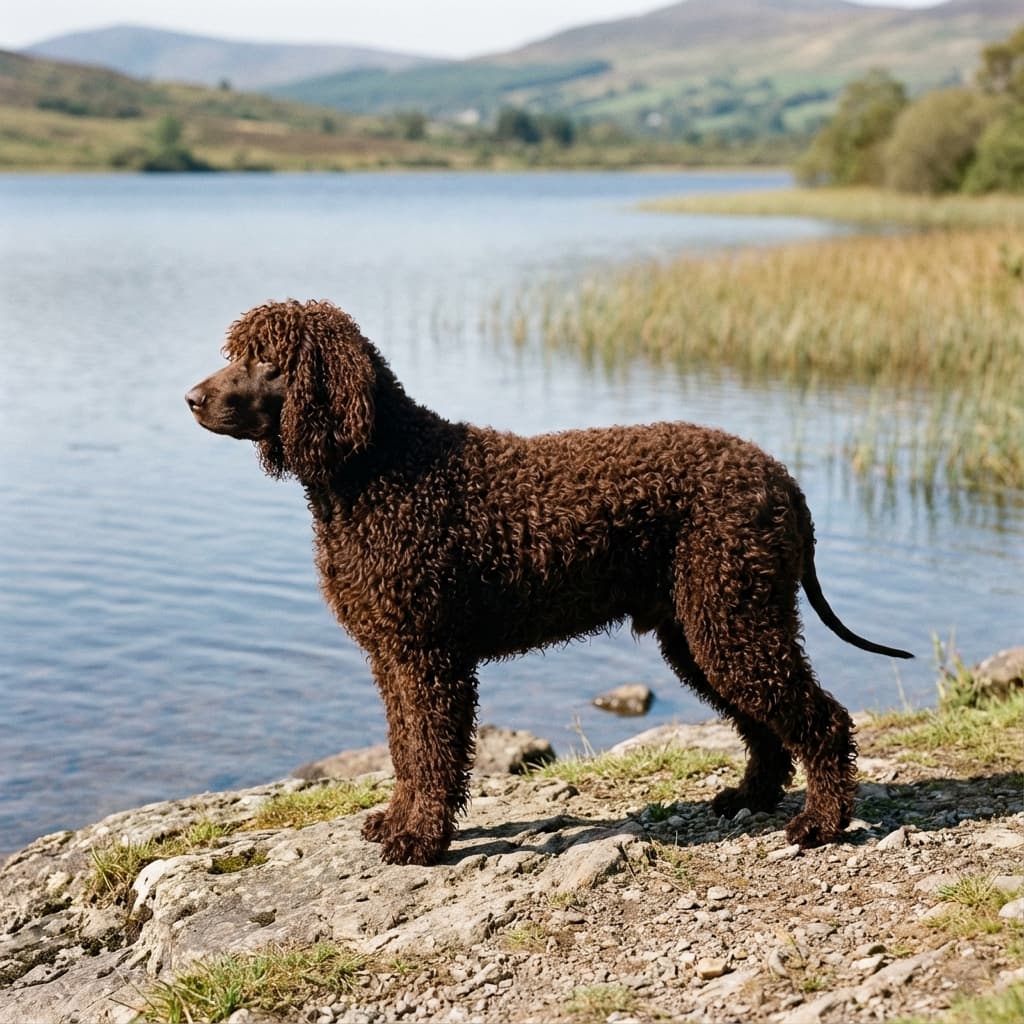
- It is believed that the Cão de Água shares common ancestors with other water dogs, such as the Irish Water Spaniel, poodle, or Newfoundland.
- Some historians suggest that the breed may have originated in the Algarve region (southern Portugal), where natural conditions favored the development of dogs adapted to work in water.
The Golden Age – a working dog at sea:
- For centuries, the Cão de Água was a vital companion of Portuguese fishermen along the entire coast of Portugal, from the north (Porto region) to the south (Algarve).
- These dogs worked on fishing boats, performing a range of specialized tasks that made them invaluable crew members.
Tasks of the water dog at sea:
- Driving fish into nets – the dogs swam around schools, scaring fish towards the deployed nets.
- Diving for lost nets and gear – they retrieved torn or lost tools from the seabed.
- Communication between boats – they transported messages, ropes, and small equipment between ships and the shore.
- Rescuing drowning sailors – they pulled sailors who fell overboard from the water.
- Guarding boats – they watched over equipment and catches to prevent theft.
Their exceptional swimming and diving abilities, dense waterproof coat, and intelligence made them indispensable in challenging maritime conditions. Fishermen valued them as highly as crew members.
Decline and threat of extinction (19th-20th century):
- With the development of modern fishing techniques in the 19th and early 20th centuries, the demand for working dogs on boats drastically decreased.
- Larger vessels, mechanization, and new fishing methods made the Cão de Água less needed.
- The breed's population sharply declined, becoming limited mainly to the Algarve region, where traditional fishing survived the longest.
- By the 1930s, the breed was on the brink of extinction – only a few dozen individuals remained.
Rescue – Vasco Bensaúde and the breed's revival:
- In 1930, Portuguese businessman and dog enthusiast Vasco Bensaúde noticed the critical state of the breed.
- He initiated a breeding program aimed at saving the Cão de Água from total extinction.
- Bensaúde traveled along the coast of Portugal, searching for the last purebred individuals of the breed.
- He established the Algarbiorum kennel, which became the foundation for rebuilding the population.
- In 1934, the first breed standard was developed, allowing for organized breeding.
International recognition:
- In 1954, the breed was officially recognized by the Fédération Cynologique Internationale (FCI) – the international canine organization.
- In 1958, the first Cão de Água arrived in the United States, where the breed began to gain popularity.
- In 1972, the Portuguese Water Dog Club of America (PWDCA) was established to promote the breed in the USA.
- In 1981, the American Kennel Club (AKC) officially recognized the breed.
Modern times – from working dog to family dog:
- Today, the Cão de Água is valued worldwide not only as a working dog but primarily as a great family dog and companion.
- The breed has gained immense popularity due to its intelligence, friendliness, and hypoallergenic coat properties.
- The Cão de Água excels in dog sports: agility, obedience, flyball, water rescue.
- Some individuals work as therapy dogs in hospitals, nursing homes, and schools.
Fame in the White House:
- The breed gained international fame when in 2009, U.S. President Barack Obama and his family adopted a Cão de Água named Bo.
- In 2013, a second dog of this breed – Sunny – joined him.
- This choice was driven by the president's daughter's allergy – the Cão de Água is hypoallergenic.
- Bo and Sunny became celebrities, significantly increasing the breed's popularity worldwide.
Preserving the heritage:
- Although today the Cão de Água rarely works at sea, in Portugal, traditions related to the breed are still cultivated.
- In some regions, water skill demonstrations are organized, reminding of the historical role of the dogs.
- The Portuguese Kennel Club (Clube Português de Canicultura) actively promotes the breed and ensures its purity.
Current status:
- The Cão de Água Português is no longer at risk of extinction – the population is stable and healthy.
- The breed is popular in Portugal, the USA, Canada, the United Kingdom, and other European countries.
- Hundreds of new puppies are registered annually in national kennel clubs.
In summary, the history of the Portuguese Water Dog is a fascinating tale of survival, devotion, and versatility. From ancient ancestors through the golden age of work at sea, near extinction, dramatic rescue, to contemporary popularity as a family dog – the Cão de Água has undergone an extraordinary transformation while maintaining its unique character, intelligence, and love for water. It stands as a living monument to Portuguese maritime culture and proof that with determination and passion, invaluable heritage can be saved!