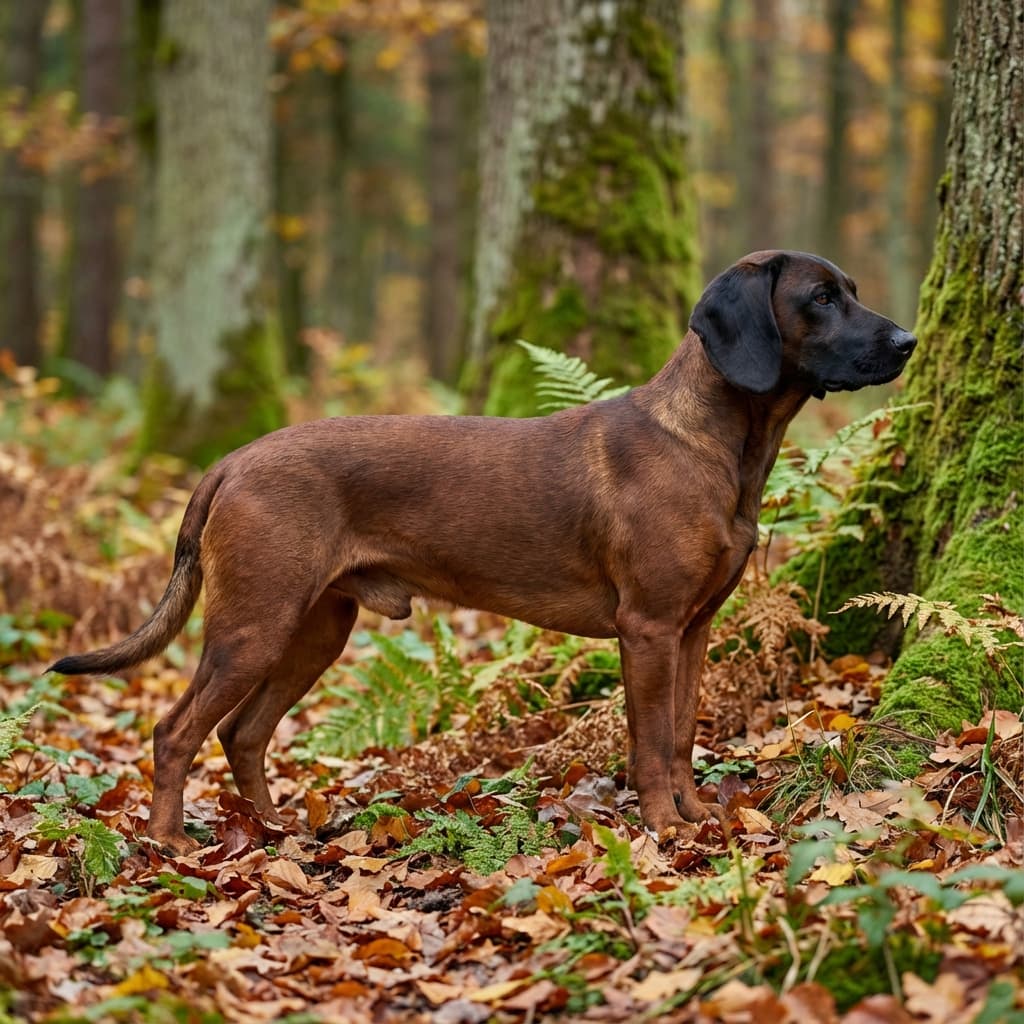
Bavarian Mountain Hound
FCI Group
6• FCI 217
Size
Medium
Origin Country
DE
Height
44-52 cm
Weight
17-30 kg
Lifespan
11-13 years
Temperament
Overview
The Bavarian Mountain Hound (Bayerischer Gebirgsschweisshund) is a specialized breed of hunting dogs, developed in southern Germany for tracking wounded game in challenging mountainous terrain. Its exceptional sense of smell and remarkable endurance make this breed an indispensable helper during hunts in the Bavarian Alps and other mountainous areas.
The breed was established at the turn of the 19th and 20th centuries through selective breeding from old hound breeds. Breeders aimed to create a dog with excellent tracking abilities that would also be smaller and more agile than traditional hounds, allowing it to navigate steep slopes and dense mountain forests effectively.
The Bavarian Mountain Hound is characterized by a balanced temperament and a strong attachment to its handler. Although it can be reserved and distrustful towards strangers, making it a good guard dog, it shows loyalty and devotion to its family. Its intelligence and focus on tasks are admirable; however, its independent nature requires an experienced owner who understands the specifics of working with hunting dogs.
Physically, the Bavarian Mountain Hound is a medium-sized dog with a strong, harmonious build adapted for prolonged work in the field. Its short, dense coat protects it well from the variable weather conditions in the mountains. The average lifespan of this breed is between 11 to 13 years, which is typical for dogs of this size.
The breed requires an active lifestyle and ample exercise. It thrives in rural or mountainous environments where it can regularly engage its natural instincts. Proper physical and mental stimulation is crucial for the well-being of this energetic dog.
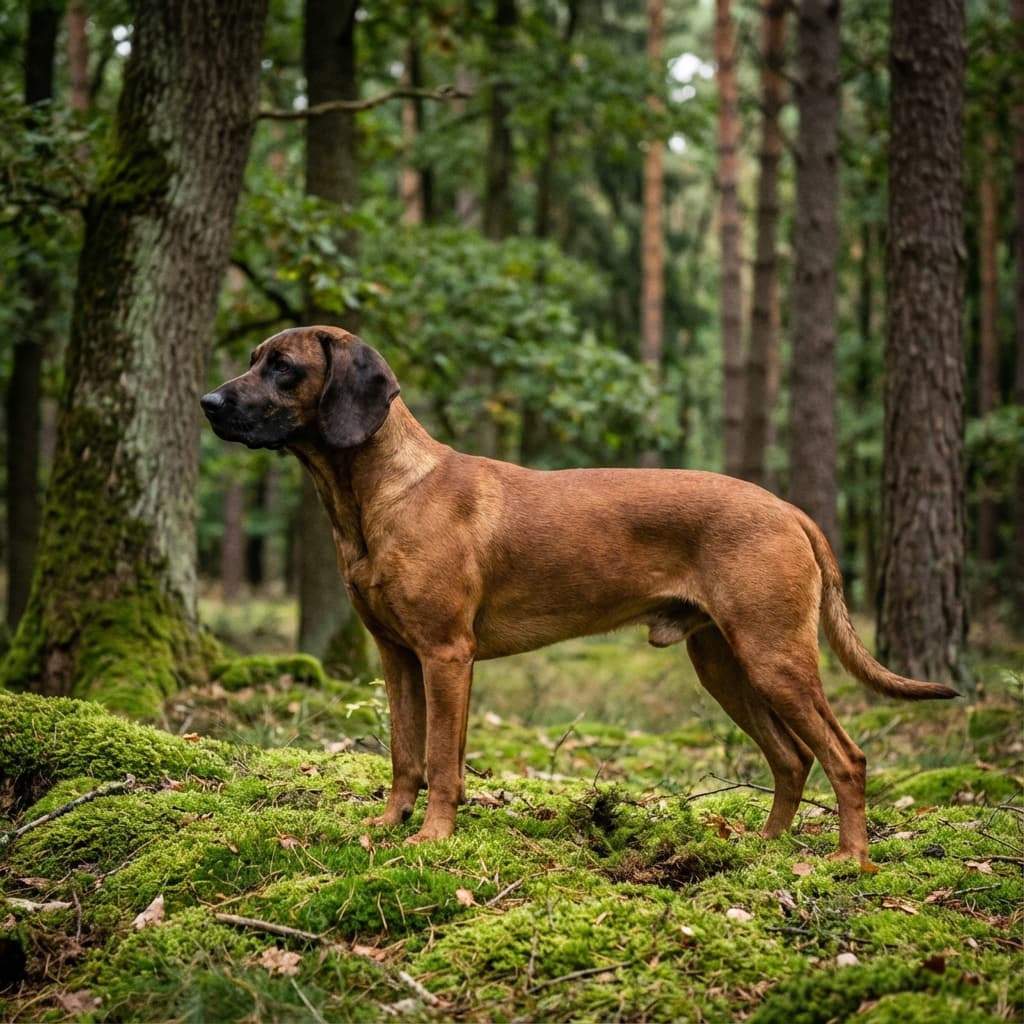
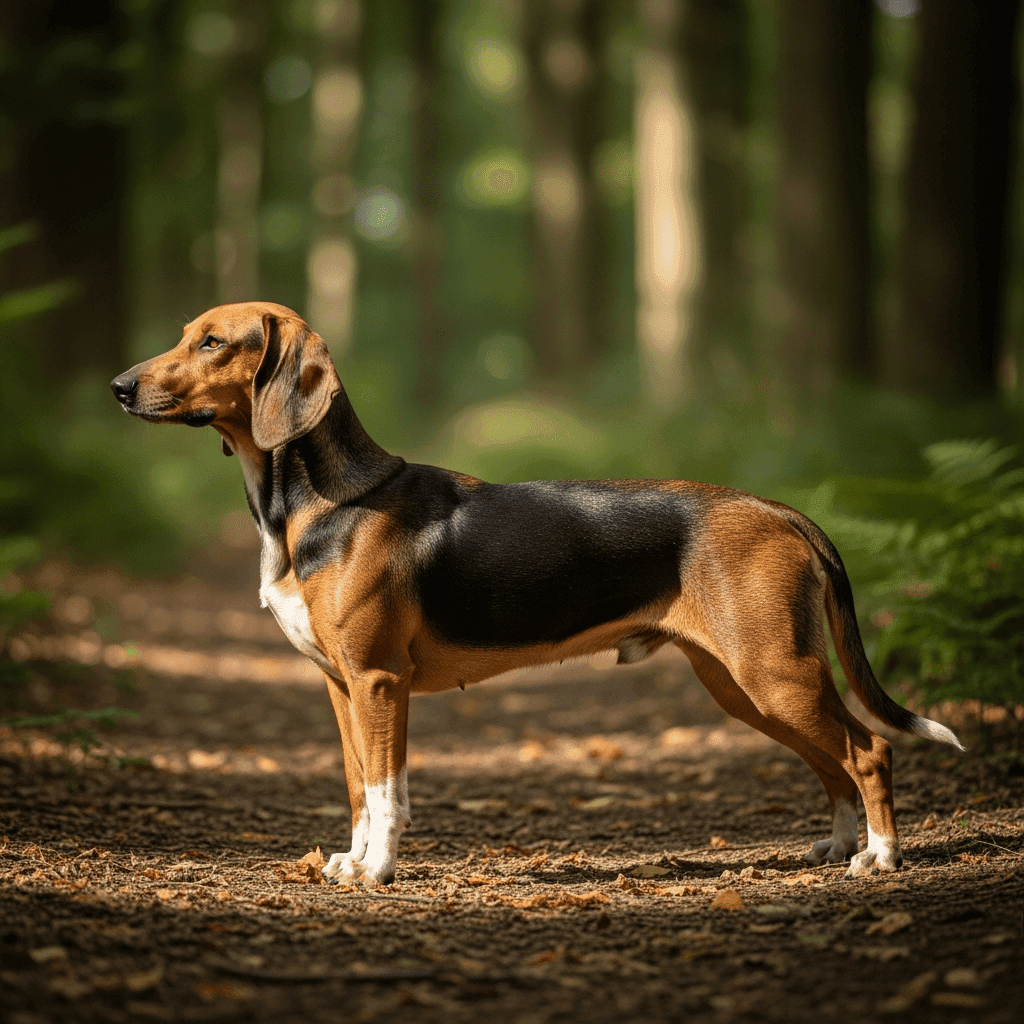
The Bavarian Mountain Hound is a medium-sized dog with a strong, muscular build, perfectly adapted for work in difficult mountainous terrain. Height at the withers ranges from 44 to 52 cm, and weight oscillates between 17 and 30 kg. Males are usually slightly larger and heavier than females. The dog's silhouette is somewhat elongated, meaning that the body length exceeds the height at the withers, giving the breed a characteristic, harmonious appearance.
The head is proportional to the body, relatively wide and strong. The skull is slightly convex, with a clearly defined stop between the forehead and the muzzle. The muzzle is wide and strong, ending with a large black nose with widely open nostrils, indicating the breed's excellent olfactory abilities. The eyes are medium-sized, dark, with a calm and attentive expression. The ears are of medium length, wide at the base, hanging along the cheeks, and are set high on the head.
The coat of the Bavarian Mountain Hound is short, dense, and well-fitting to the body, providing excellent protection against rain, snow, and cold. On the head and ears, the coat is slightly thinner and smoother, while on the belly and lower legs it may be slightly longer and coarser. A characteristic feature of the breed is the rich palette of colors: from deep deer red (known as hirschrot), through various shades of brown and reddish, to light beige. There are often lighter markings on the chest, legs, and under the tail.
The tail is of medium length, set fairly high, usually carried horizontally or slightly lowered. The limbs are strong, straight, and well-muscled, ending in compact, well-arched paws with hard pads, allowing the dog to move confidently over rocky mountainous terrain. The movements are free, energetic, and fluid, reflecting the endurance and agility of this hunting breed.
The Bavarian Mountain Hound is a dog with a balanced, composed temperament, combining the traits of an excellent tracker and a loyal companion. The breed was developed for independent work in the field, which shaped its independent character and strong determination. At the same time, these dogs show deep attachment to their handler and family, demonstrating loyalty and devotion.
A characteristic feature of the Bavarian Mountain Hound is its reserved nature towards strangers. These dogs are not aggressive, but they remain alert and reserved in interactions with unfamiliar people, making them natural guardians of the home. Their protective instinct is well-developed yet controlled, meaning they respond appropriately to situations without unnecessary nervousness.
In work, the Bavarian Mountain Hound demonstrates exceptional focus and perseverance. Its strong hunting instinct and excellent sense of smell allow it to track the scent of injured game for hours, even in the most challenging conditions. However, this same passion for tracking scents can lead to problems if the dog does not receive adequate activity and mental stimulation.
In relation to other dogs, the Bavarian Mountain Hound is usually tolerant, especially if it has been properly socialized from puppyhood. However, it is important to remember that the strong hunting instinct can cause issues in interactions with cats and other small pets. The breed requires a consistent handler with experience in working with hunting dogs, who can provide it with the right amount of exercise and tasks that engage its natural abilities.
The Bavarian Mountain Hound is not a breed for everyone. It thrives best in active hunting families or individuals leading an intense outdoor lifestyle who can meet its need for movement, exploration, and work. With proper guidance, it becomes a reliable partner both in the field and in the comfort of home.
The Bavarian Mountain Hound is a breed that is generally healthy and resilient, enjoying good physical condition for most of its life. The average lifespan is between 11 to 13 years, which is a typical indicator for medium-sized dogs. Its solid body structure and natural selection focused on working abilities have allowed this breed to avoid many health problems common to dogs bred primarily for aesthetic reasons.
Despite its generally good health condition, like any breed, the Bavarian Mountain Hound may be prone to certain ailments. The most common issues include:
- Dental diseases - regular oral hygiene and dental check-ups are essential to prevent tartar buildup and gum diseases
- Skin infections - thick fur and an active lifestyle in the field can lead to irritations, so it is important to regularly check the condition of the skin
- Eye problems - attention should be paid to symptoms of conjunctivitis or other eye ailments
- Ear infections - drooping ears require regular checks and cleaning to prevent the development of bacterial or fungal infections
Owners should regularly monitor their dogs' health to detect and respond to potential problems early. A proper diet, rich in high-quality protein and nutrients, is crucial for maintaining optimal condition. Regular exercise, which is a natural need for this active breed, also supports physical and mental health.
The Bavarian Mountain Hound is a breed well adapted to changing weather conditions. Its thick, short coat protects it from both cold and heat. However, in extreme weather conditions (very low or very high temperatures), it may require additional protection or activity limitations. Regular veterinary visits, vaccinations, and deworming are essential for maintaining the health and longevity of this wonderful breed.
The care of the Bavarian Mountain Hound is relatively simple and low-maintenance, making this breed easy to keep on a daily basis. The short, dense, and close-fitting coat does not require time-consuming grooming procedures or frequent visits to the groomer.
Regular brushing once a week is usually sufficient to remove dead hair, dirt, and prevent tangles. Natural bristle brushes or rubber grooming gloves work best for this purpose. During periods of heavier shedding, which occur in spring and autumn, it is advisable to increase the brushing frequency to 2-3 times a week to minimize the amount of hair in the house.
Bathing should be done only when absolutely necessary, when the dog is heavily soiled or smells unpleasant. Overwashing can strip the coat of its natural protective oils and lead to skin irritations. During baths, gentle shampoos specifically designed for dogs should be used, which do not disrupt the natural pH of the skin.
Particular attention should be paid to:
- Ears - the drooping ear structure makes them prone to infections. Their condition should be checked regularly (at least once a week) and cleaned with special dog products
- Teeth - regular tooth brushing (ideally daily, at least 2-3 times a week) prevents the formation of tartar and gum diseases
- Nails - their length should be monitored and trimmed if necessary to prevent discomfort while walking and joint problems. Active dogs often wear down their nails naturally while moving on hard surfaces
- Paw condition - after walks, especially in rough terrain, it is advisable to check the pads for injuries, foreign bodies, or irritations
After excursions in the field, especially in forests or meadows, it is recommended to thoroughly check the entire body of the dog for ticks, worms, and other parasites. Overall, the grooming of the Bavarian Mountain Hound is not time-consuming, and with regular, short treatments, the dog will look well-groomed and feel comfortable.
The Bavarian Mountain Hound is a breed exceptionally active and requiring a lot of exercise, which directly stems from its hunting purpose. These dogs were bred for hours of tracking in difficult mountainous terrain, so their energy needs are significant and must be systematically met.
At least two hours of intense physical activity per day is the absolute minimum for this breed. Ideally, the exercises should be varied and engage both the body and mind of the dog. Perfect forms of activity include:
- Long walks and hikes - preferably in forested or mountainous areas where the dog can freely explore and utilize its excellent sense of smell
- Running - both leisurely in a safe, fenced area and accompanying the owner during jogging
- Nose work - tracking exercises, searching for hidden objects (mantrailing), which utilize the breed's natural predispositions
- Fetching - although not a specialty of this breed, it can be a form of play and exercise
- Agility - helps develop coordination and agility and strengthens the bond with the owner
The Bavarian Mountain Hound feels best in a rural or mountainous environment, where it has regular access to open spaces and natural terrain. Living in the city and limited apartment space can be frustrating for it unless the owner provides a very intense activity program.
Due to its strong hunting instinct and tendency to follow a scent, these dogs should only be let loose in safe, properly fenced areas. Otherwise, there is a risk that the dog will follow an interesting scent and stray away from the owner. During walks in public places, it is recommended to keep them on a leash.
Lack of adequate exercise and stimulation can lead to behavioral problems, such as excessive barking, destruction of objects, hyperactivity, or apathy. Owners should view daily, intense exercise not as an option but as a necessity for their dog's physical and mental health. With the right amount of activity, the Bavarian Mountain Hound becomes a calm and balanced companion at home.
Training a Bavarian Mountain Hound requires experience, patience, and consistency. This is an intelligent breed that quickly learns new commands, but its independent nature and strong personality can pose a challenge for inexperienced owners. These dogs were bred for independent work in the field, which has shaped their tendency to make their own decisions, especially when it comes to tracking.
The most effective training methods are based on positive reinforcement - rewarding desired behaviors with treats, praise, and play. Physical punishment or aggressive methods are completely inadvisable and can ruin the relationship with the dog and undermine its confidence. The Bavarian Mountain Hound responds best to calm, confident leadership and clearly defined rules.
Key elements of training:
- Early socialization - from puppyhood, the dog should be gradually introduced to various people, dogs, environments, and stimuli to develop a balanced character
- Basic obedience commands - Sit, Lie Down, Stay, Come - are absolutely essential for controlling the dog, especially due to its strong hunting instinct
- Recall - requires special attention, as a dog focused on a scent may ignore its owner's call
- Impulse control - learning self-control and delaying immediate gratification is very important
- Nose work - utilizing natural predispositions through tracking training brings joy to the dog and strengthens its bond with the owner
Regular, short training sessions (10-15 minutes, several times a day) are more effective than long, exhausting sessions. It is important to maintain the dog's interest by introducing variety and elements of play. Training should be conducted consistently throughout the dog's life to maintain its skills and provide adequate mental stimulation.
Due to the specialized nature of the breed, many dogs are additionally trained for hunting work according to tracking requirements. Such advanced training should take place under the supervision of experienced instructors familiar with the specifics of working with tracking dogs. For dogs not used for hunting, an excellent alternative is mantrailing training or other forms of nose work that satisfy their natural needs and provide an intellectual challenge.
The nutrition of the Bavarian Mountain Hound plays a key role in maintaining its health, condition, and high physical fitness. As an active breed that requires a lot of movement, these dogs need a balanced diet that provides them with energy for daily activities and work in the field.
The Bavarian Mountain Hound has a moderate appetite and typically does not show tendencies toward obesity, provided it receives the appropriate amount of exercise. Nevertheless, owners should monitor portion sizes and the dog's condition to avoid both overweight and underweight issues.
Basic nutrition guidelines:
- High-quality protein - should form the basis of the diet, preferably sourced from meat (poultry, beef, lamb, fish). Protein is essential for muscle building and regeneration.
- Appropriate fats - are the main source of energy for active dogs. Omega-3 and omega-6 fatty acids support skin and coat health.
- Complex carbohydrates - rice, oats, sweet potatoes provide long-lasting energy.
- Vitamins and minerals - essential for the proper functioning of the body, should be provided in appropriate proportions.
Owners can choose between high-quality commercial food (dry or wet) and home-cooked diets (BARF, cooked). Regardless of the choice, it is important that the food is tailored to the dog's age (puppy, adult, senior), size, and activity level. Very active working dogs may require higher-calorie foods.
It is absolutely essential to avoid giving table scraps, sweets, fatty foods, and products harmful to dogs (chocolate, onions, garlic, grapes, avocados). Such practices can lead to digestive problems, overweight, and the development of unhealthy eating habits.
It is recommended to feed an adult dog twice a day (in the morning and evening), which ensures a steady supply of energy and reduces the risk of gastric torsion. Puppies require more frequent meals (3-4 times a day). It is very important to provide the dog with constant access to fresh, clean water, especially after intense exercise.
For very active or working dogs, it is worth considering adjusting portion sizes and calorie intake to the level of activity. During periods of intense work, they may need more calories, while during quieter periods, portions should be reduced to avoid weight gain. Regular consultations with a veterinarian will help optimize the diet and keep the dog in optimal condition throughout its life.
Characteristic Traits
Pros
- Exceptional tracking abilities and sense of smell
- Loyalty and strong attachment to the handler
- Balanced and composed temperament
- Resilience to harsh weather conditions
- Relatively simple coat care.
Cons
- Requires a very large amount of exercise and activity
- Reserved and distrustful of strangers
- Requires an experienced owner
- Strong hunting instinct can be problematic
- Not suitable for city living.
Behavioral Ratings
Breed History
The Bavarian Mountain Hound (Bayerischer Gebirgsschweisshund) has a fascinating history dating back to the late 19th century and is inextricably linked to the hunting tradition of southern Germany. The breed was created out of the need for a specialized dog for tracking wounded game in the difficult mountainous terrain of the Bavarian Alps.
At the roots of the breed are ancient German hunting dogs (Bracken) and the Hanoverian Hound (Hannoverscher Schweisshund), which was larger and heavier. By the end of the 19th century, Baron Karg-Bebenburg, a hunter and breeder from Bavaria, concluded that the traditional Hanoverian Hound, while excellent in flat terrains, was too massive and not agile enough for work in the steep, rocky Alps. He decided to breed a lighter, more agile dog while retaining exceptional tracking abilities.
In the breeding program, the Hanoverian Hound was crossed with local mountain dogs, probably with bracke-type breeds from the alpine region. The result of this selection was a medium-sized dog with an excellent sense of smell, extraordinary endurance, and the ability to work on steep slopes and in dense mountain forests.
In 1912 in Munich, the official breed club was established - the Bavarian Hound Club (Klub für Bayrische Gebirgsschweisshunde), which began systematic breeding and established breed standards. From that moment on, the Bavarian Mountain Hound gained popularity among hunters in southern Germany, Austria, and Switzerland as an irreplaceable specialist for tracking work.
Throughout the 20th century, the breed was developed with an emphasis on working abilities - excellent sense of smell, endurance, calm temperament, and strong attachment to the handler. Unlike many other breeds, the Bavarian Mountain Hound has always prioritized functional hunting traits over appearance. To this day, breeding is strictly controlled, and puppies mainly go to hunters and foresters.
The Bavarian Mountain Hound remains a relatively rare and little-known breed outside hunting circles. It is valued for its reliability in searching for wounded game, which has significant ethical implications in hunting - it helps to shorten the suffering of animals and prevent the waste of meat. In Germany, Austria, and other alpine countries, these dogs are still actively used by professional hunters and foresters.
Today, although the breed remains primarily a working dog for hunters, it is also beginning to gain recognition as a companion dog for active, experienced owners who can meet its exercise needs and utilize its natural talents through mantrailing training or other forms of scent work. Despite its growing popularity, the Bavarian Mountain Hound remains true to its roots as an irreplaceable tracker in the mountainous regions of Central Europe.