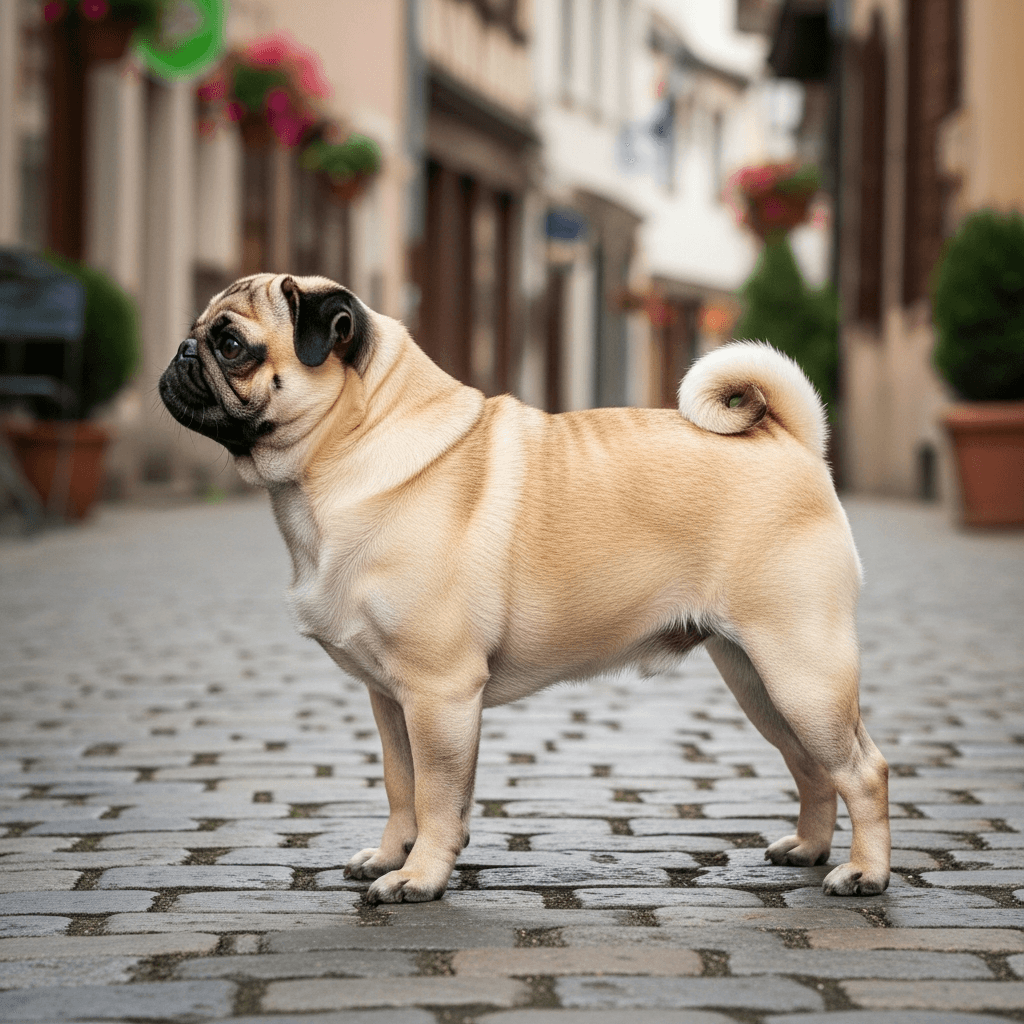
Pug
FCI Group
9• FCI 253
Size
Small
Origin Country
CN
Height
25-40 cm
Weight
6.3-8.1 kg
Lifespan
12-15 years
Temperament
Overview
Pug, also known as Mops, is one of the most charming and recognizable dog breeds that has captured the hearts of people around the world for centuries. Its fascinating history dates back to ancient China, where over 2000 years ago it delighted emperors and aristocrats with its sociable, dignified character. Today, Pug enjoys enduring popularity as a companion dog, and its distinctive flat face, large expressive eyes, and wrinkled face consistently attract attention and bring smiles.
These small dogs with a square, sturdy build are known for their smooth, short coat, which adds elegance despite their small size. Pugs love the company of people and excel as family dogs, making them ideal companions for singles, couples, or seniors. They embody the principle of multum in parvo (much in little) - they are dogs with a compact structure, well-proportioned bodies, and strong muscles, yet they never appear clumsy or too low-set.
Their cheerful, balanced temperament and friendly, charming character make them perfect partners for both younger and older family members. Despite their small size, Pugs can brighten any day with their funny, playful behavior and lively disposition. They are moderately active dogs, making them ideal for apartment living, especially for those leading a quieter lifestyle. Their exercise needs are not high, but regular walks and playtime are essential for maintaining good health.
However, it is important to remember that Pugs have specific health needs related to their unique, brachycephalic body structure. Their flat face can lead to breathing problems, which requires special attention during hot days and intense exertion. With proper, mindful care and regular veterinary check-ups, Pugs can enjoy a long, happy life lasting 12-15 years, bringing their owners plenty of joy and unforgettable moments.
Pugs are incredibly loyal and form deep attachments to their caregivers, making them excellent companions for everyday life. Their friendly, dignified temperament means they get along well not only with people but also with other pets. If you are looking for a dog that will be not just a pet but a true friend with a big heart and intelligence, Pug will be an excellent choice. Discover the full range of information about this extraordinary breed in the following sections of our guide, where you will find detailed information on health, care, diet, training, and the rich history of Pugs.
The Pug is a small, compact dog with a characteristic square silhouette and extraordinary charm. Its body structure is definitely square and compact, which perfectly embodies the principle of multum in parvo (much in little) - a dog with compact proportions, well-defined musculature, and firm muscles. The height of an adult Pug typically ranges from 30 to 36 cm at the withers, and the weight is between 6.3 to 8.1 kg.
The most distinctive feature of the Pug is its head - relatively large in proportion to the body, round but not apple-shaped. The muzzle is short, blunt, and square, never turned upwards. The wrinkles on the forehead are clearly defined but not exaggerated. The nose is black with fairly large, well-opened nostrils - pinched nostrils and a heavy fold over the nose are unacceptable. The eyes are dark, very large, round, with a gentle, caring expression, shiny and full of fire when the dog is excited.
The ears are thin, small, and soft like black velvet. There are two shapes of ears: rose ears (small, hanging, folding back) and button ears (folded forward, the tip close to the skull, covering the ear opening). Button ears are preferred.
The coat of the Pug is delicate, smooth, short, and shiny, never rough or woolly. The following colors are present: silver, apricot, light brown (fawn), and black. Each of these colors should be clearly defined, with a good contrast between the color and markings. The markings are clearly defined: the mask, ears, markings on the cheeks, a mark on the forehead, and the dorsal line should be as dark as possible, preferably black.
The body is short and compact, wide in the chest with well-arched ribs. The top line is straight, never concave (roach back) or arched (snipe back). The tail is set high, tightly curled over the hips. A double curl is highly desirable. The limbs are very strong, straight, of moderate length, and well-placed under the body, giving the Pug a stable, confident appearance. Overall, this makes the Pug a dog with a unique, recognizable, and dignified appearance.
Pugs are dogs with great charm, dignity, and intelligence, characterized by a balanced, cheerful, and lively temperament. Their nature is exceptionally friendly and sociable - they love being the center of attention and derive immense joy from being in the company of their owners. Pugs are extremely attached to their caregivers and do not tolerate prolonged solitude, which can lead to separation anxiety, depression, and destructive behavior.
These are dogs that love the company of both people and other animals. Their funny, humorous character makes them perfect for families with children - they are patient, tolerant, and gentle with small kids, although due to their build, they require gentle handling. Pugs exhibit moderate intelligence and can quickly learn new commands and tricks, although sometimes their characteristic stubbornness can pose a challenge during training.
Their low hunting instinct and gentle disposition make them get along well with other pets - both dogs and cats. Pugs are not aggressive or overly distrustful of strangers; they usually greet guests with curiosity and friendliness. Due to their sensitive nature, raising them requires gentleness, patience, and positive reinforcement to avoid behavioral problems.
Pugs are also relatively quiet - they rarely bark without reason, making them ideal companions for living in an apartment or block. Their greatest need is closeness to their owner - they are true companion dogs that want to participate in all aspects of family life. They are characterized by a certain degree of humor in their behavior, which continually entertains and disarms household members.
Pugs have an average lifespan of 12 to 15 years. Although they appear strong and compact, they are prone to various health issues primarily related to their brachycephalic (short-nosed) structure. The biggest health challenge is breathing problems caused by their flattened muzzle and narrowed airways.
Due to their skull structure, Pugs do not cope well in extreme temperature conditions. On hot days, they are particularly susceptible to overheating because they lack the ability to effectively cool their bodies through panting - their constricted nostrils and heavy fold over the nose can significantly hinder breathing and are unacceptable in the breed standard. In cooler conditions, they are also not very resilient due to their short coat, which is why they should not be kept outdoors.
In addition to breathing problems, Pugs may suffer from skin conditions related to their folds - if the folds are not regularly cleaned, irritations, fungal, and bacterial infections can occur. Their large, bulging eyes are also prone to injuries and infections, including corneal ulcers, dry eye (keratoconjunctivitis sicca), and distichiasis (double eyelashes).
Other health issues that Pugs may be susceptible to include:
- Obesity - Pugs tend to gain weight, which can lead to additional problems with joints, breathing, and heart
- Degenerative joint disease - particularly of the knees (patellar luxation)
- Pug Dog Encephalopathy (PDE) - a rare but serious neurological disease specific to this breed
- Dental problems - due to jaw structure
Pug owners should regularly monitor their health and provide a proper diet to avoid obesity. Regular veterinary check-ups, cleaning of skin folds, eye and ear checks, and avoiding intense exercise on hot days are important. With conscious, responsible care, Pugs can enjoy a long and happy life.
Grooming a Pug is relatively simple, but it requires regularity and consistency. Its coat is short, smooth, delicate, and shiny, which means it does not require complicated brushing or professional grooming. Regular brushing at least once a week using a soft brush or rubber glove will help remove dead hair, dirt, and keep the coat in excellent condition.
During the shedding period, which occurs in spring and autumn, more frequent brushing is recommended - even daily - to minimize the amount of hair in the home. Pugs shed moderately throughout the year, but the intensity increases during shedding seasons. Baths should be organized as needed, usually once every few weeks, using gentle shampoos designed for dogs with sensitive skin.
The most demanding aspect of grooming a Pug is cleaning the skin folds, especially those on the face. Folds should be regularly, preferably a few times a week, gently cleaned with a damp, soft cloth or tissue, and then thoroughly dried to prevent moisture, dirt, and bacteria buildup, which can lead to irritations and skin infections.
Other important grooming aspects include:
- Eyes - due to their prominent structure, the eye area should be regularly checked and gently cleaned, removing any discharge
- Ears - check weekly, ensuring they are clean, dry, and free of unpleasant odors; clean with a special solution if necessary
- Nails - trim regularly, usually once a month, if they do not wear down naturally during walks
- Teeth - brush several times a week with a dog toothbrush and toothpaste to prevent tartar buildup and periodontal disease
Grooming a Pug is not complicated, but it requires consistency and attention to ensure its health, comfort, and good condition of the skin and coat.
Pugs are dogs with moderate to low physical activity needs, making them ideal companions for people leading a calmer lifestyle or living in smaller apartments. They do not require long, exhausting walks or intense exercise - usually, short walks 2-3 times a day lasting about 20-30 minutes are enough to meet their movement needs and provide adequate mental stimulation.
Pugs have a cheerful, lively disposition and enjoy participating in play, but they prefer activities indoors where they can run, jump, and play with their owner without excessive effort. They excel at games like fetching a soft toy, hide and seek, or simple tricks that engage both body and mind.
However, it is important to remember the significant limitations resulting from their brachycephalic structure:
- Avoid intense activities, especially on hot, humid days - due to breathing difficulties, Pugs can quickly overheat
- Never force them to run in high temperatures - this can lead to dangerous heatstroke
- Organize walks on hot days early in the morning or late in the evening when the temperature is lower
- Always provide access to fresh water and shade
- Watch for signs of fatigue: heavy panting, bluish tongue, unsteady gait - in such cases, immediately stop the activity
Pugs are not sporting or running dogs, but they need regular, moderate exercise to maintain a healthy weight and prevent obesity, to which they are prone. Short, frequent walks combined with indoor play will be ideal for keeping them in good physical and mental condition. Their greatest joy is simply being with their owner, regardless of the type of activity.
Pugs are dogs that can be relatively easy to train, provided that one approaches it with patience, consistency, and a positive attitude. They are characterized by great charm, dignity, and intelligence, which makes them quick to learn commands, tricks, and rules of behavior; however, their sometimes stubborn, independent nature can pose a challenge during training.
The most effective methods for Pugs are positive reinforcement - rewarding good behavior with treats, praise, and play. Pugs are sensitive dogs and do not respond well to harsh training methods, yelling, or physical punishment, which can lead to fear, stubbornness, or behavioral problems. Due to their social nature and desire to please their owner, they enjoy participating in training when it is conducted in a friendly, encouraging atmosphere.
Key aspects of training a Pug:
- Early socialization - start as early as possible, from puppyhood, so that the Pug learns proper behavior towards people, other dogs, and animals, as well as various situations
- Short, engaging training sessions - Pugs can get bored quickly, so it is better to conduct several short (5-10 minutes) sessions daily than one long one
- Consistency - all household members should use the same rules and commands to avoid confusing the dog
- Basic commands - Sit, Stay, Come, Lie down, No - are the foundation of good manners
- House training - Pugs can be a bit stubborn in this regard, but with regularity and positive reinforcement, they learn quickly
It is important to avoid overfeeding during training - Pugs have a tendency to obesity, so the amount of treats should be controlled and included in their daily calorie intake. You can also use part of their regular food as a reward.
Pugs are very social and love to be the center of attention, so training should be enjoyable for them and a way to spend time with their beloved owner. With the right approach, they can become well-mannered companions who know how to behave in various social and home situations.
The Pug's diet should be carefully thought out and balanced to prevent one of the biggest health problems of this breed - obesity. Pugs have a strong tendency to gain weight due to their relatively low energy needs, inclination towards laziness, and irresistible desire to eat.
Basic nutrition guidelines for Pugs:
- High-quality food - choose premium/super premium dry or wet food tailored to small breeds, age (puppy, adult, senior), and activity level
- Portion control - strictly adhere to the manufacturer's feeding recommendations or veterinarian guidelines; Pugs can be very persuasive when begging, but do not give in
- Regular meals - ideally 2-3 times a day at consistent times, which helps with weight control and digestion
- Avoid human food - especially fatty, salty, sweet products that are high in calories and unhealthy ingredients; many human foods are also toxic to dogs
- Fresh water - provide constant access to clean, fresh water, particularly important due to thermoregulation issues
A well-balanced diet should consist of high-quality protein (meat as the first ingredient), carbohydrates (rice, potatoes, vegetables), and healthy fats (omega-3 and omega-6 fatty acids) that support skin, coat, and nervous system health. Vitamins and minerals essential for the proper functioning of the body are also important.
Due to the specific health needs of Pugs, it is worth considering:
- Joint health-supporting food (glucosamine, chondroitin) - due to susceptibility to orthopedic issues
- Food with added antioxidants to support the immune system
- For skin issues - hypoallergenic or limited ingredient food
- For older dogs - senior food with reduced calories
Owners should regularly monitor the weight of their Pug and consult with a veterinarian to establish an optimal feeding plan, taking into account the dog's age, weight, activity level, and health status. A proper diet is crucial for the health and longevity of a Pug, helping to prevent obesity and related health problems such as diabetes, heart disease, and exacerbated breathing issues.
Characteristic Traits
Pros
- Great charm and dignity
- Balanced and cheerful disposition
- Ideal for apartment living
- Friendly to children and other pets
- Easy to care for
- Low exercise needs.
Cons
- Breathing problems (brachycephaly)
- Sensitivity to high and low temperatures
- Tendency to obesity
- Specific health needs (folds
- eyes)
- May be stubborn during training
- Does not tolerate loneliness.
Behavioral Ratings
Breed History
The Pug, also known as Pug, has a fascinating and rich history dating back to ancient China, where it was valued by the aristocracy, including emperors of the Han dynasty (around 400 BC), over 2000 years ago. This breed was particularly popular among mandarins and the Chinese elite, who treated their Pugs as precious treasures and family members. These dogs lived in luxury, often guarded by soldiers and had their own servants.
In ancient China, short-nosed dogs with flat faces were bred - in addition to Pugs, also Pekingese and Shih Tzus. Pugs were valued for their friendly character, dignity, and charming appearance. The wrinkles on a Pug's forehead were particularly prized when they formed a pattern resembling Chinese characters - ideally, when they created the character for prince (王).
In the 16th century, Pugs made their way to Europe thanks to Dutch sailors and merchants of the Dutch East India Company, who transported them on their ships as early as the 1500s. In Holland, the breed quickly gained immense popularity and became a symbol of the House of Orange. According to legend, a Pug named Pompey saved the life of Prince William I of Orange in 1572 by warning him of approaching Spaniards, which made Pugs the official dogs of the royalist party.
From Holland, Pugs spread to England, especially when William III of Orange and his wife Mary II ascended the English throne in 1688. In England, Pugs became extremely fashionable among the aristocracy and the royal family. Queen Victoria was a great lover of this breed and owned many Pugs, which further increased their popularity during the Victorian era.
By 1877, only fawn Pugs were known in Europe, but then the first pair of black Pugs was imported from China - Lady Brassey brought a pair of black Pugs from China, which quickly gained recognition and were included in breeding. Black Pugs initially caused controversy, but over time they were accepted as an equal color.
Pugs were also present in art and culture - they appeared in paintings by William Hogarth, Goya, and in porcelain figurines from Meissen. In the 18th and 19th centuries, they were the favorite dogs of many aristocrats and artists. Josephine Bonaparte, the wife of Napoleon, had a beloved Pug named Fortune.
The first breed standard was developed in 1883, and in 1885 the Pug was officially recognized by The Kennel Club in the United Kingdom. The American Kennel Club (AKC) recognized the breed in 1885. Since then, Pugs have regularly been exhibited at dog shows, where their distinctive appearance and charming personality attracted the attention of judges and spectators.
In the 20th century, the popularity of Pugs went through various phases - from being very fashionable in the 50s and 60s, through a decline in interest, to a resurgence in popularity at the end of the century and the beginning of the 21st century. Today, Pugs are among the most popular companion dog breeds worldwide, valued for their friendly nature, small size, and adaptability to apartment living.
Despite some health challenges related to brachycephaly, which have become a focus for breeders and kennel organizations striving for healthier breeding, Pugs continue to enjoy immense popularity. Their history is a testament to the long-lasting, centuries-old bond between humans and these charming dogs, which have delighted their owners for thousands of years with their dignity, intelligence, and big hearts contained in small bodies.