Puli
FCI Group
1• FCI 55
Size
Medium
Origin Country
HU
Height
39-45 cm
Weight
10-15 kg
Lifespan
13-15 years
Temperament
Overview
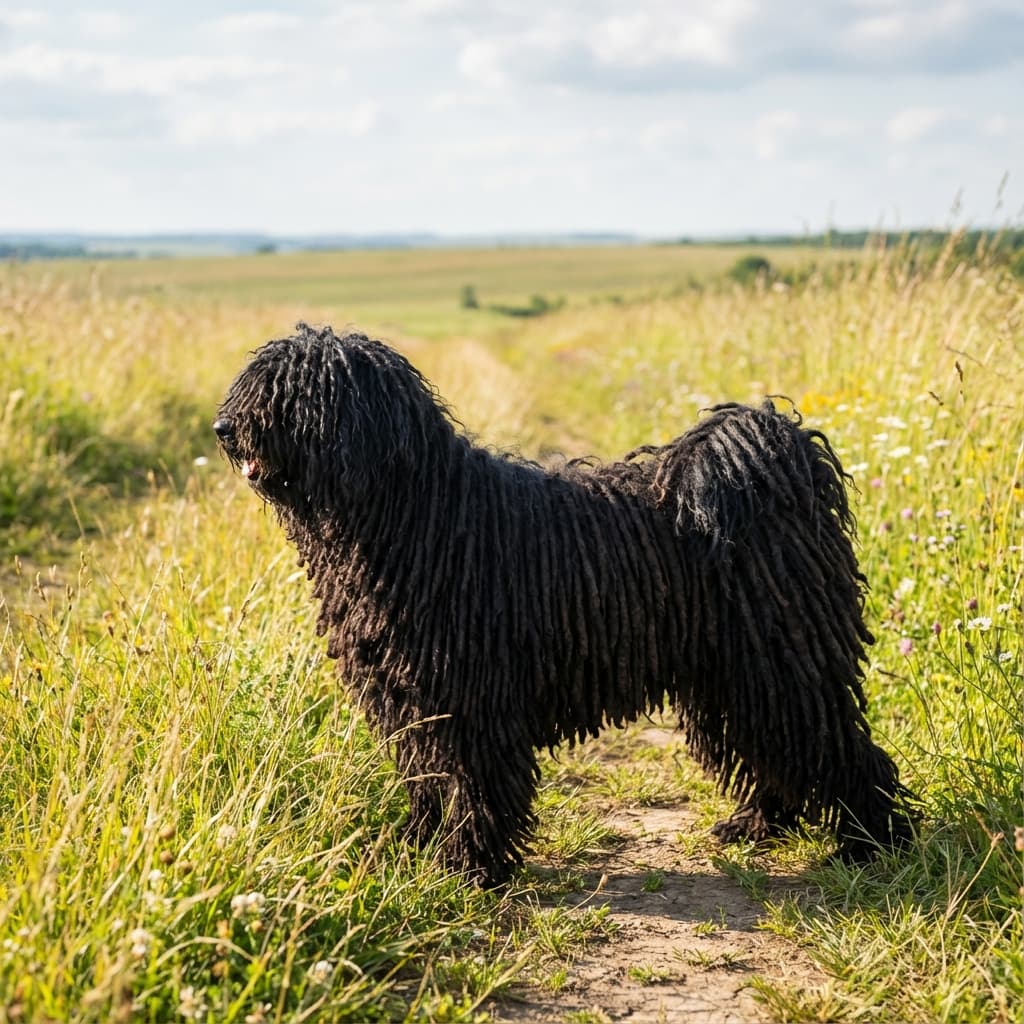
The Puli is a unique breed of herding dogs that originates from Hungary and boasts a fascinating history dating back to the Middle Ages. This medium-sized breed is known worldwide for its distinctive long coat, which forms natural cords resembling dreadlocks or Rastafarian braids.
What makes the Puli so special? First and foremost, its unique coat, which not only catches the eye and gives the dog an exotic appearance but also serves an important practical function – protecting it from extreme weather conditions, both cold and heat. Thanks to its double coat, the Puli can work in any weather conditions.
The body structure of the Puli is square and compact, with strong musculature and a well-developed skeleton. Its round head and eyes, which often hide under the thick fur falling over its face, give the dog a mysterious yet charming expression. The tail curled over the back further emphasizes the characteristic silhouette of this breed.
Character and temperament:
- Strong herding instinct – The Puli is a born herder, excelling in working with sheep and other livestock
- Exceptional intelligence – it is one of the most intelligent breeds, learning quickly and understanding commands well
- Independence and stubbornness – despite its willingness to cooperate, it can be independent in decision-making, requiring consistent training
- Affectionate – it forms strong bonds with the family, loves children, and is a loyal companion
The Puli is a dog with a lively and energetic temperament that needs an active owner. Its alertness and guarding instinct make it an excellent watchdog, warning the family of strangers. At the same time, with proper socialization, it is friendly and open towards people.
This breed thrives both in a house with a garden and in an apartment, provided it receives regular physical and mental activity. Without adequate energy release, the Puli can become destructive or develop behavioral problems.
In this comprehensive guide, you will discover all aspects of life with a Puli – from details about health and grooming of its characteristic coat, through exercise and training requirements, to dietary recommendations and the fascinating history of this Hungarian breed. You will also learn about its unique appearance and temperament, which make the Puli an increasingly valued family companion worldwide.
The Puli is a medium-sized dog with a characteristic square silhouette and strong, compact body structure. Its proportions are harmonious, and the entire body is covered with exceptional fur.
Dimensions and weight:
- Height at the withers: 39-45 cm (males), 36-42 cm (females)
- Weight: 10-15 kg (males and females)
- Proportion: body length equal to height at the withers (square silhouette)
Most characteristic feature – dreadlock fur:
The fur of the Puli is absolutely unique in the dog world. It is long, dense, and forms natural cords resembling dreadlocks or ropes. The undercoat is soft and thick, while the outer coat is coarse and rough. Together, these two layers create characteristic tangled strands that can reach lengths of 20-30 cm.
Acceptable colors:
- Black – the most popular, intense color
- White (pearl) – less commonly seen, elegant shade
- Gray (silver) – from light to dark gray
- Fawn (fako) – with a black mask on the face
Characteristic features of the build:
- Head: round, proportional to the body, with short erect ears hanging in a V shape
- Eyes: medium-sized, dark brown, often hidden beneath the dense fur falling over the face
- Muzzle: shorter than the skull, constituting 1/3 of the total head length
- Nose: always black, regardless of the coat color
- Tail: abundantly furred, curled over the back, creating a characteristic silhouette
- Limbs: straight, strong, well-muscled, covered with long strands of fur
The entire silhouette of the Puli gives an impression of lightness and agility despite its dense fur. Movement is springy, flexible, and full of energy. Thanks to its unique fur, the Puli is immediately recognizable and cannot be confused with any other breed – it is a true rarity in the dog world!
The Puli is a dog with a lively, energetic temperament and a strong personality. Its behavior is the result of centuries of selection as a herding dog, which has influenced the development of many characteristic traits.
Family relationships:
- Strong attachment – The Puli is extremely loyal and devoted to its family, creating a deep emotional bond.
- Great companion for children – patient, caring, loves to play with younger family members.
- Need for closeness – prefers the company of people, does not like to be alone for long periods.
- Caring instinct – may try to herd children or other animals, which is a result of its herding nature.
Intelligence and learning abilities:
The Puli is among the most intelligent dog breeds. It quickly absorbs new commands and understands complex tasks well. However, its intelligence comes with independence and stubbornness – the Puli can make decisions on its own and does not always follow commands unconditionally. This requires the owner to be consistent, patient, and a confident leader.
Guarding instinct and alertness:
- Excellent alarm dog – immediately warns of approaching strangers.
- Distrust of strangers – takes time to accept new people.
- Loudness – may bark frequently and loudly, requiring training to control barking.
- Territoriality – guards its territory and family.
Energy level and activity:
The Puli is a very energetic dog that needs a lot of exercise and mental stimulation. Its original purpose of working with sheep all day has given it great endurance and fitness. Without proper energy release, it may develop behavioral problems:
- Excessive barking.
- Destructive behaviors (destroying objects).
- Nervousness and impatience.
- Attempts to escape in search of adventures.
Socialization and interactions with other animals:
With proper socialization from puppyhood, the Puli gets along well with other dogs and pets. However, its herding instinct may cause it to try to herd cats, birds, or other animals. Early socialization is crucial for developing a friendly and balanced character.
Who is the Puli for?
This breed is for experienced, active owners who are willing to dedicate time to regular exercise, training, and mental stimulation for the dog. It is ideal for people who enjoy long walks, dog sports (agility, rally obedience), and an active lifestyle. This is not a dog for inactive individuals or those who spend most of the day away from home.
The Puli is a generally healthy and resilient breed that, with proper care, can enjoy a long life. Their unique coat and strong constitution allow them to thrive in various climatic conditions.
Average lifespan: 12-16 years (typically 13-15 years)
The natural resilience of the Puli is ensured by:
- Double coat – insulates against cold, wind, and moisture
- Strong build – well-developed skeleton and musculature
- Working selection – multi-generational breeding of working dogs has eliminated many health issues
Potential health problems in the breed:
1. Eye diseases:
- Cataracts – more common in older dogs, can lead to vision loss
- Progressive Retinal Atrophy (PRA) – a genetic disease leading to blindness
- Recommendation: regular eye examinations, especially for breeding dogs
2. Hip Dysplasia (HD):
- Occurs less frequently than in larger breeds, but can still appear
- Symptoms: limping, difficulty getting up, reluctance to run
- Prevention: maintaining a healthy weight, moderate exercise during growth
3. Bardet-Biedl Syndrome (BBS):
- Rare, genetic multi-system disease
- Symptoms: vision problems, obesity, kidney disorders
- Occurs sporadically, requires genetic testing of parents
4. Degenerative Myelopathy (DM):
- Progressive spinal cord disease, similar to multiple sclerosis in humans
- Symptoms: weakness of the hind limbs, coordination problems
- Appears in older dogs (usually after 8 years of age)
5. Obesity – a serious problem in Pulis:
Pulis have a strong tendency to gain weight, especially if not sufficiently active. Obesity leads to many complications:
- Joint and spine strain
- Cardiovascular problems
- Diabetes
- Shortened lifespan
Prevention: regular weighing, controlled food portions, a minimum of 60 minutes of activity daily, limiting treats.
Specific coat-related issues:
- Overheating in hot weather – thick coat can cause discomfort in high temperatures
- Recommendation: shorten the coat by a few centimeters during summer (DO NOT shave it completely!)
- Access to shade and fresh water on hot days
- Avoiding intense exercise during the middle of the day in summer
Preventive recommendations:
- Regular veterinary visits (at least once a year)
- Genetic testing before breeding (PRA, HD, BBS)
- Weight and physical condition monitoring
- Eye examinations, especially for older dogs
- High-quality diet tailored to age and activity level
- Care for coat cleanliness (preventing skin infections)
With proper veterinary care, appropriate nutrition, and regular activity, the Puli can enjoy excellent health for many years, being a loyal family companion.
The care of the Puli is a topic that requires special attention due to the absolutely unique structure of its coat. This is not a breed for people who do not have the time or patience for regular grooming.
Two types of Puli coat:
1. Corded coat (dreaded, stringy) – traditional type:
This is the most characteristic appearance of the Puli, which requires a special grooming technique.
How dreads form and how to care for them:
- Natural process – cords begin to form around 6-9 months of age
- Manual separation of strands – a key element of grooming, you must gently separate the forming cords to prevent one big mat from forming
- Regular checking – checking the coat every 2-3 days to prevent individual dreads from merging
- Never brush! – brushing will destroy the structure of the cords
- Grooming time – separating strands takes 30-60 minutes weekly
Bathing a Puli with dreads:
- Frequency: every 4-6 weeks (or as needed)
- Preparation: separating cords before bathing, removing dirt
- Washing: thoroughly soaking the entire coat (difficult!), gently massaging in shampoo
- Rinsing: very thorough – leftover shampoo can cause itching
- Drying: a crucial stage! Natural drying can take 1-2 days, a low-temperature dryer can be used
- NOTE: damp fur can mold and smell unpleasant – it must be thoroughly dried!
2. Non-corded coat (brushed) – alternative type:
Some owners choose to maintain the coat in a non-corded form, similar to other long-haired breeds.
Caring for brushed fur:
- Regular brushing – daily or at least 3-4 times a week
- Using a comb and a slicker brush
- Preventing tangles, especially behind the ears, in the armpits, and on the limbs
- Bathing every 3-4 weeks using a conditioner to facilitate combing
- Drying with a dryer while simultaneously brushing
Trimming a Puli – a controversial topic:
- Summer trimming – shortening the coat by a few centimeters during hot weather (recommended for the dog's comfort)
- Hygienic trimming – trimming the fur around the eyes, ears, and anal area
- Shaving bald – NOT RECOMMENDED! It destroys the structure of the coat and removes protection against weather conditions
- After shaving, the coat may grow back differently and not form proper cords
Additional grooming aspects:
Eyes:
- Thick fur falls over the eyes – checking if the dog can see well
- Removing discharge from the corners of the eyes
- Optionally: tying the fur on the head with a rubber band (not recommended for shows)
Ears:
- Regularly checking the ears under the thick fur
- Cleaning with ear products
- Checking for odor (may indicate infection)
Nails:
- Trimming every 4-6 weeks (for dogs that do not naturally wear them down)
- Checking the length to ensure they do not curl and injure the pads
Teeth:
- Regular brushing (2-3 times a week, ideally daily)
- Dental chews to help remove plaque
- Checking dental health with a veterinarian
Does the Puli shed?
Practically not! The Puli's coat does not shed in the traditional sense – dead hairs remain trapped in the cords. This makes the breed suitable for allergy sufferers (though not 100% hypoallergenic). However, it requires regular separation and removal of accumulated dead hairs during grooming.
Summary:
Caring for a Puli is a significant time commitment, but the result in the form of healthy, beautiful corded fur is truly spectacular. It is worth taking the time to learn the proper techniques so that the dog looks beautiful and feels comfortable. For inexperienced individuals, it is recommended to consult a groomer specializing in long-haired breeds or directly in the Puli breed.
The Puli is a very active breed that requires a large amount of daily exercise and mental stimulation. Its original purpose for all-day work with sheep gives it exceptional endurance and a constant need for activity.
Minimum daily requirements:
- At least 60-90 minutes of intense activity every day
- Divided into 2-3 training/walking sessions
- Combination of physical and mental effort
- Diversity of activity forms (not just walks!)
Types of activities ideally suited for the Puli:
1. Long walks and hikes:
- The Puli loves to explore new terrains
- Its natural curiosity makes it excel during hiking trips
- Mountain trails, forests, meadows – ideal places for this breed
- A great companion for trekking and long hikes enthusiasts
2. Running:
- An excellent jogging partner (once it reaches adulthood)
- Can run alongside a bicycle on medium distances
- NOTE: do not overexert puppies and young dogs (up to 12-18 months)
- On hot days, limit intense exertion
3. Canine sports – a true passion of the Puli:
- Agility – Pulis are natural athletes, quickly learning obstacles
- Rally obedience – a great combination of obedience and agility
- Flyball – a dynamic team sport
- Treibball – a modern version of herding work with balls
- Frisbee – Puli loves to jump and catch
- Nosework – excellent stimulation for the sense of smell and mind
4. Water play:
- Many Pulis love water and swimming
- A great form of exercise on hot days
- NOTE: the coat takes a long time to dry! – remember to dry thoroughly after bathing
- Swimming in lakes, rivers, or the sea – excellent exercise engaging the whole body
5. Fetch games:
- Balls, frisbees, plush toys – Puli loves to fetch
- A great way to release energy in the garden or park
- Can be combined with obedience training
6. Mental stimulation – just as important as physical!
- Interactive toys – puzzles, Kongs, scent mats
- Training new tricks – Puli loves to learn
- Hide and seek games – hiding treats or toys
- Scent games – tracking, nosework
- Without mental stimulation, a Puli can get bored despite a lot of movement
What happens when a Puli doesn't get enough exercise?
Lack of proper activity leads to serious behavioral problems:
- Excessive, obsessive barking
- Destructive behaviors – destroying furniture, chewing
- Nervousness, impatience, hyperactivity
- Attempts to escape in search of adventures
- Difficulty concentrating during training
- Frustration-induced aggression
- Health problems related to obesity
Adjusting activity to age:
Puppies (2-12 months):
- Shorter but more frequent activity sessions (15-20 minutes, 4-5 times a day)
- Avoid intense exertion (jumping, running on hard surfaces)
- Emphasis on socialization and learning basic commands
- Free play without overloading joints
Adult dogs (1-8 years):
- Full spectrum of activities
- 60-90 minutes of intense exertion daily
- Canine sports, long hikes, running
- Highest demand for movement
Seniors (8+ years):
- Adjust intensity to fitness level
- Calmer, longer walks instead of intense running
- Swimming – gentle on the joints
- Greater emphasis on mental stimulation
- Monitoring for signs of joint pain
Summary:
The Puli is a breed for truly active people who love spending time outdoors, engaging in sports, and taking on new challenges. This is not a dog for those who prefer a calm, sedentary lifestyle. However, for those ready for an active life with a dog, the Puli will be the perfect, energetic companion for every adventure!
Puli training is a fascinating adventure that requires the right approach, patience, and consistency. This breed is exceptionally intelligent but also independent, which makes training both satisfying and challenging.
Puli Intelligence – a double-edged sword:
The Puli is one of the most intelligent dog breeds in the world. It quickly learns new commands and can understand even complex sequences of actions. However, its intelligence comes with independent thinking – as a herding dog, it was used to making decisions on its own in the field, which means it doesn't always follow commands blindly. It will analyze whether a given command makes sense in a particular situation!
Key principles for effective Puli training:
1. Positive training methods:
- Rewards – treats, toys, praise – are the key to success
- The Puli responds well to positive reinforcement
- Harsh methods, shouting, and physical punishment lead to resistance and loss of trust
- Motivation through play – make training a game!
2. Consistency and clear rules:
- The owner must be a confident leader
- Rules must be consistent – the whole family uses the same commands
- Don't give in on important matters – the Puli will quickly notice weaknesses
- Reward desired behaviors immediately
3. Short, dynamic sessions:
- Training sessions: 10-15 minutes, several times a day
- The Puli quickly gets bored with long, monotonous exercises
- Diversity – introduce new tricks, games, tasks
- End the session while the dog is still interested (rule: always leave them wanting more)
4. Early socialization (CRITICAL!):
- Start from the moment the puppy enters the home (8-12 weeks of age)
- Exposure to various stimuli: people (of different ages, appearances), dogs, animals, environments (city, countryside, stores), sounds (traffic, fireworks, children)
- Positive experiences – reward calm reactions
- Puppy school – an excellent opportunity for socialization
- Lack of socialization = distrust, anxiety, defensive aggression in adulthood
Basic commands – the foundation of training:
Essential commands for every Puli:
- Sit – the basis of control, easy to teach
- Lie down – important in situations requiring calmness
- Stay – crucial for safety (e.g., before crossing the street)
- Come / Here – the most important command! The Puli must return when called
- No / Leave it – interrupting unwanted behavior
- Place – sending to the bed
- Heel – walking beside the owner (important for safe walks)
Behavioral issues and how to solve them:
1. Excessive barking:
- The Puli is a loud breed – it's part of its herding heritage
- Training the Quiet command – reward when it stops barking
- Identify the causes: boredom, fear, excitement, warning
- Don't shout (it only reinforces barking!) – calmly interrupt
- Provide enough activity – a tired dog barks less
2. Stubbornness and selective listening:
- The Puli can pretend not to hear commands
- Increase motivation – better rewards (e.g., chicken instead of dry food)
- Don't repeat commands multiple times – it teaches the dog that it doesn't have to listen immediately
- Positively reinforce every execution of the command
3. Herding children or animals:
- Natural herding instinct – requires redirection
- Teach the Leave it command
- Provide alternatives – herding sports (treibball, herding)
- Teach children appropriate behavior with the dog
4. Jumping on people:
- A common problem with energetic Pulis
- Ignore jumping – don't give attention
- Reward when all paws are on the ground
- Teach the Sit command for greetings
Advanced training and sports:
Once the basics are mastered, the Puli thrives in more advanced forms of activity:
- Agility – a true passion for the Puli, with the potential to reach high levels
- Rally obedience – a combination of precision and dynamism
- Treibball – modern herding work
- Tricks and stunts – the Puli loves to learn new things
- Freestyle – dancing with the dog
- Nosework – scent work
Common training mistakes with Pulis:
- ❌ Too harsh methods – lead to resistance and loss of connection
- ❌ Monotonous exercises – the Puli gets bored quickly
- ❌ Lack of consistency – the dog will exploit any weakness
- ❌ Neglecting socialization – effects visible in adulthood
- ❌ Expecting absolute obedience – this is not a soldier-type breed
Who will find Puli training difficult?
- For people without experience with dogs
- For those expecting immediate, absolute obedience
- For those who do not have time for regular training sessions
- For those using harsh training methods
Summary:
Training a Puli is a partnership, not a dictatorship. It is a breed for experienced owners who enjoy the intelligence and independence of the dog, rather than fighting against it. With the right approach, the Puli can achieve an incredible level of advancement and become an ideal partner in sports and everyday life. The key is positive reinforcement, consistency, and a sense of humor!
Proper nutrition for the Puli is key to its health, condition, and longevity. This active breed has specific dietary requirements that should be tailored to the dog's age, activity level, and individual needs.
Basic nutrition guidelines for Puli:
1. High-quality food:
- Animal protein as the main ingredient – at least 25-30% protein in the food
- Protein sources: meat (chicken, beef, lamb, fish)
- Animal fats: 12-18% – important for coat and skin condition
- Carbohydrates: moderate amount (rice, potatoes, vegetables)
- Avoid: food with fillers (corn, wheat in large amounts), artificial colors, preservatives
2. Types of food – what to choose?
Dry food (kibble):
- Advantages: convenient, economical, helps clean teeth
- Disadvantages: contains less moisture, often more carbohydrates
- Choose premium/super premium foods with high meat content
Wet food (cans, pouches):
- Advantages: high moisture content, better digestibility, tastier
- Disadvantages: more expensive, spoils faster after opening
- Can be combined with dry food (e.g., 70% dry + 30% wet)
BARF diet (raw meat and bones):
- Advantages: natural, high-quality ingredients, control over diet
- Disadvantages: requires knowledge, time-consuming, risk of deficiencies if poorly balanced
- Requires consultation with a veterinarian or canine nutritionist
- Careful balancing of macro- and micronutrients is necessary
Homemade food (cooked meals):
- Meat (70%) + vegetables (20%) + carbohydrates (10%) + oils and supplements
- Requires precise balancing of nutrients
- Consultation with a veterinarian or nutritionist is necessary
3. Feeding frequency:
Puppies (2-6 months):
- 4 meals a day
- Smaller portions, more frequent feeding
- Puppy food for medium breeds
Young dogs (6-12 months):
- 3 meals a day
- Gradual transition to adult dog food (around 10-12 months)
Adult dogs (1-8 years):
- 2 meals a day – ideally in the morning and evening
- Equal portions, consistent feeding times
- Adjust amount according to activity level
Seniors (8+ years):
- 2-3 smaller meals a day
- Food for older dogs (fewer calories, more fiber)
- Possibly supplements for joints (glucosamine, chondroitin)
4. Amount of food – how to calculate?
Caloric needs for an average Puli (12 kg, active):
- Low activity: ~600-700 kcal/day
- Moderate activity: ~800-900 kcal/day
- High activity (sports, work): ~1000-1200 kcal/day
Tip: Read food labels and adjust portions according to the manufacturer's recommendations, observing the dog's condition.
5. CRITICAL: Weight control and obesity prevention!
Puli has a strong tendency to gain weight, which can lead to serious health problems.
How to prevent obesity:
- Regular weighing (every 2-4 weeks)
- Condition test: ribs should be palpable (not visible!), waist should be discernible
- Strictly defined food portions – DO NOT feed ad libitum (free feeding)
- Limit treats to a maximum of 10% of daily calorie intake
- Minimum 60-90 minutes of activity daily
- Do not give human food (especially sweets, fatty foods)
Signs of overweight in Puli:
- No palpable ribs
- No visible waist
- Difficulty moving, fatigue
- Lack of willingness to be active
Action: Reduce portions by 10-20%, increase activity, consult with a veterinarian.
6. Healthy additions to the diet:
Allowed vegetables and fruits (in moderation):
- Carrots, broccoli, spinach, pumpkin – rich in vitamins
- Apples (without seeds!), blueberries, raspberries – antioxidants
- Can be a tasty, low-calorie snack
Oils and fats:
- Flaxseed oil – omega-3 and omega-6 for healthy skin and coat
- Salmon oil – supports the immune system
- Dosage: 1 teaspoon per 10 kg body weight, 2-3 times a week
Supplements:
- Glucosamine and chondroitin – for joints (especially in seniors)
- Probiotics – for gut health
- Omega-3 fatty acids – for skin, coat, brain
- Consult with a veterinarian before introducing supplements!
7. Forbidden products for Puli (TOXIC!):
- ❌ Chocolate – contains theobromine (mortally toxic)
- ❌ Onion, garlic – damage red blood cells
- ❌ Grapes, raisins – damage kidneys
- ❌ Xylitol (sweetener) – causes liver failure
- ❌ Avocado – contains persin (toxic to dogs)
- ❌ Cooked bones – splinter, can injure the digestive tract
- ❌ Alcohol, coffee, tea – toxic to the nervous system
8. Water – always available!
- Fresh, clean water 24/7
- Change water at least twice a day
- After intense exercise: offer water gradually, do not allow drinking a lot at once
- Monitor intake – excessive drinking may indicate health problems
Summary:
Proper nutrition for the Puli is an investment in its health and lifespan. The key is high-quality food tailored to the activity level, strict portion and weight control, and avoiding excessive treats. With the right diet and regular activity, Puli can enjoy excellent condition for many years, being an energetic and healthy family companion!
Characteristic Traits
Pros
- Exceptional intelligence and quick learning ability
- Strong herding instinct and excellent working skills
- Loyalty and deep attachment to family
- Sociability and friendliness towards children
- Alertness and excellent guarding instinct
- Hypoallergenic coat that doesn't shed
- Endurance and resilience to harsh weather conditions
- Agility and energy perfect for canine sports.
Cons
- Requires a very high amount of physical and mental activity
- Sometimes stubborn and independent
- requires consistent training
- Tendency to dominate if proper socialization is lacking
- Loud excessive barking can be a problem
- Demanding care for the dreadlocked coat is time-consuming
- Distrust of strangers requires early socialization
- Tendency to obesity with lack of exercise
- Herding instinct may apply to children and other animals.
Behavioral Ratings
Breed History
The Puli is one of the oldest herding dog breeds in the world, with roots that reach deep into the history of the Hungarian plains. This breed has a fascinating, centuries-old tradition that has shaped its contemporary appearance and character.
Asian roots and migration to Europe:
The origin of the Puli is linked to nomadic Asian tribes that arrived in the Hungarian Plain around the 9th-10th century along with the Magyars (ancient Hungarians). Cynological historians believe that the ancestors of the Puli likely came from Central Asian regions, from where they reached Central Europe with migrating tribes.
These early forms of herding dogs were characterized by:
- Medium size ideal for working with sheep
- Thick coat protecting against extreme weather conditions
- Intelligence and independence in decision-making
- Agility and endurance necessary for all-day work
Puli in medieval Hungary:
In Hungary, the Puli quickly became an indispensable helper to shepherds. The Hungarian plains (Great Hungarian Plain – Puszta) were ideal for sheep and cattle farming, and the Puli excelled as a working dog.
Role division by coat color:
- Black Puli – used for daily work with sheep during the day, their dark coat was visible against the backdrop of white flocks
- White Puli – primarily used for nighttime protection of flocks against predators (wolves, bears), their light coat allowed shepherds to distinguish them from dark predators
The Puli was valued for:
- Ability to make independent decisions in the field
- Courage in confronting predators
- Loyalty and dedication to shepherds
- Endurance allowing for all-day effort
17th-19th century – the breed's flourishing:
During this period, the Puli was widely used by Hungarian shepherds in the Puszta region. The breed was so valued that the worth of a well-trained Puli could equal a shepherd's annual salary! This indicates how essential these dogs were in daily work.
End of the 19th century – breed standardization:
- 1915 – the first official breed standard for the Puli
- Beginning of conscious breeding with an emphasis on preserving characteristic working traits
- Differentiation of the Puli from similar breeds (e.g., Pumi, Mudi – other Hungarian herding dogs)
World War I and II – near extinction of the breed:
Both world wars tragically affected the Puli population. Warfare in Hungary, the destruction of farms, and systematic destruction of sheep flocks led to a drastic decline in the number of dogs of this breed. After World War II, the Puli was on the brink of extinction.
Rebuilding the breed after the war:
Thanks to dedicated Hungarian breeders who found surviving individuals, the breed was slowly rebuilt. This process was difficult and time-consuming, but it allowed for the preservation of the unique traits of this ancient breed.
Expansion to the West – 20th century:
- 1930s – the first Pulis arrive in the United States
- Post World War II – increased interest in the breed in Western Europe and North America
- 1936 – breed recognition by the American Kennel Club (AKC)
- 1954 – recognition by the Fédération Cynologique Internationale (FCI)
Puli in the 21st century – family and sport dog:
Today, the Puli has transformed from a working dog into a family dog, although it has retained all its herding instincts and character traits. It is now valued as:
- Family companion – loyal, intelligent, attached to family
- Sport dog – successful in agility, rally obedience, freestyle
- Show dog – its unique corded coat attracts attention at shows
- Working dog – still used in some regions of Hungary for working with sheep
Population and distribution:
- Largest population: Hungary (country of origin)
- Significant populations: USA, Germany, United Kingdom, France, Scandinavia
- In Poland: a small but growing population, known mainly among enthusiasts of rare breeds
- Status in FCI: Group 1 (Herding dogs and cattle dogs, except Swiss herding dogs), Section 1 (Herding dogs)
Cultural recognition in Hungary:
The Puli is a national pride of Hungary, a symbol of pastoral traditions and the rural heritage of the country. In Hungary, it is common to see the Puli depicted on postage stamps, in folk art, and literature. This breed is an integral part of Hungarian cultural identity.
Historical curiosities:
- The Puli was included in NASA's program – there was consideration of sending dogs of this breed to the space station due to their intelligence and adaptability (this idea was ultimately abandoned)
- In the 1980s, the Puli appeared in the popular film The Shaggy Dog, which increased interest in the breed in the USA
- The name Puli most likely comes from the Hungarian word puli meaning leader or guide
Summary:
The history of the Puli is an account of survival, dedication, and adaptation. From the Asian steppes, through the medieval Hungarian plains, to contemporary family homes around the world – this breed has come a long way, preserving its unique traits. Today, the Puli combines the heritage of ancient working dogs with the role of a loving family companion, serving as a living monument to the centuries-old pastoral tradition of Hungary.