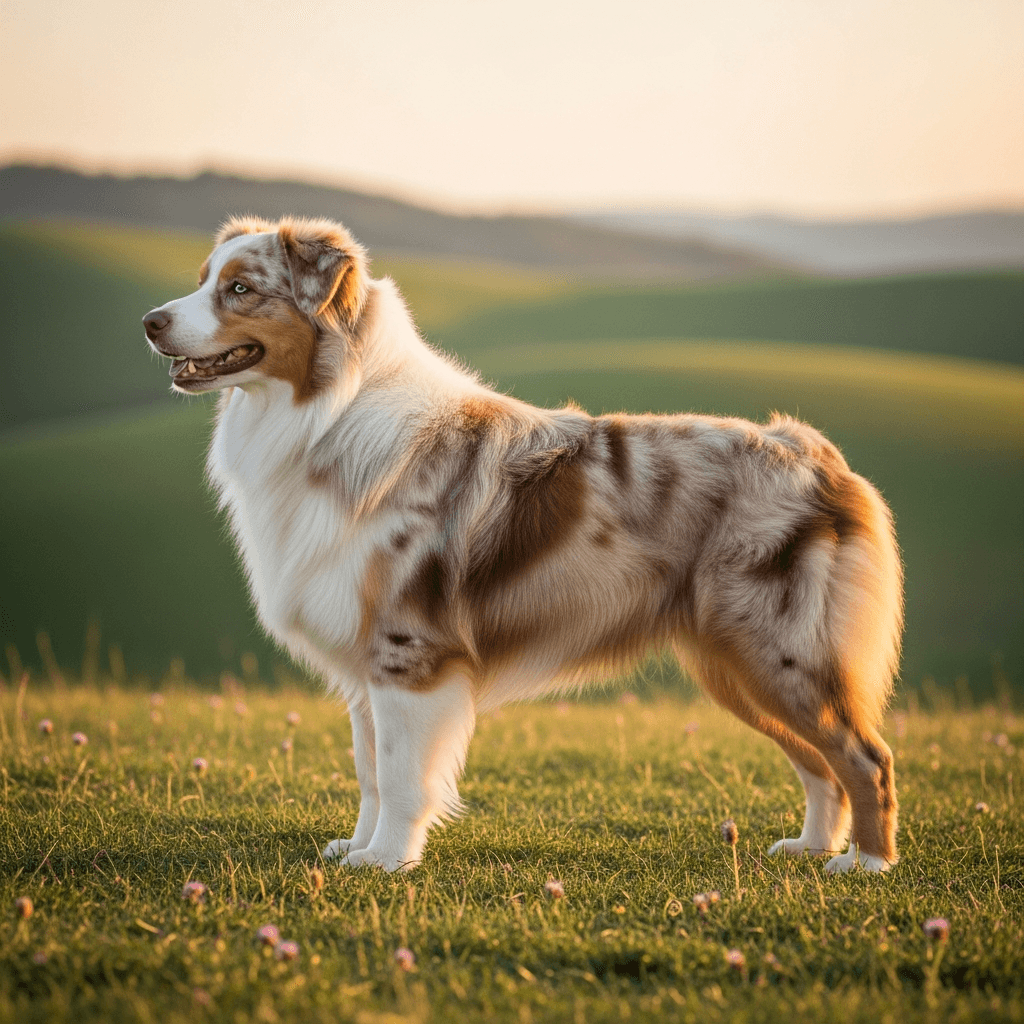
Australian Shepherd (American type)
FCI Group
1• FCI 342
Size
Medium
Origin Country
XX
Height
46-58 cm
Weight
18-34 kg
Lifespan
13-15 years
Temperament
Overview
American Australian Shepherd, also known as Aussie, is a fascinating dog breed that has captured the hearts of countless dog enthusiasts around the world. Although the name suggests Australian origins, these intelligent and versatile canines actually stem from American breeding. Originally created as herding dogs for working with sheep and cattle, Australian Shepherds quickly gained recognition for their exceptional working abilities and extraordinary loyalty to their owners, making them excellent companions for active families.
The Australian Shepherd is a medium-sized dog, standing between 46 to 58 cm at the withers. Its coat, of medium length and slightly wavy, comes in many charming colors, such as blue merle, black, red, or red merle. Due to their energetic temperament and constant desire to be active, Aussies require a significant amount of exercise and mental stimulation. If they do not receive adequate activity and intellectual challenges, they may become destructive due to boredom and excess unspent energy.
Their deep emotional bond with their owners means they do not cope well with prolonged loneliness and separation. Therefore, it is crucial for potential owners to be ready for an active, engaging life with these demanding dogs. Australian Shepherds are extremely popular in canine sports such as agility, obedience, flyball, and disc dog, further highlighting their versatility and athletic predispositions. Their warm disposition, friendliness towards children, and ability to coexist with other animals make them favorites among many families around the world.
We invite you to further explore this exceptional breed through our detailed guide sections. You will learn more about health, grooming, exercise requirements, training methods, nutrition, fascinating history, distinctive appearance, and temperament. This comprehensive guide will help you better understand and fully appreciate the remarkable traits of the American Australian Shepherd.
The Australian Shepherd is a dog with a harmonious, well-balanced body structure, characterized by an average height at the withers. Its height ranges from 46 to 58 cm, with males typically being taller (51-58 cm) and females slightly shorter (46-53 cm). The weight of representatives of this breed ranges from 18 to 34 kg, depending on gender and individual build. The Australian Shepherd is characterized by an extraordinary variety of coat colors, making each individual truly unique in appearance.
The most commonly seen colors are blue merle, black, red, and red merle, often with white markings and/or tan points. The coat of the Australian Shepherd is of medium length, straight or slightly wavy, with a dense, soft undercoat that provides effective protection against adverse weather conditions, both cold and moderate heat.
The dog's head has clean, distinct lines, is strong and proportional to the body, with a well-defined stop. The eyes are almond-shaped, in various fascinating colors – from brown, through amber, to blue, and their expression is alert, intelligent, and friendly. Interestingly, some individuals may have eyes of different colors (heterochromia) or speckled eyes, which is permissible in the breed standard. The ears of the Australian Shepherd are medium-sized, triangular, set high on the skull, and when interested in something, they raise and fold forward.
The dog's neck is strong, of medium length, slightly arched, which harmoniously transitions into well-placed shoulders. The chest is deep, reaching to the elbows, and moderately wide, providing sufficient space for internal organs. The front and hind limbs are strong, straight, and well-muscled, which gives the dog great agility, strength, and efficiency in movement. The tail is naturally short (NBT – natural bobtail) or has been docked according to breeding traditions in countries where this procedure is permissible. The movement of the Australian Shepherd is free, fluid, and graceful, perfectly highlighting its athletic build and excellent physical condition.
Australian Shepherds are dogs with an incredibly lively temperament, known for their outstanding intelligence, mental agility, and strong desire to cooperate with their owner. This breed is deeply attached to its family and does not cope well with prolonged solitude or isolation. They are social dogs that require regular interaction with people and other animals to feel fulfilled, happy, and emotionally balanced.
By nature, Australian Shepherds are gentle, friendly, and open towards familiar people, but they can be somewhat wary and reserved towards strangers, which makes them good guard dogs. Their strong, innate herding instinct makes them inclined to protect their flock (family), which can lead to guarding and alert behaviors towards unfamiliar individuals. These dogs are also extremely energetic and need a significant amount of exercise, physical activity, and mental stimulation to avoid destructive behaviors such as excessive barking, chewing on objects, or destroying furniture.
Owners should provide them with a variety of activities, tasks, and challenges to meet their natural mental and physical needs. Australian Shepherds are exceptionally intelligent and quickly learn new commands, tricks, and complex tasks, making them excellent students in the training and education process. Their unwavering desire to please their owner and natural willingness to cooperate make them ideal companions in canine sports, working with livestock, as well as in everyday family life.
Proper socialization from a puppy age and consistent, positive reinforcement-based training are absolutely crucial to ensure that an Australian Shepherd becomes a balanced, confident, and happy family dog that thrives in various life situations.
American-type Australian Shepherds have an average lifespan of 13 to 15 years, although many individuals live up to 16-17 years with proper care and a healthy lifestyle. This breed is generally considered healthy and resilient, but like most purebred dogs, they can be prone to certain genetic and hereditary diseases, particularly those related to the musculoskeletal system and the eyes.
Owners should be aware that some dogs of this breed may suffer from hip dysplasia (HD) and elbow dysplasia (ED), which can lead to pain, lameness, and arthritis. Eye problems, such as progressive retinal atrophy (PRA), cataracts, Collie eye anomaly (CEA), or coloboma, may also occur in this breed. Additionally, some individuals may be affected by idiopathic epilepsy, which requires long-term treatment and monitoring.
An extremely important health aspect is avoiding the breeding of two dogs with merle coats (merle x merle), as such pairings can lead to the birth of puppies with serious genetic defects, such as blindness, deafness, and developmental disorders. These puppies, referred to as double merle or homozygous merle, often are born with severe health problems and may require specialized care throughout their lives.
Australian Shepherds do well in a variety of climatic conditions due to their dense, double coat, but they are sensitive to extreme temperatures. Their thick undercoat protects them from moderate cold; however, in very low temperatures below -15°C, they may require additional protection in the form of dog clothing. Regular physical activity is absolutely crucial for maintaining a healthy weight and condition, as these dogs have a tendency to gain weight if not properly active or if they receive a diet that is too high in calories.
American-type Australian Shepherds have medium-length, dense fur with a thick undercoat that requires regular and consistent grooming to maintain its health, beautiful appearance, and protective functionality. During the intense shedding period, which occurs twice a year – in spring and autumn – these dogs shed a significant amount of fur, which is a natural process of coat replacement.
Therefore, it is crucial to brush them at least 2-3 times a week during normal periods, and during shedding season even daily or every other day, to effectively remove dead hair, prevent matting, and reduce the amount of fur in the home. Regular, thorough brushing not only keeps the coat in excellent condition but also allows for early detection of potential skin problems, such as itching, rashes, ticks, or external parasites.
In addition to brushing the coat, owners should also regularly check and clean their dogs' ears, especially after baths or swimming, to prevent infections and inflammation of the ear canal. Checking and cleaning teeth is equally important – it is essential to ensure proper oral hygiene for the dog by regularly brushing their teeth (ideally 2-3 times a week) and providing special dental chews to prevent tartar buildup and dental issues such as gum disease.
Nails should be regularly trimmed (usually every 3-4 weeks) when they become too long and start clicking on the floor, to avoid discomfort while walking, running, and potential injuries. Baths should be given as needed, typically every 6-8 weeks or when the dog is noticeably dirty, using gentle, dog-specific shampoos to avoid disrupting the skin's natural protective layer. Overall, grooming an Australian Shepherd is relatively simple and low-maintenance, but it requires regularity, consistency, and commitment from the owner.
American-type Australian Shepherds are dogs with exceptionally high energy and an unrelenting need for movement, requiring a significant amount of physical activity and mental stimulation to be happy, healthy, and balanced. This breed thrives in an active, dynamic environment where they can spend time running intensely, playing exciting games, exploring their surroundings, and engaging in tasks that involve both body and mind.
They should receive at least 1.5-2 hours of intense physical activity daily, along with additional time for play, interaction with their owner, and mental training, such as learning new commands or scent games. Owners should actively engage their dogs in a variety of activities, such as long, dynamic walks, running alongside a bike (canicross), playing with a ball, frisbee, retrieving, as well as canine sports like agility, obedience, treibball, flyball, or disc dog.
Thanks to their outstanding intelligence, athletic predispositions, and strong desire to cooperate with humans, Australian Shepherds make excellent, reliable partners in outdoor activities and sports competitions. If a dog does not receive enough exercise and intellectual challenges, it can become deeply bored, frustrated, and anxious, leading to destructive behaviors such as excessive barking, chewing furniture, destroying objects, or intense digging in the garden.
Moreover, these dogs significantly benefit from regular interaction with other well-socialized dogs, allowing them to improve their social skills, learn appropriate behaviors, and release excess energy through play. Regular physical challenges, mental activities, and training are absolutely crucial for maintaining the well-being, mental health, and physical fitness of an Australian Shepherd.
American-type Australian Shepherds are exceptionally intelligent, sharp, and eager to learn, making them one of the easiest breeds to train and educate. Their natural, strong desire to please their owner and cooperate with humans makes them very receptive to commands, signals, and various training techniques.
Proper, effective training should be based on the principles of positive reinforcement, which means that rewarding the dog for desired behavior (using treats, praise, play) is crucial for the effectiveness of the learning process and building a strong bond based on trust. Owners should start the training process from a very early, puppy age (from 8-10 weeks of life) to build a solid relationship with the dog based on mutual trust, respect, and clear communication.
Proper, comprehensive training should include basic obedience commands such as Sit, Lie Down, Stay, Come, and No, as well as more advanced skills related to obedience, distance control, and sports activities. Sometimes, Australian Shepherds may seem a bit stubborn or independent in decision-making, especially if they don't see the point in following a command, which is why it is so important for the training to be consistent, interesting, varied, and based on strong, positive motivation.
Regular training sessions, which are short (10-15 minutes) but intense and engaging, will help maintain the dog's full attention, ensure effective learning, and prevent boredom or frustration. Australian Shepherds respond excellently to various, creative training techniques, including clicker training, shaping behaviors, training for practical obedience, as well as training in specialized skills such as working with cattle, sheep, or tracking.
Early and intensive socialization with diverse stimuli, people, animals, and environments is just as important as obedience training itself to ensure that the Australian Shepherd grows into a confident, balanced, and friendly dog that will thrive in any life situation.
American-type Australian Shepherds, as active, energetic, and demanding working dogs, require a balanced, high-quality diet that provides them with all the essential nutrients, vitamins, minerals, and the right amount of energy to maintain optimal physical condition and health. Owners should choose high-quality commercial foods or prepare balanced homemade meals that are precisely tailored to their dogs' individual energy needs, especially for working dogs, those engaged in sports, or used in breeding.
It is important that the food contains the right amount of high-quality protein (25-30% for active dogs), healthy fats (15-20%), including essential fatty acids omega-3 and omega-6, as well as carbohydrates providing energy, along with vitamins (A, D, E, K, B group) and minerals (calcium, phosphorus, zinc, iron). Regular meals should be carefully adjusted to the dog's age (puppy, adult, senior), weight, level of physical activity, and any specific health needs.
For Australian Shepherd puppies, the diet should be particularly rich in nutrients, protein, and calcium with phosphorus in appropriate proportions (Ca:P ratio of about 1.2-1.5:1) to effectively support their intense growth, bone development, muscle growth, and nervous system. Owners should avoid overfeeding their dogs and giving them overly caloric food to prevent obesity issues, which can lead to serious health problems such as diabetes, heart disease, joint issues, and a shortened lifespan.
Additionally, it is extremely important for the dog to have constant, unlimited access to fresh, clean drinking water, especially after intense physical activity or on hot days. Treats can be used during training as positive reinforcement, but they should be used in moderation and sensibly to avoid exceeding the daily recommended caloric intake (treats should not make up more than 10% of the daily caloric requirement).
Australian Shepherds can also be sensitive or allergic to certain food ingredients, such as grains (wheat, corn), poultry, or dairy, so it is essential to closely monitor their reactions to new foods and consult a veterinarian if allergy symptoms occur (itching, rash, diarrhea, vomiting) and consider an elimination diet or hypoallergenic food.
Characteristic Traits
Pros
- Exceptional intelligence and quick learning ability
- Versatility and excellent work skills
- Deep loyalty and attachment to the owner
- Friendliness towards children and other pets
- An excellent dog for canine sports.
Cons
- Requires a lot of movement and mental stimulation
- Struggles with prolonged loneliness
- Can become destructive due to boredom and lack of activity
- Requires consistent training and socialization.
Behavioral Ratings
Breed History
The American type Australian Shepherd has a fascinating, somewhat mysterious history that begins in the 19th century in the United States, although the breed's name may misleadingly suggest Australian origins. In reality, this breed was developed through planned and accidental crossbreeding of various types of herding dogs, including shepherds from the Basque Country (northern Spain and southwestern France), who arrived in the USA with Basque shepherd immigrants from Australia between 1840 and 1900.
These herding dogs brought from Australia were crossed with local American working dog breeds, such as Border Collie, Collie, and other herding dogs, resulting in a versatile, durable, and intelligent breed that was well-suited for work on vast American ranches and farms. This dog quickly gained recognition as a reliable, excellent helper in working with cattle and sheep, demonstrating exceptional abilities in directing, controlling, and protecting the herd.
Australian Shepherds became extremely popular among American breeders, ranchers, and farmers who needed intelligent, versatile, and durable dogs for hard work in tough conditions. After World War II, the breed gained even greater popularity and fame as it began to be regularly showcased at rodeo shows, western riding competitions, in films, and on popular television programs, attracting the attention of a broader audience.
As the years went by, American type Australian Shepherds also became highly valued companion and family dogs, known for their deep attachment to families, extraordinary loyalty, and boundless energy and enthusiasm. Their versatility in work, excellent performance in dog sports such as agility, obedience, flyball, and disc dog, as well as their friendly nature, contributed to their growing popularity worldwide, including in Europe and Asia.
The breed was officially recognized by the American Kennel Club (AKC) in 1991 and by the Fédération Cynologique Internationale (FCI) in 1996, which solidified its international status. Today, American type Australian Shepherds are among the most frequently chosen family, working, and sporting dogs, enjoying a well-deserved reputation as loyal, intelligent, versatile, and energetic life companions.