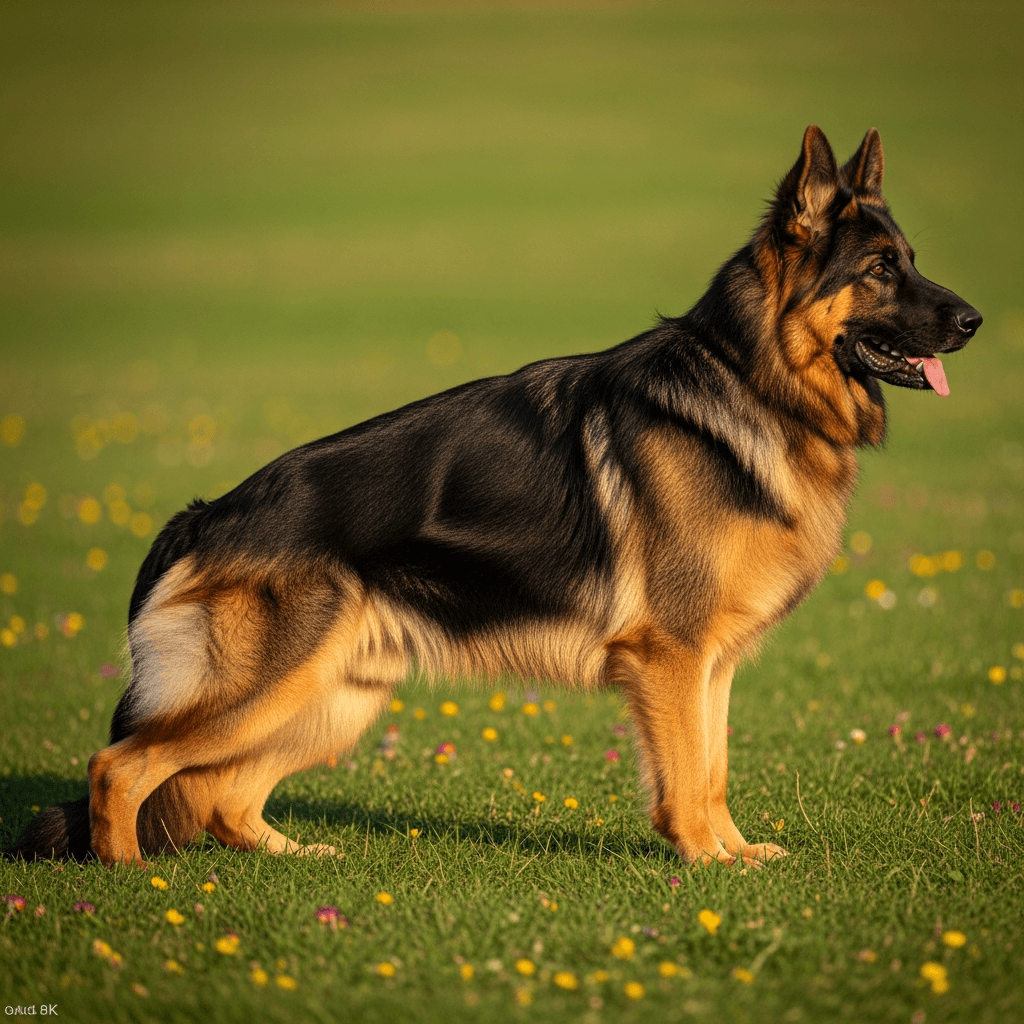
Long-haired German Shepherd
FCI Group
1• FCI 166A
Size
Medium
Origin Country
DE
Height
55-65 cm
Weight
22-40 kg
Lifespan
10-13 years
Temperament
Overview
The long-haired German Shepherd, also known as Deutscher Schäferhund Langstockhaar, is a true treasure in the world of dogs. Its popularity transcends continental borders, which is understandable given its balanced character and extraordinary versatility. Intelligence and loyalty are traits that set this dog apart from other breeds. Since its inception in the late 19th century, the German Shepherd has become synonymous with an excellent working dog – from herding work, through service in police and military, to the role of a devoted family companion.
The long-haired variety, officially recognized by the FCI only in 2011, attracts attention with its beautiful, thick and shiny coat, which is its hallmark. Unlike its short-haired relatives, the long-haired German Shepherd has a softer, flowing coat that creates distinctive feathers on the ears, legs, tail, and lower body. It requires regular grooming, but in return offers extraordinary beauty and a sea of love and devotion.
Long-haired German Shepherds are medium to large-sized dogs, ideal for both families and active individuals. Their patience and nurturing nature make them great companions for children. They are known for their strong protective instinct, which makes them excellent watchful guardians of the home. However, their main asset is their ability to adapt to various lifestyles – from farm life, through city living with access to walking areas, to an active sports lifestyle – as long as their needs are adequately met.
These are energetic dogs that require a lot of physical and mental activity. Whether it's long walks, running, fetching, or agility and obedience training – any form of exercise is beneficial for them and brings them joy. Thanks to their high intelligence and willingness to cooperate, they are easy to train, making them excellent partners in canine sports and working tasks. Their diverse temperament – from affectionate and playful to extremely intelligent and focused – ensures that every day with them is full of surprises and positive experiences.
If you are looking for a dog that will be not only a companion but also a full-fledged family member, the long-haired German Shepherd is an excellent choice. Its majestic appearance and balanced temperament have won the hearts of millions of dog lovers around the world. We encourage you to explore the next parts of our guide to learn more about the health, grooming, exercise, training, nutrition, history, appearance, and behavior of this extraordinary breed.
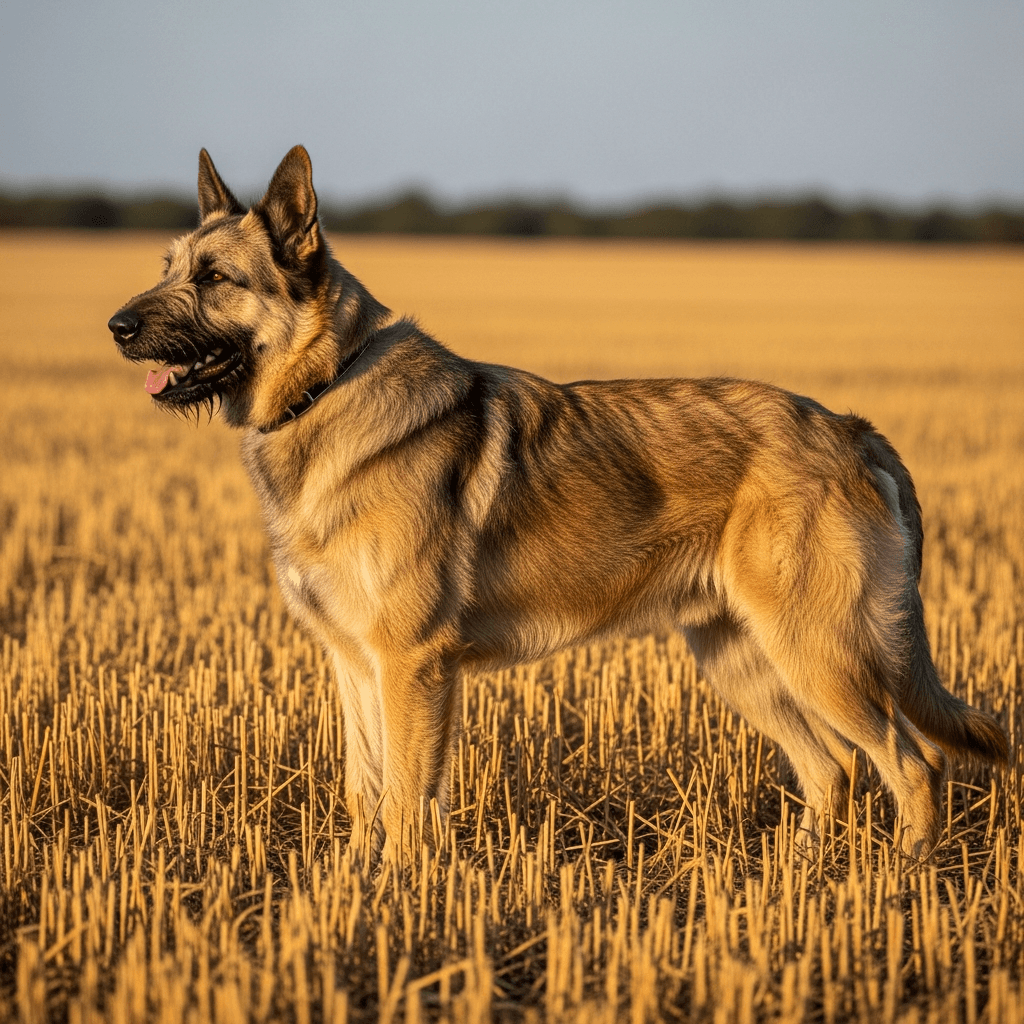
The long-haired German Shepherd has a distinctive and majestic appearance that attracts the attention of dog lovers around the world. Its silhouette is balanced and proportional, with a slightly elongated body, strong muscles, and well-developed limbs with strong bone structure. The height at the withers is:
- Males: 60-65 cm
- Females: 55-60 cm
Body weight ranges from 22 to 40 kg, depending on the sex and build of the individual.
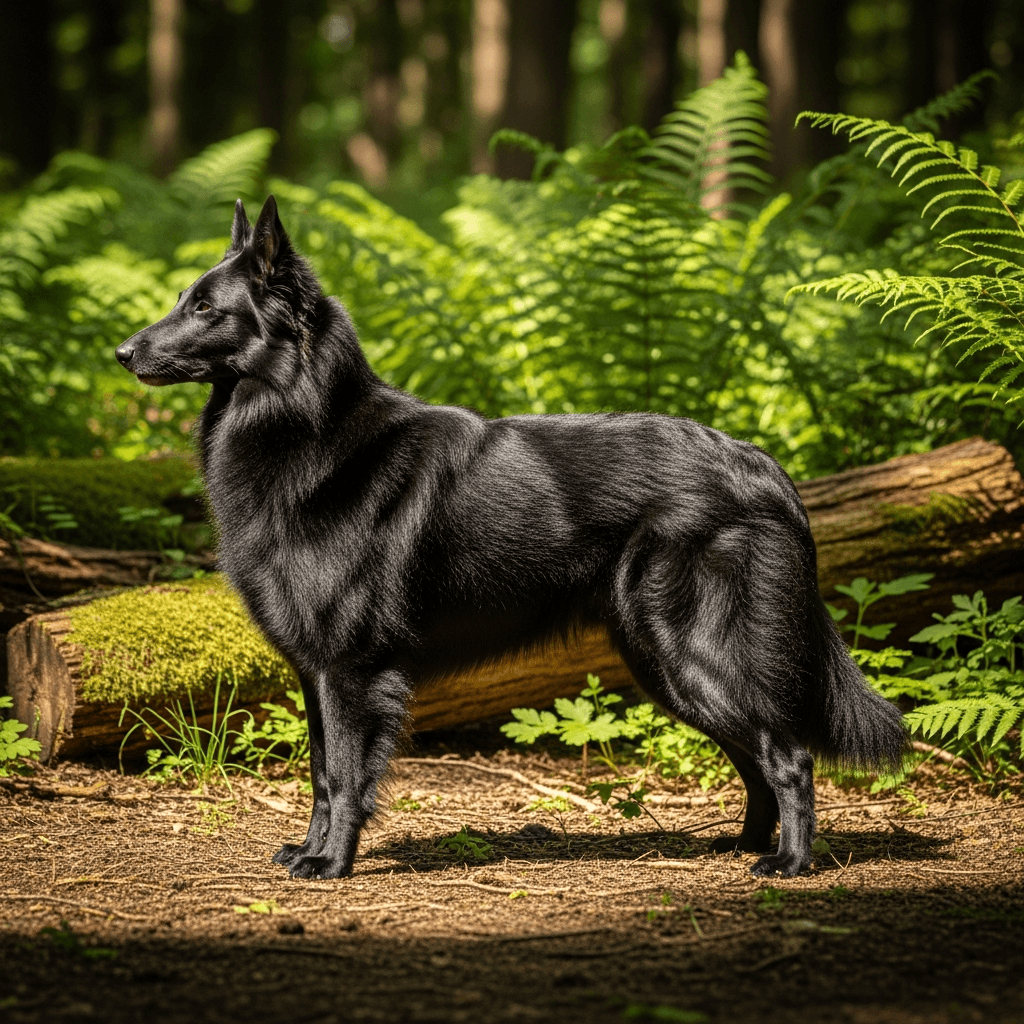
The coat of the long-haired German Shepherd is thick and double, consisting of a long, somewhat coarse outer coat and a soft, dense undercoat. What distinguishes the long-haired variety is the elongated hair on the ears, neck, tail, back of the thighs, and the lower line of the belly. The fur creates characteristic feathers and manes, giving the dog an elegant and noble appearance. The coat color can vary, with the most common shades being:
- Black with tan in reddish, brown, yellow, or gray shades
- Solid black
- Gray wolf-like (sable)
- Gray with tan
The eyes of the German Shepherd are medium-sized, almond-shaped, dark and expressive, giving it an intelligent and alert expression. The ears are medium-sized, erect and pointed, set high and directed forward, which emphasizes its alertness and readiness for action. The head of the German Shepherd is wedge-shaped, with a strong jaw and a straight nasal bridge. The ratio of skull length to muzzle length is about 1:1. The dentition is complete, with a strong scissor bite.
The tail is long and abundantly furred, reaching at least to the hock joint. When at rest, it is carried in a gentle curve (like a saber), and in motion, it may be slightly raised, but it should never be carried above the line of the back.
In motion, the long-haired German Shepherd presents itself majestically and harmoniously, with a smooth, efficient trotting step that reflects its excellent anatomical structure. It moves lightly and fluidly, with great strength and endurance. Its appearance is not only aesthetically pleasing but also practical, as its body structure is perfectly adapted for intensive work and prolonged physical activity.
The long-haired German Shepherd is characterized by a balanced and stable temperament, making it an ideal companion for families and active individuals. This breed is known for its exceptional intelligence, loyalty, and boundless devotion, which makes German Shepherds extremely attached to their owners and family members. Their affection towards household members and eagerness to play make them excellent companions for children and other pets – provided they have been properly socialized from a young age.
German Shepherds are also very alert and have a strongly developed protective instinct, making them excellent guard and protection dogs. However, they are not aggressive without reason – their protective instinct is primarily directed towards defending their loved ones and territory from real threats. They behave reservedly and observantly towards strangers, but once they accept a new person, they can be very friendly.
This breed requires proper socialization and consistent training from an early age to avoid behavioral problems such as:
- Separation anxiety
- Excessive distrust of strangers
- Destructive behavior due to boredom
- Excessive barking
Long-haired German Shepherds are relatively easy to train, making them ideal for various activities – from canine sports (agility, obedience, IPO) to work in uniformed services (police, military, border guard), to roles as rescue or therapy dogs. Their willingness to cooperate and learn allows them to quickly grasp new commands and tasks.
It is important to provide them with adequate mental and physical stimulation, as a lack of activity can lead to boredom and resulting behavioral issues. German Shepherds are working dogs that need tasks and challenges – they are not suitable for individuals leading a very quiet, low-activity lifestyle.
Overall, the long-haired German Shepherd is a dog with many talents and a versatile character, capable of adapting to various lifestyles – as long as its physical, mental, and emotional needs are adequately met. It is a partner that engages in family life 100%, offering loyalty, protection, and unconditional love.
The long-haired German Shepherd, like other varieties of this breed, has its specific predispositions to certain diseases that can affect its quality of life. The average lifespan of these dogs is from 10 to 13 years, but with proper care, a balanced diet, and regular check-ups, they can enjoy good health for many years.
The most common health problems in German Shepherds are:
- Hip dysplasia (HD) – a hereditary condition that can lead to pain, lameness, and mobility issues. Proper breeding with screening tests (hip X-rays) and maintaining an appropriate body weight can significantly reduce the risk of symptoms.
- Elbow dysplasia (ED) – a similar condition affecting the elbow joints, which also requires breeding control and proper care.
- Gastric torsion – a sudden and life-threatening condition that requires immediate veterinary intervention. The risk can be reduced by feeding several smaller meals instead of one large meal and avoiding intense exercise immediately after feeding.
- Thyroid diseases – hypothyroidism is relatively common in Shepherds and can lead to weight gain, lethargy, and skin problems.
- Von Willebrand's disease – a blood clotting disorder that can lead to excessive bleeding during surgical procedures or injuries.
- Degenerative myelopathy (DM) – a progressive neurological disease leading to paralysis of the hind limbs. Fortunately, it occurs in older dogs and can be detected through genetic testing.
- Pancreatitis – a condition requiring a proper diet and veterinary monitoring.
- Allergic dermatitis – Shepherds may be prone to food or environmental allergies.
Recommendations for owners:
- Regular veterinary check-ups (at least once a year, twice for older dogs)
- Monitoring weight and body condition – obesity worsens the symptoms of dysplasia and other conditions
- A proper diet tailored to age and activity level
- Moderate physical activity – avoiding joint overload in puppies and young dogs
- Regular vaccinations and deworming
- Breeding testing for dogs intended for reproduction (HD, ED, DM, eye diseases)
Despite these health challenges, German Shepherds can lead healthy and happy lives, provided they are properly cared for, monitored, and receive prompt veterinary assistance when needed. Choosing a puppy from a responsible breeder that conducts genetic testing and screening of the parents significantly increases the chances of having a healthy dog.
Caring for a long-haired German Shepherd can be demanding and time-consuming, but it is essential to ensure their health, comfort, and beautiful appearance. Their long, dense coat requires regular brushing – during normal periods at least 2-3 times a week, and during heavy shedding periods in spring and autumn ideally daily.
Grooming tools:
- Slicker brush – for removing dead undercoat
- Metal comb with wide teeth – for detangling mats and knots
- Comb with fine teeth – for finishing and smoothing the coat
- Furminator or deshedder – a special tool for removing undercoat during shedding
- Natural bristle brush – for adding shine to the coat
Brushing: The process should be done gently, starting from the lower layers of the coat and gradually moving to the upper layers. Special attention should be paid to areas prone to mats:
- Behind the ears
- Under the neck
- Inner thighs
- Under the armpits
- Tail
Bathing: Regular baths are important, but owners should avoid washing too frequently, as it can weaken the skin and coat's natural lipid protection. Baths are recommended every 6-8 weeks or as needed (e.g., after getting dirty). It is advisable to use shampoos designed for long-haired dogs, preferably with a pH suitable for the dog's skin. After bathing, it is worth applying a conditioner or a detangling spray.
Additional grooming aspects:
- Ears – regular checking and cleaning with a special solution every 1-2 weeks to prevent infections. This is particularly important for long-haired dogs, where hair around the ears limits ventilation.
- Nails – trimming every 3-4 weeks or as needed to prevent breakage and ensure comfort while walking. If the dog walks a lot on hard surfaces, the nails wear down naturally.
- Teeth – brushing 2-3 times a week with special dog toothpaste to prevent tartar and gum disease.
- Anal glands – checking and possibly emptying by a veterinarian or groomer (not all dogs require this procedure).
- Paw pads – regularly checking for cuts, cracks, or foreign bodies. In winter, it is advisable to use protective products against salt.
Overall, grooming a long-haired German Shepherd requires commitment and consistency, but it is crucial for their health, comfort, and beautiful appearance. A well-groomed shepherd is a happy shepherd, and the time spent together during grooming further strengthens the bond between the dog and the owner.
The long-haired German Shepherd is a dog with a high energy level and significant exercise needs, requiring regular and intense workouts to remain healthy, happy, and mentally balanced. As a herding and working breed, German Shepherds have an innate need for movement, activity, and work.
Minimum daily requirements:
- Walks: at least 1.5-2 hours a day, divided into 2-3 outings
- Intensive activity: 30-60 minutes of running, fetching, or other intense exercises
- Mental stimulation: 15-30 minutes of training, educational games, or problem-solving tasks
Forms of physical activity for German Shepherds:
- Running: accompanying the owner during jogging, biking (bikejoring) – excellent for healthy adult dogs
- Fetching: balls, frisbees, fetch toys – great fun engaging both body and mind
- Agility: an obstacle course developing fitness, coordination, and the bond with the owner
- Obedience: a dog sport enhancing command execution precision
- IPO/Schutzhund: a protection and defense sport – natural for German Shepherds
- Nosework: tracking, scent detection – utilizing natural instincts
- Swimming: an excellent form of exercise, especially for dogs with joint problems
- Dog trekking: long mountain or forest hikes
- Rally obedience: a combination of obedience and navigation
Mental stimulation:
German Shepherds are extremely intelligent dogs that need not only physical activity but also intellectual challenges. Lack of mental stimulation can lead to boredom and behavioral issues. Recommended forms:
- Obedience training: regular repetition of commands and learning new skills
- Treat hiding games: scent mats, interactive toys
- Learning tricks: shake hands, spin, fetch specific items by name
- Dog puzzles: Kong-type toys, puzzle feeders
- Socialization: interaction with other dogs, new people, different environments
Adjusting to age and condition:
- Puppies (2-12 months): short, frequent exercise sessions – avoid overloading joints and excessive jumping. No running alongside a bike before 12-18 months of age.
- Young adults (1-6 years): full intensity of exercise, the best time for dog sports
- Older dogs (7+ years): adjust intensity to condition – calmer walks, swimming instead of running
Consequences of lack of exercise:
For German Shepherds that do not receive enough activity, serious behavioral problems may arise:
- Destructive behavior (destroying furniture, chewing objects)
- Excessive barking and howling
- Separation anxiety
- Hyperactivity and inability to focus
- Frustration-induced aggression
- Obesity and health issues
It is important that activities are regular, varied, and tailored to the individual needs of the dog. German Shepherds also need opportunities for exploring their environment, interacting with other dogs, and participating in various forms of activity to ensure they have a healthy, happy, and fulfilling life. This is not a breed for people leading a sedentary lifestyle – the German Shepherd is a partner for the active!
Training a long-haired German Shepherd is a key aspect of its upbringing and development, and at the same time one of the most rewarding activities when working with this breed. Due to their exceptional intelligence, willingness to cooperate, and natural ability to learn, German Shepherds are among the easiest breeds to train in the world. It is no coincidence that they are the most commonly chosen dogs in law enforcement, rescue work, and canine sports.
Basic training principles:
- Early start: beginning training at a puppy age (from 8 weeks old) to establish positive habits and hierarchy in the relationship with the owner
- Positive reinforcement: using rewards (treats, toys, verbal praise) for correctly following commands
- Consistency: clear and consistent rules – the dog must know what is expected of it
- Patience: avoiding frustration and harsh methods that can harm the relationship with the dog
- Short sessions: 10-15 minutes of training several times a day instead of long, exhausting sessions
- Regular repetition: reinforcing learned commands in various places and situations
Basic commands (foundations of obedience):
- Sit – the dog sits on command
- Lie down – the dog lies on the ground
- Stay/Wait – the dog stays in place
- Come/Here – calling the dog
- Heel – walking by the side without pulling the leash
- Leave it – giving up an object or food
- No – interrupting unwanted behavior
Advanced training:
After mastering the basics, German Shepherds can move on to more demanding forms of training:
- Fetching: bringing specific items on command
- Protection work: protecting the owner and property (only under the supervision of an experienced trainer)
- Tracking: following scent trails
- Agility: navigating an obstacle course
- Obedience: precise execution of commands in competition conditions
- Rally-O: navigating through a course with various tasks
- Nosework: searching for hidden scents
Socialization – just as important as training:
In addition to commands, appropriate socialization is crucial, which helps the dog develop positive behaviors, confidence, and emotional control. The German Shepherd should be introduced to:
- Different people (adults, children, people in hats, glasses, with canes)
- Other dogs and animals
- Different environments (city, forest, beaches, pet stores)
- Sounds (cars, trams, thunder, fireworks)
- Different surfaces (asphalt, grass, metal, water)
Typical challenges and how to counteract them:
- Pulling on the leash: training to walk by the side with rewards for a loose leash
- Barking at strangers: socialization and the command Quiet with positive reinforcement
- Excessive protectiveness: controlled social situations, rewarding calm behavior
- Separation anxiety: gradually getting used to being alone, enriching the environment with toys
What to avoid in training German Shepherds:
- ❌ Harsh methods based on fear and pain (prong collars, electric collars – inhumane and unnecessary)
- ❌ Inconsistency (sometimes allowing, sometimes punishing for the same behavior)
- ❌ Social isolation and lack of contact with other dogs
- ❌ Long, exhausting training sessions
- ❌ Punishing after the fact (the dog will not connect the punishment with behavior from a few minutes ago)
Training a long-haired German Shepherd is not just about learning commands, but also about building a strong bond based on trust and cooperation. A well-trained German Shepherd brings joy to its owner and serves as a model for others – a stable, obedient, confident, and happy dog that excels in any situation.
The diet of a long-haired German Shepherd should be carefully balanced and tailored to its individual needs, considering age, weight, activity level, health status, and any allergies or food intolerances. Proper nutrition is the foundation of health, good condition, and a long life.
Basic nutritional requirements:
- Protein: at least 20-30% in food for adult dogs, 22-32% for puppies. Protein supports muscle mass, tissue regeneration, and overall condition. Sources: meat (chicken, beef, turkey, fish), eggs, dairy products.
- Fats: 8-15% for adults, 10-20% for puppies. Fats provide energy, support the absorption of fat-soluble vitamins (A, D, E, K), and maintain skin and coat health. Sources: salmon oil, flaxseed oil, poultry fat.
- Carbohydrates: a source of energy and fiber. Sources: rice, potatoes, sweet potatoes, oats, vegetables.
- Vitamins and minerals: appropriate proportions of calcium, phosphorus, vitamins A, D, E, B complex, and minerals (zinc, selenium, iron).
- Water: CRITICAL – constant access to fresh, clean water throughout the day.
Types of diets:
- Dry food (kibble): convenient, economical, helps clean teeth. Choose high-quality premium or super-premium foods with meat as the first ingredient.
- Wet food (cans): tastier, higher water content, better for dogs with dental issues. Can be combined with dry food.
- BARF diet (raw meat and bones): natural, but requires knowledge and supplementation. Consultation with a veterinarian is recommended.
- Homemade diet (cooked meat + vegetables): possible, but requires balancing of nutrients.
Feeding schedule:
- Puppies (2-6 months): 3-4 meals a day
- Young dogs (6-12 months): 2-3 meals a day
- Adults (1+ years): 2 meals a day (morning and evening) – prevents stomach torsion!
- Seniors (7+ years): 2 meals, senior food with lower calorie content may be suitable
CRITICAL feeding rules (preventing stomach torsion!):
- ✅ Feed 2 smaller meals instead of 1 large
- ✅ Avoid intense exercise 1-2 hours before and after eating
- ✅ Feed from elevated bowls (not from raised ones – contrary to previous beliefs, elevated bowls INCREASE the risk of torsion)
- ✅ Calm, slow eating – slow feeder bowls can be used
- ✅ Avoid feeding just before or after consuming large amounts of water
Amount of food:
Depends on weight and activity. Example daily amounts for a 30 kg adult shepherd (average activity):
- Dry food: approx. 300-400 g (divided into 2 meals)
- Wet food: approx. 800-1000 g
- BARF diet: approx. 2-3% of body weight (600-900 g)
Always check the manufacturer's recommendations and adjust according to the dog's condition!
What CAN be added to the diet:
- Cooked meat (chicken, beef, turkey)
- Vegetables (carrots, broccoli, pumpkin, spinach)
- Fruits in small amounts (apples without seeds, berries, bananas)
- Fish (salmon, tuna – rich in Omega-3 fatty acids)
- Natural yogurt (unsweetened)
- Cooked eggs
What is PROHIBITED (toxic to dogs!):
- ❌ Chocolate (theobromine – toxic!)
- ❌ Onion and garlic (damage red blood cells)
- ❌ Grapes and raisins (damage kidneys)
- ❌ Avocado (persin – toxic)
- ❌ Xylitol (sweetener – deadly dangerous!)
- ❌ Cooked bones (can splinter and damage intestines)
- ❌ Alcohol, caffeine, salt in large amounts
- ❌ Products with sugar, flour, fatty leftovers from the table
Supplementation (after consulting with a veterinarian):
- Salmon oil / Omega-3: skin, coat, joint health
- Glucosamine and chondroitin: joint support (especially for older dogs or those with dysplasia)
- Probiotics: gut and digestive health
- Vitamins and minerals: in the case of homemade diets
Monitoring weight and condition:
Regularly checking body weight is KEY to avoid obesity, which worsens the symptoms of joint dysplasia and other conditions. A dog in good condition should have:
- A visible waist (from above)
- Palpable ribs under a slight layer of fat
- A slightly tucked belly (from the side)
Overall, the diet of a long-haired German Shepherd should be well-balanced, high-quality, and tailored to its individual needs. Proper nutrition is an investment in the long, healthy, and happy life of your four-legged friend!
Characteristic Traits
Pros
- Exceptional intelligence and ease of training
- Deep loyalty and devotion to family
- Strong protective instinct and alertness
- Versatility and adaptability to various tasks
- Beautiful long coat adding elegance.
Cons
- Requires a lot of daily physical and mental activity
- Regular and time-consuming grooming of long fur
- Predisposition to hip dysplasia
- Strong protective instinct requires proper socialization and training
- May exhibit separation anxiety without adequate preparation.
Behavioral Ratings
Breed History
The long-haired German Shepherd has a rich and fascinating history that dates back to the late 19th century when systematic breeding of herding dogs began in Germany. During this period, a group of enthusiasts and breeders, led by Colonel Max von Stephanitz, aimed to create the ideal herding dog – intelligent, versatile, hardworking, and absolutely devoted to humans.
The goal of the breeding was to obtain a dog with excellent working traits, such as:
- High intelligence and ease of training
- Loyalty and devotion to the owner
- Ability to work in various conditions (herding sheep, flock protection, defense work)
- Endurance and physical condition
- Balanced temperament
As a result of planned crossings of various local herding breeds from central and southern Germany – such as shepherds from Thuringia, Württemberg, Bavaria, and Saxony – the German Shepherd in its original form was created. The first individuals exhibited diversity in coat type – short-haired, medium-haired, and long-haired.
Key events in the breed's history:
- 1899: Max von Stephanitz purchased a dog named Horand von Grafrath, who became the first registered German Shepherd and the progenitor of the breed. In the same year, the German Shepherd Association (Verein für Deutsche Schäferhunde – SV) was established, which adopted the first official breed standard.
- Early 20th century: German Shepherds quickly gained popularity not only as herding dogs but also as service dogs in police, military, and customs services. Their versatility and learning abilities made them indispensable.
- World War I and II: German Shepherds served as military, communication, medical, and rescue dogs. Their bravery and intelligence were recorded in the history of conflicts.
- 1950s-1980s: the rise in popularity of German Shepherds worldwide. The breed became one of the most recognizable and beloved dog breeds.
- 2011: BREAKTHROUGH MOMENT – FCI (Fédération Cynologique Internationale) officially recognized the long-haired variety of the German Shepherd as an equivalent variant of the breed (FCI Standard No. 166a). Previously, long-haired individuals were considered a breeding fault and disqualified from shows.
Long-haired variety – history of recognition:
For decades, long-haired German Shepherds were regarded by breeding purists as undesirable because the breed standard preferred short and coarse fur. However, the gene responsible for long hair was present in the genetic line from the very beginning of breeding, and long-haired puppies were regularly born in litters. Enthusiasts of this variety fought for its recognition for years, emphasizing that long-haired German Shepherds retain all the working qualities of their short-haired relatives, and their beautiful coat adds elegance and charm.
Thanks to the persistent efforts of breeders and enthusiasts, in 2010 the FCI accepted changes to the standard, and in 2011 the long-haired variety officially entered the standard as Long-haired German Shepherd – FCI Standard No. 166a.
German Shepherds today:
Today, the long-haired German Shepherd is one of the most recognizable and valued breeds worldwide, known for:
- Work in police, military, border guard
- Rescue operations (searching for missing persons, mountain rescue)
- Therapy (therapy and assistance dogs)
- Canine sports (agility, obedience, IPO)
- Wonderful family dogs and life companions
This breed has evolved from a herding dog to a universal partner of humans – loyal, intelligent, brave, and beautiful. The history of the long-haired German Shepherd is a tale of perseverance, passion, and love for dogs that has resulted in one of the most versatile and talented breeds in the history of cynology.