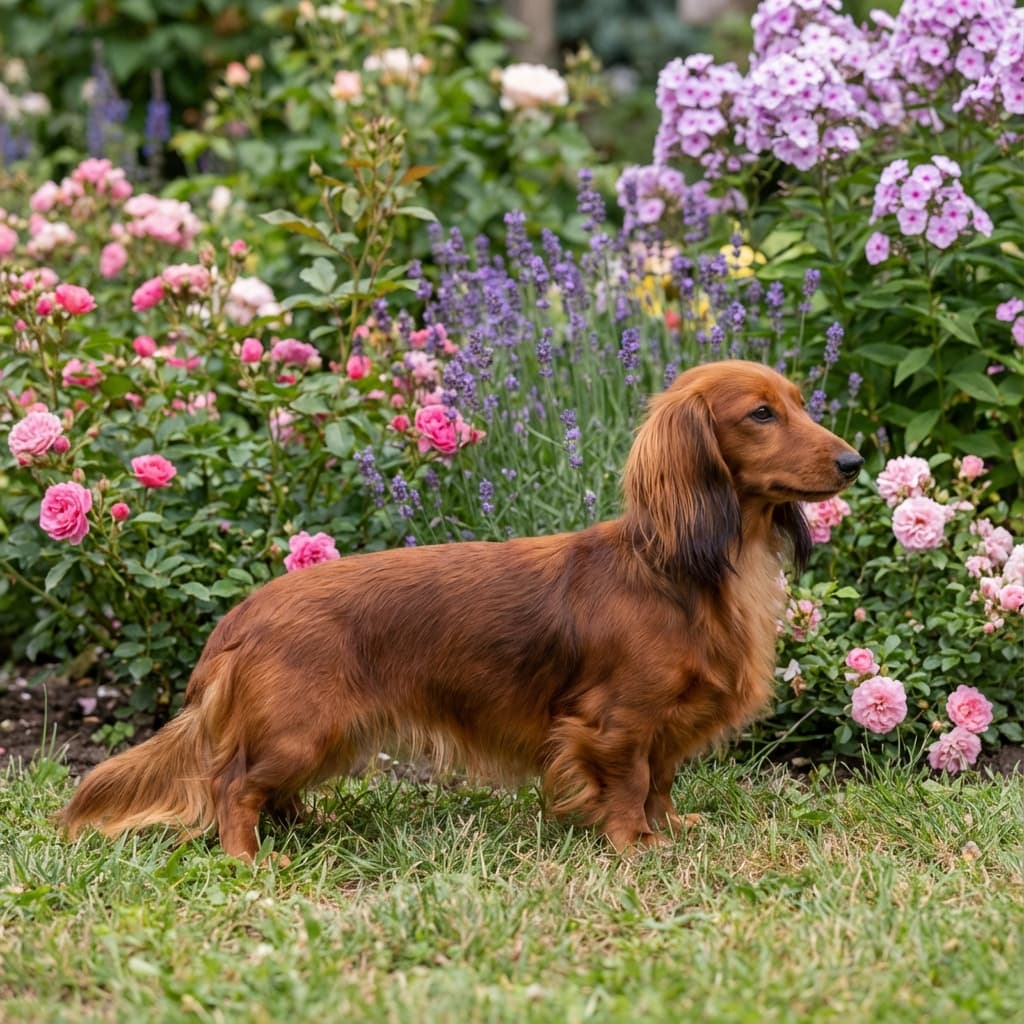
Long-haired rabbit dachshund
FCI Group
4• FCI 148A
Size
Small
Origin Country
DE
Height
25-32 cm
Weight
3-4 kg
Lifespan
12-14 years
Temperament
Overview
The long-haired rabbit Dachshund, also known as Dackel or Teckel, is a dog breed that has gained immense popularity worldwide. Originating from Germany, the long-haired rabbit Dachshund was valued as a superb hunting dog in the Middle Ages, specialized in hunting underground game. Its low, elongated silhouette with short legs makes it absolutely unique among other breeds – the characteristic sausage-like shape has become its trademark.
The unique body structure of the Dachshund is not accidental – it is the result of centuries of selection, which allowed these dogs to excel in hunting rabbits and other burrowing animals. The long-haired variety stands out among its cousins, the short-haired and wire-haired, thanks to its long, dense, and shiny coat, which requires regular but not overly complicated grooming. The coat color of this variety can be solid, bi-colored, or marbled, and the almond-shaped eyes with a keen expression add a friendly and intelligent look.
The character of this breed is as fascinating as its appearance. Dachshunds are full of energy, extremely intelligent, and naturally friendly towards their loved ones, although they can also be stubborn and independent, which requires consistency from the owner in training. Their excellent sense of smell and perseverance make them ideal companions not only for hunting but also for everyday family life. The long-haired rabbit Dachshund adapts well to various living conditions, both in urban apartments and in the countryside, provided they receive the right amount of exercise and mental stimulation.
However, it is important to remember the specific needs of this breed. It is crucial to avoid overloading their spine, which is particularly important due to their elongated structure and short legs – jumping from heights or running up and down stairs can lead to serious injuries. Dachshunds are also known for their deep loyalty and ability to form strong emotional bonds with their family, making them fantastic companions.
Key to the health of a Dachshund is maintaining an appropriate weight, as this breed is prone to obesity, which can further strain their vulnerable spine. A proper diet and regular but safe exercise are absolutely essential for a long and happy life for this charming dog. In the further sections of our guide, you will find detailed information about health, grooming, nutrition, training, and the rich history of this fascinating breed. Get to know the long-haired rabbit Dachshund better and learn how to provide your four-legged friend with the best care!
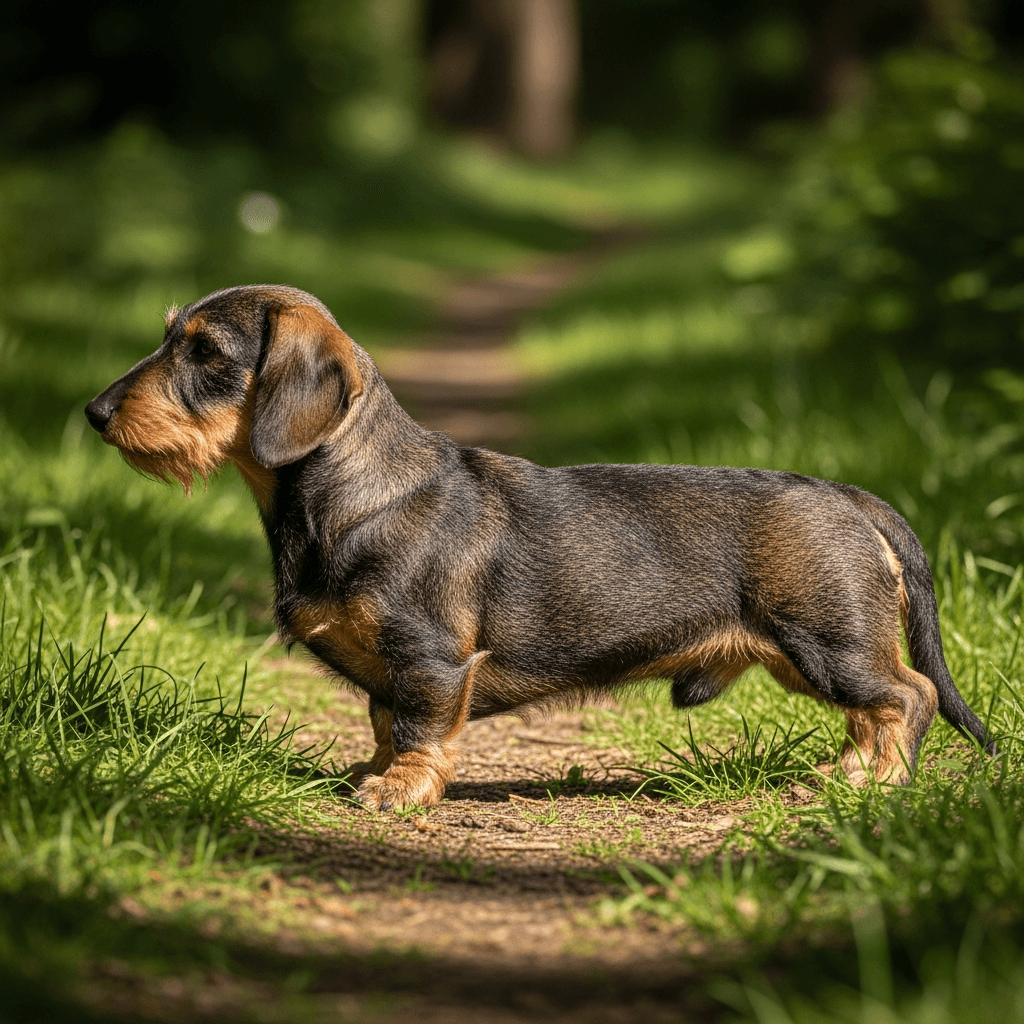
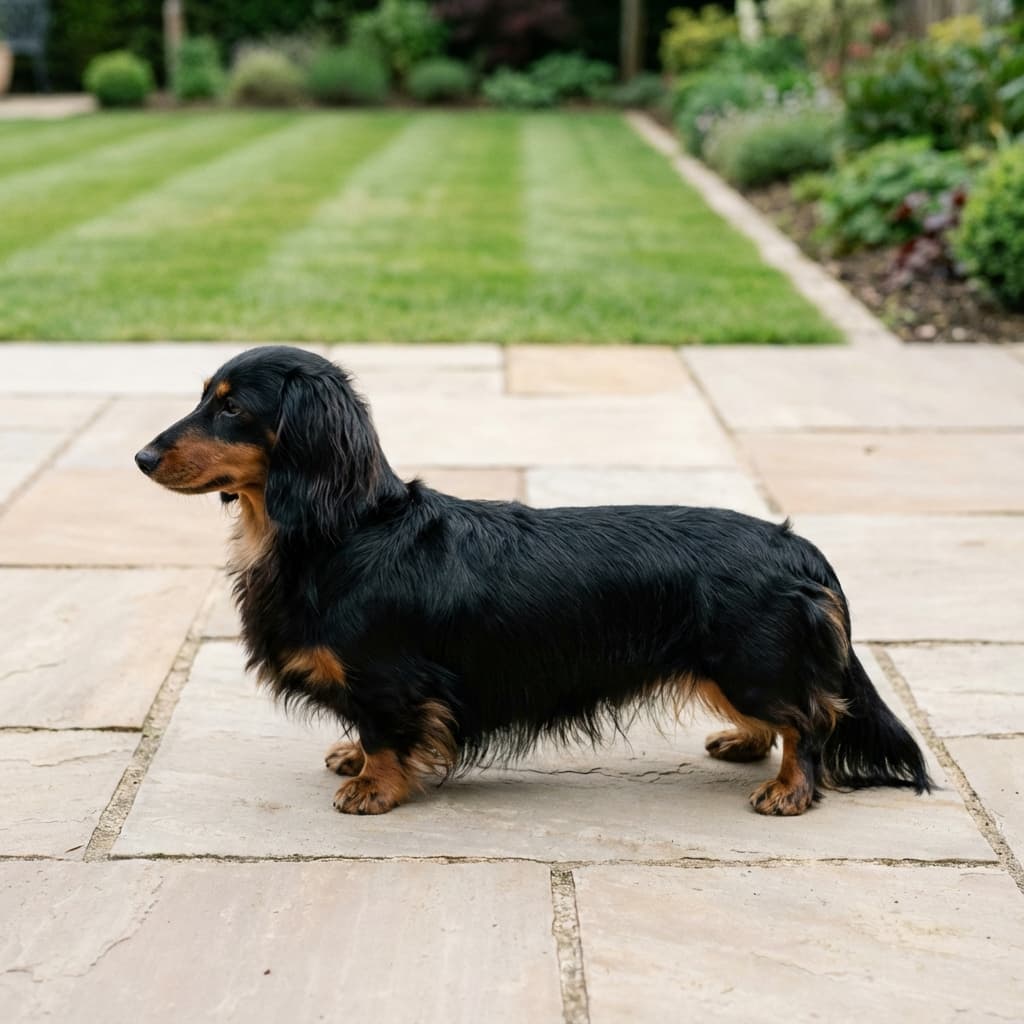
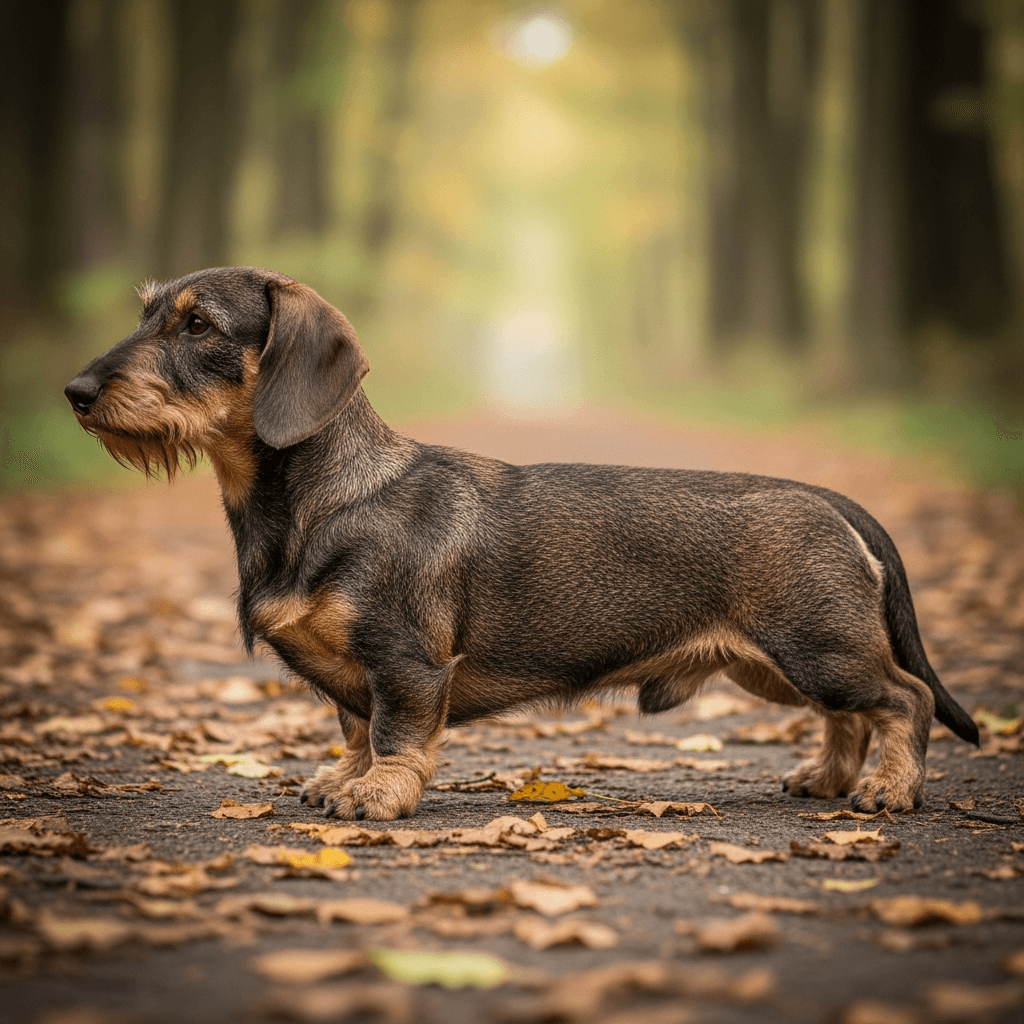
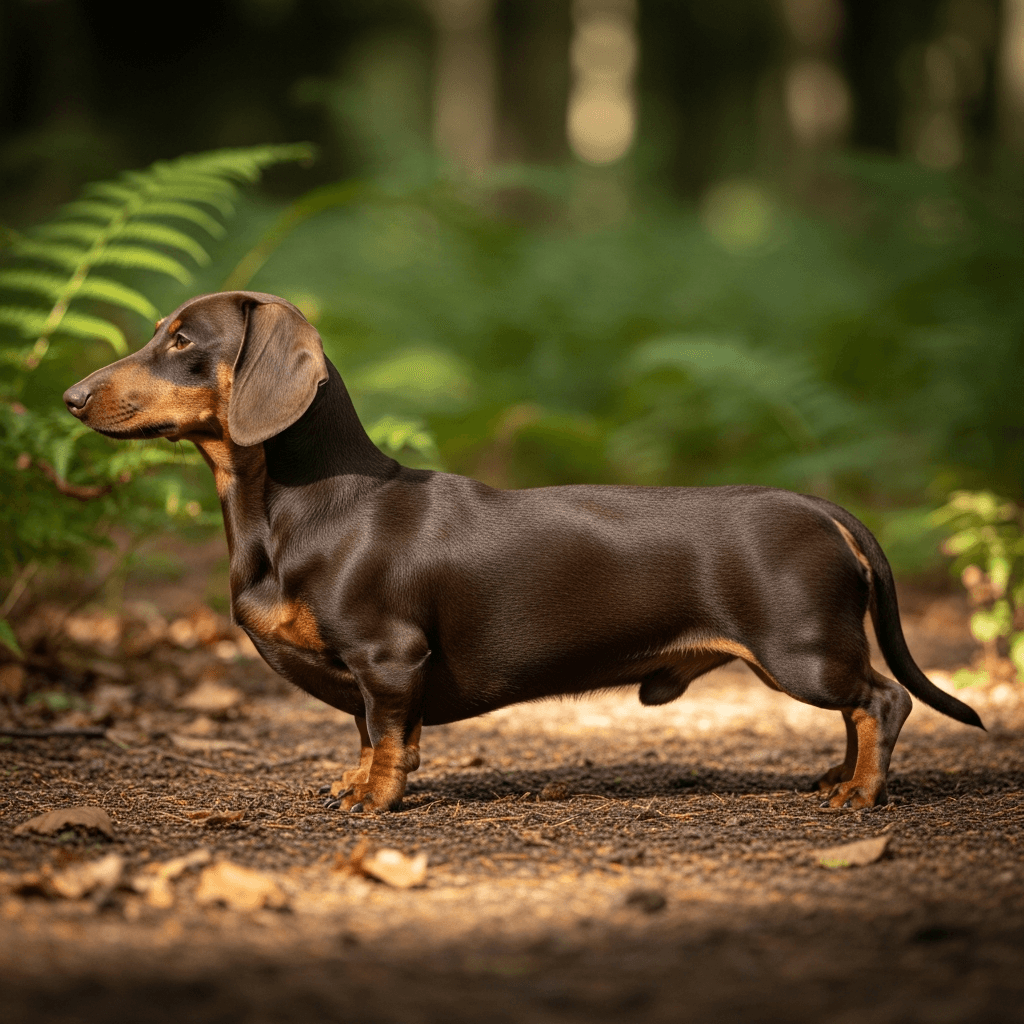
The long-haired rabbit dachshund is a dog with an extremely characteristic, elongated silhouette and short, strong legs. Its body length exceeds its height at the withers in a ratio of 1.7 to 1.8, giving it that recognizable, unique appearance. The height at the withers for the rabbit dachshund is between 25 to 30 cm for females and 27 to 32 cm for males, with a chest circumference not exceeding 30 cm – making it the smallest variety of dachshunds.
The head of the dachshund is long and elegant, with a clearly defined stop between the forehead and the muzzle. The skull is slightly arched, and the muzzle is straight and strong, with well-developed jaws. The ears are long, wide at the base, rounded at the tips, and elegantly hang along the cheeks, reaching almost to the corners of the lips. They are set high and move freely, adding expression to the dog while listening.
The eyes are medium-sized, almond-shaped, with a sharp and friendly expression, ranging in color from dark brown to black-brown, depending on the coat color. The dachshund's gaze is intelligent and full of temperament. The coat of the long-haired dachshund is dense, shiny, and smooth, gently wavy but not curly. It lies close to the body on the torso, with longer, decorative hair on the ears, lower part of the neck, belly line, back parts of the legs, and tail, giving it an elegant, aristocratic appearance.
The coat color of the long-haired dachshund can be very varied: solid (from red to dark brown), bicolor (black and tan, brown and tan), marbled, or brindle, making each individual unique. The limbs are short but proportional, strong, and well-muscled, with clearly defined angles at the joints, allowing for efficient and confident movement both on flat surfaces and in difficult terrain.
The tail continues the line of the back, carried low, slightly curved, with rich, long hair creating a beautiful plume. The long-haired rabbit dachshund is a well-built, harmonious, and proportional dog, combining hunting functionality with an elegant, aristocratic appearance.
The long-haired rabbit dachshund is a dog with a friendly and balanced temperament, which makes it an excellent family dog. By nature, it is social, intelligent, and full of energy, making it a wonderful companion for active owners. Long-haired dachshunds are usually milder and friendlier than their short-haired counterparts, which can be more dominant and independent – the long-haired variety has a gentler, more family-oriented character.
Dachshunds are deeply loyal to their owners and can form incredibly strong emotional bonds with family members. They can be somewhat distrustful and reserved towards strangers, which makes them great watchdogs – their alertness and tendency to bark at unknown visitors ensure they won't miss any suspicious movement. However, they should not be treated as guard dogs due to their small size.
This breed has a strong hunting instinct, stemming from a long history of hunting underground game. Therefore, dachshunds may show significant interest in smaller animals such as cats, rabbits, or rodents – they may chase them, dig in the ground, or intensely track scents. Early training and socialization are crucial for proper behavioral development, helping them learn appropriate interactions with other animals and people.
The long-haired dachshund can be incredibly cheerful, funny, and lively, making it an excellent playmate for children. It loves to be the center of attention and actively participate in family life. However, it is important to remember that dachshunds can also be stubborn and independent – a typical trait of hunting dogs that had to make independent decisions in burrows. Therefore, consistency, patience, and positive training methods are absolutely key to ensuring the dachshund becomes a well-mannered and balanced pet.
The long-haired rabbit dachshund, despite its charming appearance, is prone to certain specific health problems that arise directly from its characteristic body structure. The most common and serious problem is spinal disorders, particularly intervertebral disc disease (IVDD), which can lead to severe pain, paralysis of the hind limbs, and loss of bladder control.
The long body and short legs make dachshunds particularly susceptible to back injuries, especially if they engage in jumps from heights, running up and down stairs, standing on their hind legs, or carrying heavy objects. Owners should avoid such situations and provide a safe environment for the dog – it is worth investing in dog ramps, avoiding allowing the dachshund to jump from furniture, and monitoring its physical activity.
Another significant issue is obesity, which dramatically increases the strain on the spine and can accelerate the development of disc disease. Maintaining an appropriate weight is absolutely crucial for the health of the dachshund – every extra kilogram is an additional burden on its back. Regular weight checks and a tailored diet are essential.
Dachshunds can also suffer from:
- Epilepsy – idiopathic epilepsy
- Hormonal disorders – Cushing's syndrome, hypothyroidism
- Eye diseases – progressive retinal atrophy (PRA), cataracts
- Heart problems – mitral valve disease
- Skin diseases – allergic dermatitis, black skin disease (acanthosis nigricans)
- Neoplasms – particularly in older age
Regular veterinary visits (at least once every 6-12 months) are crucial for monitoring the dog's health and early detection of potential problems. Proper preventive care, including vaccinations, worming, protection against external parasites, and dental check-ups, also plays an important role in maintaining the health of the dachshund. With proper care, a dachshund can live 12-16 years.
Caring for a long-haired dachshund is an essential part of ensuring its health, comfort, and attractive appearance. Its long, thick, and shiny coat requires regular brushing to avoid tangling, matting, and excessive shedding. It is recommended to brush at least 2-3 times a week, and during heavy shedding periods (spring and autumn), even daily.
It is worth investing in the right grooming tools:
- Natural bristle brush – for daily brushing and shining the coat
- Metal comb – for detangling longer sections of fur on the ears, tail, and limbs
- Furminator or undercoat rake – for removing dead undercoat during shedding periods
Bathing should be relatively infrequent – 2-3 baths a year are sufficient, unless the dog gets significantly dirty during walks or outdoor play. Too frequent baths can lead to dry skin and loss of the natural protective fatty layer of the coat. During baths, it is important to use gentle shampoos designed for long-haired dogs to avoid irritating the skin and to maintain the natural shine of the fur.
Ear hygiene is particularly important for dachshunds due to their long, drooping ears, which can restrict air circulation and promote the development of infections. Ears should be checked regularly (once a week) and cleaned with special solutions designed for dog ear care. It is important to watch for any unpleasant odors, discharge, or redness – these are signs of a possible infection.
Oral hygiene is crucial for preventing cavities, tartar buildup, and gum disease. Teeth should be brushed at least 2-3 times a week (ideally daily) with a special toothbrush and toothpaste for dogs. It is also beneficial to give the dog dental chews that mechanically clean the teeth.
Nails should be regularly trimmed (every 3-4 weeks) to prevent them from curling into the floor and causing potential foot injuries. If nails can be heard clicking on the floor, it is a sign that they are too long. It is also important to check paw pads for wounds, cracks, or ingrown foreign bodies.
The long-haired rabbit dachshund is a dog with high energy and endurance, requiring regular physical activity to maintain good mental and physical condition and health. Although relatively small, its exercise needs are significant – it is still a hunting dog that loves movement and exploration.
Ideally, a dachshund should have at least 45-60 minutes of activity daily, which can include:
- Walks – 2-3 walks a day, preferably in varied terrain (park, forest, meadow)
- Scent games – tracking exercises, searching for treats in the grass, nosework games
- Interactive play – fetching, ball games, tug-of-war
- Obedience training – short training sessions that stimulate the mind
- Garden play – digging (in designated areas), exploration, free play
It is important to provide the dachshund with various forms of activity that allow it to develop its scenting abilities and tracking skills – this is a natural behavior of this breed that brings them great joy and satisfaction. Dachshunds love to run and explore new places, so it is worth taking them on outdoor trips, walks in the woods, or discovering new trails.
NOTE – Spine Safety: Due to their long spine and short build, certain forms of activity can be dangerous for dachshunds and should be completely avoided:
- ❌ Jumping from heights (sofas, beds, armchairs)
- ❌ Running up and down stairs (especially down)
- ❌ Standing on their hind legs
- ❌ Jumping over obstacles in agility
- ❌ Intense tugging during play
It is also good to avoid overexerting the dog, especially in the case of puppies, whose skeletal system is still developing. Young dachshunds should not be forced to long, strenuous walks – the rule is about 5 minutes of activity for each month of age, twice a day.
Regular exercise not only helps maintain physical health and appropriate weight but also positively affects the well-being and behavior of the dachshund, reducing the risk of behavioral problems associated with excess energy, such as destroying objects, excessive barking, or frustration.
Training a long-haired dachshund is a process that requires patience, consistency, and a positive attitude. Dachshunds are incredibly intelligent, have excellent memories, and learn quickly, but at the same time, they are very stubborn and independent – a typical trait of hunting dogs that had to make independent decisions while hunting in burrows. The owner must demonstrate firmness, but without using punishment or coercion.
It is crucial to start training as early as possible, preferably during the puppy stage (from 8-10 weeks of age), when the dog is most open to learning and forming habits. The earlier you start teaching, the easier it will be to shape the right behaviors.
Positive training methods are absolutely essential – dachshunds respond excellently to rewards, praise, and treats, but they do not tolerate punishment or coercion well. Good behavior should be rewarded immediately after it occurs, and undesirable behaviors should be ignored (as long as they are not dangerous). The dachshund loves attention and being the center of interest, so enthusiastic praise can be just as effective as a treat.
Basic commands to learn:
- Sit
- Lie down
- Stay
- Come here
- Leave it
- Quiet (limiting barking)
Socialization is just as important as obedience training itself. A dachshund should be exposed to various stimuli from a young age: other people, dogs, animals, sounds, places, and situations. A well-socialized dachshund will be confident, friendly, and balanced, while a poorly socialized one may become fearful, aggressive, or excessively barking.
Training should be varied, short, and intense – training sessions of 5-10 minutes, several times a day, are much more effective than one long, exhausting session. Dachshunds quickly get bored with monotony, so it's worth introducing variety and elements of play.
Control of hunting instinct is particularly important in dachshunds. Work on the command Come here in an environment with distractions (other animals, scents), use a long training leash during walks in the field, and reward the dog for paying attention to the owner rather than external stimuli.
Training a dachshund can be a challenge due to its stubbornness, but with the right approach, commitment, and consistency, excellent results can be achieved. Dachshunds excel in various dog sports, such as nosework, rally obedience, or tracking, which demonstrates their potential with the right motivation.
The nutrition of the long-haired rabbit dachshund is a key element of its health and longevity. Due to this breed's strong tendency towards obesity and sensitivity to spinal problems, the diet must be carefully balanced, tailored to individual needs, and strictly monitored in terms of quantity.
It is important to choose high-quality foods that are appropriate for small breed dogs, taking into account their age (puppy, adult, senior), weight, activity level, and any health issues. The food should be:
- Rich in high-quality protein (meat, fish) – 22-28% for adult dogs
- Contain healthy fats (omega-3 and omega-6 fatty acids) – 12-18%
- Low in carbohydrates – to prevent excessive weight gain
- Enriched with glucosamine and chondroitin – for joint and spine support
- Contain vitamins and minerals – for overall health
Regular meals – ideally 2-3 times a day at consistent times – help maintain stable energy levels, regulate metabolism, and prevent snacking. Dividing the daily portion into smaller meals is healthier than one large feeding.
Portion control is absolutely crucial. It is essential to strictly follow the manufacturer's feeding guidelines and adjust portions according to the dog's current weight and condition. The dachshund should have a clearly defined waist when viewed from above, and the ribs should be palpable but not visible. Weighing the dog regularly (once a month) allows for quick detection of concerning changes.
AVOID:
- ❌ Feeding table scraps – many human foods are harmful to dogs (chocolate, onions, garlic, grapes, avocados, xylitol)
- ❌ Excessive treats – they should not make up more than 10% of daily caloric intake
- ❌ Feeding the dog before or immediately after intense exercise – risk of gastric torsion
- ❌ Free access to food – always measure portions
Fresh water should be available throughout the day – regularly change the water and clean the bowl.
Food allergies – some dachshunds may be more sensitive to certain dietary ingredients (chicken, grains, dairy). Allergy symptoms include itchy skin, hair loss, digestive issues, and ear infections. If allergies are suspected, it is advisable to consult a veterinarian and consider an elimination diet or hypoallergenic foods.
Supplementation may be indicated in cases of joint problems (glucosamine, chondroitin, MSM), probiotics for gut health, omega-3 fatty acids for skin and coat. Always consult supplementation with a veterinarian.
If in doubt about nutrition, it is always worth consulting a veterinarian or veterinary dietitian, who can help establish an optimal feeding plan tailored to the individual needs of the specific dog.
Characteristic Traits
Pros
- Deep loyalty to family
- Excellent sense of smell and intelligence
- Great adaptability to apartments and houses
- Friendly and cheerful character
- Elegant appearance.
Cons
- Strong tendency to obesity
- Sensitive spine – risk of discopathy
- Stubborn and independent – difficult to train
- Requires regular coat care.
Behavioral Ratings
Breed History
The history of the long-haired rabbit dachshund dates back deep into European medieval times when this breed was intensively used as a hunting dog for hunting underground game, including rabbits, foxes, badgers, and other burrowing predators. The dachshund, known in German as Dackel or Teckel (from the word Dachs – badger), descends from ancient hounds that were systematically crossed and selected for work in difficult, underground conditions.
The first mentions of dogs similar to dachshunds date back to the 15th century, when hunting books described low, elongated dogs with exceptional tracking and fighting abilities against burrowing game. In the 17th century, systematic breeding of dachshunds began in Germany, dividing them into different varieties according to size (standard, miniature, rabbit) and coat type (short-haired, long-haired, wire-haired).
The long-haired variety likely emerged from crossing short-haired dachshunds with small spaniels and setters, which allowed for longer, more decorative fur while retaining all hunting traits. This variety was particularly valued among the aristocracy and hunters, who appreciated not only its skills but also its elegant, aristocratic appearance.
A pivotal moment for the breed's development was the year 1888, when the first official dachshund breeders' club – Deutsche Teckelklub e.V. (DTK) – was established in Germany, which to this day is the oldest and most prestigious breeding organization for this breed in the world. This club established the first breed standards, introduced breeding books, and began organizing shows, significantly contributing to the popularity of dachshunds.
In the 20th century, dachshunds began to gain international recognition not only as hunting dogs but also as wonderful family companions. Their charismatic appearance, intelligence, and devotion to their owners made them one of the most popular breeds in the world. Dachshunds were particularly favored by the European aristocracy – Queen Victoria was a great admirer of this breed, and dachshunds accompanied many monarchs and artists.
Dachshunds were also present in popular culture – they became the heroes of books, films, satirical drawings, and various social events. Their characteristic elongated shape earned them the nickname sausage dog (hot dog), which became their unofficial moniker in English-speaking countries.
During World War I and II, the popularity of dachshunds in English-speaking countries temporarily declined due to their German origin, but after the war, the breed quickly regained its position. Today, the long-haired rabbit dachshund is one of the most beloved dogs among pet lovers worldwide, and its hunting history, breeding tradition, and contribution to culture are still appreciated and celebrated by breed enthusiasts.