Rhodesian Ridgeback
FCI Group
6• FCI 146
Size
Large
Origin Country
XX
Height
61-69 cm
Weight
32-39 kg
Lifespan
10-12 years
Temperament
Overview
Rhodesian Ridgeback, also known as the African Lion Hound, is an extraordinary breed originating from Southern Africa that has gained recognition worldwide. It stands out not only for its exceptional hunting abilities but primarily for its boundless loyalty to its family. This impressive dog is an ideal companion for active individuals who value intelligence and independence in their four-legged friends.
The history of this breed dates back to the times when European colonists in Southern Africa needed brave and resilient dogs for lion hunting. Ridgebacks were developed from crosses between local dogs of the Khoikhoi tribe and European hunting breeds, resulting in a dog with remarkable traits. The characteristic ridge on the back, where the fur grows in the opposite direction, has become the hallmark of this breed and its most recognizable feature.
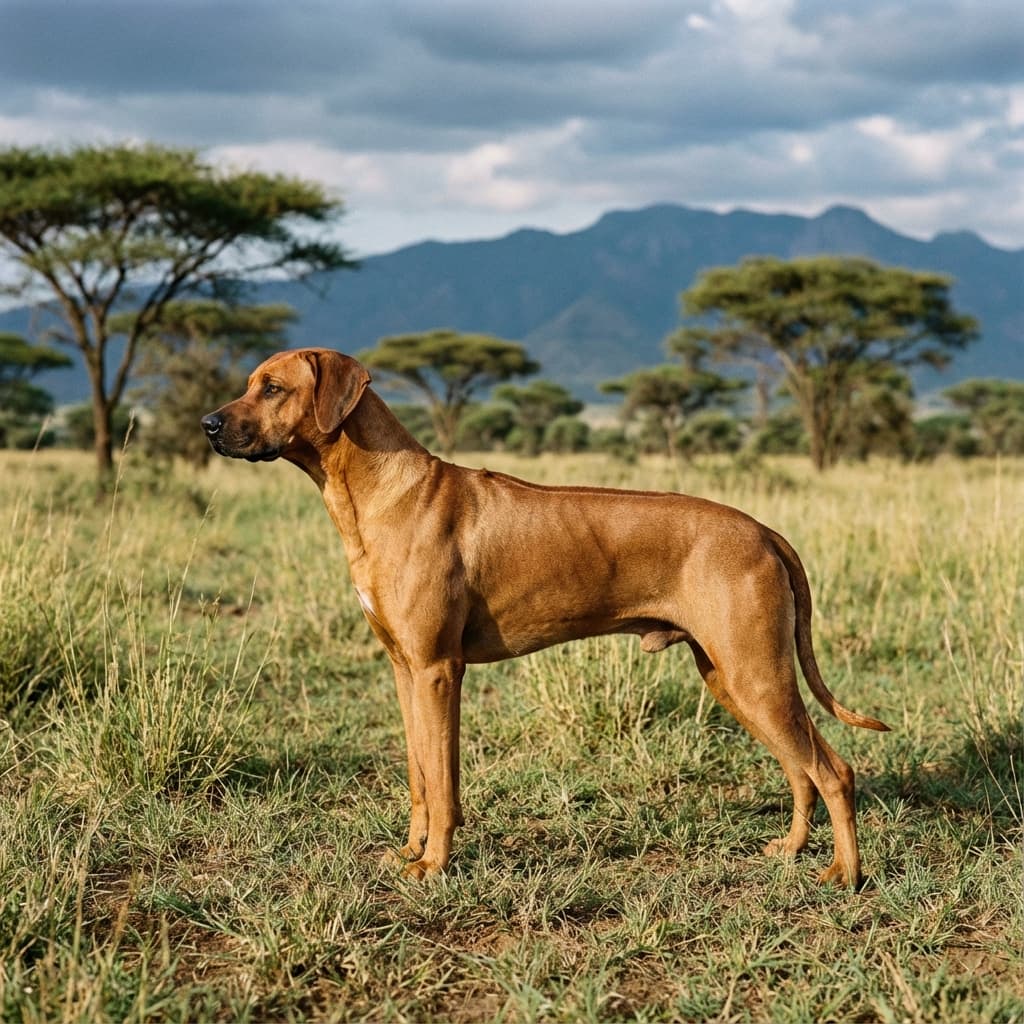
The Rhodesian Ridgeback has a powerful, muscular build and a well-defined body, making it a durable partner for intense outdoor activities. Despite its strength and athletic physique, it is not a bulky dog – rather, it exudes elegance and agility. This combination of strength and grace allows the Ridgeback to move with extraordinary fluidity, showcasing excellent physical condition.
Intelligence, energy, and attachment are the main character traits of the Rhodesian Ridgeback that make it a wonderful member of an active family. These dogs are exceptionally devoted to their guardians and get along well with children, provided they are properly socialized. They display a natural reserve and alertness towards strangers, but without aggression, making them excellent guard dogs. With proper socialization from a young age, Ridgebacks develop balanced relationships with other dogs and people.
This breed requires ample space to move and regular, intense exercise. Rhodesian Ridgebacks are dogs with a very high energy level that need daily physical and mental activity to maintain their health and mental balance. Their short, dense, and shiny coat is relatively easy to care for. The coat comes in various shades from light wheaten to golden to deep red-wheaten. Small white markings on the chest and toes are permissible according to the standard.
Raising a Rhodesian Ridgeback requires a experienced and consistent handler. Although they are intelligent dogs, they can exhibit stubbornness and independence, which can pose a challenge during training. The key to success is patience, consistency, and positive reinforcement methods. A properly trained Ridgeback becomes a loyal companion for life, embodying the courage of a hunter, the vigilance of a guardian, and the affection of a family companion.
The Rhodesian Ridgeback is a large, impressive dog with an athletic and harmonious body structure. Height at the withers ranges from 61 to 69 cm, with males reaching 63-69 cm and females 61-66 cm. Weight varies between 32 and 36.5 kg depending on gender and build. Their silhouette presents an excellent balance between strength and elegance – they are not massive but muscular and sleek.
The most characteristic feature of this breed is the ridge on the back, formed by hair growing in the opposite direction to the rest of the coat. The ridge should be clearly defined, symmetrical, and tapering towards the back. At its beginning, there are usually two identical crowns that give it a unique appearance. The ridge is the hallmark of this breed and signifies its uniqueness.
The coat is short, dense, shiny, and close-fitting to the body, giving the dog an elegant appearance. It should not be silky or woolly. The color can take various shades from light wheaten through golden to intense red-wheaten. Small white markings on the chest and toes are accepted. Darker shades may appear on the muzzle and ears, adding distinctiveness to the silhouette.
The head is long with a flat skull between the ears, without skin folds at rest. The distance between the ears is quite wide. The stop (transition from forehead to muzzle) is moderately defined. The ears are set fairly high, medium-sized, tapering to rounded tips and lying close to the head. The eyes are round, shiny, and lively, expressing intelligence. Their color harmonizes with the coat color – from light amber to dark amber, with darker colors preferred.
The neck is strong, fairly long, and free of a dewlap, allowing for free head movement. The back is straight, strong, and slightly arched in the lumbar region. The chest is deep (reaching to the elbows) and moderately wide, allowing for free movement. The tail is strong at the base, gradually tapering towards the end, carried slightly upwards in a gentle curve, but is never curled or forming a ring.
The movement of the Rhodesian Ridgeback is fluid, efficient, and full of grace. During walking, the limbs move parallel, and when increasing speed, they converge towards the centerline of the body. Their athletic build allows for prolonged exertion and sudden accelerations, which were essential during hunts for wild game.
Rhodesian Ridgebacks are characterized by a balanced and dignified temperament, combining confidence with a deep attachment to family. They are exceptionally intelligent dogs that learn quickly and can analyze situations, but their intelligence comes with a certain degree of independence. Ridgebacks are not dogs that blindly follow commands – they prefer to understand their meaning and purpose.
In relation to family members, they are extremely loyal, affectionate, and protective. They behave gently and patiently with children, especially when properly socialized from a young age. However, due to their size and energy, interactions with small children should be supervised. Ridgebacks can be very gentle, but in play, they may inadvertently knock over a small child.
In relation to strangers, they exhibit natural reserve and alertness, but without aggression. This trait makes them excellent guard dogs – they can assess a situation and respond appropriately to the level of threat. Their deep, resonant voice and impressive stature effectively deter intruders, although Ridgebacks are not overly barky.
Rhodesian Ridgebacks have a strong hunting instinct, which means they may show interest in smaller animals such as cats, rabbits, or rodents. Therefore, early and consistent socialization is crucial for harmonious coexistence in a multi-species household. They generally get along well with other dogs, although males may show dominance towards other males.
Despite a certain independence, Ridgebacks need closeness and interaction with family members. They are not dogs that can be left alone for long periods – they may then exhibit destructive behaviors or excessive barking. Owners should be consistent in training, establishing clear rules and boundaries, but always with respect and without violence.
Proper training and positive reinforcement are essential for a Rhodesian Ridgeback to develop its potential and become a balanced, well-mannered dog. Their need for physical and mental activity makes them ideal companions for active families who can provide them with the right amount of exercise, stimulation, and participation in family life.
Rhodesian Ridgebacks are a breed of dogs that are generally healthy and resilient, enjoying good condition throughout most of their lives. Their average lifespan is between 10 to 12 years, which is typical for large breeds. Despite their solid build and endurance, there are certain health issues that this breed may be prone to, and that owners should be aware of.
The most common health problems include hip dysplasia (HD) – a congenital defect characterized by the improper formation of the hip joint socket. It can lead to pain, lameness, and arthritis. Therefore, it is crucial for breeders to conduct X-ray examinations of the parents before breeding. Elbow dysplasia (ED) can also occur, although less frequently.
Dermoid sinus is a congenital defect specific to this breed, involving the abnormal formation of a skin canal that may connect the skin surface to deeper structures, even to the spinal cord. It requires surgical removal and can be a source of infection. Responsible breeders screen puppies for this defect before selling them.
Rhodesian Ridgebacks may also be prone to cancers, including mast cell tumors and osteosarcoma. Regular veterinary check-ups and monitoring of any lumps or skin changes are crucial for early detection. Thyroid problems (hypothyroidism) may also occur, manifesting as weight gain, lethargy, or skin issues.
It is important for Rhodesian Ridgeback owners to regularly monitor their health with a veterinarian and keep track of their weight, as this breed tends to gain weight with an improper diet or lack of exercise. Obesity can exacerbate joint problems and lead to other conditions such as diabetes or heart disease.
Maintaining a healthy diet, regular physical activity, and preventive veterinary check-ups is key to a long and happy life for a Ridgeback. It is also worth noting that dogs of this breed are sensitive to extreme temperatures – they do not tolerate severe cold or heat well, which should be taken into account in their daily care.
The care of Rhodesian Ridgebacks is relatively simple and low-maintenance due to their short, dense coat without an undercoat. This breed belongs to dogs with low grooming requirements, making it attractive for those who value simplicity in daily care. However, despite the ease, regular grooming is essential for maintaining the dog's health and well-being.
Brushing at least once a week, preferably twice, is sufficient to keep the coat in excellent condition and remove loose hair. It is best to use a natural bristle brush or a rubber grooming glove. Ridgebacks shed moderately throughout the year, with slight increases in spring and autumn. Regular brushing minimizes the amount of hair in the home and stimulates skin circulation.
Bathing is not required often – usually every 2-3 months is enough, unless the dog gets dirty or develops an unpleasant odor. Bathing too frequently can strip the skin of its natural oils, leading to dryness and irritation. A gentle dog shampoo with a neutral pH should be used. After walks in the rain, it is advisable to thoroughly dry the dog with a towel, especially the area between the toes and in the skin folds.
Ear checks should be done regularly, ideally once a week. Rhodesian Ridgebacks have floppy ears that can be prone to infections, especially in humid climates. The ear flaps should be gently cleaned with a cotton ball moistened with a special dog ear cleaning solution. Never insert cotton swabs deeply into the ear canal.
Dental care is extremely important for preventing tartar buildup, gum disease, and tooth loss. Ideally, teeth should be brushed 2-3 times a week using a dog toothbrush and toothpaste. Special dental treats and chew toys can also be used to help mechanically clean the teeth.
Nail trimming should be done every 3-4 weeks, depending on how quickly they grow and whether the dog naturally wears them down while walking on hard surfaces. Overly long nails can cause discomfort, affect the way the dog walks, and even lead to joint problems. If you can hear the nails clicking on the floor, it’s a sign they need trimming.
With regular but simple grooming, Rhodesian Ridgebacks can maintain a healthy, shiny appearance for many years. Routine grooming activities are also an excellent opportunity to check the dog's health, detect any lumps, wounds, or parasites.
Rhodesian Ridgebacks are a breed of dogs with a high energy level that requires a significant amount of daily exercise to remain healthy, happy, and balanced. As hunting dogs bred to track and hold wild game, they have an inherent need for physical and mental activity. Without proper stimulation, they can become bored, restless, or exhibit destructive behaviors.
It is recommended that a Rhodesian Ridgeback has the opportunity for vigorous exercise every day for at least 60-90 minutes. Long, energetic walks, runs, hikes in hilly terrain, or playing fetch are ideal. Ridgebacks also love running alongside a bike, jogging with their owner, and swimming, although they should be gradually acclimated to water.
Owners should avoid overloading the joints, especially in puppies and young dogs. Intense exercises, such as jumping or long runs on hard surfaces, can lead to health issues in the future, including joint dysplasia. For puppies, shorter but more frequent activity sessions are better – about 5 minutes of exercise for each month of age, twice a day.
Rhodesian Ridgebacks are very intelligent and also need mental stimulation. It is worthwhile to engage them in obedience training, dog sports training (agility, nosework), scent games, and strategic play. Interactive toys, dog puzzles, or hiding treats are excellent ways to mentally tire the dog, which is just as important as physical exertion.
Joint activities with the owner not only satisfy the dog's physical needs but also strengthen the bond between the dog and the caregiver. Ridgebacks love spending time with their people and participating in family life. They perform well in roles as sport, rescue, or therapy dogs, provided they are properly trained.
It is important to remember that Rhodesian Ridgebacks do not tolerate extreme weather conditions well. On hot days, activity should be limited to the cooler parts of the day (morning and evening) and access to shade and fresh water should be provided. On freezing days, protective clothing may be considered, although most Ridgebacks handle moderate cold well due to their thick coat.
Training Rhodesian Ridgebacks can be a fascinating challenge, as their intelligence is both their greatest asset and a potential source of difficulties. These dogs are extremely bright and quickly learn new commands, but their independent nature means they can also question authority and test boundaries. Therefore, it is crucial to start training as early as possible and to use methods based on positive reinforcement.
Rhodesian Ridgebacks reach full maturity only at around 2-3 years of age, which means that the puppy and adolescent periods can be long and demanding. During this time, they may exhibit excessive energy, distraction, and difficulty concentrating. Therefore, training should be consistent and ongoing throughout the dog's life to maintain acquired skills and introduce new ones.
Key training principles:
- Consistency – All family members must use the same rules and commands
- Positive reinforcement – Rewarding desired behaviors with treats, praise, and play
- Patience – Ridgebacks learn at their own pace and need time to understand
- Diversity – Varying training sessions to avoid boredom
- Short sessions – 10-15 minutes of training 2-3 times a day is more effective than long, exhausting sessions
Owners should build trust and mutual respect rather than dominance based on force. Ridgebacks are sensitive to their caregivers' moods and respond best to calm, confident leadership. Using violence, shouting, or brutality is completely unacceptable – such methods destroy the bond and can lead to behavioral problems.
Socialization from a young age is absolutely crucial. Ridgebacks should be gradually exposed to different people, dogs, animals, places, sounds, and situations. A well-socialized Ridgeback is confident, calm, and can respond appropriately in various circumstances. Lack of socialization can lead to anxiety, excessive vigilance, or aggression.
It is worth considering participation in group classes for puppies and adult dogs, which offer a controlled environment for learning and interaction with other dogs. Ridgebacks can also excel in dog sports such as agility, obedience, rally-o, or nosework, which combine physical activity with mental challenges.
A properly trained Rhodesian Ridgeback becomes a loyal, obedient, and enjoyable companion who can work with the owner and enjoys spending time together. Investing time and effort in training pays off in the form of a balanced, happy dog who is a pride and joy to the whole family.
A proper diet is key to the health of a Rhodesian Ridgeback, as this breed has a natural tendency to gain weight, especially with insufficient exercise. Owners should provide their dog with a balanced, high-quality diet tailored to its age, weight, activity level, and health status.
puppies (0-12 months) need food specially formulated for large breed puppies, which supports the proper development of bones and joints. Such foods contain the right proportion of calcium and phosphorus, which is crucial for preventing joint dysplasia. Puppies should be fed 3-4 times a day with smaller portions, gradually transitioning to 2 meals a day around 6-8 months of age.
Adult dogs (1-7 years) require food for active large breed dogs, rich in high-quality protein (meat, fish), healthy fats (omega-3 and omega-6), and complex carbohydrates. Foods should also contain essential vitamins, minerals, and ingredients that support joint health (glucosamine, chondroitin). Adult Ridgebacks typically eat 2 meals a day.
Senior dogs (7+ years) need food with lower calories but higher fiber content to support digestion and prevent obesity. Senior food should also contain ingredients that support joint, heart, and cognitive function (antioxidants, omega-3 fatty acids).
The amount of food depends on many factors, including weight, age, activity level, and type of food. As a guideline, an adult Ridgeback weighing 32-36 kg needs about 350-450 grams of dry food per day, divided into 2 meals. However, it is best to consult a veterinarian to determine precise portions.
Important nutrition rules:
- Avoid overfeeding – Obesity leads to joint, heart, and diabetes problems
- Regular weighing – Monitor weight and body condition (ribs should be felt under a slight layer of fat)
- Fresh water – Always available, especially on hot days and after exercise
- Avoid feeding leftovers – Human food can be too fatty, salty, or contain harmful ingredients
- Gradual changes – When changing food, do it gradually over 7-10 days
Treats can be used as rewards in training but should not make up more than 10% of daily caloric intake. Healthy options include small pieces of cooked chicken, carrots, apples (without seeds), or special dental treats.
It is important to avoid harmful products for dogs: chocolate, grapes, raisins, onions, garlic, xylitol, avocados, and fatty foods. After intense exercise, it is advisable to wait 30-60 minutes before feeding to reduce the risk of gastric torsion.
A proper diet combined with regular physical activity will help the Rhodesian Ridgeback maintain a healthy weight, shiny coat, and good well-being for many years.
Characteristic Traits
Pros
- Exceptional loyalty to family
- Excellent hunting and guarding abilities
- Easy coat maintenance
- Intelligent and quick to learn
- Ideal for an active lifestyle
- Healthy and resilient breed.
Cons
- Requires a lot of daily movement and activity
- May show stubbornness during training
- Needs an experienced and consistent handler
- Strong hunting instinct can be problematic
- Requires early socialization with other animals.
Behavioral Ratings
Breed History
The Rhodesian Ridgeback is a breed with a fascinating history that dates back to colonial South Africa. Its origin is the result of the practical need of European settlers who arrived in the Cape of Good Hope region in the 16th and 17th centuries and required dogs capable of hunting African wildlife in extreme climatic conditions.
A key role in the breed's development was played by the Khoikhoi (formerly known as Hottentots) – the indigenous people of southern Africa who bred semi-wild dogs with a distinctive ridge on their backs. These resilient, brave animals were used for hunting and guarding camps. When European colonists arrived with their hunting dogs (mainly mastiffs, hounds, bloodhounds, and terriers), the process of natural crossbreeding local dogs with imported breeds began.
In the 17th and 18th centuries, Dutch, German, and French (Huguenot) settlers established the first farms in southern Africa. They needed versatile dogs that could hunt, guard the homestead, protect against predators, and be loyal family companions. The crossbreeds resulted in dogs that combined the strength and courage of European breeds with the endurance and adaptability of local dogs.
A true breakthrough occurred in the 19th century when European hunters began to explore the territories of present-day Zimbabwe (then Rhodesia). They needed dogs capable of hunting lions – the most powerful African predators. Ridgebacks excelled in this role: working in pairs or small groups, they tracked lions, then held them at bay and distracted them, allowing the hunter to approach within shooting range. The dogs had to be fast, agile, and intelligent enough to avoid deadly attacks.
In 1922, a group of breeders led by Francis Richard Barnes met in Bulawayo, Rhodesia (present-day Zimbabwe) and developed the first official breed standard. Barnes based the standards on the Dalmatian standard, which is evident in some of the Ridgebacks' structural and movement characteristics. This standard was approved by the South African Kennel Union (KUSA) in 1926.
The name Rhodesian Ridgeback became established as a tribute to the region of Rhodesia, where the breed reached its final form. After Zimbabwe regained independence, some proposed changing the name, but the traditional name remained in use worldwide.
In the 1950s and 1960s, Rhodesian Ridgebacks began to gain popularity outside Africa. They reached Europe, North America, and Australia, where they gained recognition as family, sporting, and show dogs. The Fédération Cynologique Internationale (FCI) officially recognized the breed in 1955, classifying it in group 6 (scent hounds) as a related breed.
Today, Rhodesian Ridgebacks are valued worldwide not only as hunting dogs but primarily as wonderful family companions, guard dogs, sporting, and therapy dogs. Their history is a testament to their remarkable ability to adapt, courage, and deep attachment to humans. Ridgebacks embody the heritage of African wilderness, European breeding, and centuries of cooperation with humans.