Bernardine
FCI Group
2• FCI 61
Size
Large
Origin Country
CH
Height
65-90 cm
Weight
50-90 kg
Lifespan
8-10 years
Temperament
Overview
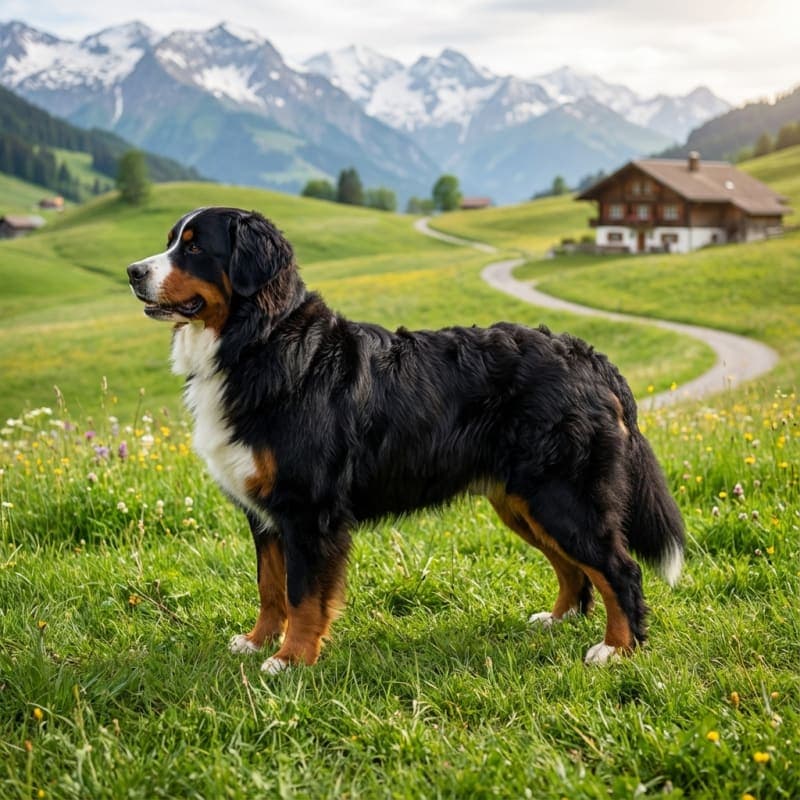
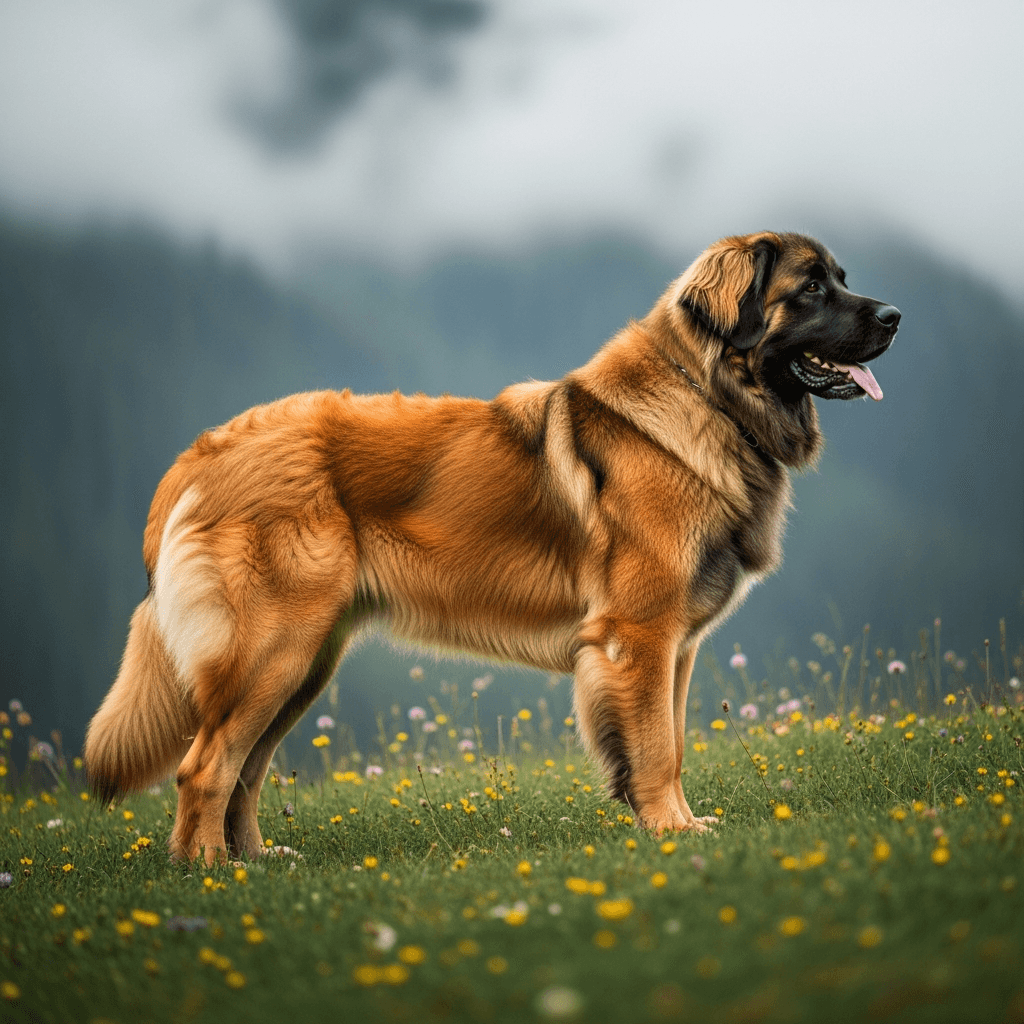
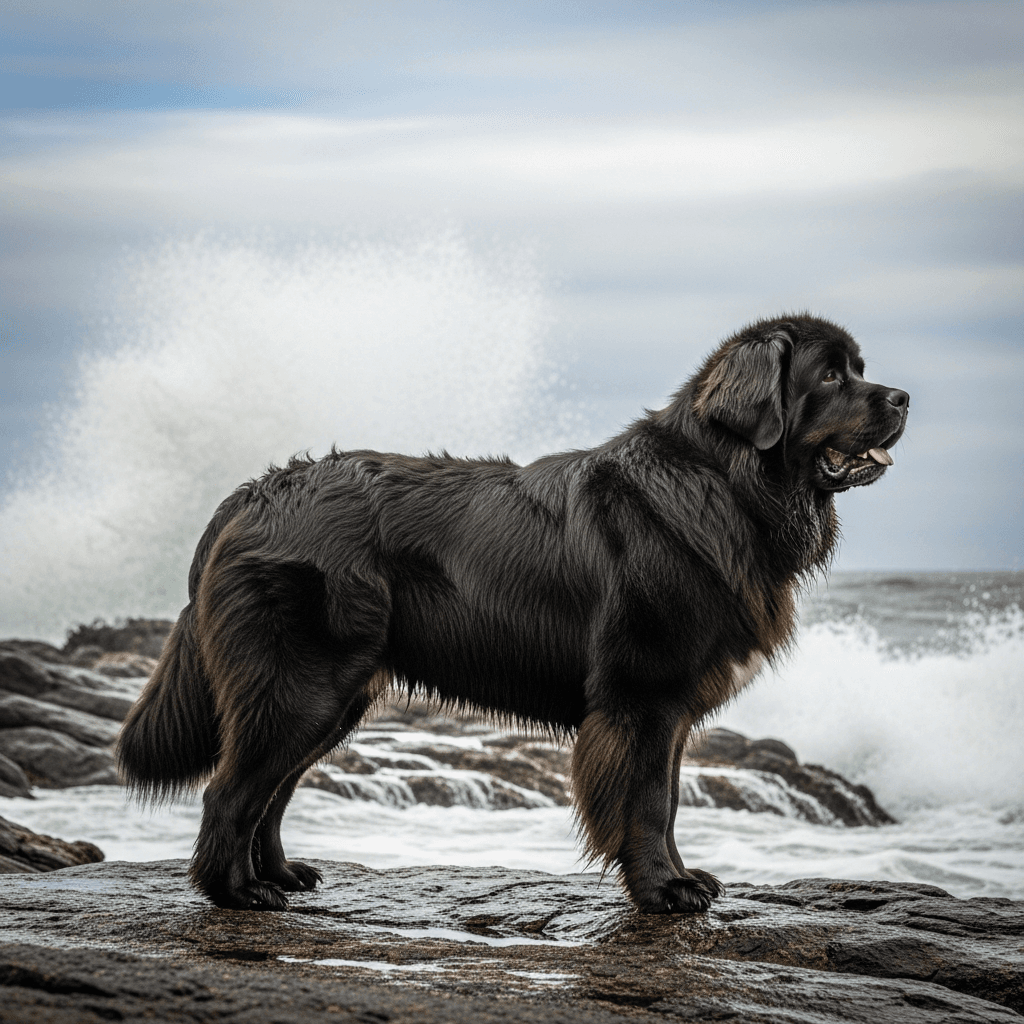
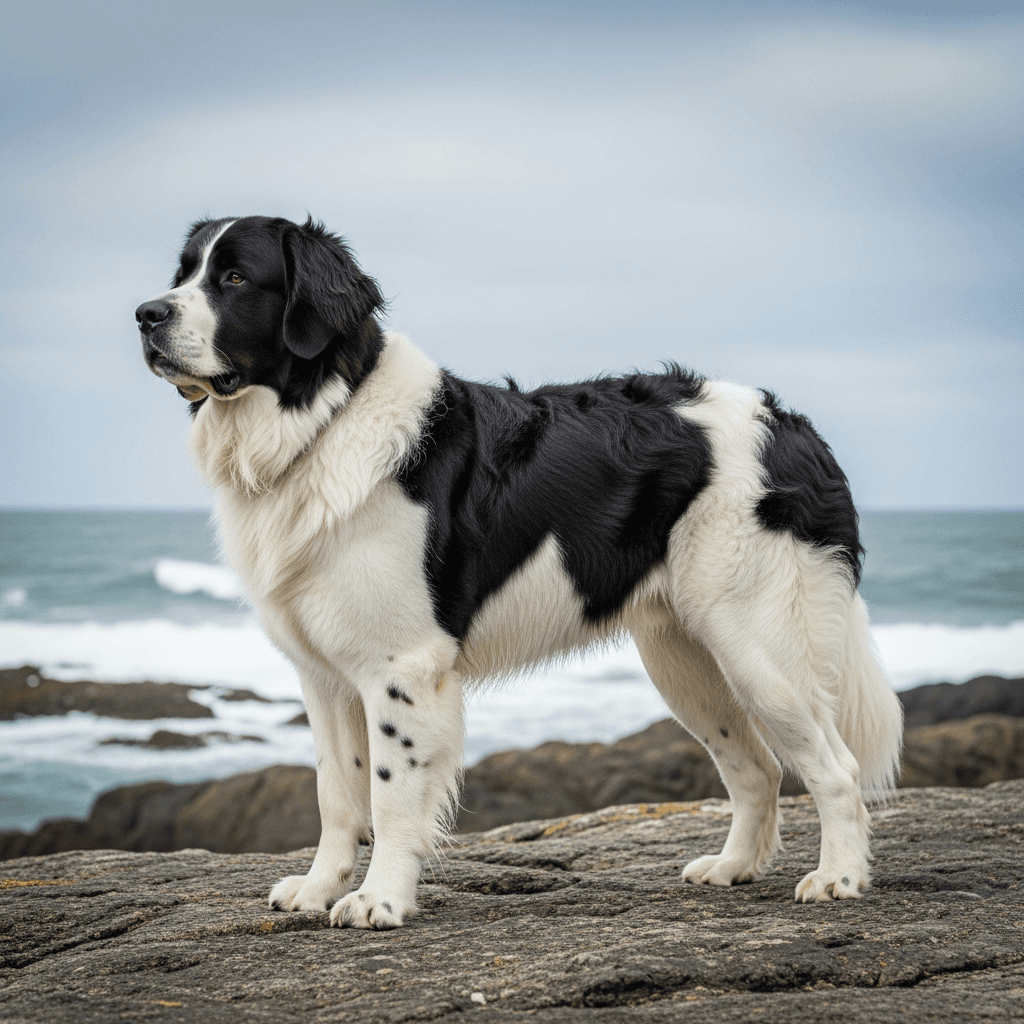
Saint Bernard, also known as Bernardyn, is one of the most majestic and recognizable mountain dog breeds in the world. It originates from picturesque Switzerland and has a long, fascinating history dating back to the 11th century. Monks from the Great St. Bernard Pass monastery began breeding these impressive canines to assist in rescuing travelers and pilgrims lost in the mountains — making the Saint Bernard a truly deserving hero in the history of human-dog relationships.
Physical characteristics: The Saint Bernard is a dog with an impressive, muscular build, existing in two coat varieties:
- Short-haired – coat is hard, dense, and close to the body
- Long-haired – coat is longer, wavy, requiring more intensive grooming
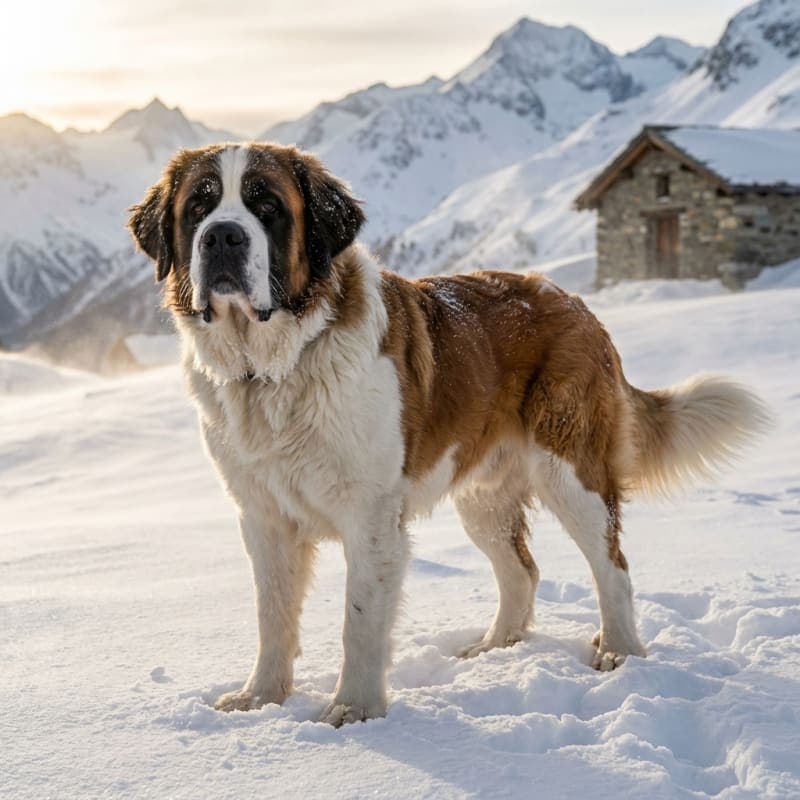
Both varieties have a double, dense coat that provides excellent protection against extreme mountain cold. Its massive head with a broad skull and prominent cheekbones gives it a truly majestic appearance, while dark, gentle eyes reflect its friendly and calm nature.
Temperament and character: Despite its enormous size, the Saint Bernard is extremely gentle, kind, and friendly towards children. It is a dog that easily forms deep bonds with the entire family and other pets, making it an ideal life companion for families with children. Its legendary loyalty and devotion will be appreciated by all family members. Although it shows natural caution towards strangers, it does not exhibit aggression — its firmness in defending the family is combined with gentleness in everyday life.
Requirements and care: The Saint Bernard requires regular, moderately long walks and positive interactions with its owner to maintain good physical and mental condition. Although its build is not conducive to intense sports training, calm yet regular walks are ideal for expending energy. It is important to be aware of certain health issues typical for large breeds, such as hip and elbow dysplasia or heart conditions. A proper diet, regular activity, and veterinary check-ups are crucial for the long, healthy life of this magnificent dog.
Grooming: Grooming the Saint Bernard is relatively easy, although it requires regularity — especially during seasonal shedding. Regular brushing prevents matting of the coat and keeps it in excellent condition. This breed also tends to have watery eyes, so it is important to check and clean the eye area daily.
Training and socialization: Training should begin as early as possible, preferably during puppyhood, to avoid behavioral issues typical of large dogs. Although its impressive stature may seem somewhat intimidating, the Saint Bernard is an intelligent dog eager to cooperate with its owner. Thanks to its intelligence, it quickly learns new skills, and positive training methods (rewards, praise) yield the best results.
Discover more about this extraordinary breed by delving into the following sections dedicated to health, detailed grooming, training, and the fascinating history of the Saint Bernard. Get ready for an adventure-filled life with a loyal, calm, and devoted companion by your side!
The Saint Bernard is a breed of dog with a particularly impressive appearance, characterized by a large, massive build and a strong, muscular body. It is one of the largest dog breeds in the world, distinguished by its harmonious silhouette despite its massiveness.
Dimensions and weight:
- Height at the withers (males): 70-90 cm
- Height at the withers (females): 65-80 cm
- Body weight: 50-90 kg (depending on gender and build)
Head and muzzle: The Saint Bernard has a massive, wide head with distinctly marked cheekbones, giving it a majestic and dignified appearance. The eyes are medium-sized, dark, with a gentle, friendly expression that perfectly reflects its calm temperament. The ears are medium-sized, triangular, set high and slightly drooping along the cheeks, which adds to its friendly expression.
Coat types: The breed comes in two varieties:
- Short-haired: The coat is dense, hard, close-fitting to the body, and easy to maintain. Despite its short length, it is double-coated and provides excellent protection against the cold.
- Long-haired: The coat is longer, slightly wavy, abundant, especially around the neck (collar), tail, and hind legs. It requires more intensive grooming and regular brushing.
Coloration: The primary coloration is white with reddish patches in various shades—from light brown to intense red. Characteristic white markings are found on:
- The chest
- The paws (so-called white socks)
- The tip of the tail
- The bridge of the nose (stripe)
- The collar around the neck
A characteristic dark mask on the muzzle is also often seen, which adds to the Saint Bernard's distinctiveness.
Body structure: The Saint Bernard has a strong, harmoniously built torso with a wide, deep chest and strong limbs providing stability and strength. The back is straight and wide, the loins are strong, and the hindquarters are slightly sloping. The tail is long, thick at the base, drooping at rest, and slightly raised when excited (but never curled over the back).
Movement: Despite its massive build, the Saint Bernard moves with harmony and grace. Its gait is characterized by a good front stride and strong rear drive, creating an impression of fluidity and strength at the same time. This elegance of movement, combined with impressive size, makes the Saint Bernard one of the most recognizable and admired breeds in the world.
Overall impression: The appearance of the Saint Bernard evokes respect and admiration, but at the same time, its gentle expression immediately signals a friendly, calm character. It is a dog that combines majesty, strength, and gentleness.
The Bernese Mountain Dog is a dog with a remarkably gentle, calm, and friendly disposition, making it an ideal companion for families with children and for those who value peaceful coexistence. Its character is one of the greatest assets of this breed — despite its impressive size, it is incredibly gentle and patient.
Family relationships: By nature, the Bernese Mountain Dog is deeply attached to its family and shows a strong but not intrusive protective instinct. Its temperament oscillates between calm and moderately lively, but it always remains balanced and predictable. It values the closeness of its owner and loves spending time with the family — prolonged solitude is very difficult for it to endure.
Intelligence and learning ability: The Bernese Mountain Dog is a very intelligent dog that quickly learns new skills and can adapt to various life situations. Its social intelligence allows it to read the moods of household members perfectly and respond appropriately to the situation.
Relationships with children: Despite its massive build, the Bernese Mountain Dog is extremely gentle, cautious, and patient when interacting with children. It instinctively understands that it must be gentle with the youngest family members. Children can feel safe around it, and it, in turn, treats them with care and protectiveness. It is an excellent choice for families with small children, provided there is proper early socialization.
Relationships with other animals: The Bernese Mountain Dog is very tolerant of other pets, especially if it has been properly socialized from a puppy. It can coexist peacefully with other dogs, cats, and various animals. When interacting with other dogs, it may show slight dominance due to its size, but it is usually sociable, calm, and non-confrontational.
Attitude towards strangers: The Bernese Mountain Dog is alert and cautious towards strangers, which makes it a good guard dog. However, its natural reserve does not translate into aggression — it is firm and brave in the face of danger but does not attack without reason. It usually observes the situation from a distance and reacts only when it truly feels a threat to its family.
Emotional needs: The Bernese Mountain Dog is a dog that needs companionship and does not tolerate prolonged solitude. It feels best in a family where it can serve as a loyal friend, guardian, and companion. It enjoys being at the center of family events and participating in daily activities.
Natural curiosity: Despite its calm nature, the Bernese Mountain Dog exhibits a natural curiosity about the world and enjoys spending time outdoors, exploring its surroundings. Walks are not only a form of physical activity for it but also a source of mental stimulation.
Training and socialization: Owners should remember that as a large dog, the Bernese Mountain Dog requires proper training and early socialization to avoid behavioral problems in the future. With proper care, consistent upbringing, and a loving approach, the Bernese Mountain Dog becomes a devoted, loving companion for many years.
Summary of character: The Bernese Mountain Dog is as gentle as a lamb, loyal as a knight, and patient as a saint — not without reason is its name derived from the patron saint of travelers. It is a wonderful choice for families looking for a calm yet protective and devoted companion.
The Bernese Mountain Dog has a moderate lifespan, averaging from 8 to 10 years. Despite its impressive build and generally good health, this breed — like most large dogs — is prone to certain conditions that owners should be aware of and monitor throughout the dog's life.
Hip and elbow dysplasia (HD/ED):
Due to their large body mass and rapid growth in youth, Bernese Mountain Dogs are particularly susceptible to hip and elbow dysplasia. This genetic condition involves improper joint development, leading to:
- Pain and discomfort when moving
- Limited mobility, especially in older age
- Possible complications in the form of arthritis
Prevention: Regular orthopedic check-ups with a veterinarian, a proper diet supporting joint health (glucosamine, chondroitin), and moderate physical activity without overloading the joints during puppyhood.
Cardiovascular diseases:
Due to their body structure and large heart size, Bernese Mountain Dogs can suffer from various cardiological problems, including:
- Heart muscle hypertrophy
- Heart rhythm disorders
- Heart failure (especially in older age)
Prevention: Regular cardiological examinations (ECG, ECHO), avoiding intense exertion, weight control, and a low-sodium diet.
Obesity:
The Bernese Mountain Dog has a natural tendency to gain weight, which is particularly dangerous due to the strain on joints and the cardiovascular system. Obesity can lead to:
- Worsening of joint dysplasia
- Diabetes
- Heart diseases
- Shortened lifespan
Prevention: Controlled diet, regular weighing of the dog, avoiding table scraps, and appropriate amounts of exercise tailored to age and condition.
Eye problems:
Bernese Mountain Dogs can suffer from various eye conditions, such as:
- Entropion – inward rolling of the eyelid, causing irritation of the cornea
- Ectropion – outward rolling of the eyelid, leading to dryness and infection
- Conjunctivitis – resulting from excessive tearing
Prevention: Regular eye cleaning, ophthalmological check-ups, and prompt intervention at the first signs (redness, tearing).
Sensitivity to temperature:
In summer: Due to their massive build and thick, double coat, Bernese Mountain Dogs are very sensitive to high temperatures. They can suffer from overheating (heat stroke), which is a life-threatening condition.
- Ensure constant access to shade and fresh, cool water
- Avoid walks during the hottest hours of the day (11:00 AM - 4:00 PM)
- Consider trimming the coat in hot summer (consultation with a groomer)
- Never leave the dog in a closed car
In winter: The double coat provides excellent protection against the cold, but prolonged exposure to extreme conditions (frost below -20°C, strong winds) should be avoided.
Gastric torsion:
Large dog breeds, including Bernese Mountain Dogs, are prone to gastric torsion — an emergency condition that threatens life and requires immediate veterinary intervention. Symptoms include:
- Abdominal bloating
- Unsuccessful attempts to vomit
- Restlessness, panting
- Pale mucous membranes
Prevention: Feeding meals in 2-3 smaller portions daily (instead of one large one), avoiding intense activity immediately before and after meals, and feeding from special slow-feeding bowls.
General recommendations:
- Regular veterinary check-ups (at least once every six months)
- Healthy, balanced diet tailored to age, weight, and activity
- Moderate, regular physical activity
- Appropriate supplementation (glucosamine, omega-3, vitamins) after consulting with a veterinarian
- Weight control — preventing obesity is crucial
- Monitoring symptoms — quick response to concerning signals
With proper veterinary care, a healthy diet, regular but moderate physical activity, and vigilant owners, the quality and lifespan of a Bernese Mountain Dog can be significantly improved. An informed owner is the best investment in the health of this wonderful dog.
The care of a Saint Bernard is relatively easy and not excessive, but it requires regularity and consistency, especially during periods of intense shedding. Proper grooming not only keeps the dog in excellent aesthetic condition but also supports its health and well-being.
Coat care — short-haired variety:
Short-haired Saint Bernards have a dense, double coat that is tough and close to the body. Their grooming is less time-consuming than that of the long-haired variety:
- Daily brushing during shedding seasons (spring and autumn) — use a furminator brush or a shedding glove
- 2-3 times a week outside of shedding season — regular brushing prevents the accumulation of dead hair
- Use brushes with natural bristles or rubber gloves
Coat care — long-haired variety:
Long-haired Saint Bernards require more intensive grooming due to their longer, wavy coat:
- Daily brushing — especially during shedding periods (spring/autumn)
- Particular attention to areas prone to tangling:
- Behind the ears
- The collar around the neck
- The tail
- The hind legs (feathers)
- Use slicker brushes and metal combs with long teeth
- Regular trimming of the hair between the paw pads (prevents the accumulation of mud and snow)
Bathing:
Saint Bernards do not require frequent baths — their natural oils protect the skin and coat:
- Frequency: 4-6 times a year or as needed (dirty coat)
- Use gentle shampoos designed for dogs with dense coats
- Thorough rinsing — leftover shampoo can cause irritation
- Drying: Towel drying + low-temperature dryer (avoid overheating)
Eye care (CRITICAL!):
Saint Bernards have a tendency to excessive tearing, which requires special attention:
- Daily eye cleaning — use damp gauze or special dog wipes
- Gently wipe around the eyes, removing discharge and preventing tear stains
- Monitor for redness, swelling, or excessive tearing — these may signal an infection
- Regular eye check-ups with a veterinarian
Dental care:
Large dog breeds are prone to dental problems if oral hygiene is neglected:
- Brush teeth 2-3 times a week — use a toothbrush and toothpaste designed for dogs
- Provide dental treats or chewing bones (natural cleaning)
- Regular veterinary check-ups — professional cleaning of tartar once a year
Ear care:
Droopy ears of the Saint Bernard can be prone to infections:
- Check the ears once a week — the inner side should be pink and clean
- Clean the ears with a special ear cleaning solution for dogs (available from a veterinarian)
- Avoid excessive moisture in the ear canal
- Signs of infection: unpleasant odor, redness, excessive scratching — visit a veterinarian
Nail trimming:
Nails should be kept at an appropriate length to avoid discomfort and walking problems:
- Trim nails every 3-4 weeks or when you hear them clicking on the floor while walking
- Use sturdy clippers for large dogs
- Be careful of the blood vessel inside the nail (quick) — only trim the tip
- If you don't feel confident — use the services of a groomer or veterinarian
Drooling:
Saint Bernards have a tendency to drool, especially after eating, drinking, or on hot days:
- Always keep a towel handy for wiping the mouth
- Regularly clean around the mouth to prevent skin irritation
- This is a natural breed trait — it cannot be eliminated
Grooming as a bonding experience:
Regular grooming is not just a matter of aesthetics — it is also an excellent opportunity to build a bond between the dog and the owner. Saint Bernards love closeness with their family, so grooming sessions can become a pleasant ritual of shared time. Gentleness, patience, and a positive attitude make grooming a pleasure for both parties.
Summary: Grooming a Saint Bernard is not complicated, but it requires consistency, regularity, and attention to detail. With proper care, your Saint Bernard will look wonderful, and its health and well-being will be at the highest level.
The Bernese Mountain Dog is a breed with moderate physical activity needs. Despite its enormous size and massive build, it is not a particularly sporty dog nor does it require intense, prolonged exercise. Its movement needs are quite different from those of herding or hunting dogs — the Bernese values calm, but regular forms of activity.
Recommended daily activity:
- Long, calm walks — at least 1 hour a day, divided into 2-3 sessions
- Walking pace: moderate, allowing for free movement without excessive strain on the joints
- Exploring the surroundings — the Bernese loves to wander and discover new places
- Activity should be adjusted to age, condition, and season
Activity in puppyhood (up to 18 months) — CAUTION!:
Bernese puppies undergo extremely rapid growth in the first months of life, making their bodies particularly susceptible to injury. Intensive exercise at a young age can lead to permanent joint and bone problems.
- Avoid:
- Running long distances
- Jumping (e.g., from furniture, from heights)
- Intense play on hard surfaces
- Long obedience training sessions requiring jumping
- Recommended:
- Short walks (15-20 minutes) several times a day
- Free play with other puppies on soft surfaces
- Allowing the puppy to regulate the pace of play
- Swimming in shallow water (excellent low-impact activity)
Activity in adulthood (18 months+):
Once physical maturity is reached (around 18-24 months), more demanding forms of activity can be gradually introduced, but always in moderation:
- Long walks: 1-2 hours a day at a calm pace
- Mountain hiking: The Bernese loves mountainous areas (in line with its origins), but choose trails with gentle inclines
- Swimming: an excellent form of activity — low-impact, yet engaging all muscle groups
- Fetching: short sessions of fetching a ball or toy (avoid throwing objects high)
- Playing with other dogs: socialization combined with activity — ideal for the Bernese
Activity depending on the season:
Summer (WARNING!): Due to its thick, double coat and massive build, the Bernese is very sensitive to heat:
- Walks only during cool times of the day — early morning (5:00-8:00) or late evening (after 20:00)
- Avoid walks between 11:00-17:00
- Ensure constant access to shade and fresh water
- Monitor for signs of overheating: excessive panting, drooling, lethargy — immediately stop activity
- Consider activities in air-conditioned spaces (e.g., training centers)
Winter: This is a natural season for the Bernese — its coat provides excellent protection against the cold:
- Longer walks are possible and recommended
- The Bernese loves snow — let it roll around and play in it
- Remember to clean its paws after walks (road salt, chemicals)
The importance of activity for mental health:
Movement is important not only for physical fitness but also for the mental and emotional health of the Bernese:
- Reduces stress and boredom — prevents destructive behaviors
- Supports socialization — interactions with other dogs and people
- Strengthens the bond with the owner — quality time spent together on walks
- Stimulates the mind — discovering new scents, routes, environments
Activities to avoid:
- Intense running alongside a bike
- Agility or sports requiring quick turns and jumps
- Long runs on hard surfaces (asphalt, concrete)
- Activity in extreme heat
- Strenuous endurance training
Recommended and safe activities:
- Calm walks in the forest, park, or meadow
- Swimming in a lake or river (under supervision)
- Fetching games on soft surfaces (grass)
- Socialization with other dogs in a dog park
- Hiking on gentle mountain terrains (for adult dogs)
- Scent games (searching for treats in the grass)
Summary: The Bernese does not require intense exercise, but regularity is key. Calm, daily walks adjusted to age, condition, and season are the ideal form of activity for this breed. Remember: quality is more important than intensity — the Bernese values time spent with its owner more than extreme athletic feats.
Training a St. Bernard is a key element of its upbringing and proper functioning within the family. Due to its large body mass (an adult dog can weigh up to 90 kg), it is absolutely essential to start training as early as possible — an untrained adult St. Bernard can be difficult to control and pose a challenge even for experienced owners.
Early socialization (8-16 weeks) — FUNDAMENTAL IMPORTANCE:
The first weeks of a puppy's life in a new home are crucial for its future behavior. During this period, the puppy should be:
- Introduced to various people — of different ages, genders, and appearances (glasses, hats, umbrellas)
- Exposed to various stimuli — street noise, cars, bicycles, scooters, strollers
- Socialized with other dogs — puppies and adult dogs in controlled conditions
- Familiarized with different places — park, street, pet stores, veterinary clinic
- Accustomed to body handling — touching paws, ears, and muzzle, which will facilitate future grooming and veterinary visits
Proper socialization prevents fears, aggression, and behavioral problems in adulthood.
Basic commands (from 8 weeks of age):
Basic obedience commands should be introduced as early as possible:
- Sit — a basic command to control the dog
- Lie down — calming the dog in various situations
- Stay — teaching patience and control
- Come — the most important command for the dog's safety
- No — stopping undesirable behavior
- Leave it — leaving an object on the ground
Training methods — POSITIVE REINFORCEMENT:
The St. Bernard is an intelligent dog that quickly learns new skills, but can sometimes be stubborn and independent in thinking. The best results come from methods based on positive reinforcement:
- Treat rewards — small, aromatic bites as immediate rewards
- Verbal praise — enthusiastic praise in a cheerful voice
- Play — a favorite toy as a reward for following a command
- Short training sessions — 5-10 minutes several times a day (long sessions bore the dog)
- Consistency — all family members must use the same commands and rules
What to avoid in training:
- Physical punishment — never hit or jerk the dog
- Shouting and aggression — frightens the dog and destroys the bond with the owner
- Long, exhausting sessions — lead to frustration and reluctance to learn
- Inconsistency — different people using different rules (the dog doesn't know what is expected of it)
Barking control:
St. Bernards can be quite loud and use barking to:
- Signal their presence
- Warn about strangers
- Express excitement or boredom
It is important to teach the dog when barking is appropriate and when it is not:
- The command Quiet or Enough — reward the dog when it stops barking on command
- Do not reward barking with attention — often the dog barks to get your attention
- Provide adequate activity — a bored dog barks more often
Leash training (CRITICAL!):
An adult St. Bernard weighs 50-90 kg — a dog that does not know how to walk on a leash can be dangerous for the owner and the environment:
- Start training from puppy age — even an 8-week-old puppy can learn to walk on a leash
- Rule: the dog does not pull = the dog moves forward — if it pulls, stop and wait until it relaxes the leash
- Reward walking by your side — treat or praise for walking next to you
- Use a sturdy leash and appropriate collar/harness — not flimsy automatic lines
- Consider training with a professional trainer if the dog has a pulling problem
Socialization with other dogs:
St. Bernards are generally sociable with other dogs, but due to their size, they may unintentionally dominate or scare smaller dogs:
- Regularly meet other dogs in controlled conditions (dog parks, walks)
- Teach the dog gentleness towards smaller dogs
- Monitor play — do not allow overly rough behavior
- Reward calm, friendly interactions
Patience and consistency — keys to success:
The St. Bernard is intelligent, but can sometimes be stubborn and prefer its own decisions. It requires the owner to have:
- Patience — some commands may require many repetitions
- Consistency — rules must be applied at all times, not just sometimes
- Calmness — the dog senses the owner's frustration and may become stressed
- Positive attitude — training is fun, not a chore
Training classes and professional trainer:
Due to the size and strength of the St. Bernard, it is worth considering professional training:
- Puppy classes — excellent for socialization and learning the basics
- Basic obedience course — for dogs aged 4-12 months
- Individual trainer — if there are specific behavioral issues
Benefits of a well-trained St. Bernard:
- Safe and controlled in any situation
- Pleasant companion for walks (does not pull on the leash)
- Calm at home and in the presence of guests
- Well-behaved around children and other animals
- Obedient to commands — which can save lives in dangerous situations
Summary: Training a St. Bernard requires early initiation, patience, consistency, and positive reinforcement. A well-trained St. Bernard is a wonderful, obedient, and safe companion that brings joy to the whole family. Remember: investing in training is an investment in years of peaceful, harmonious coexistence with this majestic dog.
The nutrition of a Bernese Mountain Dog is one of the most important aspects of caring for its health, condition, and lifespan. Due to its large stature, rapid growth in youth, and natural tendency towards obesity, the diet of this dog requires special attention, consideration, and adjustment to individual needs.
General nutrition guidelines:
- High-quality food — choose premium or super-premium foods rich in animal protein, vitamins, and minerals
- Age adjustment — puppies, adult dogs, and seniors have different nutritional needs
- Portion control — Bernese Mountain Dogs tend to be obese, so precise dosing is crucial
- Regular meal times — a consistent schedule prevents digestive issues
- Fresh water — always available, changed daily
Nutrition for puppies (0-18 months) — CRITICAL PERIOD!:
Bernese Mountain Dog puppies experience incredibly rapid growth — they can gain as much as 1-2 kg per week in the first months of life. Improper nutrition during this period can lead to permanent joint and bone problems.
- Food for giant breed puppies — specially formulated, with controlled levels of calcium and phosphorus
- AVOID rapid growth — do not overfeed! Excess calories lead to too rapid growth and joint problems
- Feeding frequency:
- 8-12 weeks: 4 meals a day
- 3-6 months: 3 meals a day
- 6-18 months: 2 meals a day
- Supplementation (after consulting with a veterinarian): glucosamine, chondroitin — support proper joint development
Nutrition for adult dogs (18 months - 7 years):
An adult Bernese Mountain Dog has moderate energy needs — despite its large size, it is not a very active dog:
- Food for adult large/giant breed dogs — high protein content (min. 22-26%), moderate fat content (12-15%)
- Feeding frequency: 2 meals a day (less often 3 smaller ones)
- Portion size: adjusted to weight, age, and activity level (usually 500-800g of dry food per day, divided into portions)
- Weight control: regularly weigh the dog (every 2-4 weeks) — sudden weight gain is a signal to reduce portions
Nutrition for senior dogs (7+ years):
Older Bernese Mountain Dogs have a slower metabolism and lower physical activity:
- Food for senior dogs — lower calorie content, higher fiber content, enriched with joint-supporting ingredients
- Smaller portions — older dogs need fewer calories
- Supplementation: glucosamine, chondroitin, omega-3 (support joints and heart)
- Health monitoring — regular veterinary check-ups, diet adjustments in case of health issues
Preventing obesity (CRITICAL!):
Obesity is one of the most serious threats to the health of a Bernese Mountain Dog — it leads to:
- Worsening of joint dysplasia
- Heart problems
- Diabetes
- Shortened lifespan
How to prevent obesity:
- Controlled portions — measure food with a cup/scale, do not eyeball it
- Avoid table scraps — many human foods are calorie-dense and harmful to dogs
- Limit treats — max 10% of daily caloric intake
- Regular weighing — monitor weight every 2-4 weeks
- Appropriate activity — regular walks
Preventing gastric torsion (bloat) — LIFE-THREATENING!:
Large dog breeds, including Bernese Mountain Dogs, are very prone to gastric torsion — an emergency condition that, without immediate veterinary intervention, results in death:
- 2-3 smaller meals a day instead of one large one
- Avoid intense activity 1-2 hours before and after meals
- Feeding from special slow-feeding bowls — prevents rapid swallowing of air
- Avoid feeding directly after intense drinking — allow the dog to calm down
- Feeding in a calm environment — stress during eating increases the risk
What can a Bernese Mountain Dog eat:
- High-quality dry food — the basis of the diet
- Wet food — as a supplement or in case of dental problems
- Fresh meat (cooked) — chicken, beef, turkey (without bones, seasoning)
- Vegetables — carrots, broccoli, pumpkin (cooked or raw in small amounts)
- Fruits — apple (without seeds), bananas (in small amounts)
- Natural yogurt (unsweetened) — in small amounts as a treat
What to AVOID — toxic/harmful products:
- Chocolate — toxic to dogs!
- Onion, garlic — toxic, destroy red blood cells
- Grapes, raisins — toxic to kidneys
- Avocado — toxic
- Chicken bones — splinter, can damage the esophagus
- Sweets, products with xylitol — toxic
- Alcoholic beverages, coffee, tea — toxic
- Fatty foods — can cause pancreatitis
Treats and rewards:
- Max 10% of daily caloric intake
- Choose low-calorie training treats
- Natural treats: dried beef, pieces of cooked chicken
- Avoid salty, fatty, sugary snacks
Supplementation (after consulting with a veterinarian):
- Glucosamine and chondroitin — support joint health (especially important for Bernese Mountain Dogs)
- Omega-3 (fish oil) — supports heart, skin, coat
- Probiotics — support digestion
- Vitamins and minerals — if the diet is insufficient (rarely needed with high-quality food)
Consultations with a veterinarian:
It is absolutely essential to regularly consult the diet with a veterinarian:
- Choosing food tailored to age, weight, activity level
- Monitoring weight and body condition
- Adjusting diet in case of health issues (e.g., allergies, digestive problems)
- Recommendations for supplementation
Summary: The nutrition of a Bernese Mountain Dog requires attention, consideration, and adjustment to individual needs. A proper diet is the foundation of health — controlled, balanced, and high-quality food combined with regular activity and veterinary check-ups will ensure a long, healthy, and happy life for the Bernese Mountain Dog.
Characteristic Traits
Pros
- Gentle and child-friendly
- Loyal and devoted to family
- Excellent guard dog without aggression
- Easily establishes relationships with other animals
- Intelligent and quick to learn.
Cons
- Requires regular activity and companionship
- Tendency towards joint dysplasia and heart problems
- Sensitive to heat
- requires a temperate climate
- Significant drooling.
Behavioral Ratings
Breed History
The story of the Bernese Mountain Dog is a fascinating tale of courage, loyalty, and the extraordinary bond between man and dog, dating back to the 11th century. It is one of the oldest and most distinguished dog breeds in human history, whose history is inextricably linked to the picturesque Swiss Alps and the heroic mission of saving human lives.
The beginnings of the breed — 11th century:
It all began at the Great St. Bernard Pass (Col du Grand-Saint-Bernard), located at an altitude of 2469 meters above sea level, on the border between Switzerland and Italy. In the 11th century (around the year 1050), Augustinian monks established a hospice there, which was meant to serve as a shelter for travelers and pilgrims traversing the dangerous mountain crossing.
The pass was extremely dangerous — frequent snowstorms, avalanches, fog, and extreme cold caused many travelers to perish in harsh conditions. The monks undertook the mission of rescuing the lost, and from the mid-17th century, they began to use large mountain dogs for this purpose.
The birth of the rescue breed — 17th-18th century:
From around 1660, the monks began systematically breeding large, strong dogs with thick fur that excelled in extreme mountain conditions. The first written mention of these dogs in the hospice dates back to 1707, while graphic representations date back to 1695.
These dogs had an extraordinary sense of smell, which enabled them to:
- Detect people buried in snow even at depths of several meters
- Find the lost in thick fog
- Predict impending avalanches
- Find their way back to the hospice in the worst weather conditions
The Bernese Mountain Dogs (then called Barry dogs or hospice dogs) often worked in pairs or groups — one dog would warm the injured traveler with its body, while the other would run to the monastery for help.
Barry — the legendary hero (1800-1814):
The most famous representative of the breed was a dog named Barry, who lived from 1800 to 1814. According to historical accounts, Barry saved the lives of about 40-45 people during his 12 years of service at the hospice. One of the most famous stories tells that Barry found a small boy buried in snow, warmed him with his body, and carried him on his back to the hospice, thus saving his life.
Barry became a symbol of the breed, and to this day, his name is synonymous with courage and dedication. After his death, his body was mounted and is housed in the Bern Natural History Museum, where it can still be viewed today. In his honor, for many years, every dog at the hospice was named Barry.
The spread of the breed in Europe — 19th century:
The fame of the Bernese Mountain Dog spread throughout Europe in the 19th century, especially after 1800, when Napoleon Bonaparte's army traversed the Great St. Bernard Pass. Soldiers spoke of the extraordinary rescue dogs, which sparked great interest in the breed.
Chronicles and stories of the heroic deeds of these dogs, published in many languages, made the Bernese Mountain Dog one of the most recognizable dogs in the world. At that time, the breed was referred to by various names:
- Barry dogs (Barry-Hund)
- Hospice dogs (Hospice Dogs)
- Alpine Mastiffs (Alpine Mastiff)
Official recognition of the breed — 19th century:
In 1867, breeder Heinrich Schumacher began keeping the first breed registries for Bernese Mountain Dogs. In 1884, the Swiss Bernese Mountain Dog Club (Schweizerischer St. Bernhardsclub) was established in Basel (Switzerland), the first breed club in the world.
In 1887, during the International Canine Congress in Zurich, the Bernese Mountain Dog was officially recognized as a Swiss national breed. The first breed standards were established, describing both the short-haired and long-haired varieties.
The myth of the alcohol barrel:
A popular legend depicts Bernese Mountain Dogs with a small barrel of alcohol (usually brandy or rum) hanging around their necks. This myth likely originated in the 19th century, and its author was the English painter Edwin Landseer, who painted the picture Alpine Mastiffs Reanimating a Distressed Traveler in 1820, depicting a Bernese Mountain Dog with a barrel.
In reality, the dogs did NOT carry barrels of alcohol — alcohol is not an appropriate first aid measure for hypothermic individuals (it dilates blood vessels, leading to heat loss). However, this myth has persisted in popular culture, and to this day, the Bernese Mountain Dog is often depicted with a barrel around its neck.
The Bernese Mountain Dog in the 20th and 21st centuries:
In the 20th century, the role of the Bernese Mountain Dog as a rescue dog gradually diminished — the development of rescue technologies (helicopters, professional rescue services, modern equipment) made the use of dogs less necessary. The last rescue dog at the hospice retired in the 1950s.
Today, the Bernese Mountain Dog is primarily a companion dog, although its history as a rescue dog still lives on in memory and culture. The hospice at the Great St. Bernard Pass still breeds Bernese Mountain Dogs, which serve as ambassadors of the breed and remind us of its heroic past.
The Bernese Mountain Dog as a symbol of Switzerland:
The Bernese Mountain Dog has become one of the most recognizable symbols of Switzerland, alongside cheese, chocolate, and watches. Its image appears on souvenirs, postcards, and in films. The breed enjoys immense popularity worldwide — in Europe, North America, and Asia.
Summary:
The history of the Bernese Mountain Dog is a remarkable story of courage, dedication, and service to humanity. For centuries, these dogs saved the lives of travelers in the worst conditions, becoming a living legend of the Alps. Today, although their role has changed — from rescuers to companions — their loyalty, gentleness, and majestic beauty make them one of the most valued and beloved dog breeds in the world. The Bernese Mountain Dog is not just a dog — it is a living symbol of heroism and the unbreakable bond between man and dog.