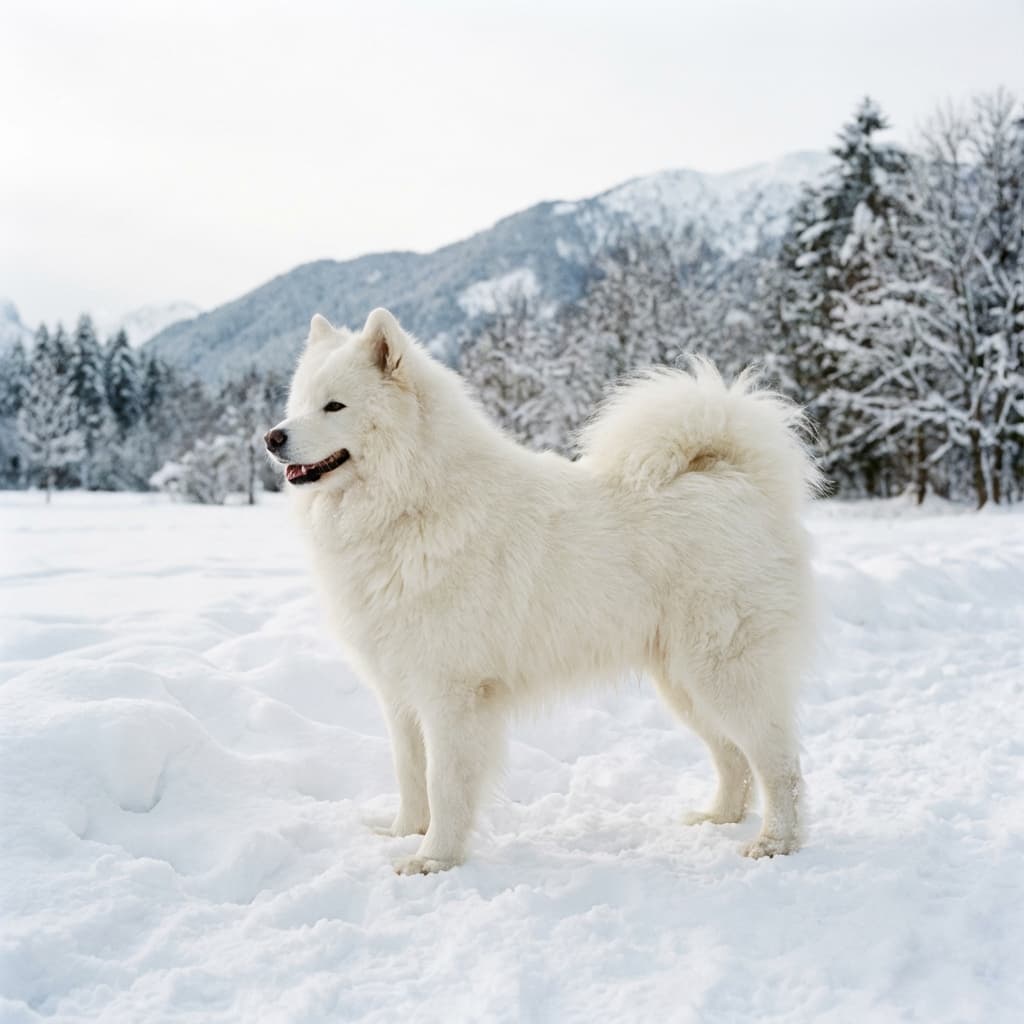
Samoyed
FCI Group
5• FCI 212
Size
Medium
Origin Country
XX
Height
50-60 cm
Weight
15-30 kg
Lifespan
10-12 years
Temperament
Overview
The Samoyed, also known as Samoiedskaïa Sabaka, is a breed of dog with extraordinary elegance and a majestic posture that captures the attention of every dog lover at first glance. The characteristic white fur and the famous "Samoyed smile" are distinctive features of this breed, which has accompanied the peoples inhabiting northern Russia and Siberia for centuries.
Developed by the nomadic Samoyed tribe, these dogs played extremely important roles in the daily life of the community – they guarded reindeer herds, assisted in hunting, and served as sled dogs in the harshest climatic conditions. Their unique bond with humans was their hallmark – Samoyeds slept in the tents of their owners, providing warmth during the freezing Siberian nights. The double, thick coat provides excellent thermal insulation, making these dogs resistant to extreme temperatures, both in winter and summer.
The modern Samoyed is not only a beautiful dog with a rich history but also a wonderful companion for family life. This breed is characterized by exceptional sociability, attachment to family, and particular patience with children. However, prospective owners must be aware that Samoyeds require a significant amount of physical activity – regular walks, playtime, and other forms of exercise are essential to keep the dog in excellent physical and mental condition.
The intelligence and a certain degree of independence of this breed can pose a challenge during training, but using positive reinforcement methods yields excellent results. The Samoyed is a dog that will not only bring joy and love to your home but also enrich the life of every family member with its energy and devotion. In our comprehensive guide, you will find detailed information about the health, grooming, history, and behaviors of this extraordinary breed – get to know the Samoyed better to fully understand its needs and provide the best care.
The Samoyed is a medium-sized dog with an impressive, Arctic appearance, distinguished by its thick, snow-white coat and characteristic, expressive "smile." The body structure is harmonious and proportional, combining strength, endurance, and agility.
Dimensions and proportions:
- Height at the withers: males 54-60 cm, females 50-56 cm (acceptable tolerance ±3 cm)
- Build: compact, well-muscled, giving an impression of strength and elegance at the same time
- Body length: slightly exceeds the height at the withers (proportions approx. 105:100)
Anatomical details:
- Head: strong, wedge-shaped, proportional to body size, with a slightly rounded skull and a distinct, but not too steep, stop
- Eyes: dark brown, almond-shaped, set wide apart and slightly slanted, giving the dog an intelligent, alert, and friendly expression
- Ears: small, triangular, upright and mobile, set high on the skull, slightly rounded at the tips
- Muzzle: strong, evenly tapering towards the nose, of medium length; black nose, lips, and eye rims
- Limbs: straight, strong, and well-muscled, with perfectly developed joint angles providing elasticity and strength
- Tail: long, heavily feathered, carried high over the back or to the side, curled in a characteristic way
Coat and coloration:
The Samoyed has a distinctive double polar coat, consisting of a soft, dense undercoat and longer, straight guard hairs with a weather-resistant structure. Around the neck and on the nape, a striking "ruff" forms, particularly pronounced in males. Acceptable coat colors are:
- Pure white
- Cream
- White with a biscuit shade
The overall appearance of the Samoyed exudes Arctic beauty, noteworthy strength, and exceptional elegance, making this breed one of the most recognizable and valued working dogs of Nordic origin.
The Samoyed is a breed of dog with a remarkably friendly and open temperament, which has been bred for centuries to live in close symbiosis with humans. Their temperament is characterized by extraordinary sociability, joyful energy, and deep attachment to family.
Main character traits:
- Sociability and friendliness: Samoyeds are extremely social and love being around people. Their natural openness makes them wonderful family dogs, particularly patient and gentle with children.
- Emotional sensitivity: Dogs of this breed exhibit a high sensitivity to their owners' emotions and can sense the moods in the home perfectly.
- Need for contact: Samoyeds do not tolerate prolonged solitude – left alone for many hours, they may exhibit undesirable behaviors such as destroying objects, excessive barking, or howling.
- Intelligence and independence: They are intelligent dogs but also possess a certain degree of independent thinking, which can sometimes manifest as stubbornness during training.
Relations with strangers and other animals:
Despite their impressive appearance, Samoyeds are not suited to the role of guard dogs – they are too friendly towards strangers and are more likely to greet an intruder with an enthusiastic wagging tail than aggression. They usually get along well with other dogs, especially if they have been properly socialized from puppyhood. However, they may exhibit hunting instincts towards smaller animals.
Activity and play:
Samoyeds are dogs full of life and energy who love to play and engage in all forms of activity. Their natural curiosity about the world and liveliness make them joyful companions for active families. However, this same curiosity can lead to attempts to escape if they are not provided with adequate yard security.
Characteristic behaviors:
- "Samoyed smile": A characteristic facial expression resembling a smile, created by the specific arrangement of the lips.
- Vocalization: Samoyeds enjoy "talking" – they can produce a variety of sounds, from murmurs to howls.
- Digging: Instinctively, they may dig holes, which is a remnant of their Arctic ancestry (preparing a den in the snow).
In summary, the Samoyed is a wonderful family dog that will bring immense joy and love to the home, provided they receive enough attention, family contact, and opportunities for active time together.
Samoyeds are generally a healthy and long-lived breed, with an average lifespan of 12 to 14 years. However, like any purebred, they can be prone to certain genetic and acquired conditions, so responsible breeding and proper care are crucial for maintaining good health.
Most common health issues:
- Hip dysplasia (HD): A developmental defect leading to improper fit of the hip joint, which can cause pain and arthritis. Responsible breeders perform radiological examinations of the parents before breeding.
- Progressive retinal atrophy (PRA): An inherited eye condition leading to gradual vision loss and blindness. Genetic tests are available to exclude carriers from breeding.
- Cataracts: Can occur as an inherited condition or age-related, requiring monitoring by a veterinary ophthalmologist.
- Diabetes: Samoyeds may be more prone to developing diabetes, especially in middle and older age.
- Skin problems: Food or environmental allergies, dermatoses, and skin infections can occur, especially with improper coat care.
- Congenital deafness: A rare condition that can affect white dogs of Nordic breeds.
Temperature sensitivity:
The thick, double coat protects Samoyeds well from the cold but makes them very sensitive to high temperatures. Owners must be particularly cautious during the summer:
- Avoid physical activity during the hottest parts of the day
- Ensure constant access to fresh water and shade
- Monitor for signs of overheating (heavy breathing, excessive drooling, weakness)
- Never leave a dog in a car on warm days
Health prevention:
- Regular veterinary visits: Annual check-ups and vaccinations as recommended
- Weight control: Obesity is a serious health issue – regular weighing and adjusting diet to activity level
- Screening tests: For dogs intended for breeding – dysplasia tests, genetic testing for PRA
- Oral hygiene: Regular tooth brushing and dental check-ups
- Coat care: Proper grooming prevents skin problems
Choosing a breeder:
Choosing a responsible breeder who conducts health tests on their breeding dogs, can provide genetic test results, and ensures puppies with stable temperaments and good health is crucial. Avoiding puppy mills significantly reduces the risk of acquiring a dog with serious health problems.
With proper veterinary care, a suitable diet, and regular physical activity, a Samoyed can enjoy a long, healthy, and happy life alongside their family.
Samoyed care requires regular commitment and consistency, especially due to its characteristic thick double coat. Proper grooming not only keeps the fur in beautiful condition but also prevents skin problems and improves the dog's quality of life.
Coat care:
- Basic brushing: During non-shedding periods, brushing 2-3 times a week with a metal brush and a comb with long teeth is sufficient to reach the undercoat.
- Shedding period: Samoyeds undergo intense shedding twice a year (in spring and autumn), during which they lose a significant amount of undercoat. During this time, daily, thorough brushing is necessary, which can take up to 30-60 minutes a day.
- Grooming tools: Slicker brush, steel comb with long teeth, undercoat rake, pin brush.
- Preventing mats: Special attention should be paid to areas prone to tangling: behind the ears, under the armpits, around the neck, and near the tail.
Bathing:
Samoyeds do not require frequent bathing – their coat has a natural ability to self-clean and repel dirt. Recommendations:
- Bathing only when truly necessary (3-4 times a year or when the dog is very dirty)
- Using mild shampoos designed for dogs with white fur
- Thoroughly rinsing out the shampoo to avoid skin irritation
- Thoroughly drying the coat (excess moisture in the thick undercoat can lead to skin problems)
- Never shave a Samoyed – the coat serves as insulation against both cold and heat
Paw care:
- Regular nail trimming (every 3-4 weeks) if they do not wear down naturally
- Checking the paw pads, especially after walks in snow, ice, or hot asphalt
- Trimming the fur between the toes to prevent ice or mud buildup
- Using protective balms on paw pads in extreme conditions
Ear, eye, and teeth care:
- Ears: Regular checking and cleaning (once a week) using special ear cleaning solutions
- Eyes: Daily removal of discharge from the corners of the eyes with a soft, damp cloth
- Teeth: Brushing teeth 2-3 times a week using dog toothpaste to prevent tartar buildup
Additional tips:
- Starting grooming from puppyhood makes it easier for the dog to get used to the procedures
- Rewarding calm behavior during grooming
- Considering professional grooming by a groomer 2-4 times a year
- Investing in good quality tools – they significantly ease the work and are more effective
Proper care of a Samoyed is not just a matter of aesthetics – regular attention to the coat, skin, and hygiene directly translates to the dog's health and comfort, as well as strengthening the bond between the owner and the four-legged friend.
Samoyed is a breed with high exercise requirements, bred for intensive physical work in the most challenging climatic conditions. As sled and herding dogs, Samoyeds need regular, demanding activity to maintain physical and mental balance.
Minimum exercise requirements:
- Activity time: At least 1.5-2 hours of intense effort daily
- Types of activities: Long walks, running, fetch games, training, dog sports
- Frequency: Minimum of 2-3 longer outings daily, with opportunities for free running in safe areas
Recommended forms of activity:
- Walking and running: Long, vigorous walks in varied terrain; the possibility of accompanying during jogging or cycling (with proper training)
- Agility: An excellent discipline that utilizes the intelligence and agility of the Samoyed
- Canicross / Bikejoring: Sports involving pulling the owner running or biking – tapping into the natural instincts of a sled dog
- Dog frisbee: A dynamic game combining running, jumping, and cooperation
- Sledding: In winter – a traditional form of activity that fully utilizes the breed's potential
- Swimming: An excellent form of exercise, especially in summer (though not all Samoyeds love water)
- Nosework: Activities that engage the sense of smell, stimulating the dog's mind
Mental stimulation:
In addition to physical activity, Samoyeds require regular intellectual stimulation:
- Training new commands and tricks
- Playing with interactive toys (dog puzzles, Kongs, scent mats)
- Obedience training and working dog training
- Diversity of walking routes – new scents and environments stimulate the mind
Seasonality of activity:
- Winter: Samoyeds love snow and cold – it's the perfect time for long, intense outdoor activities
- Summer: Need to adjust the schedule – activities during cooler parts of the day (early morning, late evening), avoiding exertion in the heat, frequent water breaks
Consequences of lack of exercise:
Unmet exercise needs lead to serious behavioral problems:
- Destructive behaviors (destroying furniture, chewing objects)
- Excessive barking and howling
- Hyperactivity and lack of focus
- Weight problems and related health issues
- Frustration, separation anxiety, depression
- Escapes and attempts to seek entertainment on their own
Adjustment to age:
- Puppies (up to 12-18 months): Moderate activities tailored to bone and joint development – shorter, more frequent walks, avoiding long runs on hard surfaces
- Adult dogs (2-8 years): Peak physical condition – intense, demanding activities
- Seniors (8+ years): Gradually adjusting intensity to the dog's capabilities, maintaining regularity, gentler forms of exercise
In summary, the Samoyed is a dog for active individuals and families who are willing to dedicate a significant amount of time to daily outdoor activities. Regular, varied forms of exercise are the key to a happy, healthy, and balanced Samoyed.
Training a Samoyed can be an interesting adventure, but also a challenge due to the independence characteristic of this breed and intelligence combined with a bit of stubbornness. The key to success is starting training early, being consistent, and using only positive reinforcement methods.
Basic training principles:
- Positive reinforcement: Rewarding for correct behavior (treats, praise, play) instead of punishing for mistakes – Samoyeds react poorly to aggression and coercion
- Consistency: Clear, unchanging rules followed by all family members
- Patience: Samoyeds learn at their own pace and may test boundaries – do not get discouraged
- Short, frequent sessions: 5-10 minutes several times a day is more effective than long, exhausting training sessions
- Early start: Beginning training from the first days in a new home (8-10 weeks of puppy life)
Socialization (a key element!):
Proper socialization during the puppy stage (3-16 weeks of life) is the foundation of a balanced character:
- Positive interactions with various people (children, adults, seniors)
- Introducing to other dogs and animals
- Acclimatizing to different environments (city, park, forest, pet store)
- Getting used to various stimuli (street sounds, public transport, crowds of people)
- Visiting a puppy kindergarten or group classes
Basic commands to teach:
- Sit – a fundamental control command
- Stay – teaching to wait in place
- Come / Here – recall (especially important due to tendencies to escape)
- Lie down – a calming position
- Leave / No – giving up unwanted behaviors
- Wait – self-control (e.g., before entering/exiting)
- Walking on a loose leash – key for comfortable walks
Typical challenges in training a Samoyed:
- Selective deafness: The dog knows exactly what you expect but chooses to ignore the command – requires patience and motivation
- Stubbornness: Samoyeds can be stubborn, especially when they don't see the point in a given behavior
- Distraction: Many stimuli in the environment can divert attention – training in controlled conditions, gradually increasing difficulty
- Tendencies to escape: A strong instinct to explore requires special attention when teaching recall
- Pulling on the leash: A natural instinct of a sled dog – requires systematic training to walk at heel
Motivation methods:
- High-value treats: Chicken, cheese, special training treats
- Play: A favorite toy as a reward often works better than food
- Verbal praise: Enthusiastic praise is important for people-oriented dogs
- Variety: Changing rewards to maintain interest
Advanced training and activities:
Once the basics are mastered, consider:
- Advanced obedience classes
- Training for dog sports (agility, rally obedience)
- Training for sled work
- Therapeutic training (therapy dog visiting hospitals, nursing homes)
- Trickdog – learning tricks and stunts
What to avoid:
- Physical punishment: Never use physical punishment – it builds fear and destroys the bond
- Shouting: Raising your voice is ineffective and stressful for the dog
- Monotony: Repetition bores intelligent Samoyeds – introduce variety
- Too high expectations: Every dog learns at its own pace
- Training in heat: Samoyeds do not tolerate high temperatures well – plan training for cooler parts of the day
Professional support:
It is worth considering:
- Classes with a certified behaviorist or dog trainer
- Group classes for puppies and adult dogs
- Individual consultations in case of behavioral problems
In summary, training a Samoyed requires patience, consistency, and creativity, but with the right approach, it brings excellent results. A dog that has been properly trained from puppyhood becomes a pleasant, obedient companion with whom you can safely and joyfully share life.
A properly balanced diet is the foundation of health, fitness, and longevity for a Samoyed. Due to the high activity level of this breed, the energy requirements are significant, and proper nutrition directly translates to the quality of the dog's life.
Basic nutrition principles:
- High-quality protein: The foundation of the diet (min. 22-25% for adult dogs, 28-30% for puppies) from meat, fish, or poultry – supports muscle building and regeneration
- Healthy fats: A source of energy and essential fatty acids (omega-3, omega-6) for healthy skin and a shiny coat (min. 12-15% fat)
- Carbohydrates: A source of energy – preferably complex carbohydrates from rice, oats, sweet potatoes
- Fiber: Supports digestion and regular bowel movements
- Vitamins and minerals: A complete set of micronutrients supporting the body's functions
Types of diets:
- Dry food (kibble): Convenient, long-lasting, helps clean teeth. Choose premium or super-premium foods without unnecessary fillers and artificial additives.
- Wet food: Higher moisture content, more appetizing, but more expensive and less convenient to store
- BARF diet (raw meat and bones): Requires knowledge and diligence, but valued by many owners – necessary consultation with a veterinarian or canine nutritionist
- Home-cooked diet: Full control over ingredients, but requires balancing with the help of a specialist
Adjustment for age and activity:
- Puppies (2-12 months): Special food for medium/large breed puppies with increased protein and calorie content; 3-4 meals a day; avoid premature transition to adult food
- Active adult dogs (1-7 years): Food for active dogs with appropriate caloric content; 2 meals a day; adjust portions to activity level
- Seniors (7+ years): Food for older dogs with reduced caloric content, enriched with joint-supporting ingredients; monitor weight; possible 2-3 smaller meals
- Pregnant/nursing females: Puppy food or special food for pregnant females – increased energy requirements
Weight and portion control:
- Regular weighing: Weighing every 2-4 weeks to quickly respond to changes
- Body condition: The dog should have a noticeable but not visible waist; ribs should be felt under a thin layer of fat
- Portion adjustment: The amount of food depends on individual metabolism, activity level, and type of food – manufacturer recommendations are a starting point, not a rigid rule
- Treats: Should not exceed 10% of daily caloric needs; choose healthy, natural treats
Obesity prevention:
Samoyeds tend to gain weight, especially with insufficient activity:
- Strict portion and calorie control
- Limiting treats and table scraps
- Regular physical activity
- Consultation with a veterinarian if noticeable weight gain occurs
Water:
- Constant access to fresh water – especially on hot days and after physical activity
- Change water at least once a day
- Regularly clean bowls
Prohibited products (toxic to dogs):
- Chocolate and cocoa
- Onion, garlic, leeks
- Grapes and raisins
- Xylitol (artificial sweetener)
- Avocado
- Alcohol, caffeine
- Cooked bones (can easily splinter and damage the digestive tract)
- Excess salt and fat
Supplementation:
With complete food, supplementation is usually not necessary, but in certain situations, it is worth considering:
- Omega-3 fatty acids (salmon oil) – for healthy coat and skin
- Glucosamine and chondroitin – joint support for older dogs
- Probiotics – support for digestion
- Always after consultation with a veterinarian
Transitioning to a new food:
- Gradual introduction over 7-10 days
- Start with 25% of the new food, increasing the proportion every 2-3 days
- Monitor gastrointestinal reactions (stool, appetite)
In summary, a proper diet is an investment in the health of a Samoyed. High-quality food, tailored to age, activity level, and individual needs, combined with portion control and obesity prevention, will ensure the dog a long, healthy, and energetic life.
Characteristic Traits
Pros
- Friendly and gentle nature
- Excellent family dog
- Beautiful white coat
- Intelligent and sociable
- Cold-resistant
- Healthy and long-lived breed.
Cons
- Very intense shedding
- Requires a lot of movement and activity
- Struggles with heat
- Can be stubborn in training
- Not suitable as a guard dog
- Requires regular grooming.
Behavioral Ratings
Breed History
The history of the Samoyed is deeply rooted in the Arctic regions of northern Russia and Siberia, where this breed has accompanied humans for thousands of years. The name of the breed comes from the nomadic Samoyed (Samojad) tribe that inhabited the harsh lands between the White Sea and the Yenisei River.
Ancient origins and functions:
Samoyeds are among the oldest dog breeds that have survived virtually unchanged for thousands of years. Genetic studies confirm their close relationship with wolves and their belonging to the group of basal (primitive) dogs. For centuries, these dogs played key roles in the survival of the Samoyed people:
- Sled dogs: Transporting people and goods across snowy terrains
- Herding dogs: Guarding and directing reindeer herds
- Hunting dogs: Assisting in hunting large animals
- Companions and warmers: Sleeping in tents with people, providing warmth on cold nights (hence they were colloquially called living blankets)
Close bond with humans:
Unlike many other working dogs, Samoyeds have always been treated as family members, not just ordinary working animals. This multi-generational cooperation and living in close contact with humans shaped their exceptionally friendly, social character, which has endured to this day.
Arrival in Europe – Ernest Kilburn Scott:
The modern history of the Samoyed in the West began in 1889, when British zoologist Ernest Kilburn Scott spent three months among the Samoyed tribe. Fascinated by these dogs, he brought to England:
- Sabarka – a brown dog
- Whitey Petchora – a cream female from the western Ural region
- Musti – a snow-white dog from Siberia
These few dogs, along with individuals brought by polar explorers (including Fridtjof Nansen, Roald Amundsen, Ernest Shackleton), formed the foundation of the western lineage of Samoyeds.
Polar heroes:
Samoyeds played a crucial role in the epic of polar expeditions at the end of the 19th and beginning of the 20th century:
- They participated in expeditions to the North and South Poles
- They pulled sleds with supplies for hundreds of kilometers in extreme conditions
- Many of these dogs did not survive the expeditions, but their contribution to polar discoveries was invaluable
Official recognition and spread:
- 1909: The first official breed standard written in England
- 1912: Establishment of the Samoyedo Club in the United Kingdom
- 1923: Official registration of the breed by the American Kennel Club (AKC)
- FCI Patronage: Acceptance of patronage by the Nordic Kennel Union (NKU), representing Nordic countries
Evolution of role:
As the 20th century progressed, Samoyeds underwent a transformation from working dogs to companion and show dogs:
- In Nordic countries, still used in sledding and winter sports
- In other countries, mainly family and show dogs
- Growing popularity in agility, obedience, and other dog sports
- Utilized as therapy dogs due to their gentle temperament
Modern times:
Today, Samoyeds are popular worldwide as family dogs, while still retaining their original traits – endurance, strength, intelligence, and deep attachment to humans. Responsible breeders strive to preserve not only the breed's characteristic appearance but also its authentic, friendly temperament and working abilities.
The history of the Samoyed is a story of thousands of years of symbiosis between humans and dogs in some of the most challenging conditions on Earth – a bond that has survived to this day, making Samoyeds exceptional companions for modern families.