Schipperke
FCI Group
1• FCI 83
Size
Small
Origin Country
BE
Height
30-38 cm
Weight
3-9 kg
Lifespan
13-15 years
Temperament
Overview
Schipperke, often referred to as the little black devil, is a unique dog breed that attracts attention with its bravery, vitality, and relentless character. Originating from Belgium, this small but brave companion originally served as a guardian on boats and an effective hunter of rats and mice. Today, the Schipperke wins hearts as a charming, intelligent, and easy-to-care-for family dog.
What sets the Schipperke apart from other breeds? Above all, its constant curiosity and exceptional intelligence, which lead to amusing, though sometimes slightly troublesome situations. This dog is full of energy and joy for life, bringing a lot of life and positive energy into the home, although it can also introduce a bit of creative chaos at times.
The Schipperke typically stands between 30 to 38 cm tall at the withers and weighs between 3 to 9 kg, with the most desirable weight being between 4 to 7 kg. Its small size makes it an ideal companion both in an apartment and in a house with a garden. The Schipperke's coat is dense, double-layered, straight, and stiff to the touch, while the classic solid black color adds elegance and character.
The Schipperke is not just about its charming appearance, but above all, its extraordinary loyalty and devotion to its family. As an excellent guardian, it remains alert and ready to alert its owner to potential threats. Its courage and determination, often disproportionately large compared to its small body size, make it an excellent watchdog that never fails in this role.
The Schipperke loves to run, jump, and play, which is why it needs a daily dose of physical and mental activity. Its liveliness and boundless energy make walks, playtime, and shared outdoor activities a true pleasure for it. If you are looking for a dog that will bring dynamism, energy, and a lot of joy into your life, the Schipperke may be the perfect choice. This is a dog that is hard not to love for its playful character and unconditional love.
To learn more about this fascinating breed, we invite you to continue reading our comprehensive guide, where you will find detailed information about its health, grooming, activity requirements, training, nutrition, rich history, distinctive appearance, and temperament.
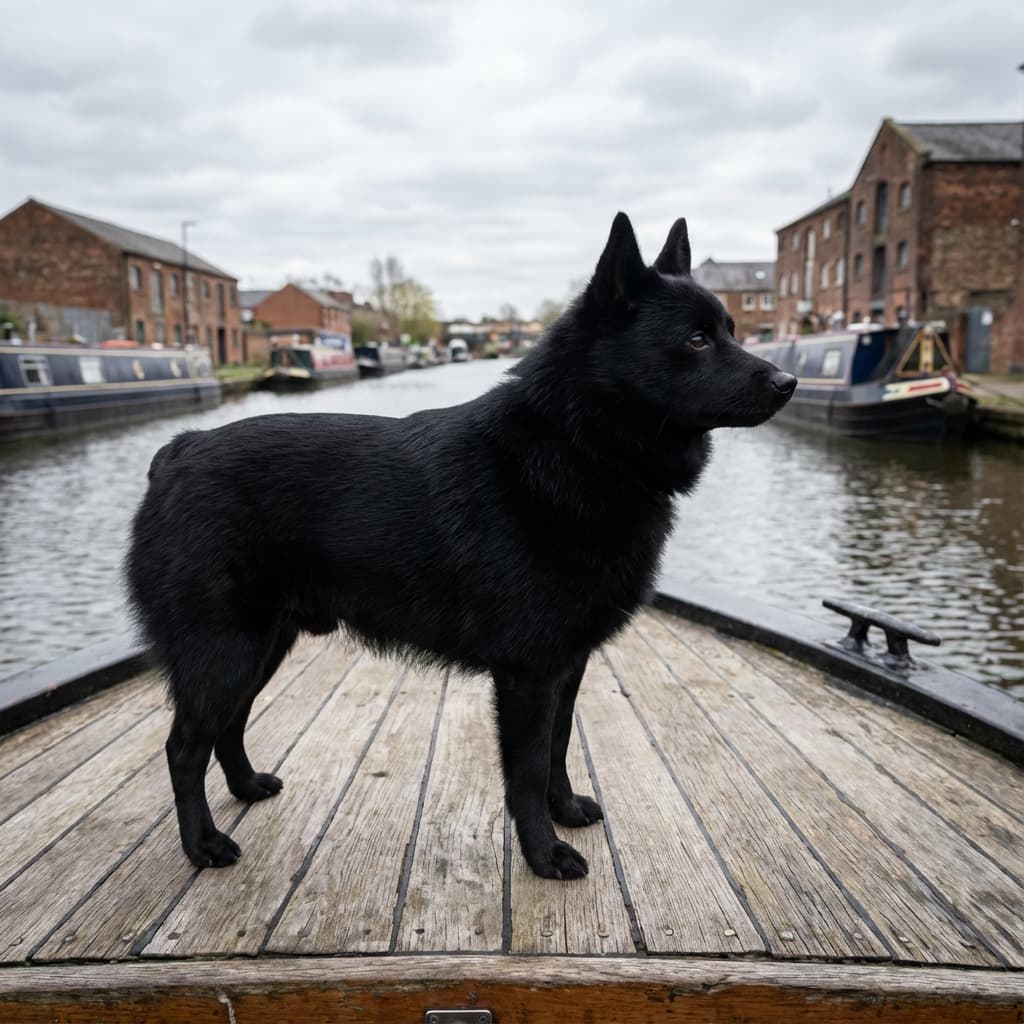
Schipperke is a small but very solidly and compactly built dog with a characteristic fox-like silhouette. Its head is wedge-shaped, with a well-developed skull and a relatively short, yet distinctly defined muzzle. The body is proportional, wide, and stocky, giving it a neat and harmonious appearance.
The most distinctive feature of this breed is its rich coat, which is straight and stiff to the touch, creating a prominent and impressive mane around the neck, a plentiful ruff on the chest, and dense trousers on the hind legs. These natural adornments give the Schipperke a unique, noble look.
Breed dimensions:
- Height at the withers: from 30 to 38 cm
- Weight: from 3 to 9 kg
- Most desirable body mass: from 4 to 7 kg
Dogs of this breed have dark, almond-shaped eyes that give them a lively, intelligent, and somewhat mischievous expression. The ears are small, erect, and triangular, set high on the head, which further emphasizes their natural alertness and readiness for action.
The Schipperke's coat is uniformly black, which is the only accepted color in the breed standard. The undercoat may be slightly dark gray, which is a natural and accepted phenomenon. Dogs of this breed are characterized by strong, well-muscled limbs and a balanced, harmonious body structure, making them extremely agile, fast, and active.
The Schipperke's tail is set high and can be naturally long or short. Traditionally, it was docked very short or completely, but nowadays in many countries this practice is banned, and dogs display their natural tails. At rest, the tail should hang down, while in motion or in a state of excitement, it may be raised energetically.
Schipperke is a dog with a perfect temperament, combining the traits of an excellent guardian and a devoted, loving family companion. Dogs of this breed are always alert and ready to immediately warn of any dangers or unusual situations, making them great watchdogs, especially considering their small size.
Schipperkes are extremely energetic and full of life, which means they are always engaged with the world around them. Their natural curiosity drives them to eagerly explore everything happening around them. This alertness and interest in their surroundings often manifests as distrust towards strangers, which can lead to intense and loud barking in situations the dog perceives as potentially suspicious.
Family relationships:
- Very gentle and patient with children, they love spending time with them
- They may be too energetic for very small children due to their energy
- They strongly bond with the whole family, being loyal and devoted
- They need a lot of attention and interaction with household members
Schipperkes are also known for being excellent at catching mice, rats, and other rodents, which is a direct legacy of their historical tasks on boats and in workshops. This hunting instinct remains very strong even after many generations of living as companion dogs.
The temperament of this breed means they require a lot of physical and mental activity to avoid behavioral problems arising from boredom or excess unused energy. In the right conditions, with proper training, consistent socialization, and an active lifestyle, Schipperkes can become wonderful, reliable companions for families and active, engaged owners.
It is important to remember that despite their small size, Schipperkes have strong personalities and need an owner who can provide them with appropriate boundaries, consistency in training, and plenty of activity and mental stimulation.
Schipperke is generally a healthy and resilient breed, known for its longevity and good physical condition. The average lifespan of a Schipperke is between 13 to 15 years, although many individuals can live up to 16-17 years with proper care and a healthy lifestyle.
Dogs of this breed are usually well-muscled, disease-resistant, and exhibit natural vitality, allowing them to enjoy a long and active life. However, it is important to provide them with appropriate, regular health care, including:
- Regular check-ups with a veterinarian (at least once a year)
- Vaccinations according to the veterinarian's recommendations
- Regular deworming and protection against external parasites
- Annual preventive examinations, especially for older dogs
Weight management is particularly important, as Schipperkes tend to gain weight if they do not receive adequate exercise or are overfed. Being overweight can lead to additional health problems, so monitoring the dog's condition is crucial.
Conditions occurring in the breed:
- Cataracts - clouding of the eye's lens, which can lead to vision loss
- Progressive retinal atrophy (PRA) - a hereditary condition leading to blindness
- Hip dysplasia - abnormal development of the hip joint
- Legg-Calvé-Perthes disease - necrosis of the femoral head, most commonly in young dogs
- Hypothyroidism - hormonal disorders affecting metabolism
- Epilepsy - occasionally occurring in the line
With proper veterinary care, a healthy diet, regular exercise, and health monitoring, Schipperkes can enjoy a long, healthy, and active life. Choosing a puppy from a responsible breeder who conducts genetic testing on the parents can significantly reduce the risk of hereditary conditions.
Grooming a Schipperke is significantly easier than it might seem, considering their dense and impressive coat. Regular brushing once or twice a week is sufficient to keep the fur in excellent condition and prevent matting.
The coat of this breed naturally lays down and does not require professional trimming, clipping, or styling. This is a significant advantage for owners who want to avoid the costs of visits to a grooming salon. Regular brushing with a natural bristle brush or a furminator to remove undercoat is all that is needed.
Shedding in Schipperkes:
- Moderate most of the year
- Intense during seasonal changes (spring and autumn)
- Females may shed more intensely after hormonal cycles
- During periods of heavy shedding, daily or every other day brushing is recommended
During seasonal shedding, especially in spring and autumn, dogs of this breed can lose truly impressive amounts of undercoat. It is advisable to significantly increase the frequency of brushing to effectively remove dead hair and prevent it from spreading throughout the house and forming hairballs.
Additional grooming includes:
- Ears - regular checks and cleaning once a week, particularly important due to their upright ears
- Teeth - brushing 2-3 times a week to prevent tartar buildup
- Nails - trimming every 3-4 weeks if they do not wear down naturally during walks
- Bathing - only as needed, 3-4 times a year, as too frequent baths can weaken the skin's natural protection
Proper, systematic grooming not only enhances the dog's appearance and makes them look elegant but also significantly contributes to their health, well-being, and early detection of potential skin or health issues.
Schipperke is a dog with very high energy and unlimited vitality, which is why it needs at least an hour, preferably 1.5-2 hours of physical activity every day. This is not a breed for those who prefer a calm, low-active lifestyle.
Ideal forms of activity for Schipperke:
- Long, energetic walks (at least 2-3 times a day)
- Running alongside a bicycle (after reaching full physical maturity)
- Playing fetch with a ball or frisbee
- Hiking in forests and mountains
- Playing in a dog park with other canines
- Swimming (if the dog is gradually accustomed to water)
Schipperke is an extremely curious dog that loves to explore its surroundings and can be a great companion for various outdoor activities. It will want to investigate every new place, encounter new scents, track trails, and observe the world around it.
Mental stimulation is just as important as physical activity. Schipperke is a smart breed that needs mental challenges to avoid boredom and prevent behavioral problems. Excellent solutions include:
- Games to find hidden treats or toys
- Interactive puzzle toys for dogs
- Training tricks and new commands
- Cynological sports: agility, rally-o, flyball
- Scent exercises and tracking
It is important to provide Schipperke with the right amount of exercise and stimulation, as a bored dog of this breed can become destructive. It may destroy objects, bark excessively, dig holes in the garden, or develop other undesirable behaviors resulting from excess unspent energy.
It is also worth remembering that Schipperke has a strong hunting instinct, so caution should be exercised during walks in the field, and the dog should be properly secured to prevent it from chasing small game.
Schipperkes are very intelligent and eager to learn, which theoretically makes them relatively easy to train. However, their strong personality, independence, and sometimes stubborn approach mean that they require an experienced, consistent owner.
This breed responds best to positive training methods based on rewards, praise, and play. The use of physical punishment or yelling is completely discouraged and can lead to behavioral problems and a breakdown of the bond with the dog.
Key training principles for Schipperkes:
- Early start - starting training from a young age, preferably from 8-10 weeks of life
- Consistency - the same rules must apply at all times, without exceptions
- Patience - Schipperkes can be stubborn, do not get discouraged
- Short sessions - 5-10 minutes of intense training, repeated 2-3 times a day
- Diversity - avoiding monotony, introducing new exercises and challenges
- Positive reinforcement - treats, toys, praise
Socialization is absolutely crucial for this breed. Schipperkes have a natural distrust of strangers and a tendency to bark excessively, so it is necessary to:
- Introduce the puppy to various people (children, adults, seniors)
- Expose them to other dogs and animals from a young age
- Acclimate them to different sounds, smells, and situations
- Visit various places (city, park, forest, stores)
- Travel by different means of transportation
Recommended training activities:
- Basic obedience - Sit, Lie down, Stay, Come, Heel
- Agility - an excellent activity that utilizes intelligence and agility
- Rally-O - a combination of obedience and agility
- Flyball - great for utilizing energy and hunting instinct
- Tricks and dog dancing - creative use of intelligence
- Scent sports - natural tracking instinct
It is also worth taking care of anti-barking training, as Schipperkes have a strong tendency to loudly alert about anything they consider unusual. Without proper training, this can lead to problems in neighborly relations.
Classes with a professional trainer, especially in puppy groups, can be an excellent way to channel the energy and intelligence of Schipperkes, as well as to strengthen the bond between the dog and the owner and develop social skills.
A proper, balanced diet is crucial for the health, condition, and longevity of Schipperke. Dogs of this breed should be fed high-quality food that meets their current needs based on age, body weight, and level of physical activity.
Nutritional recommendations for Schipperke:
- Puppies (2-12 months) - puppy food for small breeds, 3-4 meals a day, rich in protein and calcium
- Adult dogs (1-7 years) - food for active adult dogs, 2 meals a day, balanced for energy
- Senior dogs (7+ years) - senior food, easier to digest, tailored to reduced energy needs
It is advisable to choose foods rich in high-quality animal protein (chicken, beef, fish), vitamins, minerals, and omega-3 and omega-6 fatty acids, which support skin, coat, joint health, and overall body condition.
What to avoid in a Schipperke's diet:
- Low-quality foods containing grain fillers
- Artificial additives, colorings, and preservatives
- Excess carbohydrates leading to weight gain
- Feeding table scraps (can lead to digestive problems)
- Toxic products for dogs: chocolate, grapes, onions, garlic, xylitol
Weight control is particularly important, as Schipperke has a clear tendency to gain weight, especially if they do not receive enough exercise. Overweight dogs are at risk of:
- Joint and spine problems
- Heart and circulatory diseases
- Diabetes
- Shortened lifespan
Practical feeding tips:
- Feeding at regular times (e.g., morning and evening)
- Controlling portion sizes according to the manufacturer's guidelines and the dog's condition
- Limiting treats to a maximum of 10% of daily caloric intake
- Using treats as rewards during training
- Fresh water always available, especially after physical activity
- Regularly weighing the dog (monthly) to monitor weight
When choosing a specific food, it is advisable to consult with a veterinarian, who can help select the optimal type and amount of food tailored to the individual needs of the dog. Regular monitoring of weight and overall health will help keep the Schipperke in excellent condition for many years.
Characteristic Traits
Pros
- Easy to care for
- Extremely loyal and devoted
- Small and agile
- High intelligence
- Excellent guard
- Long-lived and healthy
- Does not require grooming.
Cons
- Requires a lot of movement and activity
- Can be excessively noisy
- Needs consistent training
- Distrustful of strangers
- Strong hunting instinct
- Tendency to gain weight.
Behavioral Ratings
Breed History
Schipperke has a long, fascinating, and rich history, dating back at least to the 17th century. This breed originates from Belgium, specifically from the St. Gery district in Brussels, where it was a favorite among workers, craftsmen, shoemakers, and coachmen.
The name Schipperke comes from a Flemish dialect and means little shepherd or little captain. This indicates the dual origin and purpose of the breed - on one hand as a herding dog, and on the other as a companion to captains and sailors on river and canal boats, where it served as a guard and an excellent rat hunter.
The Legend of the Schipperke Tail:
According to one of the most popular legends, around 1690, local dog shows were organized in Brussels, where owners showcased their dogs and intricately crafted brass collars that adorned them. One day, an unhappy shoemaker, whose dog did not win the competition, in a fit of anger cut off the tail of the winning dog. Unexpectedly, this modification was deemed attractive and elegant, which initiated a trend of completely removing tails from all dogs of this breed. This practice lasted until the end of the 20th century when it was banned in most European countries.
Functional Role in History:
- Rodent Hunter - excelled at dealing with rats, mice, and moles
- Guard Dog - a vigilant guardian of workshops, boats, and homes
- Companion of Craftsmen - a favorite among shoemakers, tailors, and other craftsmen
- Boat Dog - a guardian and rat hunter on canal boats
The first official presentation of the Schipperke at a dog show took place in 1882 in the city of Spa in Belgium. This event contributed to the growing popularity of the breed among the upper social classes.
A true breakthrough in the breed's history was the interest that Schipperke sparked in Belgian Queen Marie Henriette at the end of the 19th century. Her enthusiasm and patronage of the breed significantly contributed to the popularity of Schipperke not only in Belgium but throughout Europe.
In 1887, the first individuals of this breed arrived in Great Britain and the United States, where they quickly gained recognition as both working and companion dogs. The first breed standard was also established in the same year.
In 1888, the first club for Schipperke enthusiasts was founded, which is the oldest breed club in Belgium. Club members worked on creating an official breed standard and on standardizing the breed type, which required many years of selection and thoughtful breeding associations.
Over the years, breeders put tremendous effort into standardizing the Schipperke breed type, as there was significant variation in size, build, and characteristics in the early years. Thanks to these efforts, the modern Schipperke presents a uniform, recognizable breed type.
Today, Schipperke is valued worldwide as an intelligent, loyal, and energetic companion dog, which has retained many traits of its working ancestors, including alertness, courage, and an extraordinary hunting instinct.