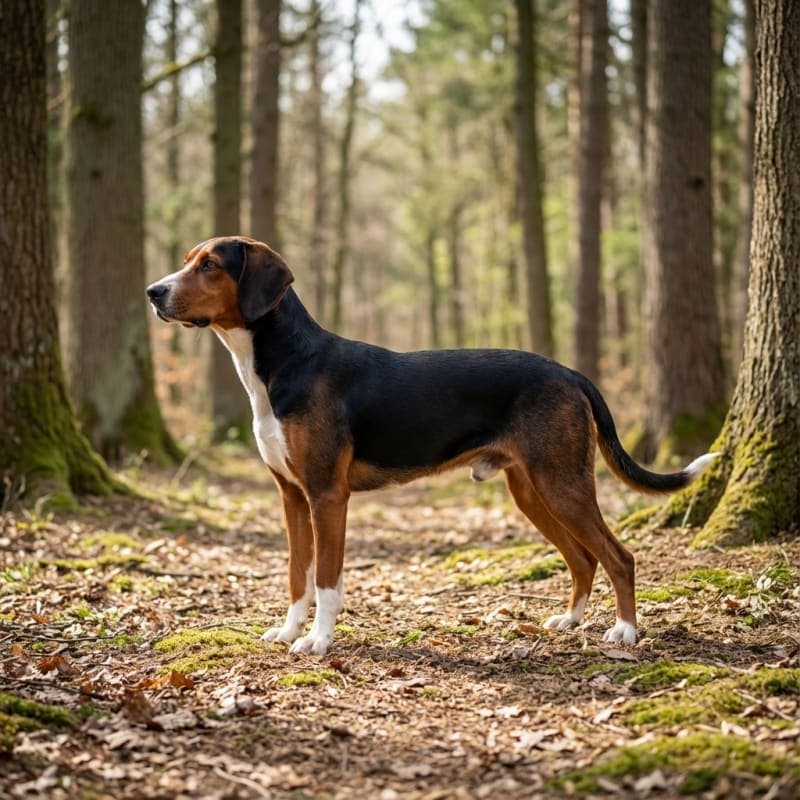
Serbian tricolor hound
FCI Group
6• FCI 229
Size
Medium
Origin Country
XX
Height
44-55 cm
Weight
20-25 kg
Lifespan
11-13 years
Temperament
Overview
Serbian Tricolor Hound, also known as Srpski Trobojni Gonic, is a fascinating hunting breed with roots in Serbia. Its remarkable stamina and energy make it not only an effective hunter but also an excellent companion in everyday life.
Medium-sized and robust, it perfectly combines functionality with aesthetics. The history of this breed dates back to the early 20th century, and it was officially recognized as a separate breed in 1946. Since then, the Serbian Tricolor Hound has captured the hearts of dog lovers worldwide, especially among hunters who appreciate its tracking skills.
One of the most distinctive features of this breed is its strong hunting instinct. Traditionally used for hunting wild boar and other large game, it requires the right approach and training. It needs plenty of exercise and stimulation to maintain its mental and physical balance. Therefore, owners should be prepared for daily long walks and active play in the field.
The Serbian Tricolor Hound is an incredibly loyal and devoted family member. Its sociable nature means it gets along well with people and other dogs. However, due to its hunting instinct, socialization from a young age is absolutely crucial. It may have difficulties interacting with smaller animals, so early and consistent training will ensure a harmonious life within the family.
In the following sections of the guide, you will find detailed information regarding the health, grooming, exercise, training, diet, history, appearance, and behavior of the Serbian Tricolor Hound. Each of these aspects has been carefully discussed to help you better understand and care for your four-legged friend. The Serbian Tricolor Hound is a unique dog that will undoubtedly bring a lot of joy and energy into your life. Its unique traits and character make it not only a hunting dog but also an irreplaceable family companion that will support you for many years to come.
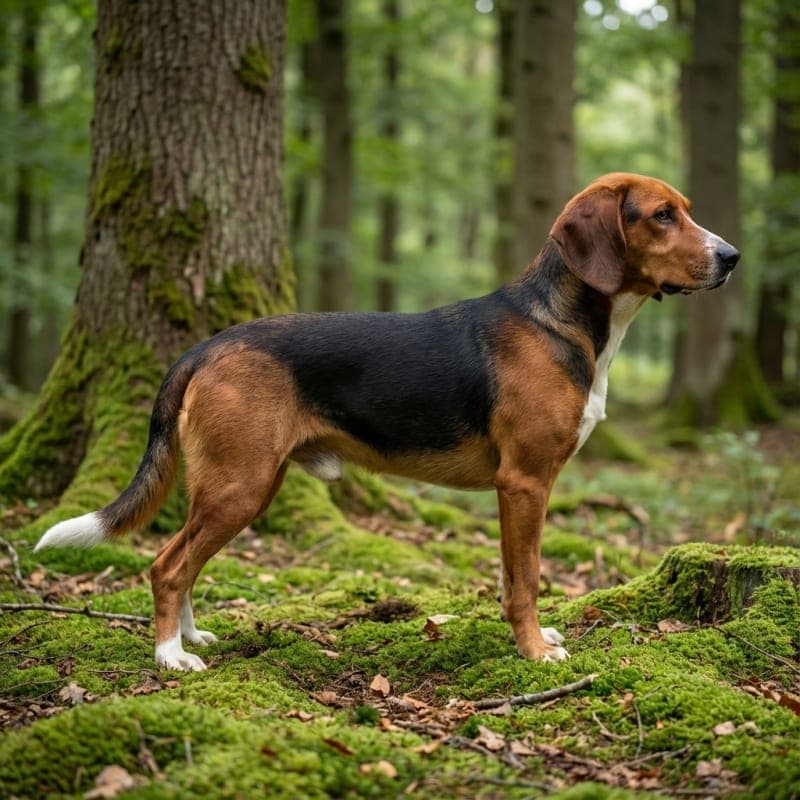
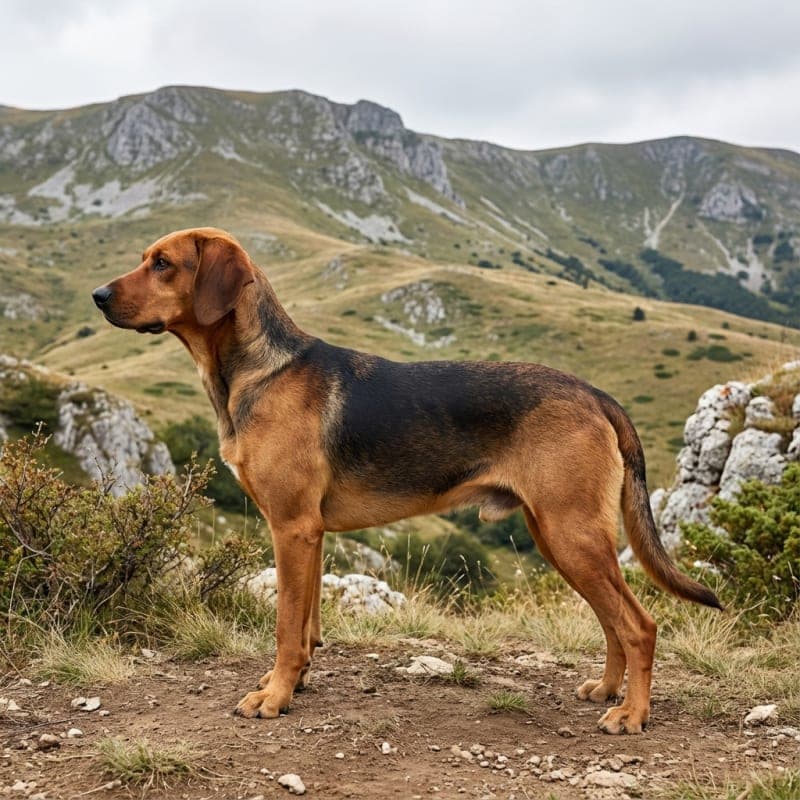
The Serbian tricolor hound is a medium-sized dog with a strong and harmoniously built silhouette. The height at the withers ranges from 44 to 55 cm, making it a dog with a solid yet compact posture. The body length from the withers to the ischial tuberosities is 10% greater than the height at the withers, giving it proportional proportions.
Its coat is short and dense, with a well-developed undercoat that provides protection against various weather conditions. A characteristic feature of its appearance is the tricolor coat - deep red or fox red with a black coat and white markings that may appear on the head, neck, chest, and legs.
The head is dolichocephalic (narrow skull combined with a large length), slim, with diverging lines of the skull and muzzle. The skull is slightly rounded, and the muzzle is well developed. The eyes are almond-shaped and dark, giving it an intelligent and attentive expression. The ears are of medium length, hanging down, closely adhering to the cheeks, which is typical for hound dogs.
The tail is of moderate length, strong at the base, tapering towards the end, always carried slightly upwards or horizontally during movement. Overall, the Serbian tricolor hound presents itself as a lively dog with a harmonious build and a distinctive, easily recognizable appearance that perfectly reflects its hunting function.
The Serbian tricolor hound is a dog with a lively and sociable temperament. It is loyal, devoted, and full of energy, making it an excellent companion for active families. This breed is characterized by a strong hunting instinct, which makes it very active, prone to tracking, and capable of showing remarkable perseverance during work.
It may be somewhat suspicious of strangers, but with proper socialization, it becomes friendly and open. The Serbian tricolor hound needs a lot of attention and mental stimulation to avoid boredom, which can lead to destructive behaviors such as chewing furniture or excessive barking.
In interaction with children, it is usually gentle and patient, but it is important to always supervise their play to ensure the safety of both parties. This breed enjoys the company of other dogs, with which it can easily form friendly relationships during walks or playtime.
However, it should be noted that their strong hunting instinct makes them unsuitable for living with other smaller pets, such as cats, rabbits, or rodents. They may treat them as prey. The Serbian tricolor hound is a dog that, combining energy, intelligence, and loyalty, becomes a wonderful companion both in the field during hunts and in the comfort of home.
The Serbian tricolor hound is a breed known for its overall health and endurance. It typically lives from 11 to 13 years, which is a typical lifespan for dogs of this size. There are no known specific genetic disorders characteristic of this breed, making it relatively resistant to breed-specific diseases.
However, like any breed, it may be prone to certain general health issues, such as hip dysplasia and ear infections, particularly due to their drooping structure. Regular veterinary visits, a proper diet, and adequate exercise are crucial for maintaining its health and vitality.
A well-balanced diet rich in protein and nutrients will help maintain its physical condition and avoid obesity, which can strain the joints. Regular ear cleaning is also important to prevent bacterial and fungal infections.
This breed tolerates various weather conditions well, both heat and cold, thanks to its dense coat with an undercoat. This makes it a versatile companion for hunting in different climatic conditions. Regular vaccinations, deworming, and flea and tick prevention are essential for keeping the dog healthy.
The care of the Serbian tricolor hound is relatively simple and low-maintenance. Their short, dense coat requires minimal grooming. Typically, regular brushing once or twice a week is sufficient to remove dead hair, minimize shedding, and keep the coat in good condition.
This breed is moderately shedding, which means that during the spring and autumn seasons, they may shed more fur. During this time, it is advisable to increase the frequency of brushing to daily to manage the amount of loose hair.
Regular baths are recommended only as needed, for example, when the dog is very dirty after hunting or playing outdoors. Too frequent bathing can lead to excessive drying of the skin and loss of natural oils that protect the coat.
Special attention should also be paid to ear and dental hygiene. Due to their droopy ear structure, the Serbian tricolor hound is prone to ear infections, so regular checking and cleaning of the ears is essential. Brushing their teeth a few times a week will help prevent dental issues and tartar buildup.
With their natural resilience and lack of special grooming requirements, the Serbian tricolor hound is suitable for owners who prefer dogs with low grooming needs, while still attending to their pet's basic hygiene needs.
The Serbian Tricolor Hound is a dog with a high energy level and needs a lot of exercise every day. It requires at least 60-90 minutes of intense physical activity daily to maintain health, happiness, and emotional balance.
The ideal way to meet its exercise needs is through long runs, walks in the woods, or play in open areas where it can fully utilize its energy. Due to its strong hunting instinct, this breed loves to run, explore its surroundings, and track scents, making outdoor activities natural and essential for it.
Therefore, it is important to provide it with space to run and the opportunity to interact with other dogs during walks or visits to the dog park. It is also essential that activities are varied - a combination of walks, running, fetch games, and scent exercises will help avoid boredom, which can lead to behavioral problems.
The Serbian Tricolor Hound excels as a companion for jogging, cycling, or hiking, thanks to its endurance and determination. It is also worth considering participation in canine sports such as mantrailing or nosework, which will allow it to utilize its natural tracking skills in a controlled manner.
The training of the Serbian tricolor hound should be based on positive motivation and consistency. This breed is intelligent and learns quickly, but can also be quite independent and stubborn, which sometimes makes training require patience and determination from the owner.
The best approach to training is short but regular training sessions (10-15 minutes) that are fun and engaging. Early socialization with other dogs, people, and different environments is absolutely crucial to ensure proper behavior in adulthood and to avoid issues with distrust or anxiety.
The Serbian tricolor hound responds excellently to positive reinforcements such as treats, praise, and play. Avoid physical punishment or yelling, as these can discourage the dog and harm your relationship. It is also good to introduce a variety of exercises and games to keep his interest and prevent boredom.
Due to his strong hunting instinct, it is important not to let him run loose in areas where he may encounter smaller animals or wildlife. It is also worthwhile to train a solid recall to maintain control over the dog even in situations where he gets distracted by an interesting scent.
Basic commands such as Sit, Stay, Come, Lie Down should be taught from a young age. For more advanced owners, tracking training or participating in hunting competitions can be an excellent way to utilize the natural abilities of this breed.
The diet of the Serbian tricolor hound should be well-balanced and tailored to its activity level, age, and health status. Owners should choose high-quality foods that are rich in animal protein and nutrients essential for maintaining its energy, muscle mass, and overall health.
Due to its active lifestyle, the diet should contain an appropriate amount of calories (usually 1200-1600 kcal per day for an adult dog, depending on the activity level) to provide energy while avoiding overweight, which can strain the joints and lead to health problems.
Regular meals adjusted to the age (puppies 3-4 times a day, adult dogs 2 times a day), weight, and activity level of the dog are essential. It is also recommended to avoid giving table scraps, as some human foods can be harmful to dogs (chocolate, onions, garlic, grapes).
It is important to always have fresh water available for the dog, especially after intense physical activity, to ensure proper hydration and thermoregulation. For dogs actively participating in hunting or canine sports, it may be worth considering additional supplementation, such as omega-3 fatty acids for joints or probiotics for gut health, after consulting with a veterinarian.
Characteristic Traits
Pros
- Extraordinary endurance
- Strong hunting instinct
- Loyalty to family
- Sociable nature
- Easy maintenance.
Cons
- Requires a lot of exercise
- Needs early socialization
- May not get along with smaller animals
- Can be stubborn during training.
Behavioral Ratings
Breed History
The Serbian Tricolor Hound has a long and interesting history, dating back to the early 20th century and connected to the Balkan canine tradition. This breed was initially regarded as one of many varieties of hounds from the Balkans, sharing common roots with other hunting breeds from the region.
In 1946, the theory that the Serbian Tricolor Hound was merely a variety of the Serbian Hound was definitively rejected. The breed gained status as a separate breed, and the first standard was developed. This was a breakthrough moment in the history of this breed, as it allowed for the official recognition of its unique features and characteristics.
The breed was first presented to the canine community during the International Dog Show in Belgrade on June 7-8, 1950. In 1961, the FCI (Fédération Cynologique Internationale) officially recognized the Serbian Tricolor Hound as an independent breed and published the standard as the Yugoslav Tricolor Hound, which was later updated in 2002.
This breed was traditionally used for hunting wild animals, including wild boars, deer, and other large forest animals. Its tracking abilities, determination, and endurance have made it a popular and valued companion for hunters in Serbia and other Balkan countries.
Although this breed is relatively unknown outside its native country and the Balkan region, its popularity among hunters and hound enthusiasts in Serbia remains high. The Serbian Tricolor Hound is a symbol of Serbian canine heritage and is highly respected among local communities as an authentic representative of traditional Balkan hunting.