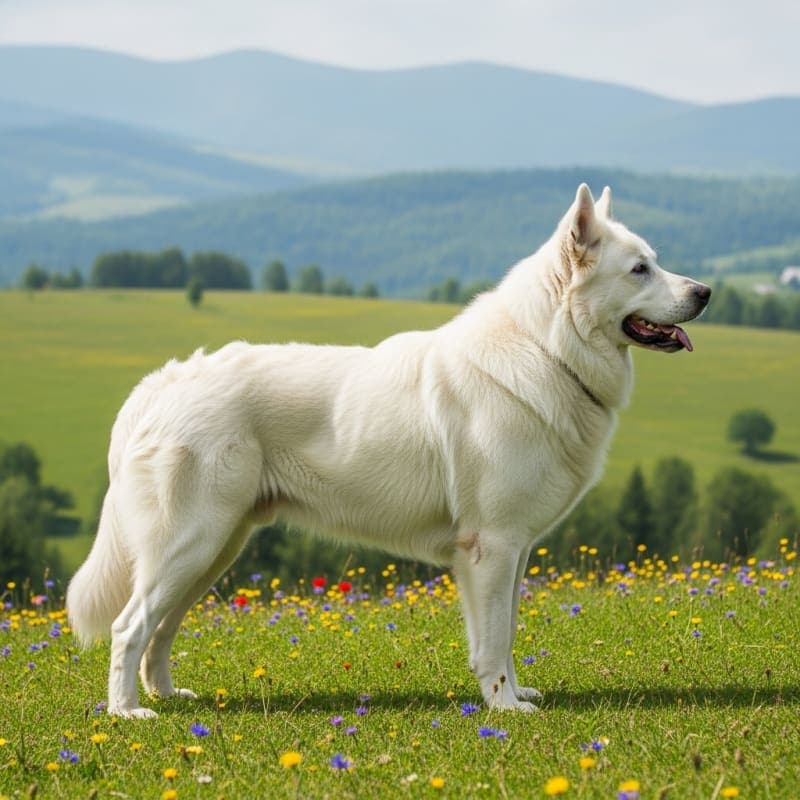
Slovak watchdog
FCI Group
1• FCI 142
Size
Large
Origin Country
SK
Height
59-70 cm
Weight
31-44 kg
Lifespan
11-13 years
Temperament
Overview
The Slovak Cuvac, also known as Slovenský čuvač, is a unique breed of herding dogs with deep roots tracing back to the rugged mountains of Slovakia. Its history dates back to the 17th century, making it one of the oldest herding dogs in the Tatra region. For centuries, these dogs have been invaluable to mountain shepherds, who relied on them to protect flocks of sheep and cattle from wolves, bears, and other predators.
Although the exact origin of this breed remains uncertain, many researchers believe that the Slovak Cuvac descends from Arctic wolves, whose remains have been found in the mountainous regions of Europe from before the Ice Age. This theory emphasizes the extraordinary endurance and resilience of the breed to harsh climatic conditions. The Slovak Cuvac belongs to a group of white mountain dogs that developed in isolated high-altitude regions of Europe, from the Caucasus through the Carpathians to the Pyrenees.
The characteristic white coat is not accidental - it allowed shepherds to distinguish the dog from dark predators, even at night or during a snowstorm. The dense, double coat protects the dog from frost, rain, and wind, while the mane-like effect around the neck gives it a majestic appearance. Its strong body structure, powerful limbs, and moderately rectangular silhouette provide the breed with the strength and agility necessary to navigate mountainous terrain.
In terms of temperament, the Slovak Cuvac is a remarkably loyal and devoted family companion. Their attachment to loved ones contrasts with their natural suspicion of strangers, making them excellent guard dogs. They are intelligent and quickly learn new commands, but their independent nature requires an owner who is firm, consistent, and experienced in working with large breeds. The temperament of these dogs is balanced yet full of energy - they need regular, intense physical exercise and mental stimulation.
The Slovak Cuvac thrives best in a rural environment, where it has space to move and can fulfill its natural guarding instincts. It requires an owner who understands the needs of a large, active dog and can provide appropriate living conditions. Proper socialization from a puppy age is crucial for developing a balanced and confident dog that will be an excellent companion for active individuals and families with children.
In summary, the Slovak Cuvac is a breed that combines physical strength, intelligence, courage, and unwavering loyalty. Its impressive history as a herding and guarding dog, combined with its unique appearance and balanced temperament, makes it a valuable companion both in work and family life. This breed is gaining increasing recognition not only in Slovakia but also on the international stage, where it is appreciated for its unique traits and deep cultural heritage.
The Slovak Cuvac is a powerful dog with an impressive appearance, which immediately attracts attention with its majestic white coat. Adult males reach a height at the withers of 62 to 70 cm, while females are slightly smaller - from 59 to 65 cm. The weight of these dogs corresponds to their massive build: males weigh from 36 to 44 kg, and females from 31 to 37 kg. These parameters make the Slovak Cuvac a large and strong dog, perfectly adapted to work in difficult mountain conditions.
The most characteristic feature of this breed is its dense, double coat in a snow-white color. It covers the entire body of the dog, providing excellent thermal insulation. The undercoat is soft and dense, while the outer coat is longer, slightly wavy, and somewhat coarse to the touch. On the head and front limbs, the fur is shorter and more adherent, while on the back, sides of the body, and tail, it is significantly longer. A particularly impressive mane forms around the neck and chest, giving the dog an extraordinarily noble and majestic appearance, especially in males.
The head of the Slovak Cuvac is strong, wide, and proportional to the rest of the body, with clearly defined brow arches. The eyes are dark, oval, and deeply set, expressing intelligence and alertness. The nose is always black and well-developed. The ears are of medium length, hanging down and set relatively high, closely adhering to the head. The neck is strong, well-muscled, and set at a moderate angle, emphasizing the dog's strength and confidence.
The body structure is solid and harmoniously built. The torso has a moderately rectangular shape, with a wide and deep chest providing a large lung capacity - an essential feature for a dog working in the mountains. The back is straight and strong, the loins are wide and muscular. The limbs are strong, with well-developed bones and muscles, which provide the dog with stability, strength, and agility on difficult terrain. The paws are large, compact, and round, with thick pads that protect them from sharp stones and frost.
The tail is set low and hangs down when at rest, reaching at least to the hock joint. In motion or when the dog is excited, the tail is raised and curled over the back, creating an elegant arc. The skin of the Slovak Cuvac is elastic and pink, with characteristic dark spots around the eyes, nose, and muzzle. The overall appearance of this breed reflects its mountain origin, strength, independence, and defensive abilities, which were crucial for survival in the harsh conditions of the Tatras.
The Slovak Cuvac is a breed with a remarkably distinct and characteristic temperament, combining loyalty, courage, intelligence, and independence. These dogs are deeply attached to their family and show unconditional devotion to their owners. Their protective instinct is highly developed, making them excellent guard dogs, always alert and ready to defend their territory and loved ones. By nature, they are suspicious of strangers and other animals, which is a desirable trait in herding dogs, but requires proper socialization from a young age.
The temperament of the Slovak Cuvac is stable and balanced; however, their independent nature means they are not submissive or easily compliant dogs. For centuries, they have been bred to make independent decisions while guarding herds in remote mountain pastures, without constant shepherd supervision. This heritage allows them to think for themselves and take initiative, which can be a challenge for inexperienced owners. Therefore, the Slovak Cuvac needs a confident, consistent, and assertive owner who can build a relationship with the dog based on mutual respect and trust.
In interactions with family members, Slovak Cuvacs are extremely affectionate, gentle, and protective. They particularly get along well with children, showing patience and caution towards them. They naturally take on the role of a guardian and protect younger family members. However, due to their large size and strength, they should always be supervised when playing with small children. In relation to other dogs and animals, they may show dominant tendencies, especially if they have not been properly socialized. Early and systematic socialization is crucial for developing a balanced character.
Slovak Cuvacs are intelligent and quick learners, which makes their training easier, provided that appropriate methods are used. They respond best to positive reinforcement, rewards, and praise, while harsh or oppressive methods can lead to stubbornness and reluctance to cooperate. Their strong will may cause them to test boundaries and try to take control, so consistency in training is absolutely essential.
Despite their large size and impressive presence, at home, Slovak Cuvacs are surprisingly calm and composed. They can adjust their energy level to the situation, behaving quietly indoors and actively during outdoor play. They have a moderate need for companionship - they can tolerate short periods of solitude but definitely prefer to be near their owners. Leaving them alone for extended periods can lead to frustration, boredom, and destructive behaviors. Proper socialization, consistent training, and providing an adequate amount of physical and mental activity are key to raising a balanced and confident Slovak Cuvac, who will be an excellent companion in family life.
The Slovak Cuvac is a breed known for its hardiness, endurance, and overall good health, which is the result of centuries of natural selection in harsh mountainous conditions. These dogs were primarily bred for their working ability and resilience, which has translated into a relatively low number of health issues characteristic of this breed. The average lifespan of a Slovak Cuvac ranges from 11 to 13 years, which is typical for large breeds.
One of the most common health issues in this breed is hip dysplasia. This is a genetically predisposed condition where the hip joint socket and the head of the femur do not fit together perfectly, leading to improper weight distribution, joint wear, pain, and limited mobility. Responsible breeders conduct radiological examinations of the parents before breeding to minimize the risk of passing this defect to offspring. Owners should ensure regular veterinary check-ups to detect any potential problems early and implement appropriate treatment or physiotherapy.
Another health threat to the Slovak Cuvac, typical for large dogs with deep chests, is gastric torsion, also known as bloat. This is a sudden, life-threatening condition where the stomach fills with gas and twists around its axis, cutting off blood supply. Symptoms include restless behavior, attempts to vomit without effect, a bloated abdomen, and weakness. To minimize the risk of gastric torsion, it is recommended to feed the dog smaller, more frequent meals (2-3 meals a day instead of one large one), avoid intense physical activity immediately before and after eating, and use bowls that prevent rapid food consumption.
Slovak Cuvacs are well adapted to cold climates thanks to their dense, double coat that protects them from frost, rain, and wind. However, this same feature means they do not tolerate high temperatures well. On hot days, it is essential to provide them with shade, a cool resting place, and constant access to fresh water to avoid overheating and heatstroke. Intense physical activity should be avoided during the hottest parts of the day.
To keep a Slovak Cuvac in optimal health, key factors include: a proper high-quality diet, regular physical activity tailored to the dog's age and condition, systematic veterinary visits, and monitoring body weight. Obesity can significantly worsen joint problems and reduce the dog's quality of life. Regular vaccinations, deworming, and prevention against external parasites are standard elements of veterinary care. With proper care, a Slovak Cuvac can enjoy a long, healthy, and active life alongside its family.
The care of the Slovakian Cuvac is relatively simple, but requires regularity and consistency, especially due to the thick, double coat of this breed. The white coat of the Cuvac, while striking and majestic, requires proper attention to maintain a healthy appearance and protect the dog from skin problems. The most important element of grooming is regular brushing, which helps remove dead hair, dirt, and prevents matting.
For most of the year, it is recommended to brush the coat at least once or twice a week, using appropriate brushes with metal bristles or combs designed for dogs with thick, long hair. Brushing should be thorough, reaching down to the undercoat to effectively remove loose hair and ensure proper air circulation against the skin. During periods of heavy shedding, which typically occur in spring and autumn when the dog changes from winter to summer coat and vice versa, it is necessary to increase the frequency of brushing to daily. At this time, Cuvacs lose huge amounts of hair, and regular brushing significantly facilitates this process and reduces the amount of hair in the home.
Brushing not only keeps the coat in good condition but also strengthens the bond between the dog and the owner, provides an opportunity to check the skin for potential issues (irritations, parasites, wounds), and gives the dog a pleasant form of closeness and attention. Many Slovakian Cuvacs greatly appreciate these moments of shared grooming.
Baths should be conducted occasionally, only when truly necessary - for example, when the dog is very dirty after playing in muddy areas. Too frequent bathing can damage the natural protective layer of the skin and coat, leading to dry skin and a decline in hair quality. Usually, bathing the Cuvac every few months is sufficient. During baths, gentle shampoos specifically designed for dogs should be used, and after washing, all soap residues should be thoroughly rinsed out and the coat carefully dried, especially the undercoat.
In addition to coat care, it is important to regularly check and clean the ears, especially since Cuvacs have hanging ears, which promote moisture and dirt accumulation. Ears should be gently cleaned once a week or as needed, using special ear cleaning solutions or a damp cotton ball. The eyes should be regularly checked and gently wiped with a damp gauze if necessary.
Nail trimming is another important aspect of grooming. If the dog runs a lot on hard surfaces, the nails wear down naturally, but for less active dogs or those that mainly move on soft grass, regular nail trimming every 3-4 weeks is necessary to prevent excessive growth, which can lead to discomfort and walking problems. It is also important to check and clean the dog's teeth several times a week to prevent tartar buildup and oral issues. With systematic and proper grooming, the Slovakian Cuvac will not only look beautiful but also enjoy good health and condition.
The Slovak Cuvac is a vigorous, active, and resilient dog that requires a large amount of exercise every day to maintain physical and mental health. Due to its mountainous origins and history as a herding dog, this breed is accustomed to intense physical effort over vast areas and is not suited for living in a small apartment without access to a garden or walking areas. Slovak Cuvacs need at least two hours of active physical activity daily, and even more is preferable if they have the opportunity.
Ideal forms of exercise for this breed include long walks, hiking in the mountains or forests, running alongside a bicycle (for adult, fully developed dogs), and free play in a fenced area. Slovak Cuvacs love outdoor activities and feel great in any weather conditions - rain, snow, or wind are not a problem for them thanks to their thick, waterproof coat. They particularly enjoy activities that engage both body and mind, such as team games with other dogs, fetch games, or searching for hidden objects.
Without the appropriate amount of exercise and stimulation, a Slovak Cuvac can become bored, frustrated, and develop behavioral problems, such as excessive barking, digging holes in the garden, destructive behaviors (destroying furniture, personal belongings), or attempts to escape. Therefore, owners must be prepared for daily, multi-hour physical activities with their dog, regardless of weather conditions or their own mood. This is not a breed for people leading a sedentary lifestyle or who do not have time for long walks.
Slovak Cuvacs also exhibit a natural desire to work, making them excellent candidates for various dog sports and activities such as obedience, agility, tracking, or mantrailing. Participation in such activities not only provides necessary physical exertion but also mental stimulation, strengthens the bond with the owner, and gives the dog a sense of purpose and fulfillment. Many Slovak Cuvacs still perform their traditional roles, guarding sheep herds or protecting farms.
Regular, intense exercise is crucial not only for maintaining a healthy weight and good physical condition but also for the dog's mental health. Physical activity helps to release accumulated energy, reduces stress and anxiety, prevents boredom, and supports the proper functioning of the circulatory, respiratory, and musculoskeletal systems. For a Slovak Cuvac, movement is not a luxury but a basic life necessity - owners who cannot meet this need should consider choosing a different, less demanding breed.
The Slovak Cuvac is a smart dog that quickly learns new commands and skills, but its training requires experience, patience, consistency, and the right approach. Due to its independent nature, strong will, and herding and guarding instincts developed over centuries of independent work, Slovak Cuvacs are not dogs for novice owners. They need an experienced handler who understands the psychology of large breeds and can build a relationship with the dog based on mutual respect, trust, and clear boundaries.
Training should begin as early as possible, preferably during the puppy stage (from 8-10 weeks of age) to take advantage of the period when puppies are most open to learning and absorb new experiences like a sponge. Basic rules of good behavior, elementary commands (Sit, Stay, Come, Lie Down, No), and acceptance of routine activities (grooming, vet visits) should be introduced gradually, in a positive and friendly manner. Early training helps puppies understand their place in the family hierarchy and learn self-control.
A key aspect of raising a Slovak Cuvac is socialization, which should be intense, systematic, and start from a young age. The dog must be exposed to contact with various people (of different ages, appearances, and clothing), dogs, other animals, environments (city, countryside, crowds, traffic), as well as sounds and situations. Due to the natural suspicion of this breed towards strangers, proper socialization is absolutely essential for the dog to learn to distinguish real threats from normal, everyday situations and not to react aggressively or overly defensively in standard circumstances.
In training a Slovak Cuvac, positive training methods work best, based on reinforcing desired behaviors through rewards (treats, praise, play) and ignoring or gently correcting undesirable behaviors. Harsh, oppressive methods, shouting, physical punishment, or the use of force are not only ineffective and harmful to the relationship with the dog, but can also provoke resistance, distrust, fear, or even defensive aggression. Slovak Cuvacs are proud dogs that respect a fair and consistent leader but rebel against unjustified violence.
Due to their intelligence, Cuvacs can quickly become bored with repetitive exercises. Therefore, it is worth diversifying the training, introducing new commands and tasks, and working in different locations. Training sessions should be short (10-15 minutes) but frequent (several times a day) to maintain the dog's attention and motivation. Working on commands that are natural and interesting for the dog (e.g., guarding, retrieving, searching) will help keep them engaged.
An important element of training is also teaching control over the guarding instinct. Slovak Cuvacs have a well-developed instinct to protect their territory and family, which is an advantage, but it must be properly controlled. The dog must learn when there is a real need for protection and when it should remain calm. The owner should be able to stop the dog's barking on command and control its reactions towards guests or passersby.
Regular, systematic training not only develops the dog's practical skills but also strengthens the bond between the dog and the owner, provides mental stimulation (which is as important as physical), and builds confidence and emotional balance. A well-trained and socialized Slovak Cuvac is a wonderful companion that can be relied upon in any situation - loyal, brave, intelligent, and completely devoted to its family.
The Slovak Cuvac, as a large breed dog with high physical activity, requires a properly balanced high-quality diet that provides all the essential nutrients needed to maintain optimal health, condition, energy, and a beautiful coat. Proper nutrition is one of the foundations of a long and healthy life for a dog, so owners should pay great attention to choosing the right food and controlling the amount of food consumed.
The basis of the Slovak Cuvac's diet should be high-quality animal protein, which is essential for building and regenerating muscles, maintaining healthy skin and coat, and proper functioning of the immune system. The best sources of protein are meat (beef, chicken, turkey, lamb), fish (salmon, sardines), and eggs. The food should also contain an appropriate amount of fats, which provide energy and essential omega-3 and omega-6 fatty acids that support skin, coat, heart, and nervous system health.
Carbohydrates (rice, oats, potatoes, sweet potatoes) provide additional energy, which is particularly important for active dogs, as well as fiber that supports proper digestion. Vegetables and fruits (carrots, pumpkin, apples, blueberries) are a valuable source of vitamins, minerals, and antioxidants. It is important that the food is balanced in terms of all nutrients - excess or deficiency of certain substances can lead to health problems.
Owners have several feeding options: high-quality commercial food (dry or wet), homemade diet prepared independently under the supervision of a veterinarian or animal nutritionist, or BARF diet (raw meat, bones, vegetables). Regardless of the chosen method, it is crucial to tailor the diet to the individual needs of the dog (age, activity level, health status, any allergies or food intolerances).
The amount of food should be carefully controlled to avoid obesity, which is a serious health problem, especially for large dogs. Obesity increases the burden on joints, heart, and internal organs, leads to worsening hip dysplasia, reduces mobility and quality of life, and shortens lifespan. The manufacturer's feeding recommendations are only a starting point - the actual amount should be adjusted to the individual metabolism, physical activity, and condition of the dog. Regularly monitor the dog's weight and body shape (the waist should be visible, and the ribs should be felt under a thin layer of fat, but not visible).
It is recommended to divide the daily portion into two or three smaller meals instead of feeding the entire amount of food at once. This feeding method is easier for the digestive system to absorb, reduces the risk of bloating and gastric torsion (a serious threat for large dogs with deep chests), and maintains a stable energy level throughout the day. It is also important to avoid intense physical activity immediately before and after meals - at least an hour break is recommended to minimize the risk of gastric torsion.
Fresh water should be available to the dog at all times, especially after intense physical exercise, on hot days, and during feeding dry food. Proper hydration is crucial for the proper functioning of all organs and systems in the body. Regularly change the water in the bowl and maintain the cleanliness of the dishes.
Puppies, adult dogs, and seniors have different nutritional needs. Puppies need food rich in protein and calories for rapid growth, but excessive overfeeding should be avoided, as it can lead to too rapid weight gain and joint problems. Adult dogs require a balanced maintenance diet, while older dogs often need easier-to-digest food with lower calories and enriched with ingredients that support joint health and cognitive functions. With proper nutrition, regular physical activity, and veterinary care, the Slovak Cuvac will enjoy a long, healthy, and energetic life.
Characteristic Traits
Pros
- Extremely loyal to the family
- Effective and brave guard dog
- Intelligent and quick to learn
- Perfectly resilient to harsh weather conditions
- Strong and durable.
Cons
- Requires a lot of movement and physical activity
- Independent and sometimes stubborn character
- Strong suspicion towards strangers necessitates intense socialization
- Intense shedding twice a year.
Behavioral Ratings
Breed History
The history of the Slovak Cuvac dates back to at least the 17th century, when the breed began to develop in the harsh, mountainous regions of Slovakia, mainly in the Tatra Mountains and the adjacent Carpathians. These dogs were an indispensable part of the life of mountain shepherds, who relied on them to protect their flocks of sheep and cattle from numerous predators inhabiting these areas - wolves, bears, lynxes, and human thieves. For centuries, Slovak Cuvacs were bred solely for their working abilities - strength, courage, independence, endurance, and loyalty - which shaped their characteristic temperament and appearance.
The Slovak Cuvac belongs to the ancient group of white mountain dogs that developed in isolated, high-altitude regions of Europe stretching from the Caucasus, through the Balkans (especially the Rhodope Mountains), the Carpathians (especially the Tatras), the Alps, the Apennines, to the Pyrenees. According to archaeological and genetic studies, these dogs likely descend from Arctic wolves, whose remains from the pre-glacial period have been preserved in mountain caves and deposits. In the cooler and wetter regions of Europe, alongside the remains of these wolves, traces of flora and fauna were also found, whose closest counterparts currently exist in Scandinavia.
This theory of Nordic origin is supported by similarities between mountain dogs and other Northern European breeds. The white coat is not a coincidence - it was selected by shepherds because it allowed them to easily distinguish the dog from darker predators, even at night, during snowstorms, or in fog. The dense, double coat protected the dogs from freezing winters, rain, and wind, enabling them to work in extreme conditions year-round.
Slovak alpine agriculture and shepherding have a very ancient tradition, dating back to pre-Slavic times. Slovak Cuvacs (then known locally as Tatra shepherd dogs) accompanied mountain shepherds throughout the entire summer season when flocks were grazed in high-altitude pastures, often many kilometers away from human settlements. These dogs had to be independent, responsible, and capable of making decisions on their own, as they often stayed with the flocks without direct human supervision. Their task was not only to guard but also to actively defend the sheep from attacks by wolves and bears - a task requiring immense courage and strength.
For many centuries, Slovak Cuvacs were bred locally, by shepherds for shepherds, without formal breeding records or breed standards. The first formal breeders' organization and attempts to standardize the breed occurred only in the 1930s, when Slovak cynologists and breed enthusiasts began systematically registering dogs, creating stud books, and developing an official standard. In 1964, the breed was officially recognized by the Fédération Cynologique Internationale (FCI) under the name Slovenský čuvač (Slovak Cuvac), in group 1 (herding and livestock dogs), section 1 (shepherd dogs), standard number 142.
During the communist period after World War II, the breed was systematically developed in state farms and by private breeders, and its popularity grew both as a working dog and a family companion. Slovak Cuvacs were used not only by shepherds but also as guard dogs on farms, in agricultural enterprises, industrial facilities, and as patrol dogs in mountain border posts.
Today, the Slovak Cuvac is valued both in Slovakia and beyond its borders for its exceptional qualities - loyalty, courage, intelligence, strength, and defensive abilities. Although many dogs still perform their traditional herding and guarding functions (especially in mountainous areas), the breed has also gained recognition as a family dog and companion for active individuals who appreciate the independence and proud character of this majestic dog. The history of the Slovak Cuvac is deeply intertwined with mountain culture, shepherding traditions, and the cultural heritage of the Tatras, making these dogs not only a working breed but also a symbol of national heritage and pride for Slovakia.