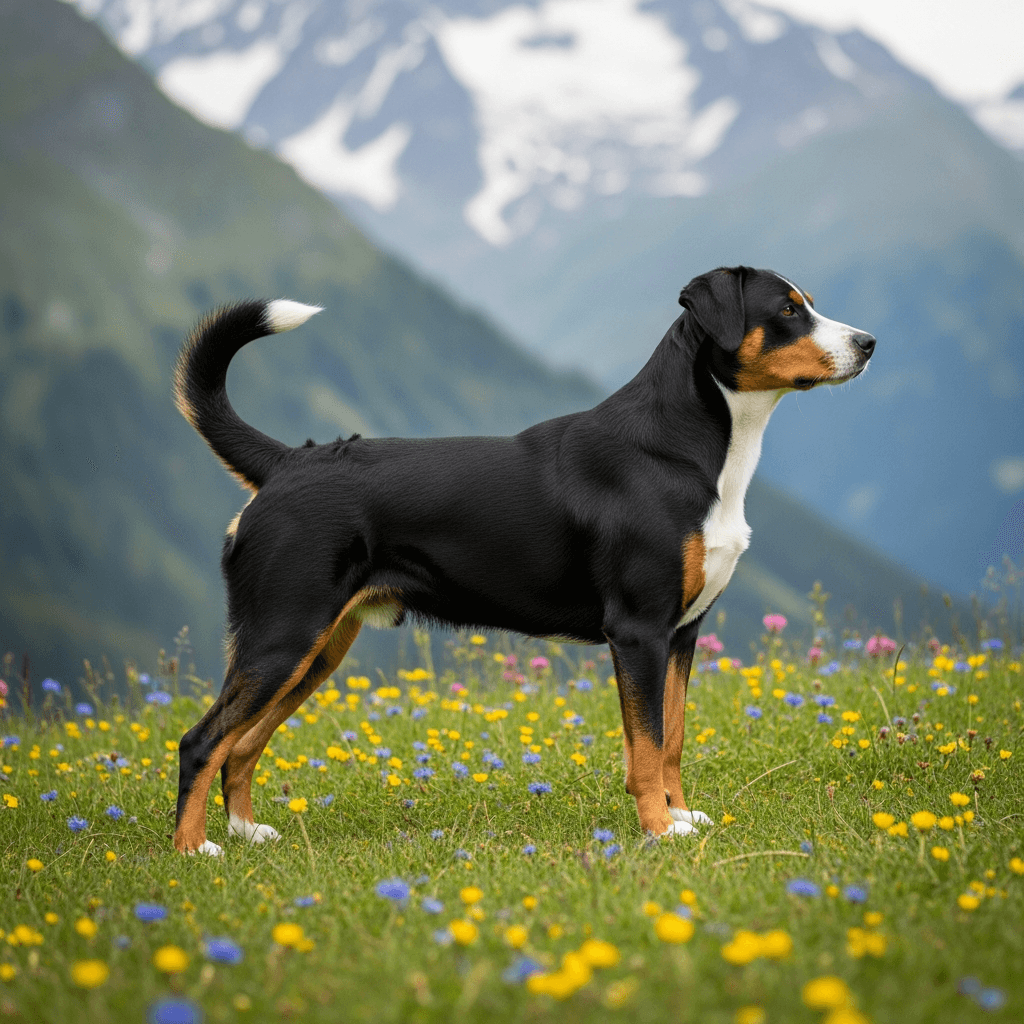
Appenzeller Sennenhund
FCI Group
2• FCI 46
Size
Medium
Origin Country
CH
Height
50-56 cm
Weight
22-32 kg
Lifespan
12-14 years
Temperament
Overview
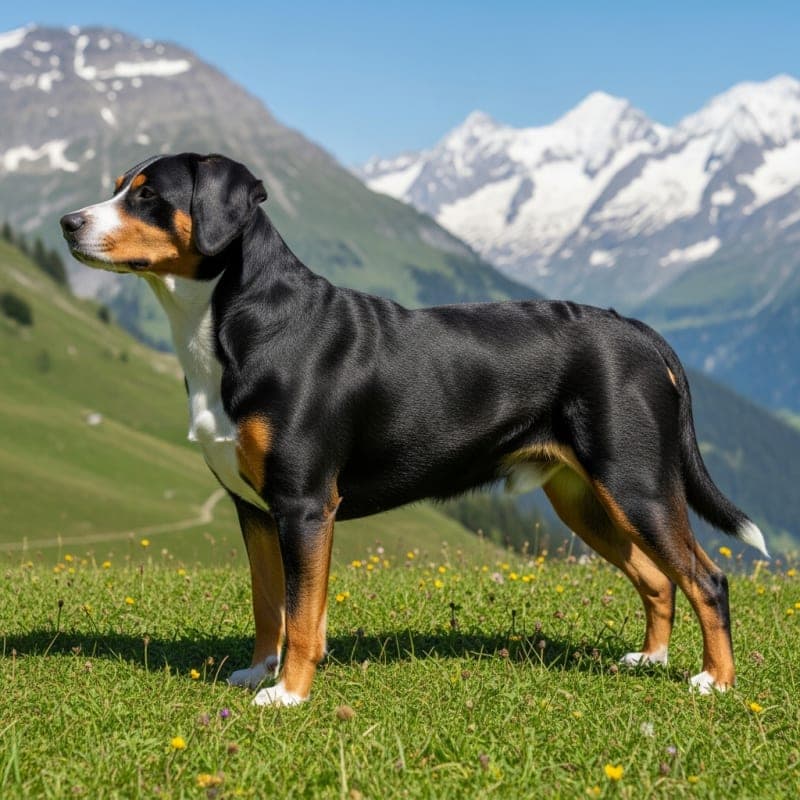
The Appenzeller Sennenhund, also simply known as the Appenzeller, is a unique breed of herding dogs originating from the picturesque regions of the Swiss Alps. This medium-sized dog is distinguished by its characteristic tricolor coat with a glossy appearance, consisting of black, rust-brown, and white colors, creating a unique pattern.
This breed is known for its unwavering loyalty to its family and exceptional skills in working with livestock – for centuries, Appenzellers have protected cattle from predators and effectively herded animals on mountain pastures. Their strong guarding instinct makes them ideal guardians both in traditional farms and in modern family homes.
Appenzeller Sennenhunds are characterized by their active temperament and high intelligence, which makes them full of energy and in need of regular mental and physical stimulation. Without the appropriate amount of exercise and mental tasks, behavioral issues such as excessive barking or destruction of objects may arise. This breed is also known for its ease of learning, but requires a consistent and confident owner who will provide proper training from a young age.
Appenzellers love being close to their owners and eagerly participate in family activities – whether it's long mountain hikes, dog sports, or just everyday play. Their friendly and lively disposition makes them great with children, but they may show a tendency to dominate other dogs, so early and thorough socialization is absolutely essential.
Appenzellers enjoy longevity – they typically live from 12 to 14 years. They are relatively resistant to many genetic diseases, although they may suffer from hip dysplasia and progressive retinal atrophy. Regular veterinary check-ups and a proper diet are crucial for maintaining their health for many years. In terms of grooming, they require regular brushing, especially during the spring and autumn shedding periods, to keep their dense coat in excellent condition.
In summary, the Appenzeller Sennenhund is a lively and energetic dog that needs an active lifestyle, consistent training, and a large dose of love and attention to become a wonderful, devoted family companion. We invite you to explore the next sections of our comprehensive guide, where you will find detailed information about the appearance, character, health, grooming, exercise, training, nutrition, and history of this fascinating alpine breed.
The Appenzeller Sennenhund is a medium-sized dog with a harmonious and proportional build, whose shape is close to a square. According to the FCI standard, the height at the withers for males ranges from 52 to 56 cm, and for females from 50 to 54 cm, making this breed ideal for work in difficult mountainous terrain – large enough to be effective, but not too heavy to lose agility.
The most characteristic feature of its appearance is the tricolor coat with a unique arrangement:
- Black base color covering most of the body
- Reddish-brown markings on the cheeks, above the eyes, on the chest, and legs
- White markings on the muzzle (mask), chest, legs, and tip of the tail
The coat is short, dense, and shiny, with a very thick undercoat that provides excellent protection against cold and moisture in mountainous conditions. The topcoat is glossy and lies close to the body, giving the dog an elegant appearance.
The head is proportional to the rest of the body, with a slightly wedge-shaped head. The skull is almost flat, and the braincase is wide, indicating the breed's intelligence. The eyes are rather small, almond-shaped, in color ranging from dark brown to hazel – expressing intelligence and alertness. The characteristic triangular ears are set wide and high, hanging down, which combined with the attentive gaze gives the dog a very distinctive expression.
The back is strong and straight, and the chest is wide and deep, emphasizing their muscular, athletic build. The tail is of medium length, densely coated, and in motion, characteristically curled over the back in a loose ring – this is one of the most recognizable elements of the Appenzeller's silhouette.
Appenzeller Sennenhunds move with extraordinary agility and lightness, despite their strong build. Their movements are lively, flexible, and full of energy. The overall appearance radiates confidence, strength, and readiness for action – this is a dog that from the first glance shows its herding heritage and working abilities.
Appenzeller Sennenhunds have a remarkably lively and confident temperament, making them exceptional companions for the right owners. They are energetic, brave, and intelligent dogs, which makes them excellent guardians of the household and family. Their alert nature means that almost nothing escapes their notice – any suspicious sound or movement will be immediately reported with loud, ringing barking.
Appenzellers are extremely sociable with their family and enjoy being close to people, but they may be somewhat wary or reserved around strangers. This trait does not stem from fearfulness, but from a natural protective instinct – the dog first assesses the situation before deciding whether a person is trustworthy. This makes them effective guard dogs that do not react aggressively without reason.
This breed is distinguished by its exceptionally high intelligence and quickly learns new commands, making them easy to train – provided there is a consistent approach. Their willingness to work and cooperate means they excel in various dog sports:
- Agility – their agility and speed are ideal for obstacle courses
- Obedience – precise execution of commands is their strong suit
- Herding trials – herding trials allow them to utilize their natural instincts
- Rally obedience – a combination of obedience and fun
This breed can be quite vocal – Appenzellers tend to bark to alert their owner of any irregularities. This is an innate trait, related to their history as herding dogs that needed to communicate with shepherds over long distances. Early training can help manage this behavior.
In interactions with children, Appenzeller Sennenhunds are usually gentle and patient, but they may try to herd younger children just as they once herded cattle. Therefore, it is important to supervise play and teach both the dog and the children how to play safely together.
Appenzellers can be territorial and may show a tendency to dominate other dogs, especially of the same sex. Proper socialization from the earliest weeks of life is absolutely crucial to ensure they are well-adjusted to various social situations. Their strong personality and confidence require an owner who is equally self-assured and consistent in setting rules.
In summary, the Appenzeller Sennenhund is a loyal, intelligent, and hardworking dog that thrives in an active family that appreciates its independent nature and need for regular mental and physical stimulation.
Appenzeller Sennenhunds are generally a healthy and resilient breed, which is a result of their history as working dogs, where only the strongest and healthiest individuals could survive the harsh mountain conditions. Their average lifespan is between 12 to 14 years, which is relatively long for a medium-sized dog and indicates good genetic health of the breed.
Despite their overall resilience, like many other purebred breeds, Appenzellers can be prone to certain health issues:
Hip Dysplasia (HD)
This is one of the most common problems in this breed. Dysplasia involves the improper development of the hip joint, which can lead to pain, limping, and limited mobility. Responsible breeders perform X-ray examinations of the parents before breeding to minimize risk. Proper weight management and moderate exercise during the growth period can help ensure proper joint development.
Progressive Retinal Atrophy (PRA)
This is a genetic condition that leads to gradual vision loss and can ultimately result in blindness. The first symptoms usually appear in middle-aged dogs – difficulties seeing in low light (night blindness). Genetic tests are available that allow breeders to exclude carriers from breeding.
Obesity
As a very active breed, Appenzeller Sennenhunds can easily gain weight if they do not receive enough exercise. Obesity leads to additional strain on the joints, heart problems, and diabetes. Proper portion control and regular exercise are crucial for maintaining a healthy weight.
Ear Problems
The droopy ears of the Appenzeller can be prone to infections, especially if they are not regularly checked and cleaned. Ears should be checked weekly for redness, unpleasant odor, or excessive discharge.
To ensure optimal health for the Appenzeller, it is recommended to:
- Regular veterinary visits (at least once a year, every 6 months for older dogs)
- Up-to-date vaccinations and parasite protection
- Screening tests – hip X-rays, CERF eye examinations
- A balanced diet tailored to their activity level
- Appropriate amount of exercise without overexerting during the growth period
With proper veterinary care, a healthy diet, and regular physical activity, the Appenzeller Sennenhund can enjoy excellent health for many years, remaining an active and energetic companion well into old age.
The grooming of Appenzeller Sennenhunds is relatively uncomplicated, but requires regularity to keep their coat in optimal condition and ensure the dog's comfort. Their coat is short but double-layered – consisting of a dense undercoat that protects against the cold and a shiny, close-lying topcoat.
Brushing the coat
Appenzellers shed moderately throughout the year, with two intense shedding periods in spring and autumn when they lose their undercoat. Regular brushing 2-3 times a week is recommended to remove dead hair, minimize the amount of fur in the house, and stimulate the skin while distributing natural oils. During intense shedding periods, brushing should be done daily to help the dog get rid of excess hair and speed up the process.
Best grooming tools:
- Natural bristle brush – for daily brushing and adding shine
- Metal comb – for thorough detangling and detecting mats
- Furminator or deshedder – during shedding periods to remove undercoat
Bathing
Appenzeller Sennenhunds do not require frequent baths – their coat has a natural self-cleaning ability. Bathing should only be done when absolutely necessary (the dog has gotten very dirty, an unpleasant odor has appeared), usually no more than once every 2-3 months. Too frequent bathing can strip the natural oils from the skin, leading to dryness and irritation. Always use a high-quality dog shampoo.
Ear care
The hanging ears of the Appenzeller are prone to infections due to limited airflow. It is important to regularly check the ears once a week for redness, unpleasant odors, or excessive wax buildup. Cleaning the ears with a gentle solution designed for dogs will help prevent problems. Never insert cotton swabs deeply into the ear canal.
Oral hygiene
Teeth should be brushed ideally 2-3 times a week (or daily if possible) with a special toothbrush and toothpaste for dogs to prevent periodontal disease, tartar buildup, and bad breath. Dental chews and toys that mechanically clean the teeth can also be used.
Nail trimming
Nails should be trimmed every 3-4 weeks or when they can be heard clicking on the floor while walking. Overgrown nails can cause discomfort, changes in the dog's gait, and even joint problems. If the owner does not feel confident trimming the nails, it is advisable to seek the services of a groomer or veterinarian.
Overall, grooming Appenzeller Sennenhunds is not time-consuming or complicated, but regular grooming practices are key to their health, comfort, and maintaining a beautiful, shiny coat appearance.
Appenzeller Sennenhunds are dogs with a very high energy level that require a significant amount of regular physical and mental activity to maintain health, well-being, and balanced behavior. As a working breed developed for herding cattle in mountainous conditions, they have an inherent need for movement and tasks to perform.
Minimum requirements
Appenzellers require at least 90-120 minutes of intense exercise daily, which should include a variety of activities. This is not a breed for people leading a sedentary lifestyle or living in a small apartment without access to exercise areas. A dog that does not receive enough exercise may become destructive, excessively bark, or develop behavioral problems.
Recommended forms of activity:
- Long walks and hikes – ideally 2-3 times a day, in varied terrain
- Biking alongside – an excellent form of exercise for adult dogs (not for puppies!)
- Free running – in a safe, fenced area or dog park
- Fetch – games with balls, frisbees, or retrieving toys
- Swimming – if the dog enjoys water, it's a great low-impact exercise
- Agility – dog sports are an ideal way to utilize their agility and intelligence
- Dog trekking – long mountain hikes with a backpack for the dog
- Herding trials – herding trials allow for the use of natural instincts
Mental stimulation
Just as important as physical activity is mental stimulation. Appenzellers are very intelligent and quickly become bored if they only engage in monotonous tasks. They should be provided with:
- Interactive toys – dog puzzles, Kongs filled with treats, scent mats
- Obedience training – learning new commands and tricks (10-15 minutes daily)
- Scent games – searching for hidden treats in the house or garden
- Changing walking routes – new scents and environments stimulate the senses
Notes for puppies
Although adult Appenzellers require a lot of exercise, puppies need caution. Too much intense exercise during their growth period (up to 12-18 months) can damage developing joints and lead to dysplasia. The five-minute rule: a puppy can have 5 minutes of structured exercise for each month of age, twice a day (e.g., a 4-month-old puppy = 20 minutes × 2).
Consequences of lack of exercise
An Appenzeller that does not get enough physical and mental activity may exhibit:
- Excessive barking and howling
- Destruction of furniture and belongings
- Digging holes in the garden
- Hyperactivity and inability to calm down
- Obesity and related health issues
- Aggression or anxiety
Well-socialized and regularly exercised Appenzellers are balanced, happy companions who willingly cooperate with their owners and enjoy every shared activity. Therefore, regular, intense physical and mental activity is absolutely essential for the health and happiness of this breed.
Training Appenzeller Sennenhunds is both a rewarding and demanding experience that requires the owner to be consistent, confident, and to understand the specifics of this intelligent and independent breed. Appenzellers are known for their high intelligence, quick learning, and willingness to work, which makes them great students – but only for owners who know how to approach training.
Early socialization (CRITICAL!)
Socialization is absolutely essential and should begin as early as possible, ideally between 3 and 14 weeks of age – during the so-called critical socialization period. Appenzellers have strong protective and territorial instincts that, without proper socialization, can turn into excessive distrust or aggression. Socialization should include:
- Contact with different people – children, elderly individuals, in various clothing (hats, uniforms)
- Meetings with other dogs – of different breeds, sizes, and temperaments, in controlled conditions
- Exposure to different environments – city, park, pet stores, rural areas
- Habituation to sounds – cars, vacuum cleaners, doorbells, thunder
- Different surfaces – concrete, grass, sand, bridges, stairs
Training methods
Appenzellers respond best to positive reinforcement – rewards, praise, and play. This method keeps the dog motivated and builds a strong bond with the owner. Harsh training methods (yelling, physical punishment, pulling on the collar) should be avoided as they can:
- Destroy the dog's trust in the owner
- Cause fear and insecurity
- Lead to defensive aggression
- Make the dog stubborn and distrustful
Key elements of training
1. Consistency and confidence
Appenzellers need an owner who is consistent in setting rules and boundaries. If we allow a behavior once that we prohibit at another time, the dog will quickly learn to manipulate the situation. The owner's confidence makes the dog feel secure and know who the leader is.
2. Short, frequent training sessions
Ideally 10-15 minutes, 2-3 times a day. Appenzellers are intelligent but can get bored with monotonous training. It is better to conduct several short, intense sessions than one long one.
3. Basic commands (MUST-HAVE)
- Sit – the foundation of control
- Lie down – calming in various situations
- Stay – impulse control, safety
- Come – THE MOST IMPORTANT command for the dog's safety
- Leave it – prevents eating found objects
- Quiet – control of barking
4. Recall training
Appenzellers have a strong herding instinct and may chase moving objects. Solid recall training (command Come) is absolutely crucial for their safety. This command should be practiced regularly in different environments and with increasing levels of distraction.
Dog sports and activities
Appenzellers excel in dog sports that utilize their intelligence and agility:
- Agility – obstacle courses, ideal for this agile breed
- Obedience – precise execution of commands in competitions
- Rally obedience – a combination of obedience and fun
- Herding trials – herding tests, a natural environment for this breed
- Tracking – scent tracking
- Trickdogging – learning tricks and performances
Typical challenges
Excessive barking
Appenzellers are natural alarmists. They should be taught the command Quiet and rewarded for calm behavior. Never punish for barking without cause – first check the source of the disturbance.
Independence and stubbornness
Appenzellers can be stubborn if they believe a command is pointless. Patience and consistency are key. If the dog does not follow a command, we return to a simpler step and build from there.
Dominance over other dogs
Thorough socialization and regular positive experiences with other dogs from a young age are crucial. Attending puppy school and regular contact with well-socialized dogs will help.
A well-trained Appenzeller Sennenhund is a wonderful, obedient companion who enjoys working with their owner and engaging in various activities. However, it requires an owner who has the time, patience, and knowledge to provide proper training from a young age.
The diet of Appenzeller Sennenhunds is a key element of their health, longevity, and physical condition. Due to their active lifestyle and working background, they require a properly balanced diet rich in high-quality nutrients that support their energetic lifestyle and recovery after intense exercise.
Basic nutrition principles
Appenzellers need food rich in high-quality animal protein, which is essential for muscle building and maintaining a healthy body weight. The minimum protein content should be 22-26% for adult dogs and 28-30% for puppies during the growth period. The best sources of protein are:
- Chicken, turkey meat – lean, easily digestible
- Beef, lamb – rich in amino acids and B vitamins
- Fish (salmon, sardines) – an excellent source of Omega-3 fatty acids
- Eggs – a complete source of protein
Fats and carbohydrates
Fats should constitute 12-18% of the diet and be a source of energy and fatty acids essential for healthy skin and a shiny coat. Omega-3 and Omega-6 fatty acids also support joint health and cognitive functions.
Carbohydrates should come from high-quality sources, such as:
- Brown rice, oats – easily digestible sources of energy
- Sweet potatoes – rich in fiber and vitamins
- Vegetables (carrots, broccoli, spinach) – vitamins and minerals
It is important to avoid foods with excessive fillers (corn, wheat, soy), which have low nutritional value and can cause allergies.
Adjustment for age and activity
Puppies (2-12 months)
Appenzeller puppies need food specially formulated for medium-sized puppies, rich in protein and calcium for proper bone and muscle development. They should be fed 3-4 times a day until the age of 6 months, then 2 times a day. IMPORTANT: Do not overfeed puppies – excess weight during the growth period increases the risk of hip dysplasia!
Adult dogs (1-7 years)
Adult Appenzellers should be fed 2 times a day, in the morning and evening. The amount of food depends on the level of activity:
- Very active dogs (sports, work) – 1600-2000 kcal/day
- Moderately active – 1200-1600 kcal/day
- Less active (older, less movement) – 1000-1200 kcal/day
Senior dogs (7+ years)
Senior Appenzellers have a slower metabolism and may require senior food with lower calorie content (about 10-20% fewer calories), but enriched with joint-supporting ingredients (glucosamine, chondroitin) and antioxidants.
Weight control and avoiding obesity
Appenzeller Sennenhunds tend to gain weight if they are not sufficiently active or are overfed. Obesity leads to serious health problems:
- Additional strain on joints and increased risk of dysplasia
- Heart and respiratory diseases
- Diabetes
- Shortened lifespan
To assess the dog's weight: ribs should be felt under a thin layer of fat, the waist should be visible from above, and the belly should be tucked up (not hanging).
Treats and snacks
Treats should not make up more than 10% of the daily calorie intake. The best options are:
- Pieces of carrot, apple (without seeds)
- Dried meat (without spices)
- Special low-calorie dog treats
AVOID: chocolate, grapes, raisins, onions, garlic, xylitol – they are toxic to dogs!
Water
Fresh, clean water should be always available. Active dogs need plenty of water, especially after intense exercise. Water should be changed regularly and the bowl cleaned.
Dry food vs. wet food vs. homemade diet
- Dry food – convenient, helps clean teeth, long shelf life. Choose high-quality premium brands.
- Wet food – tastier, more moisture, good for dogs with dental problems. More expensive, shorter shelf life after opening.
- Homemade diet (BARF/cooked) – full control over ingredients, but requires nutritional knowledge to be balanced. Consultation with a veterinarian/dog nutritionist is recommended!
Supplementation
If you are feeding a high-quality complete food, additional supplementation is usually not needed. However, for active or older dogs, the following may be helpful:
- Omega-3 fatty acids (fish oil) – healthy joints, skin, coat
- Glucosamine and chondroitin – joint support for older dogs
- Probiotics – gut health
ALWAYS consult supplementation with a veterinarian!
With a properly balanced diet tailored to age, activity level, and health status, an Appenzeller Sennenhund can enjoy excellent condition, a shiny coat, and a long, healthy life.
Characteristic Traits
Pros
- Extraordinary loyalty to family
- Excellent guard dog and vigilant
- High intelligence and ease of learning
- Healthy breed with long longevity
- Great in dog sports
- Friendly towards children with proper socialization.
Cons
- Requires a lot of intense physical activity
- May dominate other dogs
- Tendency to bark loudly
- Needs a consistent and experienced owner
- Distrustful of strangers without proper socialization.
Behavioral Ratings
Breed History
Appenzeller Sennenhunds have a long and fascinating history dating back at least to the 19th century, although the breed's roots are likely much older and connected to dogs that accompanied Roman legions during their conquests of the Alpine regions around 2000 years ago. The breed's name comes from the canton of Appenzell in northeastern Switzerland, where these dogs were particularly popular among shepherds and farmers.
First historical mention (1853)
The Appenzeller Sennenhund was first officially described in 1853 in the book Tierleben der Alpenwelt (Animal Life in the Alps) by a German zoologist. It was described as a loudly barking, medium-sized herding dog with short fur and multicolored coat, with a rather uniform spitz-like type. These dogs were used both for guarding farms and for herding cattle in mountain pastures.
Max Siber and the rescue of the breed (1895)
In 1895, when the breed was threatened with extinction due to a lack of systematic breeding, Max Siber, a forest inspector and a great promoter of the breed, appealed to the SKG (Schweizerische Kynologische Gesellschaft – Swiss Canine Society) for action to preserve and develop Appenzeller Sennenhunds.
In 1898, the executive authorities of the canton of St. Gallen allocated 400 Swiss francs to support the breeding of Appenzeller Sennenhunds. The SKG then established a special committee that determined the breed's characteristic features. At the fair in Altstätten, 9 dogs and 7 bitches were presented, which received awards ranging from 5 to 10 francs. As a result, 8 Appenzeller Sennenhunds were shown at the first international dog show in Winterthur and entered into the breeding books.
Establishment of the Breed Club (1906)
In 1906, the first Appenzeller Sennenhund Breed Club was established with the aim of maintaining the purity of the breed and promoting its natural working traits. The club developed the first official breed standard, which with minor changes is still in effect today. The standard was accepted by the FCI (Fédération Cynologique Internationale) and currently, the Appenzeller is classified in Group 2, Section 3 (Swiss herding dogs).
Working functions
For centuries, Appenzeller Sennenhunds have served many functions in the Swiss Alps:
- Herding cattle – driving cows, goats, and sheep to mountain pastures and back to the valleys
- Protection from predators – defending herds against wolves, bears, and other threats
- Guarding farms – watching over homes and agricultural buildings
- Pulling carts – transporting milk, cheese, and other products to villages in the valleys
Their loud bark and confidence made them excellent alarmists, informing shepherds of any irregularities from great distances.
Modern times
As time passed and agriculture became mechanized, the role of Appenzeller Sennenhunds as working dogs diminished, but the breed gained popularity as family and sport dogs. Today, Appenzellers are bred in many countries around the world, including the United States, Canada, Australia, and European countries outside of Switzerland.
Despite their growing popularity, the breeding base remains relatively narrow, making responsible breeding absolutely crucial for maintaining the genetic health and unique traits of this breed. Breeders strive to preserve both the characteristic appearance and working temperament of the Appenzeller.
FCI Standards
The current FCI standard (No. 46) was approved on March 25, 2003, and is still in effect today. The standard emphasizes that the Appenzeller Sennenhund is a versatile working and family dog that retains its natural herding instincts but also excels as a companion for active families.
Appenzeller Sennenhunds are now appreciated not only for their historical skills in working with herds but also as loyal, intelligent, and energetic companions who need an active lifestyle and close contact with people to be happy and fulfilled dogs.