Ariégeois
FCI Group
6• FCI 20
Size
Medium
Origin Country
FR
Height
50-58 cm
Weight
25-30 kg
Lifespan
11-13 years
Temperament
Overview
Ariégeois, known as the Ariège dog, is a unique hunting breed originating from the picturesque region of Ariège in Midi-Pyrénées in southern France. The history of this breed dates back to the early 20th century when local hunters decided to breed a versatile hunting dog by crossing briquets (medium-sized hounds) with other hound breeds, such as the Blue Gascon or Gascon Saintongeois. The result of this thoughtful breeding was a dog with ideal proportions - light and agile enough to move freely in difficult mountainous terrain, yet sturdy enough to chase game for many hours.
The Ariégeois was primarily created for hare hunting, which is its favorite type of hunt. However, its versatility also makes it successfully used in tracking deer and wild boar. Thanks to its light build and remarkable agility, the Ariégeois excels both in solo hunts and in hunting groups. Its characteristic resounding voice and quick pace make it an extremely valued partner for hunters.
The FCI standard No. 20, published on January 24, 1996, classifies the Ariégeois in group 6 (hounds, bloodhounds, and related breeds), section 1.2 (medium-sized hounds). A distinctive feature of this breed is its elegant, distinguished silhouette and strong, muscular build while maintaining lightness of movement. These dogs measure from 50 to 58 cm in height at the withers (males) and from 50 to 56 cm (females), making them medium-sized dogs perfectly suited for both fieldwork and family life.
The temperament of the Ariégeois is a combination of energy, intelligence, and sociability. They are cheerful, social dogs that are easy to train, although they can sometimes show a certain stubbornness typical of hound breeds. Their strong hunting instinct requires a lot of exercise and mental stimulation - daily long walks and the opportunity to run freely are absolutely essential for their well-being. In family relationships, they are extremely affectionate and loyal, getting along well with other dogs, although they may be somewhat reserved towards strangers.
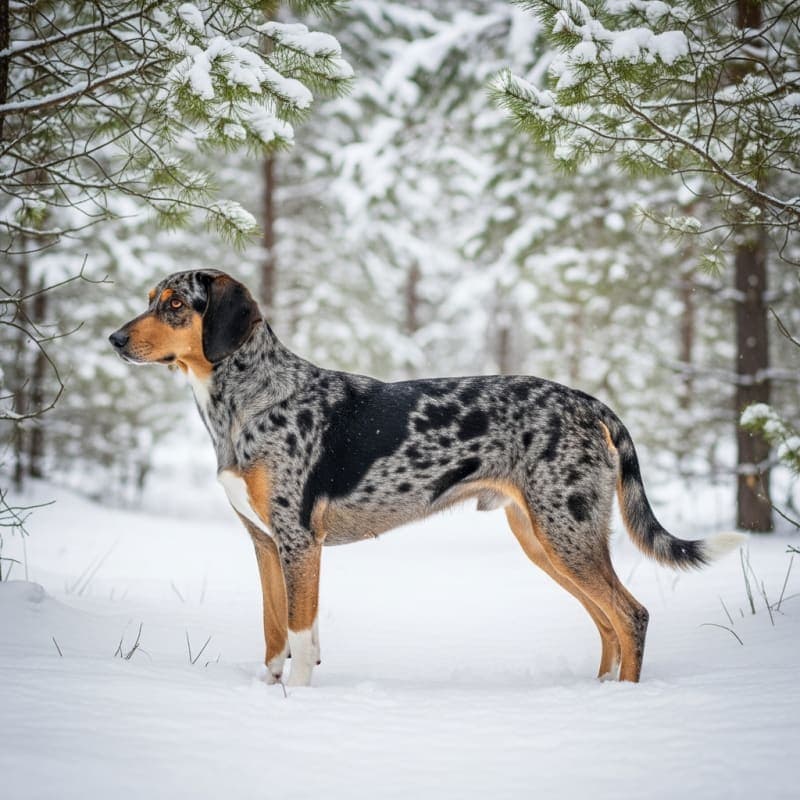
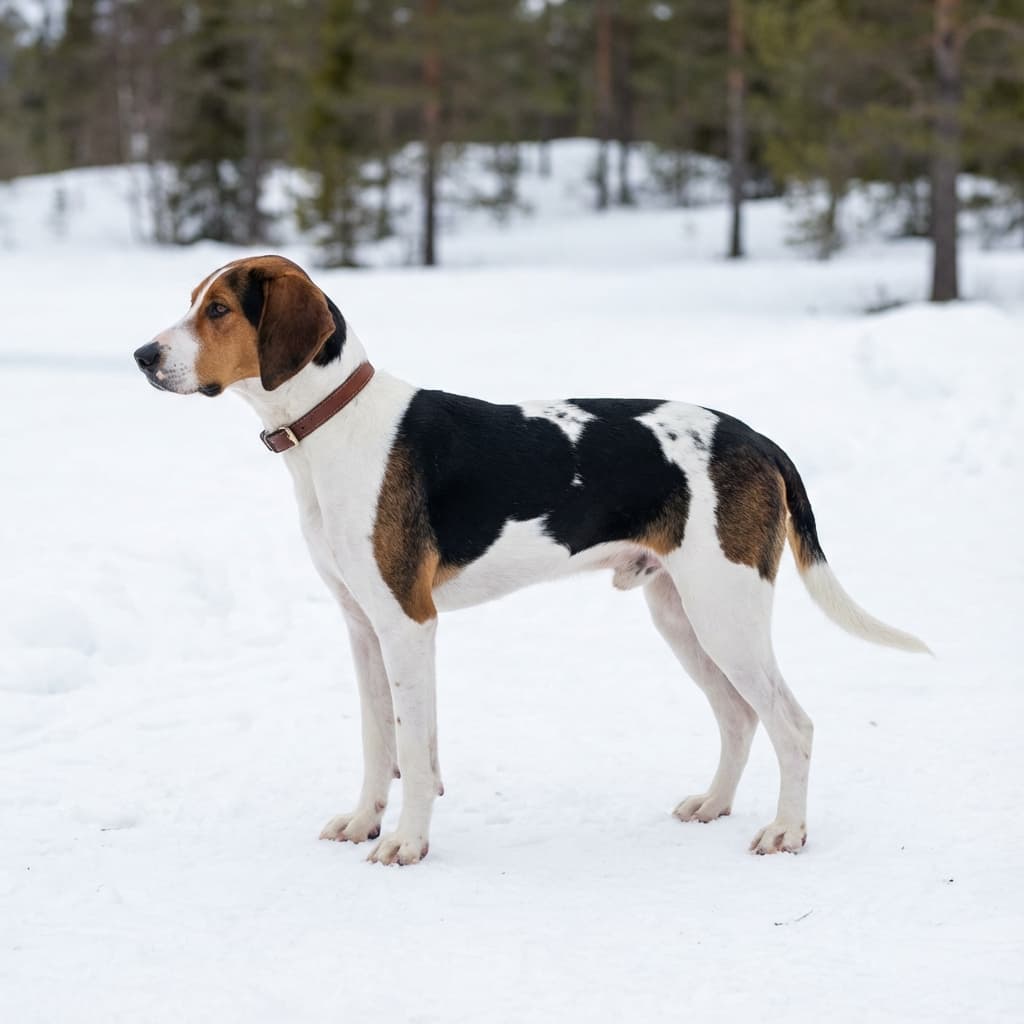
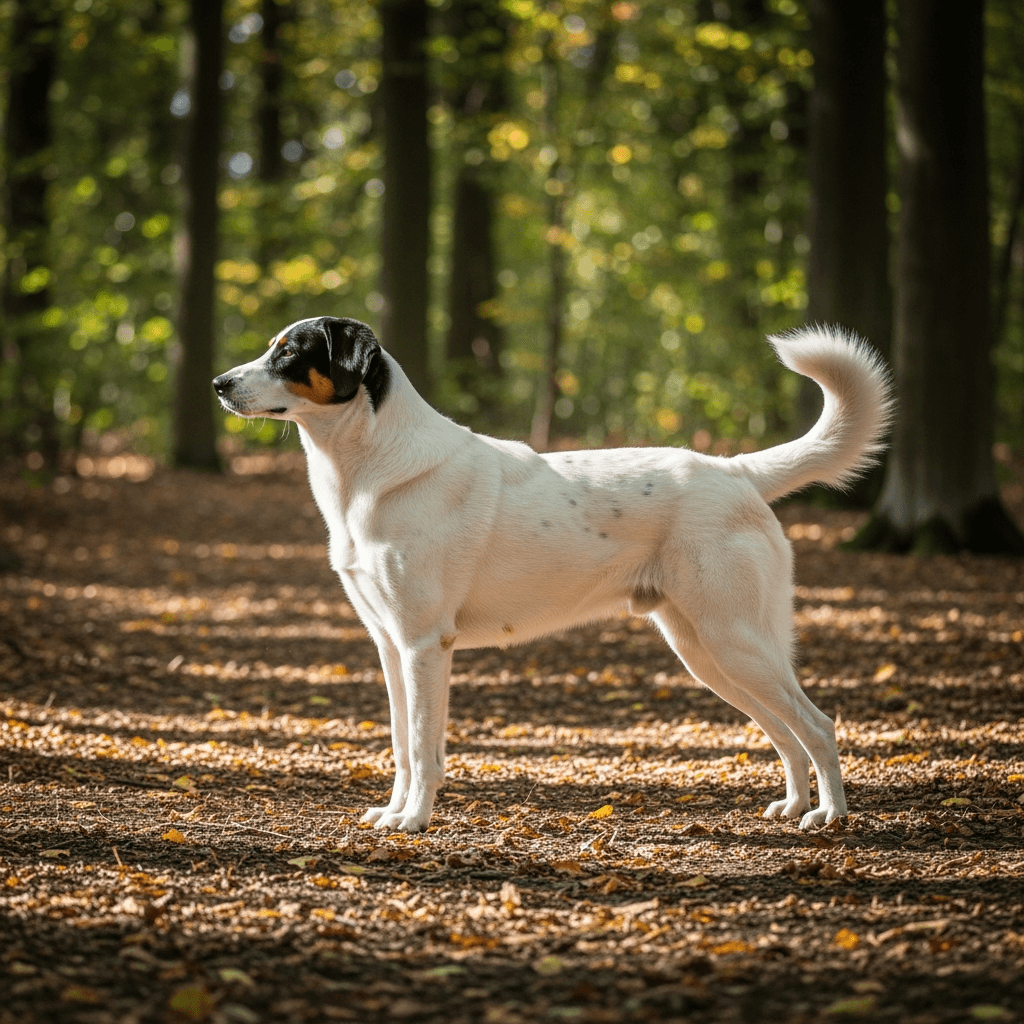
The characteristic white coat with black patches and sometimes visible tan shades on the cheeks and above the eyes give the Ariégeois a unique appearance. Their short, dense coat requires minimal grooming, making them relatively easy to maintain. In terms of health, this breed generally enjoys good condition and lives on average 11-13 years. Like most medium breeds, they may experience hip dysplasia issues and ear infections due to their long, drooping ears, so regular veterinary check-ups are particularly important.
The Ariégeois is an excellent choice for active families, hunters, and people who enjoy sports and outdoor life. Their sociable nature and patience with children make them well-suited for a family environment, provided they are given the right amount of daily activity. Due to their need for social interaction, they are not dogs that tolerate loneliness well - they require attention, engagement, and regular contact with people.
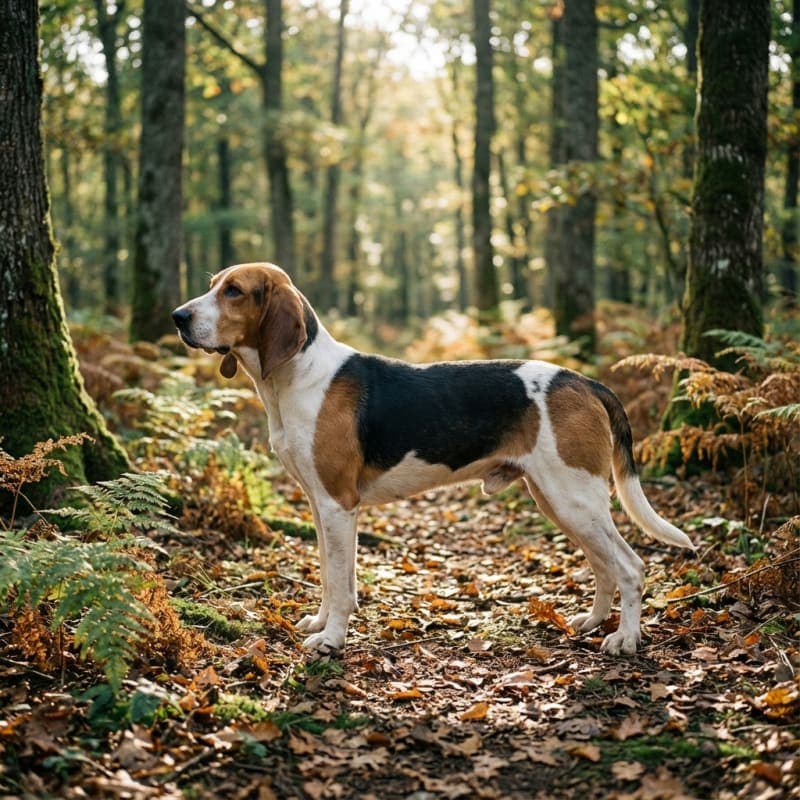
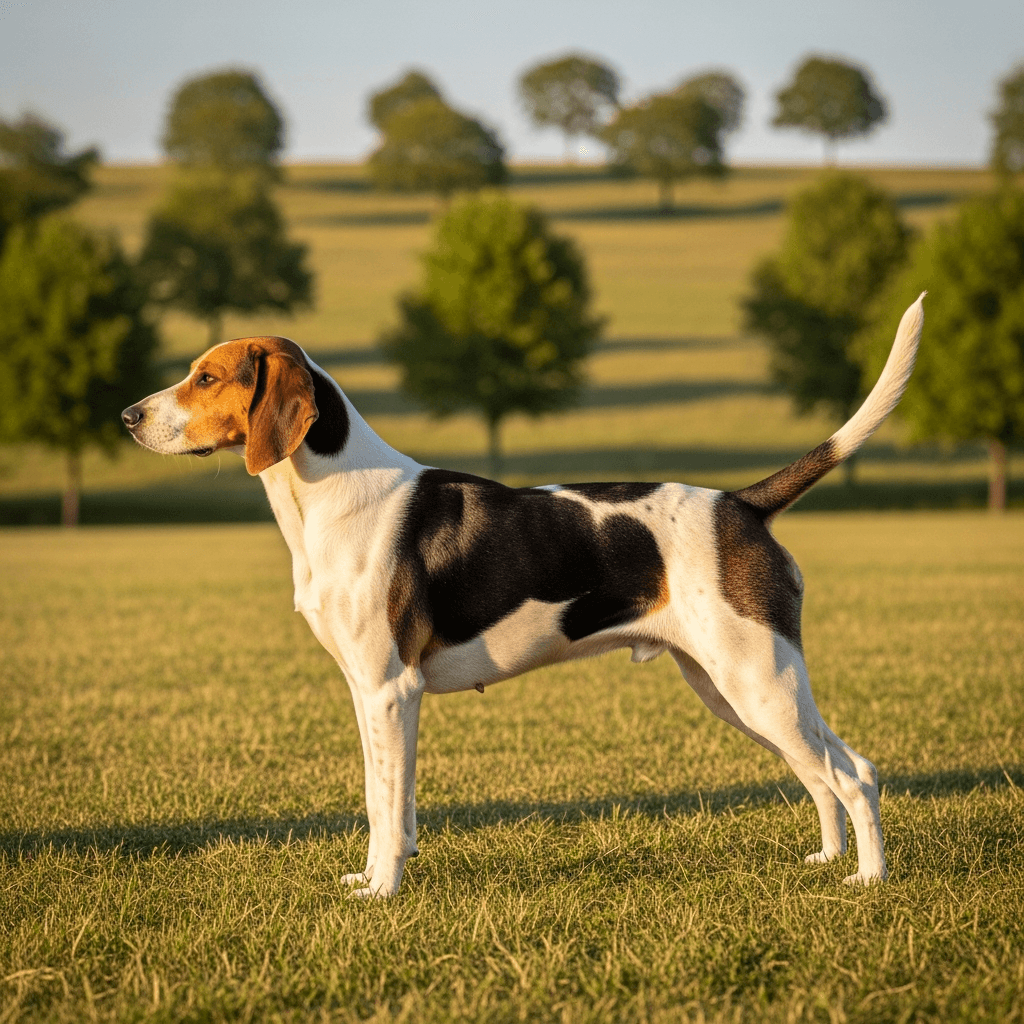
Ariégeois is a dog of medium size and elegant silhouette, which immediately attracts attention with its harmony and distinguished appearance. The height at the withers ranges from 52 to 58 cm for males and from 50 to 56 cm for females. The body structure is light yet strong and muscular, providing dogs of this breed with exceptional agility and speed necessary for hunting in difficult mountainous terrain.
The head is proportional to the rest of the body, with a slightly domed skull when viewed from the front. The skull is not too wide, giving the muzzle a noble expression. The nose is well-developed, always black in color, with widely open nostrils. The eyes are large, dark brown, expressing intelligence and liveliness of character. The gaze of the Ariégeois is penetrating yet friendly.
The ears are one of the most distinctive features of this breed - they are long, thin, delicate, and fleshy, hanging down the sides of the head. They are set at the level of the eye line or slightly below. When the dog is at rest, the ears reach at least to the end of the nose, and when folded, they can even extend further. They are slightly wrinkled, giving the dog a characteristic hound appearance.
The neck is quite long and slightly arched, without an excessively developed throat, smoothly transitioning into a well-muscled chest. The torso is harmonious, with a straight, strong back and well-defined loins. The ribs are appropriately arched, providing sufficient lung capacity - a feature extremely important for a hunting dog with great endurance.
The tail is of medium length, quite thin, tapering towards the end. At rest, it is carried loosely, while in motion or during work, it is raised cheerfully, often slightly curved, but never curled over the back. The tail is well-haired, forming a delicate brush.
The limbs are strong, straight, and well-muscled, ending in oval paws with grouped toes and hard, black pads. The thigh muscles are well-developed, providing strong propulsion during running. The movements are free, springy, and harmonious - the Ariégeois moves with natural grace and lightness.
Coat and coloration: The hair is short, dense, and soft to the touch. The coloration is primarily a pure white base color with black patches of clear contours. The following are also acceptable:
- Black speckling on white parts of the body
- Tan (reddish-brown) markings on the cheeks
- Tan markings above the eyes (known as "four-eyes")
- Tan shades at the base of the ears
Overall, it creates the image of a elegant, distinguished dog with harmonious proportions, combining lightness and strength - ideal traits for a hound working in mountainous terrain.
Ariégeois is a dog with a friendly, cheerful, and very sociable temperament, who quickly forms strong emotional bonds with its owners. This breed loves contact with people and derives great joy from participating in family activities. These dogs are known for their loyalty and devotion, while also maintaining a certain degree of independence typical of hounds.
Character and temperament:
- Joyful and energetic - Ariégeois is a lively dog that approaches every activity with enthusiasm
- Intelligent and sharp - quickly learns new commands and excels in various sports disciplines
- Sociable with family - forms strong bonds with household members and gets along well with children
- Patient and gentle - despite its hunting temperament, can be calm and balanced at home
Relationships with other animals: Ariégeois usually gets along great with other dogs - as a breed created to work in hunting groups, it has a natural tendency to cooperate with other canines. However, it may exhibit a strong instinct to chase small animals due to its hunting roots, so socialization from a young age is particularly important if we plan to keep it with cats or other small pets.
Attitude towards strangers: Towards strangers, Ariégeois can be somewhat reserved or distrustful, though not aggressive. This breed is not particularly predisposed to serve as a guard dog - its loud voice will alert to the presence of strangers, but it lacks the aggression and decisiveness to defend its territory. It is more of a friendly companion than a guardian.
Emotional needs and activity: This breed has a very high need for exercise and mental stimulation. An Ariégeois that does not receive enough physical activity and engaging mental tasks may become frustrated, which can manifest as destructive behavior, excessive barking, or attempts to escape. Regular long walks, the opportunity to run freely in safe areas, and activities like nosework, agility, or mantrailing are essential for its mental well-being.
Training and cooperation: Ariégeois is an intelligent and eager-to-learn dog, but it also has a independent character typical of hounds. It may show some stubbornness, especially when it catches an interesting scent. It requires a patient, consistent owner who will use positive reinforcement methods - rewards, praise, and treats. Ariégeois reacts poorly to harsh, authoritarian training methods, which can lead to withdrawal or stubborn resistance.
Emotional sensitivity: Despite its working character, Ariégeois is quite emotionally sensitive. It does not cope well with prolonged loneliness and needs regular interaction with the family. It is an ideal dog for active individuals who can dedicate a lot of time and attention to it, and not necessarily for busy owners who are often absent from home.
In summary, Ariégeois is a dog for active, patient, and experienced individuals who understand the specifics of hound breeds and can meet their exercise and emotional needs. In the right conditions, it becomes a wonderful, loyal companion for many years.
Ariégeois generally enjoys good health and is considered a breed relatively resistant to diseases. The average lifespan is between 11 to 13 years, which is typical for medium-sized dogs. However, like any breed, Ariégeois is susceptible to certain conditions that future owners should be aware of.
Most common health issues:
1. Hip Dysplasia (HD)
This is a hereditary orthopedic condition in which the head of the femur does not fit properly into the hip socket. It can lead to:
- Pain and discomfort during movement
- Lameness or stiffness, especially after rest
- Limited mobility in advanced stages
- Development of osteoarthritis in older age
Prevention includes choosing puppies from parents with screened hip joints, maintaining an appropriate weight, and moderate, regular physical activity without overloading the joints during puppyhood.
2. Ear Infections (otitis externa and media)
The long, drooping ears of the Ariégeois can create ideal conditions for the growth of bacteria and fungi:
- Limited airflow in the ear canal
- Retention of moisture, dirt, and wax
- Increased risk of infection, especially after baths or swimming
Prevention: Regular ear checks (at least once a week), gentle cleaning with specialized solutions, drying ears after bathing, and visiting a veterinarian at the first signs of discomfort (frequent head shaking, scratching ears, unpleasant odor).
3. Patellar Luxation (luxatio patellae)
A condition in which the kneecap (patella) slips out of its normal position. It can cause:
- Intermittent lameness
- Unusual gait (the dog sometimes hops on three legs)
- Pain and discomfort
- In severe cases - the need for surgical intervention
4. Other possible issues:
- Obesity - especially in dogs not receiving enough exercise
- Dental problems - tartar, gingivitis
- External parasites - ticks and fleas (dogs often spending time in the woods)
Prevention and healthcare:
- Regular veterinary visits - at least once a year for a check-up
- Vaccinations - according to the veterinarian's recommendations
- De-worming and external parasite prevention - regularly throughout the year
- Weight control - avoiding obesity through a proper diet and activity
- Regular orthopedic examinations - especially in young dogs during the growth period
- Ear hygiene - checking and cleaning at least once a week
- Dental care - brushing or dental treats
Physical activity and fitness: Ariégeois is an active and brave dog that requires regular exercise to maintain good physical and mental condition. However, it is important not to overload puppies and young dogs with intense exercise (e.g., long running, jumping), as this can lead to joint problems in the future. Only after reaching one year of age, when the skeleton and joints are fully developed, can the intensity of training be gradually increased.
In summary, with proper veterinary care, a healthy diet, and regular activity, Ariégeois has the chance to enjoy a long, healthy, and happy life alongside its family.
Ariégeois belongs to the low-maintenance breeds, making it an ideal choice for those who value simplicity in daily care. Its short, dense, and soft-to-the-touch coat is easy to maintain and does not require complicated grooming procedures or visits to grooming salons.
Coat care:
- Brushing 1-2 times a week - a soft brush or grooming glove is sufficient to remove dead hair and dirt
- During shedding (spring and autumn) - increase brushing frequency to 3-4 times a week to minimize the amount of hair in the home
- Bathing only as needed - when the dog is visibly dirty or smells unpleasant. Too frequent baths can dry out the skin and remove the natural protective layer of the coat
- Use of gentle dog shampoos - products intended for humans can irritate the dog's sensitive skin
Ear care (CRITICAL for this breed!):
Due to its long, drooping ears, the Ariégeois requires special attention to ear hygiene to prevent infections:
- Ear inspection at least once a week - checking for redness, unpleasant odor, excessive wax buildup
- Gentle cleaning - using special ear cleaning solutions for dogs and cotton pads/gauze (NEVER insert cotton swabs deep into the ear canal!)
- Drying ears after bathing, swimming, or walks in the rain - moisture in the ears promotes bacterial growth
- Immediate response to infection symptoms - head shaking, ear scratching, unpleasant odor require a visit to the veterinarian
Oral hygiene:
- Brushing teeth 2-3 times a week - ideally daily, using toothpaste for dogs (never for humans!)
- Dental treats - chewing special chews helps in mechanically removing plaque
- Regular dental check-ups with the veterinarian - prevention of tartar and gum diseases
Nail care:
- Regular nail trimming - usually every 3-4 weeks, if they do not wear down naturally during walks
- Checking length - nails should not touch the ground when the dog is standing
- Cautious trimming - being careful of the blood vessels inside the nail (when in doubt, consult a veterinarian)
Paw inspection:
- Regularly checking paw pads - looking for wounds, cracks, embedded thorns, or grass seeds
- Winter protection from salt and chemicals - rinsing paws after walks or using protective balms
- Trimming hair between toes - prevents dirt and snow accumulation
Skin and coat inspection:
- Regularly checking the skin - especially after walks in the woods (ticks, fleas, scratches)
- Searching for ticks - especially in the spring-summer season, around the ears, neck, and belly
- Observing any changes - lumps, thickening, rashes require veterinary consultation
Frequency of grooming procedures:
- Brushing: 1-2 times a week (3-4 times during shedding)
- Ear inspection: once a week
- Teeth brushing: 2-3 times a week (ideally daily)
- Nail trimming: every 3-4 weeks
- Bathing: as needed (on average every 2-3 months)
With its short coat and generally low grooming requirements, the Ariégeois is ideal for busy owners who appreciate simplicity in daily care but are still able to dedicate time to regular, basic hygiene procedures.
Ariégeois is a breed with a very high energy level, requiring a significant amount of movement and physical activity to remain healthy, balanced, and happy. As a hound dog, designed for long hours of hunting in challenging mountainous terrain, it has an innate need for intense effort and exploration of its surroundings.
Minimum exercise requirements:
- 60-90 minutes of intense exercise daily - this is the absolute minimum for an adult, healthy Ariégeois
- Long walks - at least 2-3 times a day, including at least one longer walk (45-60 minutes)
- Opportunity to run freely - preferably in a safe, fenced area or on a training leash
- Diverse forms of activity - just walking on a leash is not enough; the dog needs opportunities to run and track
Ideal forms of activity for Ariégeois:
1. Running and jogging
Ariégeois is an excellent running partner for active owners. With its endurance and build, it can easily accompany long-distance runs. Note: young dogs (under 12-18 months) should not be subjected to long, intense runs due to their developing skeletal system.
2. Long hikes and trekking
An ideal companion for mountain and forest expeditions. It loves to explore new areas, track scents, and tackle challenging trails. During hikes, it naturally utilizes its hunting instinct.
3. Nosework and mantrailing
Activities that utilize the sense of smell are an excellent form of both physical and mental stimulation. Ariégeois has a remarkable sense of smell and derives great satisfaction from tracking scents. This is also a great way to tire the dog out on bad weather days.
4. Agility and obstacle courses
Due to its agility and intelligence, Ariégeois can excel in agility. This is an excellent way to engage both body and mind, as well as strengthen the bond with the owner.
5. Fetch games
Although it is not a typical retriever, most Ariégeois enjoy playing fetch with balls, frisbees, or other toys, especially if properly motivated.
6. Bikejoring or canicross
For very active owners - Ariégeois can participate in sports that involve pulling the owner on a bike or while running. It requires proper preparation and equipment.
Consequences of insufficient activity:
An Ariégeois deprived of adequate exercise may exhibit a range of problematic behaviors:
- Destructiveness - destroying furniture, chewing on objects, digging holes in the garden
- Excessive barking or howling - especially when left alone at home
- Hyperactivity - inability to relax, constant pacing, whining
- Escape attempts - jumping fences, digging under, seizing every opportunity to escape
- Obsessive behaviors - chasing its own tail, licking paws
- Weight gain - lack of exercise leads to obesity and health problems
Mental stimulation is equally important!
In addition to physical activity, Ariégeois also needs intellectual challenges:
- Scent games (hiding treats)
- Puzzles and interactive toys
- Learning new commands and tricks
- Diverse walking routes (new scents and environments)
- Meetings with other dogs (play and socialization)
Safety during activities:
- Strong hunting instinct - Ariégeois may take off after game and become deaf to calls. In unfenced areas, a leash or long training line should always be used
- Gradual increase in intensity - especially for young or older dogs
- Adjustment to weather conditions - on hot days, walks should be early in the morning or late in the evening, with access to water
- Condition monitoring - observing signs of fatigue, limping, or discomfort
Who is Ariégeois for?
This breed IS NOT suitable for:
- People leading a sedentary lifestyle
- Residents of small apartments without access to green areas
- People often away from home for many hours
- Beginner dog owners who do not understand the needs of active breeds
Ariégeois is an IDEAL dog for:
- Hunters and outdoor enthusiasts
- Runners, cyclists, trekking enthusiasts
- Families living in homes with large gardens who regularly spend time walking
- People interested in canine sports (nosework, agility, mantrailing)
In summary: Ariégeois is a dog for true enthusiasts of an active lifestyle who are willing to dedicate at least 1.5-2 hours a day to the physical and mental activity of their four-legged friend. In the right conditions, it will be a loyal, energetic companion for many years of shared adventures!
Ariégeois is a smart, quick-witted, and eager to cooperate dog, which makes him relatively easy to train, provided that appropriate methods are applied and the specifics of hound breeds are understood. The key to success is patience, consistency, and an approach based on positive reinforcement.
Intellectual characteristics:
- High intelligence - quickly learns new commands and tasks
- Good memory - retains learned behaviors for a long time
- Independence of thought - typical of hounds, can sometimes be perceived as stubbornness
- Motivation by scent - smell often dominates other senses and can be distracting during training
Most effective training methods:
1. Positive reinforcement (KEY!)
- Rewarding with treats - the most effective method for this breed; use appealing, small treats
- Verbal praise and petting - enthusiastic expression of satisfaction
- Play as a reward - short play sessions after completing a command
- Diversity of rewards - Ariégeois does not like monotony, change the types of rewards
2. Consistency and regularity
- Short but frequent training sessions - 5-10 minutes several times a day instead of one long session
- Clear, consistent commands - all household members should use the same commands
- Immediate rewarding - within 1-2 seconds of performing the desired behavior
- Systematic practice - daily exercises yield the best results
3. Avoiding physical punishment and yelling
Ariégeois is emotionally sensitive and reacts poorly to harsh methods:
- ❌ Physical punishment leads to loss of trust and fear
- ❌ Yelling causes stress and may lead to the dog shutting down
- ❌ Forcing obedience creates resistance and stubbornness
- ✅ Ignoring unwanted behaviors and rewarding desired ones
- ✅ Calm, firm "no" or redirecting attention
Basic commands (FOUNDATION OF TRAINING):
- Sit - basic control command
- Lie down - calming and control
- Stay/Wait - impulse control
- Come/Here - THE MOST IMPORTANT command for a hound!
- Down/Calm - interrupting unwanted behaviors
- Heel - walking at heel without pulling on the leash
Specific challenges in training Ariégeois:
1. Strong hunting instinct and distraction by scents
Problem: The dog picks up a scent during a walk and ignores the call.
Solution:
- Early teaching of the Come command in a controlled environment
- Gradually increasing distractions during training
- Using a long training leash (10-15m) at the beginning
- Rewarding EVERY return to the owner with an exceptionally attractive reward
- Never punish the dog when it finally returns (even if it took a long time!)
2. Independence and selective listening
Problem: The dog follows commands at home but ignores them on walks.
Solution:
- Generalization training - practicing commands in various places and situations
- Increasing the value of rewards in more challenging environments
- Gradually adding distractions
- Building strong motivation to cooperate
3. Stubbornness in certain situations
Problem: The dog refuses to perform a command it usually knows.
Solution:
- Checking if the dog understands what is expected
- Breaking the task into smaller steps
- Increasing the attractiveness of rewards
- Ensuring that the session is not too long (mentally tired dog)
Socialization (CRITICAL from puppy age!):
- Exposure to different environments - city, countryside, forest, shops, crowds of people
- Contact with various people - children, adults, elderly individuals
- Meetings with other dogs - controlled interactions with different breeds and sizes
- Getting used to noises - cars, trains, thunder, fireworks
- Familiarization with different animals - cats, birds, other farm animals
Sports disciplines ideal for Ariégeois:
- Nosework/Mantrailing - utilizing the natural tracking instinct
- Agility - agility and cooperation with the owner
- Obedience - precise execution of commands
- Rally-O - a combination of obedience and fun
- Practical hunting - for dogs with working pedigrees
Common mistakes made by owners during training:
- ❌ Training sessions that are too long - the dog gets bored
- ❌ Inconsistency in commands - different family members use different words
- ❌ Punishing for returning to the owner - even if the dog ran away earlier
- ❌ Expecting too quick execution of commands in a challenging environment
- ❌ Lack of variety in training - the dog gets bored
- ❌ Comparing with other breeds - Ariégeois has its own specifics!
Tips for new owners:
- Consider obedience courses with a professional trainer, preferably specializing in hound breeds
- Enroll your puppy in a puppy kindergarten
- Read literature on positive training methods
- Be patient - learning takes time!
- Remember that every dog is different - adjust the pace to your Ariégeois's abilities
In summary: Ariégeois is a smart and capable learner, but requires a patient, consistent owner who understands the specifics of hound breeds. By applying positive reinforcement methods, regularity, and variety in training, one can raise a perfectly obedient and happy companion. The key is building a partnership based on trust and mutual respect, rather than forcing obedience.
A proper, balanced diet is a key element in maintaining the health, physical condition, and well-being of the Ariégeois. As a medium-sized dog with a high level of activity, it requires nutrition tailored to its specific energy needs and nutritional components.
Basic nutrition guidelines:
1. High-quality food
Choose food tailored to:
- Dog's age - puppies, adults, seniors have different needs
- Activity level - the Ariégeois is an active/very active dog, requiring food for sporting/working dogs
- Weight and condition - adjust caloric intake to the dog's current state
- Any allergies or intolerances - monitor reactions to ingredients
2. Feeding frequency
- Puppies (2-6 months) - 3-4 meals a day at regular intervals
- Young dogs (6-12 months) - 2-3 meals a day
- Adult dogs (over 12 months) - 2 meals a day (morning and evening)
- Older/less active dogs - 2 meals a day with reduced caloric intake
3. Appropriate portions
The amount of food depends on:
- The dog's weight and target weight
- Daily activity level
- Type of food (caloric content varies between manufacturers)
- Individual metabolism
Always follow the manufacturer's recommendations provided on the packaging, but monitor the dog's condition and adjust portions as needed.
Nutrients - what does the Ariégeois need?
1. Protein (25-30% in dry matter)
- The foundation for building and repairing muscles
- Sources: meat (poultry, beef, lamb, fish)
- High-quality animal protein should be the first ingredient
- Active dogs need more protein than dogs with low activity levels
2. Fats (12-18% in dry matter)
- Source of energy, especially for active dogs
- Omega-3 and omega-6 fatty acids - healthy skin and shiny coat
- Sources: fish oil, salmon oil, flaxseed oil, animal fats
3. Carbohydrates (moderate amount)
- Source of energy, especially for prolonged exertion
- Preferred sources: rice, oats, potatoes, sweet potatoes
- Avoid food with excessive fillers (corn, wheat) - they can cause allergies
4. Vitamins and minerals
- Calcium and phosphorus - healthy bones and joints (especially important for puppies!)
- Glucosamine and chondroitin - joint support (important for active dogs)
- Vitamins A, E, C - support for the immune system
- B vitamins - energy metabolism
Types of food - what to choose?
1. Dry food (kibble)
- ✅ Economical, long shelf life
- ✅ Helps with mechanical teeth cleaning
- ✅ Easy to portion
- ⚠️ Ensure the dog has constant access to fresh water
2. Wet food (cans, pouches)
- ✅ Better palatability, higher moisture content
- ✅ Good for dogs with dental issues
- ❌ More expensive, shorter shelf life after opening
3. BARF diet (raw meat and bones)
- ✅ Natural, minimally processed
- ✅ Control over ingredients
- ❌ Requires nutritional knowledge and time for preparation
- ❌ Risk of unbalanced ingredients
- ⚠️ Consultation with a veterinarian/canine nutritionist recommended
Nutrition-related problems and their solutions:
1. Overweight and obesity
The Ariégeois is prone to weight gain, especially when:
- Not getting enough exercise
- Being fed table scraps
- Receiving too many treats during training
Solution:
- Control portions - do not feed by eye
- Include treats in the daily caloric intake (no more than 10% of daily needs)
- Increase physical activity
- Consider Light/Weight Management food
- Regularly weigh the dog and monitor its condition (ribs should be felt under a thin layer of fat)
2. Food allergies and intolerances
Symptoms: itchy skin, rashes, digestive problems, hair loss
Solution:
- Consult a veterinarian
- Elimination diet (single protein food)
- Hypoallergenic food (lamb + rice, salmon + potatoes)
- Avoid wheat, corn, soy - common allergens
3. Digestive problems
Diarrhea, vomiting, gas
Solution:
- Easily digestible food with added probiotics
- Gradual introduction of new food (7-10 days)
- Avoid table scraps
- Regular feeding times
What to AVOID in the diet of the Ariégeois:
- ❌ Table scraps - fatty, processed, seasoned products harm the dog
- ❌ Chocolate, xylitol, grapes, raisins, onions, garlic - toxic to dogs!
- ❌ Cooked bones - can splinter and cause obstruction or perforation of the intestines
- ❌ Fatty meat and skins - can trigger pancreatitis
- ❌ Milk and dairy products in large quantities - many dogs are lactose intolerant
- ❌ Excessive treats and cookies for dogs - lead to obesity
Access to water:
- Fresh, clean water ALWAYS available - especially important for active dogs!
- Change water at least 1-2 times a day
- More frequent refills after intense exercise
- Wash the bowl daily (prevents bacterial growth)
Training treats:
- No more than 10% of daily caloric needs
- Use small, bite-sized pieces (size of a fingernail)
- Healthy options: dried meat, dried lungs, pieces of carrot, apples (without seeds)
- Subtract calories from treats from main meals to avoid overweight
Consultations with a veterinarian:
Regularly consult the diet with a specialist, especially when:
- The dog has health issues (dysplasia, allergies, gastrointestinal diseases)
- You plan to change the type of nutrition (e.g., to BARF)
- The dog is gaining or losing weight without a clear reason
- You notice changes in coat quality, energy, stool
In summary: A proper diet tailored to the age, activity, and individual needs of the Ariégeois is the foundation of its health and long life. Investing in high-quality food and regular monitoring of the dog's condition is the key to keeping your Ariégeois in excellent shape for many years!
Characteristic Traits
Pros
- Friendly and sociable character
- High intelligence and willingness to cooperate
- Excellent companion for active families and hunters
- Elegant silhouette and distinctive coat
- Low grooming requirements
- Good health condition and longevity.
Cons
- Requires a very large amount of exercise (at least 60-90 minutes a day)
- Strong hunting instinct and tendency to track
- Not suitable as a guard dog
- May show stubbornness typical of hound breeds
- Struggles with loneliness and prolonged absence of owners.
Behavioral Ratings
Breed History
The history of the Ariégeois breed begins at the turn of the 19th and 20th centuries in the picturesque region of Ariège, located in southern France, in the Midi-Pyrénées department, at the foot of the Pyrenees. This region, known for its mountainous and challenging terrain, required hunters to have dogs with special traits - lightness, agility, and endurance, which would allow them to effectively chase game in hard-to-reach places.
The breed's origin - local crossbreeding
The Ariégeois was created as a result of thoughtful crossbreeding of local hounds, known as briquets (medium-sized hounds), with other chien d'ordre type dogs - hounds that hunt in packs. It is most likely that the following participated in the breed's development:
- Blue Gascon (Bleu de Gascogne) - a large hound with a characteristic blue-speckled coat
- Gascon Saintongeois (Gascon Saintongeois) - another large French hound breed
- Local briquets from the Ariège region - medium hounds with less mass and greater agility
The breeders aimed to create a hound of smaller size than its ancestors, while retaining all the typical traits of chien d'ordre - namely excellent scenting ability, a loud voice, endurance, and the ability to work in a group. The result was the breeding of the Ariégeois - a dog that is lighter, more robust, and agile, ideally suited for hunting in the mountainous regions of the Pyrenees.
Original purpose - hunting hares
From the very beginning, the Ariégeois was primarily used for hunting hares - game that required speed, endurance, and an excellent sense of smell from the dog. Thanks to its light build and robustness, the Ariégeois easily handled difficult terrains - rocky slopes, dense thickets, and steep inclines. Its loud, distinctive voice allowed hunters to track the progress of the hunt even when the dog disappeared into thick underbrush or behind hills.
Over time, the use of the Ariégeois expanded to include tracking deer and wild boars, although hares remained its favorite type of game. These dogs excelled both in independent hunts and in hunting groups, where their ability to cooperate and communicate with other dogs was highly valued.
Official recognition of the breed
The Ariégeois gained official recognition from the International Canine Federation (FCI) with the publication of the breed standard no. 20 on January 24, 1996. The standard classifies the breed in:
- Group 6 - Hounds, bloodhounds, and related breeds
- Section 1.2 - Medium-sized hounds
- With working trials
The official recognition by the FCI contributed to a growing interest in the breed not only in France but also in other European countries. Breeders began to work more systematically on preserving the breed's characteristics and maintaining the working abilities of the Ariégeois.
Evolution of use - from hunting to family
For most of its history, the Ariégeois was primarily a hunting dog, kept in hunting packs or by individual hunters. However, over the years, especially in the second half of the 20th century, this breed began to be appreciated as a companion and family dog.
Its cheerful, sociable character, intelligence, and loyalty made the Ariégeois a popular choice not only for hunters but also for active families looking for an energetic, devoted companion. These dogs have excelled in the role of sporting dogs - participating in agility, nosework, mantrailing, and obedience competitions.
Modernity - a rarity outside France
Despite its long history and official recognition, the Ariégeois remains a relatively rare breed outside the borders of France. Most of the population is still concentrated in its region of origin - southern France, where the breed is valued by both hunters and family dog enthusiasts. In other European countries, including Poland, the Ariégeois is considered an exotic and hard-to-find breed.
Modern breeders strive to preserve both the working qualities and the temperament of the breed. The Ariégeois still participates in trial hunts and working shows, proving that its hunting abilities remain high despite its growing popularity as a companion dog.
Historical summary
The Ariégeois is a breed with a over 100-year tradition, created by French hunters for specific working conditions in the mountainous terrain of the Pyrenees. From briquets and large hounds like the Blue Gascon, it inherited excellent scenting ability, a loud voice, and endurance, but in a smaller, more agile form. Over the years, it has evolved from a strictly hunting dog to a versatile companion - still excellent in work, but also a wonderful family member. Its history is an example of successful working breeding that has simultaneously preserved a friendly, sociable temperament.