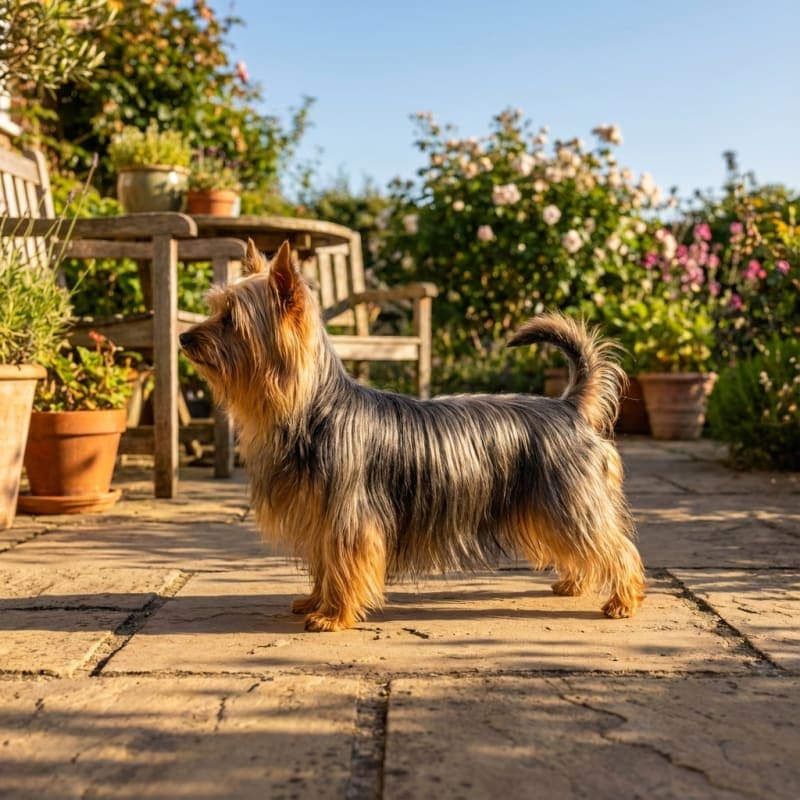
Australian Silky Terrier
FCI Group
3• FCI 236
Size
Small
Origin Country
AU
Height
20-26 cm
Weight
3.5-5.9 kg
Lifespan
12-14 years
Temperament
Overview
Australian Silky Terrier, also simply known as Silky Terrier, is a charming companion dog breed that captivates with its small, compact build and wonderful, silky coat. Despite its small size, this dog stands out with a big personality, full of energy, courage, and the cheerfulness typical of terriers. Originating from Australia, the Silky Terrier was developed from a combination of the Yorkshire Terrier and local Australian terriers, resulting in a breed with a unique appearance and temperament. Its shiny, flowing coat and lively character have quickly won the hearts of dog lovers worldwide, and for decades it has enjoyed unwavering popularity as an excellent life companion.
Although small in size – males reach a height at the withers of 23 to 26 cm, and females are slightly smaller – the Silky Terrier retains all the typical traits of a terrier: bravery, playfulness, confidence, and natural alertness. This compact canine weighs between 3.5 and 6 kg, making it an ideal dog for apartment living, even in small spaces. However, one should not be deceived by its size – it is an active, energetic dog that requires regular physical activity and mental stimulation to maintain its mental and physical health. Without proper exercise and play, it can quickly become bored, leading to undesirable behaviors.
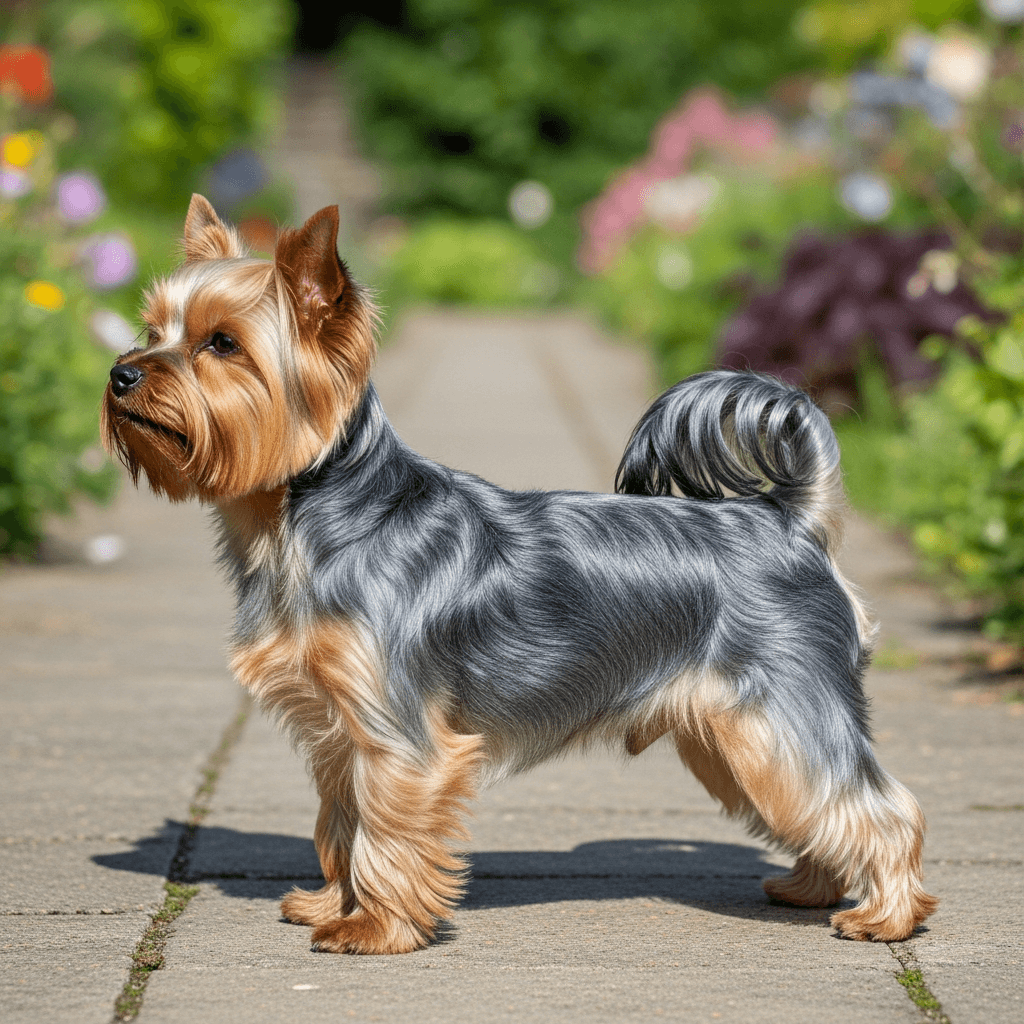
The long, smooth, and shiny coat of the Silky Terrier is its hallmark and a key feature of its distinctive appearance. The most commonly seen coat color is various shades of blue with tan or gold markings, with breeders particularly valuing intense, deep colors. The breed standard was established in the early 20th century, and in 1955, the official name was standardized to Australian Silky Terrier to emphasize its Australian origins and prevent further crossbreeding. Despite the passage of decades, this breed continues to enjoy immense popularity in Australia and beyond, winning the hearts of both experienced breeders and first-time dog owners.
The Silky Terrier is a dog that forms a strong attachment to its owner and the entire family. It does not tolerate long periods of solitude and struggles with being left alone at home for many hours – it may then exhibit signs of stress, separation anxiety, and destructive behavior. Therefore, it is ideally suited for people who can dedicate a lot of time, attention, and companionship to it. Thanks to its high intelligence, eagerness to learn, and willingness to cooperate, the Silky Terrier is relatively easy to train, although it requires consistency, patience, and positive training methods. Its lively temperament, cheerful disposition, and immense loyalty make it a wonderful choice for individuals and families looking for a small, energetic, and devoted friend who will bring plenty of joy, laughter, and positive energy into the home for many years.
Australian Silky Terrier is distinguished by its compact, harmonious body structure and moderately low perception of silhouette. The torso is of medium length, proportional to height, giving the dog an elegant and balanced appearance. Despite its small size, the Silky Terrier's silhouette is slender yet strong and muscular enough to suggest the ability to hunt small household rodents – a typical trait of terriers.
The silky, smooth, and straight coat is one of the most characteristic features of this breed. The hair should be shiny, soft to the touch, and of a length that does not restrict the dog's freedom of movement. On the back and torso, the coat forms a distinct, straight parting running from the nape to the base of the tail, emphasizing the elegant appearance of this breed.
Dimensions and proportions: The height at the withers ranges from 23 to 26 cm for males, while females are usually slightly shorter. The weight is proportional to height and ranges from 3.5 to 6 kg. Thanks to its compact build and balanced proportions, the Silky Terrier presents itself with grace and dynamism.
The head is of medium length, with a muzzle slightly shorter than the skull. The skull is flat between the ears, giving the head an elegant profile. The eyes are small, oval, and dark, full of intelligence and alertness. The expression of the eyes is lively, clear, and curious, perfectly reflecting the character of this breed. The ears are V-shaped, small, set high on the skull, and usually erect, highlighting the dog's alertness.
Coat color: The most valued coat color is in shades of blue (from light silver-blue to deep steel-blue) with tan or fawn markings. Intense, deep colors are particularly desired by breeders and show judges. Tan markings occur on the limbs, muzzle, above the eyes, and around the anus.
The tail is usually docked (although this practice has been banned in many countries), carried high but not too cheerfully above the line of the back. A natural tail is of medium length and continues the line of the back.
Australian Silky Terrier possesses all the typical characteristics of a terrier, making him a dog full of temperament, energy, and character. He is brave, confident, lively, and extremely active, which makes him an excellent companion for individuals and families leading an active lifestyle. Despite his small size, the Silky Terrier has a strong sense of self-worth and is not afraid of larger dogs, which can lead to confrontations if not properly socialized from a puppy.
This breed forms a strong bond with its owner and family members, showing immense loyalty and devotion. However, he is not an overly dependent dog – he can be independent when the situation requires it, but at the same time, he loves human closeness and spending time together. The Silky Terrier may be suspicious and cautious of strangers, making him an excellent alarm dog that will immediately signal the presence of unwanted guests. With proper early socialization, he becomes more open, friendly, and tolerant of new people and animals.
Intelligence and training: The Silky Terrier stands out with a high level of intelligence, learns quickly, and responds enthusiastically to positive training methods based on rewards and praise. He is a dog that likes to have tasks to perform and engages in training with great zeal. However, he requires consistency, patience, and firmness from his owner, as he also has a strong will and an independent character typical of terriers.
Loneliness and separation anxiety: As a companion dog, the Australian Silky Terrier does not cope well with long periods of solitude. Left alone for many hours, he may exhibit destructive behaviors, excessive barking, separation anxiety, and other behavioral issues. Therefore, this breed is ideal for people working from home, retirees, or families where someone is always present at home.
Barking: The Silky Terrier has a natural tendency to bark and vocalize, which is a typical trait for most terriers. He may bark at strangers, other dogs, noises from the street, or simply out of excitement. Therefore, it is important to teach him control over barking and the command Quiet from a young age, especially if you live in an apartment or close to other people.
With his fun, joyful, and cheerful nature, the Australian Silky Terrier is an ideal companion for individuals and families who are ready to dedicate time to his physical activity, mental stimulation, grooming, and companionship. He is a dog that can brighten, amuse, and enhance every day with his lively, positive energy.
Australian Silky Terrier generally enjoys good health and is considered a relatively resilient breed. The average lifespan ranges from 12 to 15 years, although with proper care, a healthy diet, and regular veterinary visits, many individuals live up to 16-17 years. However, like most purebred dogs, the Silky Terrier is prone to certain genetic conditions and breed-specific health issues that prospective owners should be aware of.
Common health problems:
- Diabetes mellitus: Occurs in some individuals, requiring daily insulin administration and strict dietary control.
- Epilepsy: Seizures may occur in Silky Terriers, requiring veterinary diagnostics and often chronic treatment with anticonvulsants.
- Skin and food allergies: Can cause itching, hair loss, skin redness, and discomfort. Often require dietary changes or the use of antihistamines.
- Tracheal collapse: A typical problem in small breeds, characterized by a cough that resembles a honking sound or choking. It can be exacerbated by pulling on the leash, so using a harness instead of a collar is recommended.
- Cushing's disease (hyperadrenocorticism): Leads to excessive cortisol production, manifested by increased thirst, frequent urination, weight gain, and muscle weakness.
- Joint problems: Luxating patella is relatively common in small breeds and can lead to lameness or pain.
Care and prevention: Although the Australian Silky Terrier is strong and well-built, it should be treated as an indoor dog. It does not cope well in extreme weather conditions – both in heat and cold, it may require additional protection. On hot days, it is advisable to provide access to shade and fresh water, and in winter, consider protective clothing during walks. Due to its tendency to gain weight, owners should carefully monitor food intake and ensure regular physical exercise to avoid obesity, which can lead to more serious health issues.
Recommendations: Regular veterinary visits (at least once a year), vaccinations, deworming, and check-ups will help detect potential problems early and ensure the dog has a long, healthy life.
The coat of the Australian Silky Terrier is one of the most important and characteristic elements of this breed, determining its unique appearance. At the same time, it requires regular, systematic grooming to maintain its beauty, health, and shiny look. Owners who choose this breed must be ready to dedicate the appropriate amount of time to daily care for their pet's coat.
Brushing: The Silky Terrier's coat should be brushed daily, preferably using a brush with natural bristles or a metal comb with dense teeth. Regular brushing prevents the formation of mats and tangles, which can be difficult to remove and, in extreme cases, require cutting sections of the coat. Brushing also removes dead hair, dust, dirt, and stimulates the skin, improving circulation and encouraging the growth of new, healthy hair. With daily brushing, you can also minimize the amount of hair shed in the house.
Bathing: The Australian Silky Terrier should be bathed every 2-3 weeks or as needed, using gentle, hypoallergenic shampoos designed for dogs with long, silky coats. It is important not to bathe the dog too often, as this can lead to dry skin and loss of natural protective oils. After bathing, it is advisable to use a conditioner or detangling balm to make brushing easier and give the coat extra shine. Thoroughly drying the coat is crucial – a low-temperature hairdryer can be used while brushing the hair.
Trimming and styling: Regular trimming of the hair, especially around the ears, eyes, paws, and anal area, is essential for ensuring the dog's comfort, hygiene, and safety. Hair covering the eyes can obstruct vision, and excessive hair around the ears can promote infections. Many people choose to use the services of a professional groomer every 6-8 weeks to maintain an aesthetic appearance and a standard silhouette of the dog.
Dental, nail, and ear care:
- Teeth: The dog's teeth should be brushed regularly (preferably daily or at least 3 times a week) using a toothbrush and toothpaste for dogs. This helps prevent tartar buildup, gum inflammation, and periodontal disease.
- Nails: They should be trimmed every 2-3 weeks if they do not wear down naturally during walks. Overly long nails can cause discomfort, walking problems, and joint damage.
- Ears: Ears should be regularly checked for redness, odor, or discharge, which may indicate an infection. The inside of the ears can be gently cleaned with a damp gauze or a special ear cleaning solution.
Shedding: The Australian Silky Terrier tends to shed minimally, making it a suitable breed for people with mild allergies to dog hair. However, the lack of intense shedding means that hair does not fall out on its own and therefore requires regular brushing and removal of dead hair.
Australian Silky Terrier is a breed that, despite its small size, requires a moderate but regular amount of physical exercise to maintain good mental and physical condition. Its energy level is quite high, which means it is not a typical lap dog that will be satisfied with lying on the couch. Without proper physical activity, it can quickly become bored, irritable, and even destructive.
Daily walks: The Silky Terrier should receive at least two walks a day, each lasting from 20 to 30 minutes. Ideally, walks should take place in different locations, providing the dog with mental stimulation through new smells, sights, and sounds. Despite its small legs, the Silky Terrier loves long walks and can often keep up with its owner during many kilometers of marching.
Play and activity: In addition to walks, the Silky Terrier loves various games, such as fetching a ball, chasing a frisbee, searching for hidden toys, or tug-of-war. This is an excellent form of exercise that engages both the body and mind of the dog. Playing in the garden or in a fenced area is ideal, as it allows the dog to run freely and explore without the danger of escaping.
Mental stimulation: Besides physical activity, the Australian Silky Terrier is an intelligent and curious breed that also needs mental stimulation. It is worth providing the dog with interactive toys, dog puzzles, balls with hidden treats, and scent games, such as searching for hidden goodies. Such activities help prevent boredom and undesirable behaviors resulting from a lack of engagement.
Socialization and interaction with other dogs: The Silky Terrier also derives great joy from playing with other dogs of similar size. Regular visits to a dog park or meetings with canine friends allow the dog to develop social skills, burn off excess energy, and enjoy the company of other animals.
Important safety notes: Due to its strong terrier instinct, the Silky Terrier can be brave and confident around much larger dogs, which can lead to dangerous situations. Therefore, it is important to keep the dog on a leash during walks in public places and to carefully observe its interactions with other animals. The Silky Terrier also has a natural hunting instinct and may chase small animals, such as squirrels, rabbits, or birds, so it cannot always be trusted off-leash in open areas.
Providing the Australian Silky Terrier with the right amount of exercise, play, and mental stimulation is key to raising a happy, balanced, and healthy dog that will be a wonderful companion for many years.
Australian Silky Terrier is a breed distinguished by high intelligence, curiosity, and a willingness to cooperate, making it a relatively easy dog to train, especially when appropriate positive training methods are applied. The Silky Terrier responds enthusiastically to rewards, praise, and play, which is why training based on positive reinforcement yields the best results and builds a strong, positive bond between the dog and the owner.
Positive reinforcement: The most effective training method for the Silky Terrier is positive reinforcement of desired behaviors using rewards – treats, verbal praise, petting, or a favorite toy. The dog quickly learns that good behavior brings pleasant consequences and willingly repeats those behaviors. Avoid physical punishment, yelling, and negative methods that can harm the relationship with the dog and provoke fear or aggression.
Short, engaging training sessions: Due to the short attention span typical of many small breeds, training sessions should be brief (5-10 minutes), frequent (several times a day), and full of fun and variety. Monotonous, long sessions can bore the dog and cause it to lose interest in learning.
Basic commands: It is worth starting training with basic obedience commands, such as:
- Sit – learning to sit on command
- Lie down – taking a lying position
- Come – calling the dog
- Stay – remaining in place
- Quiet – controlling barking
Once the basics are mastered, you can move on to more advanced commands and tricks, such as shake, roll over, jumping over obstacles, or fetching specific items.
Consistency and firmness: Despite its eagerness to learn, the Silky Terrier also has a strong will and an independent character typical of terriers. Therefore, owners must be consistent, patient, and firm in their training approach. The dog must understand what is expected of it and know that the rules are always the same. Lack of consistency can lead to behavioral problems and stubborn behavior.
Early socialization: Early and intensive socialization is crucial for this breed and should begin in puppyhood (from 8-16 weeks of age). Socialization involves gradually and positively exposing the puppy to various people, dogs, sounds, places, and situations. A well-socialized Silky Terrier will be confident, friendly, tolerant, and free from fears and aggression towards strangers or other animals.
Barking control: The Silky Terrier has a natural tendency to vocalize and bark, which can be problematic, especially in apartment buildings or close proximity to other people. Therefore, it is very important to teach the dog the command Quiet from a young age and reward it for calm, quiet behavior. It is also worth identifying the causes of excessive barking (boredom, anxiety, excitement) and working to eliminate them.
House training: The Silky Terrier can be relatively easily trained to be clean, but it requires consistency and patience. Regularly taking the puppy outside (after meals, naps, playtime) and rewarding it for relieving itself in the right place will quickly yield results.
With appropriate, positive, and consistent training, the Australian Silky Terrier will become an obedient, well-mannered, and pleasant companion that will be a joy for the whole family.
Proper nutrition for the Australian Silky Terrier is a key element in ensuring a long, healthy, and active life. Due to their small size, high energy, and tendency to gain weight, the diet of this dog must be carefully balanced, appropriately portioned, and tailored to individual needs.
High-quality food: It is recommended to use high-quality dog food for small breeds that contains all the essential nutrients – proteins, fats, carbohydrates, vitamins, and minerals. The food should be free from unnecessary fillers, artificial colors, preservatives, and chemicals. It is advisable to choose foods where the main ingredient is meat (chicken, beef, fish), rather than grain products or meals.
Portion size and weight control: The Australian Silky Terrier tends to gain weight if overfed or not receiving enough exercise. Therefore, it is very important to strictly follow the manufacturer's recommendations regarding portion sizes and to regularly monitor the dog's weight. Obesity can lead to serious health problems such as diabetes, heart disease, joint issues, and a shortened lifespan.
Feeding frequency: An adult Silky Terrier is best fed twice a day – in the morning and evening, which helps maintain a stable energy level and prevents hunger pangs that lead to begging. Puppies require more frequent meals – 3-4 times a day, until they reach about 6-8 months of age.
Access to fresh water: The dog must have constant access to fresh, clean drinking water throughout the day. The water should be regularly changed, and the bowl kept clean. Proper hydration is crucial for the proper functioning of all body systems.
Food allergies: Some Australian Silky Terriers may be prone to food allergies, which manifest as itchy skin, rashes, hair loss, digestive problems (diarrhea, vomiting), or excessive licking of the paws. If you notice such symptoms, it is advisable to consult a veterinarian and consider implementing an elimination diet to help identify the allergenic ingredient. Common allergens include wheat, corn, soy, chicken, or beef.
Treats and snacks: Treats can be a valuable tool in training and rewarding the dog, but they should be given in moderation. The total calorie intake from treats should not exceed 10% of the dog's daily caloric requirement. Overfeeding treats can lead to obesity and nutritional imbalances. It is worth choosing healthy, low-calorie treats, such as dried meat, vegetables (carrots, cucumber), or fruits (apple, pear – without seeds).
Prohibited products: Never give your dog:
- Chocolate (toxic to dogs)
- Onions and garlic (damage red blood cells)
- Grapes and raisins (damage kidneys)
- Avocado (contains the toxic substance persin)
- Sweets and xylitol (artificial sweetener causing hypoglycemia)
- Alcohol, coffee, energy drinks
Regular veterinary visits: A veterinarian should regularly monitor the dog's health and, if necessary, advise on adjusting the diet to meet individual needs, age, activity level, and any health issues (diabetes, allergies, kidney disease).
Proper nutrition for the Australian Silky Terrier is an investment in their health, energy, and longevity, which will result in many years of happy, active companionship.
Characteristic Traits
Pros
- Energetic and cheerful companion
- High intelligence and ease of training
- Ideal for apartment living
- Elegant appearance thanks to silky fur
- Minimal shedding
- Loyal and devoted to family.
Cons
- Requires daily coat care
- Does not tolerate long periods of solitude
- Tendency to bark
- Can be stubborn and independent
- Requires regular physical activity.
Behavioral Ratings
Breed History
The history of the Australian Silky Terrier dates back to the 19th century and is closely linked to the history of Australia's colonization and the development of dog breeding on this continent. The breed was created from the desire to combine the elegance and beauty of the Yorkshire Terrier with the resilience, strength, and terrier-like character of the Australian Terrier, resulting in a dog with a unique appearance, silky coat, and wonderful temperament.
Origins of the breed: The main ancestors of the Australian Silky Terrier were two types of terriers – the Yorkshire Terrier (originating from England) and the Australian Terrier (a breed developed locally in Australia). In the years 1820-1830, a rough-coated terrier with a shiny blue coat was brought from Tasmania to England, where it was crossed with the Dandie Dinmont Terrier. Mr. Macarthur Little from London acquired puppies from this litter and began an ambitious breeding program, experimenting with various crosses to produce a dog with a soft, silky coat and a lively, intelligent character.
Development in Australia: In later years, Macarthur Little emigrated to Sydney, Australia, where he continued his breeding, using both Australian Terriers and Yorkshire Terriers brought from England. His dogs quickly gained popularity among settlers throughout the Australian colony, and the breed began to develop and solidify its traits. The Silky Terrier became a favorite companion dog among Australian families, valued for its beautiful appearance, lively temperament, and loyalty.
Establishment of the breed standard: The breed standard was first established in the early 20th century (around 1900-1910), allowing for the formal recognition and standardization of the Australian Silky Terrier's characteristics. However, for many years there were differences in naming the breed – in different states of Australia, the dogs were known by various names, such as Sydney Silky Terrier or Victorian Silky Terrier.
Standardization of the name: In 1955, the official name of the breed was standardized to Australian Silky Terrier to emphasize its Australian origin and prevent further crossing with other breeds, particularly with the Yorkshire Terrier. This allowed the breed to gain its identity and began to be recognized worldwide as a distinct, valuable companion dog breed.
Global spread: In the second half of the 20th century, the Australian Silky Terrier gained popularity beyond Australia – in the United States, the United Kingdom, Europe, and other countries. It was officially recognized by international canine organizations such as the FCI (Fédération Cynologique Internationale) and the AKC (American Kennel Club).
Today's popularity: Despite the passage of over a hundred years since the establishment of the breed standard, the Australian Silky Terrier continues to enjoy great recognition, especially in Australia, where it is valued as a companion dog with beautiful fur, intelligence, and loyalty. This breed is an ideal choice for individuals and families looking for a small but lively companion that combines elegance with the energy and courage typical of terriers.