Japanese Terrier
FCI Group
3• FCI 259
Size
Small
Origin Country
JP
Height
30-33 cm
Weight
4-5 kg
Lifespan
12-14 years
Temperament
Overview
Japanese Terrier, also known as Nihon Terrier, is a fascinating breed with a rich history dating back to the 17th century. It was created by crossing short-haired fox terriers that arrived in Japan with Dutch sailors, with small local hunting dogs and native breeds. The result of these pairings was an elegant and graceful breed that quickly gained popularity as a companion dog in port cities such as Kobe and Yokohama.
In 1930, the breed was officially recognized by the Japanese Kennel Club, which contributed to its development and the stabilization of the modern type. Characterized by its lively temperament, the Japanese Terrier is intelligent, although it may show some shyness in the presence of strangers. It loves the company of people and other dogs, but can sometimes be jealous of its owner's attention.
This is a dog that joyfully participates in play, but also values quiet moments of relaxation in close contact with humans. With its excellent body proportions and small size – standing 30-33 cm at the withers – it is an ideal companion both in an apartment and in a house with a garden.
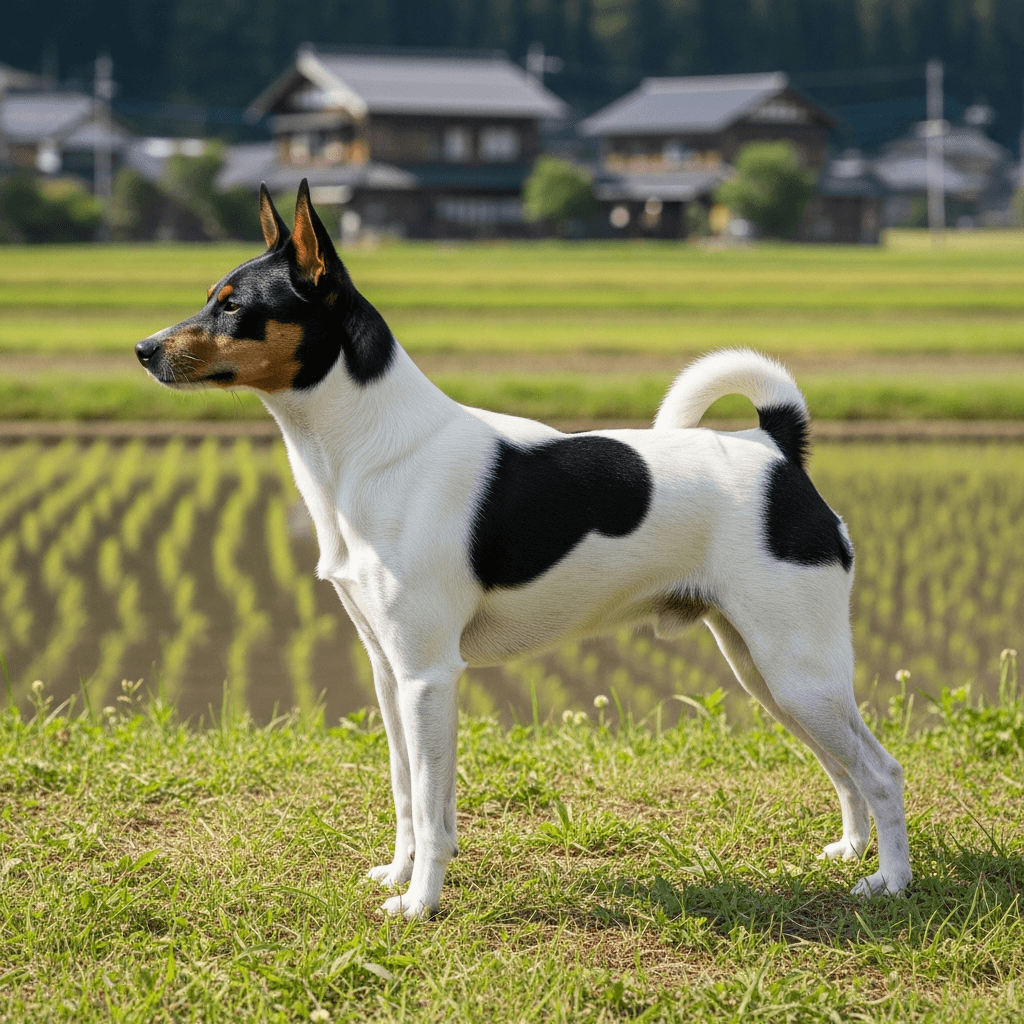
Its short, dense, and shiny coat most commonly appears in a tricolor pattern: white, black, and brown. Characteristic features include:
- Small, drooping ears shaped like a V
- Medium-sized, dark, oval eyes
- Flat and moderately narrow skull
- Compact, proportional silhouette
Although the Japanese Terrier is small, it has a lot of energy and requires regular physical activity to maintain its health and good condition. In the following sections of this guide, you will learn more about its health, grooming, exercise needs, training, nutrition, and history. Dive into the fascinating world of the Japanese Terrier and discover what makes this breed so special.
The Japanese Terrier is a small dog with an elegant and compact silhouette, reaching a height of 30 to 33 cm at the withers. Its body is proportional – the ratio of height to body length is 1:1, giving it a harmonious appearance.
The coat of this dog is short, dense, shiny, and smooth, which makes it look very aesthetic and requires minimal grooming. The most commonly seen coloration is a tricolor combination of white, black, and brown, with characteristic patches distributed across the body.
The head of the Japanese Terrier is proportional to the rest of the body, with a flat and moderately narrow skull. The stop (the indentation between the forehead and the muzzle) is slightly marked, and the nasal bridge is straight and black. The eyes are medium-sized, oval, and dark, giving the dog a vivid and intelligent appearance. The ears are quite small, thin, drooping forward in a V shape, and may also be slightly curled.
The neck is of medium length and strong, providing a stable connection to the body. The torso is short and compact, with a well-defined withers. The chest is deep, and the belly line is slightly tucked up, emphasizing the athletic build.
The front limbs are straight, parallel, and well-set, while the hind limbs are long, muscular, and provide the dog with light, free movement. The tail, traditionally docked in some countries, where docking is prohibited, is slightly curved and tapers towards the end, carried high.
Overall, the Japanese Terrier presents itself as a graceful, elegant, and lively dog, perfectly suited for the role of a companion and decorative dog.
The Japanese Terrier is a dog with a cheerful and lively disposition, who is very attached to its family. It is an intelligent animal that loves spending time with people and participating in daily household activities.
Despite its energy and love for play, the Japanese Terrier can also be calm and relaxed in a home environment, provided that its needs for physical and mental activity are regularly met. This breed is very social, forming strong emotional bonds with its owner.
However, this strong bond can lead to some jealousy when the owner pays too much attention to other pets or people. In such situations, the Japanese Terrier may bark loudly to draw attention to itself and express its dissatisfaction with being neglected.
Regarding strangers, this dog is somewhat distrustful and shy, but rarely shows aggression, preferring to keep its distance from unknown individuals. With proper socialization, it gets along well with other dogs, especially if it has been accustomed to them from a puppy age.
The Japanese Terrier is not an independent dog – it needs close contact with people and does not tolerate being left alone for long periods. If left alone without stimulation for too long, it may be prone to destructive behavior in the home or excessive barking.
Owners should be aware that this breed is not a typical guard dog, but rather a cheerful, loyal, and affectionate companion that excels as a family and decorative dog.
The Japanese Terrier is generally a healthy breed, with an average lifespan of 12 to 14 years. Thanks to careful breeding selection, this breed is not particularly burdened by serious genetic diseases, although like any dog, it may be susceptible to certain conditions.
Some of the most common health problems that may occur in the Japanese Terrier include:
- Ear infections – due to the drooping ears that can trap moisture and debris
- Patellar luxation (luxatio patellae) – a common issue in small dog breeds
- Vision problems – which may include cataracts or progressive retinal atrophy
- Dental diseases – requiring regular oral hygiene
It is important to regularly monitor the dog's health through veterinary visits, paying special attention to the ears, eyes, and teeth. Regular vaccinations, deworming, and flea and tick prevention are crucial for maintaining health.
Although the Japanese Terrier has a fairly robust body structure, it is important to remember that it is a small dog that requires careful handling, especially around small children. This breed is better suited to warm climates, and may struggle in extreme weather conditions.
On hot days, it is essential to provide the dog with plenty of fresh water, access to shade, and to avoid physical exertion during the hottest part of the day. In winter, it is advisable to equip it with a warm sweater or coat, as its short coat does not provide adequate protection against the cold.
The care of the Japanese Terrier is relatively simple and low-maintenance due to its short coat, which does not require much attention or specialized treatments.
Brushing: Regular brushing once a week with a soft brush or grooming glove is sufficient to remove dead hair and keep the coat in good condition while giving it a natural shine.
Bathing: Occasionally, it is worth bathing the dog – usually once every 4-6 weeks or as needed – to keep it clean and fresh. Mild shampoos designed for dogs should be used to avoid irritating the skin.
Ear care: Due to the drooping ears that can trap moisture, it is important to regularly check and clean the ears to prevent infections. It is recommended to gently wipe the ears with a damp gauze once a week.
Nail trimming: Nails should be trimmed as needed, usually once every 3-4 weeks, to prevent excessive growth that can lead to discomfort and walking problems.
Oral hygiene: This is a particularly important aspect of care. Teeth should be
Overall, the Japanese Terrier is not demanding in terms of grooming, but regular attention to its appearance and health is essential to ensure its comfort and long life.
The Japanese Terrier is a dog with a high energy level that requires regular physical activity to maintain health, good condition, and mental balance.
Daily walks: It is recommended to provide the dog with at least 30 minutes to an hour of walks every day. Walks should be active, allowing for sniffing and exploring the surroundings, which satisfies the dog's natural instincts.
Play and activities: This dog loves to run, play, and explore, so it's worth providing it with various forms of activity, such as:
- Playing fetch with a ball or frisbee
- Chasing toys
- Playing with other dogs in the park
- Short agility training sessions
Safety during walks: It is important to keep the dog on a leash during walks, as it has a hunting instinct and may want to chase smaller animals like rodents, cats, or birds.
The Japanese Terrier does well in an urban environment, but also feels comfortable in homes with a garden, where it has more space for free play. If you have a garden, make sure it is securely fenced.
Mental stimulation: It is also good to engage the dog in mental games, such as:
- Dog puzzles
- Treat-seeking games (nosework)
- Learning new tricks and commands
- Interactive toys with hidden rewards
Such activities allow the dog to develop intelligence and satisfy cognitive needs, which is just as important as physical exercise.
Training a Japanese Terrier is relatively easy and enjoyable, as it is an intelligent, quick-witted, and eager-to-learn dog. However, its sensitive nature makes it important for training sessions to be positive and reward-based.
Positive reinforcement: The Japanese Terrier responds excellently to positive training methods, such as rewarding with treats, verbal praise, and play. Avoid harsh punishments, yelling, or physical corrections, as the dog may become discouraged from learning and lose trust in the owner.
Basic commands: It is advisable to start training by teaching the dog basic commands, such as:
- Sit
- Lie down
- Come (or Here)
- Stay
- No
These basic commands are the foundation of good obedience and allow for safe management of the dog in various situations.
Advanced training: As progress is made, more advanced exercises and tricks can be introduced, such as rolling over, shaking hands, fetching specific items, or walking on hind legs.
Training through play: This breed is very receptive to learning through play, making training a pleasant experience for both the dog and the owner. Incorporating playful elements into training sessions helps maintain the dog's attention and reinforces positive associations with learning.
Socialization: Just as important as obedience training is early socialization. Japanese Terrier puppies should be accustomed to various people, animals, sounds, and environments from a young age. This way, the adult dog will be confident, calm, and well-behaved around other dogs and people.
Consistency and patience: The key to success in training is consistency and regular, short training sessions (10-15 minutes) that won't bore the dog. Remember to always end training on a positive note.
Proper nutrition for the Japanese Terrier is key to its health, well-being, physical condition, and longevity. Due to its small size, this breed has specific nutritional needs.
Choosing food: It is advisable to choose high-quality foods that are specially tailored to the needs of small breeds. Attention should be paid to the composition of the food to ensure it is rich in:
- Protein – should come from high-quality meat sources (chicken, beef, fish)
- Fats – essential for skin and coat health and as a source of energy
- Vitamins and minerals – supporting the immune system and overall health
- Omega-3 and omega-6 fatty acids – for healthy coat and skin
Portion control: It is important to avoid overweight, so it is advisable to control food portions and not overfeed the dog. Being overweight can lead to serious health problems, such as diabetes, heart disease, and joint issues.
Feeding frequency: It is recommended to divide the daily ration into two or three smaller meals to prevent digestive problems and maintain stable energy levels throughout the day.
Natural supplements: In addition to commercial food, you can introduce fresh fruits and vegetables into the diet, which are a healthy addition and a source of vitamins. Safe options include:
- Carrots
- Broccoli (in small amounts)
- Apples (without seeds)
- Berries (blueberries, raspberries)
Toxic foods: It is imperative to avoid certain foods that are toxic to dogs:
- Chocolate
- Onions and garlic
- Grapes and raisins
- Avocado
- Xylitol (artificial sweetener)
- Alcohol and caffeine
Access to water: Also, remember to provide the dog with constant access to fresh, clean water to keep it properly hydrated throughout the day.
Consultation with a veterinarian: If you have questions about diet, specific nutritional needs, or health issues, it is always worth consulting a veterinarian who can help devise an optimal feeding plan.
Characteristic Traits
Pros
- Friendly and sociable character
- Easy to care for and maintain
- Excellent dog for apartments and small spaces
- Intelligent and receptive to training
- Small size perfect for families.
Cons
- Can be shy and distrustful of strangers
- Requires regular physical and mental activity
- Can be jealous of the owner's attention
- Does not tolerate long periods of solitude.
Behavioral Ratings
Breed History
The history of the Japanese terrier is a fascinating tale of intercultural influences and dog breeding in Japan. The origins of this breed date back to the 17th century, when Dutch sailors arrived at the port of Nagasaki, bringing with them short-haired fox terriers from the Netherlands.
These European dogs were then crossed with local Japanese breeds and small hunting dogs, such as small pointers. As a result of these pairings, a new breed emerged that combined the characteristics of European terriers with those of native Japanese dogs.
Initially, the Japanese terrier was used for hunting rodents in port warehouses and on ships, where its agility and hunting instinct were highly valued. Over time, however, this breed evolved towards being a companion dog and decorative pet, gaining popularity among residents of port cities such as Kobe and Yokohama.
In the 1920s, systematic and planned breeding of the Japanese terrier began, aimed at stabilizing the breed's traits and improving its quality. Breeders worked on standardizing appearance, temperament, and breed standards. It was not until around 1930 that the breed type was fully established and recognized as standard.
In the same year, 1930, the Japanese terrier was officially recognized by the Japanese Kennel Club (JKC), which was an important step in its further development and promotion. This recognition contributed to an increase in interest in the breed among dog lovers in Japan and beyond.
Although the Japanese terrier is now quite a rare breed, even in its homeland, its unique character, elegant appearance, and rich history attract many devoted dog lovers around the world. This breed has also been recognized by the Fédération Cynologique Internationale (FCI) under standard number 259 in group 3 (Terriers), section 2 (Small Terriers).
Today, the Japanese terrier is a valued companion dog that has retained its lively temperament, intelligence, and devotion to its owners, serving as a living testament to the historical breeding collaboration between East and West.