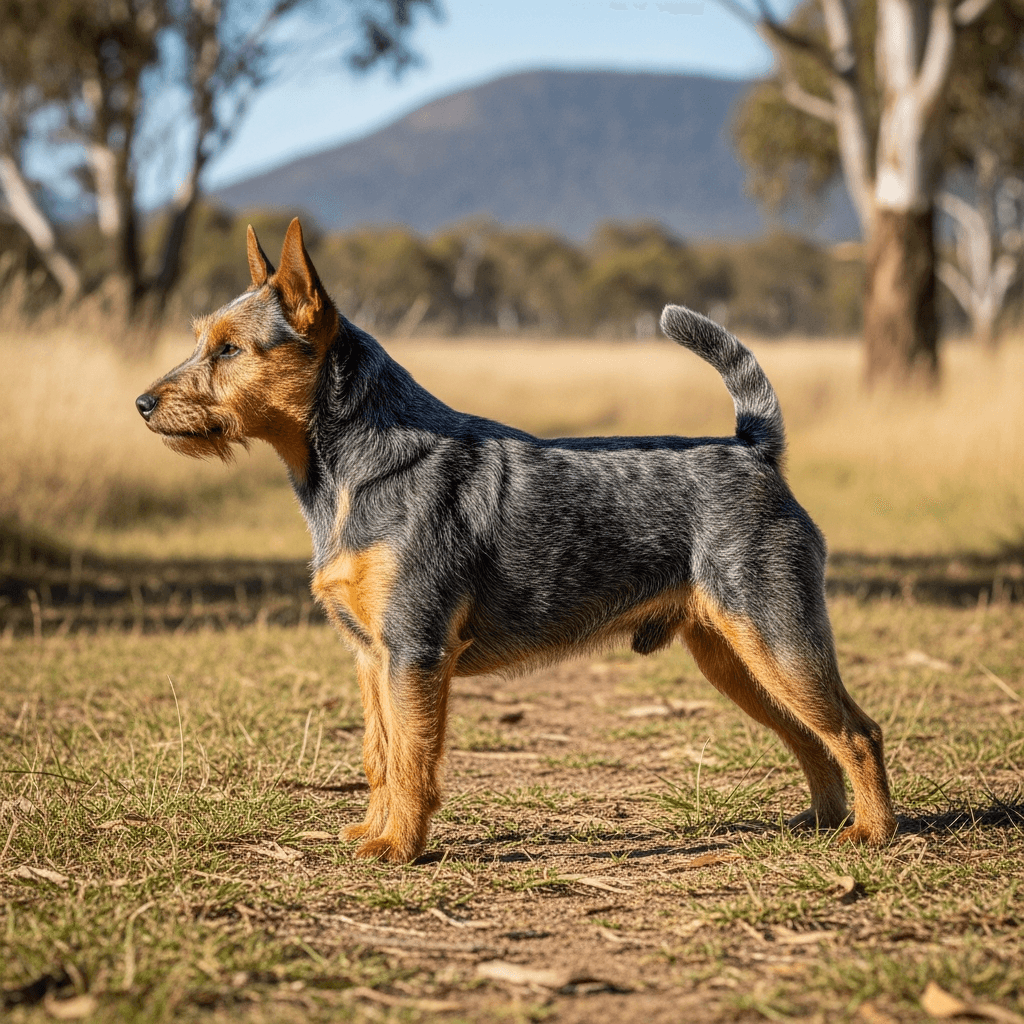
Australian Terrier
FCI Group
3• FCI 8
Size
Small
Origin Country
AU
Height
24-26 cm
Weight
5.5-7.5 kg
Lifespan
12-14 years
Temperament
Overview
Australian Terrier is an incredibly charming and characterful breed of dog that has won the hearts of dog lovers around the world with its cheerful disposition and fearless nature. This small but energetic and courageous dog originates from Australia, where it was bred from British terrier ancestors, becoming one of the first dog breeds developed on the Australian continent.
What sets the Australian Terrier apart from other terrier breeds? It is primarily its distinctive, compact appearance and unique, lively personality that combines courage with affection. It is solidly built, with short legs and a body that is quite long in proportion to its height, giving it a unique, low silhouette typical of working terriers. Its temperament is equally exceptional - it is a lively, alert, and active dog, always ready for play and cooperation with humans.
Key features of the Australian Terrier:
- One of the smallest working terriers - about 25 cm tall, weighing 6.5 kg
- The first dog breed developed in Australia - a national pride of cynology
- Rough, unkempt coat - natural protection against harsh conditions
- Characteristic tuft - soft ruff around the neck and head
- Terrier character - alertness, activity, sturdiness, courage
- Versatility - helper and companion in tough times and terrain
Outstanding intelligence of the Australian Terrier makes it quick to learn new commands, tricks, and tasks, making it an ideal companion for those who value an active lifestyle and want a dog that can cooperate. Its rough, dense, and tough coat protects it from unfavorable weather conditions - rain, cold, wind, and overgrown terrain - emphasizing its core as a working dog. Additionally, the characteristic soft tuft on its head and elegant ruff around its neck add to its unique charm and recognizability.
History and purpose of the breed:
The history of this fascinating breed dates back to the early 19th century, when free settlers around Campbelltown and Ross in Tasmania bred small, rough-coated dogs with a blue coat and tan markings, weighing about 10 pounds (~4.5 kg). The Australian Terrier was used for:
- Hunting rodents - rats, mice, rabbits
- Protection against snakes and other dangerous animals
- Guard dog - known for its excellent alertness and alarm
- Helper in the tough, rugged terrain of the Australian bush
- Companion in lonely farms and settlements
Today, the Australian Terrier is primarily a wonderful family companion that thrives in homes full of children and other pets (with proper socialization), earning the reputation of a joyful, devoted, and loyal friend. It is a dog definitely oriented towards people, loving to participate in all family activities and be the center of attention for its beloved owners.
The Australian Terrier requires regular walks and varied activities to meet its physical and mental needs as a working dog. It is important to pay attention to proper training and socialization from puppyhood, which are crucial for the proper development of this intelligent yet independent breed. Thanks to the keen intelligence of the Australian Terrier, well-conducted training using positive methods yields quick and satisfying results.
We invite you to continue reading this comprehensive guide to learn in detail about the health, professional grooming, activity requirements, training methods, proper nutrition, fascinating history, and behavior of the Australian Terrier. Without a doubt, this breed is a perfect choice for anyone looking for a small but brave and lively dog that will bring a lot of joy, energy, and devotion to the family's daily life.
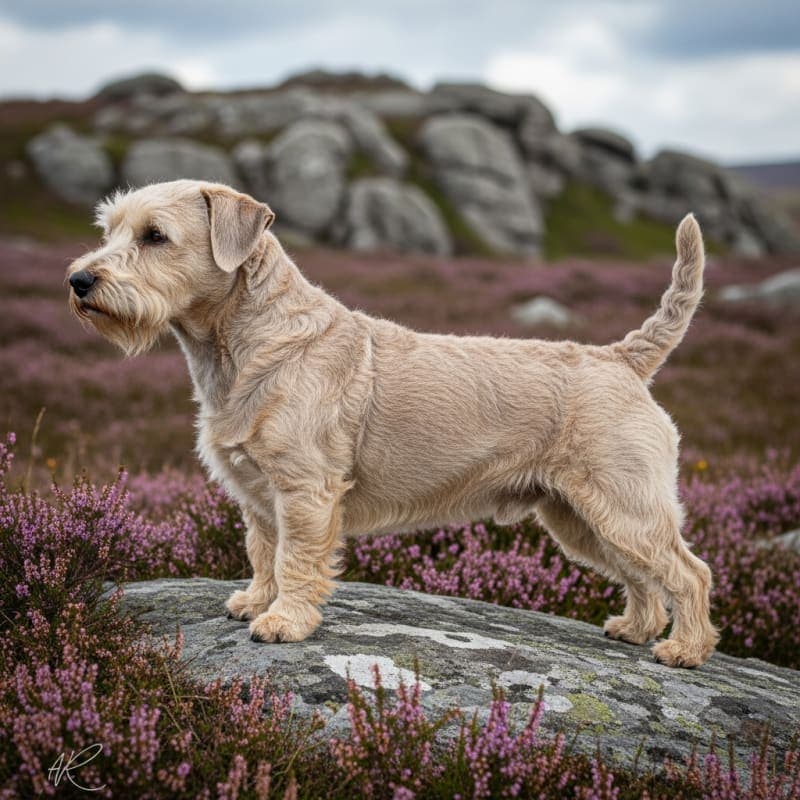
The Australian Terrier is a dog with a characteristic, compact appearance that catches the eye with its solid yet small silhouette and terrier-like confidence. According to the FCI standard, it is a strong, low-set dog, fairly long in proportion to its height, with a distinct terrier character, alertness, activity, and solid build.
Dimensions and proportions:
- Height at the withers - about 25 cm (ideal 24.5-25.5 cm)
- Weight - about 6.5 kg (range 5.5-7.5 kg depending on sex and build)
- Proportions - fairly long in relation to height, solidly built
- Silhouette - low-set, agile, muscular despite its small size
The characteristic head of the Australian Terrier is long in proportion to the whole, with a flat skull of medium width, full between the eyes, and a gentle, soft topknot on the head - one of the most recognizable features of the breed. The stop (forehead break) is pronounced. The muzzle is strong, neither too long nor too short, with good filling under the eyes. The nose is black.
Head details and expression:
- Eyes - small, oval, dark brown, with a keen, intelligent, terrier-like expression
- Ears - small, pointed, erect, set high on the skull, held alertly
- Topknot - soft hair on the top of the head, shorter than the coat
- Jaws - strong, with an excellent, regular scissor bite
- Expression - keen, alert, full of life - typically terrier-like
The coat of the Australian Terrier is one of the most characteristic features of the breed - it consists of straight, rough, hard outer coat about 6 cm (2.5 inches) long and short, soft undercoat. The coat is untrimmed, meaning it should present a natural look without excessive styling. The characteristic soft ruff or collar around the neck extends to the breastbone, giving the breed its distinctive, elegant appearance.
Coloration - three accepted variants:
- Blue and tan - dark blue or steel blue saddle, with rich tan markings on the face, ears, lower body, lower legs and paws, and around the anus. The darker and richer the tan, the better. The topknot is blue or silver.
- Sandy - any shade of sandy or red, the lighter the topknot the better. Tan markings (if present) may be present.
- Red - pure, clear red with a light topknot. It cannot have dark shading.
Regardless of color, clear tan markings should appear on: the face, ears, lower body, lower limbs and paws, and around the anus (not extending onto the back).
Body structure - compact and functional:
- Neck - of good length, slightly arched, strong, flowing smoothly into well-placed shoulders, with a characteristic ruff
- Back - level topline, strong loins
- Chest - of medium width and depth, with well-sprung ribs
- Front limbs - straight, with good bone structure, well-placed shoulders
- Hind limbs - strong, with good angles, thighs well-muscled
- Paws - small, compact, cat-like, with well-arched toes and black pads
The tail is traditionally docked to about 4/5 of its length (where legal), set high, carried joyfully but not over the back, well-covered with hair without feathering. In countries where docking is prohibited, a natural tail is acceptable.
In motion, the Australian Terrier presents itself as a lively, springy, and efficient dog, with a free, flexible gait that emphasizes its activity and willingness to work. It moves with the typical confidence and determination of terriers, showcasing its solid build and terrier character in every step.
The Australian Terrier is a dog with a cheerful, lively disposition that brings joy, energy, and plenty of personality to any home. It is extremely loyal and devoted to its owners, and its deep attachment makes it an excellent companion for families with children, singles, and seniors. The FCI standard describes the breed as having a 'strong terrier character, alertness, activity, and sturdiness.'
Key personality traits:
- Cheerful and lively - full of life and enthusiasm
- Loyal and devoted - deeply attached to the family
- Intelligent and sharp - learns quickly, solves problems
- Alert and attentive - an excellent watchdog despite its small size
- Brave and fearless - typical terrier courage
- Social with people - loves to be the center of attention
- Full of temperament - energetic, lively, always ready for action
This breed is also exceptionally intelligent and full of temperament, which means it requires proper training, socialization, and mental stimulation to reach its potential and avoid behavioral issues stemming from boredom. Despite its small size - it is one of the smallest working terriers - the Australian Terrier has a strong hunting instinct and terrier determination, and may exhibit a natural tendency to chase small animals, track scents, and dig in the ground.
For this reason, early and consistent socialization is absolutely crucial, starting from the puppy's 8th week of life. The Australian Terrier may be a bit skeptical of strangers at first meeting, displaying typical terrier alertness and reserve, but quickly warms up and forms friendships after positive experiences. This natural caution makes it an excellent alarm dog that will reliably notify you of guests arriving or suspicious sounds.
It is worth noting, however, that this is a dog with a strong terrier character that may try to dominate relationships with other dogs, especially of the same sex, if not properly socialized. Therefore, early, positive interactions with various dogs (of different sizes, breeds, temperaments) are essential for developing balanced social relationships. With proper socialization, the Australian Terrier can coexist well with other household dogs.
In relationships with children, the Australian Terrier is usually patient, affectionate, and eager to play, but due to its lively nature and terrier confidence, interactions with very small children should be supervised. Older children (6+) often find in it a wonderful playmate for games, hikes, and shared adventures. This breed thrives in active families that provide plenty of interaction, play, and quality time.
Behavioral traits requiring attention:
- Hunting instinct - may chase cats, squirrels, birds if not socialized
- Digging - natural terrier tendency to dig burrows and track
- Barking - quite loud, eager to alert (requires training for control)
- Need for engagement - gets bored without activity and stimulation, may be destructive
- Independence - terrier stubbornness requires consistent training
- Territoriality - may defend its space against strange dogs
This dog is also quite vocal and readily informs its owners of any suspicious sounds, movements, or the presence of strangers, making it a great watchdog despite its miniature size. Its deep, resonant voice may surprise those unfamiliar with the breed. Proper barking control training is recommended to maintain harmony with neighbors.
Emotional and social needs:
- Does not tolerate prolonged solitude well - prefers human companionship
- Loves to be involved in family activities
- Needs a sense of purpose and tasks to perform
- Values routine and a predictable environment
- Thrives in an atmosphere of love, consistency, and clear boundaries
Overall, the Australian Terrier is a great choice for active families and individuals who want a small but full-of-personality companion - a dog full of energy, joy, loyalty, and terrier courage. Properly trained, socialized, and cared for, the Australian Terrier is an unmatched friend, guardian, and source of endless joy for many years.
The Australian Terrier is a breed that enjoys generally very good health and longevity, with an average lifespan of 12 to 15 years, although many individuals can reach 14-16 years with optimal care. Despite being a small dog, it is characterized by solid build, resilience, and vitality, making it one of the healthier terrier breeds.
However, like any breed, the Australian Terrier can be prone to certain conditions typical of terriers and small dogs. Among the most common health issues these dogs may face are:
Potential health problems:
- Skin allergies - atopic dermatitis, food allergies, or environmental allergies
- Patellar luxation - a knee joint issue in small breeds
- Joint diseases - hip dysplasia (less common in small dogs)
- Ophthalmic problems - cataracts, progressive retinal atrophy (PRA), corneal dystrophy
- Hypothyroidism - affects metabolism and energy
- Legg-Calvé-Perthes disease - necrosis of the femoral head (in young dogs)
- Diabetes - occasionally occurring, more often in older, obese individuals
It is also important to pay special attention to the risk of obesity, especially in older, less active dogs or those that have been spayed/neutered, which may have lower caloric needs. Obesity significantly increases the burden on joints, the risk of diabetes and heart problems, and shortens lifespan. Regular monitoring of weight and physical condition (BCS - Body Condition Score) is crucial.
Health prevention - key actions:
- Regular veterinary visits - at least once a year, seniors twice a year
- Screening tests for parents - patellar luxation, PRA, thyroid before breeding
- Vaccinations according to schedule and parasite prevention
- Weight control and adjusting diet to activity level
- Teeth cleaning 3-4 times a week (small breeds are prone to dental issues)
- An active lifestyle supporting joint and heart health
- Early detection of problems through observation of behavior and appetite
Skin and coat health:
Due to its hard, rough coat, the Australian Terrier may be sensitive to environmental allergies (pollen, dust mites, mold) manifesting as itching, skin redness, and coat problems. Regular grooming, brushing, and skin observation will help in early detection of issues. In case of persistent scratching, hair loss, or skin changes, consulting a veterinarian is essential.
A well-balanced diet, rich in high-quality protein, healthy fats (omega-3, omega-6), vitamins, and minerals, is crucial for its health, energy, and beautiful coat. Additionally, due to its small size and tendency to obesity, it is important to avoid excessive treats and snacks, which should not exceed 10% of daily caloric intake to prevent overweight.
Physical activity and mental health:
Proper healthcare does not only involve veterinary visits. Regular physical activity (60-90 minutes daily), mental stimulation (interactive games, training, puzzles), and emotional bonding with the family are essential to ensure the Australian Terrier's physical and mental health, as well as a happy, long life. A bored, lonely terrier may develop behavioral problems and stress, which negatively affects health.
Choosing a responsible breeder:
When selecting a puppy, always check the health tests of the parents for patellar luxation, ophthalmic issues (eye certification), thyroid testing, and the overall health history of the breeding line. Responsible breeders conduct comprehensive tests and are ready to provide documentation, answer questions, and offer support throughout the dog's life.
The grooming of the Australian Terrier is relatively simple and time-efficient, making it an ideal choice for people who do not have the time or resources for the intensive, daily grooming required by some breeds. Its rough, hard coat is functional, easy to maintain, and naturally resistant to dirt.
Coat characteristics - natural protection:
The coat of the Australian Terrier is straight, rough, hard, and dense, about 6 cm (2.5 inches) long, with a short, soft undercoat. This is known as a 'hard coat' - a tough coat that naturally repels water, dirt, and debris. An important feature is that the coat should remain untrimmed, which means a natural, not overly groomed appearance characteristic of working terriers.
Basic grooming schedule:
- Brushing - 2-3 times a week with a bristle brush or metal comb (15-20 minutes)
- Bathing - every 6-8 weeks or when the dog is very dirty, using shampoos for hard coats
- Hand stripping/Tidying - 2-3 times a year for gentle tidying (optional, more often for show dogs)
- Nail trimming - every 3-4 weeks or when you can hear them clicking on the floor
- Ear cleaning - weekly, especially after walks in the field
- Teeth brushing - 3-4 times a week (ideally daily)
- Paw pad inspection - after walks, trimming hair between the toes
Brushing - technique and tools:
It is sufficient for the terrier to be regularly brushed 2-3 times a week to remove loose hair, dirt, twigs, and to prevent matting, especially in friction areas (under the elbows, behind the ears, in the groin). For brushing, it is best to use:
- A bristle brush or pin brush for general brushing
- A medium-coarse metal comb for thorough detangling
- A slicker brush to remove loose undercoat during shedding
- A stripping knife for shaping (optional)
Bathing - infrequently and with caution:
Bathing should occur only when absolutely necessary (the dog is very dirty, smells, or has come into contact with a toxic substance) to not strip the coat of its natural protective oils, which give it hardness, water resistance, and protection. Too frequent bathing softens the hard coat, causing it to lose its characteristic appearance and functionality. When bathing:
- Use shampoos for hard/rough coats (texturizing shampoos)
- Thoroughly rinse out all soap residues
- Dry with a towel or a hairdryer on low heat
- After bathing, roughly brush the coat in the direction of growth to maintain texture
Hand Stripping vs Clipping:
For show dogs, hand stripping (manually pulling out dead hair) is recommended, which maintains the correct hard texture of the coat, its color, and protective properties. For non-show dogs, tidying with scissors or gentle trimming is acceptable, but clipping is not recommended, as it permanently alters the coat structure from hard to soft and fluffy.
It is also important to remember about regular ear cleaning with special solutions or wet wipes, which helps prevent ear infections, especially after walks in areas where twigs, grass, or dirt can get into the ears. The ears of the Australian Terrier, although small and erect, require weekly inspection.
Oral hygiene - crucial for health:
Small dog breeds, including the Australian Terrier, are more prone to dental issues - tartar, gum disease, periodontitis, which can lead to painful infections, tooth loss, and systemic problems. Therefore, regular teeth brushing 3-4 times a week (ideally daily) with a special toothbrush and toothpaste for dogs is essential for long-term health. Additionally, you can use:
- Dental chews
- Teeth-cleaning toys
- Water additives to prevent tartar
- Annual ultrasonic cleaning at the vet
During grooming, it is important to ensure the dog’s comfort and positive experiences, introducing brushing, bathing, nail trimming, and ear cleaning gradually from puppyhood to avoid fear, stress, and resistance in adulthood. An Australian Terrier that associates grooming with praise, treats, and time with a beloved person will be eager to cooperate.
Benefits of low grooming:
- No need for professional grooming visits (optional 2-3 times/year)
- Minimal shedding (hard coat does not shed heavily)
- Natural protection against dirt and water
- Easy to maintain for novice owners
- Low grooming costs compared to breeds requiring frequent visits
Overall, grooming the Australian Terrier is low-maintenance and non-demanding compared to many other breeds, making it an easy pet to care for for busy families and those who value simplicity in daily care.
The Australian Terrier is a dog with high energy and activity needs, requiring regular, varied physical activity and mental stimulation to maintain physical health, mental well-being, and overall happiness. Despite its small size - it is one of the smallest working terriers - this breed was bred as a helper and companion in tough times and rugged terrain, which means high endurance, energy, and motivation to work.
Minimum activity requirements:
- Daily activity time - at least 60-90 minutes of intense effort
- Ideal - 90-120 minutes of varied activity for young, healthy individuals
- Walks - 2-3 walks per day (30-45 minutes each)
- Playtime - at least 20-30 minutes of active play each day
- Mental stimulation - 15-30 minutes daily (just as important as physical)
This breed needs at least an hour of exercise daily, preferably divided into two or three energetic walks and play sessions. In addition to walks, the Australian Terrier loves to play with its owner and participate in various activities that utilize its terrier nature and intelligence.
Ideal forms of activity:
- Energetic walks - 3-5 km daily in varied terrain (parks, forests, meadows)
- Fetching - balls, artificial game, toys (satisfies hunting instinct)
- Hide and seek games - utilizing the sense of smell
- Chasing toys - frisbee, flying discs
- Agility - obstacle course ideal for agile, intelligent terriers
- Earthdog trials - simulated burrowing (natural instinct of terriers)
- Barn hunt - searching for rats in safe conditions
- Obedience/Rally - obedience training as a sport
- Play with other small dogs - socialization and physical effort
- Trekking - shorter hikes suited for small legs
Thanks to its intelligence, eagerness to play and cooperate, the Australian Terrier can also participate in various obedience training and canine sports, further enriching its life through mental stimulation and bonding with its owner. These breeds love to have a 'task to perform' and feel fulfilled when they can utilize their natural instincts and intelligence.
Mental stimulation - just as important as physical:
As a remarkably intelligent dog, the Australian Terrier also needs intense mental challenges to prevent boredom and frustration. Forms of mental stimulation include:
- Scent games - hiding treats, snuffle mat
- Interactive toys and puzzles for dogs - Kong, Nina Ottosson
- Learning new tricks and commands
- Impulse control and obedience training
- Clicker sessions and shaping
- Toy rotation to maintain interest
- New walking routes and exploring new places
Consequences of insufficient activity - serious problems:
- Behavioral issues - anxiety, hyperactivity, difficulty relaxing
- Destructive behaviors - chewing furniture, shoes, destroying items
- Excessive barking or howling from frustration and boredom
- Digging in the garden (burrowing instinct of terriers)
- Obsessive behaviors - chasing its own tail, licking paws
- Aggression or reactivity towards other dogs due to frustration
- Weight problems and obesity due to lack of exercise
- Depression, apathy, and health issues in dogs that are chronically under-exercised
- Training difficulties due to excess unused energy
It is important to remember that lack of sufficient movement and stimulation can lead to serious behavioral and health problems. A bored, under-exercised Australian Terrier is an unhappy dog that will find something to do - often destructive or annoying for its owners.
Therefore, for owners of Australian Terriers, regular walks, play, and mental challenges are absolutely essential to ensure the dog has a happy, healthy, and balanced life. This is not a breed for inactive people who prefer lounging on the couch or spending most of their time away from home. The Australian Terrier needs a committed, active owner who will provide sufficient activity, interaction, and love. In return, they will receive a loyal, joyful, and devoted friend for many years.
Training an Australian Terrier is a process that requires patience, consistency, and understanding of the terrier nature, but it brings great satisfaction due to the intelligence and willingness to cooperate of this breed. This breed is exceptionally intelligent and learns new commands, tricks, and tasks quickly, but can also be independent, stubborn, and terrier-confident, which requires the right training approach.
Key principles of effective training:
- Positive reinforcement - enthusiastic praise, high-value treats, play as a reward
- Consistency and firmness - clear rules from all family members, without exceptions
- Early start - socialization and basic training from 8-10 weeks of age
- Short, dynamic sessions - 5-15 minutes several times a day (short attention spans of terriers)
- Variety and fun - changing exercises, locations, rewards to maintain interest
- Patience without harshness - avoiding frustration, yelling, and physical punishment (ineffective for terriers)
- Leader, not a tyrant - firm but fair leadership
Therefore, it is crucial for the owner to adopt a firm, yet fair and positive attitude, becoming a confident, consistent leader, rather than a tyrant or an overly lenient friend. The Australian Terrier quickly senses inconsistency and tries to take control if it does not see strong, yet fair leadership.
Early socialization - absolutely critical!
Early and intensive socialization is extremely important for the dog to learn appropriate behaviors, be confident, and well-adjusted to life in society. Socialization should begin in the breeding environment (3-8 weeks) and be continued intensively by the owner during the critical period of 8-16 weeks of the puppy's life. Areas of socialization:
- Different people - children, adults, seniors, people in hats, glasses, wheelchairs
- Different dogs - sizes, breeds, ages, temperaments in controlled, positive conditions
- Different places - city, parks, dog-friendly shops, vehicles, train stations, beaches
- Different sounds - traffic, thunder, fireworks, children playing, tools
- New surfaces - stairs, metal grates, slippery floors, grass, sand
- Animals - cats, birds, rabbits under control (important due to hunting instinct)
Priority commands and skills:
- Sit - the foundation of all training
- Down - impulse control and relaxation
- Stay - impulse control, safety
- Come - the most important command for safety, reliable recall
- Leave it/Drop it - safety, impulse control
- Quiet - control of barking (key for this breed)
- Loose leash walking - enjoyable walks without pulling
- Look/Watch - building focus and attention
- Place/Bed - teaching relaxation, staying in a designated spot
It is worth starting with basic commands such as 'sit', 'down', 'stay', or the most important - 'come', and then moving on to more advanced tricks and tasks. Using positive reinforcement, such as high-value treats (meat, cheese, chicken), enthusiastic praise, and play with a favorite toy, will help reinforce positive behaviors and build motivation to learn.
Common training challenges and solutions:
- Stubbornness and independence - short sessions, high-value rewards, variety, ending on a success
- Excessive barking - training the 'quiet' command, rewarding calmness, ignoring barking for attention
- Digging - designated digging area in the garden, redirecting energy to play
- Chasing - strong recall, impulse control training, avoiding triggering situations
- Leash reactivity - desensitization techniques, counter-conditioning, rewarding calmness
- Dominance over other dogs - early socialization, controlled, positive meetings
With proper training using positive methods, the Australian Terrier can become an obedient, well-mannered, and devoted companion who enjoys cooperating with humans. Remember that training should be fun for both the dog and the owner, which further strengthens the bond between them and builds mutual trust.
Regular mental exercises, such as treat-seeking games, interactive puzzles, learning new tricks, or nosework training, will also help stimulate the intelligent terrier mentally and prevent boredom and behavioral problems. An Australian Terrier that has activities for its body and mind is a happy, balanced, and wonderful companion.
Professional help:
For first-time owners or in case of behavioral issues, a professional puppy class and consultations with a certified behaviorist or trainer using positive methods are recommended. Group classes for puppies also provide excellent socialization with other young dogs in controlled conditions.
The diet of the Australian Terrier should be well-balanced, high-quality, and tailored to its age, weight, activity level, and individual health needs. As a small but active dog with a high metabolism and energy requirements, the Australian Terrier needs food rich in nutrients that support its health, energy, and beautiful coat.
Basic nutrition guidelines:
- Premium food - high animal protein content (minimum 25-30% for adult dogs)
- Healthy fats - omega-3 and omega-6 for healthy coat and skin (12-16%)
- Controlled carbohydrates - complex energy sources (brown rice, oats, sweet potatoes)
- Fiber - for healthy digestion and a feeling of fullness
- Vitamins and minerals - a comprehensive set to support the immune system
- Glucosamine and chondroitin - joint support (important for small, active dogs)
As a small dog with a high metabolism, the Australian Terrier has a tendency to gain weight if it consumes more calories than it burns, especially after spaying/neutering or in older age. Therefore, it is important to control the amount of food given and avoid excessive treating with snacks, which should not exceed 10% of the daily caloric intake.
Ingredients to look for in high-quality food:
- Animal protein as the first ingredient - chicken, beef, fish, lamb, turkey (named sources)
- Healthy fats - salmon oil, flaxseed oil, poultry fat
- Fruits and vegetables - berries, carrots, spinach, pumpkin (antioxidants, vitamins)
- Prebiotics and probiotics - for gut health and digestion
- NO artificial additives - colors, preservatives BHA/BHT, artificial flavors
- Limited fillers - avoid excessive corn, wheat as cheap fillers
It is recommended to provide high-quality food rich in animal protein and essential nutrients that support the dog's health, energy, and beautiful, healthy coat. Owners should also pay attention to the food's composition, avoiding products with excessive artificial additives, preservatives, colors, and unclear meat sources ('meat and animal derivatives').
Feeding schedule by age:
- Puppies (2-6 months) - 3-4 meals a day, small breed puppy food
- Young dogs (6-12 months) - 2-3 meals a day, gradual transition to adult food
- Adult dogs (1-8 years) - 2 meals a day (morning and evening, equal portions)
- Seniors (8+ years) - 2 meals a day, senior food with reduced calories and increased joint-supporting ingredients
- Active/sporting dogs - possible increase in portions or high-performance food
Weight control and obesity prevention:
Regular meals should be given at set times (routine), which will help maintain a healthy weight, good digestion, and predictability for the dog. Obesity is a serious issue in small breeds, leading to:
- Joint problems - patellar luxation, dysplasia
- Heart and circulatory diseases
- Type 2 diabetes
- Shortening of life by 2-3 years
- Decreased quality of life and activity
Additionally, the Australian Terrier should have constant access to fresh, clean water, especially on hot days, after intense exercise, and while feeding dry food. Proper hydration is crucial for kidney health, digestion, and overall body function.
Treats and snacks - in moderation:
When giving treats as rewards in training or expressions of affection, it is worth choosing healthy options, such as:
- Pieces of cooked chicken, turkey, beef
- Carrots, broccoli, green beans (low-calorie)
- Pieces of apple (without seeds), banana, berries
- Specialized dental treats
- Avoid: chocolate, grapes, raisins, onions, garlic (toxic!)
Instead of high-calorie, processed commercial treats that can lead to overweight and digestive issues. Remember that treats should make up at most 10% of the daily caloric intake.
Special diet - when needed:
In case of any health issues, food allergies (itching, skin problems, diarrhea), digestive problems, or unusual reactions, owners should consult a veterinarian to adjust the diet to the dog's individual needs. Some Australian Terriers may require:
- Low grain or grain-free diet - for dogs with grain allergies
- Limited ingredient diet - for dogs with food allergies
- Veterinary diet - for dogs with kidney, liver, or pancreatic diseases
- Diet for dogs with sensitive stomachs
An appropriate diet, combined with regular physical activity and weight monitoring, is crucial for a long, healthy, and happy life for the Australian Terrier. A healthy dog is a happy dog!
Characteristic Traits
Pros
- Exceptionally intelligent and quick to learn
- Full of energy
- cheerful disposition
- and a desire to play
- Resilient to harsh weather conditions thanks to a tough coat
- An excellent family companion - loyal and devoted
- Easy to care for - minimal shedding and low maintenance needs
- A vigilant guard despite its small size
- Versatile - suitable for various activities and sports
- A healthy breed with a long lifespan (12-15 years).
Cons
- Requires regular physical and mental activity (60-90 minutes daily)
- Needs proper training and socialization from puppyhood
- Can be stubborn and independent in training
- Strong hunting instinct - chases small animals
- Tendency to excessive barking without training
- May be territorial towards strange dogs
- Not suitable for less active individuals
- Can be too energetic and loud for some people.
Behavioral Ratings
Breed History
The history of the Australian Terrier is a fascinating tale of the development of the first native Australian dog breed, dating back to the early 19th century and the colonial times when settlers from Great Britain arrived on the harsh, demanding Australian continent, bringing with them their beloved rough-coated terriers.
Breed Origins - Australian Hybridization:
Although produced from British ancestors, the Australian Terrier is one of the few breeds in the terrier group that was developed outside of Great Britain. It can also rightly claim the title of the first dog breed developed in Australia - a national pride of the country's canine heritage.
It seems quite certain that both the Australian Silky Terrier and the Australian Terrier had a common ancestry from crossbreeds in Tasmania, New South Wales, and Victoria, namely from the so-called Broken Coated Terriers. It is believed that this type of dog originated from a mix of the following British breeds:
- Skye Terrier - contributed long, silky hair and a topknot
- Scottish Terrier (Aberdeen) - added toughness, courage, and build
- Dandie Dinmont Terrier - influenced body shape and soft topknot
- Yorkshire Terrier - introduced periodically to improve coat quality and color
- Probably Irish Terrier and Cairn Terrier - additional influence
Early History - Pioneers of Tasmania:
Historical reports indicate that as early as the early 1800s, free settlers around Campbelltown and Ross in Tasmania were breeding small, rough-coated dogs with a blue coat and tan markings, weighing around 10 pounds (~4.5 kg). These dogs were famous for their efficiency as guard dogs - alert, brave, and noisy in warning of danger or newcomers.
Purpose and Use:
These small but fearless terriers were used by Australian colonists for:
- Protection against rodents - exterminating rats, mice, and rabbits on farms and in ports
- Protection against snakes - many deadly species in Australia
- Hunting small game - rabbits, possums, quolls
- Guard dogs - alerting to danger, intruders, wild animals
- Companions in solitude - on isolated farms and bush settlements
- Helpers in harsh conditions - the harsh, unfriendly Australian terrain
The FCI standard describes the breed as 'one of the smallest working terriers, bred to be both a helper and a companion in difficult times and terrain'.
Key Stages of Development and Recognition of the Breed:
- 1800-1850 - Early crossbreeds in Tasmania, NSW, Victoria
- 1850-1880 - Stabilization of type, selection of working and appearance traits
- 1892 - First dog shows in Melbourne, breed gains popularity
- 1896 - Formation of the breed club in Melbourne
- 1897 - Official recognition by the Australian National Kennel Council
- 1906 - Adoption of the breed standard
- 1933 - Recognition by the Kennel Club in Great Britain
- 1960 - Recognition by the American Kennel Club
- 1962 - Recognition by the FCI
Evolution of the Name:
Early names for the breed included: 'Broken-Haired Terrier', 'Toy Terrier', 'Rough-Coated Terrier', 'Blue and Tan Terrier'. The name 'Australian Terrier' was officially adopted in 1897, emphasizing its national origin and pride in being the first native Australian breed.
Popularity and Modernity:
Over the years, the Australian Terrier has gained a reputation as a superb working dog on farms, as well as a loyal family companion in cities. After World War I and II, the breed spread to other continents, gaining recognition in Great Britain, North America, and Europe.
Their intelligence, courage, versatility, friendly disposition, and ease of grooming have contributed to their popularity among families, breeders, and terrier enthusiasts worldwide. Today, the Australian Terrier is valued for its distinctive traits - cheerful temperament, loyalty, intelligence, and ability to be both an energetic companion in active families and a calm companion for singles or seniors.
It remains a symbol of Australian canine heritage, national pride, and proof that even on a distant continent, with determination and passion, a unique dog breed can be created that is perfectly adapted to local conditions and needs. The Australian Terrier is a living monument to the Australian pioneers and their faithful, fearless companions.