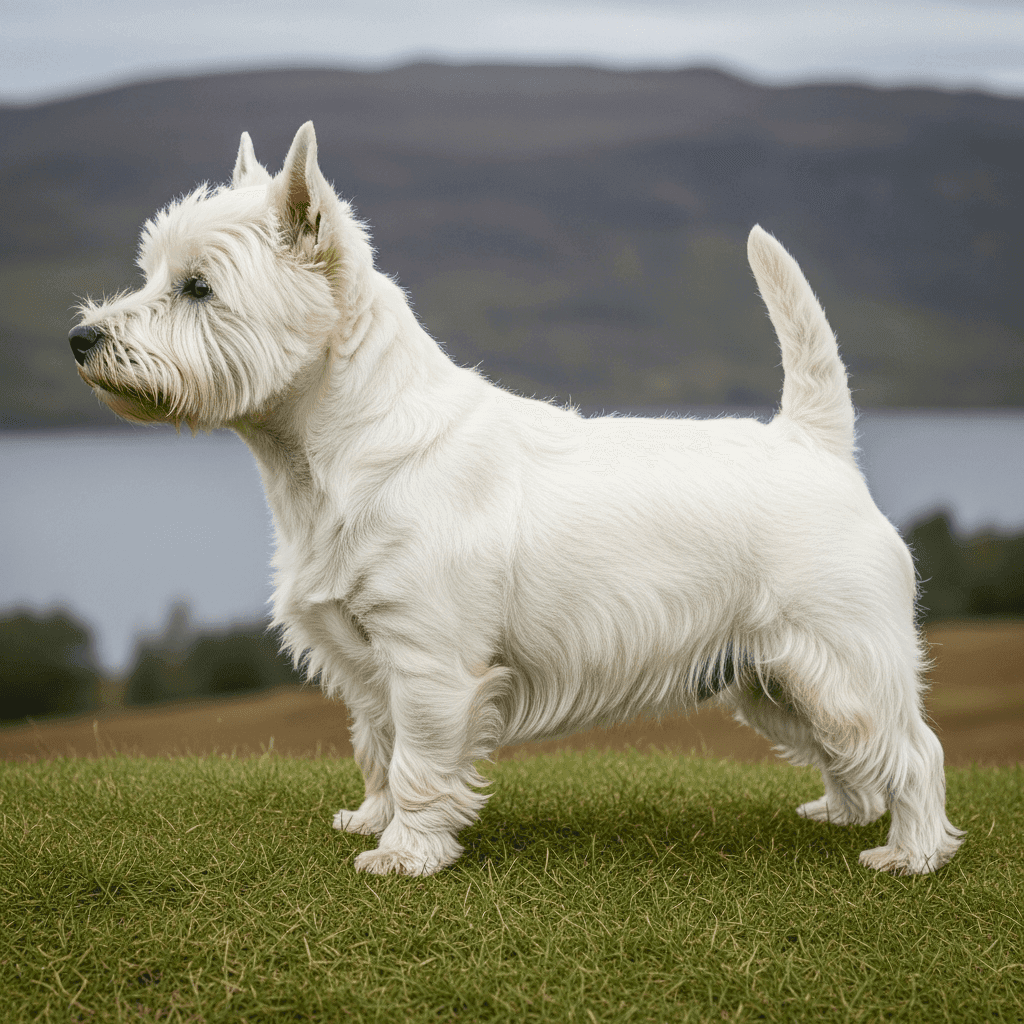
West Highland White Terrier
FCI Group
3• FCI 85
Size
Small
Origin Country
GB
Height
28-28 cm
Weight
7-10 kg
Lifespan
13-15 years
Temperament
Overview
The West Highland White Terrier, often referred to as Westie, is a fascinating dog breed that originates from Scotland. Its energetic temperament and cheerful disposition make it an ideal companion for many families. What sets the Westie apart from other breeds is its distinctive white coat and exceptional intelligence. This has made the West Highland White Terrier a favorite among dog lovers worldwide.
The Westie has a strong build, which makes it resilient to various weather conditions. Its height at the withers is about 28 cm (11 inches), and its weight ranges between 7 and 10 kg. This makes it small enough to comfortably live in smaller spaces, yet large enough to be an excellent outdoor playmate.
Its proportional head with a strong jaw and defined stop adds elegance, while the dark eyes and pointed ears give it a keen expression. The West Highland White Terrier also has a characteristic slightly rounded skull and a black nose that creates a smooth line with the rest of its muzzle.
The coat of the West Highland White Terrier is unique. The Westie has a double coat, with a hard outer coat about 5 cm long and a soft undercoat. This not only adds to its charm but also provides protection against cold and moisture. However, such a coat requires regular grooming, which is an important aspect of life with this breed.
The West Highland White Terrier is a lively dog, brave and very friendly. Its loyalty and devotion to its owner are unmatched, although sometimes its independence can manifest as stubbornness. The Westie thrives in families with children and other pets, although its relationships with larger dogs may sometimes require attention.
Despite a moderate tendency to bark, the Westie can be a great watchdog. It also has a strong hunting instinct, inherited from its ancestors who were used to hunt rodents and foxes.
It is worth noting that the West Highland White Terrier requires proper training and socialization. This is key to avoiding behavioral problems that may arise in this breed. The Westie responds well to positive training methods and quickly learns new commands. However, consistency from the owner is essential to provide it with proper guidance.
Additionally, its strong character means it needs an owner who can meet its needs and provide it with the right amount of physical activity and mental stimulation.
The history of the West Highland White Terrier is as interesting as the breed itself. Bred as a hunting dog, the Westie was meant to assist in hunting rodents, and its white coat made it easier to spot in the field. Today, thanks to its friendly nature and lifespan of 13 to 15 years, the Westie is an excellent choice for families looking for an active and joyful companion.
The West Highland White Terrier is a small dog with a strong, compact build. Its height at the withers is about 28 cm (11 inches according to FCI standards), and its weight ranges from 7-10 kg.
This breed is known for its distinctive white coat, which is dense and hard, with a soft undercoat. The back is straight and strong, and the chest is deep, giving it a strong and athletic silhouette.
Characteristic features of the head:
- Head proportional to the body
- Clearly defined stop (transition from forehead to muzzle)
- Large, dark eyes giving an alert expression
- Black nose forming a smooth line with the rest of the muzzle
- Slightly rounded skull, which feels smooth to the touch
- Strong jaws with a level bite
Body structure:
- Small, pointed, and erect ears that add charm
- Short tail (13-15 cm), well-furred, held high
- Strong front and hind limbs allowing agile movement
- Deep chest and strong hind legs on muscular legs
- Straight back and strong loins
Thanks to its attractive appearance and cheerful character, the West Highland White Terrier has become a favorite among many families. Its build combines strength and activity, and its distinctive white coat makes it recognizable at first glance.
The West Highland White Terrier is a dog with a balanced temperament, which is both energetic and friendly. This breed is characterized by its extraordinary personality, which combines courage, cheerfulness, and confidence.
Basic character traits:
- Loyalty - very devoted to its owners
- Friendliness - kind towards people, including children
- Courage - despite its small size, it is not afraid of challenges
- Independence - has its own opinions, which can sometimes manifest as stubbornness
- Curiosity about the world - eager to explore its surroundings
The Westie is known for being very loyal to its owners and eagerly participates in family activities. It has a moderate guarding instinct, which means it will alert to strangers but is usually friendly towards guests.
It is a dog that is curious about the world, which sometimes leads to its tendency to escape, especially when it notices something interesting - it could be a cat, a bird, or simply an intriguing smell. Its hunting instinct remains strong, so it is advisable to stay alert during walks.
West Highland White Terriers can also be quite noisy, so early training in bark control is crucial. This breed is intelligent and eager to learn, but their independent nature can sometimes make them stubborn.
Therefore, consistency and positive reinforcement are the most effective training methods. Westies generally get along well with children and other animals, but require early socialization to avoid behavioral issues.
At home, they can be calm and lazy, but outdoors they become full of energy and eagerly explore their surroundings. This is a dog that needs physical and mental activity to remain happy and healthy.
The West Highland White Terrier is a breed of dog that is characterized by good overall health, but like many breeds, it is prone to certain health issues. The average lifespan is between 13 to 15 years, which is typical for small breeds.
The Westie is a dog with a strong build, which makes it resistant to many diseases. However, due to its structure and breed predispositions, it may be susceptible to certain health problems.
The most common health issues:
- Skin allergies - can be caused by food or environmental factors
- Joint dysplasia - can lead to pain and limited mobility
- Patellar luxation - a condition affecting the knee joints
- Eye diseases - including dry eye (keratoconjunctivitis sicca)
- Atopic dermatitis - a chronic allergic condition
- Fibropulmonary dysplasia - a rare lung condition
Health prevention:
- Regular veterinary visits (at least once a year)
- A proper diet tailored to age and activity
- Weight control (preventing obesity)
- Regular grooming of fur and skin
- Vaccinations according to schedule
- Dental and oral health checks
Regular veterinary visits and a proper diet can help prevent many of these health problems. It is also important to observe the dog for signs of itching, scratching, or other unusual behaviors that may indicate skin issues.
With proper care and attention, the West Highland White Terrier can enjoy a long and healthy life, being a wonderful companion for many years.
Grooming a West Highland White Terrier requires regularity and commitment to keep its coat in excellent condition. This breed has a double coat, consisting of a hard outer coat and a soft undercoat.
Brushing:
- Recommended at least once a week
- During shedding season more often (2-3 times a week)
- Removing dead hair prevents matting
- Helps maintain the white color of the coat
Professional grooming:
- Recommended every 4 months
- Maintains the breed's characteristic appearance
- The groomer should be familiar with the breed's specifics
- Trimming (pulling out dead hair) can also be done
Bathing:
- Not too often - only when the dog gets dirty
- Use gentle shampoos for white dogs
- Rinse the shampoo thoroughly
- Dry the coat (do not leave it wet)
Detailed grooming:
- Ears - regular checking and cleaning (to prevent infections)
- Teeth - brushing 2-3 times a week (to prevent tartar)
- Nails - trimming when too long (every 3-4 weeks)
- Eyes - removing discharge, checking condition
Practical tips:
- Start grooming from puppy age so the dog gets used to it
- Use appropriate tools (brush with stiff bristles, comb)
- Pay attention to the skin condition while brushing
- Regularly check the coat for ticks and fleas
It is also important to pay attention to ear and dental care to prevent infections and health issues. Regular grooming is not just a matter of aesthetics but primarily the health and comfort of the dog.
The West Highland White Terrier is a dog that needs a moderate amount of physical activity to stay healthy and happy. Although it is not a breed that requires intense exercise, regular walks and playtime are essential.
Recommended amount of exercise:
- At least 30-45 minutes a day
- Divided into 2-3 walks
- Combining walks with free play
- Adjusting intensity to the dog's age and fitness
Types of activities:
- Walks - daily leashed walks in various places
- Garden play - free running in a safe area
- Fetch - playing with balls or other toys
- Scent games - utilizing the natural hunting instinct
- Obedience training - mental stimulation
This breed also enjoys playing with balls or other toys, which helps develop their agility and coordination. Additionally, the Westie has a natural hunting instinct, so it is worthwhile to allow them to explore in a safe environment, which can satisfy their curiosity and need for movement.
Important tips:
- Preventing boredom through a variety of activities
- Adjusting exercise to the weather (avoiding overheating in hot weather)
- A safe place for free play (fenced area)
- Mental stimulation is as important as physical
It is also worth noting that West Highland White Terriers adapt well to apartment living, as long as they are provided with the appropriate amount of exercise and mental stimulation. Regular physical activity also helps in
Training a West Highland White Terrier can be a challenge, but it is possible with consistency and positive methods. This breed is intelligent and eager to learn, but their independent nature can make the training process difficult.
Effective training methods:
- Positive reinforcement - rewards for good behavior
- Consistency - clear rules and their enforcement
- Short sessions - 10-15 minutes to maintain attention
- Avoiding punishment - can lead to resistance and reluctance
- Patience - some commands take time to learn
It is crucial to use techniques based on rewards, which will help reinforce positive behaviors. It is important to avoid punishment and harshness, as they can lead to resistance and reluctance to cooperate.
Basic commands to teach:
- Sit - basic obedience command
- Stay - impulse control
- Come - safety during walks
- Lie down - calming the dog
- No - stopping unwanted behavior
West Highland White Terriers respond best to short and fun training sessions that keep their attention. Monotonous repetition can lead to boredom and loss of interest.
Early socialization (CRITICAL):
- Start from puppy age (8-16 weeks)
- Exposure to different people, dogs, and situations
- Positive experiences in various environments
- Preventing anxiety and aggression
- Building confidence
It is also worth investing in early socialization of the puppy, which will help him establish positive relationships with other dogs and people. This way, the Westie will become a more balanced and friendly dog, which is crucial in their upbringing.
Problems to manage:
- Barking - teaching the quiet command
- Digging - redirecting to appropriate places
- Chasing - controlling hunting instincts
Regular training and consistency in enforcing rules will help raise a well-mannered and obedient dog, who will be a joy for the whole family.
The diet of the West Highland White Terrier should be well-balanced to provide the necessary nutrients for health and energy. This breed tends to be overweight, so it is important to control food portions and avoid overfeeding.
Basic nutrition guidelines:
- High-quality food with protein as the main ingredient
- Portion control - adjusted to weight, age, and activity
- Regular feeding times - 2 meals a day for adult dogs
- Fresh water - always available
- Avoiding overfeeding - tendency to obesity
It is advisable to choose high-quality foods that contain protein as the main ingredient to support the dog's muscles and overall condition. It is also good to provide an adequate amount of fats, vitamins, and minerals that are essential for skin and coat health.
Nutrients:
- Protein (20-25%) - meat, fish, poultry
- Fats (10-15%) - healthy sources of energy
- Carbohydrates - source of energy (rice, groats)
- Vitamins and minerals - for skin and coat health
- Omega-3 and omega-6 fatty acids - for a shiny coat
Recommendations for different life stages:
- Puppies (up to 12 months) - puppy food, 3-4 meals a day
- Adult dogs (1-7 years) - adult dog food, 2 meals a day
- Senior dogs (7+ years) - senior dog food, easier to digest
Products to avoid:
- Chocolate, onions, garlic - toxic to dogs
- Sweet and fatty products
- Chicken bones - choking hazard
- Dairy products - may cause digestive issues
In the case of special health needs, it is advisable to consult a veterinarian to determine the appropriate diet. Sometimes it may be necessary to avoid certain ingredients if the dog is prone to food allergies.
Treats and rewards:
- Should not make up more than 10% of the daily diet
- Used during training as positive reinforcement
- Choose healthy options (dried meat, vegetables)
Water should always be available to ensure proper hydration, especially after physical activity or on warm days.
Characteristic Traits
Pros
- Energetic and cheerful temperament
- Exceptional intelligence
- Strong build
- Loyalty to the owner
- Excellent family companion
- Well adapts to apartment living.
Cons
- Requires regular coat care
- Can be stubborn during training
- May have issues with larger dogs
- Tendency to bark
- Strong hunting instinct.
Behavioral Ratings
Breed History
The West Highland White Terrier has a long and fascinating history, dating back to the early 17th century in Scotland. Initially, the breed was known as a hunting dog, and its ancestors were used to hunt small animals such as rats, foxes, and badgers.
This breed was valued by hunters for its courage, agility, and determination. The West Highland White Terrier descends from the same line as other Scottish terriers, including the Cairn Terrier and Scottish Terrier.
The origin of the breed:
- 17th century - first mentions of white terriers in Scotland
- 19th century - intentional breeding started by Colonel Malcolm of Poltalloch
- Legend has it that Malcolm began breeding white dogs after tragically mistaking a red dog for a fox during a hunt
- White coat was chosen to make it easier to spot the dog during hunting
In the 19th century, thanks to the breeding conducted by Colonel Malcolm of Poltalloch, whose name is associated with the breed's earlier name Poltalloch Terrier, this breed gained popularity. During that time, there was a tendency to crossbreed with other terrier breeds, which contributed to its final shape.
Development of the breed:
- 1907 - first West Highland White Terrier Club in Scotland
- 1908 - breed officially recognized by the Kennel Club in the United Kingdom
- Early 20th century - spread in England and America
- Name changed several times: Poltalloch Terrier, Roseneath Terrier, White Scottish Terrier
- Final accepted name: West Highland White Terrier
Legend has it that the white coat was chosen to make it easier to spot the dog during hunting and to prevent it from being mistaken for wild game. As a result, the West Highland White Terrier became synonymous with a cheerful, sociable, and energetic dog.
Modern times:
- The breed has gained recognition worldwide as a companion dog
- Popular in families with children due to its friendly disposition
- Ease of adapting to various living conditions
- One of the most recognizable Scottish terriers
- Used in advertisements and media (e.g., Black & White whisky brand)
Today, the Westie enjoys great popularity, especially in families with children, due to its friendly nature and adaptability to different living conditions. It is a dog that has retained its hunting roots but excels as a family companion.
The West Highland White Terrier is a living proof of how a functional hunting dog can become an excellent family dog, combining courage, intelligence, and a remarkable personality.