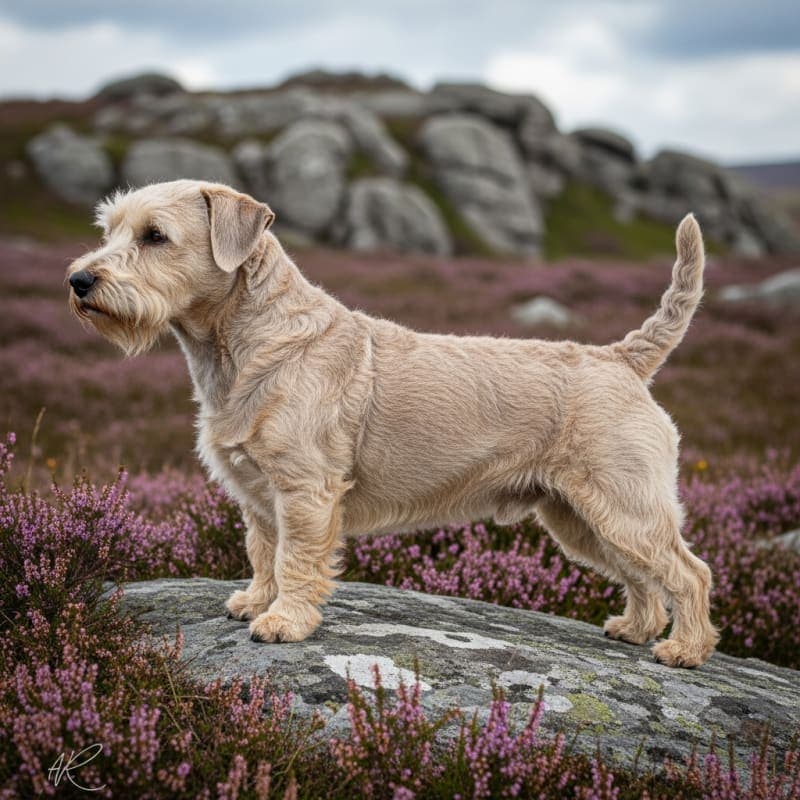
Dandie Dinmont Terrier
FCI Group
3• FCI 168
Size
Small
Origin Country
GB
Height
20-25 cm
Weight
8-11 kg
Lifespan
12-14 years
Temperament
Overview
Dandie Dinmont Terrier is a unique breed of dog originating from Great Britain, with a history dating back to the 17th century. The popularity of this breed significantly increased in the 19th century, mainly due to the literary character created by Sir Walter Scott in the novel Guy Mannering.
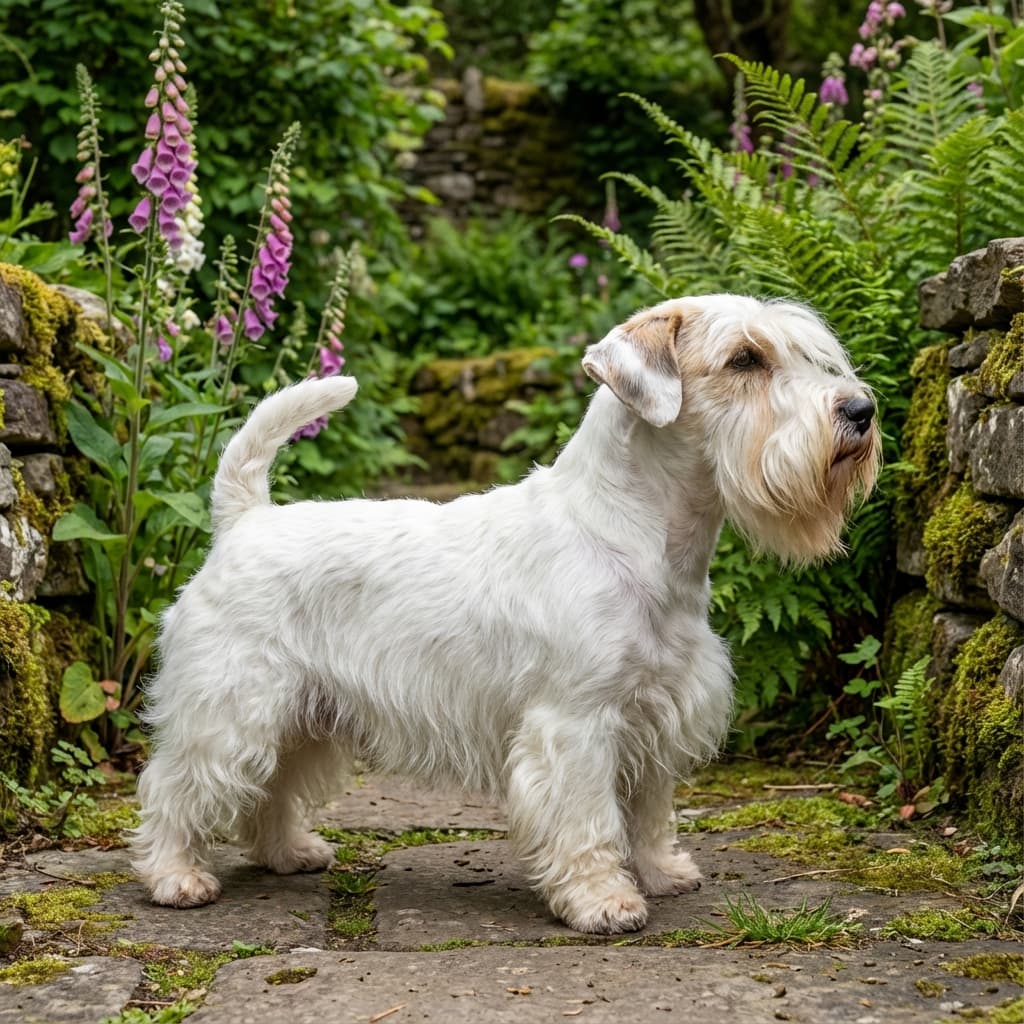
The Dandie Dinmont Terrier is a small terrier with a unique, distinctive appearance. Its silhouette is long and low, somewhat resembling the body structure of a weasel. The head of this dog is large and strong, with clearly developed cheek muscles and a beautiful, silky fringe forming a characteristic topknot on the crown of its head.
The Dandie Dinmont has large, shiny, dark hazel eyes, which give it an extraordinarily intelligent and piercing expression. The ears are drooping and wide at the base, adding to its particular charm. Its coat consists of two layers: a tougher outer coat and a soft, dense undercoat, making it well resistant to various weather conditions.
The breed comes in two color variants: pepper (ranging from dark blue to light gray) and mustard (ranging from reddish-brown to light fawn), which makes it visually very interesting. The character of the Dandie Dinmont Terrier is full of energy, independence, and intelligence. It is a dog that learns quickly, and its devotion to the family is almost uncompromising.
Originally bred for hunting small predators, the Dandie Dinmont retains a strong hunting instinct, which can make it overly curious in the presence of small animals. Nevertheless, its balanced temperament and gentleness make it an excellent companion for both families with children and single individuals.
The Dandie Dinmont Terrier stands out for its exceptional resilience and adaptability – it adjusts well to living in single-family homes as well as in urban apartments. While it can be calm, it is also very alert and protective, making it a great home guardian. We encourage you to learn more about this fascinating breed through detailed information found in sections dedicated to health, grooming, physical activities, training, nutrition, history, appearance, and behavior.
The Dandie Dinmont Terrier is a dog with a truly unique appearance that easily stands out among other terrier breeds. Its silhouette is long-bodied and low, giving it a characteristic, elongated shape reminiscent of a dachshund. The head of the Dandie Dinmont is large, strong, and distinctly muscular, which emphasizes its intelligence and confidence.
Skull structure: The forehead is clearly rounded, and the cheeks are strongly developed, giving the dog a very expressive and characteristic profile. The eyes are large, round, and shiny, in a deep dark hazel color, creating an impression of a wise and penetrating gaze. The ears are drooping, wide at the base, and tapering towards the ends, adding charm to the entire silhouette.
Coat and coloration: The coat of this breed consists of a hard outer layer and a soft, dense undercoat, making it resistant to various weather conditions. The Dandie Dinmont comes in two main colorings:
- Pepper – from dark blue to light gray
- Mustard – from red-brown to light fawn
The most characteristic element of the Dandie Dinmont's appearance is its abundant, silky topknot on the top of the head, which creates a unique and recognizable look for this breed.
Physical dimensions: The weight of an adult Dandie Dinmont Terrier ranges from 8 to 11 kg, with a height at the withers of 20 to 25 cm, classifying it as a small dog that is easy to maintain and transport. Despite its small size, this dog has well-developed muscles, making it strong and resilient. Its posture is harmonious and balanced, allowing it to move with grace and elegance, despite its unconventional body proportions.
The Dandie Dinmont Terrier is a dog with a balanced temperament, harmoniously combining typical terrier traits – energy, determination, and courage – with gentleness, friendliness, and loyal devotion. This breed is distinguished by its remarkable intelligence and strong attachment to family, making it an excellent companion for both single individuals and families with children.
The Dandie Dinmont is a very social dog that loves to spend time with its loved ones. Despite being full of vigor and energy, it can be calm and relaxed when in the comfort of home. It is the ideal companion that adapts to the rhythm of its family's life.
Hunting instinct: The Dandie Dinmont Terrier has a well-developed hunting instinct, which means it may exhibit a strong curiosity and a tendency to chase small animals. For this reason, it is extremely important to provide proper socialization from a puppy age and consistent training to teach the dog control and appropriate behaviors in the presence of other animals.
This breed is known for its certain degree of independence, which can sometimes manifest as resistance in training. The key to success is consistency, patience, and using methods based on positive reinforcement – rewarding desired behaviors. The Dandie Dinmont Terrier is moderately tolerant of solitude, so it is advisable to gradually accustom it to being alone to avoid behavioral issues.
Guarding traits: Despite its small size, the Dandie Dinmont can be an excellent guard dog. Its loud, firm bark effectively deters intruders and informs household members of unwanted guests. It is a vigilant dog that is always on alert.
The Dandie Dinmont is also extremely affectionate and caring, making it an ideal family dog. It adapts well to urban life but requires regular walks and various outdoor activities to meet its physical and mental needs. This is a dog that loves intellectual challenges and eagerly engages in training games.
The Dandie Dinmont Terrier has an average lifespan of 12 to 14 years, placing it among relatively healthy and long-lived small dog breeds. Despite its small size, its health condition is usually solid, and its physical endurance allows it to lead an active lifestyle.
However, like any dog breed, the Dandie Dinmont Terrier may be prone to certain specific health issues that owners should monitor:
- Hip and elbow dysplasia – a condition affecting the proper development of joints
- Primary glaucoma – an eye disease that can lead to vision loss
- Intervertebral disc disease (IVDD) – spine problems resulting from its long body shape
- Portosystemic liver shunts – congenital vascular anomalies in the liver
- Epilepsy – occasionally occurring in this breed
Recommendations for owners: It is extremely important to have regular veterinary check-ups, which will allow for early detection of any potential health problems. Maintaining a proper diet and regular physical activity significantly reduces the risk of many ailments.
Temperature tolerance: The Dandie Dinmont is quite resistant to cold due to its dense, double coat; however, it should not be left outside for extended periods in very low temperatures. On the other hand, high temperatures are not comfortable for it – in the summer, it should have access to shade and fresh water to avoid overheating.
Proper healthcare, prevention, and a healthy lifestyle can significantly extend the life of this charming terrier and ensure its comfort for many years.
Grooming a Dandie Dinmont Terrier requires consistency and some knowledge, but it is not too complicated for owners willing to dedicate time to their pet. The coat of this breed consists of two layers: a hard outer coat and a soft, dense undercoat, which requires a proper approach to grooming.
Brushing: To keep the coat in excellent condition, it is recommended to brush regularly at least once a week. This helps remove dirt, dead hair, and prevents the formation of tangles and mats. Brushing is also a great opportunity to strengthen the bond with your pet.
Hand stripping: Every few months, it is necessary to perform what is known as hand stripping, which involves plucking out dead hair without the use of clippers. This traditional grooming method helps maintain the proper structure and color of the coat, as well as ensures the hardness characteristic of the breed.
Other grooming procedures:
- Nail trimming – regularly, when they become too long (usually every 3-4 weeks)
- Ear cleaning – checking and gently cleaning the ears weekly to prevent infections
- Oral hygiene – brushing teeth several times a week to maintain healthy teeth
- Bathing – done as needed, usually once every few months or when the coat is clearly dirty
Grooming a Dandie Dinmont Terrier is not only a duty but also a wonderful opportunity to build a deep bond with your pet and monitor their overall health. It is worth considering using the services of a professional groomer, especially for hand stripping, if you do not feel confident performing this procedure on your own.
The Dandie Dinmont Terrier requires a moderate amount of physical activity to maintain good condition, health, and emotional balance. Although it is a small dog, its energy and zest for life are disproportionately large, which means it needs regular walks and outdoor activities.
Recommended daily activity: Two walks a day, each lasting about 30-45 minutes, should be sufficient to meet its basic exercise needs. During walks, the Dandie Dinmont can run freely, explore its surroundings, and sniff out scents, which is extremely important for its natural instincts.
Additional activities: This breed has a strong hunting instinct, so it's worth providing it with the opportunity to run safely in a fenced area where it can explore and exercise freely. The Dandie Dinmont also loves:
- Ball games – fetching and chasing toys
- Interactive mind games – puzzle toys, searching for hidden treats
- Obedience training – short, engaging training sessions
- Family hikes – walking trips, strolls in the park or forest
Regular physical activity not only helps maintain good physical condition but also significantly improves the dog's well-being and prevents behavioral problems resulting from excess unused energy, such as destroying objects or excessive barking.
The Dandie Dinmont Terrier can also be an excellent companion for various family activities. It is a dog that eagerly participates in joint ventures and values time spent outdoors together. It is important to remember to adjust the intensity of activities to the age, condition, and individual needs of each dog.
The Dandie Dinmont Terrier is a smart dog that eagerly learns new skills and quickly absorbs knowledge. However, its certain degree of independence and terrier character may make training require patience, consistency, and a well-thought-out approach from the owner.
Training methods: The Dandie Dinmont may show some stubbornness, so it is crucial to use methods based on positive reinforcement – rewarding desired behaviors with treats, praise, and play. Avoiding punishment and dominance-based methods is extremely important, as they can harm the relationship with the dog and weaken its motivation to learn.
Early socialization: The process of socialization and basic training should begin at a puppy age to provide the dog with a solid foundation in behavior. Early exposure to various stimuli, people, animals, and situations will help develop a balanced and confident adult dog.
Controlling dominant behaviors: Owners should be aware that the Dandie Dinmont may sometimes exhibit some dominance, especially in interactions with other dogs. Therefore, it is essential to teach it obedience and impulse control through regular exercises and consistent communication.
Diversity in training: Training should be enjoyable, engaging, and varied, which will help maintain the dog's high motivation. The Dandie Dinmont can significantly benefit from participating in activities such as:
- Obedience training – basic and advanced commands
- Agility – obstacle courses that develop physical and mental agility
- Scent games – exercises that utilize the natural tracking instinct
- Dog dancing – dance choreographies with the dog for ambitious owners
Building bonds: A key element of effective training is building a strong, trust-based bond between the dog and the owner. Regular, short training sessions (10-15 minutes) are more effective than long, exhausting exercises. This approach contributes to a better understanding of mutual expectations and greater obedience from the pet.
The Dandie Dinmont Terrier's diet should be well-balanced and tailored to its specific needs as a small, active dog. Proper nutrition ensures the maintenance of health, energy, and optimal physical condition throughout its life.
Food selection: Owners should choose high-quality foods that are specifically designed for the needs of small dog breeds. Attention should be paid to the ingredients – the food should contain high-quality animal protein as the main ingredient, healthy fats, low glycemic index carbohydrates, and a complex of vitamins and minerals.
Meal frequency: It is recommended to feed in two meals a day, which helps maintain stable energy levels and prevents gastrointestinal problems. Regular feeding times also help establish a routine and facilitate house training.
Weight control: The Dandie Dinmont does not have a particular tendency towards obesity, but it is important to regularly monitor its weight and body condition. Avoiding overfeeding is crucial – sticking to the recommended portions provided by the food manufacturer or veterinarian will help prevent overweight.
Treats and rewards: It is beneficial to introduce healthy treats into the diet that can be used during training as positive reinforcement. However, they should be given in moderation (no more than 10% of daily caloric intake) to avoid weight gain.
Access to water: It is extremely important to ensure the dog has constant access to fresh, clean water, especially after physical activity or on hot days.
Healthy additions: The Dandie Dinmont can also benefit from fruits and vegetables as healthy snacks (e.g., carrots, apples, blueberries), but it is essential to avoid foods that are toxic to dogs, such as:
- Chocolate and cocoa products
- Onion, garlic, leek
- Grapes and raisins
- Avocado
- Xylitol (artificial sweetener)
Consultation with a veterinarian: To ensure the best health and well-being for the dog, it is advisable to regularly consult with a veterinarian to establish an optimal diet that takes into account the individual needs of the dog, its age, physical activity, and any potential health issues.
Characteristic Traits
Pros
- Intelligent and quick to learn
- Extremely devoted to family
- Perfectly resilient to various weather conditions
- Great companion for families and singles
- Alert guardian despite small size.
Cons
- A strong hunting instinct requires control
- it can be overly curious about small animals
- it needs regular and specialized coat care
- and a certain degree of stubbornness in training.
Behavioral Ratings
Breed History
The Dandie Dinmont Terrier has a rich and fascinating history that dates back to the 17th century when this breed began to be described in literature and historical documents. The first mentions of dogs resembling modern Dandie Dinmonts can be found in books where they were depicted as hunting dogs used for hunting small predators such as badgers, otters, and foxes.
Origin of the name: The breed's name has a unique source – it comes from a fictional character created by the famous Scottish writer Sir Walter Scott in his novel Guy Mannering published in 1814. In the book, Dandie Dinmont was a farmer who bred six small terriers with a distinctive body structure. This is the only dog breed in the world named after a literary character!
Development of the breed: It is believed that modern Dandie Dinmonts have their roots in dogs bred by James Davidson, a well-known breeder from the 18th century, who ran his breeding operation on the border of Scotland and England. Over the years, the Dandie Dinmont Terrier gained a reputation as a wonderful companion and an effective hunting dog, enjoying increasing popularity both in Scotland and throughout England.
Formalization of the breed: In 1875, the Dandie Dinmont Terrier Club was established, which is one of the oldest dog breeder associations in the world. From the very beginning, this organization has worked to preserve the unique characteristics of the breed by developing detailed breeding standards and promoting the breed at dog shows.
Contemporary challenges: In recent decades, the Dandie Dinmont Terrier has faced the problem of a drastic decline in the number of breeders and registrations of puppies. The breed even found itself on the list of endangered breeds in the UK. This alarming trend has prompted numerous enthusiasts, breeders, and breed clubs to take intensive action aimed at protecting and promoting this historic breed.
Thanks to the dedication and efforts of breed enthusiasts, the number of registered puppies has begun to gradually increase, although it has not yet reached a safe level that ensures genetic diversity and the long-term future of the population.
Historical significance: The Dandie Dinmont Terrier plays an important role in the history of hunting dogs and British culture. Its unique character, distinctive silhouette, and literary origin of its name continue to attract the attention of dog lovers around the world. It is a breed that serves as a living monument to the breeding traditions of the Scottish-English border and the literary heritage of Sir Walter Scott.